
CDL Training: Free Programs, Costs, and How to Get Started 2026 October
Pass your CDL Training: Free Programs, Costs, and exam on the first attempt. Practice questions with detailed answer explanations, hints, and instant 💡
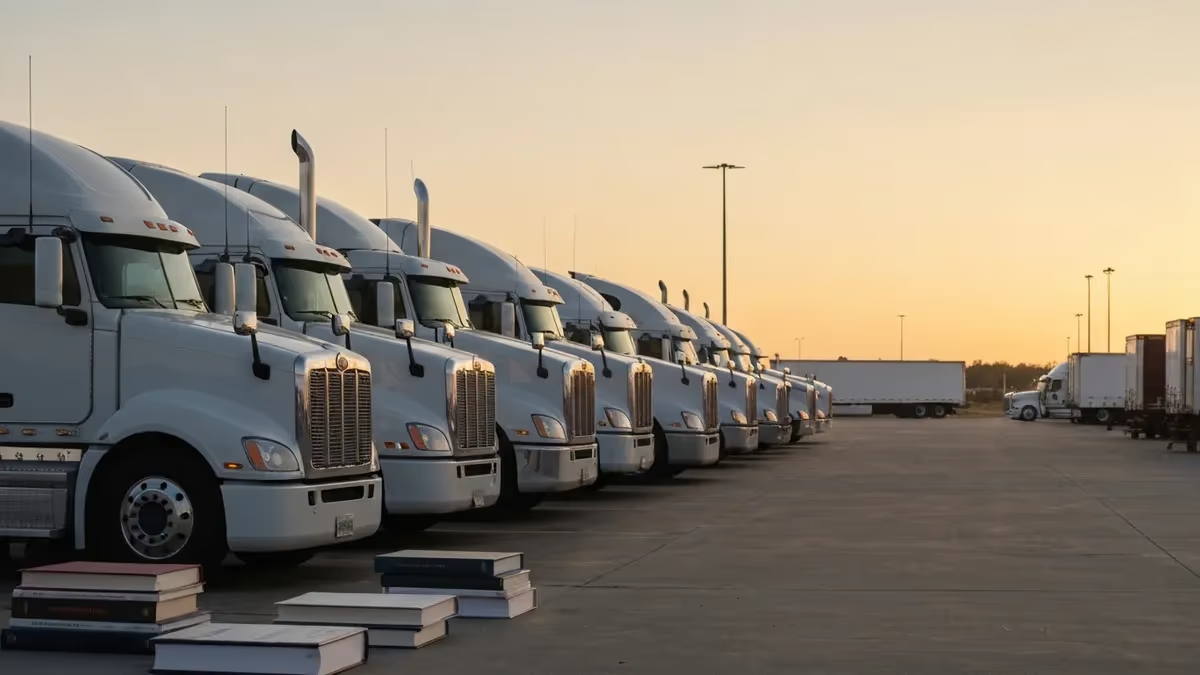
Getting behind the wheel of a commercial vehicle starts with CDL training — but you don't always need to pay thousands out of pocket. Free CDL training exists through company-sponsored programs, workforce grants, and state-funded schools that cover tuition entirely. That's not a gimmick. Companies like Roehl, Swift, and Schneider invest in new drivers because they need them on the road fast, and they'll foot the bill if you commit to driving for them afterward.
Most CDL training programs run between three and eight weeks — some accelerate to as few as two, while others stretch beyond ten depending on endorsements you're chasing and the school's structure. The format matters too. You've got full-time day programs, weekend-only schedules, and even hybrid options blending classroom and yard time around your current job. Class B CDL training typically wraps up faster since the vehicles are smaller and the skills test is less complex than Class A, which covers tractor-trailers and combination rigs.
Here's the thing: free CDL training near you might be closer than you think. Community colleges, WIOA-funded workforce centers, and veteran programs all offer paths that cost nothing upfront — you just need to know where to look. This guide breaks down how each program works, what it costs when it's not free, which companies sponsor training, and how to pick the right fit for your situation. Whether you're eyeing local routes in a straight truck or planning long-haul runs across state lines, the path starts with picking the right training setup.
One quick note — the CDL training test at the end of your program isn't optional. You'll face a three-part exam covering general knowledge, vehicle inspection, and a road test. Every state administers it, and passing all three sections is the only way to get your CDL. Some schools bake test prep into the curriculum. Others leave it to you. That distinction matters more than most people realize when comparing programs, so keep it in mind as you read through your options below.
Class B CDL training covers vehicles like straight trucks, city buses, dump trucks, and large passenger vans — anything where the trailer doesn't detach from the power unit. Programs usually run two to four weeks, significantly shorter than Class A. If you're looking at delivery routes, public transit, or local construction hauling, Class B is the license you need. Not everyone wants to drive 18-wheelers cross-country, and the industry knows it.
Finding free CDL training near me is the first search most aspiring drivers run, and there are legitimate results. WIOA grants through your local American Job Center can cover full tuition at approved CDL schools — you'll need to qualify based on income or employment status, but the application process is straightforward. Veterans have even more options through the GI Bill and state-specific programs that recognize trucking as a skilled trade worth funding.
The CDL training jobs landscape has shifted dramatically since 2020. The driver shortage pushed wages up and lowered barriers to entry — carriers that used to require two years of experience now hire graduates straight out of CDL school. That's changed the math on training ROI. Even paid programs at $7,000 can pay for themselves within six months of full-time driving, assuming you land a gig averaging $1,200 per week. And most graduates do.
Worth knowing: some community colleges offer CDL training at subsidized rates — $1,500 to $3,000 compared to $7,000 or more at private schools. The tradeoff? Longer programs, sometimes twelve weeks instead of four. But you'll graduate without debt and without a company contract tying you to one employer for a year.
Every CDL training program follows the same basic arc: classroom instruction, yard practice, and over-the-road driving. The classroom piece covers federal regulations, vehicle systems, trip planning, and hazmat rules if you're adding that endorsement. Yard time means learning pre-trip inspections, backing maneuvers — straight-line, offset, and parallel — plus coupling and uncoupling for Class A students. Then you hit the road with an instructor riding shotgun.
Roehl CDL training stands out from the pack for one reason — they pay you while you train. Roehl Transport runs its own certified schools in Marshfield, Wisconsin and Appleton, Wisconsin, putting you through a multi-week program with housing included, a small weekly stipend, and a guaranteed driving position after graduation. The catch? You'll sign a contract committing to drive for Roehl for a set period, usually twelve months. Break it early and you owe them for the training. Still, for someone with no savings and no CDL, it's one of the strongest deals in the industry.
What separates a good CDL training program from a bad one isn't always the curriculum — it's the student-to-truck ratio and the hours of actual behind-the-wheel time. FMCSA now mandates minimum training standards under the Entry-Level Driver Training (ELDT) rule, but some schools exceed those minimums by 50% or more. Ask how many hours of driving time you'll get before enrolling. Forty hours of range and road time is the floor. Sixty to eighty hours is where real confidence builds.
Don't overlook accreditation either. Schools accredited by PTDI (Professional Truck Driver Institute) meet higher standards than the ELDT minimum, and some employers specifically look for PTDI graduates. Not required — but a nice edge when you're competing for the better-paying gigs right out of school.
CDL Training Paths Compared
Carriers like Roehl, Swift, Schneider, CRST, and Werner offer free CDL training in exchange for a driving contract — usually 12 to 18 months. Training lasts 3 to 6 weeks. Housing is often included. You earn a small stipend during training. The downside: early termination means repaying $3,000 to $7,000 in training costs. Best for people with no upfront capital who are ready to commit to one carrier.
CDL training cost is the first question everyone asks — and the answer ranges from zero to over ten thousand dollars depending on the path you choose. Company-sponsored programs eliminate tuition entirely but tie you to one employer. Private schools charge $4,000 to $10,000 for accelerated timelines. Community colleges sit in the middle at $1,500 to $4,000 with longer programs but no strings attached. The right choice depends on your budget, your timeline, and how much you value freedom to pick your first employer.
CDL training jobs have exploded in availability because the American Trucking Associations estimates a shortage exceeding 260,000 drivers. That shortage translates directly into better starting pay, signing bonuses, and more companies willing to train from scratch. Five years ago, most carriers demanded two years of verifiable experience before hiring. Now? Graduate from a legitimate CDL school and you'll have multiple job offers before your last week of training ends.
The hidden costs beyond tuition catch people off guard. CDL permit fees run $30 to $100 depending on your state. The skills test itself costs $50 to $200. Medical exam for your DOT physical? Another $75 to $150 — and you'll need it every two years after that. Drug screening is mandatory. Some schools include these in tuition; others don't. Ask before you sign anything. A $3,500 program that covers testing fees might actually beat a $3,000 program that doesn't.
Short answer: budget $5,000 to $7,000 for a private school all-in, $2,000 to $3,500 for community college, or $0 if you go company-sponsored. Factor in 3 to 8 weeks without income during training — that's the real cost most people undercount.
Tuition for CDL training varies wildly based on program type, location, and what's included. A bare-bones Class B program at a community college might run $1,200. A full Class A program with hazmat and tanker endorsements at a private school? Could hit $10,000 or more. The median across all program types lands around $5,500 — but that number means nothing without context about what you're getting for it.
CDL training online has grown since COVID forced classroom portions onto Zoom and pre-recorded video platforms. Here's the honest answer about online CDL training: the classroom theory portion works fine remotely. Federal regulations, map reading, logbook rules — those translate to video lectures without losing anything. But you can't learn to back a 53-foot trailer through a screen. Every state requires hands-on training and a physical skills test. So "online CDL training" really means hybrid — you do theory remotely and then show up for the driving portion.
Some schools advertise CDL training online as a complete program, which is misleading. The FMCSA requires behind-the-wheel training from an approved provider before you can take the skills test. No exceptions. If a school claims you can get your CDL entirely online, walk away. That's not how the licensing system works, and any CDL earned without proper road training puts you and everyone else on the highway at risk.
Tuition assistance beyond WIOA exists too. The Pell Grant covers CDL programs at accredited schools — up to $7,395 per year as of 2026. Some states run their own CDL-specific scholarship funds. And the VA's GI Bill covers CDL training at approved schools for veterans. Stack these funding sources and you could graduate from a premium private school without spending a dime of your own money.
Pros and Cons of CDL Training
- +High demand means near-guaranteed employment after graduation — 260,000+ driver shortage nationwide
- +Free training available through company sponsorships, WIOA grants, and veteran programs
- +Median salary exceeds $54,000 with top earners clearing $80,000+ in specialized freight
- +Short training timeline — most programs finish in 3 to 8 weeks versus years for other trades
- +No college degree required — CDL training accepts anyone 18+ with a clean driving record
- +Multiple career paths from local delivery routes to long-haul, tanker, or hazmat specialties
- −Company-sponsored programs lock you into 12-18 month contracts with early termination penalties
- −Private school tuition ranges from $4,000 to $10,000 if you don't qualify for grants
- −Long-haul positions require extended time away from home — often 2 to 3 weeks at a stretch
- −DOT physicals, drug tests, and medical clearance create ongoing compliance requirements
- −Insurance rates for new CDL holders run higher until you build 2+ years of clean driving history
- −Backing maneuvers and pre-trip inspections take weeks of practice to master under test pressure
Swift CDL training runs through Swift Transport's own academies scattered across the country — locations in Memphis, Phoenix, Richmond, and several other cities. The program lasts about three weeks and includes both classroom and behind-the-wheel components. Swift covers tuition entirely but requires a 12-month driving commitment. Break the contract early and you'll owe around $3,900. Swift's academy has a mixed reputation — some graduates praise the speed, others say the behind-the-wheel hours are too few. Do your homework before committing.
Schneider CDL training takes a different approach. Schneider partners with existing CDL schools rather than running its own — they'll pay tuition at an approved school near you, and you repay nothing as long as you drive for Schneider for one year after graduation. This model lets you train locally instead of relocating to a company academy. Schneider's tuition reimbursement covers up to $7,000, which handles most private school programs entirely. They also offer a "Trainee Driver" position with pay during your first weeks on the road with a mentor.
Here's the thing about comparing Swift vs. Schneider vs. Roehl: they all solve the same problem differently. Swift trains in-house and gets you driving fastest. Schneider lets you pick your school and stay local. Roehl pays a stipend and provides housing during training. Your lifestyle situation — savings, family, geography — determines which model makes the most sense. None of them is objectively "the best." They're just different.
Independent trucking schools give you something none of these companies offer: freedom. Graduate without a contract and you can shop offers from twenty carriers, negotiate signing bonuses, and switch employers after six months if you're unhappy. That flexibility has real dollar value — first-year drivers who switch to a better-paying carrier at month seven often earn $8,000 to $12,000 more in their first year than contract-locked graduates.
CDL Training Enrollment Checklist
- ✓Verify you meet minimum age requirements — 18 for intrastate, 21 for interstate CDL
- ✓Obtain your CDL learner's permit (CLP) from your state DMV before starting training
- ✓Schedule and pass your DOT physical exam with a certified medical examiner
- ✓Complete a drug screening — mandatory for all CDL applicants under federal law
- ✓Research ELDT-registered training providers at FMCSA's Training Provider Registry
- ✓Compare tuition, behind-the-wheel hours, and job placement rates across 3+ schools
- ✓Apply for WIOA grants, Pell Grants, GI Bill benefits, or company sponsorships
- ✓Confirm your driving record is clean — most programs require no major violations in 3 years
- ✓Register on the FMCSA's TPR to track your ELDT completion electronically
- ✓Book your CDL skills test at a state-approved testing location before graduation day
The CDL training test breaks into three parts, and each one gates the next. First: the general knowledge written test at your state DMV. You need a passing score — usually 80% — to earn your Commercial Learner's Permit, which you must hold for at least 14 days before taking the skills test. Second: the vehicle inspection test where you walk around the truck calling out components and explaining what you're checking. Third: the driving skills test covering backing maneuvers and an on-road driving evaluation with an examiner in the cab.
CDL training in Houston deserves its own mention because Texas has one of the highest concentrations of CDL schools in the country. Houston alone has over 40 registered training providers. Programs range from $1,800 at Houston Community College to $8,000+ at private academies like 160 Driving Academy and HDS Truck Driving Institute. The Texas Workforce Commission offers WIOA funding that covers full tuition at approved schools — and Houston's TWC office is one of the most active in the state for CDL grants. If you're in the Houston area, you've got options most cities don't.
Fair warning: not all CDL schools deliver equal value. Some pack 30 students into one truck, meaning you spend more time watching than driving. Others run 4:1 ratios and get you 80+ hours behind the wheel. The difference shows up in first-attempt pass rates — schools with better ratios consistently hit 85% to 95% first-time pass rates while overcrowded schools hover around 60%. Ask for the school's pass rate before enrolling. If they won't share it, that tells you everything you need to know.
One more thing about testing: some states let you test at the school itself if it's a third-party testing site. That's a significant advantage — you'll test on the same truck and the same backing course you practiced on. No surprises. Schools that offer third-party testing charge slightly more, but the familiarity advantage is worth it for nervous test-takers.
Roehl Transport CDL training deserves a deeper look because their model is genuinely different from most company-sponsored programs. Roehl runs two dedicated training facilities in Wisconsin — Marshfield and Appleton — and operates a "Get Your CDL" program that includes housing at or near the training site, a weekly living allowance, and full tuition coverage. The training takes about four weeks and includes both classroom and extensive behind-the-wheel time with experienced instructors on Roehl's own fleet of training trucks.
What makes Roehl's program unusual is the mentoring phase after initial training. You don't just graduate and drive solo. You spend additional weeks paired with an experienced Roehl driver who coaches you through real freight runs — handling weather, tight docks, fuel stops, weigh stations, and the daily rhythm of the job. That transition period is where many new drivers from other programs struggle. Roehl builds it into the program instead of leaving you to figure it out alone on a dark highway at 2 AM.
A free CDL training test is something you should take before you ever enroll in a program — not after. Multiple websites and apps offer practice tests that mirror the actual CDL general knowledge exam, and scoring well on these gives you a baseline. If you're consistently hitting 85%+ on practice tests, the classroom portion of your CDL training will feel like review. If you're struggling below 70%, you know exactly which sections need more study time before you spend money on a program.
Bottom line: Roehl's program works best for people relocating to the Midwest or willing to train there temporarily, and who want structured mentoring instead of being thrown into solo driving immediately. The contract obligation is real — usually 12 months — but the training quality and post-graduation support justify it for most graduates. Check their current availability directly since class sizes are limited and spots fill fast during peak hiring seasons.
Some unlicensed operators charge $2,000+ for training that doesn't meet ELDT requirements — meaning your state DMV will refuse to let you test. Before paying any tuition, verify the school is listed on FMCSA's Training Provider Registry (tpr.fmcsa.dot.gov). Also confirm they have a physical training yard — purely classroom-based programs cannot legally prepare you for the CDL skills test. If a school guarantees a CDL without road training, it's a scam.
Free CDL license training isn't limited to company sponsorships — government-funded programs offer the same thing without tying you to one employer. The Workforce Innovation and Opportunity Act (WIOA) funds CDL training for eligible adults through local American Job Centers. Eligibility typically depends on income level, employment status, or displacement from a previous job. Once approved, WIOA covers full tuition at any approved training provider — and you walk away with your CDL and zero obligation to any specific carrier.
CDL training free through veteran programs deserves special attention. The Post-9/11 GI Bill covers CDL training at VA-approved schools, and several states add their own veteran trucking initiatives on top. Texas, for example, runs a "Troops to Trucks" program. California offers CDL tuition waivers through CalVet. These programs exist because the military-to-trucking pipeline makes sense — veterans already understand equipment maintenance, safety protocols, and long hours. The transition is natural, and the government recognizes it with dedicated funding.
State-funded programs fill the gaps that federal programs miss. Ohio's TechCred program reimburses employers who pay for employees' CDL training. Pennsylvania's WEDnetPA covers CDL costs for existing employees at qualifying companies. Indiana's Next Level Jobs program pays full tuition for CDL training at Ivy Tech community colleges. These aren't widely advertised — you'll need to contact your state's workforce development office directly. But they're real, funded, and available right now. Most people just don't know they exist.
The catch with all free programs: limited seats. WIOA-funded slots at popular CDL schools fill within weeks of opening. GI Bill applications require processing time. State programs have annual budget caps. Apply early — ideally two to three months before your target start date. Waiting until the last minute means competing for whatever's left, which might mean a lower-quality school or a start date months away. Planning ahead is the single biggest advantage you can give yourself in this process.
CDL Practice Test Questions
Prepare for the CDL - Commercial Driver's License exam with our free practice test modules. Each quiz covers key topics to help you pass on your first try.
CDL Alabama CDL Combination Vehicles Pract...
CDL Exam Questions covering Alabama CDL Combination Vehicles Practice Test. Master CDL Test concepts for certification prep.
CDL Alabama CDL General Knowledge Practice...
Free CDL Practice Test featuring Alabama CDL General Knowledge Practice Test #. Improve your CDL Exam score with mock test prep.
CDL Alabama General Knowledge CDL Practice...
CDL Mock Exam on Alabama General Knowledge CDL Practice Test. CDL Study Guide questions to pass on your first try.
CDL Airbrakes Practice Test
CDL Test Prep for Airbrakes Practice Test. Practice CDL Quiz questions and boost your score.
CDL Air Brakes Practice Test
CDL Questions and Answers on Air Brakes Practice Test. Free CDL practice for exam readiness.
CDL CLASS A COMMERCIAL DRIVER'S LICENSE PR...
CDL Mock Test covering CLASS A COMMERCIAL DRIVER'S LICENSE PRACTICE TEST. Online CDL Test practice with instant feedback.
CDL Class B Commercial Driver's License Pr...
Free CDL Quiz on Class B Commercial Driver's License Practice Test. CDL Exam prep questions with detailed explanations.
CDL Combination Vehicles Practice Test
CDL Practice Questions for Combination Vehicles Practice Test. Build confidence for your CDL certification exam.
CDL Doubles and Triples Practice Test
CDL Test Online for Doubles and Triples Practice Test. Free practice with instant results and feedback.
CDL Doubles Triples Practice Test
CDL Study Material on Doubles Triples Practice Test. Prepare effectively with real exam-style questions.
CDL General Knowledge Practice Test
Free CDL Test covering General Knowledge Practice Test. Practice and track your CDL exam readiness.
CDL General Knowledge Practice Test1
CDL Exam Questions covering General Knowledge Practice Test1. Master CDL Test concepts for certification prep.
CDL Hazardous Materials (Hazmat) Practice ...
Free CDL Practice Test featuring Hazardous Materials (Hazmat) Practice Test. Improve your CDL Exam score with mock test prep.
CDL Hazardous Materials Hazmat Practice Test
CDL Mock Exam on Hazardous Materials Hazmat Practice Test. CDL Study Guide questions to pass on your first try.
CDL Hazmat Practice Test
CDL Test Prep for Hazmat Practice Test. Practice CDL Quiz questions and boost your score.
CDL Passenger Transport Practice Test
CDL Questions and Answers on Passenger Transport Practice Test. Free CDL practice for exam readiness.
CDL Road Signs and Signals Practice Test
CDL Mock Test covering Road Signs and Signals Practice Test. Online CDL Test practice with instant feedback.
CDL School Bus Endorsement Practice Test
Free CDL Quiz on School Bus Endorsement Practice Test. CDL Exam prep questions with detailed explanations.
CDL School Bus Endorsement S Practice Test
CDL Practice Questions for School Bus Endorsement S Practice Test. Build confidence for your CDL certification exam.
CDL Tanker Practice Test
CDL Test Online for Tanker Practice Test. Free practice with instant results and feedback.
CDL Class A Commercial Driver's License Pr...
CDL Study Material on Class A Commercial Driver's License Practice Test -1. Prepare effectively with real exam-style questions.
CDL Class A Driver's License Practice Test -2
Free CDL Test covering Class A Driver's License Practice Test -2. Practice and track your CDL exam readiness.
CDL Class A Driver's License Practice Test -3
CDL Exam Questions covering Class A Driver's License Practice Test -3. Master CDL Test concepts for certification prep.
CDL Class A Driver's License Practice Test -5
Free CDL Practice Test featuring Class A Driver's License Practice Test -5. Improve your CDL Exam score with mock test prep.
CDL Class B Commercial Driver's License Pr...
CDL Mock Exam on Class B Commercial Driver's License Practice Test -2. CDL Study Guide questions to pass on your first try.
CDL Class C CDL with Hazmat Endorsement Pr...
CDL Test Prep for Class C CDL with Hazmat Endorsement Practice Test. Practice CDL Quiz questions and boost your score.
CDL Class C CDL with Hazmat Endorsement Pr...
CDL Questions and Answers on Class C CDL with Hazmat Endorsement Practice Test -2. Free CDL practice for exam readiness.
CDL Class C CDL with Hazmat Endorsement Pr...
CDL Mock Test covering Class C CDL with Hazmat Endorsement Practice Test -3. Online CDL Test practice with instant feedback.
Class B CDL training near me is a search that pulls results for bus driver programs, delivery truck schools, and dump truck training — all falling under the Class B umbrella. The difference between Class A and Class B is simple: Class B covers single-unit vehicles over 26,001 pounds where any towed unit stays under 10,000 pounds. Think city buses, cement mixers, box trucks, and garbage trucks. Class A covers everything heavier, plus combination vehicles with detachable trailers.
Online CDL training options have expanded, but the core reality hasn't changed — you must complete hands-on training before testing. What has changed is how the theory portion gets delivered. Schools like Roadmaster and 160 Driving Academy now offer pre-enrollment online courses that cover CDL general knowledge, air brakes theory, and hazmat regulations before you set foot on campus. This front-loading means you spend less time in a classroom and more time driving during your on-site training weeks. Smart approach if you're disciplined enough to study independently.
Geography shapes your CDL training options more than most factors. Students in Texas, California, and Florida have dozens of schools within driving distance. Students in Wyoming, Montana, or Vermont might have one or two options — or none, forcing a relocation to train. Company-sponsored programs solve this by flying you to their academy location and housing you during training. That's a genuine advantage for rural applicants who'd otherwise need to rent an apartment near a school for two months.
The final piece: timing. CDL training programs run on fixed start dates — you can't just show up any Monday. Peak enrollment months are January through March (New Year's resolution crowd) and September through November (end-of-year hiring push). Classes fill fastest during these windows. Summer months tend to have more availability. If flexibility matters, target a May or June start date when schools are less crowded and behind-the-wheel time is easier to schedule.
Sample CDL Practice Questions
Try these questions from our free CDL practice tests. The correct answer and an explanation follow each question.
What is the fastest and best way to recognize that your trailer has started to skid?
- A. Feeling your steering wheel shake
- B. Listening for the distinctive skidding sound
- C. Seeing it in your mirrors
- D. Feeling your vehicle pull to the side
Answer: C. Seeing it in your mirrors
The fastest and most reliable way to detect a trailer skid is by observing it in your mirrors. You will see the trailer begin to swing out of alignment with the tractor. Relying on feel or sound can be delayed or less distinct, making visual confirmation crucial for timely corrective action.
When is a HazMat endorsement required on a CDL?
- A. When transporting materials in quantities requiring placarding or any select agent/toxin
- B. Only when transporting explosives or radioactive materials
- C. Only for interstate shipments of hazardous materials
- D. Only when the shipment exceeds $10,000 in declared value
Answer: A. When transporting materials in quantities requiring placarding or any select agent/toxin
A HazMat endorsement (H endorsement) is required whenever a driver transports hazardous materials in quantities that require placarding, OR any amount of a material listed as a select agent or toxin. Obtaining this endorsement requires passing a knowledge test and a TSA security threat assessment background check.
Which of the following is a reason why it is so important for the bus driver to inspect the bus' interior at the end of his shift?
- A. It's not important.
- B. To collect and catalogue all items left behind on his bus.
- C. To find loose change that will help him pay for gas.
- D. To make sure he can report necessary repairs to a mechanic before he drives the bus again.
Answer: D. To make sure he can report necessary repairs to a mechanic before he drives the bus again.
Inspecting the bus's interior at the end of a shift is primarily important for identifying any necessary repairs or maintenance issues. Reporting these promptly to a mechanic ensures they can be addressed before the bus is driven again, preventing potential breakdowns or safety hazards. While finding lost items is a secondary benefit, the main goal is to maintain the bus in safe operating condition.
You will be denied or lose your hazardous materials endorsement, if you _______.
- A. Have a conviction in military or civilian court for certain felonies.
- B. If you are under indictment for certain felonies.
- C. All of the listed answers.
- D. Have been committed to a mental institution.
Answer: C. All of the listed answers.
You will be denied or lose your hazardous materials endorsement if you have a conviction in military or civilian court for certain felonies, are under indictment for certain felonies, or have been committed to a mental institution. These stringent criteria are in place to ensure that individuals transporting hazardous materials do not pose a security risk or have mental health conditions that could impair their judgment, protecting public safety from potential catastrophic incidents.
CDL Questions and Answers
About the Author

Attorney & Bar Exam Preparation Specialist
Yale Law SchoolJames R. Hargrove is a practicing attorney and legal educator with a Juris Doctor from Yale Law School and an LLM in Constitutional Law. With over a decade of experience coaching bar exam candidates across multiple jurisdictions, he specializes in MBE strategy, state-specific essay preparation, and multistate performance test techniques.
Join the Discussion
Connect with other students preparing for this exam. Share tips, ask questions, and get advice from people who have been there.
View discussion (7 replies)