
CDL General Knowledge Test: What You Need to Know About Subject Knowledge
🎯 Boost your CDL General Knowledge exam score with practice questions and detailed answer explanations. Track progress with instant feedback.
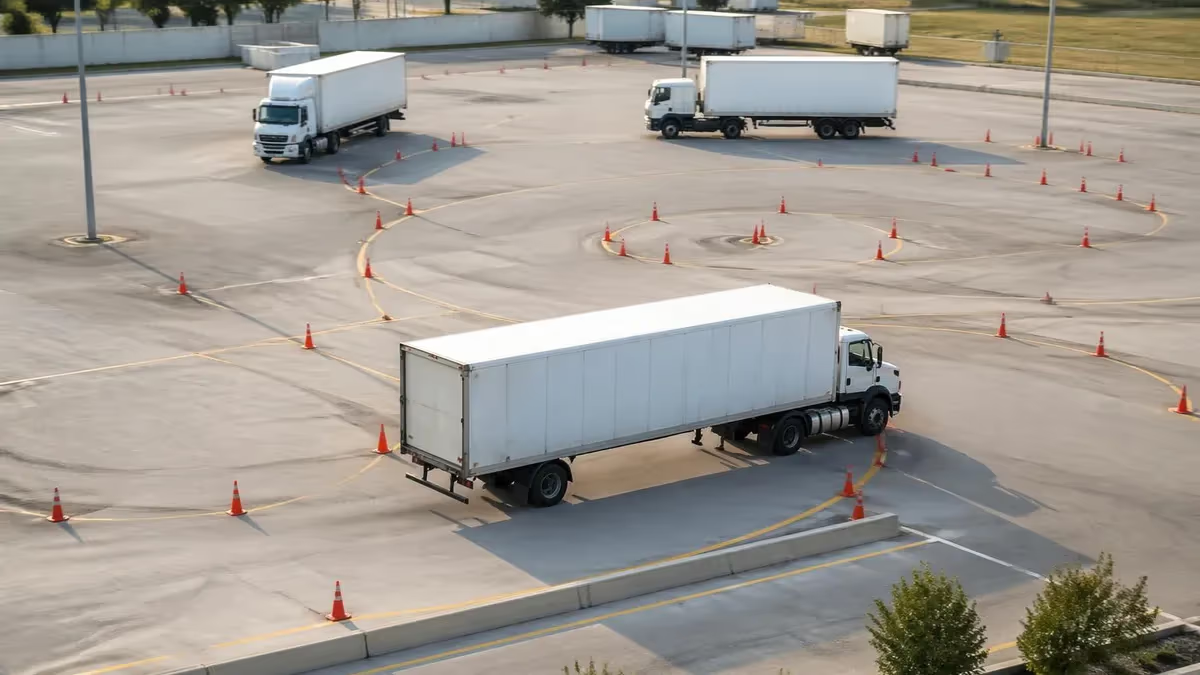
The CDL general knowledge test covers a broad sweep of subject knowledge that every commercial driver needs before sitting behind the wheel of a big rig, bus, or tanker. It's not just about memorizing road signs — you'll face questions on cargo securement, vehicle inspection, air brakes basics, hazardous conditions, and dozens of other operational topics that determine whether you're safe to share the highway with everyone else. Most states pull from the same FMCSA-approved question pool, which means if you understand the material deeply rather than surface-level, you can walk into any DMV testing center and pass.
Here's the thing: a general knowledge test for CDL trips up roughly 30% of first-time test-takers. Not because the questions are impossibly hard — they're multiple choice, after all — but because candidates underestimate the breadth of topics. You'll need to know everything from speed management on downgrades to proper tie-down requirements for flatbed loads. Skipping even one domain can sink your score, since you don't get to pick which areas show up on your specific exam version.
That's why structured prep matters. Taking a cdl practice test general knowledge before your real exam date gives you a realistic preview of the question format, the time pressure, and — most importantly — which knowledge gaps you still need to close. Practice tests don't just measure readiness. They build it.
This guide breaks down every major subject area tested, shares proven study tactics from drivers who've already passed, and points you toward free practice resources. Whether you're going for your Class A, B, or C license, the general knowledge section is the same — and it's the one you can't skip. Let's get into it.
So what exactly does the general knowledge test for CDL ask? The exam tests your understanding of 18+ subject domains pulled directly from the FMCSA's Commercial Driver's License Manual. These aren't trick questions. They're practical — designed to verify that you actually understand the physics, procedures, and regulations that keep a 40-ton vehicle from becoming a catastrophe on public roads. Each question has four answer choices, and there's only one correct answer per question.
Most candidates spend 2–4 weeks preparing for the cdl practice test general knowledge section, depending on their existing driving experience. If you've driven smaller commercial vehicles before, you'll recognize many concepts. If you're brand new to the industry, plan on the longer end of that range. The FMCSA manual itself runs about 100 pages for just the general knowledge portion — not counting endorsement-specific material for hazmat, tanker, or passenger vehicles.
A commercial driver license general knowledge test is essentially your gateway credential. Without passing it, you can't move on to the skills test (the actual behind-the-wheel portion). Every CDL class — A, B, and C — requires the general knowledge section. It's the universal foundation. The endorsement tests (hazmat, doubles/triples, passenger) are separate and come after.
Worth knowing: some states let you take the general knowledge test before you've even enrolled in a CDL training program. That means you can knock out the written portion early and focus your training time exclusively on driving skills. Not every state allows this, so check your local DMV rules before scheduling.
The commercial driver license general knowledge test covers topics that might surprise you if you've only studied road rules. Vehicle inspection is one of the heaviest sections — you'll need to know the seven-step pre-trip inspection process cold. That means naming every component you'd check on the engine compartment, cab interior, exterior walkthrough, and under the vehicle. Miss a critical item on test day, and that's a wrong answer. Miss it on the road, and it's a breakdown or worse.
Your knowledge exam will also hit cargo securement hard. The rules here come straight from federal regulations: one tie-down for articles 5 feet or shorter, added tie-downs for each additional 10 feet of length. You'll need to know the difference between blocking, bracing, and using header boards. Flatbed drivers deal with this daily, but even if you're going for a Class B box truck license, the general knowledge test doesn't let you skip it.
Then there's the emergency section. What do you do when a tire blows at highway speed? Steer straight, stay off the brake, let the vehicle slow naturally before pulling over. That's counterintuitive for most people — their instinct says slam the brakes. The test checks whether you've overridden that instinct with correct knowledge. Same with skid recovery, engine fires, and brake failures. Every scenario has a specific correct procedure, and guessing won't cut it.
Speed management, space management, and night driving round out the major topics. You'll need to understand stopping distances — the formula involves perception distance, reaction distance, and braking distance combined. At 55 mph, a loaded truck needs roughly 400 feet to stop. That's longer than a football field. Questions on this topic test math as much as they test driving knowledge.
CDL Test Topics Breakdown
Pre-trip inspection covers the seven-step process you'll use before every trip. You must identify defects in the engine compartment, cab, coupling devices, wheels, tires, and suspension. The test expects you to know which defects are safety-critical (requiring immediate repair) versus minor issues you can log and address later. Brake system components — slack adjusters, brake drums, air lines — appear heavily in this section.
When you sit down for the general knowledge CDL test, time management becomes surprisingly important. Most testing centers give you 60 minutes for 50 questions — that's about 72 seconds per question. Sounds generous until you hit a multi-part question about weight distribution or stopping distance calculations. Some candidates blow through the easy questions in 30 seconds each, then realize they've left themselves only 45 minutes for the 15 hardest questions. Bad strategy.
Better approach: work through the CDL knowledge test at a steady pace. Don't rush the ones you know — read every option, because the test writers are skilled at making wrong answers look almost right. "All of the above" and "none of the above" options appear frequently, and they're designed to catch people who stop reading after the first plausible choice. If you've taken enough practice tests beforehand, you'll recognize these patterns instantly.
One thing that catches people off guard — the general knowledge test doesn't just test rules. It tests judgment. You'll see scenario questions: "You're driving a loaded flatbed downhill in rain. Your speed is 45 mph. What should you do?" The correct answer involves multiple factors — reduced traction, increased stopping distance, load shift risk, and posted speed limits. These questions reward candidates who understand why the rules exist, not just what the rules say.
Flag questions you're unsure about and return to them. Most computerized testing systems let you mark questions for review. Use that feature. Your first instinct is usually correct, but if you genuinely don't know, skip it rather than spending three minutes agonizing — you can come back with fresh eyes after finishing the rest of the exam.
The driver knowledge test includes a section on communicating with other drivers that most people overlook. Signaling turns, using four-way flashers when moving slowly, and proper horn use all show up on the exam. These aren't difficult questions — they're just easy points that people miss because they focused all their study time on the harder topics like air brakes and cargo securement. Don't leave easy points on the table.
Another area where the CDL common knowledge test surprises candidates: alcohol and drug regulations. The legal BAC limit for commercial drivers is 0.04% — half the limit for regular drivers. You can't consume alcohol within four hours of driving a commercial vehicle. And here's the part most people miss: you can be cited for being "under the influence" even below 0.04% if an officer determines your driving ability is impaired. The test asks about these thresholds directly, and getting them wrong means losing points on what should be free gimmes.
Fatigue management also appears more than you'd expect. Hours of Service rules — the 11-hour driving limit, 14-hour on-duty window, and 10-hour off-duty requirement — are general knowledge topics even though they feel more like endorsement territory. You need to understand the 60/70-hour weekly limits and how the 34-hour restart works. These rules changed in recent years, so older study materials might have outdated information. Always cross-reference with the current FMCSA manual.
Railroad crossings get their own question cluster. Commercial vehicles must stop at all railroad crossings unless the crossing has a green signal or an official "exempt" sign. Regular cars don't have this requirement, which is why CDL candidates who've been driving personal vehicles for years often answer these wrong. Stop 15–50 feet from the nearest rail. Don't shift gears while crossing. Never get caught on the tracks. Simple rules, but the test checks that you know every detail.
Pros and Cons of Self-Study vs. CDL School
- +Self-study lets you move at your own pace and costs almost nothing — the CDL manual is free online
- +CDL school programs include structured classroom instruction that covers every test topic systematically
- +Self-study candidates who use practice tests often score just as well as school-trained candidates on the written exam
- +Schools provide behind-the-wheel training that you'll need anyway for the skills test portion
- +Online practice tests give instant feedback so you can correct misunderstandings immediately
- +CDL schools often have job placement partnerships with trucking companies that hire new graduates
- −Self-study requires strong discipline — there's nobody tracking your progress or keeping you accountable
- −CDL school tuition runs $3,000–$7,000 depending on the program and location
- −Without a classroom instructor, self-study candidates sometimes learn incorrect information from unreliable sources
- −School schedules may not fit your work or family commitments — most require 3–6 weeks full-time
- −Practice tests vary in quality — some third-party question banks don't align with current FMCSA exam content
- −Company-sponsored CDL programs may lock you into a multi-year driving contract with penalties for leaving early
Pros and Cons at a Glance
| Pros | Cons |
|---|---|
| Self-study lets you move at your own pace and costs almost nothing — the CDL manual is free online | Self-study requires strong discipline — there's nobody tracking your progress or keeping you accountable |
| CDL school programs include structured classroom instruction that covers every test topic systematically | Without a classroom instructor, self-study candidates sometimes learn incorrect information from unreliable sources |
| Self-study candidates who use practice tests often score just as well as school-trained candidates on the written exam | Practice tests vary in quality — some third-party question banks don't align with current FMCSA exam content |
| Schools provide behind-the-wheel training that you'll need anyway for the skills test portion | Company-sponsored CDL programs may lock you into a multi-year driving contract with penalties for leaving early |
If you're studying for the CDL general knowledge practice test, here's a strategy that actually works: study by topic, not by chapter order. The CDL manual organizes content logically, but the test doesn't follow that logic — questions jump between topics randomly. By studying one domain at a time (say, cargo securement for two days straight), you build deep understanding rather than shallow recognition. Then when a cargo question appears between an air brake question and a railroad crossing question, you won't get thrown off by the context switch.
Looking for CDL general knowledge test answers? The best source is the official FMCSA study guide for your state — every correct answer traces back to a specific section in that manual. Third-party answer sheets floating around online can be outdated or flat-out wrong. One common mistake: people find an answer key from 2019 and assume the questions haven't changed. They have. The FMCSA updates its question pool regularly, and states can add their own questions on top of the federal base set.
Flashcards work surprisingly well for the knowledge test. Take the key numbers — 0.04% BAC, 60 psi low-air warning, 15–50 feet from railroad tracks, 1 tie-down per 5 feet of cargo — and drill them until they're automatic. These aren't concepts that require deep understanding. They're specific values that either you know or you don't, and they show up on nearly every version of the exam.
Group study helps too, if you can find other CDL candidates preparing at the same time. Explaining a concept to someone else is the fastest way to discover whether you actually understand it. If you can't explain why loaded trucks need more stopping distance than empty ones (hint: it's about momentum and tire friction limits, not just weight), then you don't know the material well enough to answer a tricky scenario question correctly.
CDL General Knowledge Test Day Checklist
- ✓Bring two forms of valid identification — one must be a government-issued photo ID
- ✓Arrive 15–30 minutes early to handle paperwork and settle your nerves
- ✓Review your weakest topic areas during the drive to the testing center (have someone else drive)
- ✓Turn off your phone completely — some centers disqualify you for a phone vibrating during the test
- ✓Read every answer option before selecting — 'all of the above' catches speed-readers constantly
- ✓Flag uncertain questions and return to them after completing the rest of the exam
- ✓Don't change answers unless you have a specific reason — first instincts are usually correct
- ✓Watch for questions that ask 'which is NOT' — these reverse-logic questions catch tired test-takers
- ✓Manage your time: 72 seconds per question means you can't spend 5 minutes on any single question
- ✓If you fail, write down the topics you struggled with immediately — you'll need them for your retake study plan
Every state administers its own version of the general knowledge test CDL, but they all draw from the same FMCSA federal question bank. That said, some states add state-specific questions. California includes questions about mountain driving and grades that other flat states might skip. New York has questions about urban driving challenges. Texas might emphasize heat-related vehicle issues. Check your state's CDL manual supplement for any additions beyond the federal base content.
The knowledge test WA practice resources — and similar state-specific practice tools — exist because Washington, like many states, has its own testing quirks. Washington requires you to pass the general knowledge test before you can schedule your skills test appointment, and they don't let you take the knowledge test at just any licensing office. Only certain DOL locations administer CDL tests, and some require appointments while others accept walk-ins. These administrative details won't appear on the test itself, but not knowing them can waste your time and delay your CDL by weeks.
Retake policies also vary by state. Most states require a waiting period of at least one day between attempts, but some require a full week. The fee structure differs too — some charge the full testing fee each time, while others offer a reduced retake rate. A few states limit the total number of attempts within a given period. If you fail three times in some jurisdictions, you'll need to wait 30–90 days before trying again. That's a strong argument for preparing thoroughly the first time.
One more state-level difference: testing format. Most states have switched to computerized testing, but a handful still offer paper-and-pencil exams. The computerized version usually gives you your score immediately — you'll know whether you passed before you leave the testing room. Paper exams might take a day or two for scoring. Neither format is harder than the other; they're pulling from the same question bank.
A general knowledge CDL practice test is the single most effective study tool available — and most of them are free. Here's why they work better than just reading the manual: active recall. When you read a chapter, your brain processes information passively. When a practice test asks you to retrieve that information from memory, you're building the exact neural pathways you'll need on test day. Every wrong answer on a practice test is a gift — it shows you precisely what to study next.
If you want to practice CDL general knowledge test questions effectively, aim for at least five full-length practice exams before your test date. The first one will probably feel brutal — most people score 50–60% on their initial attempt. That's normal. Don't panic. By test number three, most candidates hit the 75–80% range. By test five, you should be consistently scoring 85% or higher. If you're not, you need more content study — not more practice tests.
Timing your practice tests matters. Take at least two of your five practice tests under realistic conditions: no phone, no manual nearby, strict 60-minute timer. The pressure of a clock changes how you process questions. Candidates who've only practiced in relaxed conditions often underperform on test day because the time constraint introduces anxiety they haven't practiced managing. Simulate the real experience, and the real experience won't surprise you.
After each practice test, don't just check your score. Review every single question — including the ones you got right. For correct answers, verify that you chose the right answer for the right reason, not because you guessed well. For wrong answers, go back to the manual section that covers that topic and re-read it. This review process takes longer than the test itself, but it's where the actual learning happens. Rushing through answer review is the most common mistake self-study candidates make.
FMCSA updates its CDL question pool every few years. Practice tests from 2018 or earlier may include questions that no longer appear — and miss topics that have been added. Always verify your study materials reference the current CDL manual edition. Check your state DMV website for the most recent version before you start studying.
Passing CDL knowledge tests on the first attempt saves you time, money, and frustration. The average retake costs $25–$50 depending on your state, and that's before factoring in the lost wages from taking another half-day off work to visit the testing center. Multiply that by two or three failed attempts, and you're looking at $100–$200 in fees plus potentially hundreds in missed income. That's not even counting the delay to your CDL training timeline — every week you spend retaking the written test is a week you're not earning a commercial driver's salary.
People who search for CDL general knowledge test answers PDF files are usually looking for a shortcut. Fair warning: memorizing a specific answer key doesn't work. The computerized test randomizes question order and shuffles answer options. You might see the same question on two different attempts, but the correct answer will be in a different position (A, B, C, or D). If you memorized "Question 12 is B," you'll get it wrong when Question 12 becomes Question 37 and the answer shifts to D. Understanding the material beats memorizing any answer sheet.
The smarter shortcut? Focus your study time on the highest-frequency topics. Vehicle inspection, cargo securement, and air brakes together account for roughly 40% of the general knowledge test. If you nail those three areas, you only need to score about 65% on the remaining topics to pass overall. That's still not easy, but it makes the math work in your favor. Prioritize the heavy hitters first, then fill in the gaps.
One more thing about test answers — don't fall for "brain dump" sites that claim to have the exact questions from today's exam. These are almost always scams selling outdated or fabricated content. The FMCSA doesn't release its active question pool, and any site claiming otherwise is lying. Stick with legitimate practice tests from state DMV websites, established CDL prep companies, and sites that explain why each answer is correct — not just which letter to circle.
CDL Practice Test Questions
Prepare for the CDL - Commercial Driver's License exam with our free practice test modules. Each quiz covers key topics to help you pass on your first try.
CDL Alabama CDL Combination Vehicles Pract...
CDL Exam Questions covering Alabama CDL Combination Vehicles Practice Test. Master CDL Test concepts for certification prep.
CDL Alabama CDL General Knowledge Practice...
Free CDL Practice Test featuring Alabama CDL General Knowledge Practice Test #. Improve your CDL Exam score with mock test prep.
CDL Alabama General Knowledge CDL Practice...
CDL Mock Exam on Alabama General Knowledge CDL Practice Test. CDL Study Guide questions to pass on your first try.
CDL Airbrakes Practice Test
CDL Test Prep for Airbrakes Practice Test. Practice CDL Quiz questions and boost your score.
CDL Air Brakes Practice Test
CDL Questions and Answers on Air Brakes Practice Test. Free CDL practice for exam readiness.
CDL CLASS A COMMERCIAL DRIVER'S LICENSE PR...
CDL Mock Test covering CLASS A COMMERCIAL DRIVER'S LICENSE PRACTICE TEST. Online CDL Test practice with instant feedback.
CDL Class B Commercial Driver's License Pr...
Free CDL Quiz on Class B Commercial Driver's License Practice Test. CDL Exam prep questions with detailed explanations.
CDL Combination Vehicles Practice Test
CDL Practice Questions for Combination Vehicles Practice Test. Build confidence for your CDL certification exam.
CDL Doubles and Triples Practice Test
CDL Test Online for Doubles and Triples Practice Test. Free practice with instant results and feedback.
CDL Doubles Triples Practice Test
CDL Study Material on Doubles Triples Practice Test. Prepare effectively with real exam-style questions.
CDL General Knowledge Practice Test
Free CDL Test covering General Knowledge Practice Test. Practice and track your CDL exam readiness.
CDL General Knowledge Practice Test1
CDL Exam Questions covering General Knowledge Practice Test1. Master CDL Test concepts for certification prep.
CDL Hazardous Materials (Hazmat) Practice ...
Free CDL Practice Test featuring Hazardous Materials (Hazmat) Practice Test. Improve your CDL Exam score with mock test prep.
CDL Hazardous Materials Hazmat Practice Test
CDL Mock Exam on Hazardous Materials Hazmat Practice Test. CDL Study Guide questions to pass on your first try.
CDL Hazmat Practice Test
CDL Test Prep for Hazmat Practice Test. Practice CDL Quiz questions and boost your score.
CDL Passenger Transport Practice Test
CDL Questions and Answers on Passenger Transport Practice Test. Free CDL practice for exam readiness.
CDL Road Signs and Signals Practice Test
CDL Mock Test covering Road Signs and Signals Practice Test. Online CDL Test practice with instant feedback.
CDL School Bus Endorsement Practice Test
Free CDL Quiz on School Bus Endorsement Practice Test. CDL Exam prep questions with detailed explanations.
CDL School Bus Endorsement S Practice Test
CDL Practice Questions for School Bus Endorsement S Practice Test. Build confidence for your CDL certification exam.
CDL Tanker Practice Test
CDL Test Online for Tanker Practice Test. Free practice with instant results and feedback.
CDL Class A Commercial Driver's License Pr...
CDL Study Material on Class A Commercial Driver's License Practice Test -1. Prepare effectively with real exam-style questions.
CDL Class A Driver's License Practice Test -2
Free CDL Test covering Class A Driver's License Practice Test -2. Practice and track your CDL exam readiness.
CDL Class A Driver's License Practice Test -3
CDL Exam Questions covering Class A Driver's License Practice Test -3. Master CDL Test concepts for certification prep.
CDL Class A Driver's License Practice Test -5
Free CDL Practice Test featuring Class A Driver's License Practice Test -5. Improve your CDL Exam score with mock test prep.
CDL Class B Commercial Driver's License Pr...
CDL Mock Exam on Class B Commercial Driver's License Practice Test -2. CDL Study Guide questions to pass on your first try.
CDL Class C CDL with Hazmat Endorsement Pr...
CDL Test Prep for Class C CDL with Hazmat Endorsement Practice Test. Practice CDL Quiz questions and boost your score.
CDL Class C CDL with Hazmat Endorsement Pr...
CDL Questions and Answers on Class C CDL with Hazmat Endorsement Practice Test -2. Free CDL practice for exam readiness.
CDL Class C CDL with Hazmat Endorsement Pr...
CDL Mock Test covering Class C CDL with Hazmat Endorsement Practice Test -3. Online CDL Test practice with instant feedback.
A CDL knowledge practice test isn't just for the general knowledge section — the same study approach works for endorsement exams too. Hazmat, passenger, school bus, tanker, and doubles/triples endorsements each have their own written tests, and they all follow the same multiple-choice format. But the general knowledge exam is always first. You can't attempt any endorsement test until you've passed the general knowledge baseline. Think of it as the foundation — everything else stacks on top.
Even if you're not planning on driving motorcycles commercially, you might encounter motorcycle knowledge exam questions in your prep materials if you're using a general DMV practice platform rather than a CDL-specific one. Don't confuse the two — motorcycle knowledge tests cover two-wheeled vehicle operation, which has zero overlap with CDL content. Make sure your practice resources are specifically labeled for commercial driver licensing. Using the wrong practice test wastes your time and can introduce confusion about rules that don't apply to commercial vehicles.
The CDL general knowledge test is the gateway to a career that averages $50,000–$70,000 annually for new drivers and can reach $80,000–$100,000 with experience and specialized endorsements. That's a strong return on what amounts to a few weeks of dedicated studying and a testing fee. The barrier to entry isn't high — it's just specific. You need to know the material, prove it on the written exam, and then demonstrate it behind the wheel.
Bottom line: don't overthink this. The CDL general knowledge test is passable by anyone willing to put in 15–25 hours of focused study over 2–4 weeks. Use the official manual as your primary source, supplement with practice tests, and review your mistakes ruthlessly. That combination has a near-perfect track record for first-attempt passes. The commercial driving industry needs qualified drivers — and passing this test is your first step through the door.
Sample CDL Practice Questions
Try these questions from our free CDL practice tests. The correct answer and an explanation follow each question.
School bus drivers need to check that they have what emergency equipment?
- A. Body fluid cleanup kit.
- B. Emergency kit.
- C. All of the listed answers.
- D. Spare electrical fuses.
- E. Three reflective triangles.
Answer: C. All of the listed answers.
School bus drivers must ensure they have specific emergency equipment on board to handle various situations. This includes a body fluid cleanup kit for sanitation, spare electrical fuses for minor electrical repairs, and three reflective triangles for roadside warning. Having all these items readily available is crucial for maintaining safety and responding effectively to emergencies involving students.
What determines the amount of brake pressure you need to stop the vehicle?
- A. The speed of your vehicle.
- B. How quickly you need to stop.
- C. How full your gas tank is and how quickly you need to stop.
- D. The speed of your vehicle and how quickly you need to stop.
- E. Your state of mind.
Answer: D. The speed of your vehicle and how quickly you need to stop.
The amount of brake pressure needed to stop a vehicle is directly related to its kinetic energy and the desired stopping time. Higher vehicle speed means more kinetic energy, requiring greater force to dissipate. Additionally, if you need to stop quickly, more pressure must be applied to achieve a faster deceleration rate, making both speed and urgency critical factors.
If a W appears in column 1 of the Hazardous Materials Table, what does it indicate about the hazardous material?
- A. Only applies when the material is being transported by water
- B. Only applies when the material is being transported by air
- C. Identifies a proper shipping name that is used in international transportation
- D. Only applies when the material will be exposed to water
Answer: A. Only applies when the material is being transported by water
In the Hazardous Materials Table (49 CFR Part 172.101), a 'W' in Column 1 (Symbols) indicates that the entry applies specifically when the hazardous material is offered for transportation or transported by water. This symbol helps differentiate regulations that are unique to maritime transport from those applicable to other modes like highway or rail, ensuring correct compliance for waterborne shipments.
To decide which placards to use, you need to know the hazard class, the amount shipped and
- A. The identification number
- B. The total weight of all classes of hazardous materials in your vehicle
- C. The proper shipping name
- D. The distance you are traveling
Answer: B. The total weight of all classes of hazardous materials in your vehicle
To determine which placards are required, a driver needs to know the hazard class of the material, the amount of each material, and critically, the total weight of all hazardous materials being transported in the vehicle. The cumulative weight often dictates whether placarding is necessary, especially for materials that fall under the '1,001 pounds or more' rule for 'DANGEROUS' placards.
CDL Questions and Answers
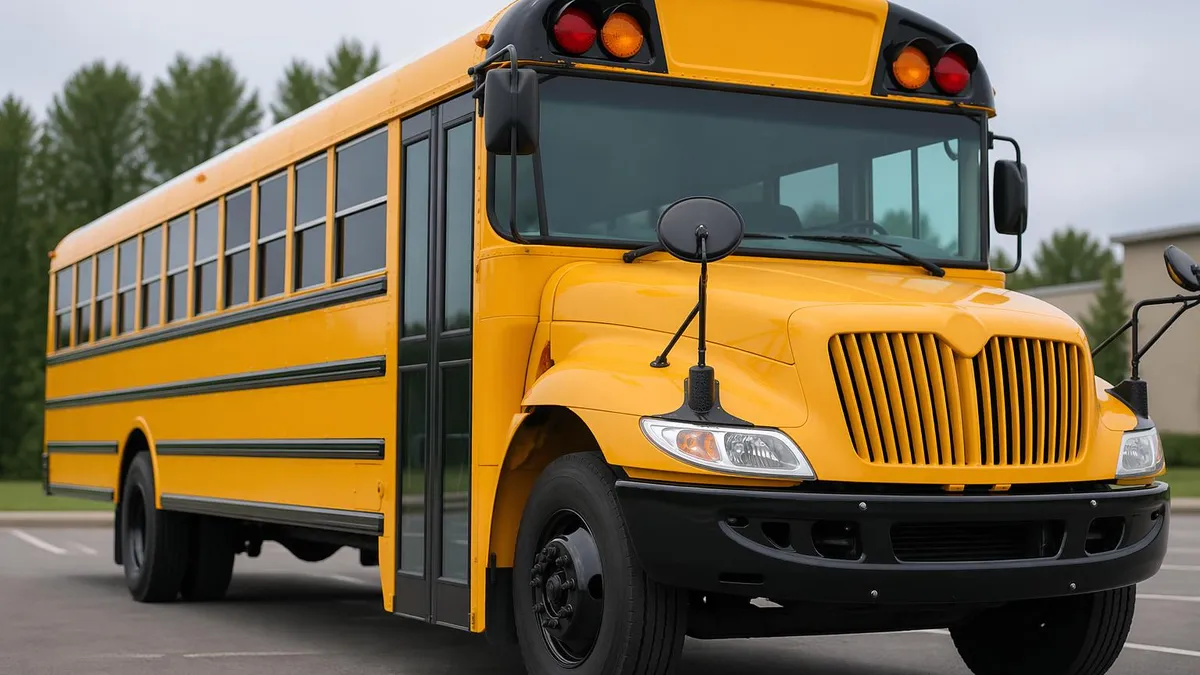
CDL Career Overview: Driving Jobs, Salaries, and How to Get Started
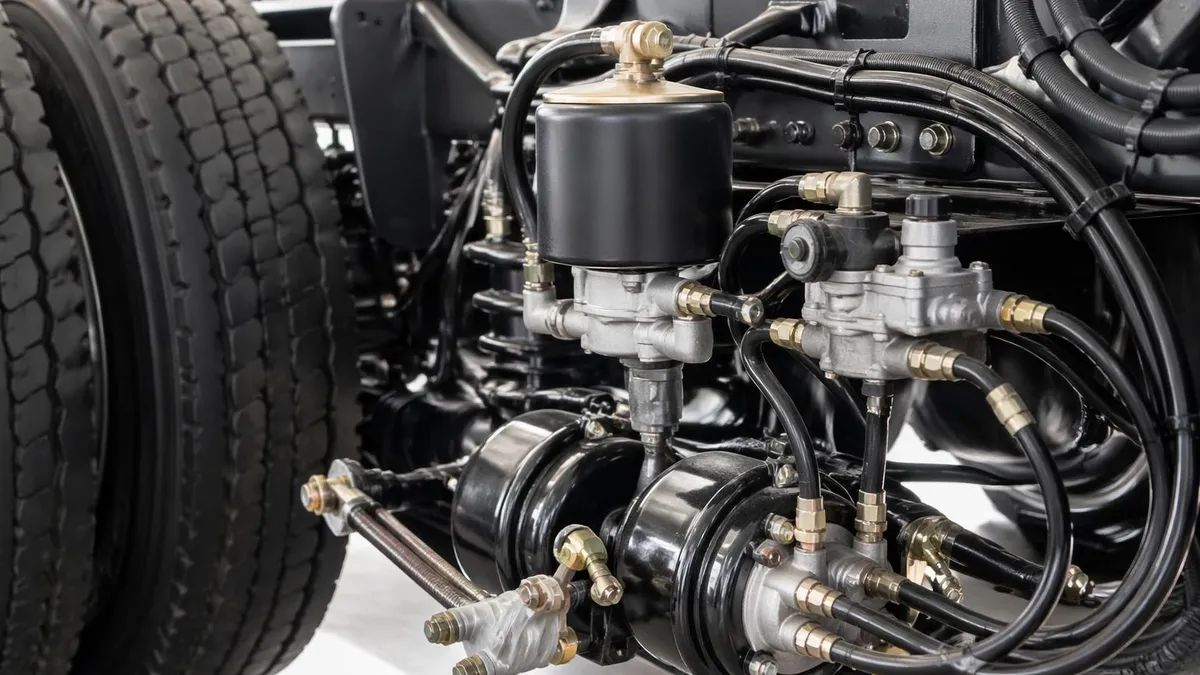
CDL Exam Eligibility: DOT Requirements, Medical Exams, and How to Qualify
CDL Hazardous Materials Study Guide and Essential Study Materials
CDL Certification Guide: DOT Requirements, Study Tips & Endorsements

CDL Practice Tests 2026: Free Online Prep for Every Endorsement
About the Author

Licensed Driving Instructor & DMV Test Specialist
Penn State UniversityRobert J. Williams graduated from Penn State University with a degree in Transportation Management and has spent 20 years as a certified driving instructor and DMV examiner consultant. He has personally coached thousands of applicants through written knowledge tests, skills assessments, and commercial driver licensing programs across more than 30 states.
Join the Discussion
Connect with other students preparing for this exam. Share tips, ask questions, and get advice from people who have been there.
View discussion (7 replies)