
CDL Class A vs Class B: Weight Limits, Vehicles, Pay, and Which to Get
Pass the CDL Class A vs Class B: Weight Limits, exam with confidence. Practice questions with detailed explanations and instant feedback on every answer. 🔎
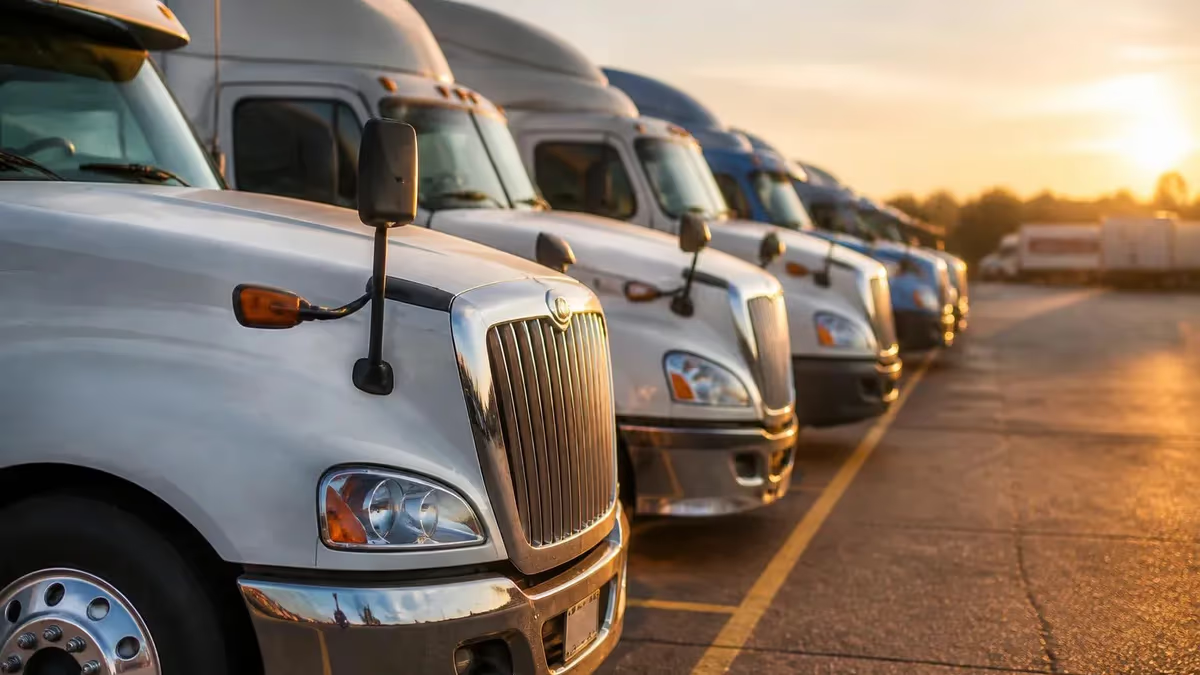
Choosing between a class A CDL and a class B CDL isn't just paperwork — it determines which trucks you can drive, how much you'll earn, and where your career goes from year one. The CDL class A vs class B decision comes down to vehicle weight ratings, endorsement options, and the types of freight or passengers you want to haul. Most drivers don't realize the gap in earning potential until they're already locked into the wrong license.
A class A CDL lets you operate combination vehicles — tractor-trailers, tankers, flatbeds — with a gross combination weight rating (GCWR) above 26,001 pounds, where the towed unit exceeds 10,000 pounds. That's the big rigs running coast-to-coast on interstates. Class B? Straight trucks, buses, dump trucks, cement mixers — single vehicles over 26,001 pounds GVWR, but anything you tow stays under 10,000. Different world.
There's also the non CDL class c category that confuses people. A non CDL class C license covers vehicles under 26,001 pounds that don't carry hazardous materials or 16+ passengers. Think delivery vans, small box trucks, airport shuttles. You don't need a CDL at all for these — just a regular driver's license with the right endorsement in some states. If you're exploring class b cdl jobs, understanding these weight cutoffs saves you months of unnecessary training.
Here's the thing: picking between Class A and Class B isn't permanent. You can upgrade later. But starting with Class A — even if you plan to drive straight trucks — gives you more flexibility from day one. Let's break down exactly what separates these two licenses and which one makes sense for your situation.
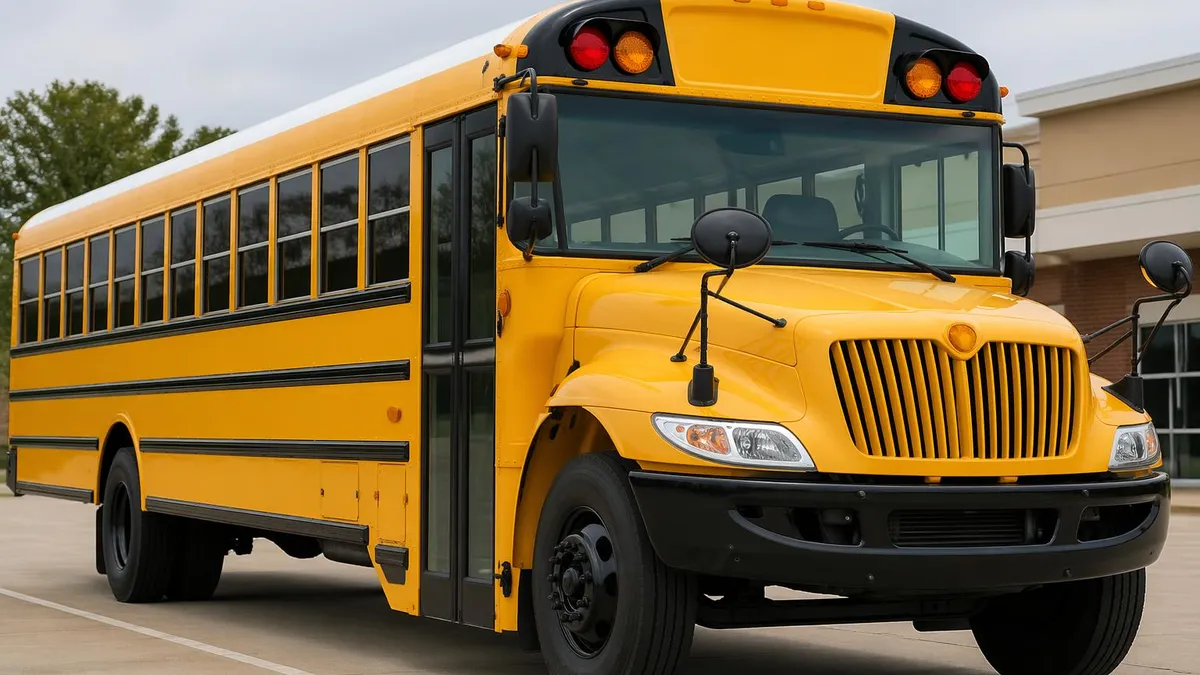
The class b cdl covers single vehicles with a GVWR over 26,001 pounds. Straight trucks, city transit buses, school buses, garbage trucks, concrete mixers — these all fall under Class B because the driver isn't managing a separate towed unit. You're handling one vehicle, period. The skills test is shorter. The training is faster. And the jobs tend to keep you closer to home.
Class A flips the equation. Once your combination weight tops 26,001 pounds with a towed unit over 10,000 pounds, federal law requires a Class A license. That means tractor-trailers, doubles, triples (where legal), and oversized loads. The pre-trip inspection alone takes twice as long because you're checking coupling devices, air brake connections, and fifth wheel assemblies that don't exist on straight trucks.
One thing that trips people up — a non-cdl class c vehicle doesn't require any CDL endorsement. If your truck weighs under 26,001 GVWR and you're not hauling hazmat or 16+ passengers, a standard license works. Plenty of delivery jobs at Amazon, FedEx Ground, and local courier companies fall into this category. No CDL school needed. If you're searching for class b cdl jobs near me, make sure the posting actually requires a CDL — some don't.
The weight threshold matters because insurance, pay, and regulation all change above 26,001 pounds. Cross that line and you're subject to FMCSA hours-of-service rules, random drug testing, and DOT physical requirements every two years. Below it? State rules vary, but the federal CDL mandate doesn't apply.
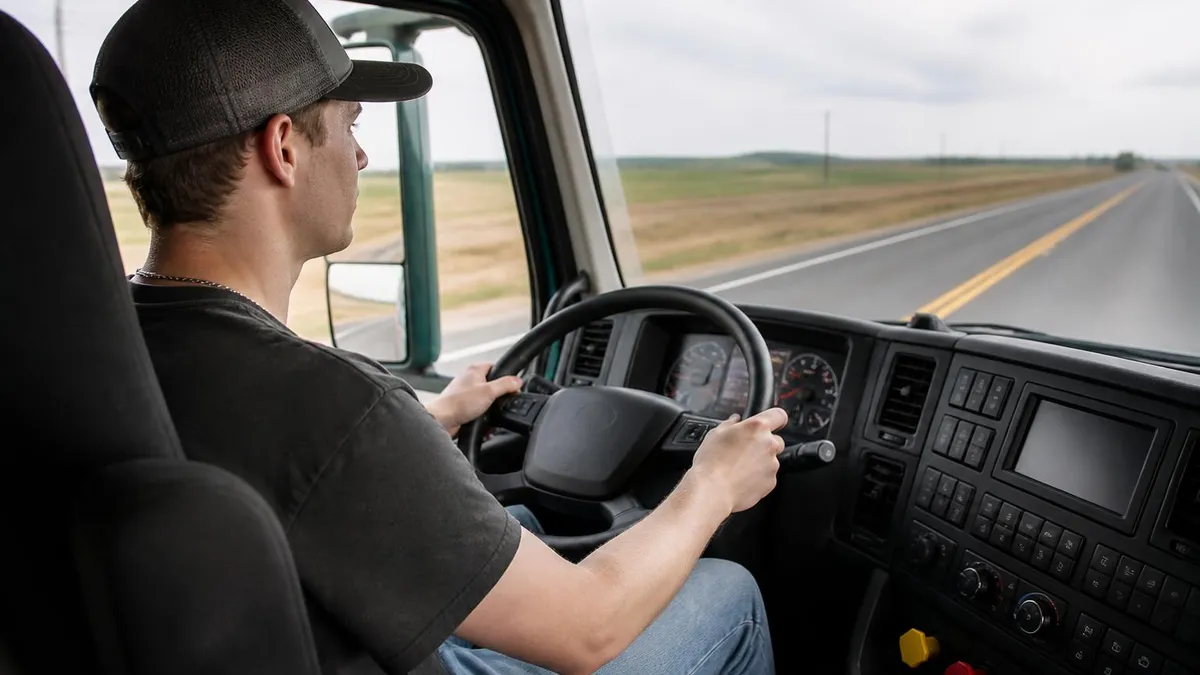
Class b cdl jobs dominate local and regional markets. Bus drivers, waste management operators, delivery drivers running box trucks — these roles keep you home every night. For some drivers, that's worth more than the extra $15,000–$20,000 a year that long-haul Class A work pays. The trade-off is real. Home time versus money. Local routes versus cross-country runs.
A non-cdl class c position might be where you start if you've never driven commercially. Amazon DSP routes, courier services, small moving companies — these get you behind the wheel of a commercial vehicle without the CDL expense. You'll learn route planning, loading protocols, and DOT basics. Not a bad launching pad if you're testing whether trucking fits your life before investing $3,000–$7,000 in CDL school.
The job market splits clearly by license type. Class A drivers haul freight for carriers like Werner, Schneider, and Swift — companies that'll pay for your training if you sign a one-year contract. Class B drivers work for municipal transit agencies, school districts, construction firms, and beverage distributors. Both markets are hiring aggressively right now. The Bureau of Labor Statistics projects 4% growth through 2032 for heavy truck drivers.
Regional Class A jobs — the sweet spot — give you the higher Class A pay without the 3-week-away-from-home lifestyle. These routes typically cover a 500-mile radius and get you home weekends. Worth looking into if the pay gap matters to you but sleeping in a truck bunk doesn't.
Vehicle Types by CDL Class
Tractor-trailers (18-wheelers): The most common Class A vehicle. GCWR typically 80,000 pounds. You'll need air brake and combination vehicle endorsements.
Tanker trucks: Liquid cargo — fuel, milk, chemicals. Requires a tanker endorsement (N) on top of Class A. Hazmat tankers need H + N = X endorsement.
Flatbed trucks: Open trailers for construction materials, lumber, steel. Securement knowledge is critical — load shifting kills drivers every year.
Doubles and triples: Two or three trailers behind one tractor. Legal in some states, requires T endorsement. Highest-paying Class A specialty.
CDL class A training takes 3 to 8 weeks at most programs — sometimes longer if you're doing nights or weekends. You'll cover air brakes, combination vehicles, pre-trip inspections, backing maneuvers, and road driving. The skills test has three parts: pre-trip, basic controls, and road test. Fail any section and you retake that section only, not the whole exam. Most programs include class b cdl training as part of the curriculum since Class A covers everything Class B does.
Cost varies wildly. Community college programs run $3,000–$5,000. Private CDL schools charge $5,000–$8,000. Carrier-sponsored training — where companies like CRST, PAM Transport, or Prime Inc. pay your tuition — costs you nothing upfront but locks you into a 6-to-12-month employment contract. Break the contract early and you owe the full tuition back. Read the fine print.
The cdl class a written exam covers general knowledge, air brakes, and combination vehicles. Three separate tests at the DMV. Class B only requires general knowledge and air brakes (if the vehicle has them). Some states let you take all written tests in one sitting. Others make you schedule separate appointments. Call your state DMV before showing up.
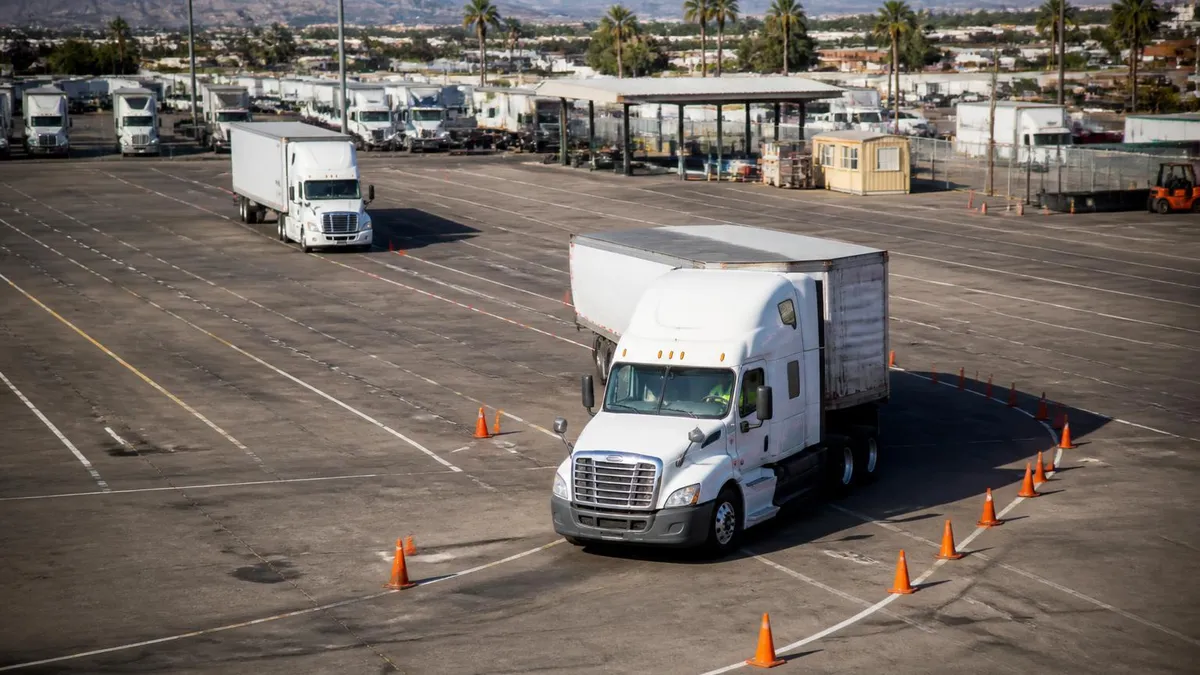
Here's what nobody tells you about CDL school: the backing maneuvers are the hardest part. Straight-line backing, offset backing, and parallel parking a 53-foot trailer — these take practice. Lots of it. If your school offers extra yard time before your test, take it. The road test is actually easier than the yard maneuvers for most students.
Class b cdl certification requirements are simpler than Class A — fewer written tests, shorter skills test, and less training time. You need to be 18 for intrastate (within your state) or 21 for interstate driving. Pass a DOT physical, provide 10 years of driving history, and clear a background check. No DUI convictions within the past 3 years. Some states are stricter — California requires an additional SPAB certificate for certain passenger vehicles.
The cdl class b skills test covers pre-trip inspection, basic vehicle controls, and an on-road driving test. No coupling/uncoupling — that's Class A only. The pre-trip takes 30–45 minutes as you walk around the vehicle calling out components to the examiner. Miss a critical item (like air brake check or steering components) and it's an automatic fail. Study your state's pre-trip checklist before test day.
One certification question that comes up constantly: can you drive Class B vehicles with a Class A license? Yes. Absolutely. A Class A CDL includes Class B and Class C privileges automatically. That's why some drivers go straight for Class A even if they plan to drive buses — it keeps every door open. The reverse doesn't work. A Class B license won't let you touch a tractor-trailer.
Medical certification matters too. The DOT physical is valid for 2 years maximum. Certain conditions — diabetes requiring insulin, sleep apnea, vision issues — can shorten your medical certificate to 1 year. You'll need to keep your medical examiner's certificate on file with your state DMV. Let it lapse and your CDL downgrades to a regular license automatically. No warning.
Class A CDL: Advantages and Drawbacks
- +Highest earning potential — OTR drivers average $65,000–$85,000 annually, owner-operators top $150,000
- +Covers ALL CDL vehicle classes — Class A includes B and C privileges automatically
- +More job variety — tractor-trailers, tankers, flatbeds, doubles, oversized loads
- +Carrier-sponsored training available — companies pay tuition in exchange for employment contracts
- +Strong demand nationwide — ATA reports a shortage of 78,000 truck drivers in 2024
- +Path to owner-operator status — the highest-paid trucking career requires Class A
- −Extended time away from home — OTR routes mean 2–3 weeks on the road between home time
- −Longer and more expensive training — 3–8 weeks, $3,000–$8,000 at private schools
- −Higher insurance costs — liability premiums for combination vehicles exceed Class B rates
- −More complex skills test — coupling, uncoupling, and combination vehicle maneuvers required
- −Physical toll — long hours sitting, irregular sleep, limited exercise, truck stop food
- −Stricter regulations — ELD mandate, 14-hour driving window, 70-hour weekly maximum
Pros and Cons at a Glance
| Pros | Cons |
|---|---|
| Covers ALL CDL vehicle classes — Class A includes B and C privileges automatically | Higher insurance costs — liability premiums for combination vehicles exceed Class B rates |
| More job variety — tractor-trailers, tankers, flatbeds, doubles, oversized loads | More complex skills test — coupling, uncoupling, and combination vehicle maneuvers required |
| Carrier-sponsored training available — companies pay tuition in exchange for employment contracts | Physical toll — long hours sitting, irregular sleep, limited exercise, truck stop food |
Finding class b cdl jobs near me is easier than most people expect. School districts, city transit agencies, waste management companies, and construction firms all hire Class B drivers — and these employers are everywhere. Unlike Class A long-haul jobs that require relocation or living on the road, Class B positions are inherently local. You drive out in the morning and come home at night. That's the entire value proposition.
The cdl class you choose shapes your career trajectory more than any single employer. Class A opens the door to linehaul, regional, and OTR positions with major carriers. Class B keeps you in your metro area working predictable routes. Neither is objectively better — it depends on what you want. A 22-year-old with no family might love OTR for a few years, banking $70,000 annually while having zero living expenses. A parent with school-age kids might prefer a $52,000 bus driving job that follows the school calendar.
Salary data tells the story clearly. According to the Bureau of Labor Statistics, the median pay for heavy and tractor-trailer truck drivers (mostly Class A) was $54,320 in 2023. Light truck and delivery drivers (mix of CDL and non-CDL) earned a median of $39,990. But medians hide the range — experienced Class A drivers with hazmat and tanker endorsements routinely clear $80,000–$95,000. Class B drivers with passenger endorsements working for transit agencies in major cities earn $55,000–$70,000 with full union benefits.
Don't overlook the benefits gap. Municipal and school district Class B jobs often come with pension plans, health insurance from day one, and guaranteed raises on a step schedule. Class A carrier jobs pay more in gross salary but benefits vary wildly. Some carriers offer excellent health plans; others give you a bare-bones option with a $5,000 deductible.
CDL Application Checklist
- ✓Confirm age requirement — 18 for intrastate, 21 for interstate CDL
- ✓Schedule and pass DOT physical with a certified medical examiner
- ✓Gather 10 years of address and employment history for application
- ✓Obtain Commercial Learner's Permit (CLP) by passing written knowledge tests
- ✓Hold CLP for minimum 14 days before scheduling skills test (federal requirement)
- ✓Complete entry-level driver training (ELDT) at a registered program
- ✓Practice pre-trip inspection until you can name every component from memory
- ✓Pass the three-part skills test: pre-trip, basic controls, road driving
- ✓Apply for endorsements — hazmat requires separate TSA background check
- ✓Submit medical certificate to state DMV within 15 days of receiving your CDL
A non cdl class c license covers the gap between regular passenger vehicles and full commercial trucks. The FMCSA defines it as any single vehicle under 26,001 pounds GVWR — or any vehicle towing a unit under 10,001 pounds — that either carries 16+ passengers or hauls placarded hazardous materials. But here's where it gets confusing: if you're NOT carrying hazmat and NOT transporting 16+ passengers, you don't need any CDL at all. Your standard driver's license handles it.
The non-cdl class c license question comes up most often with delivery drivers. You're driving a Sprinter van for Amazon. The van weighs 11,000 pounds loaded. Do you need a CDL? No. Not even close to the 26,001-pound threshold. What about a 26-foot Penske rental truck? Check the door sticker — most are rated at 22,000–25,999 GVWR. Still under the limit. Still non-CDL. But that same truck loaded past its GVWR rating? Now you've got a DOT violation regardless of your license class.
Some states create their own non-CDL commercial license categories that go beyond federal rules. California has a non-commercial Class C license that covers standard passenger vehicles plus small tow combinations. New York has a CDL Class C that requires a CDL for certain passenger vehicles that other states don't. Always check your state's DMV website — don't assume federal rules are the only ones that apply.
Worth knowing: if you drive a non-CDL vehicle for a company that operates vehicles requiring CDLs, you might still be subject to the employer's drug testing pool under FMCSA rules. The regulations follow the company's fleet, not just the vehicle you personally drive. Ask your employer about their DOT compliance program before you assume you're exempt.
A cdl class a practice test is the best way to gauge your readiness before spending money on the written exam at the DMV. The general knowledge test has 50 questions — you need 40 correct to pass (80%). Air brakes adds another 25 questions. Combination vehicles adds 20 more. That's 95 questions total for Class A written exams. Miss too many and you're paying the retest fee plus waiting for your next appointment slot.
The class c cdl written test is shorter — just general knowledge and potentially air brakes. But don't let "shorter" fool you into thinking "easier." The general knowledge section covers vehicle inspections, cargo securement, hazmat placarding basics, space management, and emergency procedures. Every CDL class shares this foundation. Whether you're testing for Class A, B, or C, you'll face the same 50 general knowledge questions drawn from the same question pool.
Study strategy matters more than study time. Drivers who use practice tests consistently score 15–20% higher on the actual exam than those who only read the CDL manual. The manual is 100+ pages of dense federal regulation language. Practice tests break it into digestible chunks and show you exactly which topics the DMV emphasizes. Air brakes and pre-trip inspection generate the most failed questions — focus your time there.
Free practice tests are available from your state DMV website and from sites like PracticeTestGeeks. The question format mirrors the actual exam: multiple choice with four options, one correct answer. Take at least five full-length practice tests before scheduling your DMV appointment. If you're scoring below 85% consistently, you're not ready. The 80% passing threshold sounds generous until you realize the questions get increasingly specific about regulation numbers, weight limits, and inspection procedures.
The Entry-Level Driver Training (ELDT) rule requires all first-time CDL applicants and those adding endorsements to complete training from an FMCSA-registered provider. You can't just study on your own and walk into the DMV anymore. Your training provider must submit your completion to the Training Provider Registry (TPR) before you can schedule your skills test. This applies to both Class A and Class B — no exceptions.
Looking for free cdl classes near me? They exist — but they're harder to find than paid programs. Workforce development boards in most states offer CDL training grants through the Workforce Innovation and Opportunity Act (WIOA). You'll need to qualify based on income, employment status, or veteran status. The training itself runs through community colleges or approved private schools, but the grant covers tuition partially or fully. Apply early — funding runs out fast, especially in Q1 when new fiscal allocations drop.
What is a non cdl class c license and when do you actually need one? In most states, you don't — the standard Class D license covers all non-CDL vehicles. But some states (California, for example) have a separate non-commercial Class C that's essentially your standard driver's license by another name. The confusion comes from mixing federal CDL class definitions with state license class labels. Federal CDL classes are A, B, and C. State non-CDL classes use letters too — but they're a completely different system. Always ask: "Does this job require a CDL?" before worrying about which class.
Some carriers and trucking companies offer free CDL training in exchange for employment commitments. CRST, Roehl, Schneider, and Prime all have programs where they cover your tuition, house you during training, and guarantee a job upon completion. The catch: you sign a contract agreeing to work for them for 6–12 months. Leave early and you owe the training cost — typically $3,500–$6,000. It's not a bad deal if you plan to drive for them anyway. Just don't sign without reading the early termination clause.
Veterans have extra options. The GI Bill covers CDL training at approved schools. Some programs specifically target transitioning military — Troops Into Transportation, Helmets to Hardhats. The VA also offers vocational rehabilitation for veterans with service-connected disabilities who need career retraining. Check with your local VA office before paying out of pocket.
You can continue preparing with the printable cdl practice test, which includes answer explanations for every question.
You can continue preparing with the air brakes practice test, which includes answer explanations for every question.
CDL Practice Test Questions
Prepare for the CDL - Commercial Driver's License exam with our free practice test modules. Each quiz covers key topics to help you pass on your first try.
CDL Alabama CDL Combination Vehicles Pract...
CDL Exam Questions covering Alabama CDL Combination Vehicles Practice Test. Master CDL Test concepts for certification prep.
CDL Alabama CDL General Knowledge Practice...
Free CDL Practice Test featuring Alabama CDL General Knowledge Practice Test #. Improve your CDL Exam score with mock test prep.
CDL Alabama General Knowledge CDL Practice...
CDL Mock Exam on Alabama General Knowledge CDL Practice Test. CDL Study Guide questions to pass on your first try.
CDL Airbrakes Practice Test
CDL Test Prep for Airbrakes Practice Test. Practice CDL Quiz questions and boost your score.
CDL Air Brakes Practice Test
CDL Questions and Answers on Air Brakes Practice Test. Free CDL practice for exam readiness.
CDL CLASS A COMMERCIAL DRIVER'S LICENSE PR...
CDL Mock Test covering CLASS A COMMERCIAL DRIVER'S LICENSE PRACTICE TEST. Online CDL Test practice with instant feedback.
CDL Class B Commercial Driver's License Pr...
Free CDL Quiz on Class B Commercial Driver's License Practice Test. CDL Exam prep questions with detailed explanations.
CDL Combination Vehicles Practice Test
CDL Practice Questions for Combination Vehicles Practice Test. Build confidence for your CDL certification exam.
CDL Doubles and Triples Practice Test
CDL Test Online for Doubles and Triples Practice Test. Free practice with instant results and feedback.
CDL Doubles Triples Practice Test
CDL Study Material on Doubles Triples Practice Test. Prepare effectively with real exam-style questions.
CDL General Knowledge Practice Test
Free CDL Test covering General Knowledge Practice Test. Practice and track your CDL exam readiness.
CDL General Knowledge Practice Test1
CDL Exam Questions covering General Knowledge Practice Test1. Master CDL Test concepts for certification prep.
CDL Hazardous Materials (Hazmat) Practice ...
Free CDL Practice Test featuring Hazardous Materials (Hazmat) Practice Test. Improve your CDL Exam score with mock test prep.
CDL Hazardous Materials Hazmat Practice Test
CDL Mock Exam on Hazardous Materials Hazmat Practice Test. CDL Study Guide questions to pass on your first try.
CDL Hazmat Practice Test
CDL Test Prep for Hazmat Practice Test. Practice CDL Quiz questions and boost your score.
CDL Passenger Transport Practice Test
CDL Questions and Answers on Passenger Transport Practice Test. Free CDL practice for exam readiness.
CDL Road Signs and Signals Practice Test
CDL Mock Test covering Road Signs and Signals Practice Test. Online CDL Test practice with instant feedback.
CDL School Bus Endorsement Practice Test
Free CDL Quiz on School Bus Endorsement Practice Test. CDL Exam prep questions with detailed explanations.
CDL School Bus Endorsement S Practice Test
CDL Practice Questions for School Bus Endorsement S Practice Test. Build confidence for your CDL certification exam.
CDL Tanker Practice Test
CDL Test Online for Tanker Practice Test. Free practice with instant results and feedback.
CDL Class A Commercial Driver's License Pr...
CDL Study Material on Class A Commercial Driver's License Practice Test -1. Prepare effectively with real exam-style questions.
CDL Class A Driver's License Practice Test -2
Free CDL Test covering Class A Driver's License Practice Test -2. Practice and track your CDL exam readiness.
CDL Class A Driver's License Practice Test -3
CDL Exam Questions covering Class A Driver's License Practice Test -3. Master CDL Test concepts for certification prep.
CDL Class A Driver's License Practice Test -5
Free CDL Practice Test featuring Class A Driver's License Practice Test -5. Improve your CDL Exam score with mock test prep.
CDL Class B Commercial Driver's License Pr...
CDL Mock Exam on Class B Commercial Driver's License Practice Test -2. CDL Study Guide questions to pass on your first try.
CDL Class C CDL with Hazmat Endorsement Pr...
CDL Test Prep for Class C CDL with Hazmat Endorsement Practice Test. Practice CDL Quiz questions and boost your score.
CDL Class C CDL with Hazmat Endorsement Pr...
CDL Questions and Answers on Class C CDL with Hazmat Endorsement Practice Test -2. Free CDL practice for exam readiness.
CDL Class C CDL with Hazmat Endorsement Pr...
CDL Mock Test covering Class C CDL with Hazmat Endorsement Practice Test -3. Online CDL Test practice with instant feedback.
Classes for cdl class a are available through three main channels: community colleges, private truck driving schools, and carrier-sponsored programs. Community colleges offer the best value — $3,000–$5,000 for a complete program with financial aid eligibility. Private schools are faster (some compress training into 3 weeks) but cost $5,000–$8,000 with fewer financing options. Carrier-sponsored programs are free upfront but come with employment obligations.
A class a cdl practice test should be part of your daily study routine from day one of training. The written exams cover three areas: general knowledge (50 questions), air brakes (25 questions), and combination vehicles (20 questions). You need 80% on each section — they're graded separately. Failing one means retaking only that section, not all three. Most CDL schools include practice tests in their curriculum, but additional practice on your own time makes a measurable difference in pass rates.
The skills test is where Class A and Class B training really diverge. Class A adds coupling and uncoupling procedures — connecting and disconnecting the tractor from the trailer. You'll demonstrate this in front of the examiner, calling out each step: secure the area, check the kingpin, position the tractor, back under, lock the fifth wheel, connect airlines, test the connection. Skip a step or do them out of order and it's points off. Enough missed points and you fail.
Bottom line: if you can afford the extra 2–4 weeks of training and you're even slightly interested in driving tractor-trailers someday, get Class A. The additional training cost is minimal compared to the lifetime earning difference. Class B is right for drivers who know exactly what they want — bus driving, local delivery, construction — and have no interest in over-the-road trucking. Both are solid careers. Both are in demand. Pick the one that matches your life.
Sample CDL Practice Questions
Try these questions from our free CDL practice tests. The correct answer and an explanation follow each question.
A Class A CDL is required to operate any combination of vehicles with a gross vehicle weight rating (GVWR) of _____ or more, provided the towed unit has a GVWR exceeding 10,000 pounds.
- A. 16,001 lbs
- B. 26,001 lbs
- C. 33,001 lbs
- D. 10,001 lbs
Answer: B. 26,001 lbs
Federal regulations define a Class A vehicle as any combination with a combined GVWR of 26,001 lbs or more, where the towed vehicle(s) exceed 10,000 lbs GVWR. This threshold distinguishes Class A from Class B and C requirements.
Which of the following correctly describes a vehicle that requires a Class A CDL rather than a Class B CDL?
- A. A single straight truck with a GVWR of 33,000 lbs
- B. A bus designed to transport 24 passengers
- C. A tractor-trailer combination with a combined GVWR of 80,000 lbs where the trailer GVWR exceeds 10,000 lbs
- D. A straight truck towing a trailer with a combined GVWR of 24,000 lbs
Answer: C. A tractor-trailer combination with a combined GVWR of 80,000 lbs where the trailer GVWR exceeds 10,000 lbs
Class A is defined by a combination vehicle where the total GVWR is 26,001 lbs or more AND the towed unit exceeds 10,000 lbs. A tractor-trailer at 80,000 lbs combined clearly meets both criteria. A single heavy straight truck (no towed unit exceeding 10,000 lbs) falls under Class B.
If you are applying for a Class B CDL, you will be required ___ of the ______ versions of a pre-trip inspection in the vehicle you have brought with you for testing.
- A. One, five
- B. One, three
- C. Two, three.
- D. Three, three
- E. Two, four.
Answer: B. One, three
For a Class B CDL skills test, applicants are required to perform one of the three versions of the pre-trip inspection. This inspection must be conducted on the specific vehicle brought for testing. The different versions ensure comprehensive knowledge of vehicle components and safety checks relevant to Class B vehicles.
During the CDL skills test for a Class A vehicle, which of the following is NOT one of the three required test components?
- A. Pre-trip vehicle inspection
- B. Basic vehicle control maneuvers
- C. Emergency brake pressure test
- D. On-road driving test
Answer: C. Emergency brake pressure test
The three mandatory components of the CDL skills test are the pre-trip inspection, basic vehicle controls (backing, turning, coupling/uncoupling), and the on-road driving test. An emergency brake pressure test is not a standalone required component.
CDL Questions and Answers
CDL Career Overview: Driving Jobs, Salaries, and How to Get Started
CDL Exam Eligibility: DOT Requirements, Medical Exams, and How to Qualify
CDL Hazardous Materials Study Guide and Essential Study Materials
CDL General Knowledge Test: What You Need to Know About Subject Knowledge
CDL Certification Guide: DOT Requirements, Study Tips & Endorsements
About the Author

Licensed Driving Instructor & DMV Test Specialist
Penn State UniversityRobert J. Williams graduated from Penn State University with a degree in Transportation Management and has spent 20 years as a certified driving instructor and DMV examiner consultant. He has personally coached thousands of applicants through written knowledge tests, skills assessments, and commercial driver licensing programs across more than 30 states.
Join the Discussion
Connect with other students preparing for this exam. Share tips, ask questions, and get advice from people who have been there.
View discussion (7 replies)