
CDL Career Overview: Driving Jobs, Salaries, and How to Get Started 2026 October
Boost your class b driving careers exam score with practice questions and detailed answer explanations. 🧠 Track your progress with instant feedback.
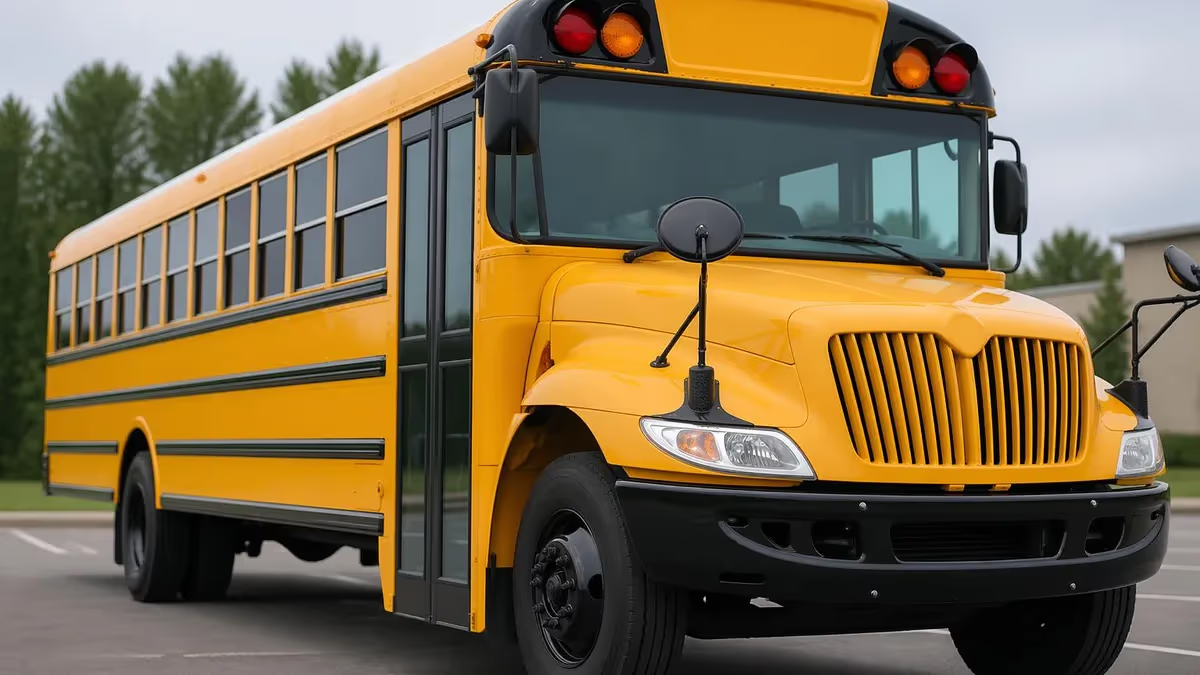
Commercial driving isn't one job — it's dozens. From local delivery runs that get you home every night to cross-country hauls paying six figures, a CDL opens doors most people don't even know exist. This career overview breaks down what's actually out there, who's hiring, and whether the investment in training makes financial sense for you in 2025.
The industry added over 50,000 positions last year alone, and the driver shortage keeps pushing wages higher. Class b driving careers alone cover bus operators, delivery truck drivers, and construction vehicle operators — roles that rarely require overnight travel. Shuttle driver careers at airports, hotels, and corporate campuses offer steady schedules with benefits that rival office jobs. Not bad for a license you can earn in weeks.
Whether you're eyeing long-haul trucking or a Monday-through-Friday route gig, this guide covers the full spectrum. We'll walk through salary ranges by CDL class, compare company-sponsored training to independent schools, and flag the career paths with the strongest growth projections. You'll also find practice test links throughout — because passing the CDL exam is step one.
Here's what most guides skip: the hidden costs, the lifestyle trade-offs, and which employers actually deliver on their recruiting promises. That matters more than any salary number on a job board.
Shuttle driver careers keep growing because every airport, hospital system, and corporate campus needs reliable transport. These positions typically require a Class B CDL with a passenger endorsement — no hazmat, no tanker certification, no 18-wheelers. Starting pay sits around $38,000 to $45,000 depending on the metro area, with union positions pushing past $55,000.
The broader category of cdl careers splits into two worlds. Long-haul drivers earn more but sacrifice home time. Local and regional drivers earn less on paper but avoid the burnout that pushes 90% of over-the-road rookies out within the first year. That turnover stat isn't a scare tactic — it's the single most important number in trucking.
What separates drivers who last from those who quit? Realistic expectations. The first six months are rough regardless of the route type. You're learning to back a trailer into tight docks, managing electronic logging devices, and dealing with dispatch pressure. After that adjustment period, most drivers settle into a rhythm. The ones who chose the right niche — local beer delivery, school bus, LTL freight — tend to stay for decades.
Don't overlook specialized endorsements either. A tanker endorsement opens chemical and fuel transport roles paying $65,000+. Hazmat certification stacks on top of that.
Coca Cola cdl careers show up on every job board, every week, in nearly every state. The company runs one of the largest private fleets in North America — over 7,000 delivery trucks — and they're almost always hiring. Routes are local, pay starts around $55,000 with overtime pushing many drivers past $70,000, and the benefits package includes health insurance from day one. That combination explains why Coca-Cola driver positions fill faster than most.
Non cdl careers in the transportation sector deserve a mention too. Box trucks under 26,001 pounds don't require a commercial license at all. Amazon, FedEx Ground contractors, and dozens of last-mile delivery companies hire drivers with nothing more than a clean regular license. The pay is lower — typically $35,000 to $48,000 — but the barrier to entry is zero training cost and zero testing.
The trade-off is clear. CDL holders earn $15,000 to $25,000 more per year on average, but they invest 4 to 8 weeks in training and pass a skills test that roughly 30% of candidates fail on the first attempt. Non-CDL delivery jobs let you start earning immediately. Many drivers use non-CDL positions as a stepping stone — driving for Amazon while saving up for CDL school tuition.
Smart move? Depends on your timeline. If you need income this month, start without the CDL. If you can invest two months, the CDL pays for itself within the first year of higher wages.
CDL Career Paths by License Class
Vehicles: Tractor-trailers, tanker trucks, flatbeds, livestock carriers — any combination vehicle over 26,001 lbs with a towed unit exceeding 10,000 lbs.
Typical roles: Over-the-road trucking, regional freight, tanker hauling, auto transport, heavy equipment moving. These are the highest-paying CDL positions, with experienced drivers earning $65,000 to $95,000 annually.
Lifestyle: Expect 2 to 3 weeks on the road for OTR positions. Regional roles offer weekly home time. Dedicated routes — like Walmart or UPS Freight — provide the best schedule predictability.
Coca Cola careers cdl positions aren't the only major brand hiring aggressively. PepsiCo, Sysco, US Foods, and McLane all operate massive private fleets with similar pay structures. The pattern is consistent: food and beverage distributors pay above-average wages because the work is physically demanding — you're not just driving, you're unloading 300 to 700 cases per stop.
Tanker driver careers represent one of the highest-paying niches in commercial driving. Fuel haulers, chemical transporters, and milk tanker operators regularly earn $70,000 to $90,000 with a few years of experience. The catch? Tanker driving requires additional endorsements, stricter background checks, and comfort with handling hazardous or sensitive cargo. Spills aren't paperwork problems — they're environmental incidents.
Regional LTL carriers offer a middle ground that many drivers overlook. Companies like Estes Express, Southeastern Freight Lines, and ABF Freight run terminal-to-terminal routes with predictable schedules and competitive pay. You're home most nights, the freight is palletized (no hand-unloading), and the equipment is well-maintained because damaged freight costs the company money.
The fastest path to $80,000+ without going over-the-road? Combine a Class A CDL with tanker and hazmat endorsements, then apply to fuel distribution companies. Many offer sign-on bonuses between $5,000 and $15,000.
Your cdl career trajectory depends heavily on what you do in the first two years. Most training companies — Swift, Werner, CRST — lock new drivers into 12-month contracts with below-market pay. It's a trade-off: they cover your training costs (worth $4,000 to $8,000), but you're earning $0.38 to $0.44 per mile while experienced drivers at those same companies make $0.55+. Break the contract early and you owe the full tuition back.
LTL freight careers offer a different entry point entirely. Less-than-truckload carriers like FedEx Freight, XPO Logistics, and Old Dominion hire drivers for dock-to-driver programs where you start in the warehouse, earn your CDL on the company's dime, and transition to driving within 6 to 12 months. The starting warehouse pay is modest — around $18 to $22 per hour — but you graduate into driving roles paying $60,000 to $80,000 with zero training debt.
Independent CDL schools charge $3,000 to $7,000 for programs lasting 3 to 8 weeks. Community colleges offer longer programs (12 to 16 weeks) at similar or lower cost, often with financial aid eligibility. The CareerLink system in Pennsylvania and similar workforce development programs in other states sometimes cover the full tuition for qualifying applicants.
Which path is best? Company-sponsored training if you can't afford school. Community college if you want the most thorough preparation. Private school if you want speed. Dock-to-driver if you want zero risk.
CDL Career Pros and Cons
- +Median pay exceeds $54,000 with top earners clearing $90,000+ annually
- +Persistent driver shortage means job security and negotiating use
- +Multiple career paths — local, regional, OTR, specialized — fit different lifestyles
- +Entry requires weeks of training, not years of college or graduate school
- +Company-sponsored training eliminates upfront costs for many new drivers
- +Endorsements let you increase earning potential without changing employers
- −Over-the-road positions require extended time away from home and family
- −Physical demands — loading, pre-trip inspections, long sitting — take a health toll
- −First-year turnover exceeds 90% at many large carriers due to unrealistic expectations
- −Insurance and fuel costs make owner-operator transitions financially risky
- −Hours-of-service regulations limit earning potential for mileage-paid drivers
- −Automated driving technology creates long-term uncertainty for some route types
Pros and Cons at a Glance
| Pros | Cons |
|---|---|
| Persistent driver shortage means job security and negotiating use | Over-the-road positions require extended time away from home and family |
| Multiple career paths — local, regional, OTR, specialized — fit different lifestyles | Physical demands — loading, pre-trip inspections, long sitting — take a health toll |
| Entry requires weeks of training, not years of college or graduate school | Insurance and fuel costs make owner-operator transitions financially risky |
| Company-sponsored training eliminates upfront costs for many new drivers | Hours-of-service regulations limit earning potential for mileage-paid drivers |
| Endorsements let you increase earning potential without changing employers | Automated driving technology creates long-term uncertainty for some route types |
Amazon cdl careers exploded after 2020 when the company decided to build its own freight network instead of relying entirely on third-party carriers. Amazon Freight now operates thousands of trailers, and they're hiring CDL-A drivers at rates competitive with UPS and FedEx — starting around $24 to $28 per hour depending on the region. The schedules are predictable because Amazon's logistics algorithms optimize everything, including driver routes.
Route driver careers cover a surprisingly wide range of positions beyond package delivery. Beverage distributors, uniform rental companies (Cintas, UniFirst), linen services, and medical supply firms all employ route drivers. These jobs combine driving with customer-facing sales and service — you're delivering product, building relationships, and sometimes upselling. Total compensation including commissions can reach $55,000 to $75,000.
The distinction between a route driver and a long-haul trucker matters more than most people realize. Route drivers know their stops, build rapport with customers, and rarely deal with loading dock chaos at unfamiliar warehouses. That predictability reduces stress significantly. Long-haul drivers earn more per mile but face constant uncertainty — will the shipper be ready? Will the receiver have an open dock? Will you sit for six hours waiting to unload?
Pick your personality fit, not just the pay rate. Introverts tend to prefer OTR solitude. Extroverts thrive on routes.
CDL Career Launch Checklist
- ✓Verify you meet minimum age requirements — 18 for intrastate, 21 for interstate CDL
- ✓Get a DOT physical exam and obtain your medical examiner's certificate
- ✓Study for and pass the CDL written knowledge test at your local DMV
- ✓Obtain your Commercial Learner's Permit (CLP) — valid for 180 days in most states
- ✓Complete a CDL training program — company-sponsored, private school, or community college
- ✓Log required behind-the-wheel training hours with a licensed CDL instructor
- ✓Schedule and pass the CDL skills test: pre-trip inspection, basic controls, road test
- ✓Add endorsements (hazmat, tanker, passenger) based on your target career path
- ✓Research employers — compare pay, home time, equipment age, and driver reviews on forums
- ✓Apply to 3-5 companies simultaneously and negotiate using competing offers
Careerlink free cdl training programs exist in Pennsylvania and several other states under different names. These workforce development initiatives cover tuition, books, and sometimes even living expenses for qualifying applicants. Eligibility typically requires unemployment or underemployment, residence in the service area, and passing a drug screening. The catch? Slots are limited and the application process can take 4 to 8 weeks before you're approved.
CDL A careers — meaning Class A specifically — remain the most lucrative tier of commercial driving. The wage gap between Class A and Class B averages $12,000 to $18,000 annually, which explains why most career-focused drivers pursue the higher license even if their first job only requires Class B. Training for Class A takes 2 to 4 weeks longer than Class B programs, but that extra investment pays dividends for the entire length of your driving career.
State-funded training isn't limited to CareerLink. The WIOA (Workforce Innovation and Opportunity Act) funds CDL programs through American Job Centers nationwide. Veterans can use GI Bill benefits at approved CDL schools — some programs are fully covered with a housing allowance on top. Vocational rehabilitation programs in every state also fund CDL training for individuals with qualifying disabilities.
Free training sounds too good to be true. It's not — but you'll wait longer to start, and program quality varies wildly. Research graduation rates and employer partnerships before committing to any program, paid or free.
LTL careers deserve more attention than they get. Less-than-truckload freight is the backbone of business-to-business shipping — smaller shipments consolidated onto single trailers running between terminals. The work is steady because LTL volume correlates with overall economic activity, not seasonal spikes. Companies like Old Dominion, Estes, SAIA, and XPO run thousands of routes daily.
CDL career opportunities keep expanding beyond traditional trucking. Waste management companies, utility crews, fire departments, and municipal governments all need CDL holders. A garbage truck driver in New York City earns $80,000+ with benefits and a pension — that's a career, not a fallback. Snow plow operators in northern states earn overtime premiums that push winter earnings well above their base salary.
The gig economy has reached trucking too. Load boards like DAT and Truckstop.com let owner-operators find freight without committing to a single carrier. Relay apps from Uber Freight and Convoy offer guaranteed rates with quick payment — sometimes within 48 hours of delivery. These platforms work best for experienced drivers who understand lane economics and know which loads to reject.
Bottom line: the CDL isn't just a trucking license. It's a credential that opens doors across construction, public safety, waste management, transit, and logistics. The career opportunities expand the longer you hold the license and the more endorsements you stack.
Every CDL holder must pass a DOT physical exam every 24 months. Conditions like uncontrolled diabetes, certain heart conditions, and vision below 20/40 (corrected) can disqualify you. Get your physical done before investing in training — don't discover a disqualifying condition after you've paid tuition. The exam costs $75 to $150 at most urgent care clinics and certified medical examiners.
A career in truck driving starts with a single decision: which CDL class fits your goals? Class A opens every door but requires more training. Class B gets you working faster in local positions. Neither is objectively better — they serve different lifestyles and income targets. Most career advisors recommend Class A unless you're certain you want bus driving or local delivery exclusively.
PA CareerLink CDL training represents one of the strongest state-funded programs in the country. Pennsylvania's workforce development system partners with approved CDL schools across the state, covering tuition for eligible residents. The program has placed thousands of drivers into careers since its inception, and employer partners include major carriers who hire directly from the program's graduating classes.
Beyond Pennsylvania, similar programs operate under different names: Texas Workforce Commission, California EDD, Florida CareerSource, and Georgia's WorkSource. The common thread? Government-funded training designed to fill the driver shortage while giving unemployed or underemployed workers a path to middle-class wages. Application windows open quarterly in most states — check your local workforce office or state labor department website.
The demand side isn't slowing down. E-commerce growth, reshoring of manufacturing, and infrastructure spending all require more drivers. Autonomous trucks get headlines, but they're decades away from replacing human drivers on most routes. Your CDL will be valuable for the foreseeable future.
CDL Practice Test Questions
Prepare for the CDL - Commercial Driver's License exam with our free practice test modules. Each quiz covers key topics to help you pass on your first try.
CDL Alabama CDL Combination Vehicles Pract...
CDL Exam Questions covering Alabama CDL Combination Vehicles Practice Test. Master CDL Test concepts for certification prep.
CDL Alabama CDL General Knowledge Practice...
Free CDL Practice Test featuring Alabama CDL General Knowledge Practice Test #. Improve your CDL Exam score with mock test prep.
CDL Alabama General Knowledge CDL Practice...
CDL Mock Exam on Alabama General Knowledge CDL Practice Test. CDL Study Guide questions to pass on your first try.
CDL Airbrakes Practice Test
CDL Test Prep for Airbrakes Practice Test. Practice CDL Quiz questions and boost your score.
CDL Air Brakes Practice Test
CDL Questions and Answers on Air Brakes Practice Test. Free CDL practice for exam readiness.
CDL CLASS A COMMERCIAL DRIVER'S LICENSE PR...
CDL Mock Test covering CLASS A COMMERCIAL DRIVER'S LICENSE PRACTICE TEST. Online CDL Test practice with instant feedback.
CDL Class B Commercial Driver's License Pr...
Free CDL Quiz on Class B Commercial Driver's License Practice Test. CDL Exam prep questions with detailed explanations.
CDL Combination Vehicles Practice Test
CDL Practice Questions for Combination Vehicles Practice Test. Build confidence for your CDL certification exam.
CDL Doubles and Triples Practice Test
CDL Test Online for Doubles and Triples Practice Test. Free practice with instant results and feedback.
CDL Doubles Triples Practice Test
CDL Study Material on Doubles Triples Practice Test. Prepare effectively with real exam-style questions.
CDL General Knowledge Practice Test
Free CDL Test covering General Knowledge Practice Test. Practice and track your CDL exam readiness.
CDL General Knowledge Practice Test1
CDL Exam Questions covering General Knowledge Practice Test1. Master CDL Test concepts for certification prep.
CDL Hazardous Materials (Hazmat) Practice ...
Free CDL Practice Test featuring Hazardous Materials (Hazmat) Practice Test. Improve your CDL Exam score with mock test prep.
CDL Hazardous Materials Hazmat Practice Test
CDL Mock Exam on Hazardous Materials Hazmat Practice Test. CDL Study Guide questions to pass on your first try.
CDL Hazmat Practice Test
CDL Test Prep for Hazmat Practice Test. Practice CDL Quiz questions and boost your score.
CDL Passenger Transport Practice Test
CDL Questions and Answers on Passenger Transport Practice Test. Free CDL practice for exam readiness.
CDL Road Signs and Signals Practice Test
CDL Mock Test covering Road Signs and Signals Practice Test. Online CDL Test practice with instant feedback.
CDL School Bus Endorsement Practice Test
Free CDL Quiz on School Bus Endorsement Practice Test. CDL Exam prep questions with detailed explanations.
CDL School Bus Endorsement S Practice Test
CDL Practice Questions for School Bus Endorsement S Practice Test. Build confidence for your CDL certification exam.
CDL Tanker Practice Test
CDL Test Online for Tanker Practice Test. Free practice with instant results and feedback.
CDL Class A Commercial Driver's License Pr...
CDL Study Material on Class A Commercial Driver's License Practice Test -1. Prepare effectively with real exam-style questions.
CDL Class A Driver's License Practice Test -2
Free CDL Test covering Class A Driver's License Practice Test -2. Practice and track your CDL exam readiness.
CDL Class A Driver's License Practice Test -3
CDL Exam Questions covering Class A Driver's License Practice Test -3. Master CDL Test concepts for certification prep.
CDL Class A Driver's License Practice Test -5
Free CDL Practice Test featuring Class A Driver's License Practice Test -5. Improve your CDL Exam score with mock test prep.
CDL Class B Commercial Driver's License Pr...
CDL Mock Exam on Class B Commercial Driver's License Practice Test -2. CDL Study Guide questions to pass on your first try.
CDL Class C CDL with Hazmat Endorsement Pr...
CDL Test Prep for Class C CDL with Hazmat Endorsement Practice Test. Practice CDL Quiz questions and boost your score.
CDL Class C CDL with Hazmat Endorsement Pr...
CDL Questions and Answers on Class C CDL with Hazmat Endorsement Practice Test -2. Free CDL practice for exam readiness.
CDL Class C CDL with Hazmat Endorsement Pr...
CDL Mock Test covering Class C CDL with Hazmat Endorsement Practice Test -3. Online CDL Test practice with instant feedback.
CDL careers near me — that's the search term drivers use when they're ready to stop researching and start applying. The good news? Nearly every metro area in America has dozens of open CDL positions at any given time. The driver shortage is national, not regional. Rural areas sometimes have fewer options but compensate with lower cost of living and shorter commutes to terminals.
Pepsi cdl careers mirror the Coca-Cola model: local delivery routes, competitive pay, and physical work. PepsiCo's Frito-Lay division also hires route drivers for snack distribution — positions that technically don't require a CDL because the trucks stay under 26,001 pounds. Pepsi Beverages, however, runs heavier trucks that do require commercial licensing. Starting pay ranges from $50,000 to $68,000 with performance bonuses pushing total compensation higher.
Job search strategy matters as much as the license itself. Indeed and ZipRecruiter aggregate postings, but the best positions often fill through company websites and driver referral programs. Trucking forums — especially r/Truckers on Reddit and TruckersReport.com — provide unfiltered reviews of employers that job listings can't match. Drivers share real pay stubs, describe dispatcher quality, and warn about companies with deceptive recruiting practices.
One more tip: apply before you finish training. Most carriers extend conditional offers to students 2 to 4 weeks before graduation. Walking out of CDL school with a job already lined up eliminates the income gap that makes the training investment stressful.
Sample CDL Practice Questions
Try these questions from our free CDL practice tests. The correct answer and an explanation follow each question.
If you are driving in very hot weather, it's a good idea to check your tires every ______.
- A. 3 hours.
- B. Hour.
- C. 30 minutes.
- D. 2 hours.
- E. 45 minutes.
Answer: D. 2 hours.
Driving in very hot weather significantly increases the risk of tire overheating and failure due to increased internal pressure and stress. To mitigate this, commercial drivers should inspect their tires every two hours or every 100 miles, whichever comes first. This frequent check allows drivers to monitor tire pressure and condition, helping to prevent blowouts and ensure safe operation.
How should you brake when driving a tanker to avoid surge problems?
- A. Slam the brakes hard once
- B. Brake smoothly and increase following distance
- C. Pump the brakes rapidly
- D. Avoid braking on grades
Answer: B. Brake smoothly and increase following distance
Smooth, gradual braking and extra following distance help manage liquid surge and stopping distance.
Why must you check the manhole covers and vents before driving a tanker?
- A. To verify the fuel level
- B. To make sure they are closed and not leaking
- C. To check tire pressure
- D. To confirm the load weight
Answer: B. To make sure they are closed and not leaking
Leaking manhole covers or vents can spill product and create hazards, so they must be secure before driving.
You are driving a 40 foot truck at 35 MPH, how much space (in seconds) should you keep in front of you?
- A. 3 seconds
- B. 4 seconds
- C. 5 seconds
- D. 6 seconds
Answer: B. 4 seconds
The standard rule for commercial vehicles is to maintain a following distance of at least one second for every 10 feet of vehicle length. For a 40-foot truck, this calculation yields 4 seconds (40 feet / 10 feet per second). Since the speed is 35 MPH (not exceeding 40 MPH), no additional second is required, making 4 seconds the correct safe following distance.
CDL Questions and Answers
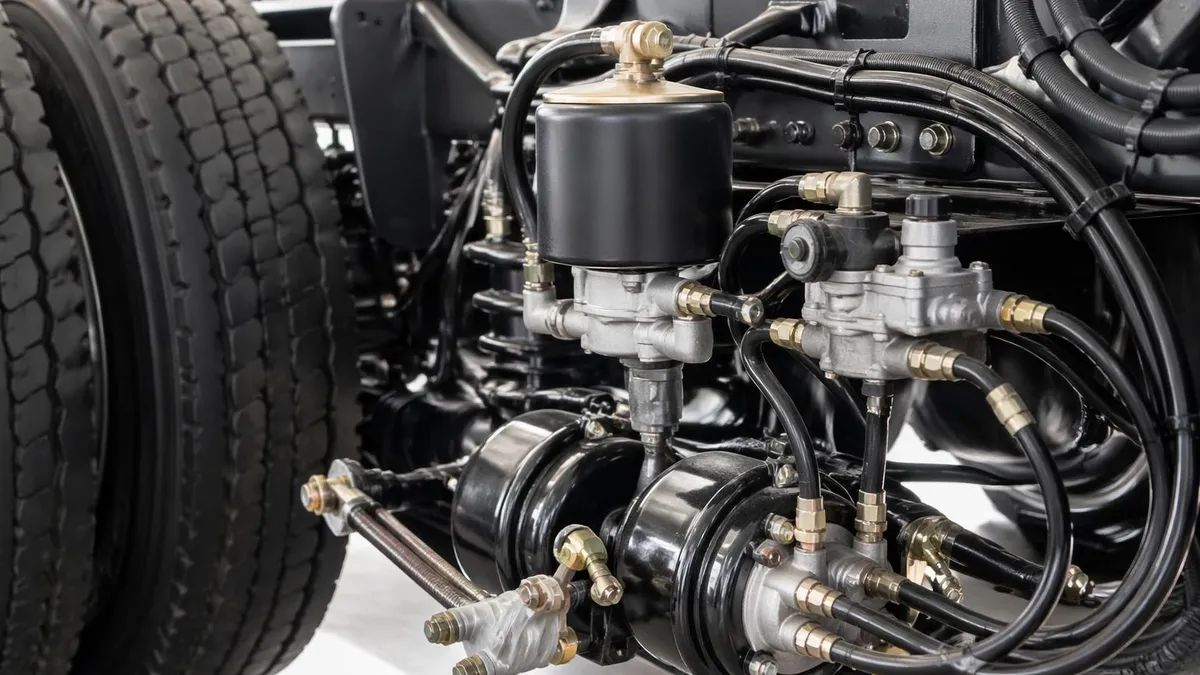
CDL Exam Eligibility: DOT Requirements, Medical Exams, and How to Qualify

CDL Hazardous Materials Study Guide and Essential Study Materials
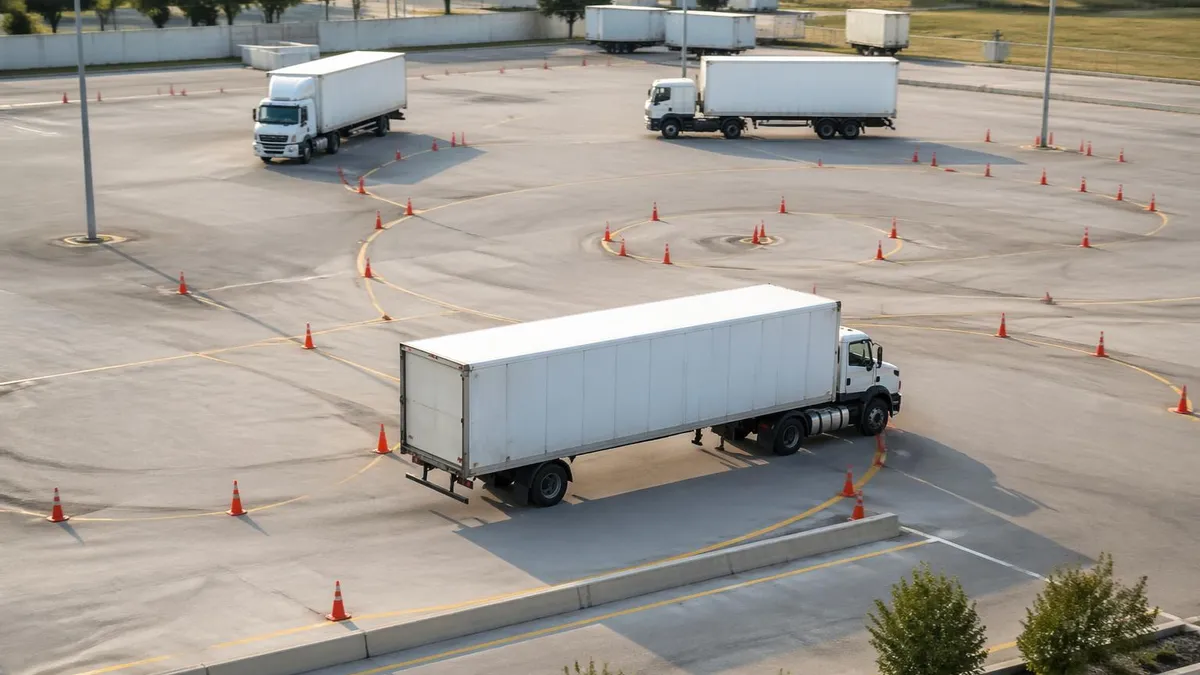
CDL General Knowledge Test: What You Need to Know About Subject Knowledge
CDL Certification Guide: DOT Requirements, Study Tips & Endorsements

CDL Practice Tests 2026: Free Online Prep for Every Endorsement
About the Author

Licensed Driving Instructor & DMV Test Specialist
Penn State UniversityRobert J. Williams graduated from Penn State University with a degree in Transportation Management and has spent 20 years as a certified driving instructor and DMV examiner consultant. He has personally coached thousands of applicants through written knowledge tests, skills assessments, and commercial driver licensing programs across more than 30 states.
Join the Discussion
Connect with other students preparing for this exam. Share tips, ask questions, and get advice from people who have been there.
View discussion (7 replies)