ALCPT Preparation Tips: Effective Study Strategies 2026 October
🗨️ Free ALCPT Preparation Tips: Effective Study practice test with questions and answer explanations. Prepare for the 2026 October exam with instant scoring.
The ALCPT is heavily weighted toward listening comprehension, making it the single most important skill to develop before test day. The listening section tests your ability to understand spoken American English in a variety of contexts — conversations, announcements, and instructional passages that reflect real military communication environments.
Daily immersion in American English audio is the fastest path to improvement. Dedicate at least 30 minutes every day to listening to authentic sources: Voice of America (VOA) broadcasts, American news programs, US military training videos, and English-language radio. Focus especially on understanding speech at natural speed — do not slow recordings down, as the ALCPT uses normal speaking pace.
Pay particular attention to American English idioms and military-specific vocabulary. Phrases like 'stand down,' 'fall in,' 'brief the commander,' and 'chain of command' appear frequently in ALCPT content. Build a vocabulary list of common military expressions and review them weekly. You can also find comprehensive listening exercises through our ALCPT listening comprehension practice section, which covers the question types you'll encounter on the real test.
The structural section of the ALCPT tests grammar at the sentence level. Unlike academic grammar tests that focus on rules, ALCPT grammar questions ask you to identify correct or incorrect usage in context — the kind of grammar a native speaker would use naturally. This means rote memorization of grammar rules is less effective than extensive reading and listening practice.
Focus your grammar review on the topics that appear most often: English verb tenses (especially perfect and progressive forms), articles (a, an, the), prepositions of time and place, subject-verb agreement, pronoun reference, and conditional sentences. These categories account for the majority of structural section questions. Work through at least one English grammar workbook systematically, completing exercises for each topic before moving to the next.
ALCPT Checklist
✓Master all 12 English verb tenses with practice exercises
✓Study article usage rules (a/an/the and zero article)
✓Review common prepositions of time, place, and direction
✓Practice subject-verb agreement with collective nouns and compound subjects
✓Study pronoun reference and antecedent agreement
✓Review conditional sentences (zero, first, second, third conditionals)
✓Learn common collocations and fixed phrases used in American English
✓Build a vocabulary of 500+ military and formal English terms
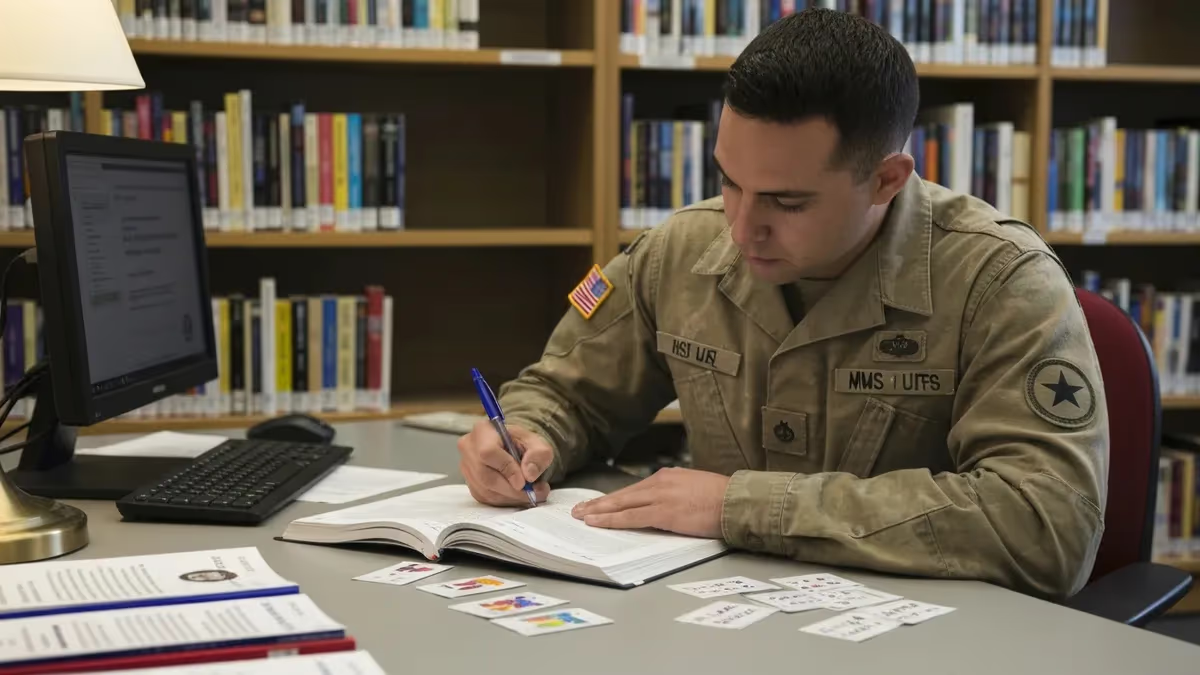
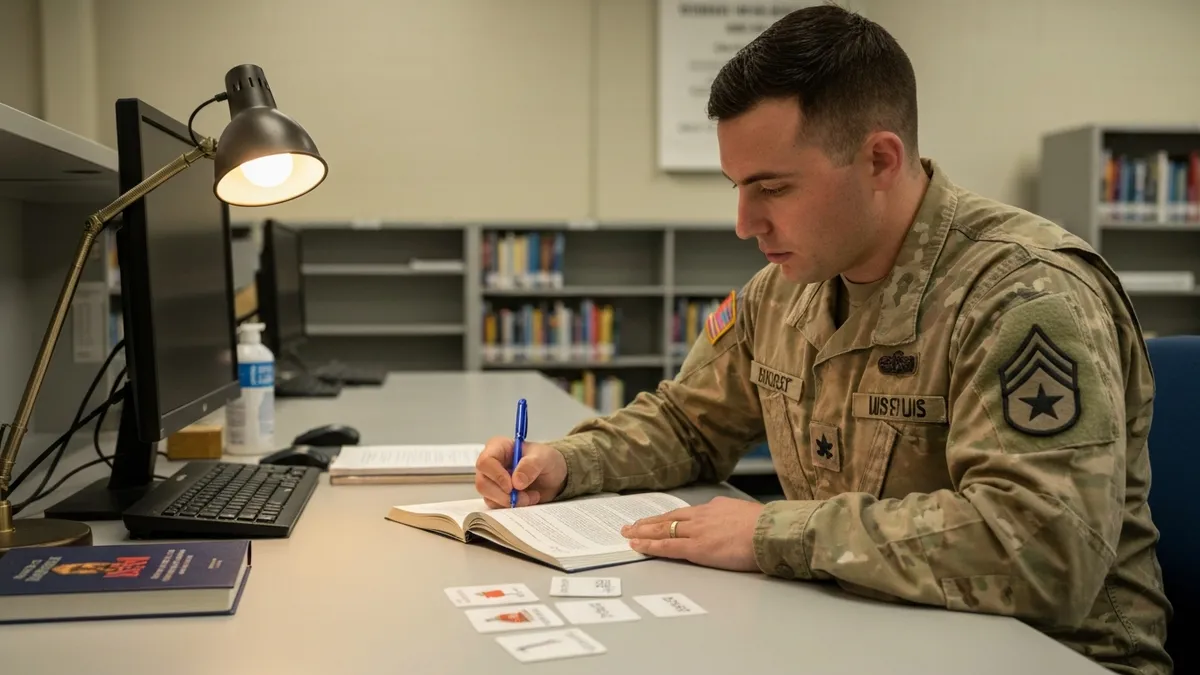
Vocabulary building requires a consistent long-term effort. Use flashcard systems like spaced repetition to learn 10–15 new words daily. Focus on words that frequently appear in formal and professional American English contexts. Reading English-language military manuals, instructions, and official documents also builds the vocabulary register that the ALCPT tests. For a broader understanding of the test and its content domains, review our ALCPT complete guide.
1
Take diagnostic test, review content outline
⏱ 8-10h recommended
2
Study weakest domains, take notes
⏱ 10-12h recommended
3
Practice questions on all topics
⏱ 10-12h recommended
4
Full practice exam #1, review mistakes
⏱ 10-12h recommended
5
Full practice exam #2, targeted review
⏱ 10-12h recommended
6
Final review, practice exam #3, rest before test
⏱ 8-10h recommended
Understanding how to approach the ALCPT strategically can raise your score significantly, even without additional content knowledge. The test is multiple-choice throughout, which means there is always a correct answer among the options — and smart test-takers use this to their advantage.
For the listening section, read the answer choices before the audio plays if time allows — this primes your brain to listen for specific details. Never leave a question unanswered; if you are uncertain, eliminate obviously wrong choices and select from the remaining options. On the structural section, read the full sentence before looking at the answer choices. Your ear for correct English will often catch an error before your conscious mind identifies the grammar rule.
Common mistakes to avoid: do not change your first answer without a clear reason — your initial instinct is usually correct. Do not overthink structural questions; the ALCPT tests natural usage, not obscure grammar rules. And do not let unfamiliar vocabulary stop you — use context clues from the sentence to infer meaning. Understanding your ALCPT score interpretation helps you set a realistic target and know which score range corresponds to your English level goals.
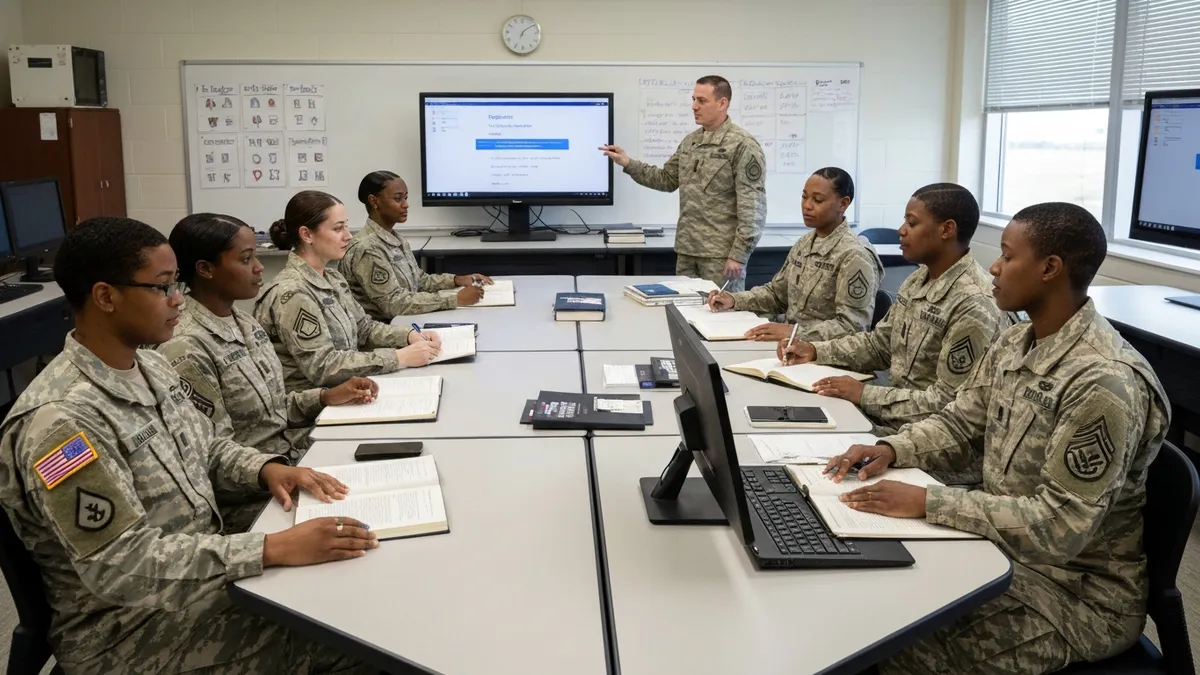
A structured six-to-eight week study schedule gives most learners enough time to meaningfully improve their ALCPT score. The schedule below assumes one to two hours of daily study. Adjust the timeline based on your current English level and target score — learners at lower English levels may need additional weeks before beginning timed practice.
Weeks one and two should focus entirely on diagnostics and foundation building. Take one full-length practice test on day one to establish your baseline score. Identify your weakest areas — listening, grammar, or vocabulary — and dedicate the majority of study time to those areas. Begin daily listening practice immediately and maintain it throughout all six weeks without interruption.
Weeks three and four shift to intensive practice in your identified weak areas while maintaining general review. Take a second full practice test at the end of week four to measure progress. Analyze every incorrect answer in detail — understand why the correct answer is right, not just why your answer was wrong. This error analysis process is one of the highest-value activities in ALCPT preparation. If the test requires understanding English proficiency levels, also review the ALCPT to ECL equivalency to understand how your score maps to the English Comprehension Level scale.
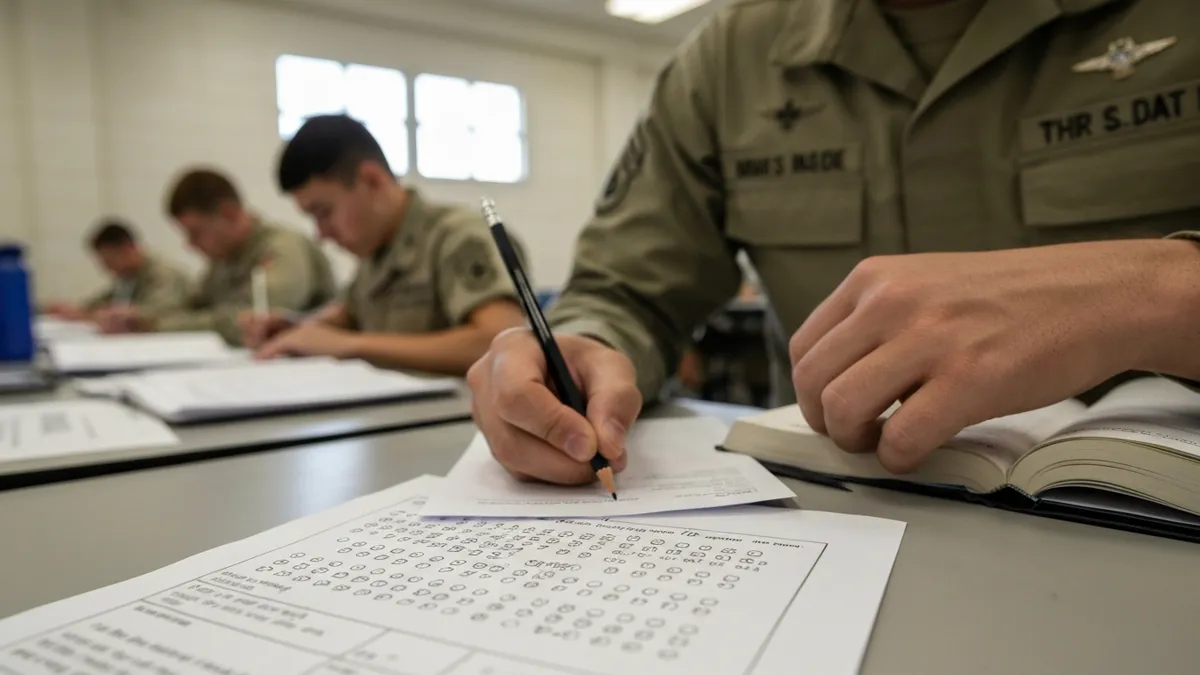
Weeks five and six are for consolidation and test simulation. Take at least one more full-length timed practice test per week. Introduce no new material in the final week — focus only on reviewing your existing notes, refreshing vocabulary lists, and maintaining your listening practice routine. Getting adequate sleep the night before the test is as important as any last-minute study session.
ALCPT Pros and Cons
✅Pros
+Structured ALCPT study guides organize all required content in exam-aligned order, reducing time spent identifying what to study
+Combining review guides with practice questions provides both content knowledge and test-taking fluency
+Focused study plans allow candidates to allocate more time to weak areas rather than reviewing already-mastered content
+Free and low-cost study resources mean comprehensive preparation is accessible at any budget level
−No single study guide covers all tested content optimally — most candidates need 2–3 resources for complete preparation
−Study guides can become outdated quickly when exam content is updated; verify edition currency before purchasing
−Self-study requires self-discipline; candidates without structured external accountability often underallocate preparation time
−Coverage breadth in comprehensive guides can create false confidence — recognizing content is not the same as answering questions correctly under timed conditions
−Study time estimates in guides often assume ideal conditions; real preparation time is typically 30–50% longer due to life disruptions
Pros and Cons at a Glance
Pros
Cons
Structured ALCPT study guides organize all required content in exam-aligned order, reducing time spent identifying what to study
Study guides can become outdated quickly when exam content is updated; verify edition currency before purchasing
Combining review guides with practice questions provides both content knowledge and test-taking fluency
Self-study requires self-discipline; candidates without structured external accountability often underallocate preparation time
Focused study plans allow candidates to allocate more time to weak areas rather than reviewing already-mastered content
Coverage breadth in comprehensive guides can create false confidence — recognizing content is not the same as answering questions correctly under timed conditions
Sample ALCPT - American Language Course Placement Test Practice Questions
Try these questions from our free ALCPT - American Language Course Placement Test practice tests. The correct answer and an explanation follow each question.
The plan was 'effective.' What does 'effective' mean?
A. complicated and unclear
B. producing the desired result
C. too expensive to use
D. difficult to understand
Answer: B. producing the desired result
'Effective' means something that works well and produces the intended result.
What does the expression 'burn the midnight oil' mean? (A) To destroy classified documents (B) To work or study late into the night (C) To waste fuel carelessly (D) To signal distress with a flare
A. To destroy classified documents
B. To work or study late into the night
C. To waste fuel carelessly
D. To signal distress with a flare
Answer: B. To work or study late into the night
'Burn the midnight oil' is an idiom meaning to work or study very late at night. It originates from the era when people used oil lamps and burned oil to work after dark.
You hear: 'The next ALCPT examination will be held on Thursday, March 15th, at 0800 hours in Building 22, Room 104. Students must bring two forms of identification, a number two pencil, and their unit authorization form. No electronic devices are permitted in the testing area.' What time does the examination begin? (A) 0700 (B) 0800 (C) 0900 (D) 1000
A. 0700
B. 0800
C. 0900
D. 1000
Answer: B. 0800
The announcement states the examination is at '0800 hours,' which is 8:00 in the morning in military time.
If someone is described as 'a quick study,' what does it mean?
A. They study very slowly
B. They learn new things rapidly
C. They prefer short books
D. They rarely read
Answer: B. They learn new things rapidly
'A quick study' describes someone who learns or picks up new skills very quickly.
For full test format details, scoring breakdowns, and additional study resources, visit our ALCPT practice test hub. Consistent preparation using the strategies above gives you the best chance of achieving your target score and advancing in your English language training program.
About the Author
Dr. Lisa PatelEdD, MA Education, Certified Test Prep Specialist
Educational Psychologist & Academic Test Preparation Expert
Dr. Lisa Patel holds a Doctorate in Education from Columbia University Teachers College and has spent 17 years researching standardized test design and academic assessment. She has developed preparation programs for SAT, ACT, GRE, LSAT, UCAT, and numerous professional licensing exams, helping students of all backgrounds achieve their target scores.
Join the Discussion
Connect with other students preparing for this exam. Share tips, ask questions, and get advice from people who have been there.