
ASVAB Prep Class: Top Courses, Tutors & Study Programs for 2026 October
Pass your ASVAB Prep Class: Top Courses, Tutors & exam on the first attempt. Practice questions with detailed answer explanations, hints, and instant ✍🏼

Your ASVAB prep class matters more than you'd think. The Armed Services Vocational Aptitude Battery covers 9 subtests, takes up to 3 hours, and determines which military jobs you qualify for. About 30% of first-time test takers don't hit minimum branch requirements -- that's roughly one in three people walking into MEPS unprepared. A structured asvab prep class can close that gap fast.
Here's the thing about asvab preparation classes: they're not all the same. Some give you video lessons and practice questions you can work through on your couch. Others put you in a classroom with a live instructor who walks you through Arithmetic Reasoning step by step.
A few pair you with a one-on-one tutor who focuses entirely on your weak spots. The right choice depends on your timeline before MEPS, how much you can spend, and where you're struggling most. If math gives you trouble, that's a different prep path than someone who needs help with Word Knowledge or Mechanical Comprehension.
This guide breaks down every major ASVAB prep option for 2026 -- online courses, in-person classes, private tutors, free resources, and self-study programs. You'll find real cost ranges, what each format actually includes, and which programs offer score improvement guarantees. Whether you've got 30 days or 8 weeks before your test date, there's a prep path here that fits. Start with our free ASVAB practice tests to see where you stand right now.

Picking the right asvab preparation classes starts with a simple question: where are you weakest? Take a full-length diagnostic test first. You need to know whether Arithmetic Reasoning, Word Knowledge, Math Knowledge, or Paragraph Comprehension is dragging your AFQT score down. Those four subtests are the only ones that count toward AFQT -- the qualifying score every branch uses. Everything else (General Science, Electronics, Auto/Shop, Mechanical Comprehension, Assembling Objects) affects your MOS line scores but not whether you get in.
Once you've got a baseline, look at your timeline. If MEPS is 3 weeks away, you need an intensive crash course or a tutor who can meet 3-4 times a week. Got 6-8 weeks? A self-paced online program gives you more flexibility. The biggest mistake people make is buying a "complete" course when they only struggle with one or two subtests.
That's like going to the doctor for a broken arm and getting a full-body cast. Target your weak spots. Don't waste time on sections you already score well in. Check out asvab preparation classes strategies that focus on score-building efficiency.
Budget also matters. Free resources like March2Success and PracticeTestGeeks cover the fundamentals well. But if you're 15+ points below your target AFQT, paid asvab prep classes with score guarantees can justify their cost. Kaplan, ASVAB Boot Camp, and Mometrix all offer structured programs in the $49-$199 range. For candidates who need the fastest improvement, private tutoring at $40-$100/hour often delivers the best return on investment.
Searching for asvab prep classes near me? You've got more local options than you'd expect. Military recruiting offices -- especially Army and Navy -- host free weekly study groups for DEP (Delayed Entry Program) candidates. These aren't formal courses, but they provide structure, accountability, and access to practice materials at zero cost. Community colleges run ASVAB prep through their continuing education departments too, typically for $50-$150 over 6-8 weeks. Public libraries often stock Kaplan, Barron's, and Mometrix ASVAB prep books you can use for free.
If you're searching for asvab test prep classes near me, local tutoring centers like Sylvan Learning offer customized ASVAB programs. They're pricier -- $50-$100 per hour -- but the in-person structure works well for candidates who struggle to stay focused with online-only formats. High school tutoring centers sometimes allow recent graduates to access SAT/ACT prep materials, and there's significant overlap between SAT Math and ASVAB Arithmetic Reasoning content. Ask around. These options exist but they're rarely advertised.
Online asvab prep classes give you the widest selection. You're not limited by geography or class schedules. Kaplan's ASVAB course includes 3 full-length practice tests, adaptive quizzes, and a score guarantee. ASVAB Boot Camp runs a 30-day intensive with daily lessons. Union Test Prep offers 1,000+ free practice questions organized by subtest. And March2Success -- backed by the DoD itself -- covers core ASVAB subjects at no cost to any potential recruit.
Top ASVAB Prep Courses 2026
Best Online ASVAB Prep Courses
Online courses offer the widest range of features and price points. Most include video lessons, timed practice tests, and progress tracking dashboards.
- Kaplan ASVAB Prep -- 3 full-length practice tests, adaptive quizzes, and a score improvement guarantee. ~$149. Best for serious candidates targeting competitive MOS slots.
- ASVAB Boot Camp -- Intensive 30-day program with daily lessons and video explanations. ~$99-$199. Includes a score guarantee if you complete the full program.
- Union Test Prep -- 1,000+ free ASVAB practice questions sorted by subtest. Strong for self-motivated learners. Free.
- March2Success -- DoD-endorsed, free to all potential recruits. Covers core ASVAB math, science, and reading.
Pair any online course with free ASVAB practice tests to reinforce weak areas between study sessions.
The four AFQT subtests determine your military eligibility -- and they're where asvab test prep classes deliver the most value. Arithmetic Reasoning tests your ability to solve word problems using basic math. Mathematics Knowledge covers algebra, geometry, and pre-calculus concepts. Word Knowledge measures vocabulary through synonyms and context clues. Paragraph Comprehension tests reading skills with short passages and questions. Your combined performance on these four sections produces your AFQT percentile, which every branch uses as the minimum qualifying score.
What surprises many candidates is how much AFQT scores can improve with focused study. A 10-point AFQT jump -- from, say, 28 to 38 -- can mean the difference between disqualification and qualifying for three branches. Most structured prep programs target exactly this kind of improvement. Kaplan reports average gains of 10-15 AFQT points. Students working with private tutors for 10-20 hours typically see 10-20 point increases. Even self-study candidates using free resources consistently over 30 days often gain 5-10 points.
The remaining five subtests (General Science, Electronics Information, Auto & Shop Information, Mechanical Comprehension, Assembling Objects) don't affect AFQT but do determine your MOS line scores. If you're targeting a technical job -- like Navy Nuclear, Air Force Cyber, or Army Intelligence -- you'll need strong composite scores from these sections too. Good asvab test prep classes cover all 9 subtests, but the best ones let you weight your study time toward the sections that matter most for your specific career goals.
Finding asvab prep classes near me doesn't have to mean expensive private tutoring. Free options exist in almost every community -- they're just not well-advertised. Military recruiting stations are the most overlooked resource. Walk into any Army, Navy, or Marine Corps recruiting office and ask about ASVAB study groups. Most run weekly sessions for DEP candidates, and some recruiters will even arrange one-on-one help if you're close to qualifying. It costs nothing because the recruiter's job is to get you qualified.
Public libraries are another goldmine for asvab test prep classes materials. Most carry current editions of Kaplan, Barron's, Mometrix, and Peterson's ASVAB prep books. Many libraries also provide free access to LinkedIn Learning (formerly Lynda.com), which has math courses that cover the same algebra and geometry tested on the ASVAB. Community colleges with veteran services offices sometimes offer free or low-cost tutoring through peer programs. The math content overlaps heavily with pre-algebra and algebra courses -- so asking for general math tutoring often covers ASVAB prep by default.
If you're a self-starter, combining free resources can rival any paid course. Use March2Success for structured lessons, Khan Academy for math gaps, PracticeTestGeeks for timed practice tests, and Quizlet for Word Knowledge flashcards. This zero-cost approach works well with 4-8 weeks of consistent daily study. The key word is "consistent." Cramming for 3 days before MEPS rarely produces meaningful AFQT improvement. Thirty minutes a day for 30 days beats 15 hours in a single weekend every time. Build the habit and the scores follow.
ASVAB Prep: Paid Courses vs. Free Self-Study
- +Structured curriculum keeps you on track with daily study goals
- +Score improvement guarantees reduce financial risk
- +Live instructor access for real-time Q&A on tough concepts
- +Adaptive practice tests adjust difficulty to your skill level
- +Progress tracking dashboards show subtest-level improvement
- +Full-length timed exams simulate actual CAT-ASVAB conditions
- −Paid courses cost $49-$199+ depending on the program
- −Some programs lock content behind paywalls with limited previews
- −In-person classes require fixed schedules that may conflict with work
- −Generic curriculum may waste time on subtests you already ace
- −Score guarantees often require completing 100% of the program
- −Quality varies widely -- not all paid courses outperform free resources
Pros and Cons at a Glance
| Pros | Cons |
|---|---|
| Structured curriculum keeps you on track with daily study goals | Some programs lock content behind paywalls with limited previews |
| Score improvement guarantees reduce financial risk | In-person classes require fixed schedules that may conflict with work |
| Live instructor access for real-time Q&A on tough concepts | Generic curriculum may waste time on subtests you already ace |
| Adaptive practice tests adjust difficulty to your skill level | Quality varies widely -- not all paid courses outperform free resources |
A 30-day study plan is the backbone of effective asvab test prep classes. Here's a framework that works whether you're self-studying or enrolled in a course. Week 1 is diagnostic: take a full-length timed practice test, identify your two weakest subtests, and start daily vocabulary practice (15 new words per day for Word Knowledge). Review basic arithmetic operations -- fractions, percentages, ratios. If you can't solve 80% of Arithmetic Reasoning questions correctly, math needs to be your primary focus.
Week 2 shifts to intensive subtest work. Dedicate 90 minutes daily to your weakest areas. Use Khan Academy for math gaps, free practice questions for verbal sections, and targeted drills for whichever subtests are pulling your score down. Complete 50 practice questions per day in your focus areas. Speed matters less than accuracy at this stage -- build understanding first, then build speed. Take notes on every question you get wrong. Patterns will emerge.
Weeks 3 and 4 bring it all together. Switch to timed practice. Rotate through all 9 subtests over each week. Take a full-length timed test at the end of Week 3 to measure improvement against your baseline. Use the results from asvab test prep classes diagnostics to target any remaining weak spots in Week 4. Take your final practice test 3 days before your scheduled ASVAB -- not the night before. You want time to review, not cram. Candidates who follow this 30-day plan consistently report 10-25 point AFQT improvements.
ASVAB Prep Class Checklist: Before You Enroll
- ✓Take a free diagnostic ASVAB practice test to establish your baseline AFQT score
- ✓Identify your two weakest AFQT subtests (AR, MK, WK, or PC)
- ✓Set a target AFQT score at least 10 points above your branch minimum
- ✓Confirm your MEPS date to determine how much prep time you have
- ✓Research whether your recruiter offers free study groups or tutoring
- ✓Check your local library for free ASVAB prep books (Kaplan, Barron's, Mometrix)
- ✓Compare at least 3 prep courses on cost, practice test count, and score guarantees
- ✓Verify the course covers all 4 AFQT subtests with timed practice tests
- ✓Schedule daily study blocks of at least 30-60 minutes for consistent progress
- ✓Plan to take a final full-length practice test 3 days before your actual ASVAB
The retake policy is something every ASVAB candidate should know -- especially if you're using asvab test prep classes to prepare for a second attempt. You can retake the ASVAB if you don't meet minimum score requirements or want to qualify for a specific MOS. But there are waiting periods. Your first retest requires a 1-month wait after the initial test. The second retest requires another month. After that, you're looking at 6-month gaps between attempts. That's a long time to sit around if you weren't prepared.
Use every waiting period for structured prep. A focused 30-day study plan during a retest window can realistically boost your AFQT by asvab test prep classes near me 10-20 points. Many candidates who fail on their first attempt pass comfortably on the second after investing in a proper prep course. The key is diagnosing exactly what went wrong. Was it time management? Weak math fundamentals? Vocabulary gaps? Your first test score report shows subtest-level performance -- use that data to build a targeted study plan for round two.
Don't overlook the CAT-ASVAB format either. The computerized version adapts question difficulty based on your answers. Getting early questions right increases the difficulty (and your potential score ceiling). Getting them wrong locks you into easier questions with a lower ceiling. This means your first 5-10 questions on each subtest carry extra weight. Good asvab test prep classes teach you this strategy -- start strong, stay focused through the opening questions, and manage your energy across the full 3-hour session.
Timing matters more than most candidates realize when it comes to asvab test prep classes. The ideal prep window is 4-8 weeks before your scheduled ASVAB date. Less than 3 weeks? You'll need intensive daily study -- 2+ hours a day -- or a private tutor who can focus on your weakest areas. More than 8 weeks? Great, but you'll need to maintain consistency. Long study timelines often lead to procrastination. Set weekly milestones. Take a practice test every 7-10 days to track progress.
Morning study sessions tend to produce better retention than late-night cramming. If you're working or in school, even 30 minutes before your day starts adds up fast over a month. Use phone apps like Quizlet for 5-minute vocabulary drills during breaks. Watch Khan Academy math videos during lunch. Small consistent efforts compound. One candidate I've seen went from a 24 AFQT to a 58 in 6 weeks just by studying 45 minutes every morning and taking a weekly practice test.
Test-day logistics matter too. Know your MEPS location, arrival time, and what to bring (valid ID, Social Security card, recruiter contact info). Get 7-8 hours of sleep the night before. Eat a solid breakfast -- the ASVAB is a 3-hour mental marathon. Don't cram the morning of your test. If your asvab test prep classes did their job over the previous weeks, you're ready. Trust the preparation and stay calm through the opening questions of each subtest.
First retest: Wait at least 1 calendar month after your initial ASVAB. Second retest: Another 1-month wait. All subsequent retests: 6 calendar months between attempts. Use every waiting period for structured prep -- don't waste the time between tests.
The math sections trip up more ASVAB candidates than anything else. Arithmetic Reasoning and Mathematics Knowledge together make up half your AFQT score. If you're weak in math, your asvab test prep classes need to prioritize these two subtests above everything. Arithmetic Reasoning tests word problem solving -- you read a scenario and apply basic operations. Mathematics Knowledge is more straightforward: solve equations, find angles, calculate areas. Both test concepts you've seen before but might have forgotten.
Here's what works for math prep. Start with the fundamentals: fractions, decimals, percentages, ratios. If you can't quickly convert 3/8 to a decimal, that's your starting point. Move to algebra basics -- solving for X, working with inequalities, understanding simple equations. Then tackle geometry: area formulas for rectangles, triangles, circles. Perimeter and volume. The Pythagorean theorem. These topics account for the vast majority of Mathematics Knowledge questions.
For Arithmetic Reasoning word problems, practice the translation step. Read the problem. Identify what's being asked. Convert the words into a math equation. Then solve. Most errors happen in step two -- people misread what the question actually wants. Time yourself. On the CAT-ASVAB, you get about 39 seconds per Arithmetic Reasoning question. Practice under timed conditions so the clock doesn't rattle you on test day. Our free asvab test prep classes practice questions mirror the actual format and difficulty level.
ASVAB Practice Test Questions
Prepare for the ASVAB - Armed Services Vocational Aptitude Battery exam with our free practice test modules. Each quiz covers key topics to help you pass on your first try.
ASVAB Arithmetic Reasoning Test
ASVAB Exam Questions covering Arithmetic Reasoning Test. Master ASVAB Test concepts for certification prep.
ASVAB Arithmetic Reasoning Word Problems
Free ASVAB Practice Test featuring Arithmetic Reasoning Word Problems. Improve your ASVAB Exam score with mock test prep.
ASVAB Assembling Objects Test
ASVAB Mock Exam on Assembling Objects Test. ASVAB Study Guide questions to pass on your first try.
ASVAB Automotive Information Test
ASVAB Test Prep for Automotive Information Test. Practice ASVAB Quiz questions and boost your score.
ASVAB Electronics Fundamentals and Circuits
ASVAB Questions and Answers on Electronics Fundamentals and Circuits. Free ASVAB practice for exam readiness.
ASVAB Electronics Practice Test
ASVAB Mock Test covering Electronics Practice Test. Online ASVAB Test practice with instant feedback.
ASVAB Electronics Practice Test 1
Free ASVAB Quiz on Electronics Practice Test 1. ASVAB Exam prep questions with detailed explanations.
ASVAB General Science Biology and Ecology
ASVAB Practice Questions for General Science Biology and Ecology. Build confidence for your ASVAB certification exam.
ASVAB General Science Practice Test
ASVAB Test Online for General Science Practice Test. Free practice with instant results and feedback.
ASVAB General Science Practice Test 1
ASVAB Study Material on General Science Practice Test 1. Prepare effectively with real exam-style questions.
ASVAB Mathematics Knowledge Test
Free ASVAB Test covering Mathematics Knowledge Test. Practice and track your ASVAB exam readiness.
ASVAB Mechanical Comprehension Principles
ASVAB Exam Questions covering Mechanical Comprehension Principles. Master ASVAB Test concepts for certification prep.
ASVAB Mechanical Comprehension Test
Free ASVAB Practice Test featuring Mechanical Comprehension Test. Improve your ASVAB Exam score with mock test prep.
ASVAB Paragraph Comprehension and Inference
ASVAB Mock Exam on Paragraph Comprehension and Inference. ASVAB Study Guide questions to pass on your first try.
ASVAB Paragraph Comprehension Test
ASVAB Test Prep for Paragraph Comprehension Test. Practice ASVAB Quiz questions and boost your score.
Verbal sections are the other half of your AFQT -- and they're where asvab test prep classes sometimes fall short. Word Knowledge and Paragraph Comprehension test different skills but both reward consistent practice. Word Knowledge gives you a word and asks for its synonym or closest meaning. You get about 9 seconds per question on the CAT-ASVAB. That's fast. If you don't know the word immediately, you need to use context clues or word roots to narrow down the options.
Build your vocabulary systematically. Learn 15-20 new words per day. Focus on words with Latin and Greek roots, since understanding root meanings helps you decode unfamiliar words on test day. Use flashcards -- Quizlet has thousands of ASVAB-specific vocabulary decks. Read military-related articles, technical manuals, and news to encounter words in context. The goal isn't memorizing definitions. It's developing the ability to figure out meaning from context, because that's exactly what the ASVAB tests.
Paragraph Comprehension is straightforward but demands focus. You read short passages -- usually 50-100 words -- and answer questions about the main idea, supporting details, or author's purpose. The trap is rushing. Candidates who read too quickly miss key details and pick wrong answers. Read each passage twice if you have time. Underline the main point mentally. Then look at the question. Don't bring outside knowledge into your answer -- the correct answer is always supported by the text. Strong asvab test prep classes drill this skill with dozens of practice passages until the process becomes automatic.
Sample ASVAB - Armed Services Vocational Aptitude Battery Practice Questions
Try these questions from our free ASVAB - Armed Services Vocational Aptitude Battery practice tests. The correct answer and an explanation follow each question.
Which class of lever has the fulcrum located between the effort and the load?
- A. First class
- B. Second class
- C. Third class
- D. Fourth class
Answer: A. First class
A first-class lever (like a seesaw or crowbar) has the fulcrum between effort and load.
A tank holds 240 gallons and is currently 3/8 full. How many gallons are needed to fill it completely?
- A. 150 gallons
- B. 90 gallons
- C. 120 gallons
- D. 160 gallons
Answer: A. 150 gallons
The tank has 3/8 × 240 = 90 gallons, so it needs 240 – 90 = 150 more gallons.
If a store adds 50 chairs to its current inventory, the total number of chairs will be the same as three-halves the current inventory of chairs. If the manager wants to increase the current inventory by 40%, what will the new inventory of chairs be?
- A. 40
- B. 60
- C. 100
- D. 140
Answer: D. 140
First, set up an equation to find the current inventory (C). The problem states that C + 50 = (3/2)C, which solves to C = 100 chairs. Next, calculate the new inventory by increasing the current inventory by 40%. This is done by multiplying the current inventory by 1.40 (representing 100% + 40%), so 100 * 1.40 = 140 chairs.
The metal porch swing virtually sizzled on the old wooden front porch today. But we sat there anyway. Gramma wouldn’t hear of anything else. I suggested a walk through the forest, hoping to entertain a breeze or two and to take advantage of the shade. Gramma shook her head. You were supposed to sit on the porch after supper, and that’s what we were going to do. This author implies that
- A. Gramma cooked supper.
- B. Gramma didn’t like the forest.
- C. Gramma didn’t change her routine.
- D. Gramma couldn’t hear very well.
Answer: C. Gramma didn’t change her routine.
The passage explicitly states that Gramma 'wouldn't hear of anything else' and insisted, 'You were supposed to sit on the porch after supper, and that’s what we were going to do,' despite the heat and a suggestion for a walk. This demonstrates her strong adherence to a fixed routine and her unwillingness to deviate from it. Therefore, the author implies that Gramma didn't change her routine.
Take the full ASVAB - Armed Services Vocational Aptitude Battery practice test
ASVAB Questions and Answers

ASVAB Exam Tips: Proven Strategies to Boost Your Score in 2026

ASVAB Career Overview: How Your Scores Open Military Job Doors
ASVAB Subject Knowledge: Word Knowledge & Math Subtests Guide

ASVAB Exam Prep: Your Study Guide for Military Enlistment
ASVAB Study Materials: Best Books, PDFs & Free Resources for 2026
About the Author
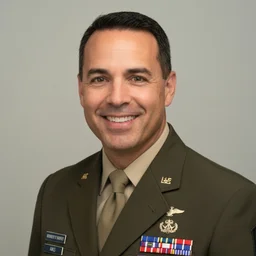
Retired Military Officer & Armed Forces Test Preparation Specialist
United States Army War CollegeColonel Steven Harris (Ret.) served 28 years in the US Army, earning a Master of Arts in Military Science from the Army War College and a Bachelor of Science in Criminal Justice. He has coached thousands of military enlistment and officer candidate program applicants through the ASVAB, AFQT, AFCT, OAR, and officer selection assessment processes across all military branches.
Join the Discussion
Connect with other students preparing for this exam. Share tips, ask questions, and get advice from people who have been there.
View discussion (5 replies)