
ASVAB Exam Prep: Your Study Guide for Military Enlistment 2026 October
Boost your ASVAB exam score with practice questions and detailed answer explanations. ❓ Track progress with instant feedback.

Your ASVAB exam prep journey starts with understanding what you're up against. The Armed Services Vocational Aptitude Battery isn't just another standardized test -- it's the gateway to every military career path in the United States. About 1.3 million people take it each year, and your score determines which branch you can join and which jobs you'll qualify for. That's a lot riding on one test.
Here's the thing most recruits don't realize early enough: the ASVAB measures ten different aptitude areas, but only four of them factor into your AFQT score -- the number that decides whether you can enlist at all. Arithmetic Reasoning, Mathematics Knowledge, Paragraph Comprehension, and Word Knowledge. Master those four, and you've cleared the biggest hurdle. The remaining six subtests shape your composite scores, which determine your specific military occupational specialty (MOS, AFSC, Rating, or NEC depending on your branch).
Whether you're aiming for Army infantry, Navy nuclear engineering, or Air Force cyber operations, how to prepare for the ASVAB exam matters more than raw talent. Smart preparation beats natural ability almost every time on this test. Most successful candidates spend 4 to 8 weeks studying before their MEPS appointment -- and the ones who score highest aren't necessarily the smartest. They're the most prepared. This guide breaks down every subtest, current branch minimums, proven study strategies, and score interpretation so you can walk into MEPS confident and ready to perform at your best.

How to Prepare for the ASVAB Exam
Figuring out how to prepare for asvab exam sessions starts with a diagnostic test. Take one full-length practice exam before you crack open a single study guide. Why? Because you need data. You need to know which subtests drag your score down and which ones you can coast through. Spending three weeks on Word Knowledge when you already score in the 80th percentile there? That's wasted time you could've spent patching real weaknesses.
Once you've got your baseline, allocate roughly 60% of study hours to the four AFQT subtests. These determine whether you can enlist at all, so they come first. Arithmetic Reasoning and Mathematics Knowledge carry half the AFQT weight combined. If your math skills are rusty -- and for most people they are -- this is where targeted study delivers the biggest score jumps. Fractions, ratios, percentages, basic algebra, and word problems. That's the core. How to prepare for the ASVAB exam effectively means drilling these topics until they're automatic.
Don't ignore reading skills, though. Paragraph Comprehension trips up recruits who read slowly or struggle with inference questions. Practice reading passages under timed conditions. You'll have roughly two minutes per question on the CAT-ASVAB, and the adaptive format means you can't skip ahead or go back. Every question counts, and you can't leave blanks. Train yourself to read actively -- identify the main idea fast, then scan for supporting details.
Understanding the 10 ASVAB Subtests
Learning how to prepare for the ASVAB exam means understanding what each subtest actually measures. The CAT-ASVAB includes ten sections, but they're not created equal. Four drive your AFQT: Word Knowledge (WK), Paragraph Comprehension (PC), Arithmetic Reasoning (AR), and Mathematics Knowledge (MK). These four are your priority -- period.
Word Knowledge gives you 16 questions in 8 minutes. You'll see a word and pick its synonym or closest meaning. It sounds simple, but military-relevant vocabulary can throw you. Build a flashcard deck of 500+ words, focusing on roots, prefixes, and suffixes. The pattern recognition this builds helps you decode unfamiliar words on test day. Paragraph Comprehension presents 11 reading passages with questions about main idea, inference, and vocabulary in context. Twenty-two minutes sounds generous until you're staring at a dense paragraph about hydraulic systems.
On the math side, Arithmetic Reasoning is pure word-problem territory. Sixteen questions, 39 minutes. You'll convert real-world scenarios into equations -- distance, rate, cost, percentage change. Mathematics Knowledge covers algebra, geometry, and number theory. No calculator allowed on either section, so mental math fluency matters. Practice estimation techniques and learn to eliminate obviously wrong answer choices quickly. The remaining subtests -- General Science, Electronics Information, Auto and Shop, Mechanical Comprehension, Assembling Objects, and Verbal Expression -- feed into composite scores for specific job qualifications.
AFQT Minimums by Branch
Army ASVAB Requirements
The Army sets the lowest bar at AFQT 31 for diploma holders. GED holders need 50+. Don't let that low minimum fool you -- technical MOSs like intelligence analyst (35F) or cyber operations (17C) demand GT scores above 110 and AFQT scores well above 60. The Army accepts the most recruits annually and offers the widest MOS range, but competitive jobs still require strong scores across multiple composite lines (ST, GT, EL, MM).
AFQT Score Calculation and What It Means
Your AFQT score isn't a percentage of questions you answered correctly. It's a percentile rank compared to a 1997 norming sample. An AFQT of 50 means you outperformed half of that reference population. An AFQT of 80 means you beat 80%. This distinction matters because candidates routinely misunderstand their score reports. Knowing how to prepare for the ASVAB exam includes understanding what your results actually mean once you get them.
The AFQT calculation uses a formula: AR + MK + (2 x VE), where VE (Verbal Expression) combines your Word Knowledge and Paragraph Comprehension standard scores. Math and verbal carry equal weight in this formula, but the verbal component gets doubled through VE, which means reading and vocabulary skills contribute more than most people assume. A candidate who's strong in AR and MK but weak in WK and PC might score lower than expected.
Beyond the AFQT, composite scores open doors to specific jobs. Each branch calculates composites differently. The Army's GT (General Technical) score uses VE + AR. Their ST (Skilled Technical) combines GS + VE + MK + MC. Navy and Air Force have their own composite formulas. Your recruiter can pull up exactly which composites your target jobs require -- get this information early so you know which subtests to prioritize after locking down your AFQT.
CAT-ASVAB vs Paper ASVAB: Key Differences
Two formats exist, and knowing which one you'll take shapes how to prepare for the ASVAB exam. The CAT-ASVAB (Computerized Adaptive Testing) is the standard format at MEPS locations. It adapts to your ability in real-time -- answer correctly and the next question gets harder. Miss one and it gets easier. You can't go back, can't skip, can't change answers. This format takes about 90 minutes to two hours, and scores are available immediately.
The paper ASVAB (MET-site version) shows up at high schools, National Guard armories, and mobile testing sites. Fixed-difficulty questions. You can review within each subtest before moving forward, which is a real advantage if you tend to catch mistakes on second review. It takes about three hours total. Student ASVAB scores from high school remain valid for two years and can be used for enlistment.
There's also the PiCAT -- a full-length online pre-screening version you can take at a recruiter's office. Score well enough and you'll only need a 25-question verification test at MEPS instead of the full CAT-ASVAB. Not every recruiter offers it, but if yours does, it's worth considering. The content is identical across all three formats. What changes is timing, adaptivity, and whether you can review your answers.
Study Guide Pros and Cons
- +Structured study guides organize content in exam-aligned order, cutting down on guesswork
- +Combining review materials with practice questions builds both knowledge and test-taking speed
- +Focused plans let you spend more time on weak subtests instead of reviewing what you already know
- +Free resources like Khan Academy and PracticeTestGeeks make quality prep accessible at zero cost
- +Spaced repetition with flashcards significantly improves long-term retention of vocabulary and formulas
- +Diagnostic tests reveal your baseline, so you can measure real progress week over week
- −No single guide covers all ten subtests optimally -- most candidates need two or three resources
- −Study guides can become outdated when test content changes; always verify the edition year
- −Self-study requires discipline; without external accountability, many candidates underestimate needed hours
- −Breadth in review books can create false confidence -- recognizing content differs from solving under time pressure
- −Estimated study times assume ideal conditions; real preparation typically runs 30-50% longer
- −Over-reliance on one source limits exposure to varied question styles and difficulty levels
Building a Weekly Study Schedule
How to prepare for the ASVAB exam on a tight timeline? Block four to six weeks minimum. Here's what a realistic weekly schedule looks like for most candidates. Weekdays: 45 to 60 minutes of focused study. Weekends: 90-minute sessions including a timed practice section. That adds up to roughly 7 hours per week -- enough to see real improvement without burning out.
Start each session with 10 minutes of vocabulary review. Then spend the bulk of your time on whichever subtest scored lowest on your diagnostic. Alternate between content review (learning the concepts) and timed practice (applying them under pressure). End every session with a brief review of missed questions from the day before. This spaced repetition approach cements material into long-term memory far better than marathon cramming sessions.
Track your scores in a simple spreadsheet or notebook. If your AR score isn't climbing after two weeks of focused study, you might need different resources -- switch from a review book to video explanations, or try working problems with a study partner who can explain approaches you haven't considered. The goal isn't perfection on every subtest. It's hitting your target AFQT with enough margin to feel confident, plus qualifying composites for your target MOS.
ASVAB Study Checklist
- ✓Take a full-length diagnostic practice test across all 10 subtests
- ✓Identify your weakest AFQT subtests: AR, MK, PC, WK
- ✓Allocate 60% of study time to AFQT subtests for maximum score impact
- ✓Review algebra basics: equations, fractions, ratios, percentages, word problems
- ✓Build vocabulary with 500+ flashcards focusing on roots and prefixes
- ✓Practice reading comprehension: main idea, inference, vocabulary in context
- ✓Complete at least 5 full-length timed practice tests before MEPS
- ✓Study composite subtests for your target MOS after AFQT fundamentals are solid
- ✓Aim for AFQT practice scores 10 points above your branch minimum
- ✓Review score report format so you understand percentile vs raw score
Score Improvement Strategies That Actually Work
Knowing how to prepare for the ASVAB exam effectively means applying techniques backed by evidence. First: process of elimination. On every question, eliminate at least two answer choices before selecting. The CAT-ASVAB gives you four options per question -- cutting to two doubles your odds even when you're uncertain. This is especially powerful on Mechanical Comprehension and General Science questions where partial knowledge often lets you rule out clearly wrong answers.
Second: don't neglect sleep the week before testing. Cognitive performance drops measurably after even one night of poor sleep, and the ASVAB tests exactly the kind of reasoning skills that suffer most. Plan to get 7-8 hours for at least three nights before your MEPS appointment. Eat a solid breakfast that morning. Arrive early. These basics sound obvious but they're ignored constantly.
Third: for the CAT-ASVAB specifically, manage your pacing. You can't go back, so don't rush. But don't agonize either. If a question stumps you after 90 seconds, make your best guess and move on. The adaptive algorithm penalizes you more for getting easy questions wrong than hard ones, so keeping your composure on straightforward questions matters more than nailing the hardest ones.
Composite Scores and Job Qualification
Beyond basic enlistment, composite scores determine your career options. Each branch calculates composites differently. Knowing how to prepare for the ASVAB exam for your specific target MOS means understanding which subtests feed into the composites you need.
The Army uses composites like GT (General Technical = VE + AR), ST (Skilled Technical = GS + VE + MK + MC), and EL (Electronics = GS + AR + MK + EI). Want to be an Army intelligence analyst? You'll need a minimum GT of 101 and ST of 101. Cyber operations (17C) requires a GT of 110+. These aren't negotiable -- you either hit the composite or you don't qualify. The Navy structures ratings around similar composite calculations but with different labels and cutoffs.
Air Force AFSCs lean heavily on the MAGE composites: Mechanical, Administrative, General, and Electronics. Space Force follows the same system. Talk to your recruiter early about which specific composites your target jobs require. Then reverse-engineer your study plan: identify which subtests feed those composites and weight your preparation accordingly. A candidate targeting nuclear ratings needs exceptional AR and MK. Someone aiming for intelligence needs strong GS and VE. Study what matters for YOUR path, not just the overall AFQT.
No calculators, phones, or electronic devices are allowed during the ASVAB. The CAT-ASVAB provides a dry-erase board for scratch work; the paper version gives you scratch paper. Practice doing all math by hand during your study sessions so it feels natural on test day. Bring a valid photo ID and your Social Security card to MEPS.
Common Mistakes to Avoid
Here's what derails candidates who know how to prepare for the ASVAB exam in theory but stumble in practice. Mistake one: studying only their strong areas because it feels good. If you already score 75th percentile on Word Knowledge, spending more time there yields diminishing returns. Shift that effort to your weakest AFQT subtest where the same study hours produce much bigger score gains.
Mistake two: ignoring the clock during practice. The CAT-ASVAB is timed and adaptive. If you practice without a timer, you're training yourself for a test that doesn't exist. Set a stopwatch for each practice section and stick to it. Get comfortable with the pressure of moving forward even when you're unsure.
Mistake three: cramming the night before. Your brain consolidates information during sleep, and last-minute cramming actually interferes with recall of previously learned material. Do a light review the evening before -- flip through vocabulary cards for 20 minutes, then stop. Watch something relaxing. Go to bed early.
You've either prepared or you haven't by that point, and rest outperforms panic studying every single time. Mistake four: neglecting the non-AFQT subtests entirely. While AFQT gets you through the door, composite scores from subtests like General Science, Electronics Information, and Mechanical Comprehension determine which jobs you'll actually qualify for. Balance matters more than most people think.
ASVAB Practice Test Questions
Prepare for the ASVAB - Armed Services Vocational Aptitude Battery exam with our free practice test modules. Each quiz covers key topics to help you pass on your first try.
ASVAB Arithmetic Reasoning Test
ASVAB Exam Questions covering Arithmetic Reasoning Test. Master ASVAB Test concepts for certification prep.
ASVAB Arithmetic Reasoning Word Problems
Free ASVAB Practice Test featuring Arithmetic Reasoning Word Problems. Improve your ASVAB Exam score with mock test prep.
ASVAB Assembling Objects Test
ASVAB Mock Exam on Assembling Objects Test. ASVAB Study Guide questions to pass on your first try.
ASVAB Automotive Information Test
ASVAB Test Prep for Automotive Information Test. Practice ASVAB Quiz questions and boost your score.
ASVAB Electronics Fundamentals and Circuits
ASVAB Questions and Answers on Electronics Fundamentals and Circuits. Free ASVAB practice for exam readiness.
ASVAB Electronics Practice Test
ASVAB Mock Test covering Electronics Practice Test. Online ASVAB Test practice with instant feedback.
ASVAB Electronics Practice Test 1
Free ASVAB Quiz on Electronics Practice Test 1. ASVAB Exam prep questions with detailed explanations.
ASVAB General Science Biology and Ecology
ASVAB Practice Questions for General Science Biology and Ecology. Build confidence for your ASVAB certification exam.
ASVAB General Science Practice Test
ASVAB Test Online for General Science Practice Test. Free practice with instant results and feedback.
ASVAB General Science Practice Test 1
ASVAB Study Material on General Science Practice Test 1. Prepare effectively with real exam-style questions.
ASVAB Mathematics Knowledge Test
Free ASVAB Test covering Mathematics Knowledge Test. Practice and track your ASVAB exam readiness.
ASVAB Mechanical Comprehension Principles
ASVAB Exam Questions covering Mechanical Comprehension Principles. Master ASVAB Test concepts for certification prep.
ASVAB Mechanical Comprehension Test
Free ASVAB Practice Test featuring Mechanical Comprehension Test. Improve your ASVAB Exam score with mock test prep.
ASVAB Paragraph Comprehension and Inference
ASVAB Mock Exam on Paragraph Comprehension and Inference. ASVAB Study Guide questions to pass on your first try.
ASVAB Paragraph Comprehension Test
ASVAB Test Prep for Paragraph Comprehension Test. Practice ASVAB Quiz questions and boost your score.
What Happens After the ASVAB
Understanding how to prepare for the ASVAB exam is half the picture. The other half is knowing what comes next. At MEPS, you'll receive your score report immediately after completing the CAT-ASVAB. Your recruiter will review your AFQT and composite scores, then discuss which jobs you qualify for based on current openings and your scores.
If your AFQT meets the minimum for your target branch but your composite scores fall short for your desired MOS, you have options. You can accept a different job, wait for openings in jobs you qualify for, or request a retest (subject to waiting periods). Some branches let you reserve a specific MOS at MEPS if your scores qualify and a slot is available. Others assign jobs during basic training based on needs and your qualifying scores.
Scores stay valid for two years. If you don't ship out to basic training within that window, you'll need to retest. Keep this timeline in mind when planning your enlistment. Recruiters can sometimes offer bonuses or incentives for shipping quickly, but don't let pressure rush you into a job you don't want. Your ASVAB scores are use -- use them to negotiate the MOS that actually interests you. The stronger your scores, the more bargaining power you carry into that conversation with your recruiter.
ASVAB Questions and Answers

ASVAB Exam Tips: Proven Strategies to Boost Your Score in 2026

ASVAB Career Overview: How Your Scores Open Military Job Doors
ASVAB Subject Knowledge: Word Knowledge & Math Subtests Guide
ASVAB Study Materials: Best Books, PDFs & Free Resources for 2026
ASVAB Practice Tests: Free Questions for Every Subtest
About the Author
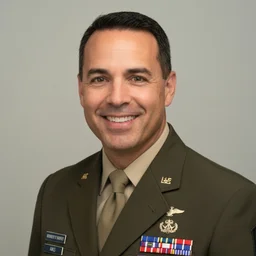
Retired Military Officer & Armed Forces Test Preparation Specialist
United States Army War CollegeColonel Steven Harris (Ret.) served 28 years in the US Army, earning a Master of Arts in Military Science from the Army War College and a Bachelor of Science in Criminal Justice. He has coached thousands of military enlistment and officer candidate program applicants through the ASVAB, AFQT, AFCT, OAR, and officer selection assessment processes across all military branches.
Join the Discussion
Connect with other students preparing for this exam. Share tips, ask questions, and get advice from people who have been there.
View discussion (5 replies)