
ASVAB Exam Tips: Proven Strategies to Boost Your Score in 2026 October
Pass your ASVAB exam on the first attempt. 💡 Practice questions with detailed answer explanations, hints, and instant scoring.

Getting ready for the ASVAB? You're not alone. Thousands of recruits take this military entrance exam each month, and the right exam tips can make a real difference in your final score. Whether you're aiming for a specific MOS or just trying to meet enlistment minimums, preparation matters more than raw talent on this test.
The Armed Services Vocational Aptitude Battery measures your abilities across nine subtests. Four of those subtests feed into your AFQT score — the number that decides whether you qualify for enlistment at all. The other five shape your line scores, which determine which military jobs you can access. That's a lot riding on one test day. But here's the good news: the ASVAB rewards preparation. It's not an IQ test. It's a skills test. And skills can be sharpened.
This guide breaks down section-by-section strategies, time management tactics, and study planning advice drawn from real test-taker experiences. You'll find specific tips for the asvab exam format — including how the computer-adaptive version differs from the paper test. We've also included links to free asvab practice exam resources so you can put these strategies to work immediately. No fluff, no filler — just actionable advice that moves your score upward.

Your AFQT score is everything when it comes to enlistment eligibility. It pulls from four subtests: Arithmetic Reasoning, Mathematics Knowledge, Word Knowledge, and Paragraph Comprehension. Score high on these four and you're in — regardless of how you perform on technical sections. That's why every asvab practice exam you take should prioritize these areas first.
But don't ignore your asvab exam scores on the remaining subtests. Line scores built from all nine sections determine which Military Occupational Specialties open up for you. A strong General Technical score unlocks intelligence and communications roles. High Skilled Technical scores lead to mechanical and electronics jobs. Think of the AFQT as your ticket through the door — and line scores as the keys to specific rooms inside.
Here's something most study guides won't tell you: the CAT-ASVAB is computer-adaptive. Early questions carry more weight because the algorithm uses your first answers to calibrate difficulty. Get the first five right in any subtest, and you'll face harder questions worth more points. Miss them, and the test adjusts downward — making it tough to recover. Spend extra time on those opening questions. It's counterintuitive, but slowing down at the start actually helps your final score.
The asvab exam scores you'll care about most are AFQT-related, and passing starts with understanding each section. Arithmetic Reasoning is all word problems. You're reading scenarios and translating English into math — rates, percentages, ratios, mixtures. The key? Don't start calculating until you've identified exactly what the question asks. Write down known values on your scratch paper. Then set up the equation. Rushing through the reading step is where most people lose points.
The military exam asvab also tests you at the meps exam facility where conditions are controlled and distractions are minimal. For Word Knowledge, you're matching vocabulary words with synonyms. Root words are your secret weapon here. Knowing that "bene" means good and "mal" means bad lets you decode dozens of unfamiliar words on test day.
Build flashcards around Latin and Greek roots — not just individual words. For Paragraph Comprehension, read the question before the passage. You'll know exactly what to look for instead of reading aimlessly. Most PC questions test main idea, specific detail, or inference. Each type has a predictable pattern once you've practiced enough.
Mathematics Knowledge covers algebra, geometry, and basic probability. Memorize the formulas you'll need: area of a circle, Pythagorean theorem, quadratic formula. The test doesn't give you a formula sheet. If you can't recall the formula, you can't solve the problem — no matter how good your math intuition is. Practice without a calculator since you won't have one on test day.
Technical Subtest Breakdown
General Science (GS) covers biology, chemistry, physics, and earth science at a high school level. The breadth is enormous — you can't memorize everything. Focus on the topics that appear most often: cell structure, genetics, Newton's laws, the periodic table, and the water cycle. Use a GS-specific study chapter and prioritize recognition over deep understanding.
Electronics Information (EI) tests Ohm's Law (V = IR), series vs. parallel circuits, and basic component identification. If you've never studied electronics, this section requires content learning — not just test strategy. Work through a dedicated EI chapter. For those with electronics background, this is one of the easiest subtests to score high on.
Time management can make or break your ASVAB performance, and the strategy changes depending on which version you take. The asvab exam online preparation you do should mirror the actual test format you'll face. For the CAT-ASVAB at MEPS, you can't skip questions or go back. Every answer is final the moment you submit it. That constraint changes everything about pacing.
On the CAT-ASVAB, if you've spent 90 seconds on a question without progress, eliminate what you can and guess. Stalling on one problem steals time from questions you might answer correctly. But — and this matters — don't rush the first five questions in each subtest. Those early answers steer the adaptive algorithm. Getting them right pushes you into harder, higher-scoring territory. Getting them wrong makes recovery difficult. Think of it as front-loading your effort.
The paper-and-pencil ASVAB works differently. You can skip and return within each subtest's time window. Use a two-pass system: answer everything you know on the first pass, mark the rest, then circle back. For practice asvab exam word knowledge sections, this approach works especially well — some vocabulary words click instantly while others need a second look. Never leave a question blank on either format. There's no penalty for guessing, and every blank is a guaranteed zero.
For Spanish-speaking recruits, you should know the examen asvab is only administered in English — there's no Spanish-language version. However, bilingual candidates often score well on Word Knowledge because exposure to Latin-rooted Spanish vocabulary transfers directly to English word roots. If Spanish is your first language, lean into that advantage on WK.
What about asvab example questions? They're everywhere online, but quality varies wildly. Some free practice tests use questions that are nothing like the actual ASVAB — either too easy or covering topics the real test doesn't include. Stick to reputable sources. The official ASVAB website (official.asvab.com) offers sample questions. Commercial prep books from Kaplan and Barron's match the real test format closely. And of course, PracticeTestGeeks provides free subtest-specific practice quizzes calibrated to actual ASVAB difficulty.
A common mistake: spending all your prep time on content review without practicing the military exam asvab format itself. Content knowledge and test-taking skill are different things. You might know how to solve a ratio problem but still miss it under time pressure because you read the question too quickly. Practice under timed conditions at least twice a week during your study period. Format familiarity alone can add five to ten points to your AFQT.
ASVAB Testing: Advantages and Challenges
- +Scores are valid for two years — giving you flexibility on enlistment timing
- +The CAT-ASVAB typically takes under two hours, much shorter than many standardized tests
- +Strong performance in some subtests can compensate for weaker areas in composite scoring
- +You can retake the ASVAB after 30 days if your initial scores fall short
- +No penalty for guessing on either the CAT or paper version
- +Free practice resources are widely available from military and commercial sources
- −CAT-ASVAB doesn't let you skip or revisit questions — every answer is final
- −Early questions carry more weight in the adaptive algorithm, creating front-loaded pressure
- −No calculator allowed — all math must be done by hand or mentally
- −Retake scores sometimes replace your original even if they're lower
- −Technical subtests (EI, MC) require specific content knowledge that casual studying won't cover
- −Score reports lack question-level detail, making it hard to pinpoint exact weaknesses
Pros and Cons at a Glance
| Pros | Cons |
|---|---|
| Scores are valid for two years — giving you flexibility on enlistment timing | CAT-ASVAB doesn't let you skip or revisit questions — every answer is final |
| The CAT-ASVAB typically takes under two hours, much shorter than many standardized tests | Early questions carry more weight in the adaptive algorithm, creating front-loaded pressure |
| Strong performance in some subtests can compensate for weaker areas in composite scoring | No calculator allowed — all math must be done by hand or mentally |
| No penalty for guessing on either the CAT or paper version | Retake scores sometimes replace your original even if they're lower |
| Free practice resources are widely available from military and commercial sources | Technical subtests (EI, MC) require specific content knowledge that casual studying won't cover |
Building a study plan doesn't need to be complicated, but it does need to be intentional. Most successful test-takers spend four to eight weeks preparing for the ASVAB. Shorter timelines work if you're strong in math and reading. Longer timelines help if technical content is new to you. The key is consistency — thirty minutes daily beats three hours on weekends.
Start with a diagnostic asvab practice exams session. Take a full-length timed practice test and score it by subtest. This baseline tells you exactly where to focus. If your AR and MK scores are low, that's your priority — these subtests have the biggest impact on your AFQT. If those are solid but GS and EI are weak, shift your attention to technical content. Don't spread your study time evenly across all nine subtests. That's inefficient.
For your last two weeks, switch from content review to full-length practice testing. Take at least two complete timed exams. Review every missed question — not just the answer, but why you missed it. Was it a knowledge gap? A careless reading error? Time pressure? Each error type requires a different fix. A asvab sample exam taken under real conditions teaches you more about test-day performance than ten hours of passive review ever will.
ASVAB Exam Day Checklist
- ✓Take a full-length diagnostic practice test to identify your weakest subtests before starting any study plan
- ✓Prioritize AFQT subtests (AR, MK, WK, PC) — they determine enlistment eligibility
- ✓Memorize key math formulas: area of a circle, Pythagorean theorem, quadratic formula, percent change
- ✓Build vocabulary flashcards around Latin and Greek roots, not just individual words
- ✓Practice reading comprehension by reading the question before the passage
- ✓For CAT-ASVAB: spend extra time on the first five questions of each subtest
- ✓For paper ASVAB: use a two-pass system — easy questions first, then return to harder ones
- ✓Study technical content (EI, MC) with a dedicated ASVAB prep book if these areas are new to you
- ✓Take two full-length timed practice exams during your final two weeks of preparation
- ✓Get a full night's sleep before test day — fatigue hurts test performance more than last-minute cramming
People ask "what is asvab exam" all the time, and the short answer is: it's the gateway to military service. Every branch uses ASVAB scores. The Army, Navy, Air Force, Marines, Coast Guard, and Space Force all require it. Your AFQT score determines basic eligibility, and each branch sets its own minimum — the Army requires a 31, the Air Force wants a 36, and the Coast Guard needs a 36 as well. Higher scores open more doors.
Here's what catches some people off guard: asvab test example questions online don't always match the real thing. The CAT-ASVAB adapts to your ability level, so two test-takers sitting next to each other see completely different questions. The person scoring higher gets harder questions — and that's by design. Your score reflects difficulty level, not just correct answers. Practice tests can't replicate this adaptive behavior perfectly, but they still build the content knowledge and pacing skills you need.
If you're taking the ASVAB at MEPS, expect a structured environment. You'll check in, receive instructions, and sit at a computer terminal. No phone. No calculator. No notes except scratch paper provided by the proctor. Each subtest has its own timer displayed on screen. When time expires, the test moves to the next section automatically. For asvab exam online practice, try to simulate these conditions — turn off your phone, set a timer, and work in a quiet space.
Your asvab exam study guide should cover all nine subtests, but you don't need to buy an expensive course. Free resources go a long way. Khan Academy covers every math topic on AR and MK — from basic fractions through quadratic equations. The official ASVAB website has sample questions and test format explanations. PracticeTestGeeks offers subtest-specific quizzes you can take right now.
For asvab exam practice, quality matters more than quantity. Taking one practice test and carefully reviewing every missed question teaches you more than blasting through five tests without review. When you miss a question, categorize the error. Content gap means you need to study that topic. Careless error means you need to slow down and read more carefully. Time pressure error means you need to practice pacing. Each category demands a different fix — and mixing them up wastes study time.
Commercial study books remain the most structured option. ASVAB For Dummies provides thorough coverage with clear explanations. Kaplan's ASVAB Prep includes practice tests with detailed answer explanations. Barron's ASVAB is known for slightly harder questions, which some test-takers prefer for building confidence. Choose one — don't buy three books and skim all of them. Deep engagement with a single resource outperforms shallow passes through multiple guides.
You can retake the ASVAB after a 30-day waiting period. After that, there's another 30-day wait for a second retake. Any subsequent retakes require a six-month gap. Important: your most recent score is the one that counts — even if it's lower than your previous score. Don't retake unless you've genuinely improved through additional study. A rushed retake can actually hurt your enlistment timeline.
One of the most common questions is "how many questions are on the asvab exam" — and the answer depends on the format. The CAT-ASVAB has 145 questions across nine subtests. The paper-and-pencil version has roughly 225 questions with different time allotments. Most recruits take the CAT version at MEPS, which runs about 90 minutes to two hours of actual testing time.
For a concrete asvab example, here's what an Arithmetic Reasoning question looks like: "A car travels 180 miles on 6 gallons of gas. How many gallons are needed for a 300-mile trip?" You'd set up a proportion — 180/6 = 300/x — and solve for x = 10 gallons. That's the level of math you'll face. Not calculus. Not trigonometry. Just solid arithmetic and basic algebra applied to real-world scenarios. If you can handle problems like this comfortably, you're in good shape for AR.
Word Knowledge questions follow a simple format: "The word 'benevolent' most nearly means — (A) hostile (B) generous (C) curious (D) timid." The answer is generous, and knowing that "bene" means good in Latin gets you there even if you've never seen the word before. Root words really are the highest-use WK strategy. Learn fifty roots and you'll decode hundreds of vocabulary questions. That's a better return on study time than memorizing individual definitions.
ASVAB Practice Test Questions
Prepare for the ASVAB - Armed Services Vocational Aptitude Battery exam with our free practice test modules. Each quiz covers key topics to help you pass on your first try.
ASVAB Arithmetic Reasoning Test
ASVAB Exam Questions covering Arithmetic Reasoning Test. Master ASVAB Test concepts for certification prep.
ASVAB Arithmetic Reasoning Word Problems
Free ASVAB Practice Test featuring Arithmetic Reasoning Word Problems. Improve your ASVAB Exam score with mock test prep.
ASVAB Assembling Objects Test
ASVAB Mock Exam on Assembling Objects Test. ASVAB Study Guide questions to pass on your first try.
ASVAB Automotive Information Test
ASVAB Test Prep for Automotive Information Test. Practice ASVAB Quiz questions and boost your score.
ASVAB Electronics Fundamentals and Circuits
ASVAB Questions and Answers on Electronics Fundamentals and Circuits. Free ASVAB practice for exam readiness.
ASVAB Electronics Practice Test
ASVAB Mock Test covering Electronics Practice Test. Online ASVAB Test practice with instant feedback.
ASVAB Electronics Practice Test 1
Free ASVAB Quiz on Electronics Practice Test 1. ASVAB Exam prep questions with detailed explanations.
ASVAB General Science Biology and Ecology
ASVAB Practice Questions for General Science Biology and Ecology. Build confidence for your ASVAB certification exam.
ASVAB General Science Practice Test
ASVAB Test Online for General Science Practice Test. Free practice with instant results and feedback.
ASVAB General Science Practice Test 1
ASVAB Study Material on General Science Practice Test 1. Prepare effectively with real exam-style questions.
ASVAB Mathematics Knowledge Test
Free ASVAB Test covering Mathematics Knowledge Test. Practice and track your ASVAB exam readiness.
ASVAB Mechanical Comprehension Principles
ASVAB Exam Questions covering Mechanical Comprehension Principles. Master ASVAB Test concepts for certification prep.
ASVAB Mechanical Comprehension Test
Free ASVAB Practice Test featuring Mechanical Comprehension Test. Improve your ASVAB Exam score with mock test prep.
ASVAB Paragraph Comprehension and Inference
ASVAB Mock Exam on Paragraph Comprehension and Inference. ASVAB Study Guide questions to pass on your first try.
ASVAB Paragraph Comprehension Test
ASVAB Test Prep for Paragraph Comprehension Test. Practice ASVAB Quiz questions and boost your score.
Beyond the ASVAB itself, many recruits wonder about example asvab questions for the technical subtests. Electronics Information might ask you to calculate resistance in a parallel circuit using Ohm's Law. Mechanical Comprehension could show you a lever diagram and ask where to apply force for maximum mechanical advantage. Assembling Objects presents puzzle pieces and asks which assembled image they form. These sections reward specific knowledge — not general test-taking ability.
The navy entrance exam is the ASVAB. So is the Army entrance exam, the Air Force entrance exam, and the Marine Corps entrance exam. It's the same test for every branch. What differs are the minimum AFQT scores each branch requires and the specific line score combinations they use for job qualification. The Navy, for example, uses a unique combination of subtests to calculate its Nuclear Field score — important for candidates pursuing nuclear engineering roles.
Your test day will go smoothly if you've done the preparation work. Arrive early. Bring your ID. Get a decent night's sleep — seriously. Fatigue impacts processing speed, working memory, and attention span, all of which directly affect ASVAB performance. Last-minute cramming the night before rarely helps and often hurts by cutting into sleep time.
Trust your preparation, pace yourself through each subtest, and remember that educated guessing beats leaving any question blank. Eat a solid breakfast — protein and complex carbs keep your energy steady. Avoid heavy caffeine if you're not used to it; jitters don't help test performance. Walk in confident, stay calm, and let your weeks of practice do the heavy lifting.
Sample ASVAB - Armed Services Vocational Aptitude Battery Practice Questions
Try these questions from our free ASVAB - Armed Services Vocational Aptitude Battery practice tests. The correct answer and an explanation follow each question.
AUDACIOUS most nearly means:
- A. timid
- B. foolish
- C. daring
- D. secretive
Answer: C. daring
Audacious means showing a willingness to take surprisingly bold risks.
The word ACRIMONY most nearly means:
- A. Kindness
- B. Bitterness or ill feeling
- C. Enthusiasm
- D. Agreement
Answer: B. Bitterness or ill feeling
Acrimony means bitterness or ill feeling, especially in speech.
Which part of the fuel system sprays a fuel and air mixture into the engine's combustion chamber?
- A. fuel pump
- B. fuel injector
- C. fuel filter
- D. fuel pressure regulator
Answer: B. fuel injector
The fuel injector is specifically designed to atomize and spray a precise amount of fuel into the engine's intake manifold or directly into the combustion chamber. This fine mist of fuel mixes with air, creating the combustible mixture necessary for engine operation.
What does the acronym OBD-II stand for?
- A. Onboard Battery Diagnostic II
- B. Onboard Diagnostics II
- C. Overhead Brake Detection II
- D. Output Boost Detector II
Answer: B. Onboard Diagnostics II
OBD-II (Onboard Diagnostics II) is the standard vehicle diagnostic system that monitors emissions and engine performance.
Take the full ASVAB - Armed Services Vocational Aptitude Battery practice test
ASVAB Questions and Answers


About the Author
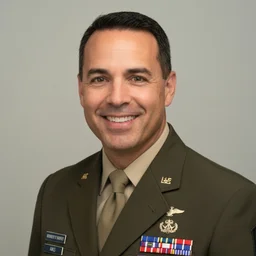
Retired Military Officer & Armed Forces Test Preparation Specialist
United States Army War CollegeColonel Steven Harris (Ret.) served 28 years in the US Army, earning a Master of Arts in Military Science from the Army War College and a Bachelor of Science in Criminal Justice. He has coached thousands of military enlistment and officer candidate program applicants through the ASVAB, AFQT, AFCT, OAR, and officer selection assessment processes across all military branches.
Join the Discussion
Connect with other students preparing for this exam. Share tips, ask questions, and get advice from people who have been there.
View discussion (5 replies)