
TBAS Test & ASVAB Guide: What Military Pilots Need to Know 2026 October
Free asvab practice test practice test with questions and answer explanations. Prepare for the 2026 October exam with instant scoring and study guides. ❓

The tbas test — Test of Basic Aviation Skills — is one of the most specialized military aptitude exams you'll encounter. It measures cognitive abilities, psychomotor skills, and multi-tasking capacity that predict success in pilot training programs. But before you ever sit for the TBAS, you'll need to clear the ASVAB. That's where your military career starts, regardless of which branch you're targeting or which specialty you want.
Taking an asvab practice test before your official exam date is the single best thing you can do to improve your score. Practice tests reveal your strengths and weaknesses across all subtests — arithmetic reasoning, word knowledge, paragraph comprehension, math knowledge, and the technical sections. You can't fix what you can't measure. A baseline score gives you a roadmap for targeted studying, and that targeted approach saves weeks of unfocused cramming.
The asvab test determines more than just whether you qualify for enlistment. Your subtest scores — grouped into composite scores called line scores — determine which Military Occupational Specialties (MOS), ratings, or Air Force Specialty Codes (AFSC) you're eligible for. A higher ASVAB score literally opens more career doors. If you're aiming for aviation, intelligence, or technical fields, you'll need scores well above the minimum. This guide covers everything from ASVAB fundamentals to TBAS-specific preparation so you walk into testing day ready.

The asvab test comes in two formats: the computer-adaptive version (CAT-ASVAB) taken at Military Entrance Processing Stations, and the paper-and-pencil version sometimes administered at schools and Mobile Examining Team sites. The CAT-ASVAB adapts to your ability level — get a question right, and the next one gets harder. Miss one, and the difficulty drops. This means your score is determined not just by how many you get right, but by the difficulty level of the questions you're answering correctly.
Military fitness standards are separate from the ASVAB but equally important to your enlistment journey. The army combat fitness test (ACFT) replaced the old Army Physical Fitness Test and now evaluates soldiers across six events: deadlift, standing power throw, hand-release push-ups, sprint-drag-carry, plank, and a two-mile run. Every branch has its own physical assessment — the Air Force uses the Integrated Resilience and Fitness Assessment, the Navy runs the Physical Readiness Test, and the Marines have their Combat Fitness Test.
Don't make the mistake of training for one test while ignoring the other. Your ASVAB score gets you in the door. Your physical fitness keeps you there. Start both preparations simultaneously — study for the ASVAB during morning sessions, then train physically in the afternoon. This dual approach mirrors the balance you'll need throughout your military career, where mental sharpness and physical readiness go hand in hand. Neither alone is enough.
Before you test asvab practice test materials, understand what you're actually being tested on. The ASVAB's four AFQT-qualifying subtests — Arithmetic Reasoning (AR), Mathematics Knowledge (MK), Word Knowledge (WK), and Paragraph Comprehension (PC) — determine your overall percentile score. This AFQT score is what recruiters look at first. The remaining subtests (General Science, Electronics Information, Auto/Shop Information, Mechanical Comprehension, and Assembling Objects) feed into your line scores.
The army fitness test has evolved significantly over the years. Current standards emphasize functional fitness — movements that translate directly to combat tasks. Whether you're running drills at basic training or preparing for specialized schools, physical readiness scores follow you throughout your service. But remember: you can retake a fitness test every few months. The ASVAB? You need to wait 30 days for a first retest, then six months for any additional attempts. Getting it right the first time matters more.
Your line scores unlock specific career fields. For example, the Skilled Technical (ST) composite combines General Science, Word Knowledge, Paragraph Comprehension, and Mathematics Knowledge. A high ST score opens doors to intelligence, medical, and technical roles. Each branch calculates composites differently, so the same ASVAB results can qualify you for different jobs depending on whether you're heading Army, Navy, Air Force, Marines, or Coast Guard. Research your target MOS or rating before test day so you know which subtests matter most for you.
ASVAB Subtests Explained
Arithmetic Reasoning tests your ability to solve word problems — ratios, percentages, time-distance calculations. Mathematics Knowledge covers algebra, geometry, and basic equations. Word Knowledge measures vocabulary through synonyms and context clues. Paragraph Comprehension tests reading ability through short passages. These four subtests combine into your AFQT percentile, which ranges from 1 to 99. Score above 50 and you're competitive for most career fields across all branches.
The army pt test standards differ by age group and gender, with minimum and maximum point thresholds for each event. Most recruits focus on meeting minimums — but that's a mistake. Scoring well above minimum on physical fitness gives you use for assignment preferences, promotion points, and school slots. The same principle applies to your ASVAB. A practice asvab test helps you aim for excellence, not just adequacy. Minimum qualifying scores get you in. High scores get you the career you actually want.
Study timing matters more than most people realize. Your brain consolidates information during sleep, so evening study sessions followed by a good night's rest often produce better retention than marathon morning sessions. Break your ASVAB prep into 45-minute focused blocks with 10-minute breaks between them. During each block, alternate between content review and practice questions. This spaced repetition approach — reviewing material at increasing intervals — is backed by decades of cognitive research.
Don't ignore the subtests outside the AFQT core. If you're aiming for technical MOS fields — mechanic, electronics technician, avionics — your Mechanical Comprehension and Electronics Information scores carry enormous weight. Grab a basic physics textbook and review simple machines, electrical circuits, and Ohm's Law. Watch YouTube tutorials on engine components and shop tools. These subtests reward practical knowledge, and you can gain enough in 2-3 weeks of focused study to significantly boost your line scores.
If you want to try an asvab test sample online before committing to a full study program, plenty of free options exist. The official ASVAB website offers a practice version, and sites like this one provide full-length timed tests across every subtest. For practice asvab test resources, look for platforms that explain why each answer is correct — not just which answer is correct. Understanding the reasoning behind answers builds transferable skills that help across multiple subtests.
An asvab practice test air force candidates specifically should target includes the General Science and Electronics Information subtests, since Air Force technical career fields weigh these heavily. The Air Force also requires higher minimum AFQT scores than the Army or Marines — currently 36 versus 31-32. If you're aiming for Air Force cyber, intelligence, or space operations, you'll need composite scores well into the 70s or higher. Free practice tests help you gauge whether you're in range or need more study time.
Here's something most study guides overlook: the CAT-ASVAB penalizes unanswered questions more heavily than wrong answers. If you're running low on time in a subtest, guess on remaining questions rather than leaving them blank. An educated guess — eliminating obviously wrong options first — gives you a 25-50% chance of picking up points. A blank answer gives you zero. Time management during the test is itself a skill worth practicing. Set section timers during your practice sessions to build pacing instincts.
CAT-ASVAB vs. Paper-and-Pencil ASVAB
- +CAT-ASVAB results are available immediately — no waiting days for scores
- +Adaptive format means fewer total questions while maintaining accuracy
- +Computer interface lets you flag and review questions within each subtest
- +Testing environment at MEPS is standardized and professionally proctored
- +Shorter overall testing time compared to paper version
- +Individual workstation reduces distractions from other test-takers
- −You can't go back to previous questions once you've answered on CAT-ASVAB
- −Adaptive difficulty means harder questions if you're doing well — which feels stressful
- −MEPS locations may require travel and an overnight stay for some candidates
- −Paper version allows you to skip and return to difficult questions
- −Paper version is sometimes offered at convenient school locations
- −Some candidates perform better on paper — screen fatigue is real during long tests
So what is the asvab test, exactly? It stands for Armed Services Vocational Aptitude Battery — a multi-subtest assessment that measures your aptitude across academic and technical domains. Every military branch uses ASVAB scores for enlistment qualification and job placement. You'll take it at a MEPS facility (Military Entrance Processing Station) as part of your enlistment process. Some high school students take it through the ASVAB Career Exploration Program, which is a great low-stakes way to see where you stand.
The army fitness test aft — now formally the Army Combat Fitness Test — evaluates physical readiness across six events designed to simulate combat demands. While it's separate from the ASVAB, both assessments happen during the MEPS/reception process. Recruits who score poorly on either test face delays in their enlistment timeline. Smart candidates prepare for both simultaneously. Your body and your brain both need training, and the discipline required for one reinforces the other.
Understanding score reports matters because confusion about ASVAB scoring is widespread. Your AFQT score is a percentile — scoring 65 means you performed better than 65% of the reference population. Line scores are standard scores with different scales depending on the branch. Don't compare raw subtest scores across different practice platforms; percentile rankings are the only meaningful comparison. When your recruiter discusses qualification, they're looking at specific line score thresholds for each MOS, not your overall AFQT alone.
ASVAB Test Day Preparation Checklist
- ✓Confirm your MEPS appointment date and location with your recruiter
- ✓Bring valid government-issued photo ID (driver's license, passport, or state ID)
- ✓Get 7-8 hours of sleep the night before — cognitive tests punish fatigue
- ✓Eat a solid breakfast with protein, complex carbs, and water
- ✓Arrive 30 minutes early for check-in and security screening
- ✓Leave your phone, smartwatch, and electronics in your vehicle or locker
- ✓Bring nothing into the testing room — scratch paper and pencils are provided
- ✓Wear comfortable clothing (you may also do physical processing at MEPS)
- ✓Don't cram the morning of — light review only, focus on staying calm
- ✓Remember: unanswered questions hurt more than wrong guesses on CAT-ASVAB
An asvab test sample online resource should mirror the real CAT-ASVAB format as closely as possible. Look for timed sections, adaptive difficulty, and detailed score breakdowns by subtest. The best platforms track your progress over time so you can see improvement trends. An asvab practice test army candidates recommend typically focuses heavily on Arithmetic Reasoning and Word Knowledge — the two subtests that carry the most weight in AFQT calculation.
For asvab test practice, establish a consistent daily routine. Thirty minutes of vocabulary building (learn 10 new words per day), 30 minutes of math problem sets, and 30 minutes of full-subtest practice. That's 90 minutes daily — manageable alongside a job, school, or other responsibilities. Consistency beats intensity every time. A candidate who studies 90 minutes daily for four weeks will outscore someone who crams 12 hours the day before. Your brain needs repetition and sleep to consolidate new information into long-term memory.
If you're retesting, pay close attention to your previous score report. It breaks down performance by subtest, showing exactly where you fell short. Target those specific areas rather than restudying everything from scratch. Your strong subtests don't need more work. Spend 80% of your retest prep on your two weakest areas and 20% maintaining your strengths. This focused approach maximizes score improvement within the 30-day or 6-month retest window.
Solid asvab test prep combines multiple resource types. A review book provides structured content coverage. Online practice tests build timing and test-taking instincts. Flashcard apps reinforce vocabulary and key formulas during spare moments. YouTube channels explain tricky math concepts visually. The candidates who score highest don't rely on a single resource — they layer multiple tools to cover different learning styles and reinforce material through varied repetition.
An af asvab practice test targets the specific composite scores Air Force recruiters care about. The Mechanical (M) composite, Electronics (E) composite, General (G) composite, and Administrative (A) composite each unlock different AFSCs. If you've got your heart set on becoming a loadmaster, aerial gunner, or pararescue jumper, research the exact composite requirements for that AFSC and tailor your study plan accordingly. Generic ASVAB prep is fine for meeting minimums, but career-specific targeting is how you get the job you actually want.
Don't underestimate Paragraph Comprehension. It's the shortest subtest — only 11 questions on the CAT-ASVAB — but it carries significant AFQT weight. Many candidates skip PC practice because reading feels "natural." The problem? ASVAB reading passages test very specific skills: identifying main ideas, drawing conclusions, and determining word meaning from context. Practice with timed reading exercises and pay attention to question stems. They often contain clues about whether the answer should be explicitly stated in the passage or inferred from it.
The PiCAT (Pre-screening internet-delivered Computer Adaptive Test) lets you take an unproctored version of the ASVAB at home, then verify your score with a short confirmation test at MEPS. It covers the same content and uses the same scoring. The advantage? You test in a comfortable environment without MEPS pressure. The catch? You must complete the verification test within 30 days, and if your verification score differs significantly from your PiCAT score, you'll retake the full ASVAB at MEPS. Ask your recruiter if PiCAT is available in your area.
Looking for a free asvab practice test? Start right here. Free tests give you a realistic preview of question difficulty, format, and timing without any financial commitment. They're ideal for your initial diagnostic — take one before you start studying to establish your baseline scores. An asvab practice test navy candidates favor typically emphasizes the subtests feeding into Navy ratings like Electronics Information and General Science, since technical ratings (ET, FC, IT) require strong technical composites.
Each branch weighs ASVAB subtests differently for qualification and job placement. The Navy's line scores use different combinations than the Army's. Marine Corps composites differ from Air Force calculations. Coast Guard requirements are their own animal entirely. Don't assume that qualifying for an Army MOS means you'd qualify for the equivalent Navy rating. Research your specific branch's composite formulas so you know exactly which subtests to prioritize in your study plan.
Mental math shortcuts save precious time on the Arithmetic Reasoning and Mathematics Knowledge subtests. Practice estimating before calculating — if the answer choices are 24, 37, 52, and 81, and your rough estimate is "somewhere around 50," you've already eliminated two options. Learn to convert fractions to decimals quickly (1/8 = 0.125, 3/4 = 0.75). Memorize common percentage calculations. These small efficiencies compound across 30+ math questions and can mean the difference between finishing comfortably and rushing through the final items.
ASVAB Practice Test Questions
Prepare for the ASVAB - Armed Services Vocational Aptitude Battery exam with our free practice test modules. Each quiz covers key topics to help you pass on your first try.
ASVAB Arithmetic Reasoning Test
ASVAB Exam Questions covering Arithmetic Reasoning Test. Master ASVAB Test concepts for certification prep.
ASVAB Arithmetic Reasoning Word Problems
Free ASVAB Practice Test featuring Arithmetic Reasoning Word Problems. Improve your ASVAB Exam score with mock test prep.
ASVAB Assembling Objects Test
ASVAB Mock Exam on Assembling Objects Test. ASVAB Study Guide questions to pass on your first try.
ASVAB Automotive Information Test
ASVAB Test Prep for Automotive Information Test. Practice ASVAB Quiz questions and boost your score.
ASVAB Electronics Fundamentals and Circuits
ASVAB Questions and Answers on Electronics Fundamentals and Circuits. Free ASVAB practice for exam readiness.
ASVAB Electronics Practice Test
ASVAB Mock Test covering Electronics Practice Test. Online ASVAB Test practice with instant feedback.
ASVAB Electronics Practice Test 1
Free ASVAB Quiz on Electronics Practice Test 1. ASVAB Exam prep questions with detailed explanations.
ASVAB General Science Biology and Ecology
ASVAB Practice Questions for General Science Biology and Ecology. Build confidence for your ASVAB certification exam.
ASVAB General Science Practice Test
ASVAB Test Online for General Science Practice Test. Free practice with instant results and feedback.
ASVAB General Science Practice Test 1
ASVAB Study Material on General Science Practice Test 1. Prepare effectively with real exam-style questions.
ASVAB Mathematics Knowledge Test
Free ASVAB Test covering Mathematics Knowledge Test. Practice and track your ASVAB exam readiness.
ASVAB Mechanical Comprehension Principles
ASVAB Exam Questions covering Mechanical Comprehension Principles. Master ASVAB Test concepts for certification prep.
ASVAB Mechanical Comprehension Test
Free ASVAB Practice Test featuring Mechanical Comprehension Test. Improve your ASVAB Exam score with mock test prep.
ASVAB Paragraph Comprehension and Inference
ASVAB Mock Exam on Paragraph Comprehension and Inference. ASVAB Study Guide questions to pass on your first try.
ASVAB Paragraph Comprehension Test
ASVAB Test Prep for Paragraph Comprehension Test. Practice ASVAB Quiz questions and boost your score.
A study.com asvab practice test and similar online platforms offer structured courses with video lessons, quizzes, and progress tracking. These paid platforms work well for candidates who need guided instruction rather than self-directed study. The key advantage? Structured curriculum ensures you don't accidentally skip important topics. The disadvantage? Cost. Weigh your budget against the free resources available — for many candidates, free practice tests combined with a $20 review book provide more than enough preparation material.
For an air force asvab practice test specifically, prioritize the subtests that feed into your target AFSC's qualifying composite. Air Force cyber careers (1B4X1, 1D7X1) require high General (G) composites — heavy on Arithmetic Reasoning, Word Knowledge, and Paragraph Comprehension. Maintenance careers need strong Mechanical (M) composites. Medical careers weight General Science heavily. Knowing your target career's composite formula lets you allocate study time strategically rather than spreading effort evenly across all nine subtests.
One last tip that applies to both the ASVAB and TBAS: manage your test anxiety actively. Deep breathing exercises — four counts in, hold for four, out for four — lower your heart rate and clear your mind between subtests. Positive self-talk works better than you'd think. Remind yourself that you've prepared, you know this material, and you can handle whatever the test throws at you. Anxiety doesn't mean you're unprepared. It means you care about the outcome. Channel that energy into focus rather than letting it spiral into panic.
ASVAB Questions and Answers
About the Author
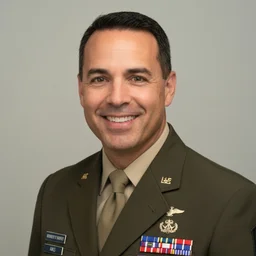
Retired Military Officer & Armed Forces Test Preparation Specialist
United States Army War CollegeColonel Steven Harris (Ret.) served 28 years in the US Army, earning a Master of Arts in Military Science from the Army War College and a Bachelor of Science in Criminal Justice. He has coached thousands of military enlistment and officer candidate program applicants through the ASVAB, AFQT, AFCT, OAR, and officer selection assessment processes across all military branches.
Join the Discussion
Connect with other students preparing for this exam. Share tips, ask questions, and get advice from people who have been there.
View discussion (5 replies)