
What is ServSafe? Complete Certification Guide 2026 October
Pass your What is ServSafe? Complete exam on the first attempt. Practice questions with detailed answer explanations, hints, and instant scoring. 💡
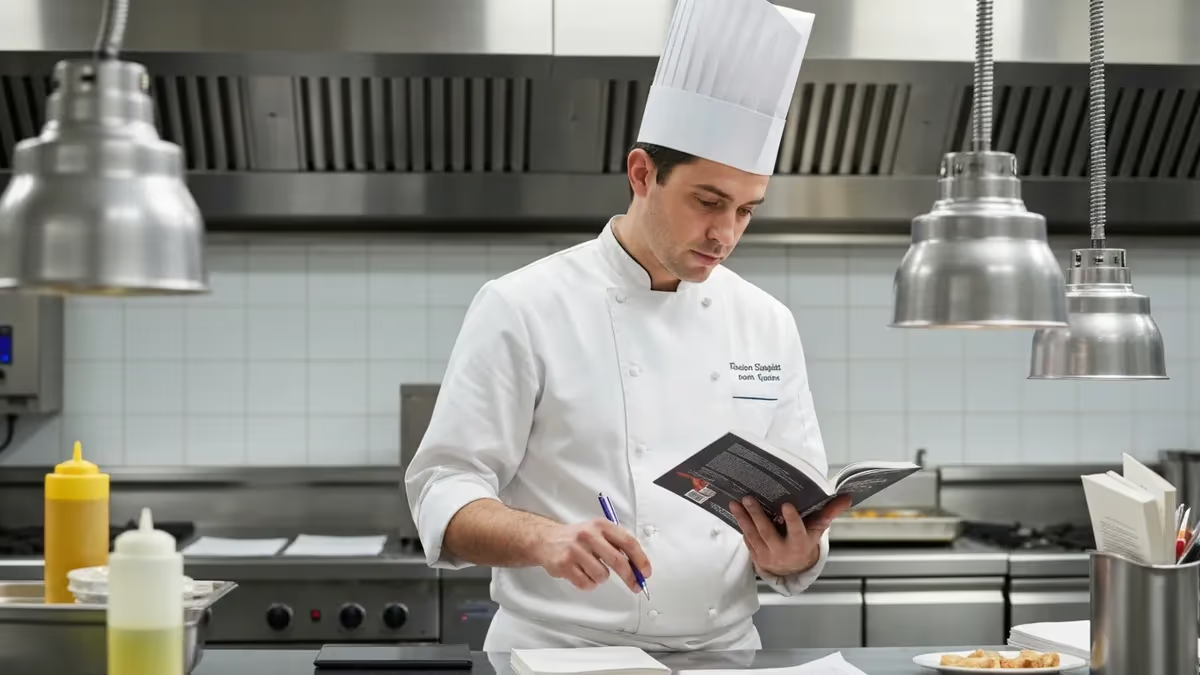
Understanding ServSafe: Your Path to Food Safety Certification
ServSafe is more than just a certificate; it's a comprehensive program designed to educate foodservice professionals on critical aspects of food safety. From preventing foodborne illnesses to implementing effective food safety management systems, ServSafe food safety training equips individuals with the knowledge to maintain high standards of hygiene and safety in any kitchen or dining establishment.
The program is developed by industry experts and constantly updated to reflect the latest science and regulatory requirements, making the ServSafe food safety certification a gold standard in the industry. Whether you're a restaurant manager, a line cook, or a server, understanding and applying ServSafe principles is critical for protecting public health and your establishment's reputation.
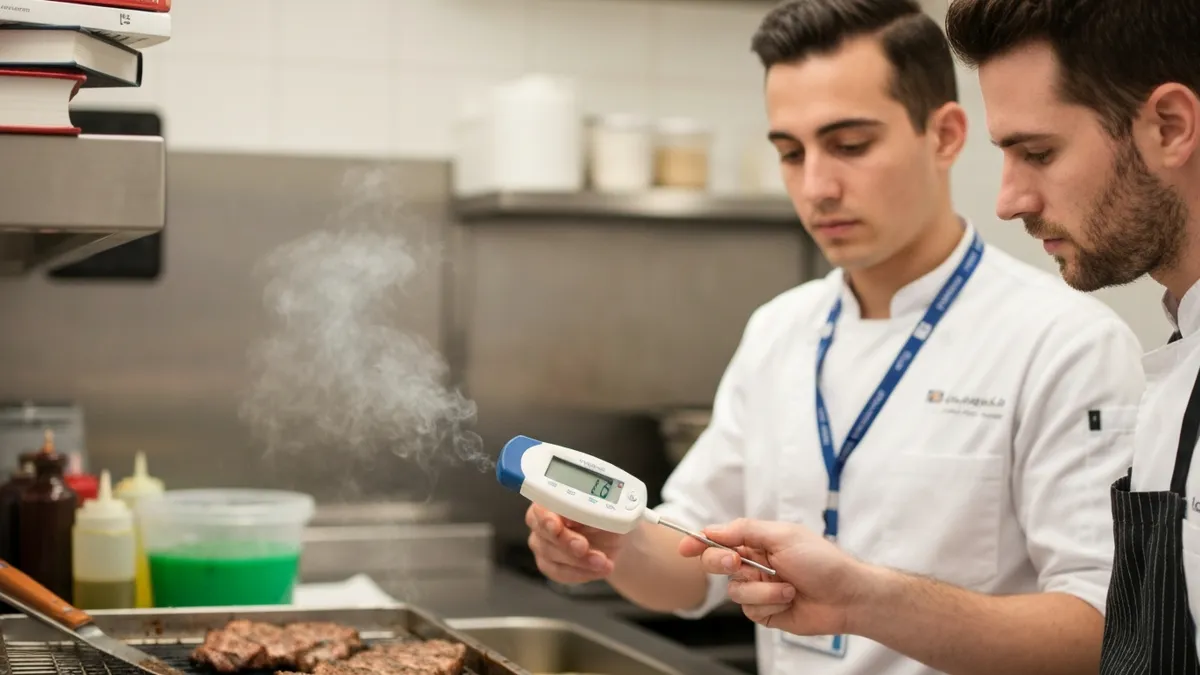
ServSafe Certification Types
ServSafe offers a range of certifications tailored to different roles within the foodservice industry. The most prominent is the ServSafe food safety manager certification, which is often a legal requirement for at least one person in a supervisory role per shift in many jurisdictions. Beyond management, specific certifications address other critical areas like food handling, alcohol service, and allergen awareness.
Each ServSafe food safety certification focuses on distinct knowledge areas, ensuring that all staff, from entry-level to management, have the appropriate level of food safety training. Understanding the specific type of ServSafe food safety certificate you need is the first step towards compliance and safety.
ServSafe Food Safety Training Explained
Getting your ServSafe food safety certification begins with proper training. ServSafe offers various formats to accommodate different learning styles and schedules, ensuring that everyone can access the necessary knowledge to pass the ServSafe food safety test. Options typically include online courses, in-person classes, and self-study materials.
The official ServSafe food safety course provides comprehensive modules covering all critical aspects of food safety, from receiving and storing food to cooking temperatures and sanitation. Many individuals find that supplementing their course with a ServSafe Manager Practice Test or a general ServSafe Practice Test Questions significantly boosts their confidence for the actual exam.
For those looking for a flexible option, the ServSafe food safety online course is a popular choice, allowing you to learn at your own pace. Classroom training, on the other hand, offers direct interaction with an instructor and peers, which can be beneficial for hands-on learners. Regardless of the format, the goal of ServSafe food safety training is to prepare you thoroughly for the certification exam.

The ServSafe Food Safety Test and Preparation
The culmination of your ServSafe food safety training is the official ServSafe food safety test. This exam assesses your understanding of critical food safety principles and practices. For the ServSafe food safety manager certification exam, you'll typically face 90 multiple-choice questions, requiring a score of 70% or higher to pass. The ServSafe food handler exam is shorter, usually 40 questions, also with a 75% passing score.
Preparation is key to success. Many resources are available, including official ServSafe study guides, online practice tests, and review sessions. Engaging with a ServSafe Food Handler Practice Test or a comprehensive ServSafe food safety practice test can significantly improve your chances of passing on your first attempt. These practice tests help you identify areas where you need further study and familiarize you with the exam format and question types.
Remember, the goal is not just to pass the ServSafe food safety test, but to truly internalize the knowledge to apply it effectively in your workplace. This commitment to management of food safety practices ServSafe promotes is what makes the certification so valuable.
ServSafe Exam Preparation Checklist
- ✓Complete an approved ServSafe food safety training program.
- ✓Review official ServSafe study materials and take practice tests.
- ✓Pass the official ServSafe food safety test with a score of 75% or higher.
- ✓Meet any additional state or local regulatory requirements for your specific role.
- ✓Be at least 18 years old for ServSafe Food Safety Manager Certification (recommended).
ServSafe Training Topics
ServSafe Food Safety Manager Certification — This is the cornerstone certification for anyone in a supervisory role overseeing food preparation and service. It covers critical aspects of food safety management systems, including HACCP, flow of food, and sanitation. Achieving your ServSafe food safety manager certification demonstrates a comprehensive understanding of preventing foodborne illnesses and is often required by law.

Comparing ServSafe with Other Food Safety Certifications
While ServSafe is highly prominent, it's not the only food safety certification available. Questions often arise about alternatives such as "is state food safety the same as servsafe?" or "premier food safety vs servsafe." Other notable providers include the National Registry of Food Safety Professionals (NRFSP) and various state-specific programs.
Generally, the ServSafe food safety manager certification holds widespread national acceptance, often making it the preferred choice for businesses operating across multiple states. However, some local jurisdictions might accept or even prefer certifications from other accredited providers. It's crucial to check with your local health department to understand their specific requirements regarding food safety certification ServSafe or otherwise.
For instance, while a "premier food safety servsafe study guide spanish pdf" might be available, it's essential to confirm if that specific provider's certification is recognized in your area. The core principles of food safety temperatures ServSafe teaches are universal, but the accepted credential may vary.
ServSafe Certification: Pros and Cons
- +Widely accepted and respected in the foodservice industry.
- +Comprehensive ServSafe food safety training content.
- +Flexible learning options (online, classroom).
- +Demonstrates commitment to high food safety standards ServSafe promotes.
- +Recognized by regulatory bodies across the U.S.
- −Certification requires renewal every 5 years.
- −Cost of ServSafe food safety course and exam can be a factor.
- −Requires dedicated study for the ServSafe food safety test.
- −Some states may have additional or specific local requirements.
Pros and Cons at a Glance
| Pros | Cons |
|---|---|
| Widely accepted and respected in the foodservice industry. | Cost of ServSafe food safety course and exam can be a factor. |
| Comprehensive ServSafe food safety training content. | Requires dedicated study for the ServSafe food safety test. |
| Flexible learning options (online, classroom). | Some states may have additional or specific local requirements. |
ServSafe Food Safety Certification Costs
The cost of obtaining your ServSafe food safety certification can vary depending on the specific program, chosen training method, and whether you purchase study materials. Generally, you'll incur costs for the training course itself, the exam voucher, and potentially a proctoring fee.
For more details, see our ServSafe Food Safety — Complete Guide (2026) guide.More ServSafe Guides




Sample ServSafe Practice Questions
Try these questions from our free ServSafe practice tests. The correct answer and an explanation follow each question.
A customer insists they are sober and demands additional alcoholic drinks, but the server observes signs of intoxication. What is the correct action per ServSafe Alcohol guidelines?
- A. Continue serving because the customer is self-reporting their own sobriety
- B. Offer one final 'last call' drink as a courtesy before cutting them off
- C. Politely but firmly decline further service and offer non-alcoholic alternatives such as water or food
- D. Quietly ask another server to take over without notifying a manager
Answer: C. Politely but firmly decline further service and offer non-alcoholic alternatives such as water or food
ServSafe Alcohol requires that servers rely on observable signs of intoxication, not a guest's self-assessment. Offering water or food shows care for the guest while maintaining legal and ethical responsibility. Management should also be notified.
A food establishment is implementing HACCP for a new menu item. What is the FIRST step they must complete before identifying critical control points?
- A. Establish corrective actions
- B. Conduct a hazard analysis
- C. Set critical limits
- D. Verify the plan works
Answer: B. Conduct a hazard analysis
Conducting a hazard analysis is the first principle of HACCP and must be completed before CCPs can be identified.
A food handler is prepping a seafood dish on April 4, using shrimp and scallops. The shrimp has a use-by date of April 8, and the scallops have a use-by date of April 10. What is the use-by date for the seafood dish?
- A. April 4
- B. April 12
- C. April 10
- D. April 8
Answer: D. April 8
When combining multiple ingredients with different use-by dates, the use-by date of the final prepared dish must be the earliest use-by date of any single ingredient. This rule ensures that all components of the dish are consumed before any individual ingredient becomes unsafe. In this scenario, since the shrimp has a use-by date of April 8, the entire seafood dish must be used by April 8.
What is the correct method for thawing a large frozen roast quickly in a food service operation?
- A. Leave it on the counter at room temperature
- B. Submerge it under running potable water at 70°F or below
- C. Thaw it in a microwave and hold it at room temperature
- D. Place it in a pan on top of the stove over low heat
Answer: B. Submerge it under running potable water at 70°F or below
Running potable water at 70°F or below is an approved rapid-thaw method that keeps the food surface out of the temperature danger zone.
Take the full ServSafe practice test
For more details, see our ServSafe Cross Connection Guide 2026: What You Need to Know guide. For more details, see our ServSafe Food Contamination & Pest Control Guide 2026 guide. For more details, see our servsafe practice test with answers guide. For more details, see our servsafe exam answer cheat sheet guide. For more details, see our ServSafe Temperature Danger Zone: Complete Guide 2026 guide. For more details, see our servsafe manager practice test guide. For more details, see our servsafe alcohol exam answers guide. For more details, see our servsafe manager certification exam guide. For more details, see our ServSafe Sanitation and Hygiene Guide 2026: Key Rules & Procedures guide. For more details, see our servsafe food handler test guide. For more details, see our servsafe study guide spanish pdf guide. For more details, see our servsafe test cost guide. For more details, see our servsafe manager online course & exam guide. For more details, see our How Long Does ServSafe Certification Last? Renewal Guide 2026 guide. For more details, see our servsafe test scores guide. For more details, see our ServSafe Promo Code & Coupon 2026: Save on Certification guide.ServSafe Questions and Answers
About the Author

Registered Sanitarian & Food Safety Certification Expert
Cornell University College of Agriculture and Life SciencesThomas Wright is a Registered Sanitarian and HACCP-certified food safety professional with a Bachelor of Science in Food Science from Cornell University. He has 17 years of experience in food safety auditing, regulatory compliance, and foodservice management training. Thomas prepares food industry professionals for ServSafe Manager, HACCP certification, and state food handler examinations.
Join the Discussion
Connect with other students preparing for this exam. Share tips, ask questions, and get advice from people who have been there.
View discussion (7 replies)