
ServSafe Food Allergens Guide: The Big 9 & Exam Tips 2026 October
Pass your ServSafe Food Allergens Guide: ✏️ The Big exam on the first attempt. Practice questions with detailed answer explanations, hints, and instant
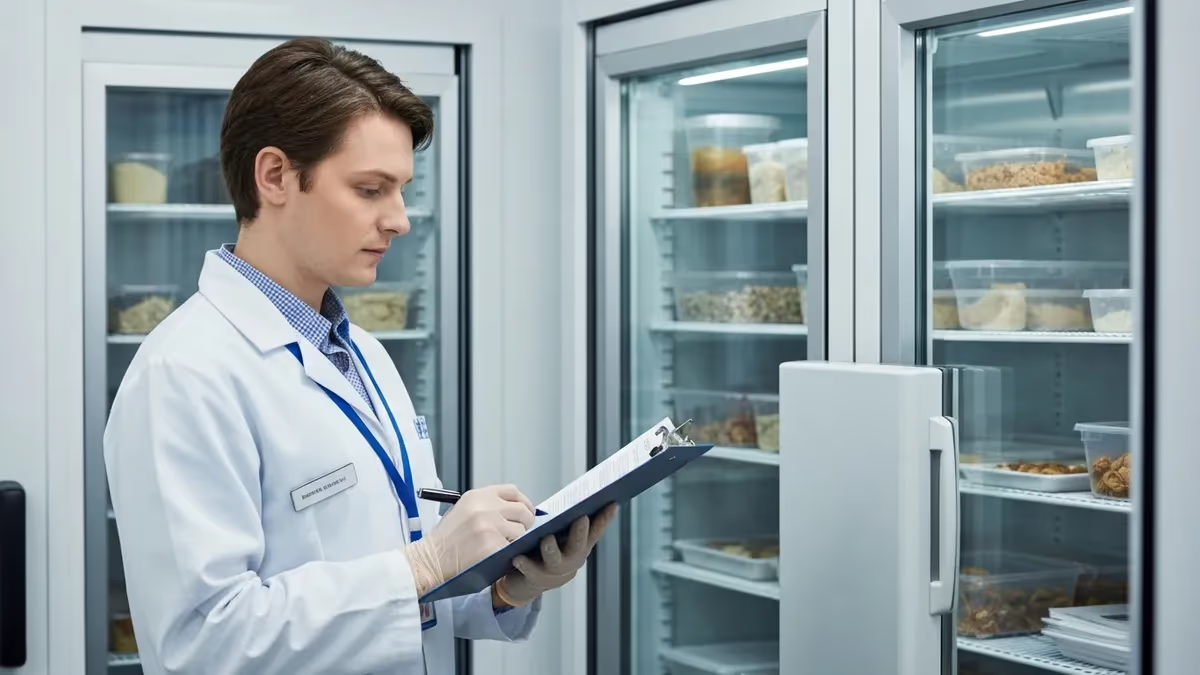
The Big 9 Food Allergens
The U.S. Food and Drug Administration (FDA) recognizes nine major food allergens that account for the vast majority of serious allergic reactions in the United States. As of January 1, 2026, sesame was added to the list, bringing the total to nine. Every food service professional preparing for the ServSafe certification exam must be able to name and recognize all nine.
The Big 9 are: milk, eggs, fish, shellfish, tree nuts, peanuts, wheat, soybeans, and sesame. These allergens must be declared on packaged food labels under the Food Allergen Labeling and Consumer Protection Act (FALCPA). In a restaurant setting, however, label reading is not enough — staff must understand every ingredient in every dish and every shared surface that food touches.
Reactions to food allergens range from mild hives and stomach upset to anaphylaxis, a severe and potentially fatal systemic reaction. There is no cure for a food allergy; the only management strategy is strict avoidance. This is why ServSafe places so much emphasis on allergen training, and why the ServSafe Manager Certification course includes dedicated allergen modules that are tested on the proctored exam.
Understanding which ingredients contain hidden allergens is equally important. For example, wheat appears in soy sauce, many gravies, and some processed meats. Tree nuts can be present in pesto, certain oils, and dessert glazes. Fish sauce — a staple in many Asian cuisines — contains fish allergen even in tiny amounts. Managers must train staff to read every label and communicate clearly with the culinary team about substitutions.
Cross-Contact vs Cross-Contamination
One of the most frequently tested distinctions on the ServSafe exam is the difference between cross-contact and cross-contamination. These terms sound similar but describe completely different hazards — and they require different control strategies.
Cross-contamination refers to the transfer of pathogens (bacteria, viruses, parasites) from one surface or food to another. It is controlled through proper cooking temperatures, cleaning, and sanitizing. Importantly, heat destroys most pathogens — so a properly cooked item is generally safe from the pathogen perspective even if it was previously cross-contaminated.
Cross-contact refers to the unintentional transfer of an allergen from one food or surface to another. Unlike pathogens, allergens are proteins — they are not destroyed by heat, cooking, or sanitizing. A peanut protein that lands on a cutting board remains allergenic whether the board is at room temperature or has been used to cook food. This is a critical point tested on the ServSafe practice exam: sanitizers kill germs but do NOT eliminate allergens.
To prevent cross-contact, food managers must implement allergen-specific controls: dedicated equipment (color-coded cutting boards, utensils, pans), thorough washing with soap and water before sanitizing, and strict ingredient segregation. When preparing an allergen-free meal, staff should wash their hands, change gloves, and use clean equipment — even if the surface appears visually clean. For more on food safety fundamentals, review the ServSafe complete guide which covers all major exam topics.
Customer Communication About Allergens
Effective allergen communication begins the moment a guest sits down. Servers must be trained to ask about allergies proactively and to escalate allergen requests to a manager or chef. The ServSafe program emphasizes that no staff member should guess about whether a dish contains an allergen — if there is uncertainty, the honest and legally appropriate response is to say so and offer to check with the kitchen.
When a guest discloses a food allergy, the manager should personally oversee the preparation of that guest's meal. Written order tickets should clearly flag the allergen. In many establishments, allergen tickets are a different color or stamped with a visible allergy alert. The dish should be delivered by someone who knows it is an allergen meal, and it should be clearly distinguished from other plates at the table.
Menus increasingly include allergen matrices — charts showing which of the Big 9 are present in each dish. While helpful, these matrices must be kept up to date whenever recipes change. For staff who want a deep dive into food safety requirements, the ServSafe Food Handler Card program provides foundational allergen training at the line-level employee tier.
Legal Requirements for Food Allergen Management
Federal law under FALCPA requires packaged food manufacturers to declare the Big 9 allergens on labels. The 2026 FASTER Act added sesame to this list. In the food service context, while restaurants are not required by federal law to print allergen information on menus, many state and local jurisdictions have enacted their own disclosure requirements. Some states require allergen training as part of food handler certification.
Regardless of local law, managers have a duty of care to their guests. Misrepresenting the allergen content of a dish — or failing to disclose known allergens — can result in civil liability, regulatory action, and reputational damage. The ServSafe Manager exam tests candidates on their understanding of these responsibilities. Candidates who want targeted practice should try the ServSafe practice test to gauge their readiness on allergen law and liability questions.
What the ServSafe Exam Tests on Allergens
Allergen content appears throughout the ServSafe Manager exam, not just in one dedicated section. Expect questions on: naming all nine major allergens; distinguishing cross-contact from cross-contamination; describing the correct protocol for preparing an allergen-free meal; explaining why heat does not eliminate allergens; and identifying hidden sources of common allergens in menu items. The ServSafe temperature guide pairs well with allergen study because many candidates conflate temperature controls (for pathogens) with allergen management (proteins, not eliminated by heat).
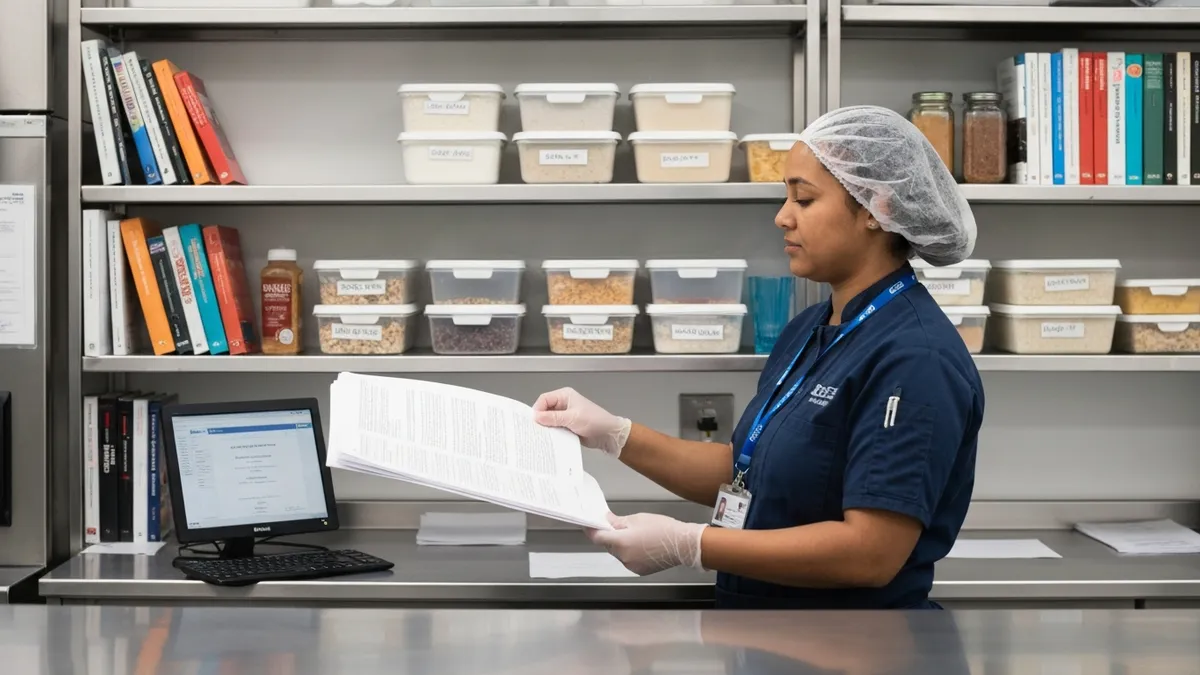
Allergen-Free Meal Preparation Checklist
- ✓Confirm the allergy with the guest and note it on the ticket — use a dedicated allergen alert system
- ✓Wash hands thoroughly with soap and water before starting allergen-free preparation
- ✓Change gloves — even if hands were just washed, gloves provide an additional barrier
- ✓Use dedicated color-coded cutting boards, knives, and cookware for allergen-free prep
- ✓Check every ingredient label, including condiments, sauces, and garnishes, for the declared allergen
- ✓Prepare the allergen-free dish in a designated area away from allergen-containing ingredients
- ✓Cover and label the finished plate clearly before it leaves the prep area
- ✓Verify with the server that the correct allergen-free meal is delivered to the correct guest
ServSafe Food Pros and Cons
- +Test-taking strategies can improve performance beyond raw content knowledge, especially on time-pressured multiple-choice sections
- +Proven strategies for eliminating wrong answers and managing time are transferable across similar exams and situations
- +Strategic approaches to pacing prevent candidates from losing points on questions they would answer correctly with adequate time
- +Familiarity with question formats reduces cognitive load on exam day, freeing mental resources for content recall
- +Strategy-focused preparation can accelerate readiness for candidates with strong foundational knowledge who need tactical refinement
- −Test-taking strategies cannot compensate for content knowledge gaps — strategy amplifies knowledge but does not replace it
- −Overemphasis on strategy during preparation can crowd out time needed for content review
- −Strategies that work in practice may fail under actual exam stress if not practiced enough to become automatic
- −Some strategy advice circulating online is specific to older exam formats and no longer applies to current versions
- −Generic strategy tips often underemphasize the domain-specific techniques that matter most for this particular exam type
Pros and Cons at a Glance
| Pros | Cons |
|---|---|
| Test-taking strategies can improve performance beyond raw content knowledge, especially on time-pressured multiple-choice sections | Test-taking strategies cannot compensate for content knowledge gaps — strategy amplifies knowledge but does not replace it |
| Proven strategies for eliminating wrong answers and managing time are transferable across similar exams and situations | Overemphasis on strategy during preparation can crowd out time needed for content review |
| Strategic approaches to pacing prevent candidates from losing points on questions they would answer correctly with adequate time | Strategies that work in practice may fail under actual exam stress if not practiced enough to become automatic |
| Familiarity with question formats reduces cognitive load on exam day, freeing mental resources for content recall | Some strategy advice circulating online is specific to older exam formats and no longer applies to current versions |
| Strategy-focused preparation can accelerate readiness for candidates with strong foundational knowledge who need tactical refinement | Generic strategy tips often underemphasize the domain-specific techniques that matter most for this particular exam type |
Sample ServSafe Practice Questions
Try these questions from our free ServSafe practice tests. The correct answer and an explanation follow each question.
According to ServSafe, which food is considered a Time/Temperature Control for Safety (TCS) food?
- A. Whole uncut apples
- B. Honey
- C. Cooked rice
- D. Dry crackers
Answer: C. Cooked rice
Cooked rice is a TCS food because it has sufficient moisture and nutrients to support bacterial growth in the danger zone.
A food service manager must exclude a food handler from working with food if the handler is diagnosed with which illness?
- A. Strep throat
- B. The common cold
- C. Salmonella Typhi
- D. Mild seasonal allergies
Answer: C. Salmonella Typhi
Salmonella Typhi (typhoid fever) is one of the Big 6 illnesses that requires complete exclusion from the food operation. The regulatory authority must also be notified. The other listed conditions do not require exclusion unless symptoms like vomiting or diarrhea are present.
A food handler needs to cool a large batch of chili from 135°F to 41°F. According to ServSafe guidelines, how long is the total maximum time allowed for this cooling process?
- A. 2 hours
- B. 4 hours
- C. 6 hours
- D. 8 hours
Answer: C. 6 hours
ServSafe requires food to be cooled from 135°F to 70°F within 2 hours, then from 70°F to 41°F within an additional 4 hours, for a total maximum cooling time of 6 hours. Exceeding this window allows dangerous bacterial growth.
A food manager notices that a food handler did not wash their hands after handling raw ground beef before touching ready-to-eat salad greens. What type of contamination has occurred?
- A. Direct contamination
- B. Cross-contamination
- C. Chemical contamination
- D. Physical contamination
Answer: B. Cross-contamination
Pathogens from raw ground beef were transferred to the ready-to-eat salad via the food handler's hands — this is cross-contamination.
ServSafe Allergen Questions and Answers
Related ServSafe Study Guides

ServSafe Temperature Guide — Food Safety Temperature Zones 2026
ServSafe Food Handler Card — How to Get Certified 2026
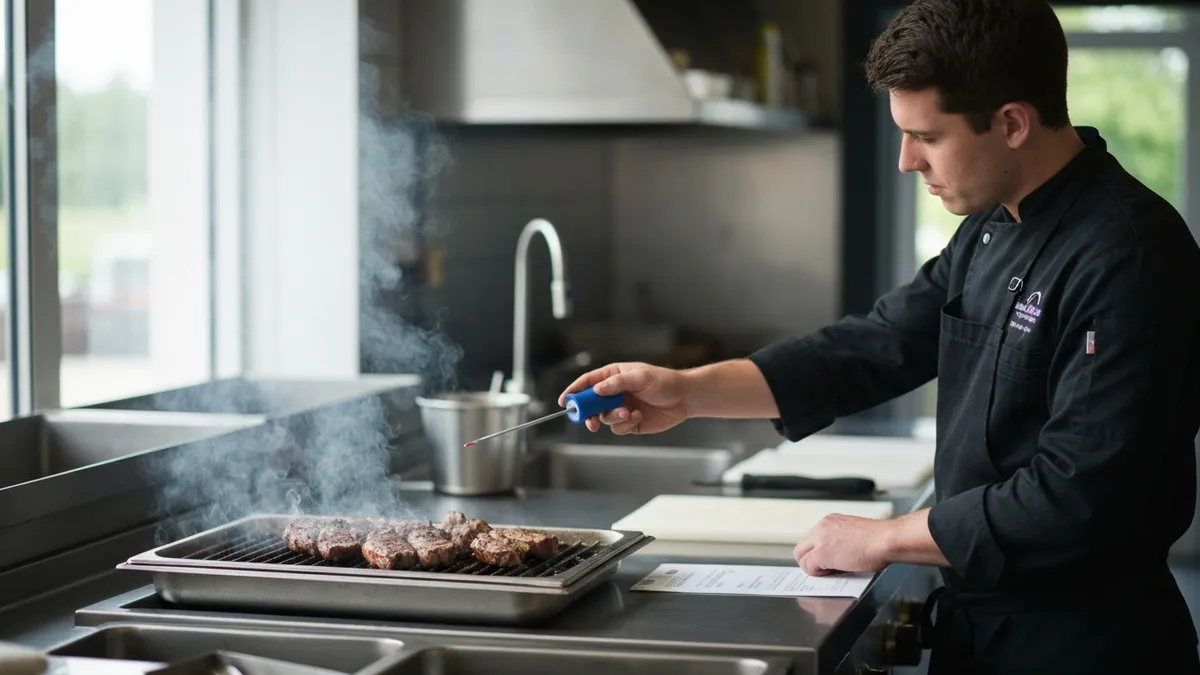
ServSafe Renewal Guide — How to Renew Your Certification 2026
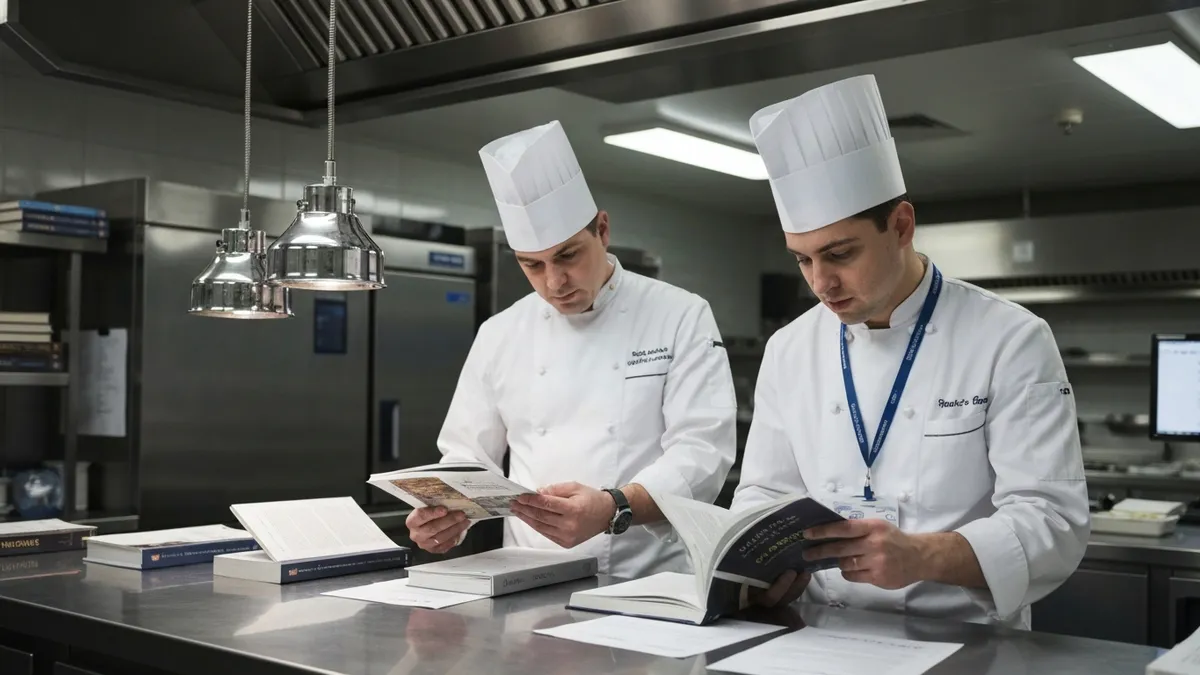
ServSafe Food Safety Manager Certification — Complete Requirements 2026

ServSafe HACCP Guide — The 7 Principles Explained for the Exam 2026
About the Author

Educational Psychologist & Academic Test Preparation Expert
Columbia University Teachers CollegeDr. Lisa Patel holds a Doctorate in Education from Columbia University Teachers College and has spent 17 years researching standardized test design and academic assessment. She has developed preparation programs for SAT, ACT, GRE, LSAT, UCAT, and numerous professional licensing exams, helping students of all backgrounds achieve their target scores.
Join the Discussion
Connect with other students preparing for this exam. Share tips, ask questions, and get advice from people who have been there.
View discussion (7 replies)