
Free ServSafe Study Guide: Complete Exam Prep for Manager Certification
Free ServSafe study guide with practice tests, exam tips & study schedules. Pass the ServSafe manager exam on your first try. 📚
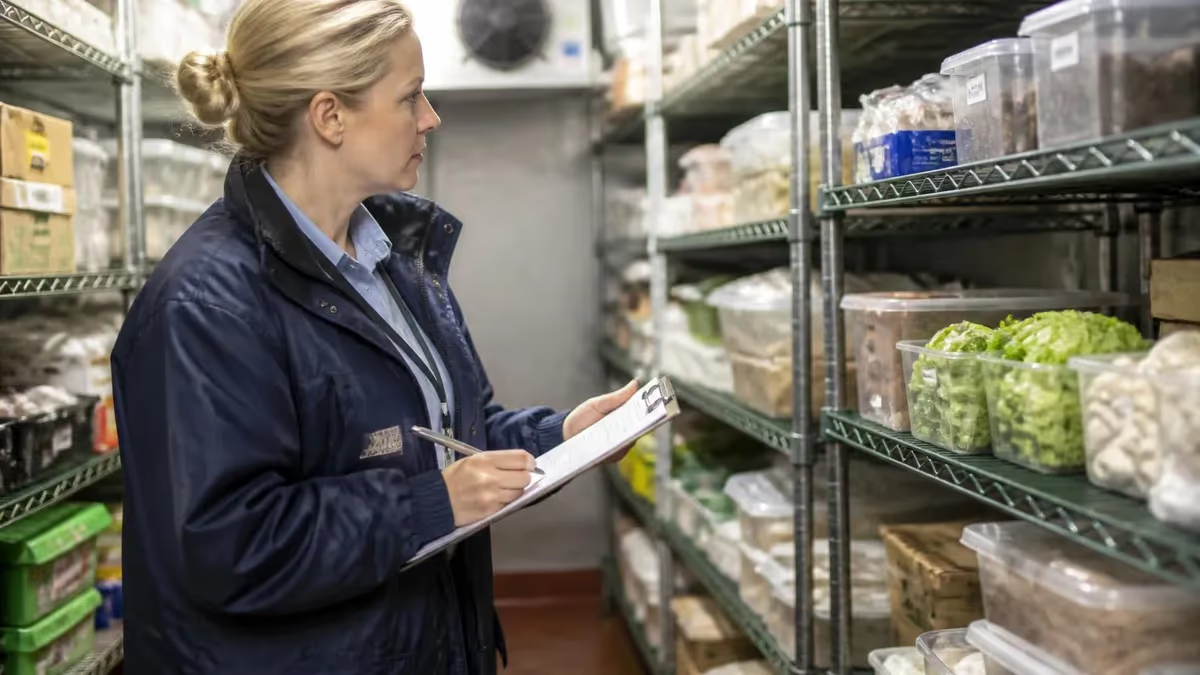
A free ServSafe study guide is the single most valuable resource you can use before sitting for the ServSafe manager certification exam. Whether you are a first-time test taker or returning for a renewal, having a structured study plan backed by quality servsafe practice test questions separates candidates who pass from those who spend another $36 on a retake. This guide covers everything from exam structure and high-frequency topics to realistic practice sessions and day-of strategies.
The ServSafe Manager certification is issued by the National Restaurant Association Educational Foundation and is recognized by health departments in all 50 states. Employers in food service, healthcare dining, and hospitality routinely require it before promoting someone to a supervisory role. Unlike a basic food handler card, the manager credential demands a deep understanding of food science, hazard analysis, regulatory compliance, and employee training — topics that require deliberate study, not casual reading.
Many candidates underestimate the difficulty of the servsafe manager exam. The 90-question, 90-minute test pulls from eight content domains, each with its own terminology, numeric thresholds, and decision trees. Topics like the Temperature Danger Zone, HACCP principles, and proper sanitizer concentrations require precise memorization, not just general awareness. A well-organized free servsafe study guide breaks these domains into manageable chunks so you build knowledge systematically instead of randomly.
Effective servsafe test prep combines three activities: reading the core content, testing yourself with servsafe manager practice test questions, and reviewing every wrong answer until you understand the underlying principle. Passive review — re-reading your notes or highlighting text — produces far weaker retention than active recall. The research on spaced repetition consistently shows that students who quiz themselves score 20 to 30 percent higher than those who only reread material, even when total study time is identical.
This article is organized as a complete hub for your servsafe test prep journey. You will find a recommended study schedule, a breakdown of the eight exam domains, tabbed content covering the most tested concepts, a full checklist of what to do in the final 48 hours before your exam, and links to servsafe manager test questions that mirror the real exam format. Every section is designed to move you from uncertain to confident in the shortest amount of time.
You do not need to spend money on expensive review courses to pass the ServSafe manager exam. The official ServSafe 7th Edition textbook is the authoritative source, and free practice tools — including the ones on this site — are more than sufficient for most candidates. What you do need is consistency: 30 to 45 minutes of focused study per day for three to four weeks produces dramatically better results than cramming over a single weekend, regardless of how many hours you log in that marathon session.
By the end of this guide, you will know exactly which topics to prioritize, how many practice questions to complete before exam day, what common mistakes to avoid, and how to use your remaining study time as efficiently as possible. Let's start building the foundation you need to earn your ServSafe Manager certification and advance your food service career.
ServSafe Manager Exam by the Numbers
Key Facts at a Glance
| Item | Value | Details |
|---|---|---|
| Exam Questions | 90 | Multiple choice format |
| Time Allowed | 90 min | About 1 min per question |
| Passing Score | 70% | 56 of the 80 scored correct needed |
| Content Domains | 8 | Covers all food safety areas |
| Certification Valid | 5 yr | Then renewal required |
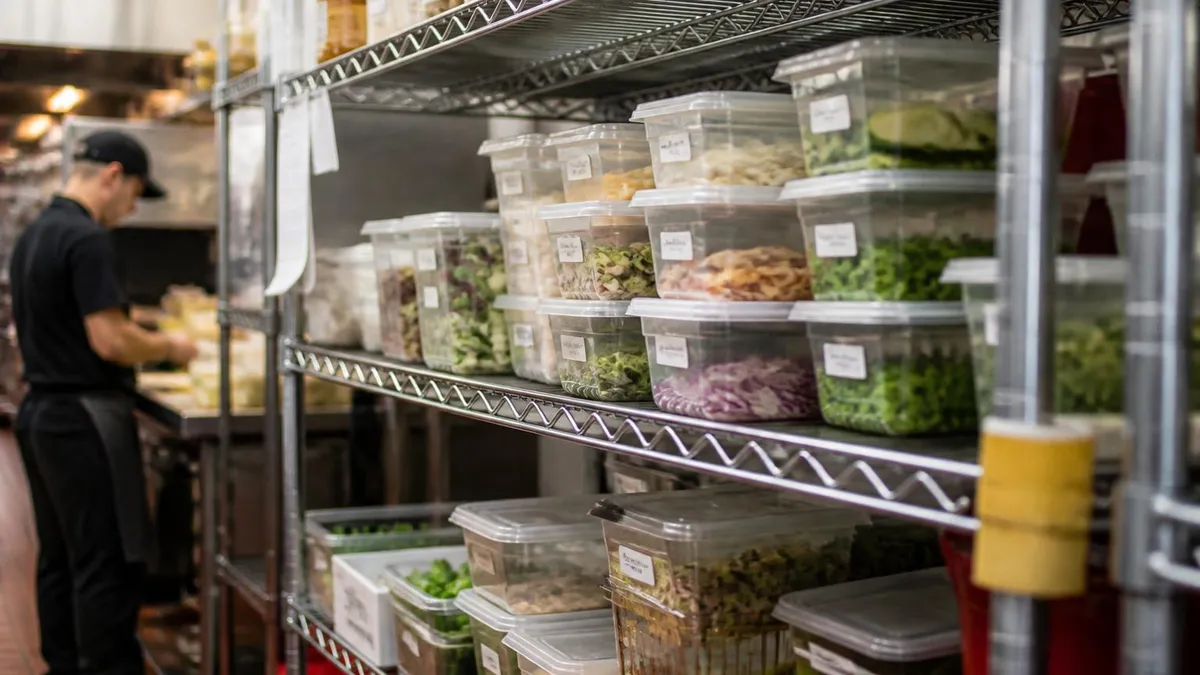
4-Week Free ServSafe Study Guide Schedule
- ▸Read ServSafe 7th Edition Chapters 1–3 on contamination and food safety hazards
- ▸Memorize the Temperature Danger Zone: 41°F–135°F (5°C–57°C)
- ▸Learn the Big 9 food allergens and cross-contact prevention rules
- ▸Complete 30 practice questions on biological, chemical, and physical hazards
- ▸Review your wrong answers and write down the correct principle for each
- ▸Study receiving, storage, thawing, cooking, and holding temperature requirements
- ▸Memorize minimum internal cooking temperatures for all protein categories
- ▸Learn proper cooling procedures: 135°F to 70°F within 2 hours, then to 41°F in 4 hours
- ▸Complete 40 practice questions covering flow of food topics
- ▸Create a temperature reference card to quiz yourself daily
- ▸Learn all 7 HACCP principles and how to write a HACCP plan
- ▸Study the differences between Critical Control Points and Critical Limits
- ▸Review cleaning vs. sanitizing, sanitizer concentrations, and contact times
- ▸Study plumbing, ventilation, lighting, and pest control requirements
- ▸Complete 50 servsafe manager practice test questions and track your domain scores
- ▸Take two full 90-question timed practice exams under realistic conditions
- ▸Identify your two lowest-scoring domains and do a focused 2-hour review of each
- ▸Review all vocabulary terms: TCS foods, FIFO, cross-contamination, calibration
- ▸Complete the pre-exam checklist 48 hours before your test date
- ▸Rest well the night before — sleep deprivation measurably reduces recall accuracy
Understanding the eight content domains of the ServSafe manager exam is the most important structural insight you can gain from any free servsafe study guide. The exam is not a random collection of food safety trivia — it is a carefully weighted assessment across specific knowledge areas, and knowing which domains carry the most questions lets you allocate your study time strategically rather than spending equal time on topics with very different exam weights.
Domain 1, Providing Safe Food, covers the foundational science of foodborne illness: what pathogens cause it, how they spread, which populations face the highest risk, and what regulatory framework governs food service operations. This domain introduces the Big 6 pathogens that require immediate reporting to health authorities — Salmonella Typhi, Shigella, Shiga toxin-producing E. coli, Hepatitis A, Norovirus, and Nontyphoidal Salmonella. Expect 10 to 12 questions from this domain on the actual servsafe manager exam.
Domain 2, Forms of Contamination, dives into biological, chemical, physical, and deliberate contamination. You need to know not just what each type is, but the specific conditions under which each thrives or how it enters the food supply. For example, understanding that Clostridium perfringens grows rapidly in cooked meats held between 70°F and 125°F is the kind of specific, testable detail that separates a 75 percent score from a 90 percent score on the servsafe test.
Domains 3 and 4 address the Flow of Food — both the principles (purchasing, receiving, storage, preparation, cooking, holding, cooling, reheating, and service) and the specific temperature and time requirements that govern each stage. These two domains together account for roughly 30 percent of the exam. Mastery here means knowing that poultry must reach 165°F, ground beef must reach 155°F, and whole cuts of beef or pork must reach 145°F — and being able to apply those thresholds to realistic scenario questions.
Domain 5 covers Food Safety Management Systems, which is where HACCP lives. You need to know all seven HACCP principles in order, understand what distinguishes a Critical Control Point from a regular control measure, and know how to identify Critical Limits, monitoring procedures, corrective actions, verification steps, and record-keeping requirements. Many candidates find this domain abstract at first, but working through scenario-based servsafe manager practice test questions makes the concepts click.
Domains 6 and 7 address Safe Facilities and Equipment, and Cleaning and Sanitizing. These domains cover plumbing requirements, ventilation, lighting levels, pest control Integrated Pest Management strategies, proper use of chemical sanitizers, and the difference between cleaning and sanitizing. Chlorine solutions must reach 50–99 ppm at 75°F, while iodine solutions require 12.5–25 ppm. Quaternary ammonium compounds require 200 ppm. These numbers appear on the servsafe manager sample test with regularity.
Domain 8, Food Safety Regulation, covers the role of regulatory agencies, inspection processes, employee health policies, and the manager's legal responsibilities under the FDA Food Code. You can find servsafe manager practice exam materials that specifically drill regulatory scenarios, which is helpful because this domain tends to produce scenario-heavy questions that require applying rules to realistic situations rather than simple recall.
Balancing your study time across these eight domains based on their relative weight is what a structured free servsafe study guide does for you that passive reading cannot. Use domain-specific practice quizzes to identify your weakest areas early in Week 2, then allocate extra review time in Week 3 before your final simulation tests in Week 4.
ServSafe Manager Practice Test: Most Tested Concepts
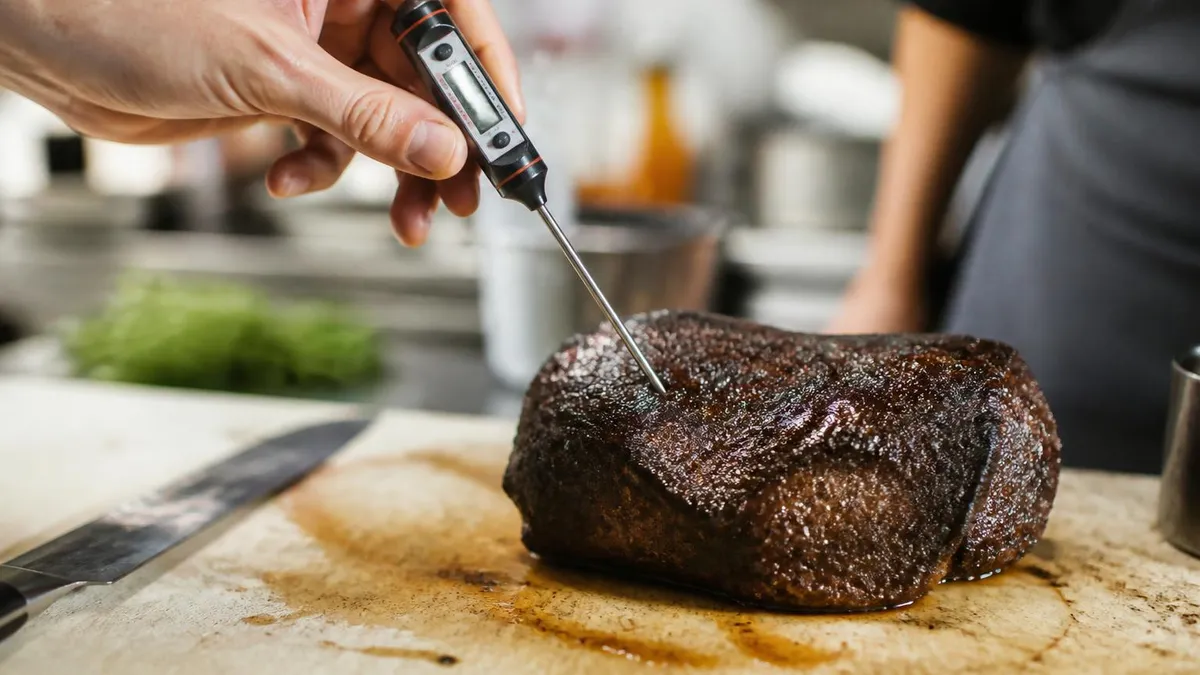
Temperature control is the highest-frequency topic on the servsafe manager practice test, appearing in approximately 25 percent of all questions. You must memorize the Temperature Danger Zone (41°F–135°F), minimum internal cooking temperatures for every protein category, proper cooling procedures (135°F to 70°F within 2 hours, then 41°F or below within 4 additional hours), and safe hot and cold holding temperatures. Thermometer calibration — ice-point method at 32°F and boiling-point method adjusted for altitude — also appears regularly.
A common exam trap involves cooling scenarios. The ServSafe rule requires food to move from 135°F to 70°F within the first 2 hours of cooling — not just within 6 hours total. Many candidates miss questions because they apply the 6-hour total window without recognizing the 2-hour sub-limit. Approved cooling methods include ice baths, blast chillers, ice paddles, and dividing food into shallow pans. Storing hot food in a standard walk-in cooler without any cooling aid is never an acceptable primary method.

Free ServSafe Study Resources: Pros and Cons vs. Paid Courses
- +Zero cost — free servsafe study guides and practice tests eliminate financial barriers to certification
- +Available 24/7 — study on your own schedule without waiting for class times or instructor availability
- +Immediate feedback — online practice tests show correct answers instantly so you can learn from mistakes in real time
- +Wide variety — multiple free practice question banks let you drill hundreds of questions beyond what any single paid course provides
- +Self-paced structure — move quickly through topics you already know and slow down only where you need more review
- +Stress-tested format — free timed practice tests simulate real exam pressure so you build the mental stamina needed on test day
- −No instructor support — if you misunderstand a concept, free resources cannot answer follow-up questions or clarify confusion
- −Quality varies widely — not all free practice questions are accurate or updated to the current ServSafe 9th edition standards
- −No official textbook included — the ServSafe 7th Edition textbook costs extra and is the authoritative source for exam content
- −Requires self-discipline — without a class schedule or instructor accountability, some candidates procrastinate and under-prepare
- −Missing rationales on some platforms — free question banks sometimes show only the correct answer without explaining the underlying principle
- −No proctored environment — practicing alone at home does not fully replicate the psychological pressure of a supervised exam setting
ServSafe Test Prep: Complete Pre-Exam Checklist
- ✓Confirm your exam date, location, and required identification documents at least one week in advance
- ✓Complete at least two full 90-question timed practice exams and score 80 percent or higher on both before test day
- ✓Review your lowest-scoring domain one final time 48 hours before the exam — not the night before
- ✓Memorize all critical temperatures: 41°F cold hold, 135°F hot hold, 165°F poultry, 155°F ground beef, 145°F whole cuts
- ✓Review sanitizer concentrations: chlorine 50–99 ppm, iodine 12.5–25 ppm, quaternary ammonium 200 ppm
- ✓Write out the 7 HACCP principles from memory until you can recite them in order without hesitation
- ✓Review the Big 6 reportable pathogens and the conditions under which an employee must be excluded from work
- ✓Sleep a full 7–8 hours the night before the exam — cramming that night reduces next-day performance measurably
- ✓Eat a balanced meal before the exam and arrive at the testing site at least 15 minutes early
- ✓During the exam, flag difficult questions and return to them — never spend more than 90 seconds on a single question
The 75% Passing Threshold Means You Can Miss 22 Questions
Many candidates are surprised to learn that a passing score on the ServSafe Manager exam requires answering only 56 of the 80 scored questions correctly — a 70percent threshold. This means you have a buffer of 22 incorrect answers. A strategic test-taker focuses mastery on high-weight domains (Flow of Food, Contamination, HACCP) and uses the remaining study time to achieve competency — not perfection — in lower-weight domains like Facilities and Regulations.
Building an effective servsafe practice test routine is the core of any successful free servsafe study guide strategy. Research on test-enhanced learning consistently shows that students who practice retrieval — actively pulling information from memory under simulated test conditions — outperform those who study the same material passively. For the ServSafe manager exam, this means completing full practice question sets under timed conditions starting in Week 2, not just reading your notes and hoping the information sticks.
The most effective practice test approach uses three phases per session. In Phase 1, complete a 30-question timed set without looking anything up. In Phase 2, review every question — not just the ones you got wrong. Understanding why a correct answer is correct is just as important as understanding why wrong answers are wrong, because the real exam uses distractor choices that exploit common misunderstandings. In Phase 3, categorize your errors by domain and note which specific concept each error reveals.
For the servsafe manager sample test questions on this site, pay special attention to the answer explanations. Many candidates miss questions not because they do not know the general topic but because they misread the question stem. ServSafe questions frequently use qualifier words like "most likely," "first," "best," and "except" — and missing these words leads to choosing the second-best answer instead of the correct one. Slowing down to re-read question stems before evaluating the answer choices eliminates a significant percentage of preventable errors.
Domain-specific drilling is especially valuable for candidates who score unevenly across sections. If your mock exams show 90 percent accuracy on temperature questions but only 60 percent on HACCP, allocate three times as much practice time to HACCP scenarios until that score climbs above 80 percent. The servsafe test answers provided after each practice session are your diagnostic data — treat them like a coach's film review, not just a score report.
Timing is another critical element of practice. The real ServSafe manager exam allows 90 minutes for 90 questions, which works out to exactly 60 seconds per question. Most candidates finish well within the time limit, but some anxiety-prone test takers freeze on hard questions and lose track of time. Practicing with a visible countdown timer from Week 2 onward builds the mental habit of moving forward rather than getting stuck, and prevents the unpleasant surprise of reaching question 70 with only 10 minutes left.
If you want to review the official cost structure before registering, including options for retakes and bundled materials, the servsafe test 90 questions and answers pdf free download page covers all current pricing in detail. Understanding what you are paying for — and what is included in your exam registration — helps you plan your study timeline around registration deadlines and retake windows without unexpected costs.
Finally, consider using a mix of question types in your practice sessions. The servsafe manager practice tests on this site include both straightforward recall questions (What is the minimum internal cooking temperature for poultry?) and applied scenario questions (A food handler is preparing chicken salad. Which step presents the greatest risk of cross-contamination?). The real exam leans heavily toward scenario questions, so candidates who only practice recall items are often surprised by the applied format even when they know the underlying facts cold.
ServSafe exam seats at proctored testing centers fill up quickly, especially in metro areas and during spring and fall hiring seasons when food service employers push employees to certify. Register at least three to four weeks before your target exam date to secure your preferred location and time slot. If you need to reschedule, ServSafe requires at least 24 hours notice — cancellations made after that window may forfeit your exam fee entirely.
Exam day performance depends heavily on what you do in the 24 hours beforehand, and most free servsafe study guide resources skip this critical window. The night before your ServSafe manager exam should involve light review only — go over your temperature reference card, mentally recite the HACCP principles, and skim your most frequently missed topics. Do not attempt to learn new material the night before. Your brain needs consolidation time, not new input, to perform at its best the following morning.
Sleep is non-negotiable. Studies on academic performance consistently show that getting fewer than 7 hours of sleep before a high-stakes test reduces working memory capacity, slows information retrieval, and increases the likelihood of careless errors. Food service professionals often work late shifts, so plan your exam for a morning when you can sleep a normal schedule the night before rather than arriving at a 9 a.m. test after closing the restaurant at midnight.
On the morning of the exam, eat a balanced meal that includes protein, healthy fats, and complex carbohydrates. Avoid a heavy sugary breakfast that produces an energy spike followed by a crash mid-exam. Arrive at the testing center at least 15 minutes early so you have time to check in, get settled, and do a brief 2-minute breathing exercise before the proctor begins. Candidates who rush in at the last minute with elevated cortisol levels consistently perform worse than those who arrive calm and prepared.
During the exam itself, use a structured approach for every question. Read the stem carefully, identify the key qualifier word if one is present, eliminate the two obviously wrong answers, then choose between the remaining two. If you are genuinely unsure, flag the question and move on — the ServSafe exam software allows you to mark questions for review and return to them before submitting. Never change a first-instinct answer unless you recall a specific fact that proves it wrong.
For servsafe exam answers that involve numbers — temperatures, concentrations, time limits — write them down on your scratch paper at the start of the exam before you read a single question. Doing this when your memory is freshest means you can reference that scratch sheet throughout the test instead of trying to recall a number mid-question when your brain is already loaded with other information. This trick alone prevents 3 to 5 errors for most candidates.
After submitting the exam, you receive your result immediately at the testing center. If you pass, your certificate is mailed within 3 to 4 weeks and your digital credential is available through the ServSafe portal sooner.
If you do not pass on the first attempt, you must wait at least one day before retesting, and you can retake the exam up to five times within a 12-month period with a $36 fee per retake. Review the servsafe manager practice exam resources available for candidates who need a second attempt, including targeted domain reviews that identify exactly where your score fell short.
The vast majority of candidates who follow a structured four-week study plan, complete 200 or more practice questions, and review every wrong answer pass the ServSafe manager exam on their first attempt. The exam is challenging but entirely passable with the right preparation. Trust your study process, arrive confident, and use the strategies outlined in this guide to turn your preparation into certification.
Beyond the core study schedule and exam-day tactics, there are several practical study habits that consistently separate high scorers from candidates who just barely pass the servsafe manager test. The first is using active writing rather than passive reading. When you encounter a new concept — say, the proper way to calibrate a bimetallic stemmed thermometer — write it out in your own words rather than highlighting the textbook sentence. The physical act of rephrasing forces deeper cognitive processing and dramatically improves long-term retention.
The second high-impact habit is building a personal fact sheet of numbers and thresholds. ServSafe questions are loaded with specific numeric values: temperatures, ppm concentrations, time windows, refrigerator storage durations, and hot holding minimums. Creating a single one-page reference sheet of all critical numbers — and quizzing yourself on it daily — is the most efficient way to commit these values to memory. Candidates who know their numbers cold can answer roughly 25 to 30 percent of exam questions within 20 seconds, freeing more time for the harder scenario-based items.
The third habit is practicing with a partner or study group whenever possible. Teaching a concept to another person is the most powerful form of active learning available. If you can explain why Norovirus is the most common cause of foodborne illness in the United States, what makes it so virulent, and exactly which prevention protocols the ServSafe program recommends, you have mastered that topic at a level that will hold up under exam pressure. Find a colleague studying for the same certification and take turns explaining domains to each other once per week.
Fourth, use the official ServSafe practice tests available on the National Restaurant Association's website as a benchmark, but do not limit yourself to those alone. The official practice materials use the real exam format but contain a limited number of questions, meaning you will see repeats quickly. Supplementing with third-party servsafe practice tests gives you exposure to a wider variety of question phrasings covering the same concepts — which is critical because the real exam uses novel scenarios you have never seen word-for-word before.
Fifth, create physical flashcards for the top 50 vocabulary terms tested on the servsafe manager exam: TCS foods, FIFO, cross-contamination, ready-to-eat foods, intact muscle, critical limit, monitoring, corrective action, verification, and more. Carry the flashcard deck with you and review it during downtime — waiting for a shift to start, commuting, or taking a break. Small consistent review sessions compound rapidly and prevent the cramming that forces candidates to re-learn material rather than simply reinforcing what they already know.
Finally, remember that the ServSafe Manager certification is not just a box to check for your employer — it represents real knowledge that protects public health. The foodborne illness outbreaks that make national news are almost always preventable with proper food handling, temperature control, and sanitation. Approaching your study with the mindset that you are learning skills that matter — not just memorizing facts for a test — keeps motivation high and gives the information a hook to stick to in long-term memory. Purposeful learning is always more efficient than rote memorization.
Use the resources in this free servsafe study guide fully: work through the practice tests, follow the four-week schedule, review your errors systematically, and apply the exam-day strategies outlined above. Candidates who combine structured content review with consistent practice testing pass the ServSafe manager exam at rates significantly higher than those who rely on reading alone. Your certification is within reach — and the food safety knowledge you gain along the way will serve you throughout your entire career.
Sample ServSafe Practice Questions
Try these questions from our free ServSafe practice tests. The correct answer and an explanation follow each question.
A food manager notices that a prep cook has returned to work after being ill with vomiting and diarrhea. When can this employee safely return to handling food?
- A. After taking over-the-counter anti-diarrheal medication
- B. After being symptom-free for at least 24 hours
- C. After receiving a doctor's clearance note
- D. After washing hands thoroughly with soap and water
Answer: B. After being symptom-free for at least 24 hours
Employees who have experienced vomiting or diarrhea must be symptom-free for at least 24 hours before returning to food handling duties to reduce the risk of spreading pathogens to food.
During a self-inspection, a manager finds a spray bottle of degreaser stored on a shelf above the prep table. What is the violation?
- A. The degreaser is missing a manufacturer's expiration date
- B. Chemicals must be stored away from and below food and food-contact surfaces
- C. Degreaser may not be kept in spray bottles
- D. Chemicals may only be stored in the manager's office
Answer: B. Chemicals must be stored away from and below food and food-contact surfaces
Chemicals must be stored in a designated area away from food, equipment, and utensils, and never above them where they could drip or spill.
A manager notices a food handler storing raw pork above ready-to-eat lettuce in the walk-in cooler. What should the manager do?
- A. Discard the lettuce immediately and re-train the food handler
- B. Move the pork below the lettuce and continue service
- C. Do nothing if the pork is in a sealed container
- D. Move raw pork above poultry but below ready-to-eat foods and re-train the handler
Answer: A. Discard the lettuce immediately and re-train the food handler
Raw pork stored above ready-to-eat food creates a direct cross-contamination risk; any drips from the raw meat would contaminate the lettuce. The compromised lettuce must be discarded, and the food handler must receive immediate corrective training.
A manager finds that a can of tomatoes has a deep dent along the seam. What should the manager do?
- A. Use the can immediately before spoilage worsens
- B. Return it to the shelf since canned goods are shelf-stable
- C. Reject or discard the can
- D. Transfer contents to a new container and refrigerate
Answer: C. Reject or discard the can
A dent along a can's seam can compromise the seal and allow bacterial contamination, including Clostridium botulinum, making the food unsafe.
ServSafe Questions and Answers




About the Author

Registered Sanitarian & Food Safety Certification Expert
Cornell University College of Agriculture and Life SciencesThomas Wright is a Registered Sanitarian and HACCP-certified food safety professional with a Bachelor of Science in Food Science from Cornell University. He has 17 years of experience in food safety auditing, regulatory compliance, and foodservice management training. Thomas prepares food industry professionals for ServSafe Manager, HACCP certification, and state food handler examinations.
Join the Discussion
Connect with other students preparing for this exam. Share tips, ask questions, and get advice from people who have been there.
View discussion (7 replies)