

911 Operator Test Practice Test
Updated for October 2026911 Operator Test Practice Test Questions
Prepare for the 911 Operator Test exam with our free practice test modules. Each quiz covers key topics to help you pass on your first try.
911 Operator Test 911
911 Operator Test Exam Questions covering 911. Master 911 Operator Test Test concepts for certification prep.
911 Operator Test 911 Call
Free 911 Operator Test Practice Test featuring 911 Call. Improve your 911 Operator Test Exam score with mock test prep.
911 Operator Test 911 Dispatcher
911 Operator Test Mock Exam on 911 Dispatcher. 911 Operator Test Study Guide questions to pass on your first try.
911 Operator Test Radio Communications and...
911 Operator Test Test Prep for 911 Operator Test Radio Communications and Dispatch Protocols. Practice 911 Operator Test Quiz questions and boost your score.
911 Operator Test Call Prioritization and ...
911 Operator Test Questions and Answers on Call Prioritization and Decision-Making. Free 911 Operator Test practice for exam readiness.
911 Operator Test Data Entry and Multitasking
911 Operator Test Mock Test covering Data Entry and Multitasking. Online 911 Operator Test Test practice with instant feedback.
911 Operator Test Deductive and Inductive ...
Free 911 Operator Test Quiz on Deductive and Inductive Reasoning. 911 Operator Test Exam prep questions with detailed explanations.
911 Operator Test Emergency Call Prioritiz...
911 Operator Test Practice Questions for Emergency Call Prioritization. Build confidence for your 911 Operator Test certification exam.
911 Operator Test Geographic Knowledge and...
911 Operator Test Test Online for Geographic Knowledge and Map Reading. Free practice with instant results and feedback.
911 Operator Test Information Recall and C...
911 Operator Test Study Material on Information Recall and Comprehension. Prepare effectively with real exam-style questions.
911 Operator Test Listening and Memory Recall
Free 911 Operator Test Test covering Listening and Memory Recall. Practice and track your 911 Operator Test exam readiness.
911 Operator Test Map Reading and Directions
911 Operator Test Exam Questions covering Map Reading and Directions. Master 911 Operator Test Test concepts for certification prep.
911 Operator Test Medical Pre-Arrival Inst...
Free 911 Operator Test Practice Test featuring Medical Pre-Arrival Instructions and Emergency Medical Dispatch. Improve your 911 Operator Test Exam score with mock test prep.
911 Operator Test Multitasking and Data Entry
911 Operator Test Mock Exam on Multitasking and Data Entry. 911 Operator Test Study Guide questions to pass on your first try.
911 Operator Test Radio Communication Prot...
911 Operator Test Test Prep for Radio Communication Protocols. Practice 911 Operator Test Quiz questions and boost your score.
- ✓Confirm your exam appointment and location
- ✓Bring required identification documents
- ✓Arrive 30 minutes early to check in
- ✓Read each question carefully before answering
- ✓Flag difficult questions and return to them later
- ✓Manage your time — don't spend too long on one question
- ✓Review flagged questions before submitting
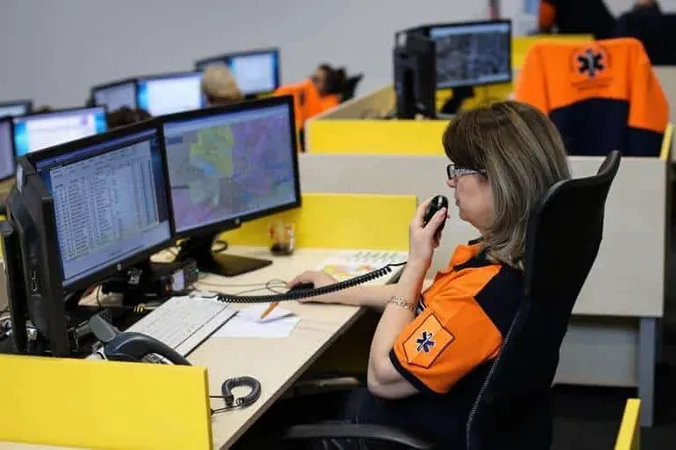
911 Operator Test: Pros and Cons
- +911 operator — 911 Operator Test exam preparation strengthens your knowledge across all domains
- +Passing the exam proves competency to employers and clients
- +Study materials and practice tests are widely available
- +Exam-based credentials are portable across states and employers
- +Clear exam objectives help focus your study plan effectively
- −Exam anxiety can affect performance — practice tests help reduce it
- −Registration fees are non-refundable if you miss your test date
- −Limited retake opportunities may apply with waiting periods
- −Exam content updates periodically — use current study materials
- −Testing center availability may require advance scheduling
Pros and Cons at a Glance
| Pros | Cons |
|---|---|
| Passing the exam proves competency to employers and clients | Exam anxiety can affect performance — practice tests help reduce it |
| Study materials and practice tests are widely available | Registration fees are non-refundable if you miss your test date |
| Exam-based credentials are portable across states and employers | Limited retake opportunities may apply with waiting periods |
| Clear exam objectives help focus your study plan effectively | Exam content updates periodically — use current study materials |
Sample 911 Operator Test Practice Questions
Try these questions from our free 911 Operator Test practice tests. The correct answer and an explanation follow each question.
An operator is handling a non-emergency call about a noise complaint. Simultaneously, they are monitoring radio traffic and notice a field unit has not checked in after a traffic stop within the expected timeframe. What is the operator's primary responsibility?
- A. Politely conclude the noise complaint call and immediately initiate an officer status check via radio.
- B. Continue with the noise complaint call while also trying to contact the officer on a secondary radio channel.
- C. Put the noise complaint caller on hold indefinitely to focus solely on the radio traffic.
- D. Send another unit to the officer's last known location without attempting radio contact first.
Answer: A. Politely conclude the noise complaint call and immediately initiate an officer status check via radio.
Officer safety is the highest priority. The operator must multitask by recognizing the potential danger indicated by the missed status check, professionally disengaging from the lower-priority call, and immediately addressing the officer safety issue according to protocol. Juggling both tasks simultaneously or putting the caller on indefinite hold is inefficient and could compromise one or both situations.
During a call, a caller asks whether an operator is a real person or a recording. How should the operator respond?
- A. Ignore the question and continue gathering information
- B. Confirm you are a live 911 operator and refocus on the emergency
- C. Transfer the call to prove you are real
- D. Ask the caller why they are asking
Answer: B. Confirm you are a live 911 operator and refocus on the emergency
Quickly confirming you are a live person builds caller confidence and helps redirect the conversation back to the emergency at hand.
An operator recognizes the voice of a frequent caller known for reporting non-existent events. The caller now reports seeing thick, black smoke coming from a neighbor's house. What is the operator's most appropriate response?
- A. Advise the caller that misusing the 911 system is a crime and end the call.
- B. Require the caller to provide a callback number for a supervisor to verify before dispatching.
- C. Treat the report as a genuine emergency and dispatch the fire department per standard protocol.
- D. Make a note of the call but do not dispatch units based on the caller's unreliable history.
Answer: C. Treat the report as a genuine emergency and dispatch the fire department per standard protocol.
An operator has a 'duty to act' on any report of a potential emergency. The caller's history does not negate the possibility that this report is legitimate. A report of smoke from a structure must always be taken seriously as a potential threat to life and property. Failing to dispatch would be a dereliction of duty and could have catastrophic consequences and create liability.
An operator receives the following BOLO (Be On the Lookout) message via teletype from a neighboring agency: 'BOLO FOR GRY SEDAN, L/S N/B ON HWY 101 FROM OUR JURIS. INVOLVED IN 211. USE CAUTION.' Which of the following is the most critical clarifying question the operator should ask the originating agency?
- A. What time did the original incident occur?
- B. Can you provide a license plate number or any further description of the vehicle or occupants?
- C. Was anyone injured during the robbery?
- D. Which of your officers is the primary on the case?
Answer: B. Can you provide a license plate number or any further description of the vehicle or occupants?
While all options might be useful, the most critical piece of information for officers to actually locate the vehicle is a unique identifier. 'GRY SEDAN' is extremely vague. A license plate number, even a partial one, or further details like make, model, damage, or a description of the occupants, provides officers with specific, actionable information needed to differentiate the suspect vehicle from countless others.
911 Operator Test Questions and Answers

About the Author

Paramedic & Emergency Services Certification Trainer
George Washington UniversityCaptain Ryan O'Brien is a licensed paramedic and NREMT-certified emergency medical professional with a Bachelor of Science in Emergency Medical Services from George Washington University. He has 15 years of field experience as a paramedic and firefighter, and has coached hundreds of EMT and paramedic candidates through their NREMT written and psychomotor licensing examinations.
Join the Discussion
Connect with other students preparing for this exam. Share tips, ask questions, and get advice from people who have been there.
View discussion (8 replies)