
911 Operator Jobs: Salary, Requirements & How to Become One 2026 October
Pass the 911 Operator Jobs: 🆕 Salary, Requirements exam with confidence. Practice questions with detailed explanations and instant feedback on every answer.

911 Operator Jobs: Salary, Requirements & How to Become One
What Is a 911 Operator and What Do They Do?
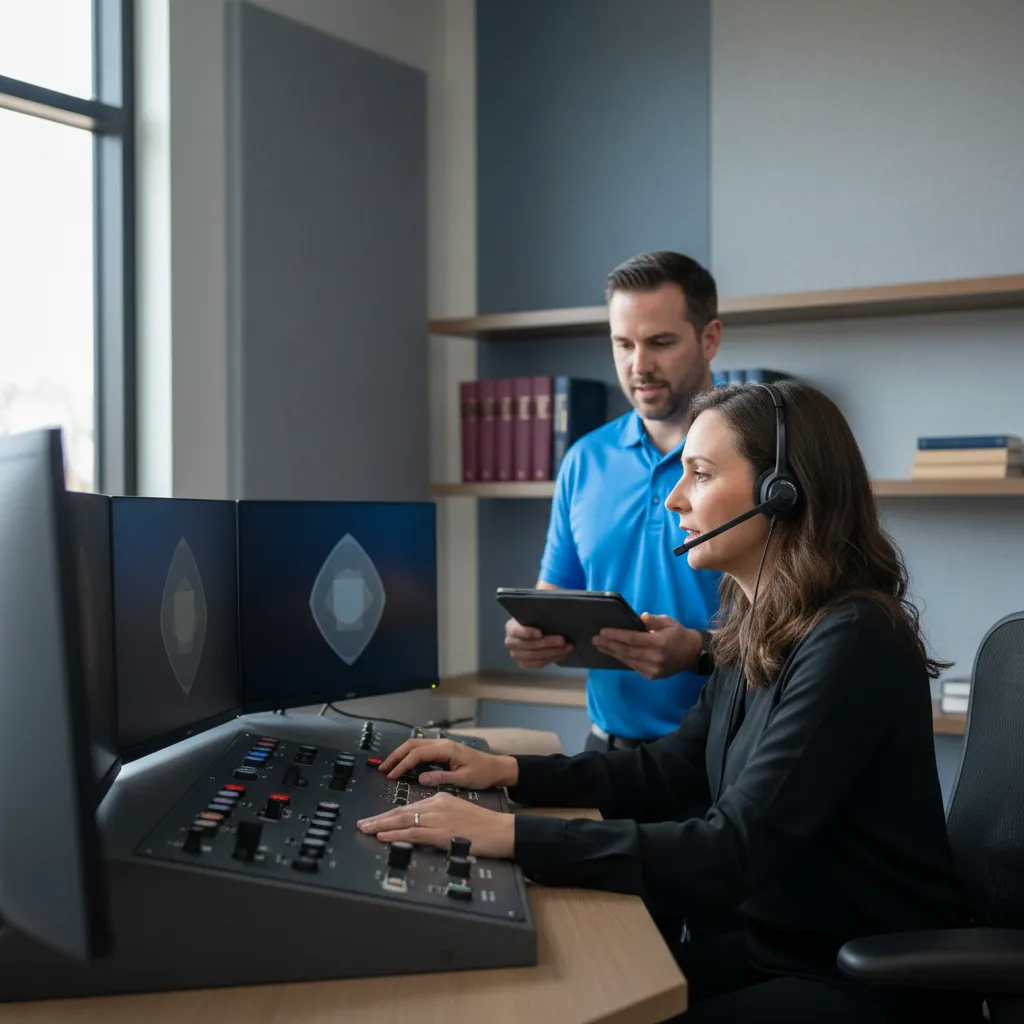
A 911 operator — also called an emergency dispatcher, public safety telecommunicator, or communications officer — is the first point of contact in any emergency situation. When someone dials 911, the 911 operator answers the call, gathers critical information about the nature and location of the emergency, and coordinates response from the appropriate emergency services: police, fire, or emergency medical services (EMS). In many jurisdictions, 911 operators also monitor radio communications between field units, maintain detailed incident logs, and provide real-time guidance to callers during active emergencies.
The job title varies by employer. Some jurisdictions use "public safety telecommunicator," which the Association of Public-Safety Communications Officials (APCO) International prefers as the professional standard. Others use "emergency dispatcher," "communications specialist," or "police dispatcher." Regardless of title, the core responsibilities remain consistent: answer incoming 911 calls, assess the situation, dispatch the right resources, and maintain coordination until the incident is resolved or transferred to on-scene responders.
911 operators work in public safety answering points (PSAPs) — centralized communication centers that receive and route 911 calls. The United States has approximately 6,000 PSAPs ranging from small single-county operations handling a few hundred calls per day to large metropolitan centers handling tens of thousands. Most PSAPs operate 24 hours a day, 365 days a year — meaning 911 operators work shift schedules that include nights, weekends, and holidays as standard requirements of the position rather than exceptional circumstances.
The role is fundamentally different from what popular culture suggests. Television dramas typically depict dispatchers as background characters who relay information and disappear. In reality, 911 operators are active crisis management professionals who conduct structured interviews under extreme time pressure, apply medical pre-arrival instructions to keep patients alive until paramedics arrive, de-escalate callers in panic, and make rapid resource allocation decisions based on incomplete information. The cognitive demands are substantial — operators handle multiple simultaneous incidents across different radio channels while maintaining caller communication and updating computer-aided dispatch systems in real time.
The job requires specific technical skills alongside emotional resilience. 911 operators must type accurately and quickly (typically 35–45 WPM minimum), navigate multiple software systems simultaneously, speak clearly under pressure, and retain critical information while processing incoming data. The ability to project calm authority to panicked callers while managing concurrent demands is the defining professional skill of a successful telecommunicator. Exploring 911 operator test standards and qualification requirements provides the clearest picture of what the job demands before pursuing it as a career path.
Modern 911 centers have evolved significantly from simple phone-answering operations. Today's PSAPs use sophisticated computer-aided dispatch (CAD) systems that track available units, recommend resource assignments based on proximity and current workload, and automatically populate incident records. Operators also access law enforcement databases to provide field units with information about callers, locations, and relevant prior history in real time. The technical environment requires both comfort with software systems and the ability to use them efficiently without slowing the core conversational work of managing callers and dispatching resources effectively during active incidents.
911 Operator Salary: What You Can Expect to Earn
911 operator compensation varies significantly by jurisdiction, experience level, certification status, and geographic location. Entry-level positions typically start between $32,000 and $45,000 annually. Fully trained and certified operators with two to five years of experience commonly earn $45,000 to $60,000. Senior operators, lead dispatchers, and supervisors at well-funded metropolitan PSAPs can reach $70,000 to $90,000+ in high cost-of-living areas with strong municipal budgets and active union contracts.
The Bureau of Labor Statistics classifies 911 operators under "Police, Fire, and Ambulance Dispatchers" (SOC code 43-5031), reporting a median annual wage of approximately $46,900. However, this median understates the full earning potential at well-funded PSAPs in major cities. New York City, Los Angeles, San Francisco, and Chicago consistently report 911 operator salaries above $65,000 for fully certified operators — and above $80,000 with overtime in high-demand periods. Rural and small-county jurisdictions often pay below the national median due to constrained municipal budgets and limited tax base.
Overtime is a significant and often mandatory component of 911 operator compensation. PSAPs nationwide face chronic staffing shortages, and mandatory overtime — requiring operators to stay beyond their scheduled shift or come in on days off — is common at understaffed centers. While this increases gross pay substantially (some operators report overtime bringing annual income 20–35% above base salary), it also contributes directly to burnout and turnover rates that perpetuate the staffing shortage cycle. Understanding the overtime reality at your target employer before accepting a position is important for realistic income and workload planning.
Benefits packages at most PSAPs include pension contributions (most public safety positions offer defined benefit pension plans), health insurance, paid leave, and shift differentials for night and weekend work. These benefits add meaningful total compensation value beyond base salary. Review the detailed 911 operator salary breakdown by state and experience level for comprehensive compensation data specific to your target region.
Geographic pay variation is more pronounced for 911 operators than for many professions because compensation is determined almost entirely by local government budgets rather than private sector market forces. States with strong public employee unions and collective bargaining rights — including California, New York, Illinois, and Washington — consistently produce the highest 911 operator salaries through negotiated contracts. States with weaker public sector union protections or lower overall cost of living, particularly across the Southeast and Great Plains, typically offer substantially lower compensation for the same responsibilities. Location selection matters more for this career than for many comparable professional roles.
Pay increases come through seniority-based step increases (automatic raises tied to years of service, common in government employment) and promotion to lead dispatcher, training officer, or supervisory roles. Researching exactly how much do 911 operators make in your specific state — where median salaries range from $38,000 to $62,000 depending on jurisdiction — is an essential step before committing to this career path and comparing it against other public safety or communications roles.
Compensation comparisons within the dispatch field are also worth understanding. EMS and fire dispatchers who hold EMD (Emergency Medical Dispatcher) certification typically earn a 3–7% pay premium above base dispatcher rates at PSAPs that offer the differential. Cross-trained operators handling police, fire, and EMS simultaneously — common at consolidated PSAPs — often receive the highest base rates because the cognitive complexity is genuinely higher. Understanding which PSAP structure offers your optimal compensation-to-workload ratio helps you target your application efforts more strategically from the start.

Pros and Cons of a 911 Operator Career
- +Meaningful public service — direct impact on community safety every shift
- +Stable government employment with defined benefit pension access
- +No college degree required — accessible career path for high school graduates
- +Significant overtime potential increases total compensation substantially
- +Strong job demand — PSAPs nationwide actively hiring and understaffed
- +Clear advancement path from operator to supervisor to management
- −Mandatory shift work including nights, weekends, and holidays is non-negotiable
- −High cumulative trauma exposure — repeated contact with emergencies causes psychological stress
- −20–30% annual turnover rate at many PSAPs indicates challenging work environment
- −Mandatory overtime due to staffing shortages limits work-life balance predictability
- −Background investigation is thorough — minor past issues may disqualify candidates
- −Training period (6–12 months) is demanding before reaching independent certification
Pros and Cons at a Glance
| Pros | Cons |
|---|---|
| Meaningful public service — direct impact on community safety every shift | Mandatory shift work including nights, weekends, and holidays is non-negotiable |
| Stable government employment with defined benefit pension access | High cumulative trauma exposure — repeated contact with emergencies causes psychological stress |
| No college degree required — accessible career path for high school graduates | Mandatory overtime due to staffing shortages limits work-life balance predictability |
| Significant overtime potential increases total compensation substantially | Background investigation is thorough — minor past issues may disqualify candidates |
911 Operator Requirements: How to Qualify and Get Hired
Becoming a 911 operator requires meeting educational, background, and skills-based requirements set by the hiring jurisdiction. Unlike many law enforcement roles requiring physical fitness tests or prior experience, 911 operator positions are accessible to a broader range of candidates — but they have meaningful qualifying requirements that eliminate candidates who haven't prepared adequately for the selection process.
Educational requirements vary by jurisdiction but are generally modest. Most PSAPs require a high school diploma or GED as the minimum educational standard. Some metropolitan agencies prefer some college coursework — often in criminal justice, communications, or a related field — but a full degree is rarely required for entry-level positions. Military veterans who served in communications, logistics, or command center roles often receive preference in hiring decisions. Strong academic performance signals the ability to process information quickly under pressure, which hiring panels consistently value.
Background investigation is one of the most critical qualifying components. Because 911 operators access sensitive law enforcement databases and communicate with officers in the field, they must pass thorough background checks equivalent in depth to those required for sworn law enforcement officers. Disqualifying factors typically include felony convictions, recent misdemeanor convictions (especially involving dishonesty or violence), significant financial delinquency, drug use within defined lookback periods, and dishonorable military discharge. Minor infractions from years ago may not automatically disqualify — the specifics vary significantly by jurisdiction and require direct inquiry with the hiring agency.
The hiring process almost universally includes a written skills examination that tests reading comprehension, data entry accuracy, multitasking ability, memory recall, and spatial reasoning. Some PSAPs use the CritiCall test — a standardized assessment developed specifically for communications officer hiring — which presents simulated dispatch scenarios testing the cognitive skills needed on the job. Taking a structured how to become a 911 operator study program before the exam significantly improves scores for candidates unfamiliar with the test format and what the assessment actually measures.
The psychological dimension of the work is increasingly recognized as a formal occupational health issue. APCO International and NENA have focused attention on cumulative trauma exposure for 911 operators — who hear deaths, assaults, child emergencies, and suicidal callers routinely without the on-scene closure that paramedics and firefighters receive. Many PSAPs now offer peer support programs, mandatory critical incident debriefing after particularly traumatic calls, and access to mental health resources as part of employee benefit packages. Asking about these programs during the hiring process signals organizational awareness — their presence indicates a workplace culture that actively supports long-term career sustainability for its telecommunicators.
After a conditional job offer, new hires undergo formal training lasting six months to one year before independent certification. Training combines classroom instruction with supervised on-the-job experience under certified operators. Many states require passing a state-specific certification examination as part of the training process. Understanding the full list of 911 operator requirements specific to your state prevents surprises during background investigation or the training certification phase that can cause otherwise-qualified candidates to fail at late stages of the hiring process.

911 Operator Qualification Requirements by Stage
- Age: Minimum 18 years old (some agencies require 21)
- Education: High school diploma or GED required; some college preferred
- Citizenship: U.S. citizen or eligible to work in the U.S. required
- Typing: 35–45 WPM minimum (some agencies test up to 60 WPM)
- Schedule: Must be available for all shifts including nights, weekends, holidays
911 Operator Job Market and Career Outlook
The Bureau of Labor Statistics projects approximately 6% growth in police, fire, and ambulance dispatcher positions over the coming decade — roughly in line with average job growth across all occupations. This growth is driven by population increases, expanding 911 service coverage in previously underserved areas, and ongoing retirements creating consistent replacement demand. The role is not facing obsolescence from technology — NextGen 911 upgrades are expanding the scope of telecommunicator responsibilities rather than reducing them.
The more immediate workforce dynamic is the chronic staffing shortage affecting PSAPs nationwide. A 2022 APCO International survey found that 75% of 911 centers reported being understaffed, with many operating at 20–30% below optimal staffing levels. This creates genuine and immediate hiring opportunity for qualified candidates who complete the demanding selection process. Entry into the profession is not limited by available positions — it's limited by the number of candidates who meet qualification standards and successfully complete lengthy training. Fully certified operators are in real demand at PSAPs across the country regardless of geographic location.
Technology modernization is reshaping the day-to-day environment significantly. NextGen 911 (NG911) systems now allow texting to 911, image and video sharing from the scene, and automatic location sharing. This expanded communication channel increases the volume and complexity of contacts that operators manage simultaneously. Operators fluent in NG911 capabilities are more valuable to employers investing in infrastructure upgrades — and all operators entering the field now can expect to work in technology-modernized environments that look very different from legacy dispatch centers of fifteen years ago.
Career advancement within the profession follows a clear trajectory. Entry-level operators can advance to lead/senior dispatcher roles within three to five years, then training officer or quality assurance roles involving supervision of trainees. Communications center supervisors typically require seven to ten years of experience. Some experienced operators transition laterally into emergency management planning, PSAP technology consulting, or training roles with APCO or NENA at the national level — paths that carry strong job stability and use telecommunications expertise in broader public safety contexts.
For candidates considering a 911 operator career, volunteering or visiting a local PSAP — where allowed — provides direct exposure to the work environment before committing to the selection process. Many dispatch centers offer public observation opportunities, and some jurisdictions have auxiliary communications programs that provide structured exposure to real dispatch environments. Talking directly to working dispatchers through online communities like Reddit's r/911dispatchers, at public safety job fairs, or through ride-along programs gives you a more honest picture of daily realities than any job description conveys. Entering the profession with accurate expectations dramatically improves retention and career satisfaction in an inherently high-turnover field.
Documentation and record-keeping standards are another frequently overlooked aspect of 911 operator qualification. Operators create legal records with every call — incident reports that can be subpoenaed in criminal trials, civil litigation, and administrative investigations. Clear, accurate, objective documentation using standardized terminology is a professional requirement. Many PSAPs test written communication skills specifically because error-prone documentation has produced real legal liability for agencies in high-profile cases.
Strong writing fundamentals, while not always tested directly in hiring assessments, correlate with long-term performance in roles where every call generates a record that may be reviewed months or years later. The profession also offers a sense of community that many operators cite as a key retention factor — working the same shift rotation builds tight professional bonds with colleagues who understand the demands of the work in ways that friends and family outside the PSAP rarely can. This collegial environment, combined with the meaningful nature of the work itself, keeps many operators in the profession long after the honeymoon period ends and the cumulative weight of the role becomes more apparent.

Steps to Become a 911 Operator
- ✓Verify local minimum requirements: age, education, background standards
- ✓Build typing speed to at least 40 WPM before applying
- ✓Research open positions at county, city, and regional PSAPs in your area
- ✓Review and address any background concerns before applying
- ✓Study for the written hiring exam and/or CritiCall assessment
- ✓Complete the application with thorough, accurate employment and personal history
- ✓Prepare for the oral interview with behavioral scenario practice
- ✓Pass the background investigation, psychological evaluation, and medical screening
- ✓Accept conditional offer and complete pre-employment requirements
- ✓Successfully complete the 6–12 month training and certification period
- ✓Earn APCO PST 1 or state-equivalent telecommunications certification
- ✓Ask employer about peer support, debriefing, and mental health resources from day one
Sample 911 Operator Test Practice Questions
Try these questions from our free 911 Operator Test practice tests. The correct answer and an explanation follow each question.
A caller provides their address at the beginning of a call, then the connection becomes poor. You need to confirm the address before dispatching. What is the best approach?
- A. Dispatch to the address you heard and hope it was correct
- B. Use ALI (Automatic Location Identification) to confirm the address
- C. Ask the caller to repeat the entire call from the beginning
- D. Disconnect and wait for them to call back on a better line
Answer: B. Use ALI (Automatic Location Identification) to confirm the address
ALI automatically captures the caller's location data, providing a reliable way to confirm or supplement a partially heard address.
A caller becomes hysterical and begins screaming, making it impossible to gather information. What should the operator do?
- A. Hang up and call back
- B. Speak in a calm, firm tone and use the caller's name if known
- C. Raise your voice to match their energy
- D. Transfer immediately to a supervisor
Answer: B. Speak in a calm, firm tone and use the caller's name if known
A calm, steady voice and using the caller's name helps de-escalate hysteria and refocuses the caller so critical information can be obtained.
What should a 911 operator do if a medical emergency caller becomes hysterical and cannot follow instructions?
- A. Hang up and wait for the caller to call back when calmer
- B. Transfer the call to a supervisor immediately
- C. Use a calm, firm voice to redirect the caller with simple, short commands
- D. Tell the caller their behavior is preventing help from being provided
Answer: C. Use a calm, firm voice to redirect the caller with simple, short commands
A calm, authoritative tone with clear, brief commands is proven to help agitated callers focus and comply with life-saving instructions.
A caller reports an accident at 'the overpass where Route 7 crosses above Highway 34.' Which unit should be dispatched to the location ON Route 7?
- A. A unit that can access the elevated road (Route 7)
- B. A unit that patrols Highway 34 below
- C. Units from both roads simultaneously
- D. The unit nearest the on-ramp to Highway 34
Answer: A. A unit that can access the elevated road (Route 7)
The accident is on Route 7 which is the overpass (elevated road), so responding units must access Route 7 directly.
911 Operator Jobs Questions and Answers
About the Author

Law Enforcement Trainer & Civil Service Exam Specialist
John Jay College of Criminal JusticeMarcus B. Thompson earned his Master of Arts in Criminal Justice from John Jay College of Criminal Justice and served 12 years as a law enforcement officer before transitioning to full-time academy instruction. He is a POST-certified instructor who has prepared candidates for police entrance exams, firefighter assessments, and civil service examinations across dozens of agencies.
Join the Discussion
Connect with other students preparing for this exam. Share tips, ask questions, and get advice from people who have been there.
View discussion (8 replies)