

PSS Practice Test
Updated for October 2026What changed for the Peer Support Specialist certification in 2026
- The National Certified Peer Specialist (NCPS) credential, originally built by Mental Health America with the Florida Certification Board, has been relocated to the National Certification Board for Behavioral Health Professionals (NCBBHP), which now solely operates it. (source)
- NCPS eligibility (2026): a current state peer support specialist credential that required at least 40 hours of training (or an equivalent 40-hour program), 2,000 hours of supervised peer specialist work or volunteer experience within the prior 10 years, and three professional letters of recommendation. Applicants have 12 months from application to earn the credential. (source)
- NCPS exam: a 125-item multiple-choice test administered with remote proctoring; candidates who do not pass may retest every 30 days. (source)
- NCPS fees (USD): application $150, exam $150 per attempt, biennial renewal $200, optional 12-month extension $150. (source)
- NCPS renewal: every 24 months with 40 CE units per renewal period (at least 20 per year); the renewal window runs August 1 to October 31, a late period runs November 1 to 30, and credentials become inactive on December 1. (source)
- California Medi-Cal Peer Support Specialist (CalMHSA): 80-hour training covering 17 core competencies; the exam is 120 items in 2.5 hours through Pearson VUE OnVUE, offered in 10 languages, with up to 3 attempts in a 12-month approval period. Fees are $100 application plus $150 per exam attempt; renewal is $80 every 2 years with 20 CE hours including 6 hours of law and ethics. For 2026, application and exam fee waivers are fully allocated, while 80-hour training and renewal fee waivers remain available first-come, first-served. (source) (fees) (2026 waivers)
- Florida Certified Recovery Peer Specialist (CRPS): 40 hours of training, 500 hours of supervised work experience (250 providing peer services) and 16 hours of on-the-job supervision, then a 100-item multiple-choice exam with a 70% passing score. Fees: $100 application, $65 exam, $75 annual renewal due June 30. (source) (fees)
- North Carolina CPSS (UNC program): applicants must be 18+, in recovery at least 18 months, hold a HS diploma/GED and complete 20 hours of prerequisite training (3 ethics + 17 related) before the $20 application; after the Foundations of Peer Support course, the certification exam costs $50 per attempt (second attempt after 14 days, third after 30, three attempts maximum). Recertification is every 2 years with 20 CE hours (3 ethics) and a $20 fee. (source) (recertification)
Last verified: September 21, 2026 against the National Certification Board for Behavioral Health Professionals (NCPS), CalMHSA, the Florida Certification Board and the NC Certified Peer Support Specialist Program.
Did you know? Peer Support Specialist jobs are among the fastest-growing roles in behavioral health, with demand increasing as healthcare systems recognize the value of lived experience in recovery outcomes. A Peer Specialist plays a unique role that complements clinical care. Try our NCLEX practice test. Try our CNA practice test.
If you are searching for peer support specialist exam questions, start with the free peer support practice test on this page: every answer comes with an explanation, and the peer support specialist exam study guide below covers the PSS exam topics in order.
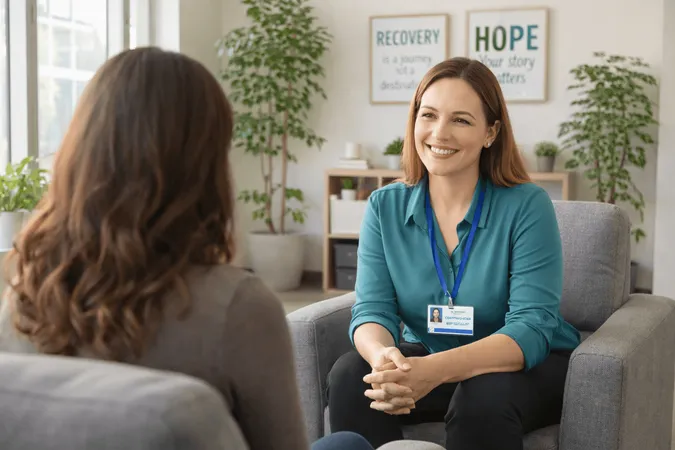
PSS Practice Test Questions
Prepare for the PSS - Certified Peer Support Specialist exam with our free practice test modules. Each quiz covers key topics to help you pass on your first try.
PSS Advocacy, Empowerment, and Navigating ...
PSS Exam Questions covering Advocacy, Empowerment, and Navigating Systems. Master PSS Test concepts for certification prep.
PSS Crisis Intervention and De-escalation
Free PSS Practice Test featuring Crisis Intervention and De-escalation. Improve your PSS Exam score with mock test prep.
PSS Cultural Humility and Addressing Stigma
PSS Mock Exam on Cultural Humility and Addressing Stigma. PSS Study Guide questions to pass on your first try.
PSS Documentation, Person-Centered Languag...
PSS Test Prep for Documentation, Person-Centered Language, and Goal Setting. Practice PSS Quiz questions and boost your score.
PSS Ethical Problem-Solving and Confidenti...
PSS Questions and Answers on Ethical Problem-Solving and Confidentiality. Free PSS practice for exam readiness.
PSS SAMHSA's Guiding Principles of Recovery
PSS Mock Test covering SAMHSA's Guiding Principles of Recovery. Online PSS Test practice with instant feedback.
PSS - Certified Peer Support Specialist Et...
Free PSS Quiz on - Certified Peer Support Specialist Ethical and Professional Responsibilities. PSS Exam prep questions with detailed explanations.
PSS - Certified Peer Support Specialist Re...
PSS Practice Questions for - Certified Peer Support Specialist Recovery and Wellness Principles. Build confidence for your PSS certification exam.
PSS Ethical and Professional Responsibilities
PSS Test Online for Ethical and Professional Responsibilities. Free practice with instant results and feedback.
PSS Motivational Interviewing and Communic...
PSS Study Material on PSS Motivational Interviewing and Communication Techniques. Prepare effectively with real exam-style questions.
PSS Trauma-Informed Care and Co-Occurring ...
Free PSS Test covering PSS Trauma-Informed Care and Co-Occurring Disorders. Practice and track your PSS exam readiness.
PSS Recovery and Wellness Principles
PSS Exam Questions covering Recovery and Wellness Principles. Master PSS Test concepts for certification prep.
PSS Role and Responsibilities
Free PSS Practice Test featuring Role and Responsibilities. Improve your PSS Exam score with mock test prep.
PSS Self-Disclosure and Use of Lived Exper...
PSS Mock Exam on Self-Disclosure and Use of Lived Experience. PSS Study Guide questions to pass on your first try.
PSS Skills and Qualities
PSS Test Prep for Skills and Qualities. Practice PSS Quiz questions and boost your score.
PSS Exam Flashcards
Quick review for the Peer Support Specialist exam
🧠What is the primary role of a Peer Support Specialist?
A Peer Support Specialist uses their lived experience to support others in recovery, providing hope and mentorship.
START PSS PRACTICE TEST⚖️What is a key ethical boundary for Peer Specialists?
Maintaining professional boundaries by avoiding dual relationships and keeping client information confidential.
GET PSS EXAM PREP🗣️What is person-centered language?
Language that puts the person first rather than their diagnosis (e.g., "person with schizophrenia" not "schizophrenic").
REVIEW PSS QUESTIONS🤝What is the purpose of sharing your recovery story?
To inspire hope, show that recovery is possible, and build a connection based on shared experience.
TRY PSS MOCK EXAM🛡️What is advocacy in peer support?
Helping individuals express their needs and rights, and working to remove barriers to their recovery.
ACCESS PSS STUDY GUIDE📝What is a Wellness Recovery Action Plan (WRAP)?
A self-designed prevention and wellness process that anyone can use to get well, stay well, and make their life the way they want it.
PRACTICE PSS TEST NOWPeer Support Specialist Exam Study Guide
This Peer Support Specialist study guide covers the essential components of the certification process. Understanding the PSS exam structure and content is crucial for success. Whether you are seeking certification for Peer Support Specialist roles in mental health or addiction recovery, this guide provides the foundational knowledge you need.
How to Use This Peer Support Practice Test With the Exam Study Guide
A practice test works best when you score it against the exam you will actually sit. The national NCPS exam has 125 multiple-choice items spread across six performance domains: Foundations of Peer Support, Foundations of Health Care Systems, Mentoring, Shared Learning and Relationship Building, Activation and Self-Management, Advocacy, and Professional and Ethical Responsibilities. California's Medi-Cal Peer Support Specialist exam has 120 items in 2.5 hours, and Florida's CRPS exam has 100 equally weighted items with a 70% passing score, so aim for at least 75% on every practice run before you schedule.
Work through the peer support specialist exam study guide tabs above in order, then take the practice questions in timed blocks of 25. After each block, read the explanation for every missed item and tag it by domain. Most candidates find that ethics, boundaries and confidentiality scenarios cause the most misses, because the "helpful" answer is often not the one that respects the person's self-determination. Re-take only the domains you tagged until they clear.
Retest windows make this discipline matter: NCPS candidates can retest every 30 days within a 12-month eligibility window at $150 per attempt, California allows three attempts in 12 months at $150 each, and North Carolina allows three attempts total ($50 each, with 14-day and 30-day waits). Passing the first time saves both the fee and weeks of waiting.
PSS Score Calculator
Many states offer scholarships or grants for Peer Support Specialist training. Check with your local vocational rehabilitation office or mental health authority for funding opportunities. Try our CNA practice test.

PSS Test Day Checklist
- ✓Valid Government ID
- ✓Exam Confirmation Email
- ✓Arrive 30 Mins Early
- ✓Review Exam Guide
- ✓Leave Electronics in Car
- ✓Comfortable Clothing
- ✓Water/Snack (for locker)
- ✓Positive Mindset!
Ready to Pass Your PSS Exam?
Join thousands of successful Peer Support Specialists who used our free Peer Support Specialist practice test questions to get certified.
PSS Renewal Requirements
Renewal Cycle
2 Years
CEUs Required
20-40 Hrs (by board)
Renewal Fee
$20 - $200
Don't let your Peer Support Specialist certification lapse! Ethics-hour requirements vary by board: California requires 6 hours of law and ethics within its 20-hour renewal, and North Carolina requires 3 hours of ethics within its 20-hour renewal. Check your certifying board's specific CE breakdown and plan ahead to earn your CEUs.
- +Validates your knowledge and skills objectively
- +Increases job market competitiveness
- +Provides structured learning goals
- +Networking opportunities with other certified professionals
- −Study materials can be expensive
- −Exam anxiety can affect performance
- −Requires dedicated preparation time
- −Retake fees apply if you don't pass
Pros and Cons at a Glance
| Pros | Cons |
|---|---|
| Validates your knowledge and skills objectively | Study materials can be expensive |
| Increases job market competitiveness | Exam anxiety can affect performance |
| Provides structured learning goals | Requires dedicated preparation time |
| Networking opportunities with other certified professionals | Retake fees apply if you don't pass |
Official Resources
- National Certified Peer Specialist (NCPS) at the National Certification Board for Behavioral Health Professionals: eligibility requirements, the 125-item exam, fees and the application for the national credential.
- NCPS renewal: the biennial renewal window, the 40 CE-unit requirement and the late and inactive dates.
- California Medi-Cal Peer Support Specialist certification exam (CalMHSA): exam content outline, Pearson VUE OnVUE scheduling, language options and the fee schedule.
Sample Certified Peer Support Specialist Practice Questions
Try these questions from our free Certified Peer Support Specialist practice tests. The correct answer and an explanation follow each question.
During a support session, a peer asks for your advice on whether they should stop taking a prescribed medication. As a Certified Peer Support Specialist, what is the proper course of action?
- A. Share your own experience with medication and advise them based on what worked for you.
- B. Encourage them to discuss any medication changes with their prescribing doctor or clinical provider.
- C. Research the medication online and provide them with the information you find.
- D. Agree with their desire to stop medication to empower their self-determination.
Answer: B. Encourage them to discuss any medication changes with their prescribing doctor or clinical provider.
Peer Support Specialists must work within their scope of practice. Providing medical advice, including advice about medication, is outside this scope. The ethical and professional responsibility is to refer the peer to a qualified healthcare professional for medical decisions.
A Certified Peer Support Specialist (CPSS) is working with a peer who discloses that they are having thoughts of harming themselves. The peer insists that the CPSS keep this information confidential. Which of the following is the most appropriate action for the CPSS to take?
- A. Maintain confidentiality as requested by the peer to preserve the trust in the relationship.
- B. Immediately inform their supervisor and follow organizational policies regarding safety concerns.
- C. Contact the peer's family to inform them of the situation without telling the peer.
- D. Advise the peer to go to the emergency room but take no further action if they refuse.
Answer: B. Immediately inform their supervisor and follow organizational policies regarding safety concerns.
The primary ethical responsibility of a Peer Support Specialist is to ensure the safety of the peer. While confidentiality is a cornerstone of the peer relationship, it has limits, especially when there is a risk of harm to self or others. The correct action is to break confidentiality and report the situation to a supervisor to ensure the peer receives the appropriate level of care.
A peer specialist observes that a peer seems withdrawn. The peer states they are 'just tired.' How should the specialist document this interaction?
- A. Document only the observation: 'Peer was withdrawn and depressed.'
- B. Document only the peer's words: 'Peer reported being tired.'
- C. Document both the observation and the peer's statement.
- D. Do not document the interaction as it was contradictory.
Answer: C. Document both the observation and the peer's statement.
Objective documentation requires recording observable behaviors ('appeared withdrawn') and the peer's own words ('stated they were 'just tired''). This approach avoids making assumptions or interpretations about the peer's feelings and respects their self-reported experience.
How does a Certified Peer Support Specialist foster empowerment in those they support?
- A. By telling them what actions to take to recover
- B. By sharing their own experiences and encouraging personal choice
- C. By dictating specific treatment plans
- D. By discouraging different treatment methods
Answer: B. By sharing their own experiences and encouraging personal choice
A Certified Peer Support Specialist fosters empowerment by sharing their own recovery experiences and encouraging personal choice in the recovery journey. They do not tell individuals what actions to take, but rather model resilience and self-advocacy. This approach helps individuals recognize their own capacity for recovery and make informed decisions about their path.
Take the full Certified Peer Support Specialist practice test
PSS Questions and Answers
About the Author

Educational Psychologist & Academic Test Preparation Expert
Columbia University Teachers CollegeDr. Lisa Patel holds a Doctorate in Education from Columbia University Teachers College and has spent 17 years researching standardized test design and academic assessment. She has developed preparation programs for SAT, ACT, GRE, LSAT, UCAT, and numerous professional licensing exams, helping students of all backgrounds achieve their target scores.