
Phlebotomy Training Near Me 2026 October: Programs, Cost & Certification Guide
Find phlebotomy training near me: 🗨️ program costs, length, certification options, and how to choose accredited classes that lead to fast hiring in 2026 October.

Searching for phlebotomy training near me is the first step toward one of the fastest healthcare careers you can launch in under a year. A quality program teaches you venipuncture technique, capillary collection, specimen handling, patient identification, and the order of draw phlebotomy professionals follow on every shift. Most accredited programs run between four and sixteen weeks, cost between $700 and $3,500, and prepare you to sit for a national certification exam. The demand for skilled phlebotomy technicians keeps climbing as outpatient labs, hospitals, plasma centers, and mobile draw services expand across every metro area in the United States.
Before you enroll, it helps to understand what is phlebotomy at its core: the controlled, sterile collection of blood for diagnostic testing, transfusion, research, or therapeutic phlebotomy treatments. You will learn anatomy of the antecubital fossa, vein selection, tourniquet timing, additive tube sequencing, and how to manage anxious or pediatric patients. Programs labeled NAACLS-approved or state-board-licensed produce the highest pass rates and the best job-placement outcomes.
The right school depends on your schedule, budget, and how quickly you need income. Community colleges typically offer the lowest tuition but longer waitlists. Private vocational schools and hospital-based programs run intensive boot camps that finish in five to eight weeks. Online hybrid programs handle theory virtually while requiring in-person clinical hours at a partner lab. If you compare phlebotomy classes near me, look at clinical hours, instructor credentials, and externship guarantees first.
Cost is rarely the deciding factor once you weigh outcomes. A $900 program with no externship can cost more in lost wages than a $2,400 program that places you in a paid lab within two weeks of graduation. Reputable schools publish their first-time certification pass rates, employer partners, and average time-to-hire. Ask for these numbers in writing before signing any enrollment agreement, because verbal promises do not survive a financial aid dispute.
Certification is technically optional in most states but functionally required by 90 percent of employers. The four major credentials — NHA CPT, ASCP PBT, AMT RPT, and NCCT NCPT — all require either completed training plus documented sticks or one year of bench experience. California, Washington, Nevada, and Louisiana mandate state licensure on top of national certification, and Massachusetts is moving toward similar requirements. Your training program should align with whichever credential your local hospitals prefer.
Phlebotomy salary expectations vary by region and certification status. The national median sits near $40,500 in 2026, with top-quartile earners in California, Alaska, and the Pacific Northwest exceeding $52,000. Certified technicians with two years of experience often add $3 to $5 per hour over uncertified peers, and night-shift differentials can push hourly pay above $28. Travel phlebotomy contracts in mobile or research settings sometimes pay $34 to $42 per hour with per-diem stipends.
This guide walks through how to choose accredited classes, what to expect in a typical curriculum, real cost breakdowns, certification pathways, salary projections, and the questions hiring managers actually ask. Whether you want a weekend program, a fast-track boot camp, or a free hospital-sponsored apprenticeship, the next sections show you exactly how to evaluate and enroll in the best phlebotomy training near you in 2026.
Phlebotomy Training Near Me by the Numbers

Types of Phlebotomy Programs You Can Enroll In
Semester-long programs costing $700 to $1,800 with built-in financial aid eligibility. Offers strongest credit transferability if you plan to pursue medical lab tech or nursing later. Waitlists can stretch six months in popular districts.
Intensive 4 to 8 week programs ranging $1,500 to $3,500. Smaller cohorts, evening and weekend sections, and faster externship placement. Great for career changers who need to start earning within three months of starting class.
Free or low-cost programs run by health systems like HCA, Kaiser, and Ascension in exchange for a 12 to 24 month employment commitment. Includes paid clinical hours and guaranteed hire upon certification.
Theory delivered virtually with proctored exams, plus 80 to 120 clinical hours at a local partner lab. Tuition $900 to $2,200. Best for parents, military spouses, or rural learners far from a campus.
American Red Cross chapters and state workforce development boards fund free seats for unemployed or underemployed adults. Apply through your local WIOA office or American Job Center for eligibility screening.
Tuition is the most visible cost of phlebotomy training, but it is rarely the largest one. When you compare phlebotomy courses near me, build a complete budget that includes textbooks ($90 to $180), scrubs and a stethoscope-free supply kit ($60 to $120), a background check and drug screen ($75 to $150), liability insurance ($30 to $45 annually), and the certification exam ($90 to $135). Add commute or childcare costs across the program length and you will see why a slightly more expensive school with a closer campus often wins on total spend.
Community colleges remain the lowest sticker price for most learners. A typical 12-credit-hour phlebotomy certificate at a state community college lands between $700 and $1,800 depending on residency status. These institutions accept federal Pell Grants, state need-based aid, and veteran education benefits. The trade-off is calendar rigidity. Most cohorts start once or twice per year, and clinical placements depend on faculty connections rather than dedicated career-services staff.
Private vocational schools and proprietary career institutes charge more but operate on rolling start dates. Tuition between $1,500 and $3,500 typically buys you a 4 to 8 week curriculum, smaller class sizes of 8 to 14 students, evening and Saturday tracks, and a named career advisor who places you with employer partners before graduation. Verify the school is licensed by your state department of education and that financial aid disbursements are tied to attendance milestones rather than upfront tuition payment.
Hospital-based and employer-sponsored pathways are the hidden bargain of phlebotomy education. Large systems including Quest Diagnostics, Labcorp, HCA Healthcare, and Sutter Health offer paid training programs that cover tuition entirely in exchange for a one or two year work commitment. You earn $14 to $18 per hour during training and step into a guaranteed phlebotomy technician role upon completion. The catch is geographic flexibility — you may need to accept rotation across multiple draw sites.
Financial aid options stretch beyond federal Pell Grants. Workforce Innovation and Opportunity Act (WIOA) vouchers can cover 100 percent of tuition for displaced workers, recent veterans, and adults below 200 percent of the federal poverty line. Apply through your local American Job Center at least 30 days before your program start date. State trade adjustment assistance and tribal education funds add additional layers for eligible applicants. Many vocational schools also offer 6 to 12 month zero-interest payment plans for self-pay students.
Scholarships are surprisingly accessible in phlebotomy. The American Society for Clinical Pathology Foundation, the American Medical Technologists Education Fund, and dozens of state lab-science associations award $500 to $2,500 grants each spring. Local hospital auxiliaries and Rotary chapters routinely fund seats for first-generation healthcare students. Spend two afternoons applying and you may erase half of your tuition before your first lab session. The phlebotomy salary jump pays back any remaining balance within six months of employment.
Refund policies and accreditation status determine whether your investment is protected. Read the enrollment agreement for the school's withdrawal refund schedule. Reputable programs refund 75 to 100 percent of tuition if you withdraw within the first week and a prorated amount through the midpoint. Schools that keep 100 percent of tuition after enrollment day one are signaling weak student outcomes. Always confirm accreditation through NAACLS, ABHES, or your state board of allied health before signing any document or paying any deposit.
Phlebotomy Practice Test Questions
Prepare for the Phlebotomy Test exam with our free practice test modules. Each quiz covers key topics to help you pass on your first try.
Phlebotomy American Medical Certification ...
Phlebotomy Exam Questions covering American Medical Certification Association Phlebotomy. Master Phlebotomy Test concepts for certification prep.
Phlebotomy American Medical Technologists ...
Free Phlebotomy Practice Test featuring American Medical Technologists Phlebotomy. Improve your Phlebotomy Exam score with mock test prep.
Phlebotomy American Society for Clinical P...
Phlebotomy Mock Exam on American Society for Clinical Pathology Phlebotomy. Phlebotomy Study Guide questions to pass on your first try.
Phlebotomy Association of Phlebotomy Techn...
Phlebotomy Test Prep for Association of Phlebotomy Technicians. Practice Phlebotomy Quiz questions and boost your score.
Phlebotomy National Center for Competency ...
Phlebotomy Questions and Answers on National Center for Competency Testing Phlebotomy. Free Phlebotomy practice for exam readiness.
Phlebotomy National Healthcareer Associati...
Phlebotomy Mock Test covering National Healthcareer Association Phlebotomy. Online Phlebotomy Test practice with instant feedback.
Phlebotomy Order of Draw and Additives
Free Phlebotomy Quiz on Order of Draw and Additives. Phlebotomy Exam prep questions with detailed explanations.
Phlebotomy Legal and Ethics
Phlebotomy Practice Questions for Phlebotomy Legal and Ethics. Build confidence for your Phlebotomy certification exam.
Phlebotomy Safety and Infection Control
Phlebotomy Test Online for Safety and Infection Control. Free practice with instant results and feedback.
Phlebotomy Special Collection Procedures
Phlebotomy Study Material on Special Collection Procedures. Prepare effectively with real exam-style questions.
Phlebotomy Specimen Processing and Handling
Free Phlebotomy Test covering Specimen Processing and Handling. Practice and track your Phlebotomy exam readiness.
Phlebotomy Test Arterial Blood Gas Collection
Phlebotomy Exam Questions covering Test Arterial Blood Gas Collection. Master Phlebotomy Test concepts for certification prep.
Phlebotomy Test Capillary and Dermal Puncture
Free Phlebotomy Practice Test featuring Test Capillary and Dermal Puncture. Improve your Phlebotomy Exam score with mock test prep.
Phlebotomy Test Pediatric Blood Collection
Phlebotomy Mock Exam on Test Pediatric Blood Collection. Phlebotomy Study Guide questions to pass on your first try.
Phlebotomy Test Phlebotomy Anatomy and Phy...
Phlebotomy Test Prep for Test Phlebotomy Anatomy and Physiology. Practice Phlebotomy Quiz questions and boost your score.
Phlebotomy Test Phlebotomy Exam Simulation
Phlebotomy Questions and Answers on Test Phlebotomy Exam Simulation. Free Phlebotomy practice for exam readiness.
Phlebotomy Test Phlebotomy Patient Identif...
Phlebotomy Mock Test covering Test Phlebotomy Patient Identification and Communication. Online Phlebotomy Test practice with instant feedback.
Phlebotomy Test Point of Care Testing
Free Phlebotomy Quiz on Test Point of Care Testing. Phlebotomy Exam prep questions with detailed explanations.
What You Learn in Phlebotomy Classes Near Me
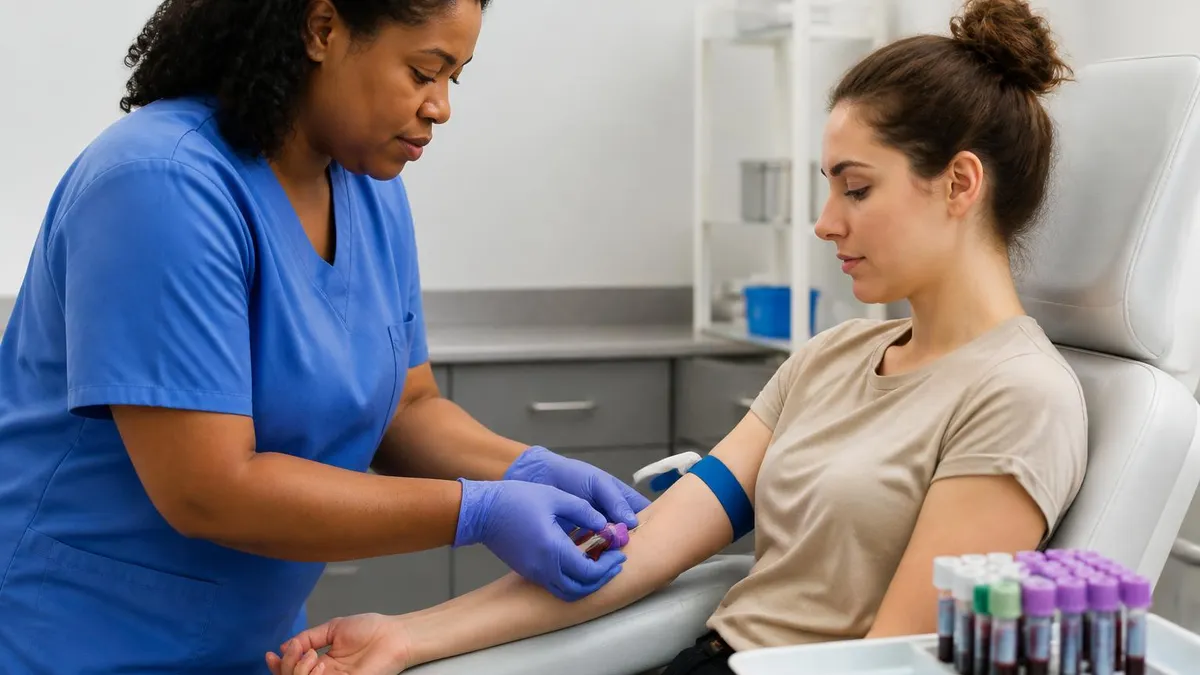
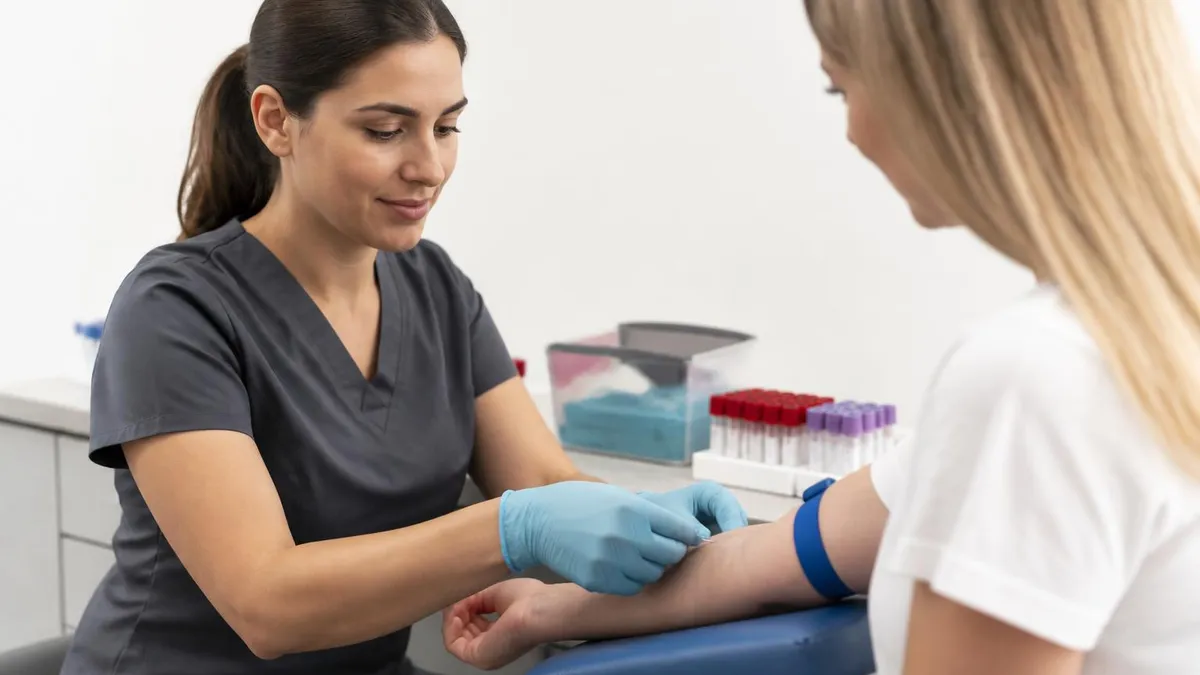
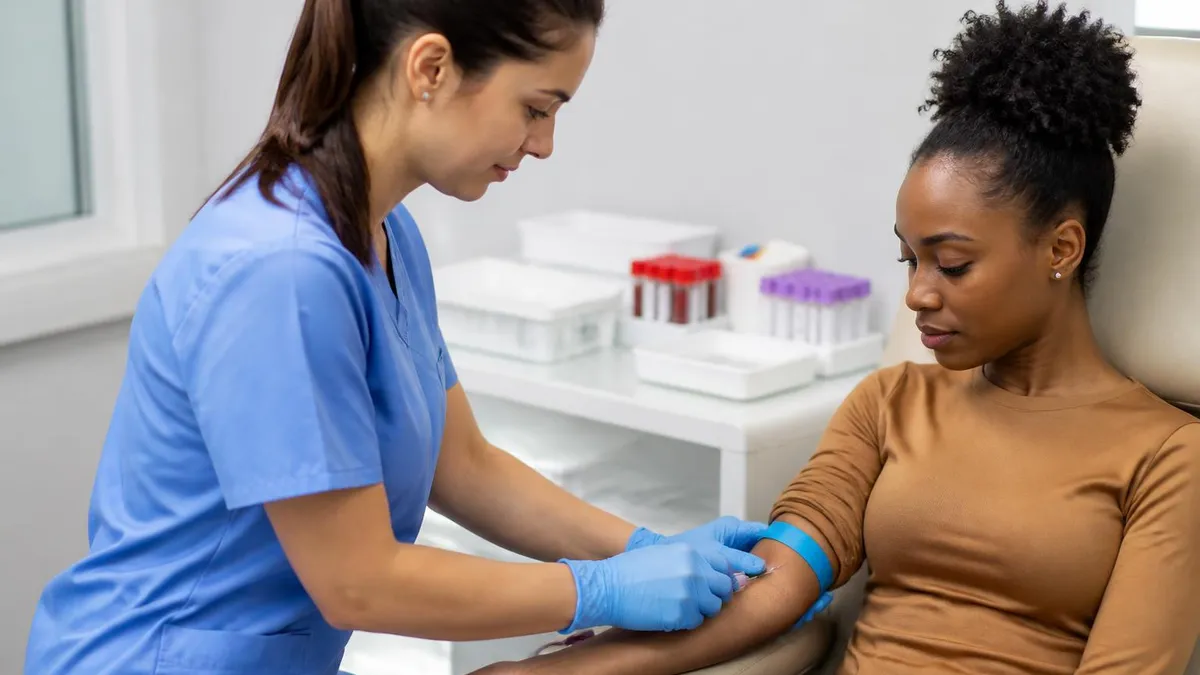
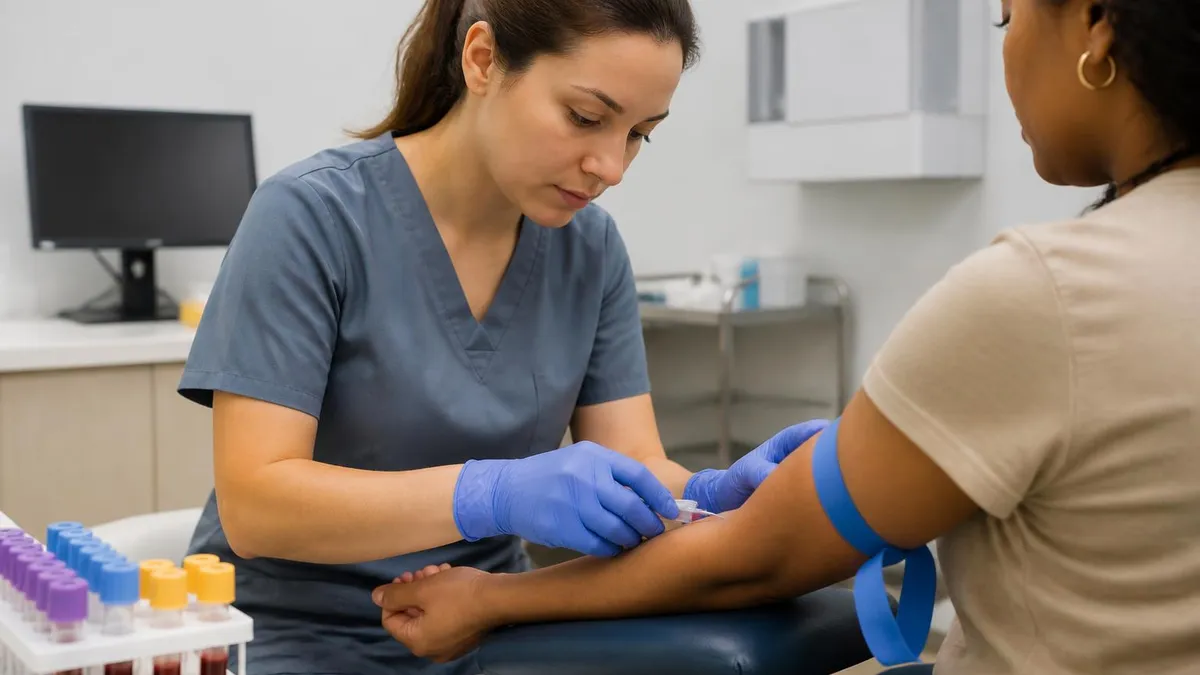
The opening two weeks cover anatomy of the arm and hand veins, the cardiovascular system, infection control principles, and bloodborne pathogen standards aligned with OSHA 1910.1030. You memorize the order of draw phlebotomy uses for vacuum tubes — yellow, light blue, red, gold/SST, green, lavender, gray — and the additives behind each color. Patient identification using two unique identifiers, requisition reading, and HIPAA basics anchor every lab session.
You also begin practicing on synthetic training arms with realistic vein density. Instructors teach proper tourniquet placement, palpation technique, and the 30-degree needle insertion angle for the antecubital fossa. By the end of week two you should land a vein on a manikin 80 percent of the time and understand why hemolysis ruins a sample. Quizzes test memorization of additives and minimum fill volumes.

Is a Local Phlebotomy Program Right for You?
- +Fastest healthcare credential — most programs finish in 4 to 16 weeks
- +Low tuition compared to nursing, MA, or surgical tech programs
- +Strong job demand in hospitals, plasma centers, mobile labs, and clinics
- +Direct pathway into nursing, MLT, and physician assistant programs later
- +Hands-on clinical work begins within the first month of class
- +Multiple national certifications accepted by most US employers
- +Excellent stepping stone for career changers over age 30
- −Physically demanding — long hours standing and repetitive arm motions
- −Exposure to bloodborne pathogens requires constant safety vigilance
- −Wages start near minimum wage in some southern markets
- −Night, weekend, and holiday shifts are common entry-level requirements
- −Difficult patients and pediatric draws cause significant emotional stress
- −California, Washington, and Nevada require additional state licensure
- −Career ceiling is lower without further education in MLT or nursing
Pros and Cons at a Glance
| Pros | Cons |
|---|---|
| Low tuition compared to nursing, MA, or surgical tech programs | Physically demanding — long hours standing and repetitive arm motions |
| Strong job demand in hospitals, plasma centers, mobile labs, and clinics | Exposure to bloodborne pathogens requires constant safety vigilance |
| Direct pathway into nursing, MLT, and physician assistant programs later | Wages start near minimum wage in some southern markets |
| Hands-on clinical work begins within the first month of class | Night, weekend, and holiday shifts are common entry-level requirements |
| Multiple national certifications accepted by most US employers | Difficult patients and pediatric draws cause significant emotional stress |
How to Verify Phlebotomy Training Specialists Near You
- ✓Confirm NAACLS, ABHES, or state board accreditation in writing
- ✓Ask for first-time national certification pass rate from the last three cohorts
- ✓Request a list of clinical externship partner hospitals and labs
- ✓Verify the instructor holds an active CPT, RPT, or PBT credential
- ✓Tour the lab to count practice arms, vacuum tube stock, and draw stations
- ✓Confirm minimum clinical hours meet your target certification's requirement
- ✓Compare total cost of attendance, not just tuition sticker price
- ✓Read every line of the refund and withdrawal policy before signing
- ✓Check the school's BBB rating, Google reviews, and state complaint history
- ✓Ask whether job placement assistance includes resume review and mock interviews
The 40-Stick Rule Decides Your Eligibility
Every major national certifying body — NHA, ASCP, AMT, and NCCT — requires documented proof of 40 to 100 successful live venipunctures plus capillary draws before you can sit for the exam. If a school cannot guarantee enough clinical hours to hit this number, you cannot certify, no matter how good the classroom instruction was. Always ask for the externship minimum in writing.
Certification turns a finished training program into a hireable credential. While certified phlebotomy technician status is not legally required in 46 states, hospital systems, reference labs, and most outpatient clinics list it as a non-negotiable hiring criterion. The four most widely accepted credentials are the National Healthcareer Association CPT, the American Society for Clinical Pathology PBT, the American Medical Technologists RPT, and the National Center for Competency Testing NCPT. Each opens roughly the same doors with minor regional preferences.
The NHA Certified Phlebotomy Technician exam is the most popular entry-level credential. Candidates need either completion of an NHA-approved training program plus 30 documented venipunctures and 10 capillary sticks, or one year of full-time supervised phlebotomy experience within the last three years. The exam runs 100 scored questions plus 20 unscored pretest items, costs $117, and posts a national pass rate near 76 percent for first-time candidates from accredited programs.
ASCP's Phlebotomy Technician PBT certification is preferred by larger academic hospitals and reference laboratories such as Mayo Clinic, Cleveland Clinic, and Quest. The exam contains 80 questions over two hours, costs $135, and accepts five education and experience routes including a high school diploma plus completion of a NAACLS-approved program. ASCP recertification requires 18 continuing education points every three years, which is more rigorous than its competitors.
AMT Registered Phlebotomy Technician status appeals to candidates from for-profit vocational programs because AMT recognizes a broader list of training providers. The exam costs $120, includes 200 questions over two and a half hours, and a passing scaled score of 70 unlocks lifetime credential maintenance for $50 annually. NCCT's NCPT credential follows a similar structure with strong recognition in the Midwest and Southeast.
State licensure stacks on top of national certification in four states. California requires CPT1 licensure through the Department of Public Health Laboratory Field Services and allows three pathways — CPT1, CPT2, and Limited Phlebotomy Technician — with progressively expanded scope of practice. Washington, Nevada, and Louisiana require state-issued credentials with their own continuing education mandates. Massachusetts, Oregon, and New York have proposed similar requirements that may pass during the 2026 legislative cycle.
Recertification keeps your credential active. NHA requires 10 continuing education credits every two years and a $169 renewal fee. ASCP demands 18 CE points across multiple competency areas every three years. AMT and NCCT use annual maintenance with smaller CE thresholds. Most employers pay for CE webinars and reimburse renewal fees because credentialed staff lower lab error rates and unlock higher reimbursement codes from CMS and private insurers.
Plan your certification path before you finish training. Talk to externship preceptors about which credential their hospital prefers, because hiring managers screen applications by exact credential abbreviation. If you live in a state with mandatory licensure, complete state paperwork in parallel with your national exam application — the licensing board can take 30 to 60 days to issue your number. Search phlebotomy certification near me to locate authorized PSI or Pearson VUE testing centers in your area.

Programs that promise certification with zero live clinical hours are violating every national certifying body's eligibility requirements. You cannot sit for NHA, ASCP, AMT, or NCCT exams without documented hands-on venipunctures. Always verify a hybrid program has secured a local clinical site for you before paying tuition, or you will hold a worthless certificate of completion.
Phlebotomy salary in 2026 sits at a national median near $40,500, with the Bureau of Labor Statistics projecting 8 percent job growth through 2032 — faster than the average for all occupations. The top 10 percent of certified technicians earn more than $54,000, especially in California, Alaska, Washington, Massachusetts, and the New York City metro. Rural areas in Mississippi, Arkansas, and West Virginia post lower medians near $32,000 but offer significantly lower cost of living and faster promotion timelines.
Settings matter as much as geography. Hospital phlebotomy technicians earn $1 to $3 more per hour than outpatient draw stations because they work nights, handle emergency department draws, and run blood bank specimens with tighter turnaround windows. Plasma donation centers like BioLife, CSL, and Grifols pay competitive base rates plus monthly bonuses tied to donor throughput. Mobile and travel phlebotomy roles for insurance exams, clinical research, and home health pay $24 to $34 per hour with reimbursed mileage.
Specialization unlocks the highest pay tiers. Therapeutic phlebotomy nurses managing hemochromatosis and polycythemia vera patients in infusion centers earn $48,000 to $58,000 in most markets. Blood bank technicians cross-trained in donor unit collections command $52,000-plus in major academic centers. Research phlebotomists supporting clinical trials at pharmaceutical companies earn the highest figures, with senior contractors topping $72,000 plus benefits when employed directly by sponsors like Pfizer, AbbVie, and Eli Lilly.
Experience compounding is real and measurable. A newly certified technician typically starts at $16 to $19 per hour. At two years with strong reviews, that climbs to $20 to $24 per hour. By year five, lead technician or supervisor titles unlock $25 to $30 per hour plus shift differentials. Cross-training into EKG, specimen processing, or medical assisting adds $1 to $3 hourly and improves promotion velocity into lab coordinator or charge tech roles.
Job hunting strategy beats job-board scrolling. Apply directly through hospital career portals during their quarterly hiring waves rather than waiting for individual postings. Network with externship preceptors at lab science association meetings, and ask former classmates which managers are currently approving headcount. Reference labs like Quest, Labcorp, BioReference, and Sonic Healthcare hire continuously and accept rolling applications. Travel agencies including Aya, AMN, and Cross Country place certified phlebotomists in 13-week contracts paying $1,200 to $1,600 weekly plus housing stipends.
Career ladders extend well beyond the draw chair. Many phlebotomy technicians use the credential as a paid pathway into nursing, medical laboratory science, ultrasound, or physician assistant school. Hospital tuition-reimbursement programs commonly cover $5,250 annually in coursework, and consistent bedside time strengthens healthcare school applications. Within five to seven years of starting as a phlebotomist, motivated workers routinely land RN or MLS roles earning $70,000 to $90,000. Track your patient interactions, certifications, and CE hours in a portfolio from day one to support your phlebotomy training specialists career narrative.
Even if you stay in the draw chair, advancement is real. Lead phlebotomist, lab coordinator, training instructor, and quality assurance roles all open up after three to five years. Some technicians transition into clinical research coordinator positions paying $58,000 to $72,000 in pharma corridors like Boston, Raleigh-Durham, and South San Francisco. Others open mobile draw or wellness screening LLCs serving insurance companies and corporate biometric screening contracts. The credential is portable, durable, and a remarkably resilient launch pad for the entire healthcare industry.
Once you have chosen a program and committed to a start date, your preparation strategy decides whether you finish in the top tier of your cohort or scramble for a passing grade. Successful students treat phlebotomy training like a part-time job. Block out 12 to 18 study hours weekly, separate from class time, and dedicate at least half of that to active recall using flashcards on tube additives, order of draw, and anatomical landmarks rather than passive textbook rereading. Cards beat highlighters every time on certification exams.
Build a study group of three to five classmates by the end of week one. Rotate hosting at a public library or hospital break room, quiz each other on the order of draw phlebotomy uses, and practice palpation on every adult arm you can access with consent. Students who study in groups pass national certification exams at roughly 12 percentage points higher than solo studiers because verbalizing concepts forces real comprehension. Bring snacks. Cohorts that bond outside class also generate the strongest professional networks five years later.
Treat clinical externship as the most important phase of your training. Arrive 15 minutes early, dress in pressed scrubs, keep your hair tied back, and carry a small notebook for documenting techniques your preceptor demonstrates. Volunteer for the hardest sticks — the dehydrated elderly patient, the pediatric heel, the chemotherapy port draw — because difficult collections build the skill ceiling that easy collections never touch. Ask one thoughtful question per shift and write down the answer the same evening.
Manage your nerves before the certification exam. The week before testing, taper your study intensity, sleep eight hours nightly, and complete two full-length timed practice exams under exam-like conditions. Skip any new material in the final 48 hours and instead review your weakest two domains using your error log. Eat a protein-rich breakfast on exam morning, hydrate, and arrive at the testing center 30 minutes early to handle check-in stress. Confidence on exam day comes from rehearsed routine, not last-minute cramming.
After certification, your first 90 days on the job determine the trajectory of your career. Document every difficult stick, ask for feedback weekly, and never leave a shift with a labeling error unreported. Hospital quality teams track tube rejection rates by individual technician, and lead phlebotomist promotions go to people with rejection rates below 0.5 percent. Volunteer for night shifts, blood drives, and pediatric clinics because these high-stress environments accelerate your skill curve dramatically faster than a steady outpatient draw bay.
Keep learning after credentialing. Subscribe to the Center for Phlebotomy Education newsletter, the ASCP Lab Medicine blog, and the AABB Bloodtalk podcast for free continuing education content. Attend at least one professional conference annually — most regional ASCLS or AMT events cost under $200 and count toward CE requirements while expanding your professional network. The phlebotomists who treat their credential as a profession rather than a job stack credentials and promotions much faster than those who clock in and out.
Finally, protect your body. Repetitive needle motions, twisting reach to draw stations, and standing for eight-hour shifts cause real musculoskeletal injury in phlebotomists over time. Invest in supportive shoes, stretch your forearms and shoulders before each shift, and rotate hands when possible. Use the ergonomic adjustments on your draw chair and patient chair every single time — they exist for a reason. Phlebotomists who protect their bodies in the first five years still draw blood at 25-year careers without chronic pain.
Sample Phlebotomy Practice Questions
Try these questions from our free Phlebotomy practice tests. The correct answer and an explanation follow each question.
What certification does the American Medical Certification Association (AMCA) offer for phlebotomy professionals?
- A. Certified Clinical Laboratory Specialist (CCLS)
- B. Phlebotomy Technician Certification (PTC)**
- C. National Phlebotomy Certification (NPC)**
- D. Licensed Blood Collection Specialist (LBCS)**
Answer: B. Phlebotomy Technician Certification (PTC)**
The American Medical Certification Association (AMCA) offers the Phlebotomy Technician Certification (PTC) for individuals working in phlebotomy. This specific credential signifies that the holder has met AMCA's rigorous standards for competence in blood collection procedures and patient care. It is their distinct certification for phlebotomy professionals.
What certification is offered by the American Medical Technologists (AMT) for phlebotomy professionals?
- A. Certified Phlebotomy Technician (CPT)
- B. Registered Phlebotomy Technician (RPT)
- C. Licensed Blood Collection Technician (LBCT)
- D. Certified Clinical Specialist (CCS)
Answer: B. Registered Phlebotomy Technician (RPT)
The American Medical Technologists (AMT) offers the Registered Phlebotomy Technician (RPT) certification for phlebotomy professionals. This credential signifies that an individual has met AMT's rigorous standards for competence in phlebotomy. The RPT certification is widely recognized and respected in the healthcare industry.
What certification is offered by the National Healthcareer Association (NHA) for phlebotomy professionals?
- A. Certified Phlebotomy Technician (CPT)**
- B. Registered Blood Collection Specialist (RBCS)**
- C. National Certified Phlebotomy Technician (NCPT)**
- D. Licensed Clinical Lab Technician (LCLT)**
Answer: A. Certified Phlebotomy Technician (CPT)**
The National Healthcareer Association (NHA) offers the Certified Phlebotomy Technician (CPT) certification for phlebotomy professionals. This specific credential signifies that an individual has met NHA's standards for competency in blood collection and related procedures. It is one of several recognized certifications for phlebotomists in the United States.
How many continuing education units (CEUs) must NHA-certified phlebotomy technicians complete before renewing their certification?
- A. 10 CEUs
- B. 15 CEUs
- C. 20 CEUs
- D. 25 CEUs
Answer: A. 10 CEUs
NHA CPT holders must complete 10 CEUs every two years to maintain their certification.
Phlebotomy Questions and Answers
About the Author

Registered Nurse & Healthcare Educator
Johns Hopkins University School of NursingDr. Sarah Mitchell is a board-certified registered nurse with over 15 years of clinical and academic experience. She completed her PhD in Nursing Science at Johns Hopkins University and has taught NCLEX preparation and clinical skills courses for nursing students across the United States. Her research focuses on evidence-based exam preparation strategies for healthcare certification candidates.