
Free Phlebotomy Training Near Me: 2026 October Guide to No-Cost Classes, Certification & Career Pathways
🧠 Find free phlebotomy training near me: no-cost classes, certification prep, salary data, and step-by-step enrollment for 2026 October career starters.
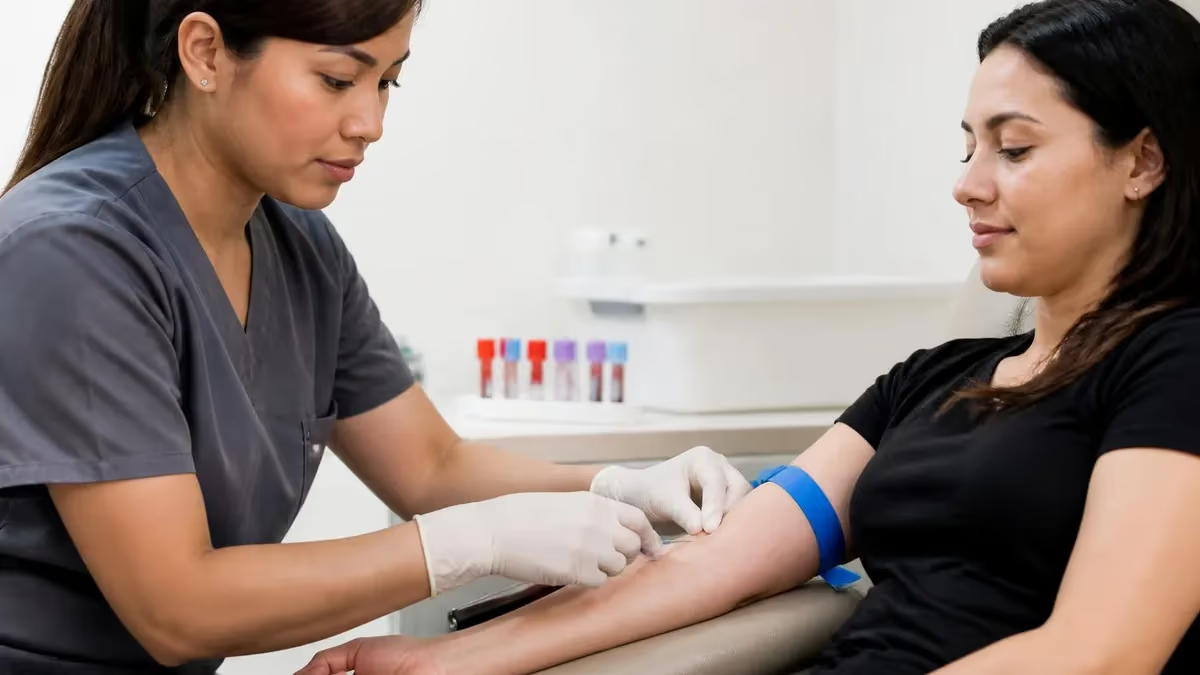
Searching for free phlebotomy training near me has become one of the most common career-pivot queries in American healthcare, and for good reason. The U.S. Bureau of Labor Statistics projects 8% job growth for phlebotomists through 2032, faster than the average occupation, and hospitals across the country are actively subsidizing tuition to fill open requisitions. If you are willing to commit roughly 80 to 200 classroom hours plus 40 hours of supervised clinical externship, you can move from zero experience to a paid healthcare role in under four months.
The phrase 'free' covers a wider menu than most people realize. It includes American Red Cross community partnerships, hospital-sponsored 'earn while you learn' apprenticeships, Workforce Innovation and Opportunity Act (WIOA) grants, vocational rehabilitation funding, Pell Grant coverage of phlebotomy classes near me at community colleges, employer reimbursement at draw centers like Quest and LabCorp, and high school dual-enrollment tracks. Each pathway carries different eligibility rules, time commitments, and certification outcomes you need to map before applying.
This guide walks through every realistic option, including the best phlebotomy training specialists offering low-cost or no-cost programs, what the curriculum actually covers, and how to translate a free seat into a credential employers recognize. We will examine eligibility, length, certification eligibility (NHA, ASCP, AMT, NCCT), and the realistic phlebotomy salary you can expect once certified — typically $35,000 to $48,000 in year one, with hospital settings paying near the top of that range.
You will also see exactly how to vet a free program. Not every 'free' offer leads to a marketable credential — some are unaccredited boot camps that satisfy curiosity but cannot place you in a clinical externship, which is the gateway to certification eligibility. We will cover the four red flags that signal a program is not worth your time, along with the specific accreditations (NAACLS approval, state department of health registration) that protect your investment.
If you are still deciding whether phlebotomy is the right fit, start by exploring our phlebotomy career training overview, which compares this role with medical assisting, EKG technician, and patient care tech pathways. Phlebotomy remains the fastest, cheapest, and most flexible entry point into hospital-based healthcare, and it stacks well into nursing, ultrasound, and laboratory science later.
The market is shifting in your favor. Labor shortages mean that in 2026, more than 60% of U.S. hospital systems will reimburse or directly fund certified phlebotomy technician training in exchange for a one- or two-year work commitment. That is the single biggest unlock for free training, and most candidates do not even know it exists. We will show you how to find these programs in your zip code and how to negotiate the contract terms.
By the end of this guide, you will have a concrete shortlist of free or near-free phlebotomy courses near me, a checklist for applications, a budget for the small remaining costs (background check, immunizations, certification exam fees), and a study roadmap that prepares you to pass on the first attempt.
Free Phlebotomy Training by the Numbers
Key Facts at a Glance
| Item | Value | Details |
|---|---|---|
| Net Out-of-Pocket Cost | $0–$300 | After WIOA, Pell, or employer funding |
| Typical Program Length | 4–16 wks | 80–200 instructional hours |
| Required Successful Draws | 100+ | For NHA, ASCP certification |

Five Realistic Pathways to Free Phlebotomy Training
The Workforce Innovation and Opportunity Act funds short-term healthcare training for displaced workers, low-income adults, and youth. Visit your local American Job Center to apply — most approved phlebotomy programs run 8–12 weeks at zero cost.
Major systems like HCA, Ascension, Kaiser, and Cleveland Clinic run paid apprenticeships that combine classroom instruction with clinical hours. You earn $15–$19 per hour while training in exchange for a 12–24 month employment commitment.
The American Red Cross trains donor phlebotomists for free in select markets. Training lasts 7 weeks and places graduates immediately into mobile blood drives and donor centers as paid technicians.
Most community college phlebotomy certificates cost $800–$1,800 but are fully covered by Pell Grants for eligible students. Programs often include externship placement and prepare you for ASCP, NHA, or AMT exams.
Quest Diagnostics, LabCorp, BioReference, and large hospital outpatient labs sponsor entry-level employees through phlebotomy training after 90 days of employment. Start as a lab assistant, then move into draws.
Before you apply for any free phlebotomy classes near me, understand what every legitimate program requires. The baseline floor is a high school diploma or GED, valid government ID, and proof of being at least 18 years old at the time of clinical externship. A few states accept 17-year-olds with parental consent, but most clinical sites enforce 18+ to align with OSHA bloodborne pathogen rules and HIPAA training prerequisites.
Beyond age and education, expect a fitness-for-duty review. This includes immunization records (Hepatitis B series, MMR, varicella, Tdap, annual flu, and COVID-19 in many states), a two-step PPD or QuantiFERON-Gold TB test, a 10-panel drug screen, and a clean criminal background check covering the past seven years. Most programs will not enroll candidates with unresolved felonies involving theft, violence, or controlled substances because clinical sites cannot credential them.
You will also need basic literacy, math, and reading comprehension at the 10th-grade level. Many free programs use the TABE (Test of Adult Basic Education) or Accuplacer to screen applicants. Phlebotomy involves reading requisitions, calculating tube fill volumes, interpreting lab labels, and following multi-step procedures — all of which require comfortable functional literacy. If your scores fall short, ask the program about pre-enrollment academic support; many WIOA-funded programs include it.
Physical requirements matter more than candidates expect. You will stand for six- to ten-hour shifts, lift trays of specimens, push phlebotomy carts, and assist with patient repositioning. Manual dexterity is non-negotiable: you must palpate veins, manipulate small needles and tube holders, and label vials accurately while talking with anxious patients. Programs typically require a physician-signed essential functions form before clinical placement.
Documentation collection is the slowest part of the application. Order birth certificates, immunization records from your pediatric provider or state registry, high school transcripts, and government ID well before deadlines. WIOA applicants additionally need recent pay stubs, unemployment determination letters, or tax returns to prove eligibility. A complete file accelerates approval and helps you start the next cohort instead of waiting six months.
Most free programs are competitive. The American Red Cross Boston site, for example, accepts 18 students per cohort from roughly 200 applicants. Hospital apprenticeships at major systems often see 10:1 selection ratios. Strong applicants demonstrate genuine healthcare interest through prior volunteering, CNA experience, EMT certification, or military medical service. If you are starting cold, log 40 hours of hospital volunteering before you apply — it will materially improve your odds.
Finally, look ahead to certification eligibility. The free training you select must include enough clinical hours to qualify you for a national exam. NHA's Certified Phlebotomy Technician credential requires 30 successful venipunctures and 10 successful capillary sticks documented under supervision. ASCP's PBT requires 100 successful venipunctures and 5 successful skin punctures. If a 'free' program does not include externship hours, it is not a real certification pathway — it is an introductory course that will leave you stuck. Compare options carefully and consult our phlebotomy program near me certification guide to align your training with the credential you want.

Phlebotomy Practice Test Questions
Prepare for the Phlebotomy Test exam with our free practice test modules. Each quiz covers key topics to help you pass on your first try.
Phlebotomy American Medical Certification ...
Phlebotomy Exam Questions covering American Medical Certification Association Phlebotomy. Master Phlebotomy Test concepts for certification prep.
Phlebotomy American Medical Technologists ...
Free Phlebotomy Practice Test featuring American Medical Technologists Phlebotomy. Improve your Phlebotomy Exam score with mock test prep.
Phlebotomy American Society for Clinical P...
Phlebotomy Mock Exam on American Society for Clinical Pathology Phlebotomy. Phlebotomy Study Guide questions to pass on your first try.
Phlebotomy Association of Phlebotomy Techn...
Phlebotomy Test Prep for Association of Phlebotomy Technicians. Practice Phlebotomy Quiz questions and boost your score.
Phlebotomy National Center for Competency ...
Phlebotomy Questions and Answers on National Center for Competency Testing Phlebotomy. Free Phlebotomy practice for exam readiness.
Phlebotomy National Healthcareer Associati...
Phlebotomy Mock Test covering National Healthcareer Association Phlebotomy. Online Phlebotomy Test practice with instant feedback.
Phlebotomy Order of Draw and Additives
Free Phlebotomy Quiz on Order of Draw and Additives. Phlebotomy Exam prep questions with detailed explanations.
Phlebotomy Legal and Ethics
Phlebotomy Practice Questions for Phlebotomy Legal and Ethics. Build confidence for your Phlebotomy certification exam.
Phlebotomy Safety and Infection Control
Phlebotomy Test Online for Safety and Infection Control. Free practice with instant results and feedback.
Phlebotomy Special Collection Procedures
Phlebotomy Study Material on Special Collection Procedures. Prepare effectively with real exam-style questions.
Phlebotomy Specimen Processing and Handling
Free Phlebotomy Test covering Specimen Processing and Handling. Practice and track your Phlebotomy exam readiness.
Phlebotomy Test Arterial Blood Gas Collection
Phlebotomy Exam Questions covering Test Arterial Blood Gas Collection. Master Phlebotomy Test concepts for certification prep.
Phlebotomy Test Capillary and Dermal Puncture
Free Phlebotomy Practice Test featuring Test Capillary and Dermal Puncture. Improve your Phlebotomy Exam score with mock test prep.
Phlebotomy Test Pediatric Blood Collection
Phlebotomy Mock Exam on Test Pediatric Blood Collection. Phlebotomy Study Guide questions to pass on your first try.
Phlebotomy Test Phlebotomy Anatomy and Phy...
Phlebotomy Test Prep for Test Phlebotomy Anatomy and Physiology. Practice Phlebotomy Quiz questions and boost your score.
Phlebotomy Test Phlebotomy Exam Simulation
Phlebotomy Questions and Answers on Test Phlebotomy Exam Simulation. Free Phlebotomy practice for exam readiness.
Phlebotomy Test Phlebotomy Patient Identif...
Phlebotomy Mock Test covering Test Phlebotomy Patient Identification and Communication. Online Phlebotomy Test practice with instant feedback.
Phlebotomy Test Point of Care Testing
Free Phlebotomy Quiz on Test Point of Care Testing. Phlebotomy Exam prep questions with detailed explanations.
Phlebotomy Technician Training: Three Free Program Types Compared
WIOA-funded programs deliver classroom and lab instruction at community colleges or vocational schools chosen from your state's Eligible Training Provider List. You apply through a local American Job Center, complete career assessments, and receive an Individual Training Account that pays tuition, books, and exam fees directly. Many states also cover transportation, childcare during class hours, and uniforms.
Eligibility favors dislocated workers, low-income adults, and young adults aged 18–24. Programs run 8 to 16 weeks, end with a NAACLS-approved curriculum, and place graduates into externships at partner hospitals. The drawback is paperwork — expect three to six weeks between application and enrollment as your case manager verifies income and develops your service plan.
Free Phlebotomy Training: Pros and Cons to Weigh Before Enrolling
- +Zero or near-zero tuition through WIOA, Pell, employer sponsorship, or apprenticeship
- +Fast completion — most programs finish in 4 to 16 weeks
- +Direct pipeline to nationally recognized certification (NHA, ASCP, AMT)
- +Built-in clinical externship with hiring partners
- +Strong job market with 8% growth projected through 2032
- +Stackable credential — easily ladders into nursing, medical lab science, or sonography
- +Flexible scheduling including evenings and weekends at many community colleges
- −Long waitlists at popular free programs, sometimes six months or more
- −Mandatory work commitment with apprenticeships (12–24 months)
- −Hidden costs persist — immunizations, scrubs, certification exam, background check ($150–$400)
- −Competitive admissions at high-quality free seats
- −Limited geographic availability outside metro areas
- −Lower starting pay than hospital-direct hire pathways during apprenticeship phase

Phlebotomy Certification Near Me: Application Checklist
- ✓Verify high school diploma or GED and request official transcripts
- ✓Gather immunization records: Hep B series, MMR, varicella, Tdap, annual flu, TB screening
- ✓Schedule and complete a 10-panel drug screen at an approved facility
- ✓Order a Level 2 fingerprint background check covering the last seven years
- ✓Confirm CPR/BLS certification through American Heart Association or equivalent
- ✓Visit your local American Job Center to screen for WIOA grant eligibility
- ✓Search Apprenticeship.gov by zip code for paid phlebotomy openings
- ✓Verify program accreditation (NAACLS, ABHES, or state DOH registration)
- ✓Confirm the program includes minimum 100 successful supervised venipunctures
- ✓Budget $150–$250 for the certification exam fee and study materials
- ✓Apply to at least three free programs to hedge against cohort waitlists
- ✓Practice with online quizzes weekly to track readiness before clinicals begin
Free does not mean unaccredited — verify before you enroll
The single biggest mistake new applicants make is enrolling in a 'free' program that lacks NAACLS approval, state DOH registration, or recognized clinical placement. These programs may award a certificate of completion but will not make you eligible for the NHA CPT, ASCP PBT, or AMT RPT exam. Always confirm the program is on your state's Eligible Training Provider List and includes externship hours that satisfy your target certification body's clinical requirements.
Free phlebotomy training is never 100% free. Even fully funded WIOA seats carry ancillary costs that surprise candidates who did not budget. Expect to spend $300 to $700 out-of-pocket across immunizations (if not covered by your insurance), uniforms and closed-toe non-slip shoes, a stethoscope and watch with a second hand, a textbook supplement, the criminal background check, drug screening, fingerprinting, and the certification exam fee itself. Plan for these costs before enrolling so they do not derail your start date.
The certification exam is the single largest non-tuition expense. NHA's Certified Phlebotomy Technician exam costs $117, AMT's RPT runs $135, ASCP's PBT(ASCP) is $135, and NCCT's NCPT exam is $135 to $159. Many free programs include the first exam attempt in the package, but a retake (15% of test-takers fail the first time) is your responsibility. Build in a buffer for one possible retake while you study aggressively to pass on attempt one.
Salary expectations should be grounded in regional data. The national median phlebotomy salary in 2024 was $41,810 according to the BLS, but the 90th percentile reached $58,420 in high-cost-of-living metro areas like San Francisco, Boston, Seattle, and New York. Hospital settings typically pay $2 to $5 more per hour than physician-office labs, and night-shift or weekend differentials add 10% to 15%. Expect to earn $17 to $22 per hour as a new graduate in most U.S. markets.
The career ladder matters as much as the starting wage. Within 24 months of certification, you can move into lead phlebotomist roles at $24 to $28 per hour, supervisor positions at $52,000 to $62,000 annually, or specialty roles in therapeutic phlebotomy, donor apheresis, and pediatric phlebotomy that pay 15% to 25% above general hospital rates. Many phlebotomists also cross-train as EKG technicians or medical assistants to stack credentials and increase versatility.
Phlebotomy is also one of the most stackable healthcare credentials. The clinical foundation — anatomy, physiology, infection control, specimen integrity, and the phlebotomy order of draw — directly applies to medical assisting, registered nursing, medical laboratory science, and sonography. Many community colleges award articulated credit toward ADN or BSN programs for phlebotomy coursework, shaving a semester off your nursing degree.
If you plan to use phlebotomy as a launching point, choose a program affiliated with a community college rather than a standalone certificate mill. The college credits transfer, the financial aid is more strong, and the long-term value compounds. Many free WIOA programs are housed inside community colleges precisely for this reason — your free certificate becomes the first nine credits of a larger associate degree at no additional cost.
One final cost worth modeling: opportunity cost during training. Even short programs eat 80 to 200 hours of your time across 4 to 16 weeks. If you are working full-time, look for evening or weekend cohorts, and confirm externship sites can accommodate flexible hours. The financial return is strong — most graduates recoup all training expenses within the first three months of employment — but cash flow during training is real, especially for unpaid (non-apprenticeship) tracks.
Programs advertised as 'fully online' rarely qualify you for national certification. Every recognized body — NHA, ASCP, AMT, NCCT — requires documented hands-on clinical hours and a minimum number of successful supervised live draws. If a program does not arrange externship placement, you must find your own clinical site, which is nearly impossible without an institutional affiliation. Always confirm in writing that externship is included.
Choosing the right certification is just as important as choosing the right free program. The four most widely accepted credentials in the United States are the NHA Certified Phlebotomy Technician (CPT), ASCP Phlebotomy Technician (PBT), AMT Registered Phlebotomy Technician (RPT), and NCCT National Certified Phlebotomy Technician (NCPT). Each is recognized by major hospital systems, but their eligibility paths and exam content differ enough that program-credential alignment matters.
The NHA CPT is the most common entry-level credential and is favored by retail-clinic and hospital outpatient employers. The exam covers safety, patient prep, specimen collection, processing, non-blood specimens, and quality assurance across 120 scored questions plus 20 pretest items. Eligibility requires either completing an NHA-recognized program within the past five years or one year of supervised work experience. Most free WIOA and community college programs prepare you specifically for the NHA CPT.
The ASCP PBT is considered the gold standard in hospital laboratories and academic medical centers. The exam is harder, more lab-focused, and requires either an accredited program plus the supervised draw minimums or extensive work experience. If you plan to work in a major academic hospital or eventually move into medical laboratory science, target ASCP PBT.
AMT RPT and NCCT NCPT are equally valid and often accepted interchangeably with NHA CPT. AMT carries strong recognition in the Midwest, while NCCT is widely accepted in the Southeast. Verify which credentials your target employers prefer by reviewing job postings in your zip code before committing to a program — the credential listed in job ads tells you exactly which exam to prioritize.
All four exams emphasize the same clinical fundamentals: anatomy of the antecubital fossa, vein selection, tube additives, draw order, specimen integrity, patient identification, and infection control. Mastering the order of draw for phlebotomy is non-negotiable — it appears on every certification exam and is the single most common reason candidates fail. Drill it daily until tube colors and additive functions are automatic.
Exam day logistics matter. Most certifications are computer-based, delivered at Pearson VUE or PSI testing centers, and last two to three hours. You receive your pass/fail result immediately, with a numeric score and section-level breakdown for failed attempts. Bring two forms of ID, arrive 30 minutes early, and avoid heavy meals — long exams favor steady focus over caloric loading. Most testing centers prohibit any personal items in the testing room.
After passing, you must maintain certification through continuing education. NHA requires 10 contact hours every two years, ASCP PBT requires 9 credits every three years through the CMP program, and AMT requires participation in their CCP program. Plan for $30 to $80 annually in renewal and CE fees, plus the time investment. Most employers cover these costs for active employees, so factor in renewal support when comparing job offers.
Once you are accepted into a free program, your success depends on how you study, not just attendance. Phlebotomy is a procedural craft built on repetition, muscle memory, and clinical judgment. The students who pass their certification on the first attempt and land jobs within 30 days of graduation follow a consistent weekly rhythm: classroom learning, lab repetition, written drilling, and reflective practice. Build that rhythm from week one.
Front-load anatomy and physiology mastery. The first two weeks of any phlebotomy course cover the structure of veins, the anatomy of the upper extremity, the antecubital fossa, alternative draw sites (hand, foot in select cases), and the pediatric circulatory system. If you understand vein anatomy deeply, you will palpate accurately, choose the right gauge, and avoid the nerve and artery damage that ends careers before they start. Drill anatomy until it is automatic.
Memorize the order of draw using mnemonics, songs, and flashcards. The CLSI standard order — blood cultures, light blue, red, gold/SST, green, lavender/EDTA, gray — must be recallable in any sequence and any direction. Practice writing the order from memory every morning. Quiz yourself by tube color and by additive. The order of draw appears on every certification exam and in every clinical evaluation; missing it is the fastest way to fail.
Treat your externship like a job interview that lasts 40 to 120 hours. Externship supervisors talk to hiring managers. Show up 15 minutes early, in pressed scrubs, with a notebook and pen. Ask thoughtful questions, offer to help with non-draw tasks during downtime, and document every successful and unsuccessful stick honestly. Most graduates who land hospital jobs within 30 days of completion were offered the role by their externship site directly.
Use online practice questions aggressively. Plan to complete 50 to 100 practice questions per week throughout your program, then 200 per week in the four weeks before your certification exam. Track which content domains you miss most often — usually specimen handling, special collections, or safety — and target those areas with focused review. Quiz tools that explain why an answer is correct (not just whether it is correct) double your learning rate.
Build relationships with your cohort. Phlebotomy is a small community in every city, and your classmates will end up working at every major employer within five years. Form a study group, share notes, practice on each other's veins (with proper supervision and consent), and stay in touch after graduation. Your network will surface job openings, shift swap opportunities, and continuing education tips throughout your career.
Finally, schedule your certification exam before you finish your program. Booking the exam date creates accountability and prevents the post-graduation drift that traps many students in 'will study later' limbo. Aim to test within 30 days of completing externship, while procedures, anatomy, and protocols are still fresh. Candidates who delay past 90 days see pass rates drop by 12 to 18 percentage points compared to those who test promptly.
Sample Phlebotomy Practice Questions
Try these questions from our free Phlebotomy practice tests. The correct answer and an explanation follow each question.
What is a primary eligibility requirement for the AMCA Phlebotomy Technician Certification exam?
- A. Completion of a formal phlebotomy training program
- B. Bachelor’s degree in a medical-related field
- C. One year of work experience in a non-medical role
- D. Supervisory experience in a clinical laboratory
Answer: A. Completion of a formal phlebotomy training program
To be eligible for the AMCA Phlebotomy Technician Certification exam, candidates must typically complete a formal phlebotomy training program. This requirement ensures they have received comprehensive instruction and practical experience in venipuncture techniques, safety protocols, and specimen handling. This foundational training is crucial for safe and effective practice.
What is the minimum educational requirement to pursue a phlebotomy certification through the APT?
- A. High school diploma or equivalent
- B. Associate degree in medical science
- C. Bachelor's degree in biology
- D. No formal education required
Answer: A. High school diploma or equivalent
To pursue a phlebotomy certification through the APT, the minimum educational requirement is typically a high school diploma or its equivalent. In addition to this, candidates must usually complete an approved phlebotomy training program. This ensures a foundational level of education and specialized training for the profession.
Which NCCT certification is specifically designed for phlebotomy technicians?
- A. NCCT-PT
- B. NCPT
- C. NCCT-PHL
- D. NPT
Answer: B. NCPT
The NCCT offers the National Certified Phlebotomy Technician (NCPT) credential for phlebotomy professionals.
What certification is offered by the National Healthcareer Association (NHA) for phlebotomy professionals?
- A. Certified Phlebotomy Technician (CPT)**
- B. Registered Blood Collection Specialist (RBCS)**
- C. National Certified Phlebotomy Technician (NCPT)**
- D. Licensed Clinical Lab Technician (LCLT)**
Answer: A. Certified Phlebotomy Technician (CPT)**
The National Healthcareer Association (NHA) offers the Certified Phlebotomy Technician (CPT) certification for phlebotomy professionals. This specific credential signifies that an individual has met NHA's standards for competency in blood collection and related procedures. It is one of several recognized certifications for phlebotomists in the United States.
Phlebotomy Questions and Answers
Phlebotomy Exam 2026: Complete Certification Study Guide & Practice
Phlebotomy: Classes, Certification, Salary & Career Guide
Phlebotomy Certification Exam 2026: Complete Guide to NHA CPT, ASCP PBT, AMT, NCCT & ASPT
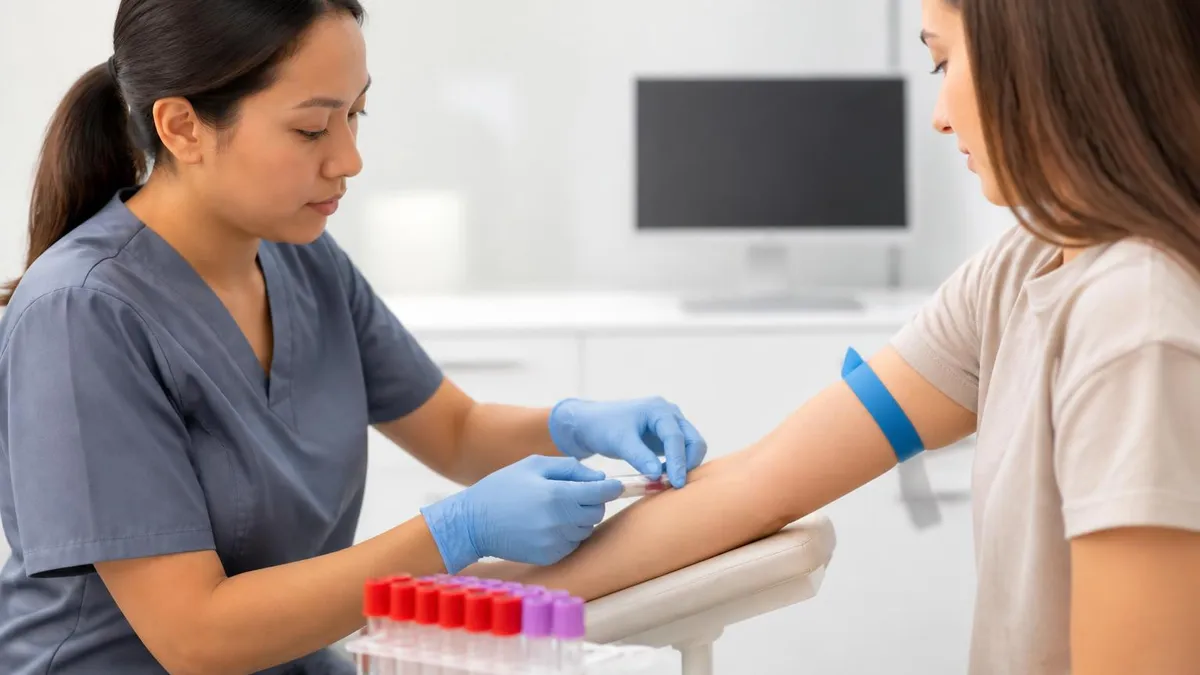
Phlebotomy Test 2026: Complete Practice Exam Prep Guide
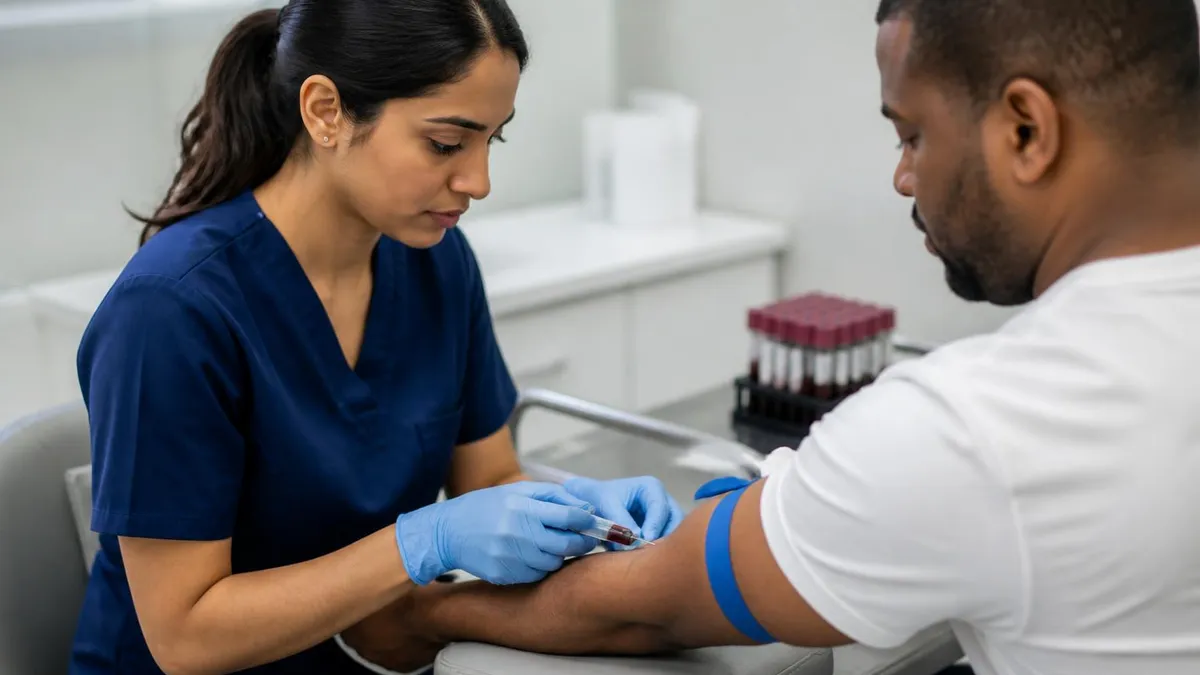
Phlebotomy Tube Colors: Complete Guide to the Order of Draw, Additives & Lab Tests
About the Author

Registered Nurse & Healthcare Educator
Johns Hopkins University School of NursingDr. Sarah Mitchell is a board-certified registered nurse with over 15 years of clinical and academic experience. She completed her PhD in Nursing Science at Johns Hopkins University and has taught NCLEX preparation and clinical skills courses for nursing students across the United States. Her research focuses on evidence-based exam preparation strategies for healthcare certification candidates.