
Mobile Notary Public Near Me: How to Find, Book, and Use One in 2026 October
📗 Find a mobile notary public near me fast. Learn what is a notary public, costs, ID rules, booking tips, and how mobile notaries work in 2026 October.

Searching for a mobile notary public near me usually means you have a document that needs a signature witnessed, a tight schedule, and no easy way to drive to a bank or shipping store. A mobile notary is a commissioned notary public who travels to your home, office, hospital room, coffee shop, or assisted living facility to verify your identity, witness your signature, and apply an official seal. For many people, this convenience is the difference between closing a loan on time and missing a critical deadline by twenty-four hours.
To understand the service, it helps to answer the underlying question: what is a notary public? A notary public is a state-appointed official authorized to perform notarial acts such as acknowledgments, jurats, oaths, affirmations, and copy certifications. Their job is not to give legal advice or verify the truth of a document, but to confirm that the signer is who they claim to be, is signing willingly, and appears to understand the document. Mobile notaries perform the same acts as any stationary notary, just at your chosen location.
Demand for mobile notary services has grown rapidly because real estate closings, estate planning packages, power of attorney forms, and parental consent letters often need to be signed in person, with proper identification, and during a narrow window. A mobile notary fills that gap. Most travel within a 25 to 40 mile radius, charge a base notarial fee set by state law, and add a travel fee that depends on distance, time of day, and urgency. Booking one is usually faster than scheduling a bank appointment.
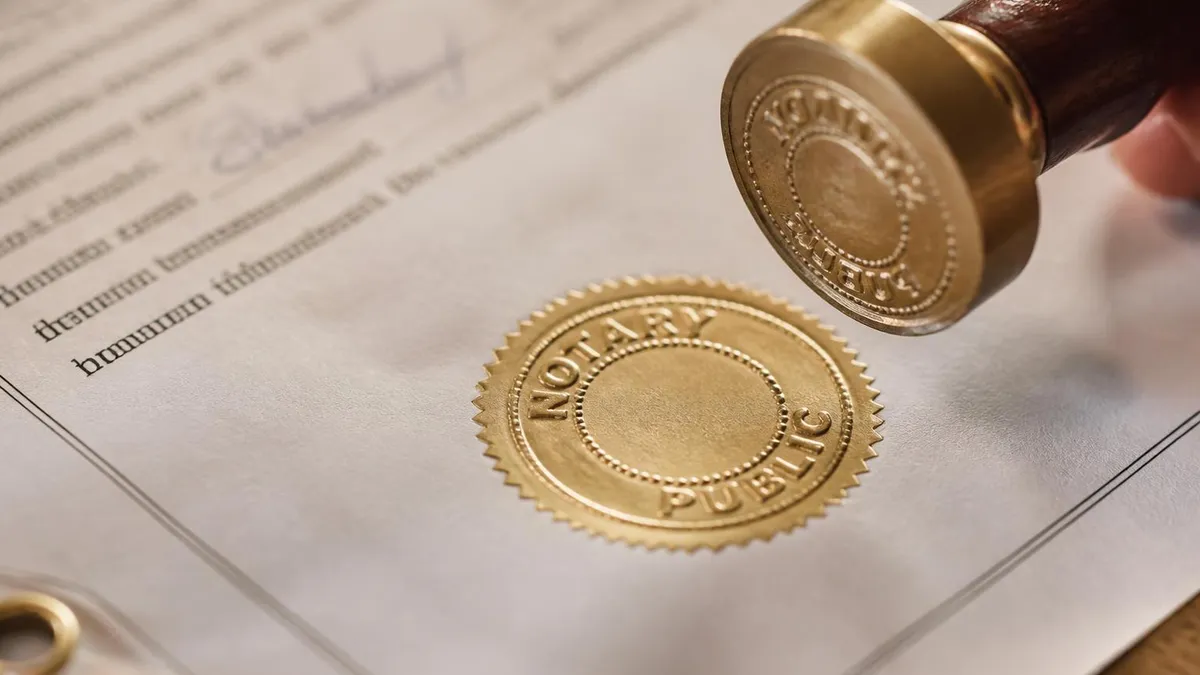
Before any signing, the notary checks your government-issued photo identification, compares it to the name on the document, and ensures the document is complete except for the actual signatures and dates. They then complete the notarial certificate, sign it personally, and impress or stamp it with the official notary public stamp. Without that stamp, the document is not legally notarized and may be rejected by recorders, courts, lenders, or government agencies.
Mobile notaries are especially valuable for clients who are homebound, recovering from surgery, parenting young children, or running businesses that cannot pause for an errand. They also serve attorneys, title companies, and signing services that need a flexible professional in the field. In many cases, the same notary will scan and email completed copies to the requesting party within minutes of the signing, which keeps transactions moving.
This guide walks through everything you need to know to hire a mobile notary with confidence in 2026: how to verify their commission, what to expect during the appointment, average fees by state, identification rules, common pitfalls, and a practical checklist you can use before they arrive. You will also find quiz links if you are studying to become a notary yourself, plus links to articles that go deeper on specific topics like searching state commission databases and finding free notary options.
By the end, you should feel comfortable picking up your phone, searching mobile notary public near me, and confidently booking a professional who fits your timeline, budget, and document requirements. The right preparation can turn a stressful errand into a fifteen-minute visit at your kitchen table.
Mobile Notary Public By the Numbers

How a Mobile Notary Appointment Works
Request and Confirm
Document Prep
Travel and Arrival
Identification
Signing and Sealing
Finding a reliable mobile notary starts with knowing where to look. The fastest options are notary directories like the National Notary Association, 123notary, Snapdocs, NotaryRotary, and Thumbtack, all of which let you filter by ZIP code, availability, and specialty. Google Maps searches for mobile notary public near me also surface local independent notaries with reviews you can read before calling. Many users compare three or four profiles, then pick the one with verifiable credentials and clear pricing.
Banks are a common starting point, but they rarely send notaries to your home. If you have walked into a branch and wondered about notary public in bank of america, you have probably learned that these notaries serve account holders inside the branch and do not travel. Mobile notaries are independent contractors or small business owners. They set their own hours, accept multiple payment types, and often work evenings and weekends, which makes them far more flexible than any branch-based service.
When you reach out, ask three quick questions: are you commissioned in this state, do you carry errors and omissions insurance, and what is your total fee for the appointment. A confident professional will answer immediately and may offer to send a copy of their commission certificate or NNA ID number. Hesitation, vague pricing, or pressure to pay upfront in cash are warning signs worth taking seriously, especially for high-value documents like deeds or powers of attorney.
Reviews matter more than slick websites. Look for notaries with at least a dozen recent reviews mentioning punctuality, professionalism, and clean signings. A pattern of complaints about late arrivals, surprise fees, or rejected documents is a clear pass. Pay closer attention to the most recent thirty days of reviews, because mobile notary businesses can change ownership or quality quickly. A long history of consistent five-star feedback is the strongest signal of reliability.
If your document is in Spanish or you prefer Spanish-language service, search for a bilingual notary or a notario. Be aware that in the United States, a notary public is not the same as a Latin American notario, who is typically a licensed attorney. Reputable bilingual notaries make this distinction clearly and never offer legal advice. You can read more about public notary what is in Spanish-speaking communities before you book.
Confirm the appointment in writing. A short text exchange listing the date, time, address, document type, fee, and payment method protects both sides and prevents miscommunication. Reputable mobile notaries will also send a follow-up text the morning of the signing. If you have a hospital, jail, or assisted living appointment, alert the notary in advance about access procedures, parking, and any staff escort required to reach the signer.
Finally, decide whether you need a general mobile notary or a certified signing agent. Signing agents specialize in residential mortgage closings and have completed background checks plus loan document training. For a single power of attorney or affidavit, any commissioned mobile notary will do. For a refinance, purchase, or HELOC, insist on a certified signing agent with current background screening and a track record of closing without errors.
Notary Public Practice Test Questions
Prepare for the Notary Public Exam exam with our free practice test modules. Each quiz covers key topics to help you pass on your first try.
Notary Public Basic Notary Public
Notary Public Exam Questions covering Basic Notary Public. Master Notary Public Test concepts for certification prep.
Notary Public Duties & Responsibilities of...
Free Notary Public Practice Test featuring Duties & Responsibilities of a Notary. Improve your Notary Public Exam score with mock test prep.
Notary Public Ethics & Professional Conduct
Notary Public Mock Exam on Ethics & Professional Conduct. Notary Public Study Guide questions to pass on your first try.
Notary Public Fraud Prevention & Security
Notary Public Test Prep for Fraud Prevention & Security. Practice Notary Public Quiz questions and boost your score.
Notary Public Identification & Credential ...
Notary Public Questions and Answers on Identification & Credential Verification. Free Notary Public practice for exam readiness.
Notary Public Jurats & Acknowledgments
Notary Public Mock Test covering Jurats & Acknowledgments. Online Notary Public Test practice with instant feedback.
Notary Public Notarial Acts & Procedures
Free Notary Public Quiz on Notarial Acts & Procedures. Notary Public Exam prep questions with detailed explanations.
Notary Public Notary Laws & Regulations
Notary Public Practice Questions for Notary Laws & Regulations. Build confidence for your Notary Public certification exam.
Notary Public MCQ
Notary Public Test Online for MCQ. Free practice with instant results and feedback.
Notary Public
Notary Public Study Material on Notary Public. Prepare effectively with real exam-style questions.
Notary Public Oaths & Affirmations
Free Notary Public Test covering Oaths & Affirmations. Practice and track your Notary Public exam readiness.
Notary Public Recordkeeping & Journal Entries
Notary Public Exam Questions covering Recordkeeping & Journal Entries. Master Notary Public Test concepts for certification prep.
Notary Public Exam Basic Notary Public
Free Notary Public Practice Test featuring Exam Basic Notary Public. Improve your Notary Public Exam score with mock test prep.
Notary Public Exam Duties & Responsibiliti...
Notary Public Mock Exam on Exam Duties & Responsibilities of a Notary. Notary Public Study Guide questions to pass on your first try.
Notary Public Exam Ethics & Professional C...
Notary Public Test Prep for Exam Ethics & Professional Conduct. Practice Notary Public Quiz questions and boost your score.
Notary Public Exam Fraud Prevention & Secu...
Notary Public Questions and Answers on Exam Fraud Prevention & Security. Free Notary Public practice for exam readiness.
Notary Public Exam Identification & Creden...
Notary Public Mock Test covering Exam Identification & Credential Verification. Online Notary Public Test practice with instant feedback.
Notary Public Exam Jurats & Acknowledgments
Free Notary Public Quiz on Exam Jurats & Acknowledgments. Notary Public Exam prep questions with detailed explanations.
Notary Public Exam Notarial Acts & Procedures
Notary Public Practice Questions for Exam Notarial Acts & Procedures. Build confidence for your Notary Public certification exam.
Notary Public Exam Notary Certificates & W...
Notary Public Test Online for Exam Notary Certificates & Wording. Free practice with instant results and feedback.
Notary Public Exam Notary Laws & Regulations
Notary Public Study Material on Exam Notary Laws & Regulations. Prepare effectively with real exam-style questions.
Notary Public Exam Notary Public
Free Notary Public Test covering Exam Notary Public. Practice and track your Notary Public exam readiness.
Notary Public Exam Notary Public MCQ
Notary Public Exam Questions covering Exam Notary Public MCQ. Master Notary Public Test concepts for certification prep.
Notary Public Exam Notary Seal & Stamp Req...
Free Notary Public Practice Test featuring Exam Notary Seal & Stamp Requirements. Improve your Notary Public Exam score with mock test prep.
Notary Public Texas, California, and Beyond: Fee Rules
Each state caps the maximum amount a notary may charge per notarial act. In notary public texas, the cap is $10 per acknowledgment or jurat as of 2026. California allows $15 per act, Florida allows $10, and New York permits only $2. These caps apply to the notarization itself and are listed on the official secretary of state website. A reputable mobile notary will quote the exact statutory fee and never hide it inside a larger lump sum.
If a document has six signatures, each requiring its own acknowledgment, the notary can charge the statutory fee six times. Always ask how many notarial acts your packet contains so you can verify the math. Receipts should itemize notarial acts separately from travel charges to keep the invoice transparent and audit-friendly.

Mobile Notary vs Walk-In: Which Is Better?
- +Comes directly to your home, office, or hospital room
- +Evening and weekend availability without bank hours
- +Faster scheduling, often same-day or within hours
- +Comfortable, private setting for sensitive documents
- +Ideal for homebound, elderly, or disabled signers
- +Can handle multi-signer packages in one visit
- +Brings full supplies including journal and seal
- −Travel fees add $25 to $100 over standard rates
- −Quality varies between independent providers
- −Cash-only operators may not be properly commissioned
- −Must verify commission and insurance yourself
- −Weather or traffic can delay arrival times
- −Limited availability in rural or remote areas
- −Some documents still require in-office witnesses
Pros and Cons at a Glance
| Pros | Cons |
|---|---|
| Comes directly to your home, office, or hospital room | Quality varies between independent providers |
| Evening and weekend availability without bank hours | Cash-only operators may not be properly commissioned |
| Faster scheduling, often same-day or within hours | Must verify commission and insurance yourself |
| Comfortable, private setting for sensitive documents | Weather or traffic can delay arrival times |
| Ideal for homebound, elderly, or disabled signers | Limited availability in rural or remote areas |
| Can handle multi-signer packages in one visit | Some documents still require in-office witnesses |
Free Public Notary Near Me: Pre-Appointment Checklist
- ✓Confirm the document is complete except for signatures and dates
- ✓Locate every page including exhibits, attachments, and addenda
- ✓Bring a current, government-issued photo ID matching the document name
- ✓Have a second ID or credible witness ready if the primary ID has issues
- ✓Verify all signers will be physically present at the appointment time
- ✓Ensure each signer can read, understand, and sign the document willingly
- ✓Choose a quiet workspace with good lighting and adequate table space
- ✓Have payment ready in your notary's preferred method to avoid delays
- ✓Confirm the notary's commission state matches where signing occurs
- ✓Save the notary's contact information in case of follow-up corrections needed
Never sign the document before the notary arrives
One of the most common reasons documents get rejected is that the signer signed at home before the notary arrived. The notary must witness the actual signing. If you signed early, you will likely need to print a fresh copy and start over, adding time and frustration to the appointment.
Mobile notary fraud is rare but real, and a small amount of due diligence protects you completely. The simplest verification step is to confirm the notary's commission through your state's official notary database. Every state secretary of state maintains a public lookup tool where you enter the notary's name or commission number and instantly see the expiration date, county, and bond information. If the database returns no record, walk away from the appointment immediately and find another professional.
The official seal is another verification tool. Every state specifies the exact wording, shape, and content of the notary seal, including the notary's full name as commissioned, the words Notary Public, the state name, and the commission expiration date. A blurry, handwritten, or homemade-looking stamp is a serious red flag. Reputable notaries treat their free public notary near me stamps and journals as protected business assets and never share or photograph them carelessly.
Beware of notaries who offer legal advice, draft documents for you, or help you decide which form to use. Drafting legal documents without a law license is the unauthorized practice of law and is illegal in every state. A legitimate notary will politely refuse and suggest you contact an attorney, paralegal, or legal aid clinic. The notary's role is strictly limited to identifying the signer and witnessing the signature, not interpreting or modifying the document content itself.
Identification rules are strict for a reason. Acceptable IDs typically include a current driver license, state ID card, US passport, military ID, or permanent resident card. Some states accept tribal IDs and consular cards. Most states require the ID to be unexpired, though a few allow IDs expired within the last few years. If your ID does not match the name on the document because of marriage, divorce, or a legal name change, bring supporting paperwork and discuss it with the notary in advance.
Coercion is the most serious issue mobile notaries are trained to detect. If a signer appears confused, intoxicated, frightened, or pressured by another person in the room, the notary is required to refuse the signing. Family members helping elderly relatives should expect the notary to speak privately with the signer to confirm they understand the document and are signing willingly. This is not personal, and a good notary will explain the process kindly before starting any questioning.
Record retention protects everyone. In states that require a journal, the notary logs the date, time, signer name, ID details, document type, and signer's signature for every notarization. These journals are confidential and stored securely. If a dispute arises months or years later, the journal entry serves as evidence that the signing happened correctly. You can request the notary's contact information for future reference but should not expect a copy of the journal entry itself.
Finally, watch out for notaries who pressure you to use them for additional services such as document delivery, recording, or shipping. These are legitimate add-on services, but they should be optional, separately priced, and never bundled in a way that obscures the base notarial fee. Transparency is the hallmark of a professional mobile notary, and any operator who resists clear itemized pricing is one you should replace before signing anything.
Most states require an unexpired government-issued photo ID. Even if you look exactly like the photo, the notary cannot proceed with an expired license or passport in most jurisdictions. Renew your ID or arrange credible witnesses before the appointment.
Real-life scenarios illustrate why mobile notaries are essential. Consider a refinance closing scheduled for 6:30 p.m. on a Friday. The lender has rate-locked through Monday, and the borrowers cannot leave work early to drive to a branch. A certified signing agent arrives at the kitchen table at 6:15, lays out the loan package, walks the borrowers through each document, notarizes the deed of trust and other required pages, and uploads scans by 7:45 p.m. The loan funds on Tuesday, and the family saves thousands over the life of the mortgage.
Hospital signings are another frequent scenario. A patient recovering from surgery needs to execute a durable power of attorney so a spouse can manage finances during recovery. The hospital social worker calls a mobile notary, who arrives within ninety minutes, confirms the patient is alert and oriented, verifies the ID matches hospital records, and completes the notarization at bedside. The whole appointment takes twenty minutes and prevents a much larger legal headache during a vulnerable time for the family.
Real estate investors also rely heavily on mobile notaries. A flipper buying a property at auction may need to sign and notarize wiring instructions, assignment contracts, or quit claim deeds across multiple counties in a single week. A trusted mobile notary on speed dial, paired with a quick public notary what is backup option, keeps deals moving without travel delays. Investors often build long-term relationships with one or two preferred notaries who understand their document flow and timing requirements.
Estate planning is one of the most common reasons families call mobile notaries. Wills, trusts, healthcare directives, and HIPAA releases often involve elderly signers who cannot easily travel. A mobile notary visits the home, coordinates with the attorney by phone if needed, and ensures every certificate is completed correctly. Because estate documents are often contested, a careful notarization with detailed journal entries protects the family from future disputes about the signer's capacity or willingness to sign.
Small business owners use mobile notaries for vendor contracts, lease agreements, equipment financing, and corporate resolutions. Rather than closing the shop to drive across town, the owner books a notary to swing by during a lunch break. Some businesses keep a recurring relationship with a notary who comes weekly or monthly to handle batch notarizations for payroll, HR, and compliance paperwork. This arrangement saves dozens of hours per year and keeps documents flowing on schedule.
International document signings, such as apostille preparation for documents traveling to Hague Convention countries, also benefit from mobile notary expertise. The notary handles the underlying notarization, then often coordinates with an apostille runner who submits the document to the secretary of state for authentication. Families adopting children abroad, professionals relocating overseas, or retirees buying foreign property all use this combined service to keep complex paperwork on track and on time.
Even simple errands like a parental travel consent letter for a minor flying internationally with one parent or a grandparent benefit from mobile notary convenience. Airlines and border officials increasingly demand notarized consent letters. Booking a mobile notary the day before departure, signing at the kitchen table after the kids are in bed, and tucking the notarized letter into the carry-on bag turns what could be a stressful errand into a fifteen-minute visit handled entirely on your schedule.
If you are considering becoming a notary yourself, mobile work is one of the most popular and lucrative paths. The question of how to become a notary public has a slightly different answer in every state, but the general path is the same: meet eligibility requirements, complete any state-mandated training, pass a notary public exam if required, file your application with the secretary of state, purchase a bond and errors and omissions insurance, and order your official seal and journal. Once commissioned, you can market yourself as a mobile notary in your service area.
States like California, Colorado, and New York require candidates to pass a notary public exam covering law, ethics, and procedures. Other states such as Florida and Pennsylvania require an approved education course but no formal exam. Notary public texas applicants file directly with the secretary of state, post a $10,000 bond, and pay an application fee without needing to pass a test. Always check your specific state's rules on the secretary of state website before ordering supplies or scheduling exams.
Once commissioned, your most important tools are your notary public seal, a sturdy journal, certificate pads for jurats and acknowledgments, and reliable transportation. Mobile notaries also invest in a portable scanner or scanning app, a mobile hotspot, and a small briefcase to keep documents flat and clean during travel. Many also add a small tablet for digital paperwork, a dash camera for liability documentation, and a label printer for shipping completed packages back to the requesting party.
Pricing strategy makes or breaks a mobile notary business. Beginners often undercharge because they feel uncertain, but professional mobile notaries quickly learn to charge full statutory fees plus reasonable travel charges that account for time, fuel, and risk. Tracking expenses, mileage, and time per appointment helps you set rates that produce a livable income rather than a hobby paycheck. Many full-time mobile notaries earn between $50,000 and $120,000 annually depending on volume, location, and signing agent specialization.
Marketing a mobile notary business starts with a Google Business Profile, a simple one-page website with clear pricing and service area, and active listings on notary directories. Word-of-mouth referrals from attorneys, title companies, hospice agencies, and real estate brokers tend to produce the highest-value repeat work. Networking at local chambers of commerce, real estate investor meetups, and senior care provider events fills the calendar faster than any paid advertising channel ever will.
Continuing education matters. Laws change, identification standards evolve, and remote online notarization is now permitted in most states, which opens an entirely new revenue stream. Successful mobile notaries dedicate a few hours each quarter to webinars, state bulletins, and refresher courses on fraud prevention. Practicing with quiz questions like the ones linked throughout this article keeps your knowledge sharp and reduces the chance of an error that could cost you your commission, your bond, or your reputation in the community.
Finally, treat every signing as a small performance. Arrive five minutes early, dress neatly, greet everyone warmly, explain each step in plain language, and leave the table cleaner than you found it. Mobile notary work is a service business, and the notaries who thrive are the ones clients remember as calm, competent, and kind, especially during stressful moments like surgeries, closings, divorces, and end-of-life planning where a professional touch genuinely changes the experience.
Sample Notary Public Exam Practice Questions
Try these questions from our free Notary Public Exam practice tests. The correct answer and an explanation follow each question.
What is a notary's responsibility when maintaining their official journal or record book?
- A. Record only transactions that involve real estate or large sums of money
- B. Keep a chronological record of every notarial act performed, including the type of act, date, and signer information
- C. Store journal entries digitally and discard paper records immediately
- D. Share journal contents freely with any member of the public who requests it
Answer: B. Keep a chronological record of every notarial act performed, including the type of act, date, and signer information
Most states require notaries to maintain a sequential journal of all notarial acts as a safeguard against fraud and as an official record. This journal may be inspected by authorities and must be kept secure and complete.
What is the purpose of a notary's journal or record book?
- A. To store copies of all notarized documents
- B. To provide a chronological record of all notarial acts performed as evidence and accountability
- C. To calculate fees owed by each client
- D. To record only rejected notarization requests
Answer: B. To provide a chronological record of all notarial acts performed as evidence and accountability
A notarial journal creates an auditable trail of every act performed, protecting both the notary and the public in case of future disputes.
Is a notary required to provide a copy of a journal entry to the signer upon request?
- A. Yes, always—signers have an absolute right to their journal entry
- B. It depends on state law; some states grant signers the right to a copy, while others restrict access to the notary and law enforcement
- C. Never—the journal is the notary's private record
- D. Only if the notary charges the statutory copying fee
Answer: B. It depends on state law; some states grant signers the right to a copy, while others restrict access to the notary and law enforcement
Access to notary journal entries varies by state law. Some states grant signers the right to copies of entries concerning their transactions; others restrict journal access more narrowly.
What is the correct term for the person who appears before a notary to have a document notarized?
- A. Beneficiary
- B. Principal or signer
- C. Grantor
- D. Respondent
Answer: B. Principal or signer
The person appearing before a notary to have a document notarized is called the principal or signer.
Notary Public Questions and Answers



About the Author

Notary Public Law Expert & State Notary Exam Specialist
Georgetown University Law CenterAttorney Sarah Williams is a licensed attorney and National Notary Association (NNA) certified notary with a Juris Doctor from Georgetown University Law Center. She has 13 years of experience in notarial law, document authentication, and real estate closings. Sarah coaches candidates through state notary public examinations, notary signing agent certification, and loan signing agent training programs.