
Free Notary Public Near Me: Where to Find One and What to Bring 2026 October
Find a free notary public near me today. Learn where banks, libraries, and credit unions notarize documents at no charge plus what to bring. ✍🏼

Searching for a free notary public near me usually starts the moment a document lands in your inbox marked sign before a notary, and most people have no idea the service can cost nothing if you know where to look. Banks, credit unions, public libraries, AAA branches, and even some pharmacies offer complimentary notarization to customers, members, or residents, which means the average household can save fifteen to twenty-five dollars per signature without much effort. This guide walks you through every legitimate free option, the paperwork you should bring, and the etiquette that gets you in and out quickly.
Before we map out locations, it helps to understand what is a notary public and why their stamp matters. A notary public is a state-commissioned official who serves as an impartial witness when important documents are signed. Their job is to confirm the signer's identity, verify the signer is acting willingly, and apply an official seal that deters fraud. Notaries do not give legal advice, and they cannot prepare documents for you, but their certification is what makes a deed, affidavit, or power of attorney legally trustworthy in courts and government offices.
The phrase notario publico means something very different in Latin America, where notarios are highly trained attorneys with broad legal authority. In the United States, a notario publico is simply a notary public with limited duties, so always confirm credentials before paying for legal advice. You can read more about the distinction in our guide on notario publico rules and common scams, which is essential reading for Spanish-speaking signers who want to avoid unauthorized practice of law and overpaying for routine notarizations.
Free notary services have exploded over the past decade because banks and membership organizations use them as customer-loyalty perks. Bank of America, Wells Fargo, Chase, US Bank, and most regional credit unions employ on-staff notaries who serve account holders at zero cost during regular business hours. AAA offers free notarization to members, UPS Stores sometimes waive fees during promotions, and many county libraries staff a notary on a rotating schedule. The catch is almost always membership, account status, or appointment availability, so a little planning saves a wasted trip.
Beyond the obvious financial benefit, using a free notary near you tends to be faster than booking a mobile notary because storefronts already have parking, identification scanners, and witnesses on staff. The trade-off is that bank and library notaries refuse certain document types, such as wills, deeds of trust, and immigration paperwork in some states, because their employers limit liability. Knowing those limits up front prevents the frustrating cycle of driving to three different locations only to learn that your specific document needs a paid notary or a different witness arrangement.
This article also doubles as a study primer if you are considering becoming a notary yourself. The same rules that govern who can notarize for free apply to anyone passing the notary public exam, and free practice quizzes at the end of each section will reinforce the legal vocabulary you need. Whether you are searching for help with a single document or building a side business, the next twenty minutes will put you ahead of ninety percent of people who walk into a bank lobby with no idea what to expect.
Free Notary Services by the Numbers
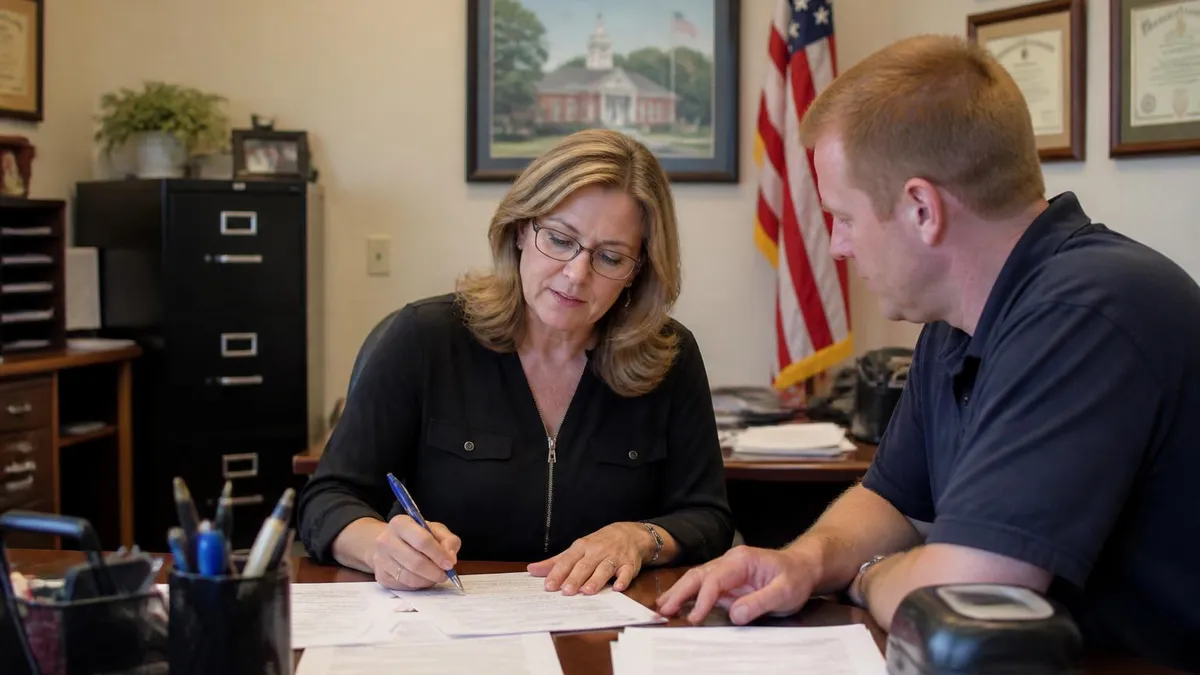
Where to Find a Free Notary Public Near Me
Almost every major bank offers free notarization to account holders. Walk in during business hours or call ahead to confirm a notary is on duty. Membership at credit unions usually includes the service as a standard perk.
Many county and city libraries staff a notary on rotating days. Service is typically free for residents, but you may need to book online. Confirm document limits before arriving, as some libraries restrict real estate paperwork.
AAA branches notarize most documents free for members in good standing. Some auto clubs, USAA branches, and military legal assistance offices extend the same benefit to active-duty service members and veterans.
Large employers, especially in healthcare, real estate, and law, often keep a commissioned notary on staff who can notarize personal documents for employees during breaks at no charge.
Some county clerks notarize basic documents for residents free or at a nominal fee. Veterans affairs offices, courthouses, and military legal assistance offices also provide free notary services in many jurisdictions.
Arriving prepared is the difference between a five-minute appointment and a wasted afternoon. Bring an unsigned copy of every document you need notarized because a notary cannot stamp a paper that has already been signed unless your state specifically allows acknowledgment of a pre-existing signature. The notary must witness the act of signing, observe your demeanor, and confirm you are not being coerced. If you signed at home thinking you were saving time, expect to be turned away and asked to print a fresh copy.
The next essential item is a current, government-issued photo ID. A driver's license, state ID card, US passport, military ID, or permanent resident card will satisfy nearly every notary. Some states accept a tribal ID or a recently expired license, but most require the document to be unexpired or expired no more than three years. If your name on the document differs from your ID, bring a marriage certificate, divorce decree, or court order showing the legal name change so the notary can document the discrepancy.
Witnesses are the third piece, and they trip up more signers than anything else. Wills, certain affidavits, real estate documents, and trusts often require one or two impartial witnesses in addition to the notary. The witness must be eighteen or older, mentally competent, and unrelated to the signer or beneficiaries. Banks usually will not let employees serve as witnesses, so plan to bring a neighbor or coworker. Libraries occasionally help locate witnesses, but never assume; call ahead and confirm.
You will also want the correct fee, even though the service itself is free, because some states require the notary to collect a small statutory fee that the bank waives only for customers. If you are not an account holder, expect to pay between two and fifteen dollars depending on jurisdiction. Bring small bills or a debit card. If your document includes attachments, exhibits, or schedules, bring them organized and labeled because the notary may need to identify them in the certificate. Paper clips work better than staples.
Consider the physical look of the certificate before you go. A proper notary public stamp includes the notary's name, commission number, jurisdiction, and expiration date, and the impression must be legible. If you see smudging, fading, or missing fields, ask the notary to re-stamp in the margin and initial the correction. A poor stamp can cause the receiving party, especially a title company or court, to reject the entire document and force you to redo the notarization weeks later when it is harder to fix.
Finally, think about timing. Banks are slammed on Friday afternoons and the first and fifteenth of each month when payroll deposits land. Libraries fill their notary appointments two weeks out at the start of every semester. AAA offices have the lightest traffic mid-morning on Tuesday and Wednesday. Booking online when possible spares you from the standby line, and a quick phone call the day before confirms the notary is actually working that shift. Notaries get sick, take vacation, and rotate branches without notice.
One last preparation tip: read your document the night before. You do not have to understand every legal term, but you should be able to tell the notary in plain English what the document does and confirm you signed it willingly. Notaries are trained to refuse service to anyone who seems confused, intoxicated, or pressured. A confident, prepared signer breezes through the appointment, while a hesitant one risks being told to come back another day with a translator, attorney, or additional witnesses.
Notary Public Practice Test Questions
Prepare for the Notary Public Exam exam with our free practice test modules. Each quiz covers key topics to help you pass on your first try.
Notary Public Basic Notary Public
Notary Public Exam Questions covering Basic Notary Public. Master Notary Public Test concepts for certification prep.
Notary Public Duties & Responsibilities of...
Free Notary Public Practice Test featuring Duties & Responsibilities of a Notary. Improve your Notary Public Exam score with mock test prep.
Notary Public Ethics & Professional Conduct
Notary Public Mock Exam on Ethics & Professional Conduct. Notary Public Study Guide questions to pass on your first try.
Notary Public Fraud Prevention & Security
Notary Public Test Prep for Fraud Prevention & Security. Practice Notary Public Quiz questions and boost your score.
Notary Public Identification & Credential ...
Notary Public Questions and Answers on Identification & Credential Verification. Free Notary Public practice for exam readiness.
Notary Public Jurats & Acknowledgments
Notary Public Mock Test covering Jurats & Acknowledgments. Online Notary Public Test practice with instant feedback.
Notary Public Notarial Acts & Procedures
Free Notary Public Quiz on Notarial Acts & Procedures. Notary Public Exam prep questions with detailed explanations.
Notary Public Notary Laws & Regulations
Notary Public Practice Questions for Notary Laws & Regulations. Build confidence for your Notary Public certification exam.
Notary Public MCQ
Notary Public Test Online for MCQ. Free practice with instant results and feedback.
Notary Public
Notary Public Study Material on Notary Public. Prepare effectively with real exam-style questions.
Notary Public Oaths & Affirmations
Free Notary Public Test covering Oaths & Affirmations. Practice and track your Notary Public exam readiness.
Notary Public Recordkeeping & Journal Entries
Notary Public Exam Questions covering Recordkeeping & Journal Entries. Master Notary Public Test concepts for certification prep.
Notary Public Exam Basic Notary Public
Free Notary Public Practice Test featuring Exam Basic Notary Public. Improve your Notary Public Exam score with mock test prep.
Notary Public Exam Duties & Responsibiliti...
Notary Public Mock Exam on Exam Duties & Responsibilities of a Notary. Notary Public Study Guide questions to pass on your first try.
Notary Public Exam Ethics & Professional C...
Notary Public Test Prep for Exam Ethics & Professional Conduct. Practice Notary Public Quiz questions and boost your score.
Notary Public Exam Fraud Prevention & Secu...
Notary Public Questions and Answers on Exam Fraud Prevention & Security. Free Notary Public practice for exam readiness.
Notary Public Exam Identification & Creden...
Notary Public Mock Test covering Exam Identification & Credential Verification. Online Notary Public Test practice with instant feedback.
Notary Public Exam Jurats & Acknowledgments
Free Notary Public Quiz on Exam Jurats & Acknowledgments. Notary Public Exam prep questions with detailed explanations.
Notary Public Exam Notarial Acts & Procedures
Notary Public Practice Questions for Exam Notarial Acts & Procedures. Build confidence for your Notary Public certification exam.
Notary Public Exam Notary Certificates & W...
Notary Public Test Online for Exam Notary Certificates & Wording. Free practice with instant results and feedback.
Notary Public Exam Notary Laws & Regulations
Notary Public Study Material on Exam Notary Laws & Regulations. Prepare effectively with real exam-style questions.
Notary Public Exam Notary Public
Free Notary Public Test covering Exam Notary Public. Practice and track your Notary Public exam readiness.
Notary Public Exam Notary Public MCQ
Notary Public Exam Questions covering Exam Notary Public MCQ. Master Notary Public Test concepts for certification prep.
Notary Public Exam Notary Seal & Stamp Req...
Free Notary Public Practice Test featuring Exam Notary Seal & Stamp Requirements. Improve your Notary Public Exam score with mock test prep.
Comparing Free and Paid Notary Public Options
The notary public in bank of america branches notarizes most standard documents for customers free during regular hours. Wells Fargo, Chase, US Bank, and PNC offer the same perk. Walk in with your photo ID and unsigned paperwork, ask the front desk to page a notary, and expect a five to ten minute wait. Service is fast and predictable, and bank notaries see hundreds of documents weekly so they catch certificate errors immediately.
The limitations are real, though. Banks usually refuse wills, codicils, deeds, immigration paperwork, and any document that touches their own product lines, like a competing bank's loan modification. They also will not notarize for non-customers in many states. If you are not an account holder, call three nearby branches before visiting, because policies vary by region and even by individual branch manager who has discretion to decline.
Free Notary Versus Paid Notary: Which Should You Use?
- +Banks and credit unions notarize most documents free for account holders
- +Public libraries serve residents at zero cost for routine paperwork
- +AAA, USAA, and employer notaries add convenience without travel fees
- +Free notaries are usually trained employees with hundreds of monthly transactions
- +No tipping or travel charges, making them perfect for tight budgets
- +Walk-in availability at most major bank branches during business hours
- −Free notaries refuse complex documents like wills, deeds, and immigration papers
- −Non-customers may be turned away at bank branches
- −Library appointment slots fill weeks in advance in busy seasons
- −No after-hours, weekend, or holiday service at most free locations
- −Witnesses must be brought separately; bank employees usually cannot serve
- −No travel option, so hospital or homebound signers need to pay a mobile notary
Pros and Cons at a Glance
| Pros | Cons |
|---|---|
| Banks and credit unions notarize most documents free for account holders | Free notaries refuse complex documents like wills, deeds, and immigration papers |
| Public libraries serve residents at zero cost for routine paperwork | Non-customers may be turned away at bank branches |
| AAA, USAA, and employer notaries add convenience without travel fees | Library appointment slots fill weeks in advance in busy seasons |
| Free notaries are usually trained employees with hundreds of monthly transactions | No after-hours, weekend, or holiday service at most free locations |
| No tipping or travel charges, making them perfect for tight budgets | Witnesses must be brought separately; bank employees usually cannot serve |
| Walk-in availability at most major bank branches during business hours | No travel option, so hospital or homebound signers need to pay a mobile notary |
Pre-Visit Checklist for Free Notary Public Near Me
- ✓Print all documents but do not sign them yet
- ✓Bring a current government-issued photo ID with no name discrepancies
- ✓Call ahead to confirm the notary is on duty that day
- ✓Confirm whether the location serves non-customers or non-residents
- ✓Arrange any required witnesses in advance and bring their ID too
- ✓Verify your document type is accepted at that location
- ✓Bring a small fee in cash in case state law requires a statutory charge
- ✓Keep attachments paper-clipped, not stapled, for easy review
- ✓Read the document the night before so you can describe its purpose
- ✓Arrive ten minutes early and bring a backup pen with blue or black ink
Never sign before the notary sees you sign
The single most common reason free notary appointments fail is signers who fill out the document at home thinking they are saving time. State law requires the notary to personally witness the signature for an acknowledgment in most jurisdictions, and jurats always demand a fresh signature in front of the notary. Always leave the signature line blank until you sit down at the desk.
Even the most accommodating free notary will refuse certain documents, and knowing the list in advance saves you from being bounced between locations. Wills and codicils sit at the top of the refusal list because the formalities for executing a will, including witnesses, holographic rules, and self-proving affidavits, vary so dramatically by state that banks and libraries refuse to risk liability. Always use an estate attorney or a notary specifically trained in wills, and bring two disinterested witnesses who are not beneficiaries.
Deeds, mortgages, and other real estate documents are the second category most free notaries decline. Title companies, escrow officers, and licensed signing agents handle these because each county recorder has unique formatting requirements that a generic notary may miss. A misplaced margin, an incorrect certificate type, or a missing legal description can void the entire transaction. If you are refinancing, expect to pay between seventy-five and two hundred dollars for a certified signing agent who specializes in loan packages.
Immigration paperwork is another flashpoint. The phrase notario publico has caused tragic confusion in immigrant communities because the role in Latin America carries attorney-level authority, but a US notary cannot give immigration advice, prepare forms, or represent anyone before USCIS. Some states forbid notaries from advertising in Spanish without strict disclaimers. If you need help with naturalization, asylum, or visa applications, hire a licensed immigration attorney or a Department of Justice accredited representative, not a notary.
Power of attorney documents fall into a gray area. Banks will notarize most general or limited powers of attorney for account holders, but they often refuse durable healthcare powers because the language varies state by state. Hospitals frequently keep an in-house notary for healthcare directives, which solves this problem for inpatient signers. Always check whether your state requires two witnesses in addition to the notary, because many do, and bring those witnesses ready to sign with valid ID.
Court documents, particularly those filed in pending litigation, are routinely declined by free notaries who worry about being subpoenaed to testify about the signing. If you are filing a motion, declaration, or affidavit in a lawsuit, ask the courthouse self-help center about its notary services. Most county courthouses staff a notary in the clerk's office for free or for a small statutory fee, and they are familiar with the exact certificate language judges expect to see on filed pleadings.
Finally, anything involving large sums of money or property transfers between strangers should give a notary pause. Free notaries are trained to spot elder financial abuse, and they will refuse to notarize a document that transfers significant assets if the signer seems confused or pressured. If a relative or caregiver is hovering over the signer, the notary may ask everyone except the signer to step away from the desk for a private conversation. This is not rudeness; it is the law working as designed.
One workaround when a free notary refuses your document is remote online notarization, which is now legal in over forty states. Services like Notarize, NotaryCam, and OneNotary connect you with a commissioned notary over video for fees ranging from twenty-five to forty dollars. The session is recorded, the signing is logged, and the notarized document is delivered electronically. This option is invaluable for cross-state real estate closings, last-minute corporate filings, and signers who simply cannot reach a physical notary during business hours.
Never pay a notary for legal advice or immigration help. Notaries who advertise themselves as notarios publicos and offer to fill out immigration forms or court papers are engaged in unauthorized practice of law, which is a crime in most states. Report violations to your state attorney general and your secretary of state's notary division, and seek a licensed attorney for any legal question.
If you find yourself searching for free public notary near me more than once or twice a year, becoming a commissioned notary yourself can be surprisingly cheap and rewarding. The process generally involves an application to your secretary of state, a background check, a small filing fee, a bond in some states, and either a training class or an exam. Total upfront costs range from forty dollars in low-cost states like Florida to over three hundred in California, and commissions last four to ten years before renewal is required.
How to become a notary public depends heavily on your state. Texas, for example, requires no exam, just an application, a four-year commission fee, and a ten thousand dollar bond. California, by contrast, requires a six-hour education course, a written notary public exam administered by the secretary of state, fingerprinting, and a fifteen thousand dollar bond. New York requires passing a written exam at a designated testing site, and Florida requires a three-hour education course before submitting the application.
The notary public exam in states that require one typically covers identification standards, certificate language, recordkeeping, prohibited acts, and fees. Pass rates vary from sixty to ninety percent depending on the state and the quality of preparation. Free online practice quizzes, including the ones linked throughout this article, mirror the structure of the official exam. Spending ten focused hours with practice questions usually beats a passive study approach because the questions force you to apply rules to realistic scenarios rather than memorize definitions in isolation.
Notary public texas applicants enjoy one of the friendliest commissioning processes in the country. There is no exam, no mandatory education, and the entire application can be completed online through the secretary of state's portal. The bond runs about ten thousand dollars but only costs the applicant fifty dollars in premium, and the four-year commission positions Texas notaries to earn extra income through real estate signings, mobile work, and remote online notarization, which Texas has authorized since 2018.
Once commissioned, every notary needs an official seal, a journal, and a basic supply kit. A quality embosser or rubber stamp runs twenty to forty dollars, a journal another fifteen, and many notaries add a thumbprinter and a portable carrying case for mobile work. Our guide on the notary public in bank of america approach to in-branch notaries explains how corporate notary programs structure their supply allowances and recordkeeping, which is useful even for independent notaries setting up their own practice.
The earning potential is more substantial than most people realize. A part-time notary working evenings and weekends as a mobile signing agent can clear five hundred to fifteen hundred dollars a month in busy real estate markets, and full-time certified signing agents who handle loan packages routinely earn between fifty thousand and ninety thousand dollars annually. Remote online notarization platforms pay between ten and twenty-five dollars per session and let notaries work from anywhere, which has opened the field to retirees, parents, and full-time professionals with flexible schedules.
The downside, and it is significant, is liability. Notaries who fail to identify a signer properly, who notarize for a friend or family member when state law forbids it, or who allow their seal to be misused face commission revocation, civil lawsuits, and in serious cases criminal charges. Errors and omissions insurance, which costs between thirty and one hundred fifty dollars per year, is essential. Treat every signing like a courtroom witness statement and you will rarely run into trouble, but cut corners and the consequences can be career-ending.
Before you head out to find that free notary public near me, a few practical tips will smooth the entire experience. First, photograph or scan every page of your document before you leave home and email the file to yourself. If the notary catches an error or the original gets lost, you can reprint a fresh copy at any library or office supply store within minutes. This habit also creates a personal record of exactly what was signed, which is invaluable if a dispute arises months or years later about a missing initial or a changed page.
Second, pay attention to the certificate language at the bottom of the document. Most notarizations are either acknowledgments, where you affirm you signed willingly, or jurats, where you swear the contents are true under oath. The certificate must match the type of notarization required, and if your document does not include one, the notary will attach a loose certificate. Read what the certificate actually says before signing, because a misuse of jurat language on a document meant for acknowledgment can void the notarization.
Third, never let anyone, including a notary, pressure you to sign something you do not understand. A good notary will pause if you seem unsure and may even refuse to proceed. That is a feature, not a problem. If you are uncertain about a clause, take the document home, consult an attorney, and come back later. Notarizations cannot be undone, and the few dollars you save by rushing can cost thousands in legal fees if you signed away rights you did not intend to give up.
Fourth, build a relationship with one trusted local notary. Whether it is a particular bank branch, a librarian who works Tuesdays, or a mobile notary who responds within an hour, having a go-to professional eliminates the search-engine scramble every time a document lands on your desk. Many notaries offer faster service to repeat clients, and some will even fit you in at the last minute if you have built rapport over a few previous appointments.
Fifth, understand that the quality of the notary public seal matters far more than people think. A worn, smudged, or partially printed seal can cause the receiving party to reject the document weeks later, especially when it crosses state lines or goes to a federal agency. If you notice anything wrong with the impression, politely ask the notary to re-stamp on a fresh portion of the page and initial the correction. Most notaries appreciate the heads-up because a rejected document can result in a complaint to the secretary of state.
Sixth, keep a personal log of every notarization you obtain, especially for estate planning, real estate, and financial documents. Note the date, the notary's name and commission number, the location, and the type of certificate used. This log is invaluable if you ever need to prove that a document was properly executed, particularly in family disputes, inheritance challenges, or business audits. A simple note in your phone takes ten seconds and can save thousands in legal discovery costs later.
Finally, share what you learn. Most people have no idea their bank will notarize for free, that libraries staff notaries, or that AAA membership includes the service. A quick mention to a friend going through estate planning, a coworker buying their first home, or a parent preparing healthcare directives can save them real money and real stress. The free notary network in the United States is one of the most underused civic resources we have, and a little word-of-mouth goes a long way toward keeping it healthy and well-staffed.
Sample Notary Public Exam Practice Questions
Try these questions from our free Notary Public Exam practice tests. The correct answer and an explanation follow each question.
What is the name of the site where the Notary will notarize documents?
- A. Venue
- B. Affidavit
- C. Mobile Notary
- D. Protest for non-payment
Answer: A. Venue
In the context of notarization, the 'venue' refers to the specific geographical location, typically the state and county, where the notarial act is performed. This information is a crucial component of the notarial certificate, appearing at the top to legally establish where the document was signed and notarized. It ensures proper jurisdiction and record-keeping for the notarization.
A document presented for notarization is written in a language the notary cannot read. What should the notary consider?
- A. Automatically refuse because all documents must be in English
- B. Many states allow notarization if the notary can communicate with the signer and the notarial certificate itself is in a language the notary understands, though some states restrict this
- C. Translate the document first
- D. Notarize only if the signer promises the document is harmless
Answer: B. Many states allow notarization if the notary can communicate with the signer and the notarial certificate itself is in a language the notary understands, though some states restrict this
The notary certifies the signature, not the content, so many states permit notarizing a foreign-language document provided the notary can communicate with the signer and complete a certificate in English or another language the notary reads.
A notary who is not an attorney is asked by a signer which type of deed to use. What should the notary do?
- A. Recommend a quitclaim deed
- B. Decline to advise and suggest the signer consult an attorney
- C. Choose the deed with the lowest fee
- D. Fill in the deed for the signer
Answer: B. Decline to advise and suggest the signer consult an attorney
Advising a signer on which legal document to use is giving legal advice, which is the unauthorized practice of law for a non-attorney notary.
What is the main purpose of an oath administered by a notary public?
- A. To authorize a document for legal use
- B. To confirm the signer’s identity
- C. To promise truthfulness or faithful performance
- D. To certify a copy of a document
Answer: C. To promise truthfulness or faithful performance
The main purpose of an oath administered by a notary public is to compel truthfulness or faithful performance from the signer. By taking an oath, the individual solemnly swears or affirms that the statements they are making are true, or that they will faithfully perform the duties outlined. This adds a legal and moral weight to their declaration, making them accountable for their words or actions.
Notary Public Questions and Answers


About the Author

Notary Public Law Expert & State Notary Exam Specialist
Georgetown University Law CenterAttorney Sarah Williams is a licensed attorney and National Notary Association (NNA) certified notary with a Juris Doctor from Georgetown University Law Center. She has 13 years of experience in notarial law, document authentication, and real estate closings. Sarah coaches candidates through state notary public examinations, notary signing agent certification, and loan signing agent training programs.