
Restorative CNA: Duties, Training, Salary & How to Get Started 2026 October
🎯 Free Restorative CNA: Duties, Training, practice test with instant feedback and detailed answer explanations. Prepare for your exam.
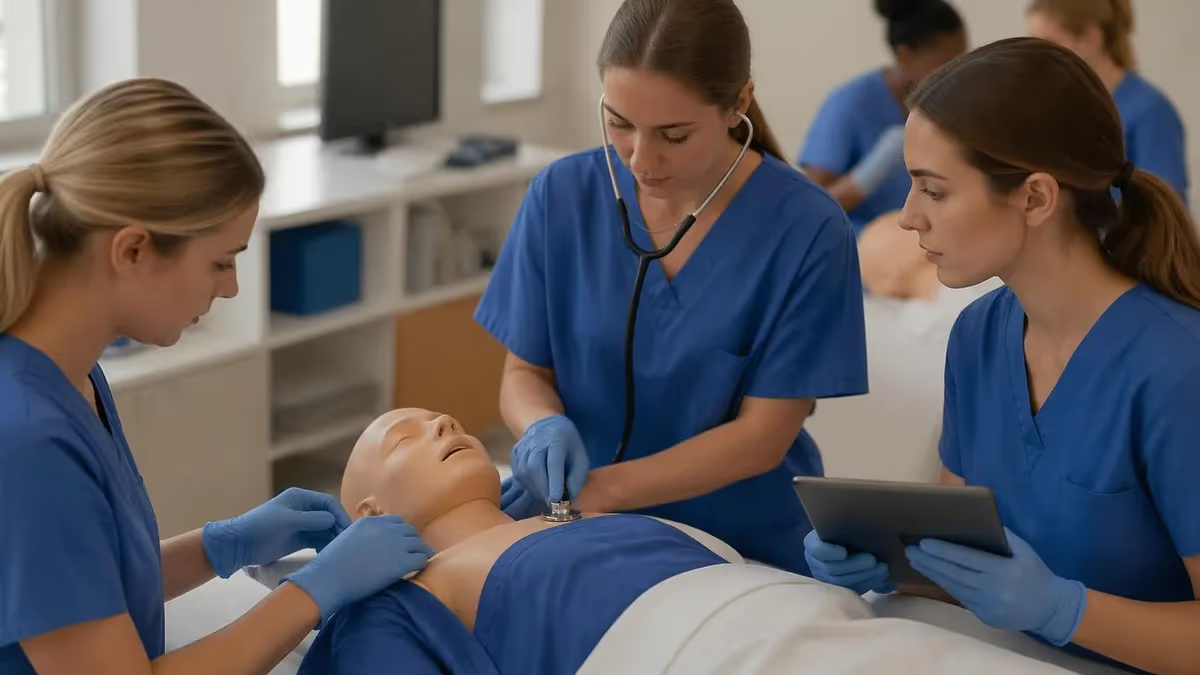
A restorative cna works in a specialized role that focuses on helping patients regain independence through targeted exercise programs, mobility training, and daily living skill rebuilding. Unlike standard CNAs who handle general patient care, restorative nursing aides design and carry out individualized care plans that emphasize rehabilitation over routine maintenance. If you're looking for restorative cna jobs, you'll find openings in skilled nursing facilities, rehabilitation centers, and long-term care homes across the country.
The demand for restorative CNAs keeps growing as the aging population expands and healthcare facilities shift toward outcome-based care models. Medicare and Medicaid reimbursement rules now tie funding to patient improvement metrics, which means facilities need staff who can document and deliver measurable progress. That's exactly what a restorative CNA does—bridge the gap between physical therapy sessions and everyday patient care by reinforcing exercises and tracking functional gains throughout the day.
Whether you're already a certified nursing assistant looking to specialize or you're exploring healthcare careers from scratch, the restorative path offers better pay, more autonomy, and a genuinely rewarding daily routine. You'll spend less time on custodial tasks and more time working one-on-one with patients who are actively trying to improve. It's a career niche that rewards patience, creativity, and genuine investment in people's recovery journeys. This guide covers everything from certification requirements and salary data to the specific duties you'll handle on a typical shift.

Finding restorative cna jobs isn't difficult once you have the right credentials. Most openings appear at skilled nursing facilities (SNFs), where Medicare regulations require dedicated restorative nursing programs. These facilities actively recruit CNAs who've completed restorative cna training because they need staff who understand range-of-motion exercises, ambulation techniques, and proper documentation of patient outcomes. Job boards like Indeed, LinkedIn, and specialized healthcare sites post hundreds of restorative CNA positions weekly.
Restorative cna training programs typically run four to twelve weeks on top of your standard CNA certification. Some employers offer in-house training—you get paid while learning the restorative skill set. Community colleges and vocational schools also run standalone programs, usually costing $200 to $800. The curriculum covers exercise physiology basics, restorative nursing techniques, patient motivation strategies, and regulatory documentation requirements that facilities need for Medicare compliance.
The job market favors candidates with both CNA certification and restorative training. Facilities that lose their restorative aide face compliance issues and potential Medicare reimbursement penalties, so retention tends to be stronger in these roles compared to general CNA positions. You'll also find that restorative positions are often Monday-through-Friday with regular daytime hours—a scheduling perk that's rare in bedside nursing aide work and one that makes the role especially attractive to experienced CNAs.
The restorative cna salary typically exceeds what general CNAs earn. National averages put restorative nursing aides at $38,000 to $48,000 annually, compared to $33,000–$40,000 for standard CNA roles. The premium reflects the specialized training and the direct impact these positions have on facility reimbursement rates. In high-cost-of-living areas—like California, New York, or Massachusetts—restorative CNAs can earn $50,000 or more with overtime and shift differentials factored in.
Restorative cna certification requirements vary by state, but the foundation is always the same: you need an active CNA license first. From there, restorative training adds specialized skills in therapeutic exercise programs, activities of daily living (ADL) retraining, splint and brace care, and cognitive stimulation techniques. Some states require a specific number of continuing education hours focused on restorative care, while others accept employer-provided training as sufficient qualification.
Career advancement from a restorative CNA position is straightforward. Many restorative aides move into restorative nursing coordinator roles, where they supervise other CNAs and manage the facility's entire restorative program. From there, some pursue LPN or RN licensure, using their restorative background as a springboard into physical therapy assistant programs or rehabilitation nursing specialties. The specialized experience makes your resume stand out in any healthcare setting.
Training & Certification
You'll need an active CNA certification before starting restorative training. Most states require completion of a state-approved CNA program (75–180 hours) and passing the NNAAP or state-specific competency exam. Once certified, you're eligible for restorative training programs. Some employers hire uncertified candidates and sponsor both CNA and restorative training simultaneously, though this is less common. A clean background check, current CPR/BLS certification, and TB test are standard requirements across all states.
What is a restorative cna, exactly? It's a certified nursing assistant who specializes in rehabilitation-focused care. While a standard CNA might help a patient get dressed and monitor vital signs, a restorative CNA actively works to improve that patient's ability to dress independently. The distinction matters—it's the difference between doing things for patients and teaching patients to do things for themselves. This philosophy shapes every aspect of the role, from how you interact with patients to how you document their progress.
Understanding the aging process and restorative care cna connection is critical to performing this job well. As people age, muscle mass decreases, joints stiffen, balance deteriorates, and cognitive function can decline. Restorative care directly addresses these changes through targeted interventions. Range-of-motion exercises maintain joint flexibility, strengthening programs slow muscle loss, balance training reduces fall risk, and cognitive activities preserve mental sharpness. You're essentially fighting against the natural decline that aging brings—and in many cases, you can reverse months or years of functional loss.
The psychological component is just as important as the physical one. Patients in long-term care often lose motivation when they feel like their independence is permanently gone. A skilled restorative CNA knows how to set achievable goals, celebrate small victories, and keep patients engaged in their own recovery. Sometimes the biggest breakthrough isn't a physical milestone—it's the moment a patient believes improvement is still possible after months of decline.
What does a restorative cna do on a typical shift? Your day starts with reviewing care plans and checking in with the nursing team about any overnight changes. Then you move through your patient caseload—typically six to ten residents—conducting individualized exercise sessions, ADL retraining, and mobility practice. Each session runs 15 to 30 minutes, and you document everything in real time. Between sessions, you might adjust exercise equipment, update flow sheets, or consult with the physical therapist about a patient's progress. Restorative cna duties are hands-on but intellectually engaging.
The specific tasks in your day depend on your patients' care plans. One resident might need range-of-motion exercises for stiff shoulders. Another might be practicing walking with a rollator after hip replacement surgery. A third could be relearning how to button a shirt following a stroke. You adapt your approach constantly—no two sessions look the same, and no two patients respond identically to the same intervention. Flexibility and creativity are essential traits for this role.
Afternoon shifts often include group activities—fall prevention classes, seated exercise groups, or cognitive stimulation sessions. These complement the one-on-one work and help build social connections among residents. You're also responsible for reporting any functional declines to the nursing staff, because a sudden drop in ability could signal a medical issue that needs immediate attention. The restorative CNA is often the first person to notice when something's wrong, precisely because you see each patient perform daily functional tasks.
Career Pros & Cons
- +Higher pay than standard CNA positions—typically $3–$5 more per hour
- +More predictable schedule with many positions offering Monday–Friday daytime hours
- +Greater autonomy and less direct supervision than bedside CNA roles
- +Deeply rewarding work watching patients regain independence
- +Strong job security due to Medicare compliance requirements at SNFs
- +Clear advancement path to coordinator, LPN, or RN roles
- −Requires additional training beyond standard CNA certification
- −Heavy documentation workload to meet Medicare requirements
- −Emotionally taxing when patients plateau or decline despite your efforts
- −Limited positions at smaller facilities that don't run restorative programs
- −Physical demands—you're on your feet assisting with exercises all shift
- −Some facilities understaff restorative programs, overloading remaining aides
Pros and Cons at a Glance
| Pros | Cons |
|---|---|
| More predictable schedule with many positions offering Monday–Friday daytime hours | Requires additional training beyond standard CNA certification |
| Greater autonomy and less direct supervision than bedside CNA roles | Heavy documentation workload to meet Medicare requirements |
| Deeply rewarding work watching patients regain independence | Emotionally taxing when patients plateau or decline despite your efforts |
| Strong job security due to Medicare compliance requirements at SNFs | Limited positions at smaller facilities that don't run restorative programs |
| Clear advancement path to coordinator, LPN, or RN roles | Physical demands—you're on your feet assisting with exercises all shift |
A restorative cna job description typically lists several core competencies beyond basic CNA skills. Employers want candidates who understand therapeutic exercise principles, can demonstrate proper body mechanics during patient transfers, and have experience with documentation systems like PointClickCare or MatrixCare. Many job postings also mention patient motivation skills—facilities know that technical ability without interpersonal effectiveness won't produce the outcomes Medicare demands.
Restorative cna job duties span clinical, administrative, and interpersonal domains. On the clinical side, you're executing exercise programs, monitoring vital signs during activity, and assessing patients for pain or discomfort. Administratively, you're maintaining flow sheets, updating care plans, and contributing to quarterly MDS (Minimum Data Set) assessments. Interpersonally, you're encouraging reluctant patients, communicating with families about progress, and coordinating with therapists. It's a complex role that challenges you differently every day.
The documentation piece deserves special emphasis. Medicare surveyors review restorative nursing records during facility inspections, and incomplete or inaccurate documentation can trigger deficiency citations. As a restorative CNA, your charting directly affects the facility's regulatory standing and reimbursement rates. Learning to write clear, objective, and timely notes isn't just a skill—it's a professional responsibility that carries real financial consequences for your employer and real care consequences for your patients.
Study Resources & CNA Test Prep
- ✓Complete a state-approved CNA training program before pursuing restorative certification
- ✓Study anatomy and physiology fundamentals—especially musculoskeletal and nervous systems
- ✓Practice range-of-motion exercises on classmates during clinical rotations
- ✓Review Medicare regulations for restorative nursing programs (F-tag F688)
- ✓Take online practice tests covering CNA competencies and restorative care principles
- ✓Shadow an experienced restorative CNA at a skilled nursing facility before applying
- ✓Learn documentation software used in long-term care (PointClickCare, MatrixCare)
- ✓Study fall prevention protocols and post-fall assessment procedures
- ✓Review adaptive equipment types—reachers, button hooks, sock aids, built-up utensils
- ✓Practice patient communication techniques for motivating reluctant participants
Restorative cna classes are available through community colleges, vocational schools, online platforms, and directly through employer-sponsored programs. The best programs combine classroom instruction with clinical practicum hours at a skilled nursing facility, giving you hands-on experience with real patients before you're working independently. Restorative cna meaning goes beyond a job title—it describes a philosophy of care that prioritizes patient independence and functional improvement over passive assistance. When you understand that philosophy, the clinical skills follow naturally.
The restorative cna job description you'll encounter in job postings varies by facility, but the core remains consistent across the industry. Most facilities want someone who can manage a caseload of six to ten patients, execute individualized exercise programs, maintain accurate documentation, and communicate effectively with the interdisciplinary care team. Some postings add specialized requirements like dementia care experience, wound care knowledge, or bilingual proficiency—these are bonus qualifications that can boost your starting pay.
Online courses have made restorative training more accessible than ever. Platforms like CareAcademy and Relias offer self-paced restorative nursing modules that some states accept for certification purposes. However, clinical hours are harder to replicate online, so most hybrid programs still require in-person practicum components. If you're in a rural area without nearby training programs, check whether your employer will sponsor on-the-job training—many facilities prefer this approach because they can tailor the training to their specific patient population and documentation systems.
Understanding cna chapter 9 rehabilitation and restorative care from your CNA textbook is the academic foundation, but the real learning happens on the floor. Chapter 9 covers the principles—promote independence, maintain function, prevent further decline—and the restorative skills cna test will assess whether you can apply those principles in clinical scenarios. Expect questions about range-of-motion exercises, proper body mechanics, ADL retraining techniques, and the role of the restorative aide within the care team hierarchy.
The restorative skills cna test format depends on your state and training program. Some programs use written exams with multiple-choice and scenario-based questions. Others include a clinical skills demonstration where you perform exercises and techniques on a mannequin or standardized patient. The best preparation combines studying theory with practicing hands-on skills—reading about passive range-of-motion is useful, but actually performing it on another person builds the muscle memory and confidence you'll need on the job.
Study groups with fellow CNA students can be incredibly effective for test prep. Pair up to practice ROM exercises on each other, quiz one another on terminology, and walk through care plan scenarios together. Many successful restorative CNAs say that peer practice was more valuable than any textbook chapter. The exam tests practical knowledge, not memorization—so focus your study time on understanding why you perform each technique, not just the steps involved. That deeper understanding will serve you well in interviews and on the job itself, where clinical reasoning matters far more than rote recall.
While all states require CNA certification as a baseline, restorative CNA requirements differ significantly. Some states mandate a specific restorative nursing training program with minimum hours, while others accept employer-provided on-the-job training. Before investing in a program, verify your state's requirements through your state nursing board website or by contacting a local skilled nursing facility's nursing education department.
Restorative care cna roles differ from general nursing aide positions in both scope and expectations. Where a standard CNA follows a task-based routine—vital signs, meals, bathing, toileting—a restorative care CNA follows a goal-based approach. Every interaction with a patient is an opportunity to reinforce independence. Helping someone with lunch? A restorative aide might use adaptive utensils and coach the patient through self-feeding rather than simply delivering a tray. That mindset shift is what separates the two roles.
The restorative aide vs cna debate often comes down to career goals and personality fit. If you prefer structured, predictable tasks with clear completion markers, standard CNA work might suit you better. If you thrive on problem-solving, enjoy tracking progress over weeks and months, and find motivation in patient breakthroughs, restorative care is your lane. The pay premium is a nice bonus, but most restorative CNAs cite job satisfaction—not salary—as the primary reason they chose the specialty.
Facilities increasingly recognize that restorative care reduces overall healthcare costs. Patients who maintain functional independence require fewer hospitalizations, less intensive nursing care, and shorter rehabilitation stays. A good restorative CNA program can save a facility hundreds of thousands of dollars annually in reduced hospital readmissions and improved survey outcomes. That financial reality is why restorative positions are among the most recession-proof roles in long-term care.
CNA Practice Test Questions
Prepare for the CNA - Certified Nursing Assistant exam with our free practice test modules. Each quiz covers key topics to help you pass on your first try.
CNA Activities of Daily Living
CNA Exam Questions covering Activities of Daily Living. Master CNA Test concepts for certification prep.
CNA Aging Process
Free CNA Practice Test featuring Aging Process. Improve your CNA Exam score with mock test prep.
CNA Anatomy and Physiology Basics
CNA Mock Exam on Anatomy and Physiology Basics. CNA Study Guide questions to pass on your first try.
CNA Assisting with Daily Living
CNA Test Prep for Assisting with Daily Living. Practice CNA Quiz questions and boost your score.
CNA Assisting with Range of Motion Exercises
CNA Questions and Answers on Assisting with Range of Motion Exercises. Free CNA practice for exam readiness.
CNA Basic Human Anatomy and Age-Related Ch...
CNA Mock Test covering Basic Human Anatomy and Age-Related Changes. Online CNA Test practice with instant feedback.
CNA Basic Nursing Skills
Free CNA Quiz on Basic Nursing Skills. CNA Exam prep questions with detailed explanations.
CNA Basic Nursing Skills 10
CNA Practice Questions for Basic Nursing Skills 10. Build confidence for your CNA certification exam.
CNA Basic Nursing Skills 11
CNA Test Online for Basic Nursing Skills 11. Free practice with instant results and feedback.
CNA Basic Nursing Skills 1
CNA Study Material on Basic Nursing Skills 1. Prepare effectively with real exam-style questions.
CNA Basic Nursing Skills 12
Free CNA Test covering Basic Nursing Skills 12. Practice and track your CNA exam readiness.
CNA Basic Nursing Skills 13
CNA Exam Questions covering Basic Nursing Skills 13. Master CNA Test concepts for certification prep.
CNA Basic Nursing Skills 14
Free CNA Practice Test featuring Basic Nursing Skills 14. Improve your CNA Exam score with mock test prep.
CNA Basic Nursing Skills 15
CNA Mock Exam on Basic Nursing Skills 15. CNA Study Guide questions to pass on your first try.
CNA Basic Nursing Skills 16
CNA Test Prep for Basic Nursing Skills 16. Practice CNA Quiz questions and boost your score.
CNA Basic Nursing Skills 17
CNA Questions and Answers on Basic Nursing Skills 17. Free CNA practice for exam readiness.
CNA Basic Nursing Skills 18
CNA Mock Test covering Basic Nursing Skills 18. Online CNA Test practice with instant feedback.
CNA Basic Nursing Skills 19
Free CNA Quiz on Basic Nursing Skills 19. CNA Exam prep questions with detailed explanations.
CNA Basic Nursing Skills 20
CNA Practice Questions for Basic Nursing Skills 20. Build confidence for your CNA certification exam.
CNA Basic Nursing Skills 21
CNA Test Online for Basic Nursing Skills 21. Free practice with instant results and feedback.
CNA Basic Nursing Skills 2
CNA Study Material on Basic Nursing Skills 2. Prepare effectively with real exam-style questions.
CNA Basic Nursing Skills 3
Free CNA Test covering Basic Nursing Skills 3. Practice and track your CNA exam readiness.
CNA Basic Nursing Skills 4
CNA Exam Questions covering Basic Nursing Skills 4. Master CNA Test concepts for certification prep.
CNA Basic Nursing Skills 5
Free CNA Practice Test featuring Basic Nursing Skills 5. Improve your CNA Exam score with mock test prep.
CNA Basic Nursing Skills 6
CNA Mock Exam on Basic Nursing Skills 6. CNA Study Guide questions to pass on your first try.
CNA Basic Nursing Skills 7
CNA Test Prep for Basic Nursing Skills 7. Practice CNA Quiz questions and boost your score.
CNA Basic Nursing Skills 8
CNA Questions and Answers on Basic Nursing Skills 8. Free CNA practice for exam readiness.
CNA Basic Nursing Skills 9
CNA Mock Test covering Basic Nursing Skills 9. Online CNA Test practice with instant feedback.
CNA Basic Restorative Services
Free CNA Quiz on Basic Restorative Services. CNA Exam prep questions with detailed explanations.
CNA Basic Restorative Services 1
CNA Practice Questions for Basic Restorative Services 1. Build confidence for your CNA certification exam.
CNA Bathing and Dressing
CNA Test Online for Bathing and Dressing. Free practice with instant results and feedback.
CNA Body Mechanics
CNA Study Material on Body Mechanics. Prepare effectively with real exam-style questions.
CNA Career Advancement and Opportunities
Free CNA Test covering Career Advancement and Opportunities. Practice and track your CNA exam readiness.
CNA Career Opportunities and Benefits
CNA Exam Questions covering Career Opportunities and Benefits. Master CNA Test concepts for certification prep.
CNA Care for Residents with Cognitive Impa...
Free CNA Practice Test featuring Care for Residents with Cognitive Impairment. Improve your CNA Exam score with mock test prep.
CNA Care of Cognitively Impaired Residents
CNA Mock Exam on Care of Cognitively Impaired Residents. CNA Study Guide questions to pass on your first try.
CNA Care of Cognitively Impaired Residents 1
CNA Test Prep for Care of Cognitively Impaired Residents 1. Practice CNA Quiz questions and boost your score.
CNA Care Of Cognitively Impaired Residents 4
CNA Questions and Answers on Care Of Cognitively Impaired Residents 4. Free CNA practice for exam readiness.
CNA Common Medical Terms and Abbreviations
CNA Mock Test covering Common Medical Terms and Abbreviations. Online CNA Test practice with instant feedback.
CNA Communication and Interpersonal Skills
Free CNA Quiz on Communication and Interpersonal Skills. CNA Exam prep questions with detailed explanations.
CNA Communication and Interpersonal Skills 1
CNA Practice Questions for Communication and Interpersonal Skills 1. Build confidence for your CNA certification exam.
CNA Communication And Interpersonal Skills 4
CNA Test Online for Communication And Interpersonal Skills 4. Free practice with instant results and feedback.
CNA Eligibility and Qualifications
CNA Study Material on Eligibility and Qualifications. Prepare effectively with real exam-style questions.
CNA Emergency Procedure
Free CNA Test covering Emergency Procedure. Practice and track your CNA exam readiness.
CNA Ethics and Professionalism
CNA Exam Questions covering Ethics and Professionalism. Master CNA Test concepts for certification prep.
CNA Exam Structure and Content
Free CNA Practice Test featuring Exam Structure and Content. Improve your CNA Exam score with mock test prep.
CNA Feeding and Hydration
CNA Mock Exam on Feeding and Hydration. CNA Study Guide questions to pass on your first try.
CNA Infection Control
CNA Test Prep for Infection Control. Practice CNA Quiz questions and boost your score.
CNA Infection Control and Safety
CNA Questions and Answers on Infection Control and Safety. Free CNA practice for exam readiness.
CNA Isolation Precautions
CNA Mock Test covering Isolation Precautions. Online CNA Test practice with instant feedback.
CNA Legal & Ethical Behaviours
Free CNA Quiz on Legal & Ethical Behaviours. CNA Exam prep questions with detailed explanations.
CNA Legal & Ethical Behaviours 1
CNA Practice Questions for Legal & Ethical Behaviours 1. Build confidence for your CNA certification exam.
CNA Legal & Ethical Behaviours 4
CNA Test Online for Legal & Ethical Behaviours 4. Free practice with instant results and feedback.
CNA Mental Health and Social Services Needs
CNA Study Material on Mental Health and Social Services Needs. Prepare effectively with real exam-style questions.
CNA Mental Health and Social Services Needs 1
Free CNA Test covering Mental Health and Social Services Needs 1. Practice and track your CNA exam readiness.
CNA Mental Health And Social Services Needs 4
CNA Exam Questions covering Mental Health And Social Services Needs 4. Master CNA Test concepts for certification prep.
CNA Nutrition and Hydration Management
Free CNA Practice Test featuring Nutrition and Hydration Management. Improve your CNA Exam score with mock test prep.
CNA Patient Care Procedure
CNA Mock Exam on Patient Care Procedure. CNA Study Guide questions to pass on your first try.
CNA Personal Care Skills
CNA Test Prep for Personal Care Skills. Practice CNA Quiz questions and boost your score.
CNA Personal Care Skills 1
CNA Questions and Answers on Personal Care Skills 1. Free CNA practice for exam readiness.
CNA Personal Care Skills 4
CNA Mock Test covering Personal Care Skills 4. Online CNA Test practice with instant feedback.
CNA Personal Care Skills 5
Free CNA Quiz on Personal Care Skills 5. CNA Exam prep questions with detailed explanations.
CNA Personal Hygiene and Grooming
CNA Practice Questions for Personal Hygiene and Grooming. Build confidence for your CNA certification exam.
CNA Practice Test - Basic Nursing Skills #2
CNA Test Online for Practice Test - Basic Nursing Skills #2. Free practice with instant results and feedback.
CNA Practice Test - Basic Nursing Skills #2 1
CNA Study Material on Practice Test - Basic Nursing Skills #2 1. Prepare effectively with real exam-style questions.
CNA Preventing Patient Falls and Injuries
Free CNA Test covering Preventing Patient Falls and Injuries. Practice and track your CNA exam readiness.
CNA Promoting Resident Independence and Ch...
CNA Exam Questions covering Promoting Resident Independence and Choice. Master CNA Test concepts for certification prep.
CNA Proper Hand Hygiene and PPE Usage
Free CNA Practice Test featuring Proper Hand Hygiene and PPE Usage. Improve your CNA Exam score with mock test prep.
CNA Resident Rights and Communication
CNA Mock Exam on Resident Rights and Communication. CNA Study Guide questions to pass on your first try.
CNA Resident’s Rights
CNA Test Prep for Resident’s Rights. Practice CNA Quiz questions and boost your score.
CNA Resident's Rights 1
CNA Questions and Answers on Resident's Rights 1. Free CNA practice for exam readiness.
CNA Resident's Rights 4
CNA Mock Test covering Resident's Rights 4. Online CNA Test practice with instant feedback.
CNA Roles and Responsibilities
Free CNA Quiz on Roles and Responsibilities. CNA Exam prep questions with detailed explanations.
CNA Safety and Emergency Procedures
CNA Practice Questions for Safety and Emergency Procedures. Build confidence for your CNA certification exam.
CNA Safety and Emergency Procedures 1
CNA Test Online for Safety and Emergency Procedures 1. Free practice with instant results and feedback.
CNA Safety And Emergency Procedures 4
CNA Study Material on Safety And Emergency Procedures 4. Prepare effectively with real exam-style questions.
CNA Safety and Infection Control
Free CNA Test covering Safety and Infection Control. Practice and track your CNA exam readiness.
CNA Scope of Practice
CNA Exam Questions covering Scope of Practice. Master CNA Test concepts for certification prep.
CNA Skills and Competencies
Free CNA Practice Test featuring Skills and Competencies. Improve your CNA Exam score with mock test prep.
CNA Supporting Rehabilitation Activities
CNA Mock Exam on Supporting Rehabilitation Activities. CNA Study Guide questions to pass on your first try.
CNA The Nurse Aide's Role and Responsibili...
CNA Test Prep for The Nurse Aide's Role and Responsibilities. Practice CNA Quiz questions and boost your score.
CNA Time Management and Prioritization
CNA Questions and Answers on Time Management and Prioritization. Free CNA practice for exam readiness.
CNA Toileting and Elimination
CNA Mock Test covering Toileting and Elimination. Online CNA Test practice with instant feedback.
CNA Using Adaptive Devices
CNA Practice Questions for Using Adaptive Devices. Build confidence for your CNA certification exam.
Cna restorative care is gaining recognition as a distinct healthcare discipline rather than just a CNA subspecialty. Professional organizations like the American Health Care Association (AHCA) and the National Association of Health Care Assistants (NAHCA) now offer dedicated restorative care tracks at their annual conferences. This professionalization benefits working restorative CNAs by establishing standardized competencies, creating networking opportunities, and advocating for better compensation across the industry.
If you're a cna restorative professional looking to stay current, join online communities and attend facility in-services whenever they're offered. The field evolves as research uncovers better rehabilitation techniques and technology introduces new tools—from wearable activity trackers that monitor patient movement to tablet-based cognitive exercise programs that engage patients between formal therapy sessions. Staying informed helps you deliver better care and positions you for advancement.
The future of cna restorative work looks strong. An aging Baby Boomer population, combined with healthcare's shift toward value-based reimbursement, ensures growing demand through at least the next decade. Facilities that invest in restorative programming see better patient outcomes, higher family satisfaction scores, and fewer regulatory deficiencies. For CNAs willing to invest in additional training, the restorative path offers a career with purpose, stability, and room to grow.
Sample CNA Practice Questions
Try these questions from our free CNA practice tests. The correct answer and an explanation follow each question.
The nurse aide is making an occupied bed. Which of the following is the most restorative approach?
- A. do everything for the resident
- B. encourage the resident to help
- C. lower both side rails
- D. tell the resident to get out of bed
Answer: B. encourage the resident to help
Encouraging the resident to help with tasks like making an occupied bed promotes their independence and self-esteem, which is central to restorative care. This approach helps maintain their physical abilities and sense of control, rather than fostering dependency. Doing everything for them or telling them to get out of bed are not restorative or respectful approaches.
During a restorative feeding program, a resident with dysphagia begins coughing repeatedly. The CNA should FIRST:
- A. Offer more liquid to help clear the throat
- B. Continue feeding since some coughing is expected
- C. Stop feeding and notify the nurse
- D. Tilt the resident's head back to open the airway
Answer: C. Stop feeding and notify the nurse
Repeated coughing during eating may signal aspiration; the CNA must stop the feeding session and immediately notify the nurse.
When a resident is performing restorative exercises, the CNA should provide:
- A. Minimal verbal interaction to avoid distraction
- B. Encouragement and positive reinforcement throughout the activity
- C. Criticism when the resident does not perform correctly
- D. Physical force to complete the full range of motion
Answer: B. Encouragement and positive reinforcement throughout the activity
Encouragement and positive reinforcement motivate residents to participate in restorative activities, which can be challenging and frustrating for them.
A resident on neutropenic precautions has a diet order for all food to be fully cooked. Which of the following meal trays delivered by the dietary aide would require the CNA to intervene?
- A. A plate with baked chicken, steamed green beans, and a fresh, unpeeled apple.
- B. A bowl of well-done beef stew with cooked carrots and potatoes.
- C. A serving of scrambled eggs with a side of pasteurized orange juice.
- D. A plate with a thoroughly cooked fish fillet, mashed potatoes, and canned peaches.
Answer: A. A plate with baked chicken, steamed green beans, and a fresh, unpeeled apple.
Patients on neutropenic precautions have a severely weakened immune system and are highly susceptible to infections. A 'neutropenic diet' excludes raw or unpeeled fruits and vegetables, undercooked meats, and unpasteurized dairy products to minimize exposure to bacteria and fungi. A fresh, unpeeled apple is a raw fruit and could harbor microorganisms, posing a significant risk. The other options consist of fully cooked or pasteurized items, which are safe for consumption.
CNA Questions and Answers
CNA Hospital Jobs Near Me: How to Find, Apply & Get Hired in 2026

Goodwill CNA Program: Free Classes, Costs, and How to Enroll
Hospice CNA: Duties, Salary, Per Diem Work & How to Get Started
4-Week CNA Program: Online Options, State Programs & How to Enroll

CNA in a Hospital: Duties, Pay, Patient Ratios & How to Get Hired
About the Author

Registered Nurse & Healthcare Educator
Johns Hopkins University School of NursingDr. Sarah Mitchell is a board-certified registered nurse with over 15 years of clinical and academic experience. She completed her PhD in Nursing Science at Johns Hopkins University and has taught NCLEX preparation and clinical skills courses for nursing students across the United States. Her research focuses on evidence-based exam preparation strategies for healthcare certification candidates.
Join the Discussion
Connect with other students preparing for this exam. Share tips, ask questions, and get advice from people who have been there.
View discussion (8 replies)