
CNA Training in Oregon: Programs, Licensing, and Jobs 2026 October
Free CNA Training in Oregon: Programs, practice test with questions and answer explanations. Prepare for the 2026 October exam with instant scoring. 🧠
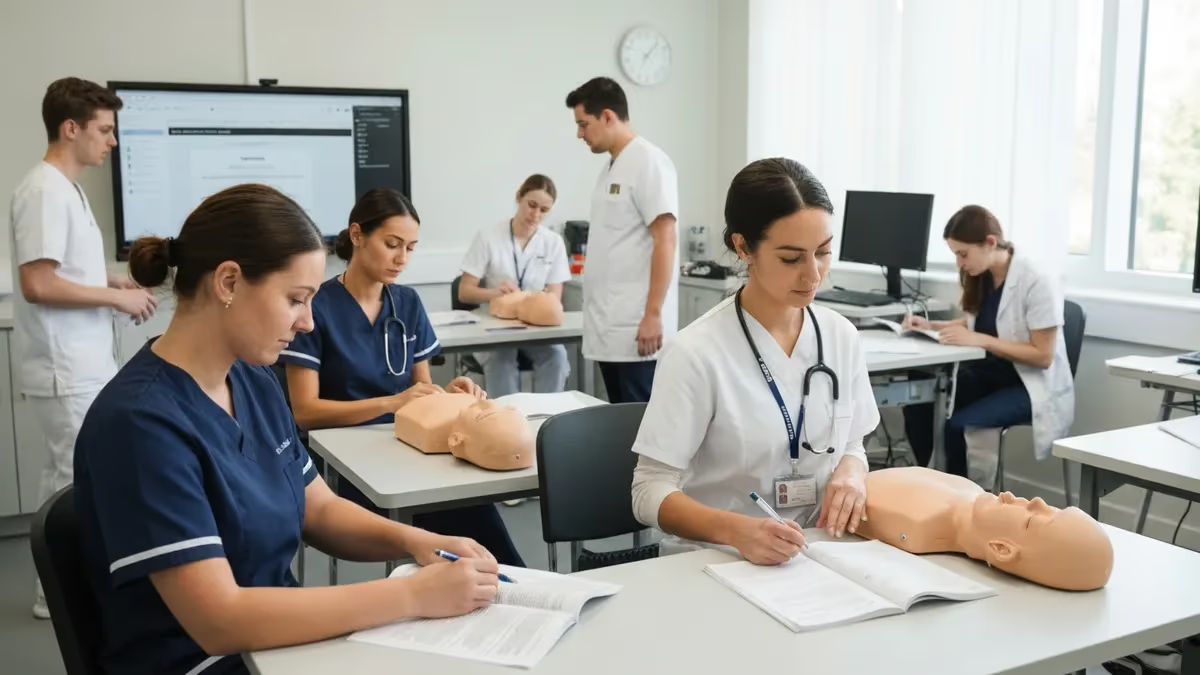
Oregon's demand for certified nursing assistants has climbed steadily over the past five years — and it's not slowing down. The state's aging population, combined with rural healthcare gaps across eastern and southern counties, means facilities are actively recruiting CNAs right now. If you're considering cna training oregon programs, you've picked a state where the job market genuinely favors new graduates. That matters more than you'd think when you're investing time and tuition into a credential.
CNA programs Oregon students enroll in follow guidelines set by the Oregon State Board of Nursing (OSBN). Every approved program must include at least 155 hours of combined classroom instruction and supervised clinical practice. Some schools pack that into four weeks. Others stretch it across a full semester — it depends on your schedule and how quickly you want to get credentialed. Either way, you'll cover infection control, patient transfers, vital signs, nutrition basics, and communication skills with patients and their families.
The real question most people start with isn't "what will I learn" — it's "where can I train, and what does it cost?" We'll break down the best CNA programs in Oregon by region, walk through the licensing process, cover salary expectations from Portland to Medford, and point you toward open positions. Whether you're in the Willamette Valley or out near Bend, there's a path that fits.
One thing worth knowing upfront: Oregon is one of the states that allows employer-sponsored CNA training. That means certain nursing homes and long-term care facilities will pay for your training in exchange for a work commitment afterward. Free training exists — you just need to know where to look.

CNA programs in Oregon range from community colleges offering semester-long courses to accelerated private schools that get you certified in under six weeks. The big names — Portland Community College, Lane Community College in Eugene, and Chemeketa Community College in Salem — all run OSBN-approved programs with strong pass rates. Tuition at community colleges typically falls between $800 and $1,500, which is significantly cheaper than private training centers charging $1,800 to $3,000 for essentially the same curriculum.
If you're exploring cna training oregon home helth aide options, know that some programs combine CNA certification with home health aide training. This dual credential opens doors beyond nursing homes — you can work in private residences, assisted living communities, and home care agencies. Goodwill Industries runs free CNA programs in select Oregon locations, though availability changes each quarter. Call ahead.
CNA programs in Oregon must include a minimum of 75 hours of classroom theory and 80 hours of hands-on clinical experience. Clinicals happen at partnered facilities — usually nursing homes or hospitals — where you'll practice skills under the direct supervision of a licensed nurse. Expect to learn everything from proper handwashing technique to operating mechanical lifts and documenting patient intake. The clinical portion is where most students figure out whether bedside care is genuinely something they want to do long-term.
Not every program is created equal. Before enrolling, verify that your chosen school appears on the OSBN's approved provider list. Graduating from a non-approved program means you can't sit for the state competency exam — and without passing that exam, you can't work as a CNA in Oregon. Period. Check the OSBN website or call their office directly at 971-673-0685.
Portland dominates Oregon's CNA job market. The metro area accounts for roughly 40% of all nursing assistant positions statewide, driven by major hospital systems like Providence, OHSU, Legacy Health, and Kaiser Permanente. If you're searching for cna jobs portland oregon, expect starting wages between $18 and $22 per hour depending on the facility type. Hospitals generally pay more than nursing homes — sometimes $3 to $5 more per hour — but they also expect more from new hires.
CNA training Portland Oregon options are widely available through PCC's multiple campus locations. The Rock Creek, Sylvania, and Cascade campuses all offer CNA programs with evening and weekend options. Private schools like CNA Training Institute and Sumner College provide accelerated timelines if you need credentials fast. Just verify OSBN approval before you sign anything or hand over a deposit.
Salem's healthcare sector is growing too, though it's smaller and more focused on long-term care and state-run facilities. The Oregon State Hospital and several large assisted living communities in the Salem-Keizer area regularly post CNA openings. CNA jobs Salem Oregon tend to pay slightly less than Portland — about $17 to $20 per hour — but the cost of living is noticeably lower. Your take-home purchasing power might actually be better in Salem depending on your housing situation.
Beyond the I-5 corridor, cities like Eugene, Bend, Medford, and Corvallis all have steady CNA demand. Rural facilities often struggle to recruit, which means they sometimes offer sign-on bonuses ranging from $500 to $2,000 for new CNAs willing to commit to a one-year contract. Don't overlook smaller towns if you're flexible on location.
Training Options by Region
Portland Community College — OSBN-approved programs at Rock Creek, Sylvania, and Cascade campuses. Tuition: ~$1,200. Day and evening schedules. Strong clinical partnerships with Providence and Legacy hospitals.
CNA Training Institute — Accelerated 4-week program. Tuition: ~$1,995. Small class sizes (max 16 students). Weekend clinical rotations available.
Sumner College — 6-week hybrid format with online theory and in-person clinicals. Tuition: ~$2,400. Portland campus only.
Getting your CNA license in Oregon requires passing the state competency evaluation after completing an approved training program. The exam has two parts: a written knowledge test (or oral alternative) and a clinical skills demonstration. You'll need to perform 3 or 4 randomly assigned nursing skills — things like measuring blood pressure, transferring a patient from bed to wheelchair, or providing perineal care — in front of a state evaluator. Most testing happens at Headmaster Testing centers across the state.
The CNA license Oregon application process starts online through the OSBN portal. You'll submit your training completion certificate, pass a criminal background check, and pay the application fee (currently $50). Background checks are non-negotiable — Oregon law requires fingerprint-based checks through the Oregon State Police and FBI databases. If you have any criminal history, it doesn't automatically disqualify you, but you'll need to disclose it and may face additional review.
CNA salary Oregon workers earn varies significantly by region, facility type, and experience level. Entry-level CNAs in Portland average $19.50 per hour, while experienced CNAs with five or more years can earn $24 to $27 per hour. Overtime opportunities are abundant — chronic understaffing means extra shifts are almost always available. Some CNAs report earning $50,000 or more annually when factoring in overtime and shift differentials for nights and weekends.
Your CNA certification in Oregon must be renewed every two years. Renewal requires proof of at least 400 hours of paid CNA employment during the certification period, plus completion of 12 hours of continuing education. If you let your certification lapse, you'll need to complete a refresher course before reactivating — so mark your renewal date on a calendar and don't let it sneak up on you.
CNA courses Oregon schools offer cover a standardized curriculum, but the quality of instruction varies more than you'd expect. The best programs pair experienced nurse educators with small cohorts — 12 to 16 students — so everyone gets meaningful clinical practice time. Larger programs sometimes rush through skills checkoffs, leaving students underprepared for the state exam. Ask about class size before enrolling. If a program regularly runs 25+ students per clinical group, that's a red flag.
Working as a CNA Oregon gives you a front-row seat to patient care that no other entry-level healthcare role can match. You'll be the person patients see most — helping them eat, bathe, dress, and move through their day. It's physically demanding work. Twelve-hour shifts on your feet, lifting and repositioning patients, responding to call lights every few minutes. But it's also the fastest way into healthcare without a college degree, and many Oregon CNAs use the role as a springboard to LPN or RN programs.
How much does a CNA make in Oregon? The statewide median sits around $41,200 annually, but that number hides a lot of variation. cna salary oregon figures look different depending on where you work. Hospital CNAs in the Portland metro earn the most — sometimes $45,000 to $52,000 with differentials. Nursing home CNAs in rural areas might start closer to $35,000. Travel CNA positions, which have exploded since the pandemic, can pay $25 to $35 per hour with housing stipends on top.
Oregon also requires CNAs to complete a minimum of 12 continuing education hours per renewal cycle. These hours must include at least 2 hours of abuse prevention training. Many employers offer free CE courses as part of their benefits package — take advantage of that before paying out of pocket for online CE credits.
Pros and Cons of Being a CNA in Oregon
- +Strong job market with 9% projected growth through 2034
- +Employer-sponsored free training programs available statewide
- +Hospital CNAs in Portland can earn over $50K with overtime
- +Clear pathway from CNA to LPN or RN through Oregon's community colleges
- +Rural facilities offer sign-on bonuses up to $2,000
- +Travel CNA positions pay $25-35/hr plus housing stipends
- −Physically demanding — 12-hour shifts, heavy lifting, constant movement
- −Entry-level pay in rural areas starts below $17/hr
- −Chronic understaffing means mandatory overtime at some facilities
- −Emotional toll from working with seriously ill and dying patients
- −Background check requirements can delay licensing by 4+ weeks
- −Certification renewal every 2 years requires 400 hours of paid work
How much does a CNA make in Oregon depends on more than just geography — it depends on specialization. Restorative CNAs, who focus on rehabilitation exercises and mobility training, typically earn $2 to $4 more per hour than standard CNAs. Hospice CNAs working with end-of-life patients also command premium pay, especially through home health agencies. If you're strategic about your first job, you can position yourself for higher earnings within your first year.
CNA certification Oregon requires passing both portions of the state competency evaluation within 24 months of completing your training program. Miss that window and you'll need to retake the entire training course — there's no extension or waiver. The written test covers 80 multiple-choice questions on topics like patient rights, infection control, and basic nursing skills. You need a 73% score to pass. The skills portion tests 3 or 4 randomly assigned tasks in 35 minutes. One mistake doesn't fail you automatically, but missing a critical step — like failing to identify a patient before a procedure — is an automatic fail on that skill.
Oregon's CNA exam is administered by Headmaster Testing at locations across the state. Testing slots fill up fast, especially during summer when training program graduates flood the system. Book your exam appointment the moment you receive your completion certificate. Waiting even two weeks can push your test date out by a month or more — and that's a month you're not earning.
Some students worry about the clinical skills portion more than the written test. Fair enough — performing under observation is nerve-wracking. But here's the thing: you've practiced these skills dozens of times during training. The evaluator isn't trying to trick you. They're checking that you follow proper procedure, maintain patient dignity, and don't skip safety steps. Practice your weakest skills five extra times the week before your exam. That's usually enough.
Oregon CNA Licensing Checklist
- ✓Complete an OSBN-approved 155-hour CNA training program
- ✓Obtain your training completion certificate from the school
- ✓Schedule your competency exam through Headmaster Testing
- ✓Pass the written knowledge test (80 questions, 73% minimum)
- ✓Pass the clinical skills demonstration (3 or 4 randomly assigned skills)
- ✓Submit fingerprints for Oregon State Police and FBI background check
- ✓Create an account on the OSBN online portal
- ✓Submit your CNA license application with all required documents
- ✓Pay the $50 application fee
- ✓Receive your CNA license number — typically within 10-14 business days
CNA classes Oregon students compete for fill up quickly — especially at community colleges where tuition is lowest. Portland Community College's CNA program, for example, often has a waitlist of 50+ students for fall term. The trick is applying early. Most programs open registration three to four months before the term starts. Set a reminder, have your application ready, and submit on day one. Students who wait until the week before classes start rarely get a spot.
CNA jobs Salem Oregon center around three main employers: Salem Health (the city's largest hospital system), the Oregon State Hospital, and a cluster of skilled nursing facilities along Lancaster Drive and Commercial Street. Salem Health hires new CNAs throughout the year and offers tuition reimbursement for employees pursuing nursing degrees. The state hospital — which provides psychiatric care — pays well but requires additional training in behavioral management and de-escalation techniques.
Outside Salem, the mid-Willamette Valley has steady CNA demand in cities like Albany, Corvallis, and McMinnville. Good Samaritan Regional Medical Center in Corvallis (part of the Samaritan Health network) is a major employer with competitive benefits. If you're a student at Oregon State University considering healthcare, a CNA position at Samaritan gives you clinical exposure while you complete your prerequisite courses for nursing school.
One advantage Oregon CNAs have over many other states: reciprocity. If you hold an active CNA certification from another state, Oregon allows endorsement — meaning you can transfer your credentials without retesting. The process takes about 3 weeks and costs $50. Similarly, your Oregon CNA credentials transfer to most other states through reciprocity agreements, which is helpful if you're considering travel CNA work or planning to relocate.
CNA schools in Oregon fall into three categories: community colleges, private vocational schools, and employer-sponsored programs. Community colleges offer the best value — tuition between $800 and $1,500, financial aid eligible, and typically strong clinical partnerships. Private schools charge more but offer flexibility: accelerated schedules, weekend-only classes, and smaller cohorts. Employer-sponsored programs are free but come with strings — usually a 6 to 12-month employment commitment at the sponsoring facility.
CNA classes Portland Oregon are available through at least eight different training providers, making it the most competitive market in the state. That competition works in your favor. Schools offer orientation sessions, free practice skills labs, and exam prep workshops to attract students. Take advantage of the free resources even if you're enrolled elsewhere — the more practice you get before the state exam, the better your chances of passing on the first attempt.
If you're comparing programs, ask three questions before enrolling. First: what's the program's first-time pass rate on the state competency exam? Anything below 75% is concerning. Second: where do clinical rotations happen? Programs with hospital clinical sites give you broader experience than those limited to a single nursing home. Third: does the program offer job placement assistance? The best schools maintain relationships with local employers and actively help graduates find their first CNA position.
Online CNA training isn't fully available in Oregon — the clinical hours must be completed in person under direct supervision. However, some programs offer hybrid formats where the classroom theory portion is delivered online. This works well for students who need scheduling flexibility but can commit to weekend or evening clinical blocks. Chemeketa Community College and Sumner College both offer hybrid options.
Only graduates of Oregon State Board of Nursing (OSBN) approved programs can sit for the CNA competency exam. Before paying tuition or signing enrollment agreements, verify your program's approval status at oregon.gov/osbn or call 971-673-0685. Graduating from a non-approved program means you cannot become licensed — and you won't get a refund.
CNA wages in Oregon have risen consistently since 2022, driven by staffing shortages and new state minimum wage increases. Portland metro CNA positions start well above minimum wage, in the $18 to $22 range. Outside metro areas, wages hover around $16 to $19 per hour. Night and weekend differentials push those numbers higher.
CNA jobs Medford Oregon and the broader Rogue Valley region represent an underrated opportunity. Asante Health System — the area's largest provider — operates two hospitals and multiple clinics in Medford and Grants Pass. They hire CNAs year-round, offer tuition assistance for nursing degrees, and pay competitive wages for southern Oregon. The cost of living in Medford is substantially lower than Portland, so your paycheck stretches further.
Travel CNA positions have become a real career path in Oregon. Agencies like IntelyCare, CareRev, and ShiftKey connect CNAs with per-diem and short-term contracts statewide. Experienced travel CNAs report earning $28 to $35 per hour. Some assignments include housing stipends. The trade-off: contracts end, assignments vary, and you're always the new person on the floor.
CNA Practice Test Questions
Prepare for the CNA - Certified Nursing Assistant exam with our free practice test modules. Each quiz covers key topics to help you pass on your first try.
CNA Activities of Daily Living
CNA Exam Questions covering Activities of Daily Living. Master CNA Test concepts for certification prep.
CNA Aging Process
Free CNA Practice Test featuring Aging Process. Improve your CNA Exam score with mock test prep.
CNA Anatomy and Physiology Basics
CNA Mock Exam on Anatomy and Physiology Basics. CNA Study Guide questions to pass on your first try.
CNA Assisting with Daily Living
CNA Test Prep for Assisting with Daily Living. Practice CNA Quiz questions and boost your score.
CNA Assisting with Range of Motion Exercises
CNA Questions and Answers on Assisting with Range of Motion Exercises. Free CNA practice for exam readiness.
CNA Basic Human Anatomy and Age-Related Ch...
CNA Mock Test covering Basic Human Anatomy and Age-Related Changes. Online CNA Test practice with instant feedback.
CNA Basic Nursing Skills
Free CNA Quiz on Basic Nursing Skills. CNA Exam prep questions with detailed explanations.
CNA Basic Nursing Skills 10
CNA Practice Questions for Basic Nursing Skills 10. Build confidence for your CNA certification exam.
CNA Basic Nursing Skills 11
CNA Test Online for Basic Nursing Skills 11. Free practice with instant results and feedback.
CNA Basic Nursing Skills 1
CNA Study Material on Basic Nursing Skills 1. Prepare effectively with real exam-style questions.
CNA Basic Nursing Skills 12
Free CNA Test covering Basic Nursing Skills 12. Practice and track your CNA exam readiness.
CNA Basic Nursing Skills 13
CNA Exam Questions covering Basic Nursing Skills 13. Master CNA Test concepts for certification prep.
CNA Basic Nursing Skills 14
Free CNA Practice Test featuring Basic Nursing Skills 14. Improve your CNA Exam score with mock test prep.
CNA Basic Nursing Skills 15
CNA Mock Exam on Basic Nursing Skills 15. CNA Study Guide questions to pass on your first try.
CNA Basic Nursing Skills 16
CNA Test Prep for Basic Nursing Skills 16. Practice CNA Quiz questions and boost your score.
CNA Basic Nursing Skills 17
CNA Questions and Answers on Basic Nursing Skills 17. Free CNA practice for exam readiness.
CNA Basic Nursing Skills 18
CNA Mock Test covering Basic Nursing Skills 18. Online CNA Test practice with instant feedback.
CNA Basic Nursing Skills 19
Free CNA Quiz on Basic Nursing Skills 19. CNA Exam prep questions with detailed explanations.
CNA Basic Nursing Skills 20
CNA Practice Questions for Basic Nursing Skills 20. Build confidence for your CNA certification exam.
CNA Basic Nursing Skills 21
CNA Test Online for Basic Nursing Skills 21. Free practice with instant results and feedback.
CNA Basic Nursing Skills 2
CNA Study Material on Basic Nursing Skills 2. Prepare effectively with real exam-style questions.
CNA Basic Nursing Skills 3
Free CNA Test covering Basic Nursing Skills 3. Practice and track your CNA exam readiness.
CNA Basic Nursing Skills 4
CNA Exam Questions covering Basic Nursing Skills 4. Master CNA Test concepts for certification prep.
CNA Basic Nursing Skills 5
Free CNA Practice Test featuring Basic Nursing Skills 5. Improve your CNA Exam score with mock test prep.
CNA Basic Nursing Skills 6
CNA Mock Exam on Basic Nursing Skills 6. CNA Study Guide questions to pass on your first try.
CNA Basic Nursing Skills 7
CNA Test Prep for Basic Nursing Skills 7. Practice CNA Quiz questions and boost your score.
CNA Basic Nursing Skills 8
CNA Questions and Answers on Basic Nursing Skills 8. Free CNA practice for exam readiness.
CNA Basic Nursing Skills 9
CNA Mock Test covering Basic Nursing Skills 9. Online CNA Test practice with instant feedback.
CNA Basic Restorative Services
Free CNA Quiz on Basic Restorative Services. CNA Exam prep questions with detailed explanations.
CNA Basic Restorative Services 1
CNA Practice Questions for Basic Restorative Services 1. Build confidence for your CNA certification exam.
CNA Bathing and Dressing
CNA Test Online for Bathing and Dressing. Free practice with instant results and feedback.
CNA Body Mechanics
CNA Study Material on Body Mechanics. Prepare effectively with real exam-style questions.
CNA Career Advancement and Opportunities
Free CNA Test covering Career Advancement and Opportunities. Practice and track your CNA exam readiness.
CNA Career Opportunities and Benefits
CNA Exam Questions covering Career Opportunities and Benefits. Master CNA Test concepts for certification prep.
CNA Care for Residents with Cognitive Impa...
Free CNA Practice Test featuring Care for Residents with Cognitive Impairment. Improve your CNA Exam score with mock test prep.
CNA Care of Cognitively Impaired Residents
CNA Mock Exam on Care of Cognitively Impaired Residents. CNA Study Guide questions to pass on your first try.
CNA Care of Cognitively Impaired Residents 1
CNA Test Prep for Care of Cognitively Impaired Residents 1. Practice CNA Quiz questions and boost your score.
CNA Care Of Cognitively Impaired Residents 4
CNA Questions and Answers on Care Of Cognitively Impaired Residents 4. Free CNA practice for exam readiness.
CNA Common Medical Terms and Abbreviations
CNA Mock Test covering Common Medical Terms and Abbreviations. Online CNA Test practice with instant feedback.
CNA Communication and Interpersonal Skills
Free CNA Quiz on Communication and Interpersonal Skills. CNA Exam prep questions with detailed explanations.
CNA Communication and Interpersonal Skills 1
CNA Practice Questions for Communication and Interpersonal Skills 1. Build confidence for your CNA certification exam.
CNA Communication And Interpersonal Skills 4
CNA Test Online for Communication And Interpersonal Skills 4. Free practice with instant results and feedback.
CNA Eligibility and Qualifications
CNA Study Material on Eligibility and Qualifications. Prepare effectively with real exam-style questions.
CNA Emergency Procedure
Free CNA Test covering Emergency Procedure. Practice and track your CNA exam readiness.
CNA Ethics and Professionalism
CNA Exam Questions covering Ethics and Professionalism. Master CNA Test concepts for certification prep.
CNA Exam Structure and Content
Free CNA Practice Test featuring Exam Structure and Content. Improve your CNA Exam score with mock test prep.
CNA Feeding and Hydration
CNA Mock Exam on Feeding and Hydration. CNA Study Guide questions to pass on your first try.
CNA Infection Control
CNA Test Prep for Infection Control. Practice CNA Quiz questions and boost your score.
CNA Infection Control and Safety
CNA Questions and Answers on Infection Control and Safety. Free CNA practice for exam readiness.
CNA Isolation Precautions
CNA Mock Test covering Isolation Precautions. Online CNA Test practice with instant feedback.
CNA Legal & Ethical Behaviours
Free CNA Quiz on Legal & Ethical Behaviours. CNA Exam prep questions with detailed explanations.
CNA Legal & Ethical Behaviours 1
CNA Practice Questions for Legal & Ethical Behaviours 1. Build confidence for your CNA certification exam.
CNA Legal & Ethical Behaviours 4
CNA Test Online for Legal & Ethical Behaviours 4. Free practice with instant results and feedback.
CNA Mental Health and Social Services Needs
CNA Study Material on Mental Health and Social Services Needs. Prepare effectively with real exam-style questions.
CNA Mental Health and Social Services Needs 1
Free CNA Test covering Mental Health and Social Services Needs 1. Practice and track your CNA exam readiness.
CNA Mental Health And Social Services Needs 4
CNA Exam Questions covering Mental Health And Social Services Needs 4. Master CNA Test concepts for certification prep.
CNA Nutrition and Hydration Management
Free CNA Practice Test featuring Nutrition and Hydration Management. Improve your CNA Exam score with mock test prep.
CNA Patient Care Procedure
CNA Mock Exam on Patient Care Procedure. CNA Study Guide questions to pass on your first try.
CNA Personal Care Skills
CNA Test Prep for Personal Care Skills. Practice CNA Quiz questions and boost your score.
CNA Personal Care Skills 1
CNA Questions and Answers on Personal Care Skills 1. Free CNA practice for exam readiness.
CNA Personal Care Skills 4
CNA Mock Test covering Personal Care Skills 4. Online CNA Test practice with instant feedback.
CNA Personal Care Skills 5
Free CNA Quiz on Personal Care Skills 5. CNA Exam prep questions with detailed explanations.
CNA Personal Hygiene and Grooming
CNA Practice Questions for Personal Hygiene and Grooming. Build confidence for your CNA certification exam.
CNA Practice Test - Basic Nursing Skills #2
CNA Test Online for Practice Test - Basic Nursing Skills #2. Free practice with instant results and feedback.
CNA Practice Test - Basic Nursing Skills #2 1
CNA Study Material on Practice Test - Basic Nursing Skills #2 1. Prepare effectively with real exam-style questions.
CNA Preventing Patient Falls and Injuries
Free CNA Test covering Preventing Patient Falls and Injuries. Practice and track your CNA exam readiness.
CNA Promoting Resident Independence and Ch...
CNA Exam Questions covering Promoting Resident Independence and Choice. Master CNA Test concepts for certification prep.
CNA Proper Hand Hygiene and PPE Usage
Free CNA Practice Test featuring Proper Hand Hygiene and PPE Usage. Improve your CNA Exam score with mock test prep.
CNA Resident Rights and Communication
CNA Mock Exam on Resident Rights and Communication. CNA Study Guide questions to pass on your first try.
CNA Resident’s Rights
CNA Test Prep for Resident’s Rights. Practice CNA Quiz questions and boost your score.
CNA Resident's Rights 1
CNA Questions and Answers on Resident's Rights 1. Free CNA practice for exam readiness.
CNA Resident's Rights 4
CNA Mock Test covering Resident's Rights 4. Online CNA Test practice with instant feedback.
CNA Roles and Responsibilities
Free CNA Quiz on Roles and Responsibilities. CNA Exam prep questions with detailed explanations.
CNA Safety and Emergency Procedures
CNA Practice Questions for Safety and Emergency Procedures. Build confidence for your CNA certification exam.
CNA Safety and Emergency Procedures 1
CNA Test Online for Safety and Emergency Procedures 1. Free practice with instant results and feedback.
CNA Safety And Emergency Procedures 4
CNA Study Material on Safety And Emergency Procedures 4. Prepare effectively with real exam-style questions.
CNA Safety and Infection Control
Free CNA Test covering Safety and Infection Control. Practice and track your CNA exam readiness.
CNA Scope of Practice
CNA Exam Questions covering Scope of Practice. Master CNA Test concepts for certification prep.
CNA Skills and Competencies
Free CNA Practice Test featuring Skills and Competencies. Improve your CNA Exam score with mock test prep.
CNA Supporting Rehabilitation Activities
CNA Mock Exam on Supporting Rehabilitation Activities. CNA Study Guide questions to pass on your first try.
CNA The Nurse Aide's Role and Responsibili...
CNA Test Prep for The Nurse Aide's Role and Responsibilities. Practice CNA Quiz questions and boost your score.
CNA Time Management and Prioritization
CNA Questions and Answers on Time Management and Prioritization. Free CNA practice for exam readiness.
CNA Toileting and Elimination
CNA Mock Test covering Toileting and Elimination. Online CNA Test practice with instant feedback.
CNA Using Adaptive Devices
CNA Practice Questions for Using Adaptive Devices. Build confidence for your CNA certification exam.
How to become a CNA in Oregon comes down to four steps: train, test, apply, work. The entire process — from enrolling in a training program to holding a license — takes anywhere from 6 weeks to 4 months depending on program format and background check processing time. Accelerated programs can get you through training in 4 weeks, but you'll still need 2 to 4 weeks for the exam and licensing paperwork. Plan accordingly if you're trying to start working by a specific date.
CNA jobs in Portland Oregon are posted daily on Indeed, the Providence Health careers portal, OHSU's job board, and Legacy Health's hiring page. Don't rely solely on job boards — walk into facilities directly. Nursing home administrators and charge nurses often know about openings before they're posted online. Bring a printed resume, dress professionally, and ask to speak with the director of nursing. This old-school approach still works surprisingly well in healthcare hiring, especially at smaller facilities.
Oregon's CNA workforce faces a genuine retention challenge. Turnover rates at some nursing homes exceed 60% annually. That's partly because the work is hard, partly because wages haven't kept pace with inflation in some facilities, and partly because CNAs who gain experience quickly move into higher-paying roles. The upside for you: facilities desperate to retain staff offer increasingly generous benefits — sign-on bonuses, shift differentials, paid CE credits, tuition assistance, and flexible scheduling. Negotiate. You have more use than you think as a new CNA in today's market.
Starting your CNA career in Oregon puts you on a clear trajectory toward advancement. Many Oregon community colleges offer LPN bridge programs specifically designed for working CNAs, with evening and weekend class schedules. From LPN, the path to RN is another step — and Oregon's nursing shortage means tuition assistance programs are widely available. The CNA credential isn't just a job. It's a career launchpad. Treat it that way from day one.
Sample CNA Practice Questions
Try these questions from our free CNA practice tests. The correct answer and an explanation follow each question.
Which of the following is a core competency area covered in federally mandated CNA training programs?
- A. Pharmacology and drug administration
- B. Infection control and prevention
- C. Surgical wound closure
- D. Anesthesia monitoring
Answer: B. Infection control and prevention
Federal regulations require CNA training to include infection control as one of the core competency areas.
A resident on a bowel training program should be offered toileting assistance at which time?
- A. Only when the resident specifically requests it
- B. At the same scheduled times each day, especially after meals
- C. Randomly throughout the shift to prevent accidents
- D. Only at bedtime to establish a nighttime routine
Answer: B. At the same scheduled times each day, especially after meals
Bowel training programs rely on consistent, scheduled toileting — particularly after meals when the gastrocolic reflex is active.
Which item should the CNA ALWAYS check the patient has with them at the time of discharge?
- A. A printed copy of their nursing notes from the stay
- B. Glasses, hearing aids, dentures, and other personal medical devices
- C. A list of all diagnoses from the entire stay
- D. Their insurance cards and billing statements
Answer: B. Glasses, hearing aids, dentures, and other personal medical devices
Personal medical devices like glasses, hearing aids, and dentures are essential for the patient's function and safety after discharge — loss of these items at discharge is a common and preventable error.
A patient's care plan includes hourly rounding for fall prevention. What is the PRIMARY goal of this intervention?
- A. To monitor vital signs and document them each hour
- B. To proactively meet patient needs — toileting, position, pain, belongings — before they attempt to get up alone
- C. To ensure medications are given on schedule
- D. To check that all four side rails are raised
Answer: B. To proactively meet patient needs — toileting, position, pain, belongings — before they attempt to get up alone
Hourly rounding addresses the '4 Ps' (pain, position, personal needs, placement of items) so patients do not feel the need to get up unassisted.
Take the full CNA practice test
CNA Questions and Answers

Restorative CNA: Duties, Training, Salary & How to Get Started

CNA Hospital Jobs Near Me: How to Find, Apply & Get Hired in 2026

Goodwill CNA Program: Free Classes, Costs, and How to Enroll

Hospice CNA: Duties, Salary, Per Diem Work & How to Get Started

4-Week CNA Program: Online Options, State Programs & How to Enroll
About the Author

Registered Nurse & Healthcare Educator
Johns Hopkins University School of NursingDr. Sarah Mitchell is a board-certified registered nurse with over 15 years of clinical and academic experience. She completed her PhD in Nursing Science at Johns Hopkins University and has taught NCLEX preparation and clinical skills courses for nursing students across the United States. Her research focuses on evidence-based exam preparation strategies for healthcare certification candidates.
Join the Discussion
Connect with other students preparing for this exam. Share tips, ask questions, and get advice from people who have been there.
View discussion (8 replies)