
Goodwill CNA Program: Free Classes, Locations, Cost, and How to Apply
✏️ Goodwill CNA classes explained: free program locations in Florida, Georgia, NYC, Long Beach, Houston, costs, eligibility, and how to apply this year.
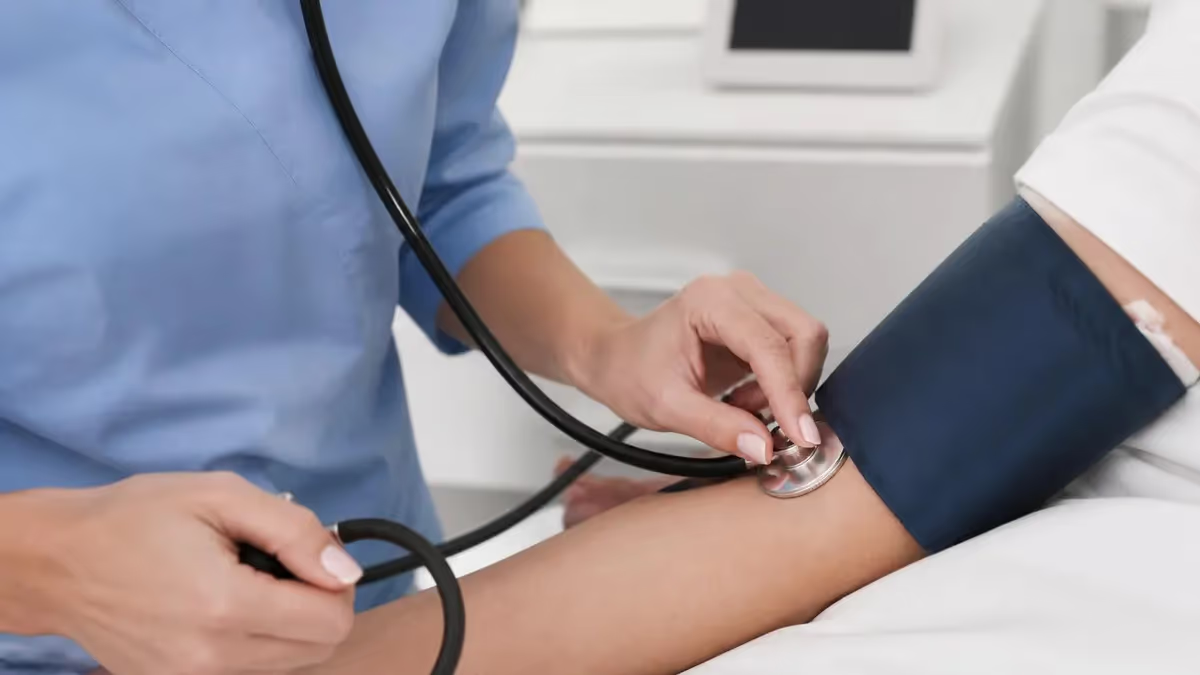
The Goodwill CNA program is a state-approved nurse aide training course offered through regional Goodwill career centers, talent bridges, and workforce development arms in roughly two dozen US cities. Classes run 4 to 8 weeks, combine classroom hours with clinical rotations, and end with the state CNA exam. Most Goodwill CNA classes are free or nearly free for students who qualify under federal workforce funding, which is what makes the program one of the most accessible routes into healthcare in the country.
Goodwill is best known for thrift stores and donation centers, but a separate division of the organization runs job training programs that include certified nursing assistant courses, security guard certification, custodial training, and basic IT skills. The CNA program is the largest healthcare track at most sites.
This guide walks through how the Goodwill CNA program actually works, which states and cities run active classes, what the cost looks like for funded and unfunded students, who qualifies for free tuition, what the schedule looks like week to week, and how the application timeline runs from first contact to your state exam day.
If you are weighing this against other paths, pair this with the CNA programs overview and the cna classes near me before you commit.
Goodwill CNA Program at a Glance
Key Facts at a Glance
| Item | Value | Details |
|---|---|---|
| Program length | 4 to 8 weeks | |
| Out-of-pocket cost (otherwise) | $600 to $1,800 | |
| Total training hours | 80 to 150 |
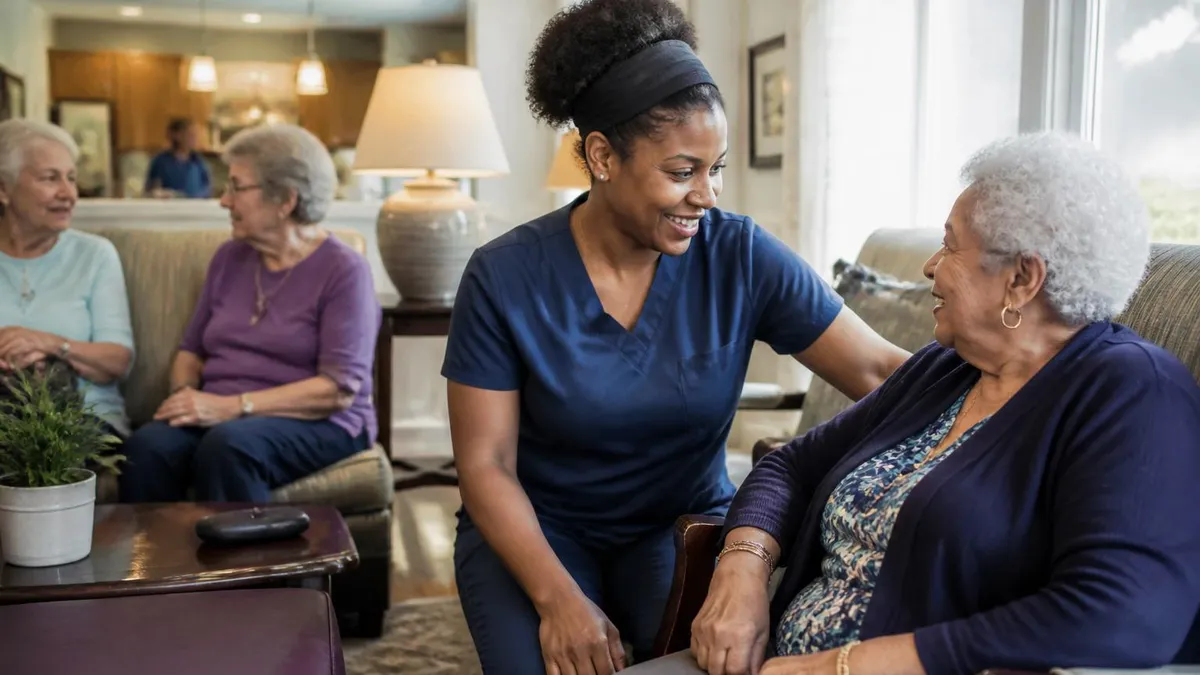
Goodwill CNA classes are funded by federal and state workforce dollars, not by donation revenue from the thrift stores. The Workforce Innovation and Opportunity Act, SNAP E&T, TANF, and similar programs cover tuition for eligible adults. You apply for the workforce funding first, then enroll in the Goodwill program once funding clears. The workforce case manager at the Goodwill career center walks you through the paperwork. Plan one to three weeks for funding approval before your start date.
What the Goodwill CNA Program Is
The Goodwill CNA program is a vocational training course that teaches the skills required to pass a state nurse aide competency exam. Each state sets its own minimum hours, but most Goodwill courses run 80 to 150 total hours including required clinical time at a partner long-term care facility. The curriculum tracks the federal Omnibus Budget Reconciliation Act standards plus state-specific add-ons.
Goodwill is not the licensing body. Goodwill runs the training, and the state Department of Health or Department of Public Health certifies graduates after they pass the state exam. The school's role ends at the exam door. Your certification belongs to you, not to Goodwill, and works at any facility in the state where you tested.
The program targets adults who need quick entry into a stable healthcare career without taking on student loans. Most students are between 18 and 45, working part-time or unemployed when they enroll, and looking for a pathway that pays back within months rather than years. Some Goodwill sites also accept high school graduates straight out of senior year, but financial aid eligibility differs for that group.
Free vs. Paid: How Goodwill CNA Classes Get Funded
The Goodwill CNA program is not universally free. The free version exists because federal Workforce Innovation and Opportunity Act dollars, state TANF funding, SNAP E&T grants, and similar programs cover tuition for eligible adults. Sites describe these arrangements as scholarships or tuition assistance but the money flows from public funds rather than from Goodwill's retail operation.
If you qualify under one of these programs, your tuition, books, uniform, background check, drug screen, and exam fee may all be covered. If you do not qualify, you pay sticker price, which ranges from $600 in low-cost markets to roughly $1,800 in higher-cost cities. Some sites split the difference with a partial scholarship.
Common Funding Pathways for Free Classes
Federal funding for unemployed or underemployed adults. Covers tuition, books, exam fees, and sometimes transportation. Apply through your local American Job Center or state workforce office before enrolling.
For adults receiving food stamps. Covers training costs plus child care and transportation reimbursement in many states. Apply through your state SNAP office and ask for the E&T program specifically.
For parents receiving Temporary Assistance for Needy Families. Funds vocational training that leads to self-sufficiency. CNA programs qualify in most states because the certification matches local labor demand.
For workers displaced by foreign trade or plant closures. Covers tuition and provides extended unemployment benefits during training. Often pays for relocation if the new job is in a different city.
Veterans use Post-9/11 GI Bill chapter 33 or Vocational Rehabilitation and Employment chapter 31 for CNA training. Goodwill sites approved as training providers accept these benefits. Apply through VA.gov.
Some regional Goodwill organizations offer partial scholarships funded by local donors. Smaller dollar amounts than workforce programs but no income or unemployment requirements. Ask at the info session.
Who Qualifies for Free Tuition
Eligibility for the free Goodwill CNA classes runs through your state workforce agency, not through Goodwill directly. The most common qualifying conditions include unemployment receipt within the past 12 months, household income below 200 percent of the federal poverty line, receipt of SNAP or TANF benefits, status as a displaced worker after a plant closure or mass layoff, and veteran status with eligible discharge.
You apply for the workforce funding first, then enroll in the Goodwill program once funding clears. The process is paperwork-heavy. You will provide proof of income through pay stubs or tax returns, proof of household composition through utility bills or lease, proof of identity through state ID and Social Security card, and sometimes proof of public benefits enrollment. Plan one to three weeks for the funding paperwork to clear before your start date.
Goodwill staff usually walk you through the funding application as part of intake. The career center has dedicated case managers who know which programs cover which expenses in your specific county. Their goal is to enroll you in funded training because Goodwill receives payment from the workforce agency when you complete the program, which creates an alignment of interests that helps students.
What You Learn: The Curriculum Week by Week
A typical 6-week Goodwill CNA course splits into classroom theory in weeks 1 through 3, lab skills practice in weeks 3 and 4, and clinical rotations in weeks 5 and 6. Class hours run Monday through Friday during business hours at most sites, though evening and weekend cohorts exist in larger markets.
Week 1 covers the role of the CNA, medical terminology basics, communication skills, infection control fundamentals, and patient rights including HIPAA. Week 2 moves into vital signs, body mechanics, transferring techniques, and basic personal care. Week 3 introduces specialized care for cognitively impaired residents, end-of-life care, and emergency procedures. Week 4 is intensive lab work where you practice the 22 to 25 skills your state will test, including hand washing, bed making with an occupant, partial bed bath, and assisted ambulation.
Clinical rotations in weeks 5 and 6 place you at a partner nursing home or long-term care facility where you provide direct resident care under the supervision of a licensed nurse and your CNA instructor. Most students complete 16 to 40 hours of clinical depending on state requirements. The clinical site usually has openings for graduates, which is why so many Goodwill CNA graduates land their first job at the facility where they did rotations.
Goodwill CNA Program by City
Sites in Tampa, Orlando, Jacksonville, and West Palm Beach. Year-round demand from retirees keeps clinical placements available. Tallahassee runs cohorts through Goodwill of the Big Bend. Pass rate strong in Tampa and Orlando sites. Florida exam vendor is Prometric, with skills testing usually held at the training facility itself.
Cities and Sites: Where the Program Runs
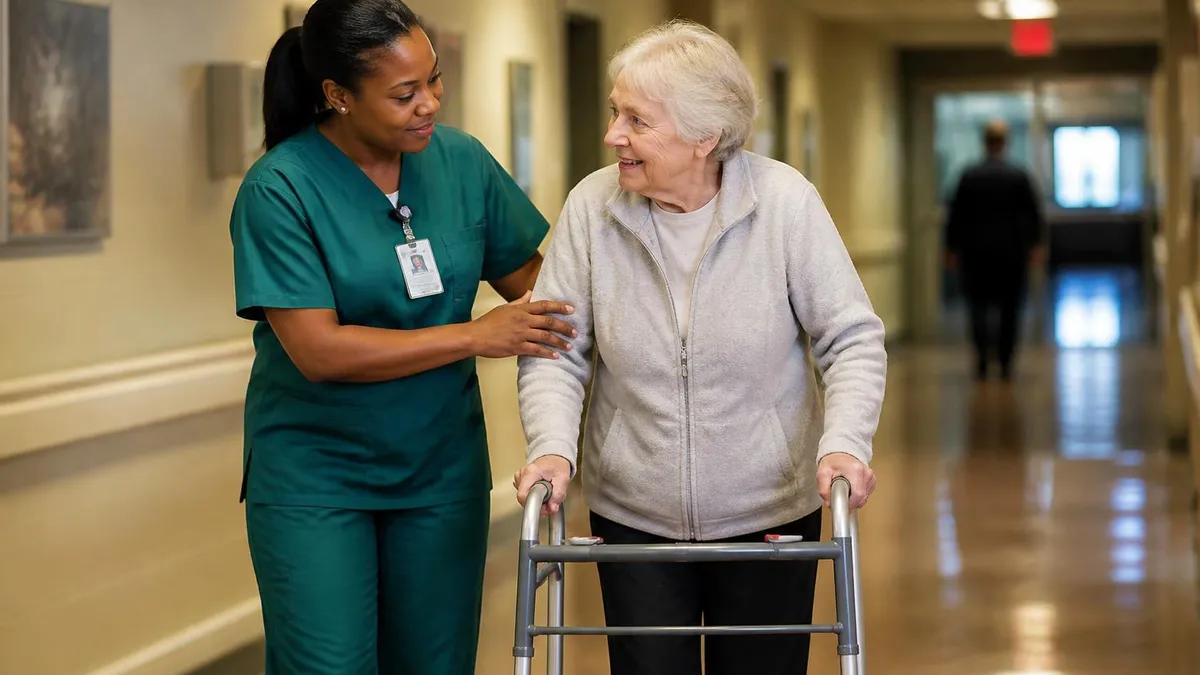
Goodwill CNA classes operate in roughly 25 metro areas across the United States. The largest and most consistent programs run in Florida, Georgia, North Carolina, South Carolina, Tennessee, Texas, California, Nebraska, New York, Michigan, and Illinois. Smaller programs come and go based on local funding, which means availability changes year to year.
The Florida Goodwill CNA program is one of the longest-running tracks, with sites in Tampa, Orlando, Jacksonville, and West Palm Beach. The Goodwill CNA program in Georgia runs primarily out of the Atlanta metro and Macon area through Goodwill of North Georgia. The Goodwill CNA program in NYC operates through Goodwill NYNJ with classes in Brooklyn, Queens, and the Bronx.
The Goodwill CNA program in Long Beach, California is run through Goodwill SOLAC, which serves South LA and Orange County workforce regions. This particular site has been highly active and is one of the most cited free CNA programs on the West Coast. The Long Beach site has its own training facility, on-site testing through the state-approved vendor, and direct placement partnerships with skilled nursing facilities in the area.
Texas, Houston, and the Talent Bridge Track
Goodwill Houston runs CNA training through its Talent Bridge division, which focuses on healthcare career pathways including CNA, EKG technician, medical assistant, and pharmacy technician. The Houston program has multiple cohort starts each year and accepts SNAP E&T funding to cover tuition for eligible students. Clinical placements run at Houston-area nursing homes including some chain facilities.
Other Texas markets including Dallas, Austin, and San Antonio have run Goodwill CNA cohorts at various times but coverage is less consistent than Houston. Check directly with your local Goodwill workforce office or with the CNA training near me directory for current openings.
Midwest Goodwill CNA: Omaha, Grand Rapids, and Chicago
The Goodwill CNA program in Omaha, Nebraska runs through Goodwill Industries of Greater Nebraska with cohorts a few times per year. The Goodwill CNA training in Grand Rapids, Michigan is part of Goodwill of Greater Grand Rapids' job training arm and serves western Michigan workforce regions. The Goodwill CNA program in Chicago operates through Goodwill Industries of Metropolitan Chicago at multiple sites, often paired with their broader Goodcare program track.
CNA certification requires hands-on clinical hours at a real facility under direct supervision. No state will register a CNA who has not completed in-person clinical training. If you see Goodwill free CNA classes online marketed as fully remote, treat it as a red flag. Verify with your state nurse aide registry that the program is on the approved training provider list. Some sites run a hybrid format where lecture is online but skills and clinical are in person. That is legitimate. Fully online with a mailed certificate is not.
Documents to Gather Before You Apply
- ✓State-issued photo ID (driver license or state ID card, not expired)
- ✓Social Security card (original, not a copy) for funding paperwork
- ✓Proof of income from past 12 months: pay stubs, tax return, or unemployment letter
- ✓Proof of household composition: utility bill, lease, or recent mail
- ✓High school diploma, GED, or transcript showing completion
- ✓Current TB skin test or chest X-ray results (within last 12 months)
- ✓Immunization records including MMR, Varicella, and Hep B (or signed declination)
- ✓Two forms of address verification matching your application
- ✓Proof of any public benefits enrollment (SNAP, TANF) if applying for those funding paths
- ✓Veteran discharge paperwork (DD-214) if applying through GI Bill or VR&E
- ✓Background check authorization (Goodwill will run it but you sign the release)
The Goodcare Program: A Newer Track Worth Knowing
Several Goodwill sites have launched a newer healthcare training initiative called Goodcare, which extends CNA training with additional certifications and career navigation support. Goodcare CNA graduates may receive add-on training in dementia care, restorative care, medication aide credentials, or phlebotomy. The Goodcare wrapper signals to local employers that the graduate has additional training beyond the state minimum.
Goodcare is not yet available at every Goodwill site that offers CNA training. The program is concentrated in larger metro areas where Goodwill has built strong employer partnerships. Ask your local site whether their CNA program is part of the Goodcare initiative or a standalone track.
The Goodwill Career Academy CNA Program
Some Goodwill divisions market their CNA training under the Goodwill Career Academy brand or the Goodwill Career Center brand. These are not different programs, just different naming conventions used by different regional Goodwill organizations. The curriculum, state approval, and certification outcome are identical because the state nurse aide registry sets the standards regardless of which Goodwill entity runs the course.
The Goodwill Career Academy CNA program in a given city may or may not be free. Funding depends on the workforce agreements at that specific location. Ask for the full price list including books, uniform, exam fees, and background check separately. Some sites bundle these into the tuition number, while others list them as additional costs.
Online Classes: How Much Is Actually Virtual
The Goodwill free CNA cna classes online label is sometimes misleading. CNA certification requires hands-on clinical hours, which cannot be completed remotely. What Goodwill offers in some markets is a hybrid format where lecture and theory content runs through online modules while skills practice and clinical rotations happen in person. The exam itself is always proctored in person at a state-approved site.
If you see Goodwill CNA classes online advertised as fully remote, it is either a different certification (such as home health aide), a misleading listing, or a third-party program using the Goodwill name without authorization. Verify with your state nurse aide registry that the program is on the approved training provider list before paying anything.
The Real Cost: What Free Means and What Free Does Not Cover
When Goodwill CNA classes are free, the workforce funding usually covers tuition, books, uniform top, name badge, and one attempt at the state exam. Some sites also cover the criminal background check fee, the drug screen, and the TB test. A handful of sites cover transportation costs through bus passes or gas reimbursement.
What is rarely covered: lost wages during training (most students are full-time in class and cannot work much), child care during class hours, the cost of failing the exam (a retake fee runs $100 to $200 depending on state and vendor), and the cost of replacement uniforms or supplies if you lose or damage what was issued. Plan to have a small savings cushion or backup income for the 6 to 8 weeks of training even when tuition is fully covered.
If you do not qualify for the free version, the typical out-of-pocket Goodwill CNA program cost runs between $600 and $1,800. Cheaper than community college CNA programs in most markets, comparable to nursing home in-house training, and more expensive than the cheapest for-profit accelerated programs in your area. The Goodwill price reflects the smaller class size (usually 8 to 16 students) and the more structured clinical placements.
The Application Timeline: What Six Weeks Out Looks Like
The Goodwill CNA application process usually runs 2 to 6 weeks from first contact to first day of class. Step one is an information session, in person or by Zoom, where Goodwill staff explain the program, the funding options, and the time commitment. Most sites require attendance at an info session before you can submit a formal application.
Step two is the funding paperwork through your state workforce agency, which can take one to three weeks depending on the workforce office's caseload. While funding is in motion, you complete pre-enrollment items including a basic reading assessment (TABE or similar), the criminal background check, drug screen, TB skin test, and physical exam. Some sites also require proof of high school diploma or GED.
Step three is acceptance and orientation. You sign your enrollment agreement, receive your textbook, get fitted for scrubs, and learn the schedule. Orientation often happens the Friday before class starts on Monday.
Goodwill CNA Program vs. Other Free or Low-Cost Options
- +Tuition is fully covered for qualified students through workforce funding
- +Smaller class sizes (8 to 16 students) than community college CNA cohorts
- +Built-in case managers help navigate funding paperwork and benefits
- +Established clinical site partnerships often lead directly to first job
- +Hybrid evening and weekend cohorts available at larger Goodwill sites
- +Add-on Goodcare track in some markets extends training beyond state minimum
- −Program availability varies by region — many Goodwill locations do not offer CNA training
- −Funding paperwork can delay enrollment by 1 to 3 weeks
- −Schedule is usually full-time weekdays, hard to combine with most jobs
- −Quality varies between regional Goodwill organizations because each runs its own program
- −Free tuition does not cover lost wages or child care during the training weeks
- −Some sites mix Goodwill brand with third-party providers — verify state approval first
The Skills Day: What the State Exam Looks Like
The state CNA exam has two parts. The written or oral knowledge test runs 60 to 80 multiple choice questions covering everything from infection control to resident rights. The skills evaluation is the live skills test where you perform 4 to 6 randomly assigned tasks in front of a state-approved evaluator on the same day.
The skills you practice in lab during the Goodwill program are the same skills you may be tested on. Hand washing is almost always one of the four skills, and it is the most failed skill in the country because students forget to time the wash for 20 seconds or skip the paper towel for the faucet. Indirect care skills (asking the resident, addressing them by name, explaining what you are doing, providing privacy) account for a large share of test points.
Goodwill instructors give practice tests under timed conditions in weeks 4 and 5. Pay attention to the indirect care prompts you forget, because forgetting four prompts in a row can fail you on an otherwise perfect technical skill. Use the CNA practice test from week 1 onward, not just before the exam, because spaced repetition beats cramming for a clinical exam.
After You Pass: First Job and the Goodwill Network
Once you pass, your name goes onto the state nurse aide registry within 24 to 72 hours. You are now a working CNA. Goodwill sites usually run a placement support process for graduates that includes resume review, interview prep, and direct introductions to facility hiring managers. The clinical site where you did rotations is the most common first job, and many facilities offer hire-on bonuses to keep their CNA pipeline flowing.
Starting wages depend on your market. Urban hospital CNA roles pay more than rural long-term care, and weekend and overnight shifts pay more than weekday day shifts. Expect $15 to $19 per hour as a starting CNA in most markets, with potential for $20+ with a year of experience and weekend differential.
Common Reasons Students Drop Out and How to Avoid Them
Goodwill CNA program completion rates are good but not perfect. The most common reason students do not finish is logistics rather than coursework. Child care falls through, transportation breaks down, a family member gets sick, or a part-time job demands hours that conflict with clinical rotations. Build the support network before week 1.
The second common dropout reason is the surprise of the clinical site. Some students discover during rotations that direct resident care, including incontinence care and behavioral management for dementia residents, is harder than they imagined. The Goodwill orientation tries to set realistic expectations, but until you stand in front of a confused 86-year-old resident at 6 AM, you cannot fully know how you will react. Shadow a working CNA before you enroll if at all possible.
The third common reason is the written exam. Students who skip the practice tests and rely on classroom recall often fail the written portion. Most states allow three attempts within a fixed window before you have to repeat the entire program. Use practice tests early and often, and treat the practice exams as if they were the real thing.
What to Ask at Your Goodwill CNA Info Session
The information session is your chance to evaluate the specific site as much as it is for them to evaluate you. Ask about the most recent state exam pass rate for the program. Ask how many students finished the last cohort versus how many started. Ask which long-term care facilities the clinical rotations run at, and which hire from the program. Ask whether Goodcare add-on training is offered. Ask how many evening or weekend cohorts run per year, in case the standard weekday schedule conflicts with current work.
Listen for specific answers, not generalities. A program that knows its pass rate, its retention rate, and its placement rate is a program that tracks its own performance and likely runs a tight operation. A program that deflects these questions with marketing language deserves more scrutiny.
First-Week Survival Plan for Goodwill CNA Students
- ✓Confirm child care coverage through every week of training, including the clinical rotations
- ✓Identify backup transportation in case your primary ride fails — public transit, carpool, or rideshare credit
- ✓Build a small savings cushion of 4 to 6 weeks of expenses before class starts
- ✓Tell your current employer about the schedule conflict in writing before week 1
- ✓Set up text reminders for class start, lab makeups, and clinical orientation
- ✓Buy a second uniform top in addition to what Goodwill issues — clinical days get dirty
- ✓Start practice tests in week 1, not week 4 — spaced repetition beats cramming
- ✓Schedule your state exam date by week 3 so you have a target on the calendar
- ✓Identify the lead instructor and ask early how to flag any conflicts with clinical hours
- ✓Pick one study partner from your cohort by week 2 for accountability
- ✓Photograph your skills checklist after each lab to track which skills still need reps
Top States for Goodwill CNA Programs
Long-running Goodwill CNA programs in Tampa, Orlando, Jacksonville, and Tallahassee. Year-round retiree demand keeps clinical sites active. State exam through Prometric, sometimes held on-site at training location.
Atlanta metro and Macon area through Goodwill of North Georgia and Middle Georgia. Strong placement into LTC and Northside Hospital satellite facilities. Pearson VUE handles state exam.
Goodwill SOLAC site is one of the most active free CNA programs on the West Coast. Serves South LA and Orange County. Direct placement partnerships with local SNFs. Cohorts every 6 to 8 weeks.
Goodwill Houston Talent Bridge runs CNA plus EKG tech, medical assistant, and pharmacy tech. SNAP E&T covers tuition for eligible students. Multiple cohort starts per year.
Goodwill NYNJ runs cohorts in Brooklyn, Queens, and the Bronx. Meets New York's 100-hour requirement. Strong nursing home placement in all five boroughs.
Goodwill Industries of Greater Nebraska runs cohorts a few times per year. Smaller class sizes. Clinical at Omaha-area nursing facilities. Workforce funding through Nebraska Workforce Development.
Reviews: What Graduates Actually Say
Goodwill CNA program reviews are mixed, in the way that all vocational training reviews are mixed. Students who passed on the first try, landed a job within a month, and are now working tend to leave positive reviews. Students who washed out, failed the exam, or had a bad clinical experience tend to leave negative reviews. The truth for any specific student depends on the specific site, the specific instructor, and the specific cohort.
Patterns to look for in reviews: comments about the lead instructor by name (good or bad), comments about the lab equipment and resident mannequins (outdated equipment hurts skills practice), comments about the clinical site (a chaotic facility makes a bad clinical experience), and comments about the support staff handling the funding paperwork (a slow case manager delays your start date by weeks).
Negative reviews that focus on "the work was harder than I thought" are usually about the realities of CNA work, not about Goodwill's training quality. Negative reviews that focus on "the instructor never showed up" or "they never returned my calls about funding" are program-specific problems and deserve weight.
How the Goodwill CNA Program Compares to Alternatives
The free or low-cost Goodwill CNA program competes with community college CNA programs ($800 to $2,500, fewer dropouts, but slower enrollment cycles), nursing home in-house training (free but locks you into working there for 12 months), Red Cross CNA training ($1,200 to $1,800, good reputation, fewer sites), and for-profit accelerated CNA schools ($1,200 to $3,000, fastest start dates, mixed reputations).
Goodwill's strength is the combination of low cost, established curriculum, real workforce funding pipelines, and stable clinical placements. Goodwill's weakness is that program quality varies between regional Goodwill organizations because each one runs its own training. The Goodwill SOLAC program in Long Beach is not the same operation as Goodwill Houston Talent Bridge, even though both wear the Goodwill brand. Always research the specific site.
If you are ready to take the next step, work through the free cna class to compare Goodwill against other no-cost options, then run an honest read on the cost of CNA classes to budget the full picture, not just tuition.
Sample CNA Practice Questions
Try these questions from our free CNA practice tests. The correct answer and an explanation follow each question.
When is it appropriate for a CNA to apply a physical restraint to a resident?
- A. Whenever the CNA feels it is needed for safety
- B. When a licensed nurse orders it and proper protocol is followed
- C. Any time the resident is confused or agitated
- D. When a family member requests it verbally
Answer: B. When a licensed nurse orders it and proper protocol is followed
Physical restraints require a physician's order, nursing assessment, and adherence to facility protocol — CNAs cannot apply them independently.
A CNA working in a long-term care facility is interested in career advancement but is not yet ready to commit to a full-time nursing program. Which specialized certification would be MOST beneficial for enhancing their skills and value within their current work environment?
- A. Certified EKG Technician (CET)
- B. Restorative Aide Specialist
- C. Certified Phlebotomy Technician (CPT)
- D. Basic Life Support (BLS) Instructor
Answer: B. Restorative Aide Specialist
A Restorative Aide Specialist certification builds directly on CNA skills and is highly valued in long-term care and rehabilitation settings. This role focuses on helping residents maintain or improve their functional abilities through exercise and other therapies, which is a core function of long-term care. While other certifications are valuable, the Restorative Aide role is most directly applicable for immediate career enhancement within that specific environment.
A CNA is asked by the facility's activities director to apply a complex, sterile dressing to a small abrasion on a resident's arm before an outdoor event. The supervising nurse is busy in another wing. The CNA should:
- A. Apply a simple adhesive bandage instead of the complex dressing.
- B. Refuse the task, stating it is outside the CNA's scope of practice, and inform the activities director to find the nurse.
- C. Attempt to apply the sterile dressing carefully as requested.
- D. Apply a non-sterile gauze pad and report it to the nurse later.
Answer: B. Refuse the task, stating it is outside the CNA's scope of practice, and inform the activities director to find the nurse.
Applying a sterile dressing is a nursing task that falls outside the CNA's scope of practice. [9, 10, 18] It requires sterile technique and wound assessment skills. The correct action is to recognize this boundary, refuse to perform the task, and ensure the person who made the request understands they need to find a licensed nurse to perform it. Applying any other dressing would be inappropriate and documentation alone is not sufficient.
The CNA is to apply elastic compression stockings (TED hose). The correct time to apply them is:
- A. After the resident has been ambulatory for 30 minutes
- B. Before the resident gets out of bed in the morning
- C. Only when the resident reports leg pain
- D. After the resident has been sitting in a chair for 1 hour
Answer: B. Before the resident gets out of bed in the morning
TED hose are applied before the resident gets up so leg veins are not yet dilated with pooled blood.
CNA Questions and Answers
About the Author

Registered Nurse & Healthcare Educator
Johns Hopkins University School of NursingDr. Sarah Mitchell is a board-certified registered nurse with over 15 years of clinical and academic experience. She completed her PhD in Nursing Science at Johns Hopkins University and has taught NCLEX preparation and clinical skills courses for nursing students across the United States. Her research focuses on evidence-based exam preparation strategies for healthcare certification candidates.
Join the Discussion
Connect with other students preparing for this exam. Share tips, ask questions, and get advice from people who have been there.
View discussion (8 replies)