

CCN Practice Test
Updated for October 2026Correctional facilities present a unique and often challenging environment for healthcare delivery. From chronic illnesses to acute trauma, substance withdrawal to mental health crises, the correctional setting demands highly skilled and adaptable nurses. The Certified Corrections Nurse (CCN) credential validates a nurse’s expertise in providing safe, ethical, and effective care to incarcerated individuals.
Administered by the National Commission on Correctional Health Care (NCCHC) or the American Correctional Association (ACA), this certification ensures that nurses are prepared to meet the complex physical and psychological needs of incarcerated populations. It also establishes a benchmark for professional excellence and ethical responsibility in a setting where care is often under intense scrutiny.
CCN Practice Test Questions
Prepare for the CCN - Certified Corrections Nurse exam with our free practice test modules. Each quiz covers key topics to help you pass on your first try.
CCN Communicable Disease Management & Publ...
CCN Exam Questions covering CCN Communicable Disease Management & Public Health. Master CCN Test concepts for certification prep.
CCN Mental Health & Substance Abuse in Cor...
Free CCN Practice Test featuring CCN Mental Health & Substance Abuse in Corrections. Improve your CCN Exam score with mock test prep.
CCN Clinical Procedures & Techniques
CCN Mock Exam on Clinical Procedures & Techniques. CCN Study Guide questions to pass on your first try.
CCN Documentation & Legal Standards
CCN Test Prep for Documentation & Legal Standards. Practice CCN Quiz questions and boost your score.
CCN Inmate Health Assessment & Chronic Car...
CCN Questions and Answers on Inmate Health Assessment & Chronic Care Management. Free CCN practice for exam readiness.
CCN Legal Regulations & Ethical Responsibi...
CCN Mock Test covering Legal Regulations & Ethical Responsibilities. Online CCN Test practice with instant feedback.
CCN Medication Administration & Emergency ...
Free CCN Quiz on Medication Administration & Emergency Response. CCN Exam prep questions with detailed explanations.
CCN Patient Assessment & Care Planning
CCN Practice Questions for Patient Assessment & Care Planning. Build confidence for your CCN certification exam.
CCN Safety & Infection Control
CCN Test Online for Safety & Infection Control. Free practice with instant results and feedback.
Key Takeaways
Free CCN Practice Test Online
The Certified Corrections Nurse (CCN) credential recognizes expertise in providing nursing care in correctional environments.
CCNs are trained to address chronic illness, mental health, infectious disease, and emergency care in correctional settings.
Certification enhances professional credibility, career mobility, and job performance within the correctional health care system.
The exam is administered by NCCHC and includes topics like legal standards, security awareness, and inmate advocacy.
CCNs are vital to maintaining the constitutional rights of incarcerated individuals to receive quality medical care.
Understanding the Role of a Corrections Nurse
Corrections nurses operate in secure facilities such as:
Jails and prisons
Juvenile detention centers
Immigration detention facilities
Forensic psychiatric hospitals
Their scope of practice includes triaging injuries, managing chronic conditions, responding to mental health crises, and providing health education—all while ensuring security protocols are observed. In many cases, they are the first—and sometimes only—point of access to healthcare for incarcerated individuals.
In addition to medical duties, corrections nurses also play critical roles in:
Suicide prevention
Substance abuse treatment
Infectious disease control (e.g., TB, HIV, Hepatitis)
Crisis response and emergency management
Interdisciplinary coordination with custody and mental health staff

Who Should Pursue This Certification?
The Certified Corrections Nurse credential is ideal for:
Registered Nurses (RNs) currently working in correctional healthcare
Licensed Practical Nurses (LPNs/LVNs) in jail/prison settings (may be eligible for different certifications depending on the body)
Nurses in forensic or psychiatric units
Public health nurses working with justice-involved populations
It’s also suitable for nurses seeking to validate their knowledge, improve patient care standards, and advance within correctional or forensic healthcare leadership.
Eligibility and Prerequisites
While specific eligibility criteria may differ by certifying body, the NCCHC’s Certified Correctional Health Professional-RN (CCHP-RN) and the ACA’s certification both typically require:
Current, unrestricted RN license
At least 2 years of full-time nursing experience, including 2,000 hours in a correctional setting within the past 3 years
Documentation of clinical practice and ethical standing
Some programs also recommend continuing education or workshops in correctional health care as part of the application process.
Core Competencies and Training Topics
Certification programs and study guides focus on the specialized knowledge needed for correctional health environments. Core areas include:
Constitutional rights to healthcare (Estelle v. Gamble)
Informed consent and inmate confidentiality
Documentation and risk management
Correctional health care accreditation standards
Working within a custody-controlled environment
Managing dual loyalties (care vs. custody)
Communication with correctional officers
Incident and injury reporting
Chronic illness management (diabetes, hypertension, asthma)
Infectious disease screening and control
Mental health screening, suicide risk, and crisis stabilization
Detox and withdrawal management (alcohol, opioids)
Performing comprehensive intake assessments
Medical clearance protocols
Identifying medical and psychological red flags
CPR and ACLS in secure environments
Trauma assessment under resource-limited conditions
Stabilization and referral to higher levels of care
Educating inmates on hygiene, self-care, and medication adherence
Preparing inmates for reentry into the community with care continuity
Certification Process
While certification pathways vary, the process typically involves:
Submit transcripts, licensure, and proof of correctional nursing hours
Provide letters of reference or employer endorsement (if required)
Study guides, online prep courses, and practice exams are available through NCCHC and third-party providers
Format: Multiple-choice (typically 100–150 questions)
Duration: 2–3 hours
Delivery: Online proctored or testing center
Content: Legal issues, patient care, security awareness, ethics
Certification is valid for 3 years
Renewal requires:
Continuing Education Units (CEUs) (often 45+ hours)
Practice hours verification
Possible re-examination in some programs
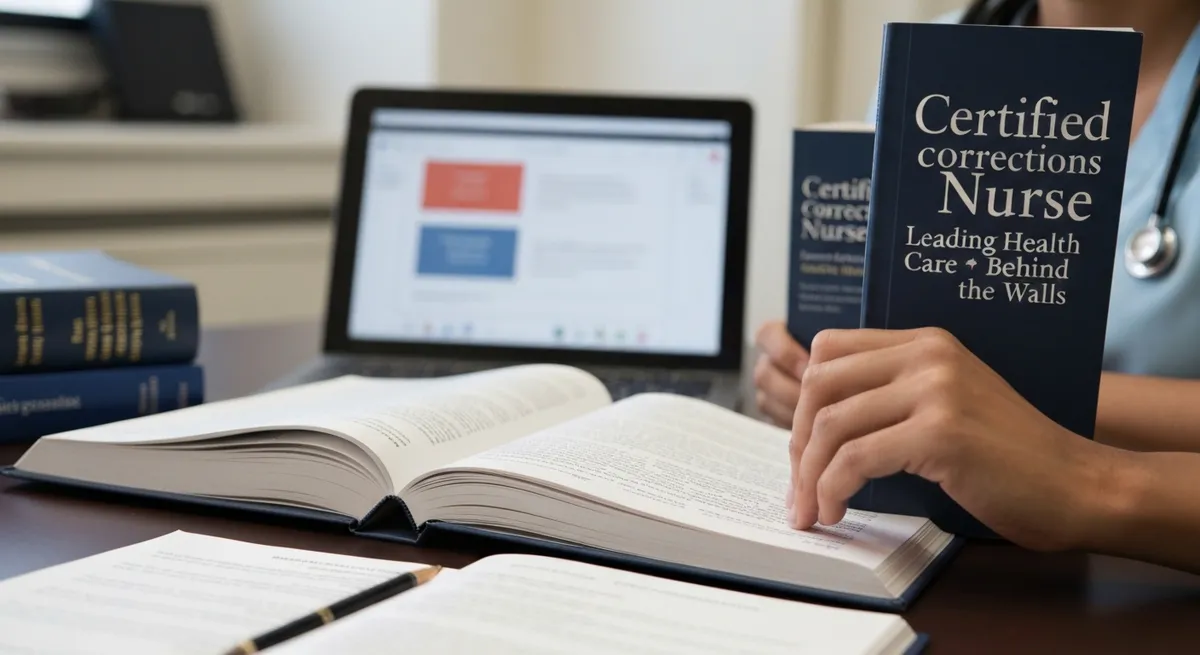
Benefits of Certification
CCN certification is recognized across the U.S. as a benchmark of correctional nursing excellence.
Certified nurses are often promoted to supervisory, administrative, or policy-making roles within correctional systems.
Training in constitutional rights and documentation protects both patients and practitioners in litigious environments.
Certification prepares nurses to deliver holistic, trauma-informed, and culturally competent care to a marginalized population.
Correctional facilities with certified staff demonstrate commitment to quality, accreditation compliance, and workforce development.
Conclusion
The Certified Corrections Nurse designation not only strengthens a nurse’s skill set but reinforces their role as a health advocate in one of the most demanding clinical environments. Working behind bars comes with unique challenges—but also powerful opportunities to deliver justice through care.
As public health and criminal justice increasingly intersect, the importance of ethical, well-trained correctional nurses cannot be overstated. Certification empowers these nurses to navigate clinical, legal, and ethical complexities with clarity and professionalism, ultimately raising the standard of care for an often-overlooked population.
- +Industry-recognized credential boosts your resume
- +Higher earning potential (10-20% salary increase on average)
- +Demonstrates commitment to professional development
- +Opens doors to advanced career opportunities
- −Exam preparation requires significant time investment (4-8 weeks)
- −Certification fees can be $100-$400+
- −May require continuing education to maintain
- −Some employers may not require certification
(CCN) Certified Corrections Nurse Questions and Answers
About the Author

Registered Nurse & Healthcare Educator
Johns Hopkins University School of NursingDr. Sarah Mitchell is a board-certified registered nurse with over 15 years of clinical and academic experience. She completed her PhD in Nursing Science at Johns Hopkins University and has taught NCLEX preparation and clinical skills courses for nursing students across the United States. Her research focuses on evidence-based exam preparation strategies for healthcare certification candidates.
Join the Discussion
Connect with other students preparing for this exam. Share tips, ask questions, and get advice from people who have been there.
View discussion (8 replies)