
ALCPT Listening Comprehension: How It Works & Strategies 2026 October
🆕 Pass the ALCPT Listening Comprehension: How It exam with confidence. Practice questions with detailed explanations and instant feedback on every answer.
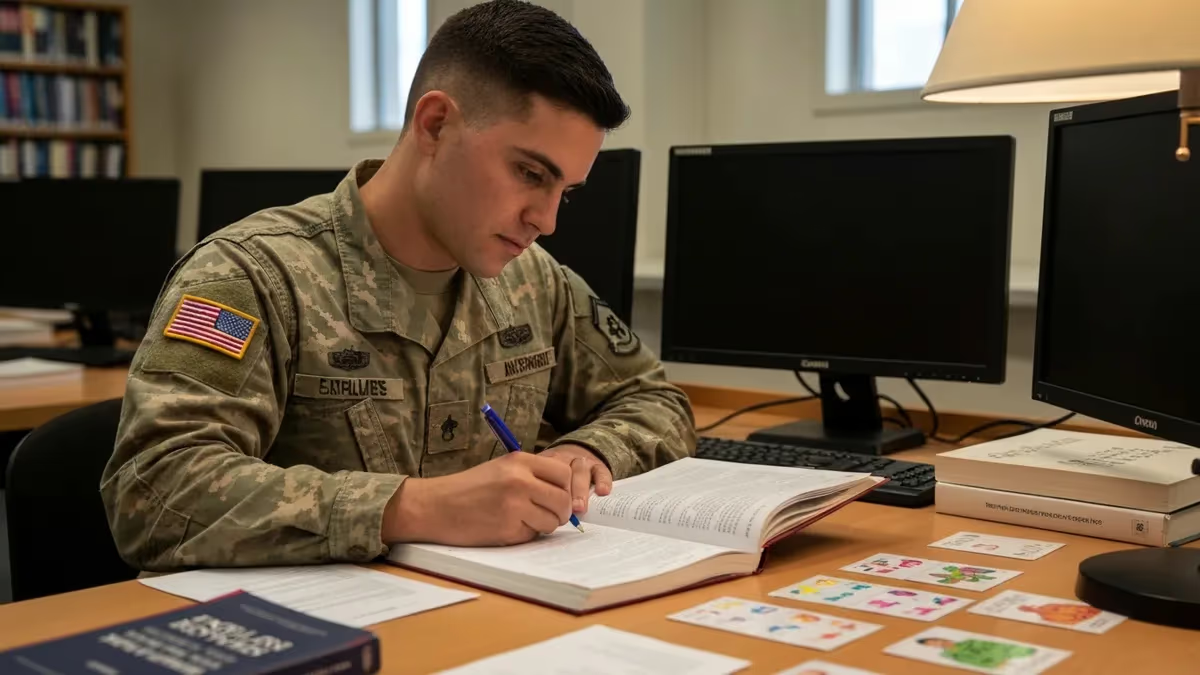
How the ALCPT Listening Section Works
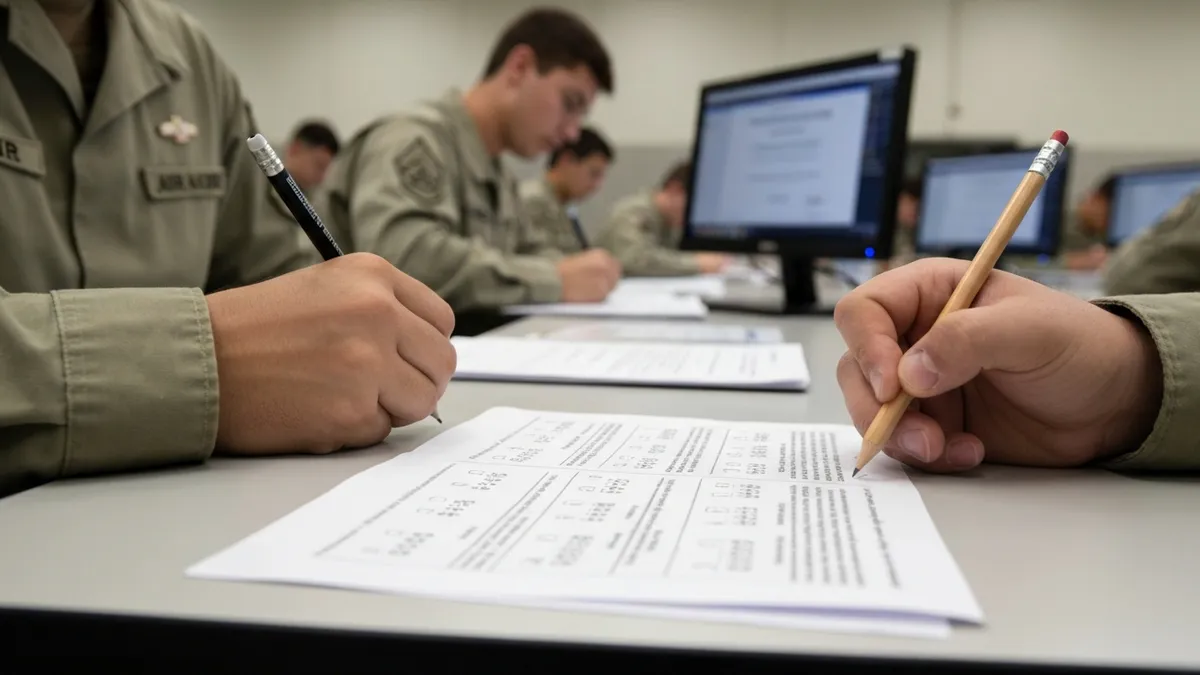
The ALCPT listening comprehension section consists of recorded audio played through standardized equipment at official test centers. Unlike reading or grammar sections, examinees cannot review the material -- each audio clip is played once, and you must select the correct answer from four written options immediately after it ends. This format demands active listening and strong short-term memory.
The section typically contains 60 questions drawn from a specific ALCPT form. The audio recordings use American English with natural speech patterns, including contractions, reductions, and connected speech. Speakers on the recordings represent a range of voices and speaking speeds, mirroring real-world communication that military personnel encounter. For a deeper look at how forms differ in content and difficulty, see the ALCPT Forms Guide.
Each question presents a spoken prompt -- either a single statement or a short conversation -- followed by a question read aloud. You then choose the best answer from the four choices printed in your test booklet. No transcript is provided. Speed and accuracy in processing spoken English are therefore the core skills being evaluated. For more background on the overall structure of the exam, visit the ALCPT Complete Guide.
Part A: Statements
Part A of the listening section consists of short statements delivered by a single speaker. Each statement is one or two sentences long. After the statement is played, you hear a question about the speaker's meaning or the topic discussed, and you must choose the answer that best reflects the content of what was said.
Common question formats in Part A test whether you understood implied meaning, identified the subject being discussed, or interpreted idiomatic expressions in context. For example, a statement about a sergeant telling troops to study before inspection requires you to recognize the idiomatic phrase being used. This type of vocabulary and idiomatic knowledge is central to performing well. Review the ALCPT Forms and Levels page to see how vocabulary difficulty scales across score bands.
Part B: Conversations
Part B moves from single-speaker statements to two-speaker dialogues. These exchanges simulate realistic scenarios: a soldier asking for directions on base, two trainees discussing a schedule change, or a student and instructor reviewing assignment results. Each dialogue is followed by one or two questions about what was said, who said it, or what can be inferred from the exchange.
Because Part B involves tracking two speakers simultaneously, test-takers must quickly distinguish between speakers and retain what each person said. The questions often test inference -- what the speakers imply rather than what they state directly. This is why passive listening practice (simply watching English-language television, for example) is less effective than active exercises that require you to answer specific comprehension questions after each audio segment.
If you want more targeted practice, the alcpt test page covers the same material with additional questions and explanations.
Difficulty Progression in the Listening Section
The ALCPT listening section is not uniform in difficulty. Questions are arranged so that earlier items tend to be more straightforward -- shorter statements, common vocabulary, clear pronunciation -- while later items introduce longer dialogues, faster speech, and more complex inferential questions. This progression mirrors the design of many standardized English proficiency exams used in military and government settings.
For non-native English speakers, the jump from mid-section to late-section questions can feel significant. Speakers may use ellipsis (dropping expected words), contractions, and stress patterns that shift meaning. Training your ear to detect these shifts is a key part of advanced ALCPT listening preparation. The ALCPT Score Interpretation page explains what score ranges correspond to which English proficiency levels.
Common Mistakes Test-Takers Make
Many examinees lose points in the listening section not because they lack vocabulary but because of test-taking habits that undermine their performance. The most frequent mistake is spending too long on a difficult question. Because the audio continues regardless of where you are in the answer booklet, falling behind means you may miss the next item entirely while still wrestling with a previous one. The best approach is to make your best guess and move on immediately.
A second common error is previewing answer choices during the audio. While this seems helpful, it often causes test-takers to mishear or misremember the audio because their attention is split. Instead, listen to the full audio clip first, then read the answer options. A third mistake is relying on a single word to choose an answer -- the ALCPT often includes distractors that repeat words from the audio in options that do not correctly answer the question.
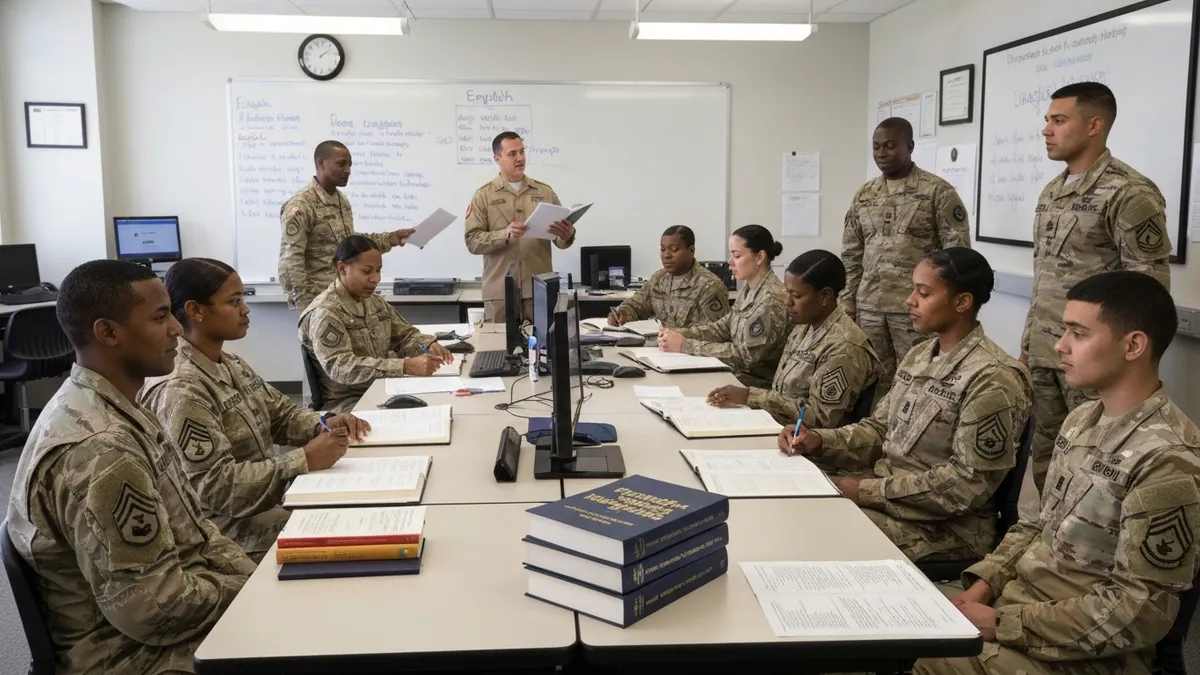
ALCPT Listening Preparation Checklist
- ✓Complete at least 5 full ALCPT listening practice sets under timed, no-replay conditions
- ✓Study American English contractions and reductions (gonna, wanna, coulda)
- ✓Learn the 50 most common military and workplace idioms used in ALCPT audio
- ✓Practice inference questions: identify what speakers imply, not just what they say
- ✓Train yourself to guess and move on -- never linger on a single question
- ✓Listen to American English audio for at least 20 minutes daily in the 2 weeks before your exam
- ✓Review your score interpretation to know what score your program requires
- ✓Take the full ALCPT practice test on PracticeTestGeeks to identify your weakest question types
ALCPT Pros and Cons
- +ALCPT credentials open career pathways with defined advancement trajectories and competitive compensation ranges
- +Growing demand in the field means qualified professionals with verified credentials have strong job security
- +Specialization within the field allows professionals to command premium compensation for high-demand skill sets
- +Remote and hybrid work options are expanding in this field, increasing geographic flexibility for credentialed professionals
- +Professional associations and networks provide ongoing career development, mentorship, and job referral opportunities
- −Entry-level positions in this field are competitive, requiring candidates to differentiate through credentials, experience, and networking
- −Some career paths in this field have defined credential and experience prerequisites that create time barriers to advancement
- −Geographic concentration of opportunities in some specializations limits location flexibility for career growth
- −Continuing education and credential maintenance requirements create ongoing time and financial obligations throughout a career
- −Career path choices made early may be difficult to reverse — specialization that narrows options later can limit career flexibility
Pros and Cons at a Glance
| Pros | Cons |
|---|---|
| ALCPT credentials open career pathways with defined advancement trajectories and competitive compensation ranges | Entry-level positions in this field are competitive, requiring candidates to differentiate through credentials, experience, and networking |
| Growing demand in the field means qualified professionals with verified credentials have strong job security | Some career paths in this field have defined credential and experience prerequisites that create time barriers to advancement |
| Specialization within the field allows professionals to command premium compensation for high-demand skill sets | Geographic concentration of opportunities in some specializations limits location flexibility for career growth |
| Remote and hybrid work options are expanding in this field, increasing geographic flexibility for credentialed professionals | Continuing education and credential maintenance requirements create ongoing time and financial obligations throughout a career |
| Professional associations and networks provide ongoing career development, mentorship, and job referral opportunities | Career path choices made early may be difficult to reverse — specialization that narrows options later can limit career flexibility |
Sample ALCPT - American Language Course Placement Test Practice Questions
Try these questions from our free ALCPT - American Language Course Placement Test practice tests. The correct answer and an explanation follow each question.
He works _____ harder than his brother.
- A. very
- B. much
- C. more
- D. most
Answer: B. much
'Much' is used before comparative adjectives/adverbs to intensify the comparison.
Speaker A: 'The colonel wants the briefing moved to Thursday.' Speaker B: 'That works for me. I was worried about the Tuesday slot anyway.' How does Speaker B feel about the change?
- A. He is upset that it was changed.
- B. He prefers the new Thursday time.
- C. He wants to keep the Tuesday slot.
- D. He is unsure about the new schedule.
Answer: B. He prefers the new Thursday time.
Speaker B says 'that works for me' and adds he was worried about Tuesday, showing he is relieved and happy with Thursday.
Choose the correctly formed yes/no question: 'He works at the base every day.'
- A. Does he works at the base every day?
- B. Does he work at the base every day?
- C. He does work at the base every day?
- D. Works he at the base every day?
Answer: B. Does he work at the base every day?
Yes/no questions in simple present use 'do/does + subject + base verb.' Because the subject is 'he' (third person singular), 'does' is used, and the main verb returns to its base form 'work' (not 'works'). Choice A incorrectly keeps the -s ending. Choices C and D use incorrect word order.
Man: 'This listening passage is playing too fast for me to catch every word.' Woman: 'Try focusing on the key words instead of understanding each one.' What strategy does the woman recommend?
- A. Listen for important words rather than trying to understand everything.
- B. Ask the instructor to replay the passage more slowly.
- C. Write down every word to review later.
- D. Skip the difficult passages and return to them.
Answer: A. Listen for important words rather than trying to understand everything.
The woman advises focusing on key words, a standard listening comprehension strategy.
Take the full ALCPT - American Language Course Placement Test practice test
ALCPT Listening Questions and Answers



About the Author

Educational Psychologist & Academic Test Preparation Expert
Columbia University Teachers CollegeDr. Lisa Patel holds a Doctorate in Education from Columbia University Teachers College and has spent 17 years researching standardized test design and academic assessment. She has developed preparation programs for SAT, ACT, GRE, LSAT, UCAT, and numerous professional licensing exams, helping students of all backgrounds achieve their target scores.
Join the Discussion
Connect with other students preparing for this exam. Share tips, ask questions, and get advice from people who have been there.
View discussion (8 replies)