
ACLS Certification Guide: How to Get Certified and Pass the Exam 2026 October
Free ACLS Certification Guide: How practice test with instant feedback and detailed answer explanations. Prepare for your exam. 🎯
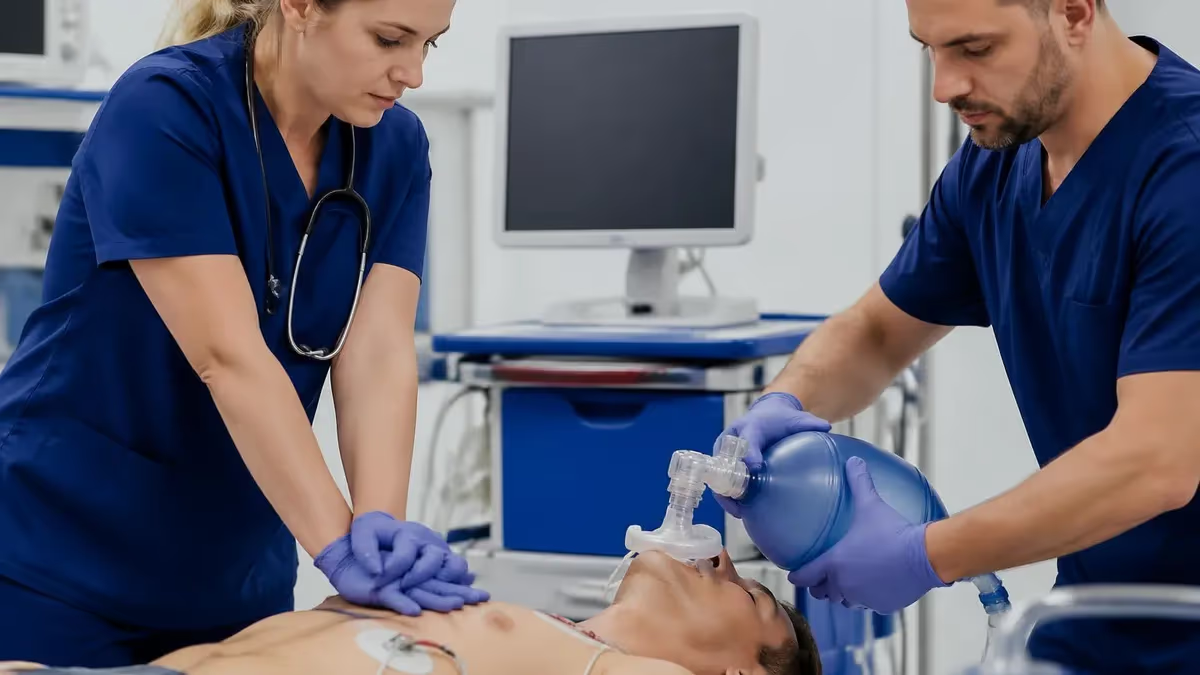
This ACLS certification guide covers everything you need to know before enrolling in your course, sitting for the exam, or scheduling a renewal. ACLS certification — Advanced Cardiovascular Life Support — is the AHA's gold-standard credential for healthcare providers who manage cardiac arrest, stroke, acute coronary syndromes, and respiratory emergencies. If you work in an ICU, ED, OR, or any high-acuity setting, you either have it or you need it. There's no middle ground.
Here's what makes ACLS different from BLS. BLS teaches CPR and AED use. ACLS builds on that foundation and adds systematic algorithms, cardiac rhythm interpretation, advanced airway management, IV/IO drug therapy, and post-cardiac arrest care. You'll learn to identify a rhythm, select the correct algorithm, call for the right drug at the right dose, and lead a team under genuine time pressure. The megacode skills evaluation tests all of this simultaneously — it's where certification gets real.
The AHA ACLS certification process has two pathways: traditional instructor-led courses (one or two full days in a classroom) and HeartCode ACLS (online self-paced learning plus a shorter in-person skills check). Both produce the same two-year AHA card. This guide walks you through prerequisites, course formats, exam content, study strategies, renewal timelines, and the practical details that determine whether you pass on your first attempt or waste time and money retaking.

What You Need Before Starting ACLS
You can't take ACLS without current what is a bls certification. Period. The AHA won't issue your card without proof of BLS, so get that squared away first if you haven't already. Beyond BLS, the course assumes you can read a basic ECG strip, have some familiarity with cardiac anatomy, and understand foundational pharmacology concepts like mechanism of action. You don't need to be an expert, but providers who try to learn BLS and ACLS simultaneously almost always struggle with the megacode. If you're searching for AHA ACLS certification courses, confirm your BLS is current before you register.
Most hospitals require ACLS before your start date or within 90 days of hire. If you work in a procedural area, interventional suite, or any high-acuity environment, ACLS isn't optional — it's baseline. Some employers cover the cost; others don't. Check with your HR department before paying out of pocket. If you're looking for ACLS certification near me, start with the AHA Training Center locator on their website. It shows every authorized provider in your area, with course dates and pricing.
Cost varies by provider and format. Traditional instructor-led courses typically run $150–$250. HeartCode ACLS (the online + skills check pathway) can be cheaper — some sites charge $75–$150 for the skills session alone since you complete the didactic portion online. Factor in time off work, travel, and any study materials you want beyond the AHA Provider Manual. Budget $200 total and you'll cover most scenarios.
Choosing Your ACLS Course Format
The AHA offers two pathways and the right choice depends on your schedule, learning style, and budget. The traditional instructor-led course runs 8–16 hours over one or two days. You'll work through didactic content, practice skills at stations, run megacode scenarios, and take the written exam — all in person. This format suits people who learn best with real-time feedback and want everything done in a concentrated push. If you're wondering what is ACLS certification in practical terms, this format shows you exactly what it demands.
HeartCode ACLS is the blended alternative. You complete the cognitive content online at your own pace — pause, rewind, repeat sections as needed. Then you schedule a shorter in-person skills session (2–4 hours) at an AHA Training Center for the hands-on evaluation. HeartCode works well for shift workers, providers with unpredictable schedules, or anyone who prefers to study on their own timeline. The ACLS certification online portion gives you flexibility without sacrificing the hands-on assessment that makes the credential meaningful.
Both formats produce identical AHA ACLS provider cards valid for two years. Neither is easier — the written exam and megacode evaluation use the same standards regardless of pathway. The difference is purely logistical. Pick the format that fits your life, study seriously regardless of which you choose, and you'll be fine.
ACLS Core Content Areas
ACLS Algorithms You Must Know
The VF/Pulseless VT algorithm is the most tested. Shock first — don't delay for drugs or intubation. Give CPR while the defibrillator charges, shock, resume CPR for two minutes, reassess rhythm. After the first shock cycle: epinephrine 1 mg IV every 3-5 minutes. After the second shock: amiodarone 300 mg IV (first dose), then 150 mg. The tachycardia algorithm branches on stability and QRS width. Unstable tachycardia always gets synchronized cardioversion. Stable narrow-complex: vagal maneuvers, then adenosine 6 mg rapid IV push. The bradycardia algorithm: if unstable, go straight to transcutaneous pacing. If stable, try atropine 0.5 mg first.
What the ACLS Written Exam Covers
The written exam has 50 multiple-choice questions and you need 84% (42 correct) to pass. Questions pull from every ACLS domain: algorithms, rhythm recognition, drug doses and indications, airway management, team dynamics, and post-cardiac arrest care. Every question is scenario-based — you'll get a patient presentation, a rhythm description, and multiple clinically plausible answer choices. The wrong answers represent what a less experienced provider might choose. If you're preparing for your ACLS recertification or an initial ACLS certification course, the exam difficulty is identical.
Most providers who fail have gaps in one of three areas. First: rhythm recognition — confusing stable VT with SVT, or calling PEA when it's actually asystole. Second: algorithm sequence — giving drugs before shocking in VF, or using synchronized cardioversion when defibrillation is correct. Third: pharmacology — wrong doses, wrong indications, or botching the adenosine technique (it must be rapid IV push through a large vein with an immediate flush). Identify your weak spot through practice testing and target it specifically.
The exam is closed book. Multiple attempts are allowed if you fail, though each retake may cost extra. Here's a strategy that works: when you're stuck on a question, work through the algorithm systematically. Is there a pulse? Is the rhythm shockable? Is the patient stable or unstable? What does the current algorithm step call for? That systematic approach eliminates most wrong-answer traps. Don't guess based on instinct — follow the algorithm.
Megacode Preparation — Where Certification Gets Real
The megacode is ACLS's skills evaluation. You lead a simulated cardiac arrest while instructors control the patient — changing rhythms, responding to your interventions, introducing complications. You'll identify the initial rhythm, direct CPR, call for drugs by dose and route, manage the airway, and pivot when the rhythm changes. A typical scenario runs through two or three rhythm changes. The ACLS certification online HeartCode pathway still requires this in-person skills check — there's no way around it. If you're scheduling an ACLS recertification course or initial ACLS certification renewal, the megacode standards are identical.
Most megacode failures aren't knowledge failures. They're communication failures. Providers who know the algorithms but don't verbalize their reasoning, don't close the loop on drug orders, or lose track of the algorithm sequence after a rhythm change tend to fail. Practice out loud. Say it: "I'm seeing VF. Charge to 200 joules. Resume CPR immediately. I need 1 mg epinephrine IV now." That explicit verbal leadership is exactly what instructors evaluate.
Before your skills check, rehearse the five core scenarios at least twice. Cover VF arrest with ROSC, VF arrest without ROSC (manage for four cycles), bradycardia with hypotension, unstable tachycardia, and stable narrow-complex tachycardia converting with adenosine. If you can lead all five smoothly — calling correct drugs, managing rhythm changes, communicating clearly — you'll pass without anxiety. Practice with a partner if possible. Even narrating to a mirror works better than silent reading.
HeartCode vs. Traditional ACLS Course
- +HeartCode allows self-paced study that fits around shift work and irregular schedules
- +Online portion can be paused, reviewed, and repeated until you feel confident
- +Skills check sessions for HeartCode are shorter than full instructor-led courses
- +Traditional courses provide real-time instructor feedback during scenario practice
- +Instructor-led format lets you ask questions and resolve confusion immediately
- +Both formats produce identical AHA ACLS certification valid for two years
- −HeartCode's online portion demands real self-discipline without a scheduled class structure
- −Self-paced learning makes it easy to rush past difficult content without mastering it
- −Traditional courses block a full day or two — tough for providers with unpredictable schedules
- −HeartCode skills check still requires finding an AHA Training Center and scheduling separately
- −Instructor quality in traditional courses varies significantly by site and instructor
- −Neither format fully replicates the pressure of a real code — the megacode is still simulated
Pros and Cons at a Glance
| Pros | Cons |
|---|---|
| HeartCode allows self-paced study that fits around shift work and irregular schedules | HeartCode's online portion demands real self-discipline without a scheduled class structure |
| Online portion can be paused, reviewed, and repeated until you feel confident | Self-paced learning makes it easy to rush past difficult content without mastering it |
| Skills check sessions for HeartCode are shorter than full instructor-led courses | Traditional courses block a full day or two — tough for providers with unpredictable schedules |
| Traditional courses provide real-time instructor feedback during scenario practice | HeartCode skills check still requires finding an AHA Training Center and scheduling separately |
| Instructor-led format lets you ask questions and resolve confusion immediately | Instructor quality in traditional courses varies significantly by site and instructor |
| Both formats produce identical AHA ACLS certification valid for two years | Neither format fully replicates the pressure of a real code — the megacode is still simulated |
ACLS Recertification: Timelines and What Changes
ACLS expires every two years. Many hospitals restrict providers from working independently in high-acuity areas once certification lapses — so don't let it sneak up on you. Schedule your AHA ACLS recertification at least 30 days before expiration. Training Center availability in urban areas gets tight during spring and fall when hospital systems run bulk renewals. Following current ACLS guidelines keeps your clinical practice current, not just your card.
Renewal courses run 4–8 hours and assume you already know the material. They focus on guideline updates, skills validation, and the written exam. The exam for renewal uses the same format and difficulty as initial certification — don't underestimate it because the course is shorter. Providers who show up without reviewing current ACLS guidelines frequently fail the written portion. The 2020 AHA updates changed compression depth recommendations, TTM temperature targets, and deprioritized vasopressin. Showing up current on these changes matters.
What about cost? Renewal courses typically run $100–$175 — cheaper than initial certification but still a real expense if your employer doesn't reimburse. Some institutions offer in-house renewal through their own AHA Training Center, which can reduce cost and scheduling friction. HeartCode renewal works the same way as initial HeartCode — online modules plus a shorter in-person skills check. Pick whichever format worked for you initially.
ACLS Certification Study Checklist
- ✓Confirm your BLS certification is current before registering for ACLS
- ✓Master shockable vs. non-shockable rhythm distinction — it determines every algorithm step
- ✓Memorize drug doses by indication: arrest drugs (epi, amiodarone), bradycardia (atropine), SVT (adenosine)
- ✓Practice the VF/VT algorithm from memory until the shock-CPR-reassess-drug cycle is automatic
- ✓Know the Hs and Ts of reversible cardiac arrest causes — tested on both written and megacode
- ✓Understand why hyperventilation during arrest is harmful: increases intrathoracic pressure, reduces perfusion
- ✓Study the unstable vs. stable tachycardia branch: unstable always goes to synchronized cardioversion
- ✓Practice 12-lead ECG STEMI recognition: two contiguous leads with 1mm ST elevation plus symptoms
- ✓Learn airway confirmation hierarchy: waveform capnography is gold standard over colorimetric devices
- ✓Run full practice megacodes before your skills check — verbal practice with a partner beats silent review
ACLS and PALS Certification — Do You Need Both?
If you're looking at ACLS and PALS certification together, here's the short version: it depends on your clinical setting. ACLS covers adult resuscitation. PALS (Pediatric Advanced Life Support) covers pediatric emergencies — different drug doses, different algorithms, different airway considerations. ED nurses, flight medics, and pediatric providers typically need both. ICU nurses who work exclusively with adult patients usually need only ACLS. Your employer's credentialing requirements dictate which certifications you carry.
Some providers stack ACLS and PALS back-to-back over a single weekend. It's doable but exhausting. The content overlap is real — BLS fundamentals, team dynamics, and systematic assessment approaches are shared. But the pharmacology and algorithm differences are significant enough that cramming both courses into 48 hours can blur the details when you need them sharp. If your ACLS certification lookup shows your card is expiring soon, handle ACLS first and schedule PALS separately. Spacing them two to four weeks apart gives your brain time to consolidate.
For providers who need both, some AHA Training Centers offer discounted combo packages. Ask before enrolling separately. ACLS certification training and PALS certification training share enough infrastructure that combined pricing is common. The key is to study each one seriously on its own terms — don't assume that passing ACLS means PALS will be easy. Pediatric arrest is physiologically different from adult arrest. A solid ACLS study guide covers adult content; you'll need separate PALS materials for the pediatric side.
Study Strategies for ACLS Certification Training
The most effective ACLS certification training approach combines three methods. First, read the AHA ACLS Provider Manual cover to cover. It's dense but it's the source material for every exam question. Don't skip the post-cardiac arrest care chapter — providers treat it as an afterthought and then miss questions about TTM targets, oxygenation ranges, and neurological prognostication timing. Your ACLS study guide should cover this content thoroughly.
Second, practice rhythm recognition until it's automatic. Use ECG simulators, flashcard apps, or printed rhythm strips. You need to identify VF, pVT, PEA, asystole, sinus bradycardia, sinus tachycardia, SVT, atrial fibrillation, and the AV blocks without hesitation. Rhythm recognition under time pressure is a different skill than rhythm recognition at your desk — train for speed, not just accuracy.
Third, rehearse the megacode scenarios aloud. Narrate your decisions: "The rhythm is VF. Charge defibrillator. Resume CPR. Give epi 1 mg IV." Speaking the algorithm out loud engages different cognitive pathways than reading it silently. It also builds the verbal leadership muscle that instructors evaluate during the skills check. If you can narrate five scenarios smoothly from start to finish, you're ready.
Many hospitals will restrict you from working independently in ICU, ED, or procedural areas once your ACLS expires. Schedule renewal at least 30 days before your expiration date — Training Center availability in urban areas gets tight during spring and fall bulk renewal periods. Set a calendar reminder at the 60-day mark so you have time to book and prepare.
BLS and ACLS Recertification: Keeping Everything Current
If you hold both BLS and ACLS, their renewal cycles may not align perfectly. ACLS BLS recertification can be handled separately or — at some Training Centers — on the same day. BLS renewal takes 2–3 hours. ACLS renewal takes 4–8 hours. Stacking them back-to-back on a single day off is efficient if you've studied for both. Just don't skip the prep work for either one.
Some providers also hold PALS alongside BLS and ACLS. Managing three certification timelines requires planning. Create a spreadsheet or calendar system that tracks each expiration date and triggers your renewal registration 60 days out. Searching for free ACLS certification online AHA approved options? The AHA doesn't offer free certification, but some employers cover the full cost. Check your education benefits before paying out of pocket.
Here's a detail most providers miss: your BLS must be current when you renew ACLS. If your BLS lapses before your ACLS renewal date, you'll need to recertify BLS first. Some providers accidentally let BLS expire while focusing on ACLS, then discover they can't sit for the ACLS renewal without a valid BLS card. Keep BLS renewal ahead of ACLS renewal on your calendar. ACLS and PALS recertification follow the same BLS prerequisite rule — no valid BLS means no renewal for either.
ACLS Practice Test Questions
Prepare for the ACLS - Advanced Cardiovascular Life Support exam with our free practice test modules. Each quiz covers key topics to help you pass on your first try.
ACLS Airway Management
ACLS Exam Questions covering ACLS Airway Management. Master ACLS Test concepts for certification prep.
ACLS Airway Management and Ventilation
Free ACLS Practice Test featuring ACLS Airway Management and Ventilation. Improve your ACLS Exam score with mock test prep.
ACLS Cardiac Rhythm Recognition
ACLS Mock Exam on ACLS Cardiac Rhythm Recognition. ACLS Study Guide questions to pass on your first try.
ACLS Cardiac Rhythms and ECG Interpretation
ACLS Test Prep for ACLS Cardiac Rhythms and ECG Interpretation. Practice ACLS Quiz questions and boost your score.
ACLS - Advanced Cardiovascular Life Suppor...
ACLS Questions and Answers on - Advanced Cardiovascular Life Support ACLS Emergency Pharmacology. Free ACLS practice for exam readiness.
ACLS - Advanced Cardiovascular Life Suppor...
ACLS Mock Test covering - Advanced Cardiovascular Life Support Acute Coronary Syndromes. Online ACLS Test practice with instant feedback.
ACLS - Advanced Cardiovascular Life Suppor...
Free ACLS Quiz on - Advanced Cardiovascular Life Support Acute Stroke Care. ACLS Exam prep questions with detailed explanations.
ACLS - Advanced Cardiovascular Life Suppor...
ACLS Practice Questions for - Advanced Cardiovascular Life Support BLS and High-Quality CPR. Build confidence for your ACLS certification exam.
ACLS - Advanced Cardiovascular Life Suppor...
ACLS Test Online for - Advanced Cardiovascular Life Support Post-Cardiac Arrest Care. Free practice with instant results and feedback.
ACLS - Advanced Cardiovascular Life Suppor...
ACLS Study Material on - Advanced Cardiovascular Life Support Tachycardia and Bradycardia Algorithms. Prepare effectively with real exam-style questions.
ACLS Advanced Cardiovascular Life Support
Free ACLS Test covering Advanced Cardiovascular Life Support. Practice and track your ACLS exam readiness.
ACLS Bradycardia
Free ACLS Practice Test featuring Bradycardia. Improve your ACLS Exam score with mock test prep.
ACLS Medical Training
ACLS Mock Exam on Medical Training. ACLS Study Guide questions to pass on your first try.
Why ACLS Certification Matters Beyond the Card
ACLS certification is one of the most practically valuable credentials in clinical medicine. It directly improves the care you deliver in moments that matter most. Providers who understand the algorithms, execute airway interventions confidently, and communicate clearly under pressure get better patient outcomes. The certification doesn't just check a box — it builds systematic thinking that high-acuity care demands. ACLS and BLS recertification aren't bureaucratic hurdles. They're chances to update your clinical knowledge against current evidence.
The guidelines change because the evidence changes. The 2020 AHA updates refined compression depth targets, expanded TTM temperature ranges, and strengthened post-arrest care protocols. Providers who engage with each ACLS and PALS recertification seriously give better codes than those who treat renewal as paperwork. The patient in your next arrest doesn't care when you last renewed — they need you to know the current algorithm and execute it correctly.
Start your preparation early. Practice the megacode scenarios verbally. Focus your study time on your weakest domain. Schedule your exam with enough lead time to avoid credential gaps. Whether you're handling ACLS and BLS recertification together or managing ACLS and PALS recertification on separate timelines, the approach is the same: study the current guidelines, practice under pressure, and show up ready. That's the whole formula.
ACLS Questions and Answers


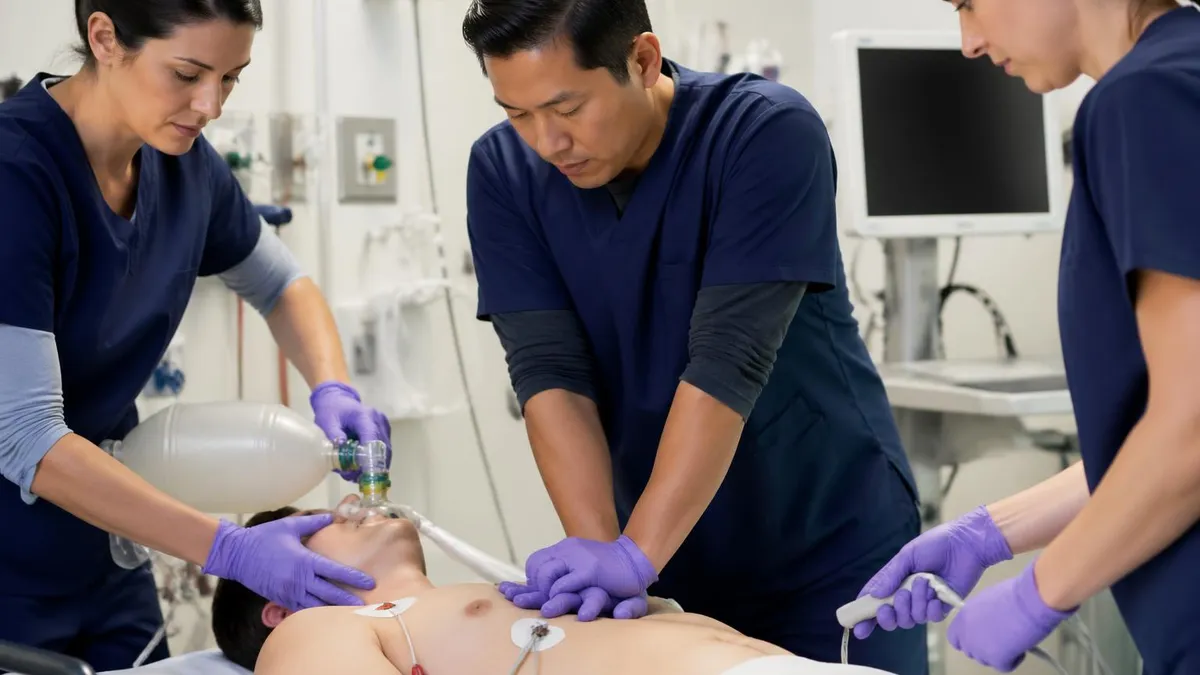

About the Author

Registered Nurse & Healthcare Educator
Johns Hopkins University School of NursingDr. Sarah Mitchell is a board-certified registered nurse with over 15 years of clinical and academic experience. She completed her PhD in Nursing Science at Johns Hopkins University and has taught NCLEX preparation and clinical skills courses for nursing students across the United States. Her research focuses on evidence-based exam preparation strategies for healthcare certification candidates.
Join the Discussion
Connect with other students preparing for this exam. Share tips, ask questions, and get advice from people who have been there.
View discussion (8 replies)