
BLS Certification: Requirements, Renewal, Cost, and How to Get Certified
✍🏼 Pass your BLS Certification: Requirements, exam on the first attempt. Practice questions with detailed answer explanations, hints, and instant scoring.
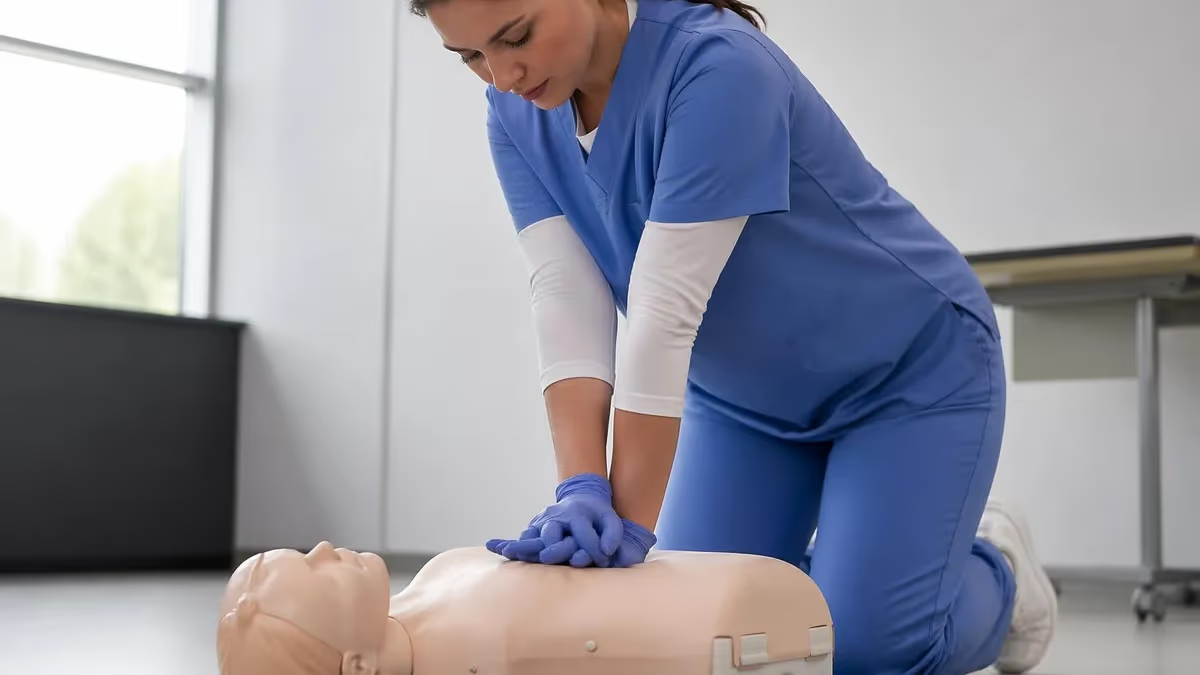
BLS certification is one of the most common — and most important — credentials in healthcare. If you work in a hospital, clinic, dental office, or EMS system, you almost certainly need it. But what is a BLS certification, exactly? It's proof that you can perform high-quality CPR, operate an automated external defibrillator (AED), and provide basic airway management for adults, children, and infants. That's the core of it. No medications, no advanced interventions — just the foundational skills that keep a person alive until advanced help arrives.
BLS stands for Basic Life Support. The certification is issued by organizations like the American Heart Association (AHA) and the American Red Cross after you complete an approved course and pass both a skills check and a written exam. Most healthcare employers require it. Many won't let you start your first shift without a current BLS card in hand. If you're a nursing student, paramedic trainee, medical assistant, or dental hygienist, you'll need this before clinicals begin. It's non-negotiable.
This article covers everything you need to know about getting and keeping your BLS certification: course options, costs, what the exam looks like, how long it lasts, and how the basic life support renewal class works when it's time to recertify. Whether you're getting certified for the first time or renewing an expiring card, you'll find what you need here. No fluff, just the facts that matter for your career and your patients.

Basic life support for healthcare providers goes beyond what you'd learn in a community CPR class. A standard CPR course teaches chest compressions and rescue breathing. BLS adds team-based resuscitation, bag-mask ventilation, multi-rescuer scenarios, and choking relief for all age groups. You learn to work as part of a team — calling out compression counts, switching roles every two minutes, coordinating AED use while someone else maintains the airway. That teamwork element is what separates BLS from basic CPR.
Every basic life support renewal class reinforces these same skills because the guidelines update regularly. The AHA publishes new resuscitation guidelines every five years, with interim updates as new evidence emerges. Your renewal class incorporates whatever changes have occurred since your last certification. Compression depth, ventilation ratios, drug protocols in the chain of survival — these details shift over time, and staying current matters when someone's life depends on your response.
The skills you learn in BLS apply everywhere: hospital codes, roadside emergencies, gym cardiac arrests, choking incidents at restaurants. Healthcare professionals use BLS daily in clinical settings, but the skills transfer directly to any situation where someone stops breathing or loses a pulse. That's why many non-healthcare employers — schools, fitness centers, airlines — also require or strongly encourage BLS certification for their staff.
The american red cross basic life support course and the AHA BLS Provider course are the two most widely recognized options. Both cover the same core content: adult, child, and infant CPR; AED operation; choking management; and team dynamics. The AHA course is more commonly required by hospitals and nursing programs. The Red Cross course is accepted by many employers but not all — check your employer's or school's specific requirements before enrolling. Accepting the wrong provider's card can mean retaking the course on your own dime.
How long does BLS certification last? Two years. Period. Both AHA and Red Cross certifications expire exactly 24 months from your course completion date. There's no grace period. If your certification lapses, most employers treat it the same as not having one — you can't work clinical shifts, and some will place you on unpaid administrative leave until you recertify. That's why setting a calendar reminder for 60 days before expiration is such a small step with such large consequences.
The basic life support for healthcare providers course from the AHA is specifically designed for clinical professionals — nurses, physicians, paramedics, respiratory therapists, and dental staff. The Red Cross offers an equivalent called BLS for Healthcare Providers. Content overlap is nearly complete. The difference is mostly administrative: which card your employer recognizes and which platform manages your certification records.
BLS Course Formats Compared
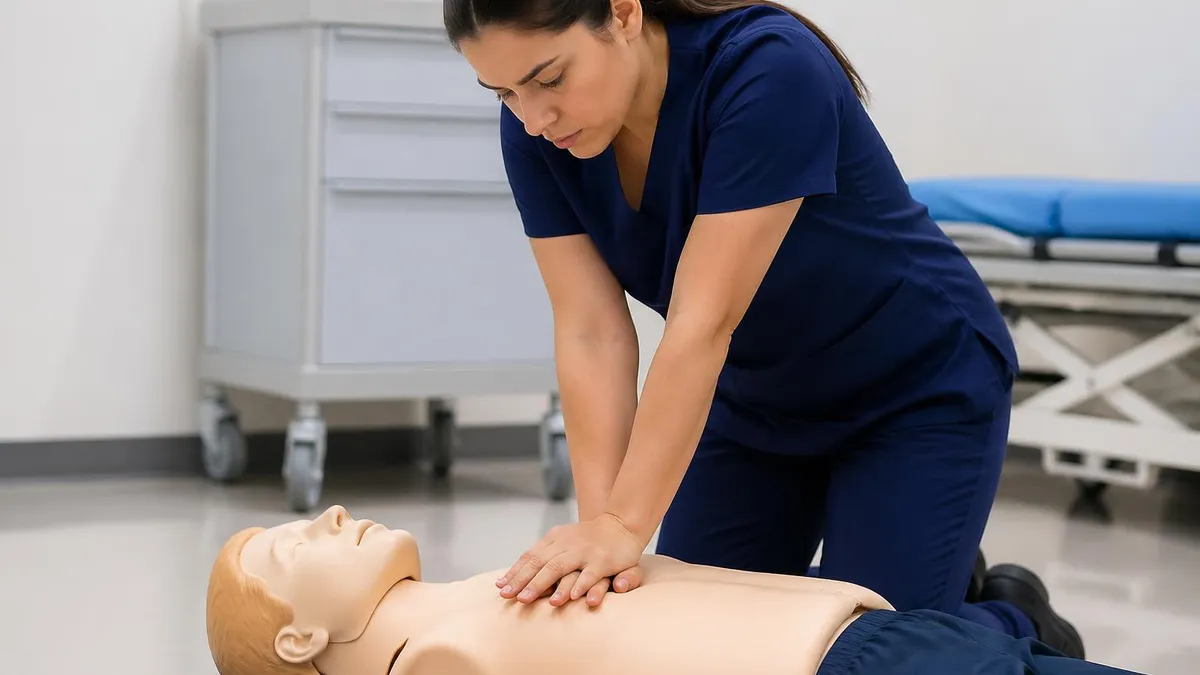
Traditional in-person BLS courses run 4 to 5 hours and include both lecture and hands-on skills practice. An instructor demonstrates each skill, then you practice on manikins until you're proficient. The written exam and skills check happen at the end of the session. This format works well for first-time learners who benefit from real-time instructor feedback.
In-person classes are available through hospitals, community colleges, fire departments, and private training centers. Class sizes typically range from 6 to 20 students. Smaller classes mean more manikin time and more individualized coaching — worth considering if you're nervous about the skills check portion.
The red cross basic life support course follows a similar structure to the AHA version: classroom instruction, manikin practice, skills check, and written exam. Red Cross courses tend to be slightly shorter — some clock in at 3.5 to 4 hours — and the online pre-learning option is available for blended delivery. Is basic life support the same as cpr? Not exactly. BLS includes CPR but adds AED use, bag-mask ventilation, team-based resuscitation, and choking management across all age groups. Standard CPR courses cover compressions and breathing only.
The distinction matters for your career. Healthcare employers require BLS specifically — not just CPR. A community CPR card from a weekend workshop won't satisfy a hospital's credentialing requirements. The extra skills in BLS (AED competence, two-rescuer CPR, pediatric protocols) are what make you useful in a clinical emergency rather than just a bystander who can do compressions.
Basic life support vs cpr comes down to scope and audience. CPR courses target laypersons — parents, teachers, coaches. BLS courses target healthcare professionals who'll use these skills in clinical settings with access to equipment and team members. If you're entering any healthcare field, BLS is the credential you need. CPR alone won't cut it.
How long does basic life support certification last? Two years — no exceptions, no extensions. Both AHA and Red Cross cards print the expiration date right on them. When that date passes, your certification is inactive. Most healthcare employers track this through their credentialing systems and will flag you automatically when your card approaches expiration. Don't wait for them to remind you.
How long does it take to get bls certification the first time? Plan for about 4 to 5 hours for a full in-person course. If you choose the blended HeartCode option, expect 2 to 3 hours of online coursework plus 1 to 2 hours for the in-person skills session. Either way, you'll walk out the same day with your BLS card — there's no waiting period, no application to submit, no processing time. You finish, you pass, you're certified.
Renewal courses are shorter. If you already hold a current BLS certification, the renewal class typically runs 3 to 4 hours for in-person or 1 to 2 hours in-person after completing the online portion. The content focuses on updates to guidelines and skills practice rather than teaching from scratch. It's a refresher, not a repeat.
BLS Certification: Pros and Cons
- +Required by virtually every healthcare employer — it's a universal credential
- +Course takes just one day to complete, so minimal time investment
- +Skills are immediately applicable in both clinical and everyday emergencies
- +Affordable at $50 to $90 per course — many employers cover the cost
- +Multiple format options: in-person, blended, and online pre-learning available
- +Renewal every two years keeps your skills current with latest guidelines
- −Must be renewed every two years regardless of experience or clinical hours
- −Letting it lapse can result in suspension from clinical duties at work
- −Not all employer accept all providers — you may need a specific organization's card
- −Fully online options aren't accepted by most healthcare employers
- −Skills checks can be stressful for people anxious about performing under observation
- −Course availability varies by location — rural areas may have fewer options
Pros and Cons at a Glance
| Pros | Cons |
|---|---|
| Required by virtually every healthcare employer — it's a universal credential | Must be renewed every two years regardless of experience or clinical hours |
| Course takes just one day to complete, so minimal time investment | Letting it lapse can result in suspension from clinical duties at work |
| Skills are immediately applicable in both clinical and everyday emergencies | Not all employer accept all providers — you may need a specific organization's card |
| Multiple format options: in-person, blended, and online pre-learning available | Fully online options aren't accepted by most healthcare employers |
| Renewal every two years keeps your skills current with latest guidelines | Skills checks can be stressful for people anxious about performing under observation |
Finding a basic life support course near me is straightforward in most areas. The AHA and Red Cross both have online course finders — enter your zip code, pick a date, and register. Hospitals, community colleges, fire departments, and private training centers all offer BLS classes. In urban areas, you'll typically find multiple options every week. Rural areas may require some planning, but most regions have at least monthly classes within reasonable driving distance.
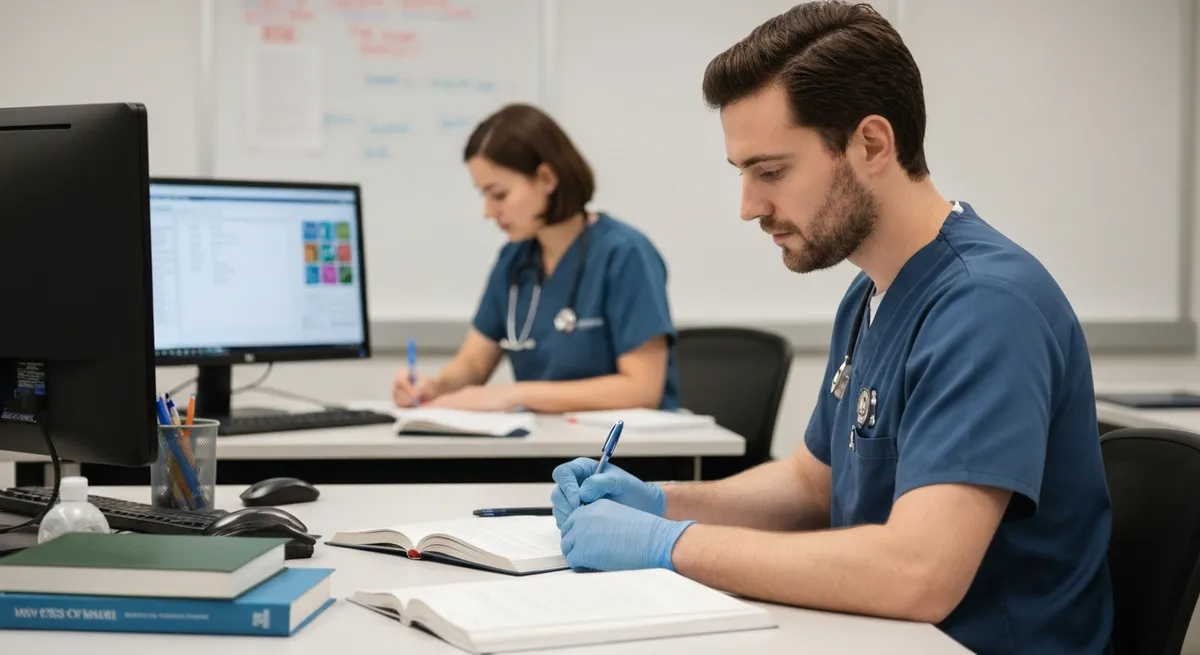
The basic life support provider manual is your study companion for the course. The AHA publishes a BLS Provider Manual that covers every topic on the exam: high-quality CPR, AED algorithms, choking management, team dynamics, and special situations like drowning or opioid overdose. Some courses include the manual in the registration fee; others sell it separately for $15 to $25. Digital versions are available through the AHA's eBook platform. Reading it before class isn't required, but it helps — especially for the written exam.
Study materials beyond the manual include practice tests, which are one of the most effective ways to prepare. The written exam has 25 multiple-choice questions, and you'll need 84% (21 correct) to pass. Most questions test practical application — what to do first, how deep to compress, when to switch rescuers — rather than obscure trivia. If you understand the algorithms and can apply them to scenarios, you'll pass comfortably.
BLS Certification Preparation Checklist
- ✓Confirm which BLS provider (AHA, Red Cross, or other) your employer or school requires
- ✓Register for a course format that fits your schedule — in-person or blended
- ✓Order or download the BLS Provider Manual and read it before class
- ✓Take at least two full BLS practice tests to familiarize yourself with exam format
- ✓Review the AHA adult, child, and infant CPR compression depths and rates
- ✓Practice the AED algorithm: power on, attach pads, analyze, shock if advised, resume CPR
- ✓Know the choking relief steps for conscious and unconscious victims of all ages
- ✓Bring a government-issued ID and your registration confirmation to class
- ✓Set a calendar reminder for 60 days before your certification expiration date
- ✓Ask your employer about tuition reimbursement — many healthcare organizations cover BLS costs
The basic life support exam a answers 25 questions that test your understanding of resuscitation protocols, not your ability to memorize textbook pages. Questions are scenario-based: a patient collapses, you arrive first — what do you do? The exam covers adult CPR sequences, pediatric modifications, AED operation, choking management, and team communication. How long is bls certification good for after you pass? Exactly two years from the date you complete the course. Mark that date.
The passing threshold is 84%, which means you can miss up to 4 questions out of 25. That's a reasonable margin. Most students who attend the full class and pay attention during skills practice pass on their first attempt. The questions aren't designed to trick you — they're designed to confirm you can apply the algorithms correctly in a real emergency. If you've done the practice and understand the why behind each step, the exam is straightforward.
If you don't pass on the first try, most courses allow a same-day retake with a different version of the exam. Some providers require you to wait 24 hours. Either way, failing isn't the end — it's a signal to review the specific content areas where your answers went wrong. The instructor can usually tell you which topics to focus on before your second attempt.
Basic life support online renewal options have expanded significantly since 2020. The AHA's HeartCode BLS renewal lets you complete the cognitive portion online and then attend a brief in-person skills session. The Red Cross offers a similar blended renewal format. These hybrid options are faster than full classroom renewals — you spend your online time reviewing updated guidelines and your in-person time demonstrating skills, typically in under two hours.
Basic life support vs cpr is a question that trips up a lot of people early in their healthcare careers. Here's the simple version: CPR is a subset of BLS. Every BLS course teaches CPR, but BLS also covers AED use, bag-mask ventilation, two-rescuer technique, and pediatric modifications that standard CPR courses don't include. If someone asks whether you're CPR certified and you hold a BLS card, the answer is yes — BLS includes and exceeds CPR. But the reverse isn't true. A CPR-only card doesn't satisfy a BLS requirement.
The renewal process itself is nearly identical to initial certification — shorter class, same skills check, same written exam (updated to current guidelines). There's no advantage to letting your card lapse and taking the full initial course again. Renewal is faster, often cheaper, and keeps your certification record continuous. Employers prefer an unbroken credentialing history.
Not all employers accept BLS cards from every provider. AHA certification is the most universally accepted in hospital and clinical settings. Red Cross BLS is widely recognized but not accepted everywhere. Third-party providers vary significantly in employer acceptance. Always confirm with your HR or credentialing department which provider they require before spending money on a course. Taking the wrong one means paying twice.
What is a bls license? Technically, BLS is a certification rather than a license — an important distinction. A license (like an RN or paramedic license) is issued by a state regulatory board and required by law to practice. BLS certification is issued by a training organization and required by employers and schools as a condition of work or enrollment. You won't find a basic life support certification lookup through a state agency because it isn't state-regulated. Your certification status is tracked by the issuing organization — AHA or Red Cross — through their online verification systems.
Employers verify your BLS status during hiring and at every renewal cycle. Most use the AHA's eCard system or Red Cross Digital Certificates, which provide instant online verification. Keep your card number accessible — you'll enter it on employment applications, credentialing forms, and clinical placement paperwork repeatedly throughout your career. Losing your card isn't a crisis since digital verification exists, but having your number handy saves time.
BLS certification costs vary by provider and format. AHA in-person courses typically run $50 to $80. Red Cross courses are priced similarly. HeartCode blended options may cost slightly more ($60 to $90) because they include the online module. Many healthcare employers reimburse BLS costs or provide on-site training at no charge. Nursing and allied health programs sometimes include BLS in their tuition. Always ask before paying out of pocket — you might not need to.
BLS Practice Test Questions
Prepare for the BLS - Basic Life Support exam with our free practice test modules. Each quiz covers key topics to help you pass on your first try.
BLS High-Quality CPR & Provider Skills
BLS Exam Questions covering BLS High-Quality CPR & Provider Skills. Master BLS Test concepts for certification prep.
BLS Special Situations & Scenarios
Free BLS Practice Test featuring BLS Special Situations & Scenarios. Improve your BLS Exam score with mock test prep.
BLS Adult, Child & Infant Resuscitation
BLS Mock Exam on Adult, Child & Infant Resuscitation. BLS Study Guide questions to pass on your first try.
BLS Airway Management & Ventilation
BLS Test Prep for Airway Management & Ventilation. Practice BLS Quiz questions and boost your score.
BLS Automated External Defibrillator (AED)...
BLS Questions and Answers on Automated External Defibrillator (AED) Use. Free BLS practice for exam readiness.
BLS Certification: Cardiac Arrest
BLS Mock Test covering Certification: Cardiac Arrest. Online BLS Test practice with instant feedback.
BLS Certification: Choking
Free BLS Quiz on Certification: Choking. BLS Exam prep questions with detailed explanations.
BLS Certification: Respiratory Arrest
BLS Practice Questions for Certification: Respiratory Arrest. Build confidence for your BLS certification exam.
BLS Chain of Survival
BLS Test Online for Chain of Survival. Free practice with instant results and feedback.
BLS CPR Techniques & Procedures
BLS Study Material on CPR Techniques & Procedures. Prepare effectively with real exam-style questions.
BLS Legal & Ethical Considerations
Free BLS Test covering Legal & Ethical Considerations. Practice and track your BLS exam readiness.
BLS Post-Resuscitation Care
BLS Exam Questions covering Post-Resuscitation Care. Master BLS Test concepts for certification prep.
The basic life support exam c answers and exam a answers test the same content from different question pools. The AHA maintains multiple exam versions (A, B, C, and sometimes D) to prevent answer-sharing between students in sequential classes. The questions cover identical topics — CPR quality, AED protocols, team dynamics, choking, and special situations — but use different scenarios and answer arrangements. Studying one version prepares you for all of them.
How long does a bls certification last once you've renewed? The same two years. Every renewal resets your clock for another 24-month cycle. There's no cumulative credit for years of experience or number of renewals completed. A nurse with 20 years of BLS certification still takes the same renewal course as someone renewing for the second time. The guidelines update, and the AHA wants every provider demonstrating current skills regardless of seniority.
Investing in solid exam preparation makes the difference between a stressful test day and a confident one. Practice tests that mirror the actual exam format — 25 multiple-choice questions with scenario-based stems — are the single best study tool. They reveal gaps in your knowledge before the real exam does. Combine practice tests with a read-through of the provider manual, and you'll walk into your BLS course already knowing the material. Class becomes reinforcement rather than first exposure, and the exam becomes confirmation rather than a challenge.
Sample BLS - Basic Life Support Practice Questions
Try these questions from our free BLS - Basic Life Support practice tests. The correct answer and an explanation follow each question.
How long should a rescuer take to check for a pulse before beginning CPR?
- A. Up to 5 seconds
- B. No more than 10 seconds
- C. Up to 20 seconds to be certain
- D. 30 seconds using both carotid and radial pulses
Answer: B. No more than 10 seconds
Pulse checks should take no more than 10 seconds; if no pulse is felt within that time, begin CPR.
What is the purpose of the 'C-A-B' sequence in adult CPR according to current AHA guidelines?
- A. It prioritizes airway management before compressions
- B. It prioritizes circulation (compressions) before airway and breathing to deliver oxygenated blood faster
- C. It ensures the AED is applied before any other intervention
- D. It refers to checking Consciousness, Airway, and Breathing before calling 911
Answer: B. It prioritizes circulation (compressions) before airway and breathing to deliver oxygenated blood faster
The C-A-B sequence (Compressions, Airway, Breathing) prioritizes chest compressions to maintain perfusion before ventilations.
Why must no one touch the victim during AED analysis?
- A. It reduces oxygen
- B. It delays CPR
- C. It can cause injury to the rescuer
- D. It can result in incorrect analysis
Answer: D. It can result in incorrect analysis
During AED analysis, the device is detecting the victim's heart rhythm to determine if a shock is needed. Any movement or contact from a rescuer can create electrical interference, which the AED might misinterpret as a heart rhythm or an artifact. This interference can lead to an inaccurate analysis, potentially delaying a life-saving shock or causing the AED to advise against a necessary one.
What action can a healthcare provider take if they believe they are being sued for providing emergency care?
- A. Consult a lawyer before providing care
- B. Ask the patient for forgiveness
- C. Consult with a legal professional about the Good Samaritan Law
- D. Stop treatment immediately
Answer: C. Consult with a legal professional about the Good Samaritan Law
If a healthcare provider believes they are being sued for providing emergency care, consulting a legal professional is the appropriate action. A lawyer can advise on the specifics of the situation and how Good Samaritan laws may apply to protect the provider from liability. This offers legal guidance and support, helping navigate potential legal challenges.
BLS Questions and Answers

About the Author
Registered Nurse & Healthcare Educator
Johns Hopkins University School of NursingDr. Sarah Mitchell is a board-certified registered nurse with over 15 years of clinical and academic experience. She completed her PhD in Nursing Science at Johns Hopkins University and has taught NCLEX preparation and clinical skills courses for nursing students across the United States. Her research focuses on evidence-based exam preparation strategies for healthcare certification candidates.
Join the Discussion
Connect with other students preparing for this exam. Share tips, ask questions, and get advice from people who have been there.
View discussion (8 replies)