
ACLS Study Guide: Complete 2026 October Certification Prep with Algorithms, Drugs & Practice Tests
🎯 Complete ACLS study guide for 2026 October certification. Master algorithms, drug doses, ECG rhythms, and pass your AHA exam with proven prep strategies.
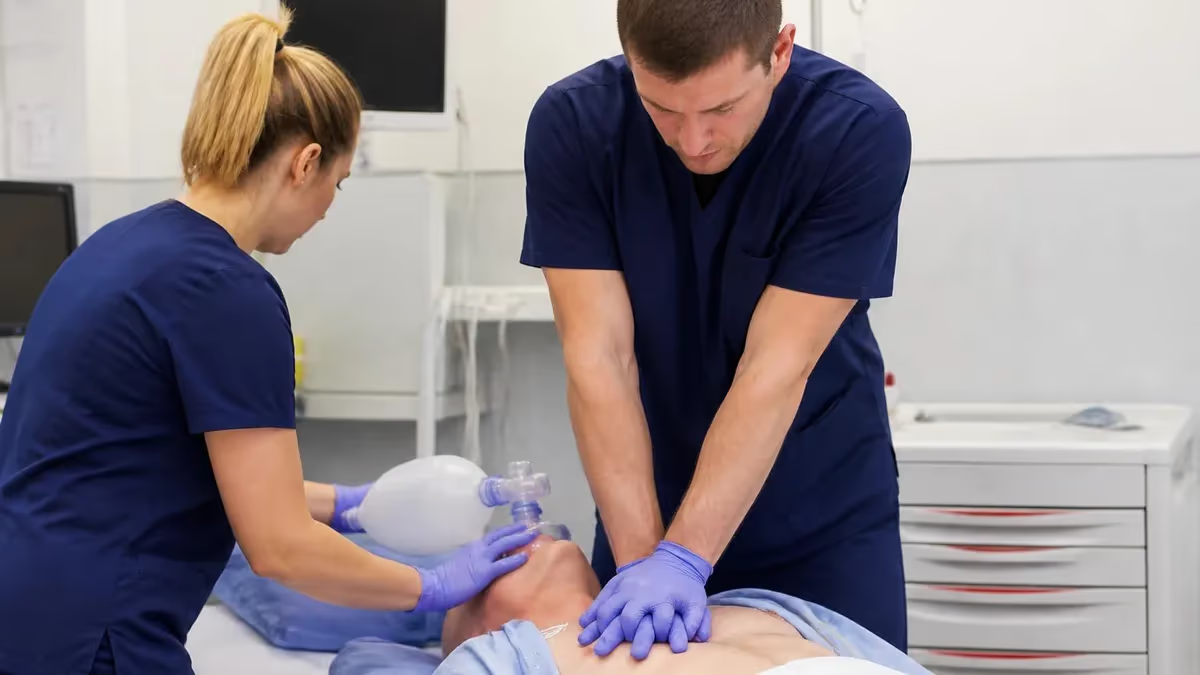
This comprehensive acls study guide is built for healthcare professionals preparing for the American Heart Association's Advanced Cardiovascular Life Support certification or recertification in 2026. Whether you are a nurse, paramedic, respiratory therapist, physician assistant, or physician tackling ACLS for the first time or refreshing after two years, this guide consolidates every algorithm, drug dose, rhythm strip, and exam strategy into one structured resource. We cover the 2020 AHA guidelines that remain in force through 2026, plus the 2024 focused updates on opioid emergencies and post-cardiac arrest care.
Most candidates underestimate ACLS until they sit through the precourse self-assessment and realize they need 84% to pass. The written exam pulls from ten core domains, including high-quality CPR, the ten core cases, pharmacology, and team dynamics. Megacode stations require you to lead a simulated resuscitation while applying the correct algorithm within seconds. This guide breaks each domain into digestible chunks so you can spread preparation across three to four weeks instead of cramming the night before class.
The ACLS provider course is two days of intensive simulation, but the real learning happens during your independent study before you ever walk into the classroom. AHA explicitly states that students who fail to complete the precourse preparation are likely to fail the course. That is why this study guide front-loads the highest-yield material: bradycardia, tachycardia with and without pulse, cardiac arrest, acute coronary syndromes, and acute stroke. Master these five and you have covered roughly 80% of what appears on the exam.
Beyond algorithms, ACLS now emphasizes systems of care, debriefing, and recognition of cardiac arrest in special populations such as pregnant patients, opioid overdose victims, and patients with pulmonary embolism. The 2024 update strengthened recommendations for naloxone in suspected overdose-associated cardiac arrest and reinforced the role of targeted temperature management between 32°C and 36°C for comatose survivors. Expect at least two or three exam questions that touch these emerging areas, and plan your study accordingly.
Drug dosing is the section where most candidates lose points. You need to recall epinephrine 1 mg every 3-5 minutes, amiodarone 300 mg then 150 mg, atropine 1 mg every 3-5 minutes up to 3 mg, and adenosine 6 mg then 12 mg by heart. Stable tachycardia treatment differs sharply from unstable, and confusing them on the megacode costs critical points. We dedicate an entire section to a pharmacology cheat sheet you can print and review during commute time.
Finally, this guide addresses the practical realities of ACLS preparation: choosing between AHA classroom, HeartCode blended learning, and online-only options; budgeting roughly $200 to $350 for the course; and scheduling enough simulation reps that muscle memory takes over when the manikin codes. By the end of this study guide you will have a study schedule, a drug cheat sheet, algorithm flowcharts, and access to free practice questions that mirror the format of the actual AHA written exam.
Use the table of contents below to jump to whichever section matches your weakest area today. Bookmark this page and return throughout your prep window. Then test yourself with our practice quizzes after each section to lock in retention. ACLS is challenging but absolutely passable when you study deliberately and use spaced repetition over three to four weeks rather than a panic-driven 48-hour cram.
ACLS Certification by the Numbers
Key Facts at a Glance
| Item | Value | Details |
|---|---|---|
| Passing Score Required | 84% | On AHA written exam |
| Recommended Study Time | 10-12 hrs | Spread over 3-4 weeks |
| Course Cost | $200-$350 | Varies by region |
| Certification Validity | 2 years | Before renewal required |
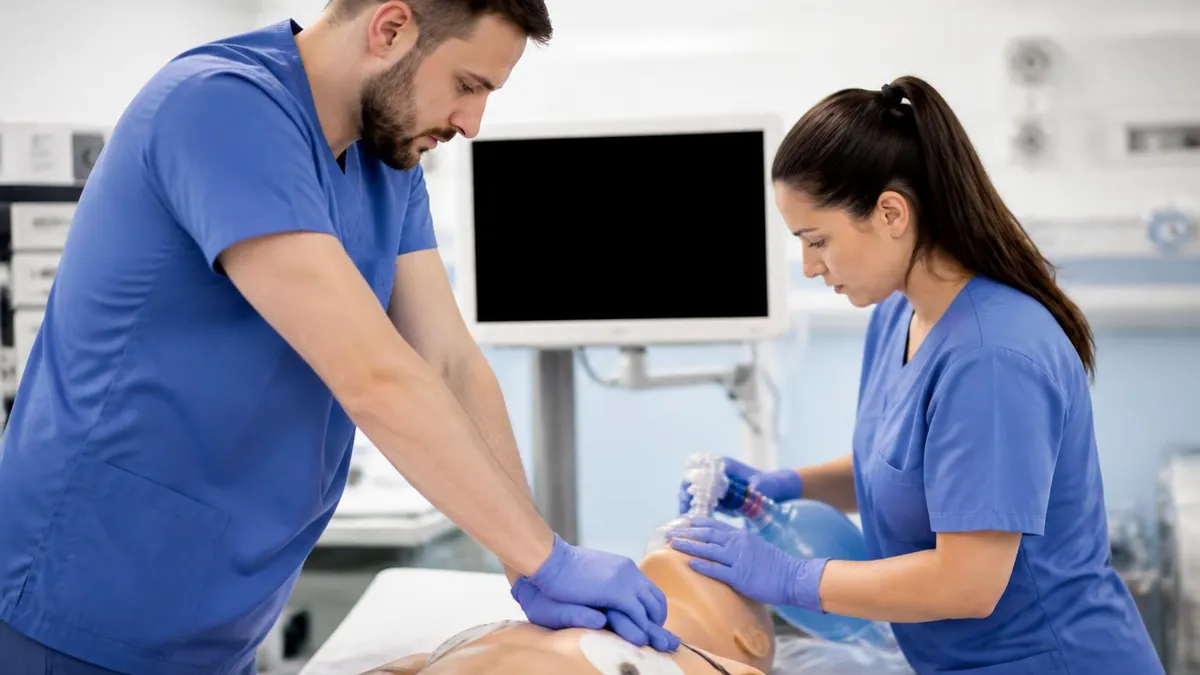
4-Week ACLS Study Schedule
- ▸Review BLS algorithm and compression rate/depth standards
- ▸Master AED operation and shock-first vs CPR-first decisions
- ▸Study airway management: bag-mask, OPA, NPA, advanced airway timing
- ▸Complete AHA precourse self-assessment baseline
- ▸Learn VF/pulseless VT algorithm cold (shock-CPR-epi-amiodarone)
- ▸Memorize PEA/asystole pathway and reversible Hs and Ts
- ▸Practice 12-lead ECG identification: STEMI, VT, VF, SVT, AFib
- ▸Complete 50 rhythm strip practice questions
- ▸Master bradycardia algorithm: atropine, dopamine, epinephrine doses
- ▸Learn stable vs unstable tachycardia decision points
- ▸Memorize all ACLS drug doses with timed flashcards
- ▸Practice synchronized cardioversion energy levels by rhythm
- ▸Study suspected stroke algorithm and door-to-needle goals
- ▸Review ACS algorithm: aspirin, nitro, morphine, fibrinolytics
- ▸Complete two full-length 50-question practice exams
- ▸Practice megacode scenarios with study partner or instructor
The core ACLS algorithms form the spine of this entire study guide, and you must commit them to permanent memory before walking into the classroom. The American Heart Association tests ten core cases, but the high-frequency exam scenarios cluster around adult cardiac arrest, symptomatic bradycardia, stable and unstable tachycardia, acute coronary syndromes, and suspected stroke. Each algorithm shares a common structure: assess, identify rhythm, apply intervention, reassess. Memorizing this pattern reduces cognitive load when stress spikes during the megacode.
Start with the adult cardiac arrest algorithm because it consumes the largest share of exam weight. For shockable rhythms like ventricular fibrillation and pulseless ventricular tachycardia, the sequence is shock at 120-200 joules biphasic, immediately resume CPR for two minutes, then check rhythm. Administer epinephrine 1 mg IV every 3-5 minutes after the second shock, and add amiodarone 300 mg after the third shock, followed by 150 mg if needed. The non-shockable pathway for PEA and asystole skips defibrillation entirely and focuses on CPR plus epinephrine while hunting reversible causes.
The reversible causes you must memorize are the Hs and Ts: hypovolemia, hypoxia, hydrogen ion acidosis, hypo or hyperkalemia, hypothermia, tension pneumothorax, tamponade cardiac, toxins, thrombosis pulmonary, and thrombosis coronary. Examiners frequently embed one of these as the underlying cause of refractory arrest, and your willingness to verbalize the differential during megacode separates an average performance from a strong one. Practice saying the Hs and Ts out loud until they roll off your tongue.
Symptomatic bradycardia hinges on whether the patient is stable or unstable. Signs of instability include hypotension, altered mental status, chest pain, acute heart failure, and signs of shock. If unstable, atropine 1 mg IV bolus is first line, repeated every 3-5 minutes up to a total of 3 mg. If atropine fails, move to transcutaneous pacing or an infusion of dopamine 5-20 mcg/kg/min or epinephrine 2-10 mcg/min. Stable bradycardia simply requires monitoring and identifying the underlying cause.
Tachycardia with a pulse splits into stable and unstable as well, but the rhythm width adds another decision branch. Narrow complex regular tachycardia like SVT responds to vagal maneuvers first, then adenosine 6 mg rapid IV push followed by 12 mg if no conversion. Wide complex tachycardia of unknown type in a stable patient gets amiodarone 150 mg over 10 minutes. Any unstable tachycardia regardless of width receives synchronized cardioversion, with energy levels ranging from 50 joules for stable narrow regular up to 200 joules biphasic for wider or irregular rhythms.
Acute coronary syndromes carry their own algorithm built around MONA-B, though contemporary practice deemphasizes routine morphine. The immediate steps are 12-lead ECG within 10 minutes, aspirin 162-325 mg chewed, oxygen if saturation below 90%, nitroglycerin sublingual every 5 minutes up to three doses if blood pressure permits, and rapid transport to a PCI-capable center. STEMI patients need door-to-balloon time under 90 minutes or door-to-needle fibrinolytics under 30 minutes. These time targets appear repeatedly on the written exam.
The suspected stroke algorithm prioritizes rapid recognition, glucose check, and CT scan within 25 minutes of arrival. Door-to-needle time for alteplase or tenecteplase is 60 minutes, and the eligibility window extends to 4.5 hours from symptom onset for tPA and up to 24 hours for mechanical thrombectomy in select patients. The Cincinnati Prehospital Stroke Scale screens for facial droop, arm drift, and abnormal speech. Hypoglycemia mimics stroke, so always check a fingerstick early in the assessment.
ACLS Practice Test Questions
Prepare for the ACLS Advanced Cardiovascular Life Support Practice exam with our free practice test modules. Each quiz covers key topics to help you pass on your first try.
ACLS Cardiac Rhythms & ECG Interpretation
ACLS Exam Questions covering ACLS Cardiac Rhythms & ECG Interpretation. Master ACLS Test concepts for certification prep.
ACLS Pharmacology & Medications
Free ACLS Practice Test featuring ACLS Pharmacology & Medications. Improve your ACLS Exam score with mock test prep.
ACLS Best Practices & Methodologies
ACLS Mock Exam on Best Practices & Methodologies. ACLS Study Guide questions to pass on your first try.
ACLS Communication & Stakeholder Relations
ACLS Test Prep for Communication & Stakeholder Relations. Practice ACLS Quiz questions and boost your score.
ACLS Core Concepts & Fundamentals
ACLS Questions and Answers on Core Concepts & Fundamentals. Free ACLS practice for exam readiness.
ACLS Data Analysis & Reporting
ACLS Mock Test covering Data Analysis & Reporting. Online ACLS Test practice with instant feedback.
ACLS Documentation & Record Keeping
Free ACLS Quiz on Documentation & Record Keeping. ACLS Exam prep questions with detailed explanations.
ACLS Industry Regulations & Compliance
ACLS Practice Questions for Industry Regulations & Compliance. Build confidence for your ACLS certification exam.
ACLS Leadership & Team Management
ACLS Test Online for Leadership & Team Management. Free practice with instant results and feedback.
ACLS Professional Standards & Ethics
ACLS Study Material on Professional Standards & Ethics. Prepare effectively with real exam-style questions.
ACLS Quality Assurance & Improvement
Free ACLS Test covering Quality Assurance & Improvement. Practice and track your ACLS exam readiness.
ACLS Risk Management & Assessment
ACLS Exam Questions covering Risk Management & Assessment. Master ACLS Test concepts for certification prep.
ACLS Pharmacology Deep Dive
Epinephrine 1 mg IV/IO every 3-5 minutes is the cornerstone vasopressor for all cardiac arrest rhythms. For shockable rhythms it is administered after the second defibrillation, while for non-shockable PEA or asystole it is given as soon as IV access is obtained. The 1:10,000 concentration delivers a 10 mL bolus, and each dose should be followed by a 20 mL saline flush and arm elevation to speed central circulation.
Amiodarone is the preferred antiarrhythmic for refractory VF and pulseless VT, dosed at 300 mg IV bolus followed by 150 mg if the rhythm persists after additional shocks. Lidocaine 1-1.5 mg/kg followed by 0.5-0.75 mg/kg every 5-10 minutes up to 3 mg/kg is an acceptable alternative. Magnesium sulfate 1-2 g IV is reserved for torsades de pointes or known hypomagnesemia and should not be given routinely.

Self-Study vs Instructor-Led ACLS Prep
- +Self-study lets you set your own pace and revisit weak areas as often as needed
- +Free online practice tests offer unlimited rhythm strip exposure without extra cost
- +Digital flashcard apps provide spaced repetition for drug doses on the go
- +You can complete precourse work during commutes, breaks, or evenings
- +Cost savings of $100-200 compared to private tutoring or extended courses
- +Builds independent clinical reasoning skills that transfer to real resuscitations
- −No immediate feedback on megacode performance without an instructor present
- −Easy to skip difficult sections or rationalize gaps in algorithm knowledge
- −Lacks the simulation manikin reps that solidify muscle memory
- −Hard to gauge whether your verbal team-leader communication meets AHA standards
- −Missing the peer pressure that drives accountability during group study
- −Some learners need real-time correction on chest compression depth and rate
Pre-Exam ACLS Study Guide Checklist
- ✓Complete the AHA precourse self-assessment with a score of 70% or higher
- ✓Memorize all five core algorithms cold without reference materials
- ✓Recite epinephrine, amiodarone, atropine, and adenosine doses on demand
- ✓Identify VF, pulseless VT, asystole, PEA, SVT, and bradycardia from a strip in under 10 seconds
- ✓Know the Hs and Ts reversible causes and how to address each one
- ✓Practice synchronized cardioversion energy levels for narrow vs wide rhythms
- ✓Review the suspected stroke algorithm including door-to-needle goals
- ✓Complete at least 150 practice questions from a reputable question bank
- ✓Run through three full megacode simulations with a study partner or instructor
- ✓Bring photo ID, AHA student manual, and a watch with a second hand on exam day
Spaced repetition beats cramming every single time
Research on medical learners consistently shows that 30 minutes of daily review over three weeks produces dramatically better retention than a 10-hour weekend cram. Use a flashcard app like Anki for drug doses and algorithm sequences. Aim for 50 reviews per day starting three weeks before your course date, and your recall on exam morning will feel automatic.
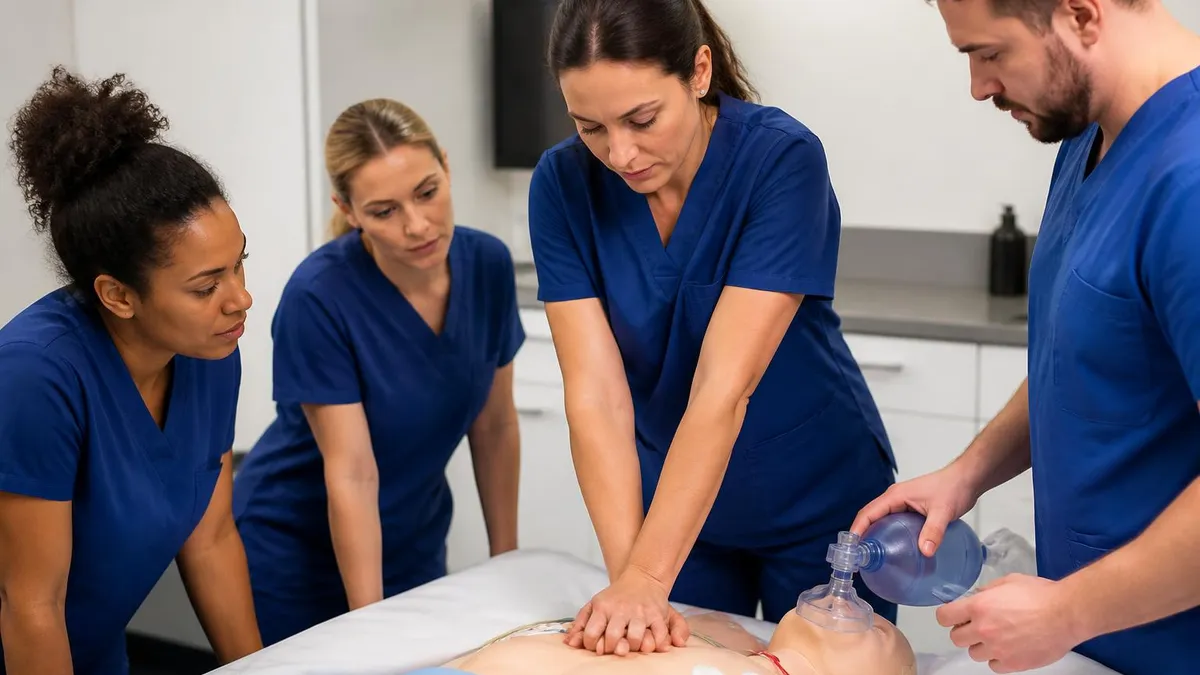
The megacode is where many candidates feel the most pressure, but with a clear mental framework you can convert it into the easiest portion of the entire ACLS course. The megacode is a scenario-based simulation in which you serve as team leader while managing a deteriorating patient through one or more rhythm changes. Examiners are looking for three things above all else: correct algorithm application, clear closed-loop communication, and effective team management. Master these three and the technical details often forgive themselves.
Begin every megacode with a verbalized primary assessment using the airway, breathing, circulation, disability, exposure sequence. Even if the manikin has obvious VF on the monitor, state aloud that you are checking responsiveness, calling for help, and assigning roles. Designate a compressor, an airway manager, a monitor and defibrillation person, an IV access person, and a recorder. Assigning roles signals to the examiner that you understand team dynamics, which is one of the explicit testing domains in the AHA evaluation rubric.
When the rhythm appears, name it out loud. If you see VF, say the words ventricular fibrillation and call for an immediate shock at 200 joules biphasic. After delivering the shock, resume CPR immediately for two minutes without checking the pulse, because pulse checks waste perfusion time. Use those two minutes productively by establishing IV access, preparing epinephrine, and identifying reversible causes with the Hs and Ts. Verbalize each step so the examiner can score your decision-making.
Closed-loop communication means every order you give is acknowledged and confirmed when complete. Say push 1 milligram of epinephrine IV now, and require the team member to respond pushing 1 milligram epinephrine IV, then again when done epinephrine 1 milligram has been administered. This three-step loop prevents medication errors and demonstrates to the examiner that you understand high-functioning team dynamics. Missing closed-loop communication is one of the most common reasons candidates lose megacode points.
Transitions between rhythms are scripted moments where examiners watch closely. If your patient converts from VF to a perfusing rhythm, immediately check pulse and blood pressure, then move into post-cardiac arrest care: targeted temperature management, 12-lead ECG, and consideration of cardiac catheterization. If your patient transitions from VT to PEA, stop preparing for shock and start hunting reversible causes while continuing CPR and epinephrine every 3-5 minutes. Examiners deliberately introduce these transitions to test algorithm fluency.
Common megacode pitfalls include shocking asystole, delaying epinephrine in PEA, giving atropine for unstable bradycardia without preparing pacing, and using unsynchronized shock on stable SVT. Another frequent mistake is forgetting to check the patient's pulse after rhythm conversion. Slow down at transitions, breathe, and verbalize your thinking. The examiner is not trying to trick you; they want to see safe, methodical leadership under pressure.
End every megacode with a brief debrief, even if not formally required. Thank your team, summarize what worked, and identify one improvement. This habit earns goodwill from examiners and reflects real-world post-resuscitation practice. The AHA increasingly emphasizes debriefing as a quality improvement tool, and showing this awareness during your simulation can tip a borderline performance toward a clear pass.
The AHA precourse self-assessment is required, not optional. Students who score below 70% on this assessment have significantly higher failure rates on both the written exam and the megacode. Complete it at least one week before your course date so you have time to remediate weak topics. Print your certificate of completion and bring it to class.
Beyond memorizing algorithms and doses, the candidates who pass ACLS most comfortably treat the exam like a clinical skill rather than an academic test. That means deliberate practice with feedback, environmental rehearsal, and emotional regulation in addition to content review. The following techniques are drawn from cognitive science research on high-stakes performance, and they translate directly to both the written exam and the megacode station.
First, build a personal cheat sheet over the course of your study, but never bring it to the exam. The act of curating and rewriting key facts in your own language creates stronger neural pathways than passive reading. Limit your cheat sheet to one page front and back. Include the five core algorithms in flowchart form, the seven highest-yield drug doses, the synchronized cardioversion energy table, and a short list of the Hs and Ts. Rewrite this sheet from memory weekly.
Second, simulate the test environment when you study. If your course uses a manikin, find a friend with CPR training and run mock megacodes in real time. If you cannot access a manikin, watch ACLS megacode videos on YouTube, pause at decision points, and verbalize what you would do next. This active retrieval practice is dramatically more effective than rereading the manual, and it acclimates you to the pressure of speaking commands aloud.
Third, prioritize sleep the night before your course. Resuscitation medicine demands working memory and rapid pattern recognition, both of which collapse under sleep deprivation. Aim for seven to eight hours and avoid caffeine after 2 pm the day before. Eat a balanced breakfast with protein and complex carbohydrates on exam morning, and arrive 30 minutes early to reduce situational stress. Small physiological optimizations have outsized effects on cognitive performance.
Fourth, use practice questions strategically rather than randomly. After completing a question set, spend twice as much time reviewing the explanations as you spent answering the questions. Make a list of every question you missed and categorize the error type: knowledge gap, misread question, algorithm confusion, or careless mistake. Focus your remaining study time on whichever category appears most often. Targeted remediation is the highest-use activity in the final week of prep.
Fifth, manage exam-day anxiety with breathing techniques. The 4-7-8 box breathing pattern—inhale four seconds, hold seven, exhale eight—activates the parasympathetic nervous system and lowers heart rate within 90 seconds. Use this between megacode stations or before opening the written exam. Anxiety degrades the working memory needed to recall drug doses, so investing two minutes in regulation pays disproportionate dividends on test performance.
Finally, recognize that ACLS certification is the floor, not the ceiling, of resuscitation competence. The real goal of this acls study guide is to prepare you for actual patient codes, not just the test. Every algorithm you memorize, every drug dose you internalize, and every rhythm you identify under pressure builds the clinical muscle that saves lives at 3 am when a patient deteriorates on your floor. Take the prep seriously now, and the next code you run will feel meaningfully more controlled.
If you find yourself struggling with any specific algorithm or topic during your prep, return to this guide, drill that section, and test yourself with the linked practice quizzes. Most candidates report that their confidence shifts dramatically once they have done 200-300 questions and three megacode rehearsals. The investment is roughly 10 to 12 focused hours over three to four weeks, and the payoff is a certification that opens doors clinically, professionally, and financially.
The final week before your ACLS course is when most candidates either consolidate their prep or panic-cram and underperform. The smart approach is to taper your effort, prioritize sleep, and focus on retrieval rather than new content. By this point you should have completed the AHA precourse self-assessment, finished at least 150 practice questions, and run through three megacode simulations. The last seven days are for polishing, not learning new material.
Day seven before the course is for a comprehensive review of all five core algorithms in flowchart form. Draw each algorithm from memory on a blank sheet of paper. Compare your version to the AHA pocket card, circle any errors in red, and rewrite those specific portions three times. This active recall combined with error analysis is among the most effective study techniques in cognitive science, and it surfaces the gaps that passive reading misses.
Day five and four are reserved for drug pharmacology drilling. Use flashcards or an app like Anki to review every drug dose, indication, contraindication, and side effect. Pay special attention to the drugs that share similar doses but different timing: epinephrine 1 mg every 3-5 minutes for arrest versus 2-10 mcg/min infusion for bradycardia, or amiodarone 300 mg bolus for arrest versus 150 mg over 10 minutes for stable wide-complex tachycardia. These nuances appear repeatedly on the written exam.
Day three is megacode rehearsal day. Find a study partner, ideally a fellow ACLS candidate or a current provider, and run three to five complete megacodes verbally. Take turns being team leader and team member. Have your partner deliberately introduce rhythm changes, equipment failures, and reversible causes to force you to adapt mid-scenario. Record yourself if possible and review the playback for clarity of communication and adherence to algorithm sequence.
Day two is for a comprehensive practice exam under timed conditions. Allow yourself 90 minutes for a 50-question test, score it honestly, and review every missed question with the corresponding section of the AHA manual. If your score is below 84%, focus the final day on whichever domain produced the most errors. If your score is above 90%, shift to lighter review and prioritize rest.
Day one before the course should be light. Skim your one-page cheat sheet in the morning, review the five algorithms once, and then stop studying by noon. Use the afternoon to gather your materials: AHA manual, photo ID, comfortable clothing for the manikin work, a watch with a second hand, snacks, and water. Lay everything out the night before so morning logistics do not steal your mental energy.
On exam morning, eat a real breakfast with protein, arrive 30 minutes early, and use box breathing to settle your nervous system before the written exam begins. Read each question carefully, eliminate obviously wrong answers first, and trust your prep. If you have followed this study guide diligently, you have already done the hard work. The exam is simply the moment where you demonstrate what you already know. Walk in confident, lead the megacode with calm authority, and you will walk out a certified ACLS provider.
ACLS Questions and Answers
ACLS Training Near Me: How to Find Local Classes, Costs & Fast-Track Options in 2026
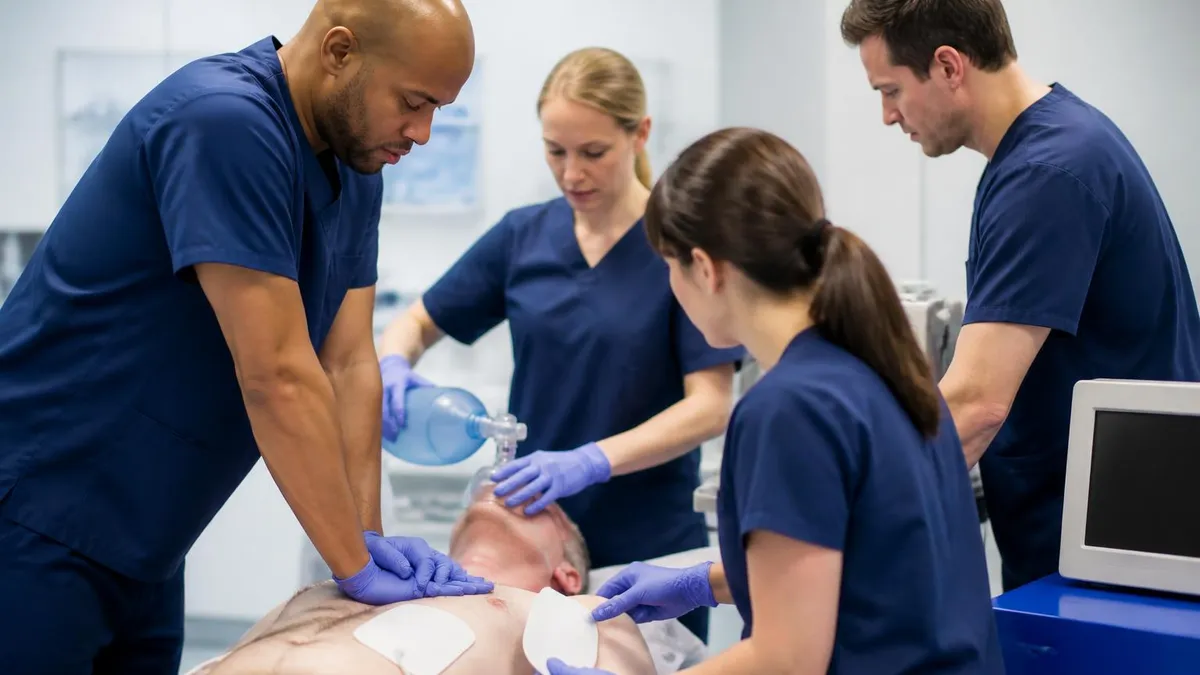
ACLS Course: Length, Cost, Format & Pass Tips (2026)
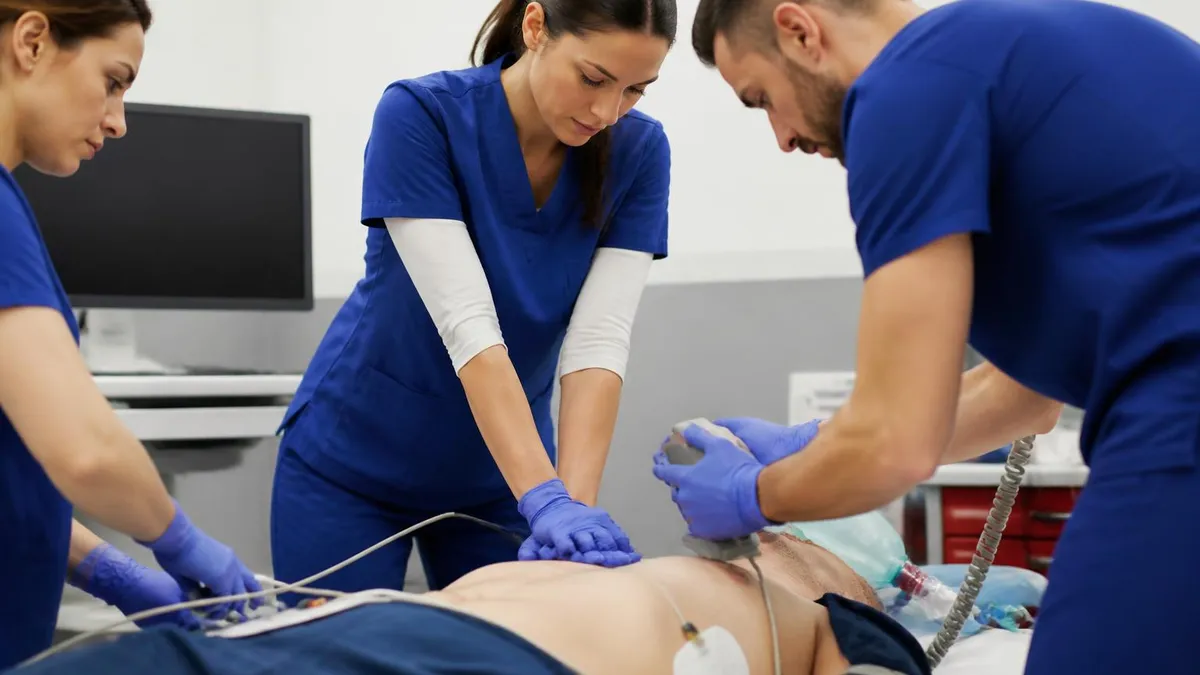
ACLS Practice Test: Free Questions, Answers & 2026 Exam Prep Guide
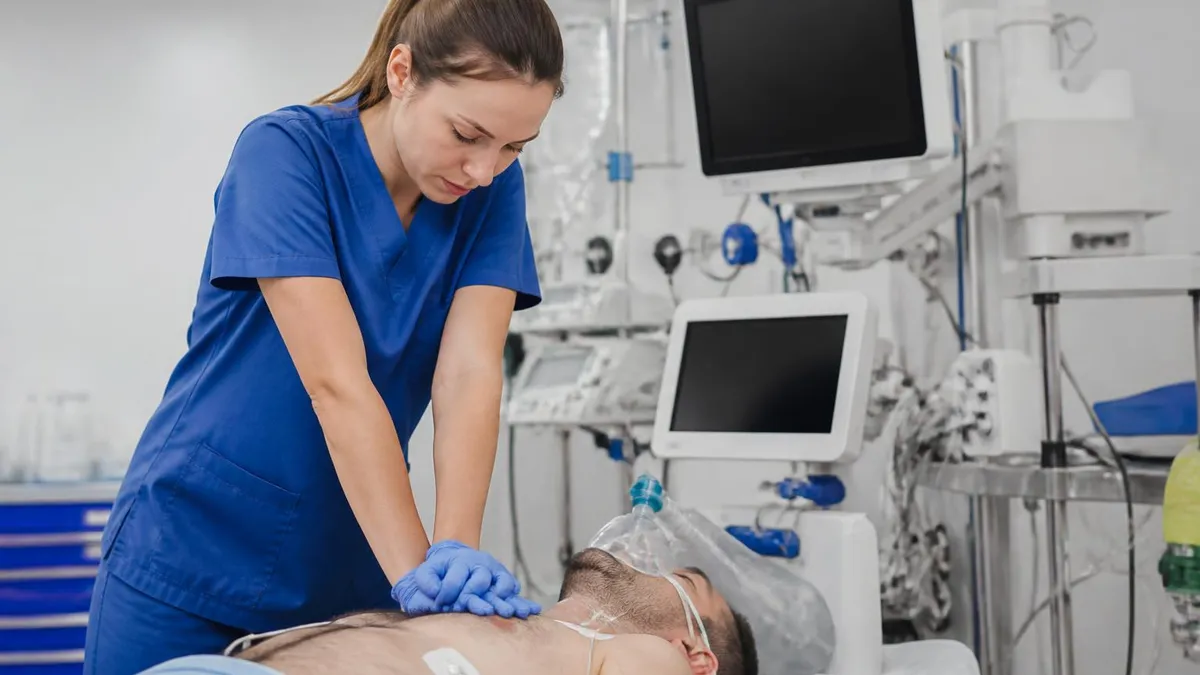
AHA ACLS: American Heart Association Advanced Cardiovascular Life Support Guide
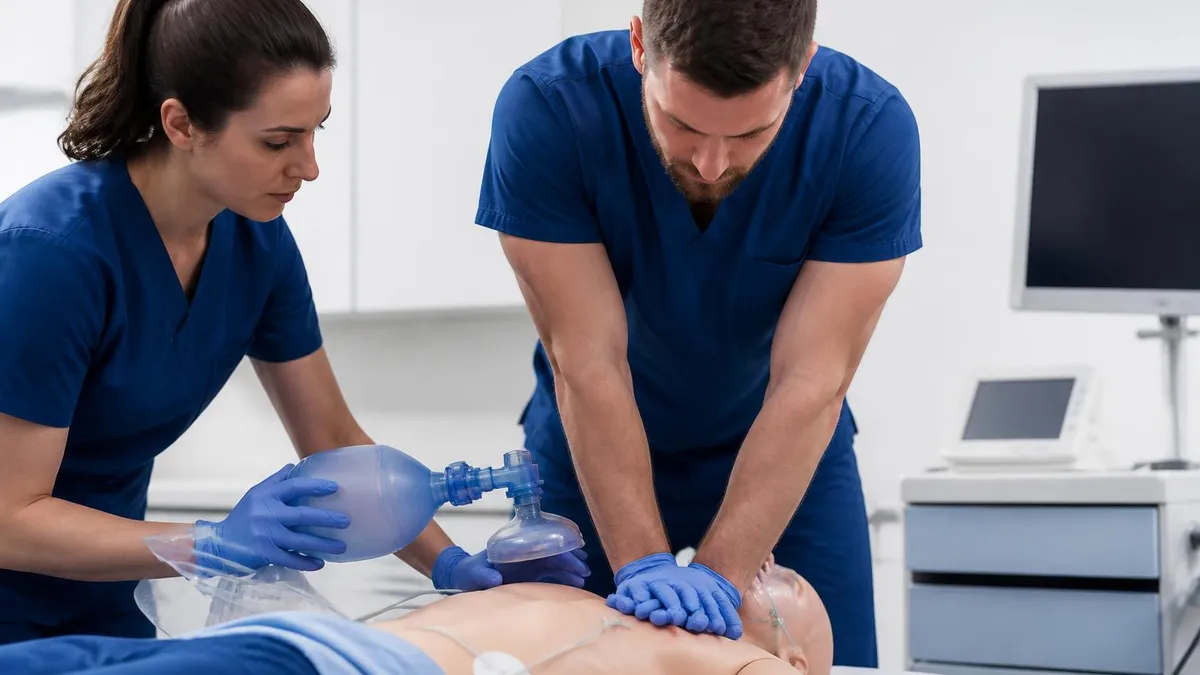
ACLS Drug Doses: Complete Pharmacology Guide for 2026 Certification
About the Author

Registered Nurse & Healthcare Educator
Johns Hopkins University School of NursingDr. Sarah Mitchell is a board-certified registered nurse with over 15 years of clinical and academic experience. She completed her PhD in Nursing Science at Johns Hopkins University and has taught NCLEX preparation and clinical skills courses for nursing students across the United States. Her research focuses on evidence-based exam preparation strategies for healthcare certification candidates.