
Unlocking the Value of a Civics Class: A Comprehensive Guide 2026 October
Boost your citizenship test exam score with practice questions and detailed answer explanations. Track your progress with instant feedback. 🟢
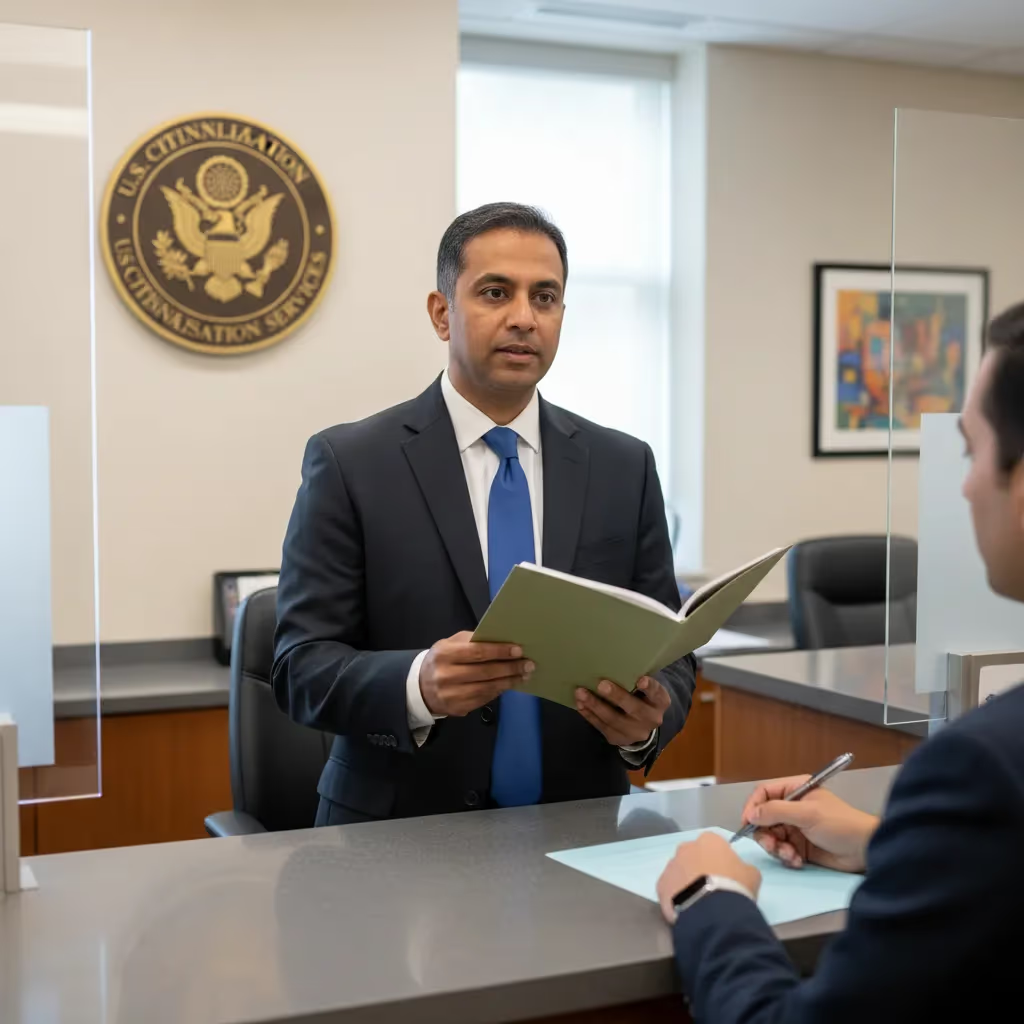
In an era where understanding the mechanics of government and the rights of citizens is more crucial than ever, the humble civics class stands as a pillar of education. It is within these classroom walls that students transform into informed participants of democracy. A civics class is not merely about memorizing dates or legal jargon; it is a dynamic exploration of how society functions, how laws are crafted, and how individuals can influence the world around them. From the local town council to the federal government, the scope of civics covers the entire spectrum of public life.
As we explore into this comprehensive guide, we will uncover the various layers that make up a strong civics education. We will look at the tools and definitions that form the bedrock of the curriculum. Whether you are a student preparing for an exam or a lifelong learner seeking to refresh your knowledge, understanding these concepts is vital. We will also address common questions and clarify the terminology that often confuses beginners. By the end of this article, you will have a clearer perspective on why this subject is indispensable in shaping responsible and active citizens.
Civics Practice Test Questions
Prepare for the Civics Test exam with our free practice test modules. Each quiz covers key topics to help you pass on your first try.
Civics 19th Century American History
Civics Exam Questions covering 19th Century American History. Master Civics Test concepts for certification prep.
Civics American Geography and Symbols
Free Civics Practice Test featuring American Geography and Symbols. Improve your Civics Exam score with mock test prep.
Civics Branches of U.S. Government
Civics Mock Exam on Branches of U.S. Government. Civics Study Guide questions to pass on your first try.
Civics Colonial Period and Independence
Civics Test Prep for Colonial Period and Independence. Practice Civics Quiz questions and boost your score.
Civics Federal and State Powers
Civics Questions and Answers on Federal and State Powers. Free Civics practice for exam readiness.
Civics Principles of American Democracy
Civics Mock Test covering Principles of American Democracy. Online Civics Test practice with instant feedback.
Civics Recent American History
Free Civics Quiz on Recent American History. Civics Exam prep questions with detailed explanations.
Civics Rights and Responsibilities
Civics Practice Questions for Rights and Responsibilities. Build confidence for your Civics certification exam.
Civics Test Civics Economic System and Nat...
Civics Test Online for Test Civics Economic System and National Economy. Free practice with instant results and feedback.
Civics Test Civics Political Parties and E...
Civics Study Material on Test Civics Political Parties and Elections. Prepare effectively with real exam-style questions.
Civics Rights and Responsibilities of Citi...
Free Civics Test covering Rights and Responsibilities of Citizens. Practice and track your Civics exam readiness.
Civics U.S. Geography and Symbols
Civics Exam Questions covering U.S. Geography and Symbols. Master Civics Test concepts for certification prep.
Civics Test: Pros and Cons
- +citizen practice questions — structured Civics Test training builds a solid foundation of skills
- +Multiple training formats available: online, in-person, and hybrid
- +Hands-on practice prepares you for real-world job scenarios
- +Training programs often include job placement assistance
- +Continuing education keeps your skills current with industry changes
- −Training programs can be time-intensive (weeks to months)
- −Quality varies significantly between training providers
- −Costs for comprehensive programs can be substantial
- −Hands-on components may require travel or in-person attendance
- −Self-paced learning requires strong discipline and motivation
Pros and Cons at a Glance
| Pros | Cons |
|---|---|
| citizen practice questions — structured Civics Test training builds a solid foundation of skills | Training programs can be time-intensive (weeks to months) |
| Multiple training formats available: online, in-person, and hybrid | Quality varies significantly between training providers |
| Hands-on practice prepares you for real-world job scenarios | Costs for comprehensive programs can be substantial |
| Training programs often include job placement assistance | Hands-on components may require travel or in-person attendance |
| Continuing education keeps your skills current with industry changes | Self-paced learning requires strong discipline and motivation |
Sample Civics Test Practice Questions
Try these questions from our free Civics Test practice tests. The correct answer and an explanation follow each question.
Which of the following was a major legislative achievement of the Civil Rights Movement in the 1960s?
- A. The Social Security Act
- B. The Affordable Care Act
- C. The Civil Rights Act of 1964
- D. The Homestead Act
Answer: C. The Civil Rights Act of 1964
The Civil Rights Act of 1964 was a landmark piece of legislation that outlawed discrimination based on race, color, religion, sex, or national origin. It was a crucial victory for the Civil Rights Movement.
What is the supreme law of the land?
- A. The Declaration of Independence
- B. The Bill of Rights
- C. The Constitution
- D. The Federalist Papers
Answer: C. The Constitution
The Constitution is the supreme law of the land and all other laws must be consistent with it.
Which of the following was a primary cause of the U.S. Civil War, fought from 1861 to 1865?
- A. Disputes over international trade tariffs
- B. Conflicts over the expansion of slavery into western territories
- C. Arguments about the location of the nation's capital
- D. Debates over the establishment of a national bank
Answer: B. Conflicts over the expansion of slavery into western territories
The U.S. Civil War was primarily caused by long-standing disagreements between the Northern and Southern states over the institution of slavery. A key point of contention was whether slavery would be permitted to expand into the new territories being added to the country.
What does the "rule of law" mean?
- A. Everyone must follow the law.
- B. Government officials do not have to follow the law.
- C. Laws apply only to U.S. citizens
- D. The President can override any law.
Answer: A. Everyone must follow the law.
The "rule of law" is a fundamental principle of democratic governance, meaning that all individuals, institutions, and entities, including the government itself, are accountable to laws that are publicly promulgated, equally enforced, and independently adjudicated. It ensures fairness and prevents arbitrary power.
Civics Practice Test Questions and Answers

Conclusion
In conclusion, the study of civics is indispensable for the health of any democracy. From understanding the basic definitions to mastering the complexities of the civics test, every aspect of this education serves to enable the individual. Resources like iCivics and dedicated civics classes provide the necessary frameworks for learning. As we have explored, the meaning of civics goes far beyond the textbook; it is about living as an engaged and responsible member of society. By prioritizing this subject, we ensure that future generations are equipped to uphold the values of freedom and justice. Let us continue to value and support civic education in all its forms.
The Civics Test exam uses a multiple-choice format with questions covering all major domains. Most versions allow 2-3 hours for completion.
Questions test both knowledge recall and application skills. A score of 70-75% is typically required to pass.

About the Author

Certified Professional Development Expert & Niche Certification Advisor
University of Pennsylvania Graduate School of EducationDr. Alexandra Kim holds a PhD in Professional Studies from the University of Pennsylvania and is a Certified Professional in Learning and Performance (CPLP) and Certified Professional in Talent Development (CPTD). With 17 years of corporate training and professional certification advisory experience, she helps professionals navigate specialized, emerging, and cross-industry certification programs.