

Sheriff Practice Test
Updated for October 2026Key Takeaways
- Understand the format and structure of the Sheriff (Deputy Sheriff) Exam
- Develop a strategic study plan to effectively prepare for the exam
- Identify the key focus areas and subject matter that are critical for success
- Learn effective time management techniques to navigate the exam efficiently
- Gain practical advice and tips to ensure a confident and successful exam day experience
Sheriff Practice Test Questions
Prepare for the Sheriff - Deputy Sheriff Exam exam with our free practice test modules. Each quiz covers key topics to help you pass on your first try.
Sheriff Applicable Laws and Regulations
Sheriff Exam Questions covering Applicable Laws and Regulations. Master Sheriff Test concepts for certification prep.
Sheriff Basic Mathematics Application
Free Sheriff Practice Test featuring Basic Mathematics Application. Improve your Sheriff Exam score with mock test prep.
Sheriff Community Policing Principles
Sheriff Mock Exam on Community Policing Principles. Sheriff Study Guide questions to pass on your first try.
Sheriff Correctional Officer Practices
Sheriff Test Prep for Correctional Officer Practices. Practice Sheriff Quiz questions and boost your score.
Sheriff Criminal Investigation Procedures
Sheriff Questions and Answers on Criminal Investigation Procedures. Free Sheriff practice for exam readiness.
Sheriff Deductive and Inductive Reasoning
Sheriff Mock Test covering Deductive and Inductive Reasoning. Online Sheriff Test practice with instant feedback.
Sheriff Evidence Collection and Preservation
Free Sheriff Quiz on Evidence Collection and Preservation. Sheriff Exam prep questions with detailed explanations.
Sheriff First Aid and Emergency Response
Sheriff Practice Questions for First Aid and Emergency Response. Build confidence for your Sheriff certification exam.
Sheriff Observation and Memory Recall
Sheriff Test Online for Observation and Memory Recall. Free practice with instant results and feedback.
Sheriff Officer Duties and Responsibilities
Sheriff Study Material on Officer Duties and Responsibilities. Prepare effectively with real exam-style questions.
Sheriff Patrol Procedures and Techniques
Free Sheriff Test covering Patrol Procedures and Techniques. Practice and track your Sheriff exam readiness.
Sheriff Professional Ethics and Situationa...
Sheriff Exam Questions covering Professional Ethics and Situational Judgment. Master Sheriff Test concepts for certification prep.
Sheriff Reading Comprehension Skills
Free Sheriff Practice Test featuring Reading Comprehension Skills. Improve your Sheriff Exam score with mock test prep.
Sheriff Report Writing and Grammar
Sheriff Mock Exam on Report Writing and Grammar. Sheriff Study Guide questions to pass on your first try.
Sheriff Report Writing and Written Communi...
Sheriff Test Prep for Report Writing and Written Communication. Practice Sheriff Quiz questions and boost your score.
Sheriff Situational Judgment Scenarios
Sheriff Questions and Answers on Situational Judgment Scenarios. Free Sheriff practice for exam readiness.
Sheriff Traffic Control and Accident Inves...
Sheriff Mock Test covering Traffic Control and Accident Investigation. Online Sheriff Test practice with instant feedback.
Understanding the Exam Format
Preparing for the Sheriff (Deputy Sheriff Exam)
Passing the Sheriff (Deputy Sheriff) Exam is key to a career in county law enforcement. To do well, you need to know the exam format and make a good study plan. We’ll help you with the main parts of getting ready for the exam. Try our FBI special agent practice test.
The Sheriff (Deputy Sheriff) Exam has multiple-choice questions. These questions check your knowledge and skills in areas like:
Candidates preparing for a career with the Los Angeles County Sheriff's Department should work through our LASD practice test to build familiarity with the written exam's reading comprehension, writing clarity, and reasoning sections.
There might also be a written part, like a report writing exercise. This part tests your communication skills. Knowing what the exam covers helps you plan your study better.
Developing a Study Plan
Having a good study plan is vital for doing well on the Sheriff (Deputy Sheriff) Exam. First, figure out what you know and what you need to work on. Then, make a schedule to cover all the exam topics. Here are some tips for a good study plan:
- Organize your study materials, like textbooks, online resources, and practice tests.
- Set realistic goals and deadlines for each topic or skill you need to master.
- Make sure you have enough time for studying, practicing, and taking practice exams.
- Check and change your study plan as needed to keep up with your progress and tackle challenges.
By knowing the exam format and planning your study well, you’re on your way to doing great on the Sheriff (Deputy Sheriff) Exam. This is your first step towards a fulfilling career in county law enforcement.
If you're targeting a corrections or deputy role that uses the Multi-jurisdictional Sheriff's Civil Service screening, our MSCTC practice test covers the vocabulary, math, and situational judgment questions you'll face on test day.
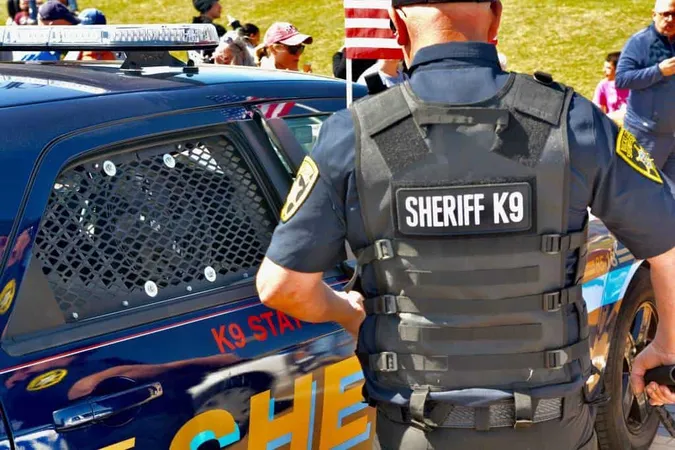
| Exam Topic | Key Areas to Focus On |
|---|---|
| Criminal Investigation | - Crime scene processing - Interviewing and interrogation techniques - Evidence collection and preservation |
| Patrol Officer Duties | - Traffic enforcement and accident investigation - Responding to calls for service - Community engagement and problem-solving |
| Correctional Officer Practices | - Inmate supervision and management - Facility security and emergency procedures - Inmate rights and rehabilitation programs |
Patrol Duties
Key Areas to Focus on for Success
To do well in the sheriff (deputy sheriff) exam, you need to know the main skills and knowledge areas. As someone aiming for a law enforcement career, focus on patrol duties, investigation procedures, community relations, emergency response, and legal knowledge. Improving your skills in these areas will help you pass the exam and start a rewarding career.
Patrol duties are key for sheriffs (deputies). They include knowing traffic laws, stopping vehicles, answering calls, and being visible in the community. Learn the best ways to do patrol work, stay safe, and talk to the public well.
Investigation Procedures
Knowing how to investigate is vital for police work. Get good at collecting evidence, interviewing witnesses, processing crime scenes, and understanding the law. Learn how to manage cases and write reports to show you can handle tough investigations.
| Skill | Description |
|---|---|
| Evidence Collection | Proper handling and preservation of physical evidence |
| Witness Interviews | Effective techniques for obtaining crucial information |
| Crime Scene Processing | Systematic approach to documenting and analyzing a crime scene |
| Case Management | Organizing and tracking the progress of investigations |
| Report Writing | Accurate and detailed documentation of investigative findings |
Community Relations
Good community relations are key for trust and positive police-public interactions. Learn about outreach, solving conflicts, and understanding different cultures. Show you can talk to people from all backgrounds and solve community problems in a caring way.
Emergency Response
Being ready for emergencies is part of the job. Improve your knowledge of how to manage emergencies, help in crisis situations, and give first aid. This helps you keep people safe and protect your colleagues during critical events.
Legal Knowledge
Knowing the law is crucial for police work. Learn about laws on searches, using force, and citizens’ rights. Show you can use the law wisely in real situations and make decisions that follow the law.

Working on these key areas and improving your skills will help you do great in the sheriff (deputy sheriff) exam. It will also set you up for a successful career in law enforcement.
Time Management Tips
Sheriff (Deputy Sheriff) Test-Taking Strategies
When you face the Sheriff (Deputy Sheriff) Exam, using the right test-taking strategies is key. These strategies will help you do well and show off your skills in law enforcement, public safety, and criminal justice.
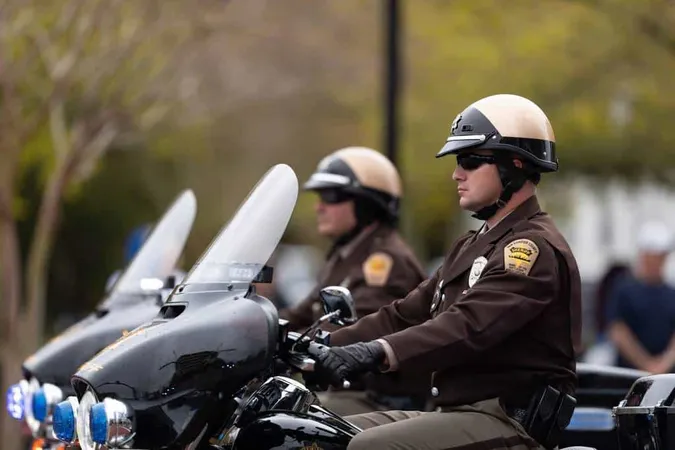
Managing your time well is crucial for doing well on the Sheriff (Deputy Sheriff) Exam. Create a plan to pace yourself during the exam. Spend the right amount of time on each section. Practice timed tests to get used to the exam’s format and learn how to manage your time.
Use techniques like prioritizing questions, skipping hard ones, and keeping track of your progress. This will help you finish the exam on time.
TCOLE Licensing Requirements for Texas Sheriff Deputies
In Texas, sheriff deputies must obtain a peace officer license through TCOLE (Texas Commission on Law Enforcement) after completing a basic peace officer course of at least 720 hours and passing the state licensing exam. The TCOLE exam covers penal code, code of criminal procedure, traffic law, arrest, search and seizure, and use of force. Candidates must score 70% or higher and complete firearms proficiency before receiving their license.
CER Practice Test Preparation for Sheriff Candidates
The CER (Correctional Employee Recruit) practice test assesses reading comprehension, situational judgment, math, and written communication skills needed for jail and detention duties under the sheriff's office. A strong CER practice test routine should include timed reading passages, incident report writing, and scenario-based questions on inmate supervision and use of force decisions. Most agencies require a passing score of 70% on the CER before advancing to the oral board interview.
Practical Advice for Exam Day
On the day of the Sheriff (Deputy Sheriff) Exam, stay calm and focused. Make sure you’re well-rested and ready, having gone over your study materials and getting used to the testing area. Drink water, breathe deeply, and trust in your hard work.
Go through each question carefully, using what you know about security, examination preparation, and the skills needed for patrol officer, correctional officer, and police officer jobs in county law enforcement.
- +Industry-recognized credential boosts your resume
- +Higher earning potential (10-20% salary increase on average)
- +Demonstrates commitment to professional development
- +Opens doors to advanced career opportunities
- −Exam preparation requires significant time investment (4-8 weeks)
- −Certification fees can be $100-$400+
- −May require continuing education to maintain
- −Some employers may not require certification
Sample Sheriff - Deputy Sheriff Exam Practice Questions
Try these questions from our free Sheriff - Deputy Sheriff Exam practice tests. The correct answer and an explanation follow each question.
A deputy responds to an incident 18 miles away. For the first 12 miles, the deputy travels at an average speed of 48 mph. For the remaining 6 miles, the deputy travels at an average speed of 36 mph. How many total minutes did it take the deputy to arrive at the scene?
- A. 20 minutes
- B. 25 minutes
- C. 15 minutes
- D. 30 minutes
Answer: B. 25 minutes
To solve this, calculate the time for each segment of the trip and add them together. The formula to use is Time = Distance / Speed. For the first segment: Time = 12 miles / 48 mph = 0.25 hours. To convert hours to minutes, multiply by 60: 0.25 * 60 = 15 minutes. For the second segment: Time = 6 miles / 36 mph = 1/6 of an hour. To convert to minutes: (1/6) * 60 = 10 minutes. The total time is the sum of the two segments: 15 minutes + 10 minutes = 25 minutes.
A deputy notices that over the past three months, every vehicle theft reported in their patrol zone has occurred between 1:00 AM and 4:00 AM on a weekend. Based on this pattern, the deputy concludes the thief is most likely active during early weekend mornings. What type of reasoning did the deputy use?
- A. Circular Reasoning
- B. Deductive Reasoning
- C. Inductive Reasoning
- D. Hypothetical Syllogism
Answer: C. Inductive Reasoning
The deputy used specific observations (the timing and day of several thefts) to form a general conclusion or prediction. This process of moving from specific instances to a broader generalization is the definition of inductive reasoning. The conclusion is a strong probability, not a certainty.
A deputy works a total of 46 hours in one week. The department pays overtime at a rate of 1.5 times the regular hourly wage for any hours worked over 40. If the deputy's regular hourly wage is $28.00, what is the deputy's total gross pay for the week?
- A. $1,288.00
- B. $1,372.00
- C. $1,932.00
- D. $1,120.00
Answer: B. $1,372.00
First, calculate the regular pay for the first 40 hours: 40 hours * $28.00/hour = $1,120.00. Next, determine the number of overtime hours: 46 total hours - 40 regular hours = 6 overtime hours. Then, calculate the overtime pay rate: $28.00 * 1.5 = $42.00/hour. Calculate the total overtime pay: 6 hours * $42.00/hour = $252.00. Finally, add the regular pay and overtime pay together: $1,120.00 + $252.00 = $1,372.00.
A deputy responds to two separate noise complaints on the same night at a college dormitory. Both incidents involve members of the university's football team. The deputy reports to his sergeant, 'All the football players in that dorm are troublemakers.' The deputy's conclusion is an example of what?
- A. A valid deductive argument.
- B. A hasty generalization fallacy.
- C. A sound inductive argument.
- D. A circular reasoning fallacy.
Answer: B. A hasty generalization fallacy.
The deputy has made a broad conclusion about an entire group ('all the football players') based on a very small and insufficient sample size (two incidents). This is a common error in inductive reasoning known as a hasty generalization fallacy.
Sheriff Questions and Answers
Official Resources
- National Testing Network administers the FrontLine written exam that many sheriff’s offices use to screen deputy applicants, and lets you register and schedule your test.
- California Commission on Peace Officer Standards and Training (POST) sets the hiring, written-test, and physical standards that deputy sheriff candidates must meet, with official guidelines and preparation materials.
- Maricopa County Sheriff’s Office posts its own deputy recruitment requirements, written-exam details, and application steps for candidates testing in Arizona.
About the Author
Commercial Pilot & FAA Certification Specialist
Embry-Riddle Aeronautical UniversityCaptain Jennifer Walsh graduated with honors in Aerospace Engineering from Embry-Riddle Aeronautical University and holds FAA Airframe & Powerplant and Airline Transport Pilot certificates. With 11 years of commercial aviation experience and 6 years as a ground school instructor, she guides aviation mechanics and student pilots through FAA written exams and practical tests.
Join the Discussion
Connect with other students preparing for this exam. Share tips, ask questions, and get advice from people who have been there.
View discussion (7 replies)