
Sheriff Deputy Exam: Complete Guide to the Written Test, Fitness, and Interview 2026 October
Boost your Sheriff Deputy exam score with practice questions and detailed answer explanations. 🎯 Track progress with instant feedback.

The sheriff deputy exam is a multi-stage hiring process used by county sheriff's offices across the United States. Candidates must pass a written aptitude test covering reading comprehension, report writing, situational judgment, and basic math, followed by a physical fitness assessment, thorough background investigation, psychological evaluation, and oral board interview. The entire process typically takes three to six months from application to academy placement.
Test-takers preparing for tci will find our TCI test 2026 invaluable for mastering the content and format before exam day.
Students preparing for standardized academic tests can practice with our Scrum Master certification test 2026, covering the quantitative reasoning and analytical sections tested on exam day.
The Sheriff exam uses a multiple-choice format with questions covering all major domains. Most versions allow 2-3 hours for completion.
Questions test both knowledge recall and application skills. A score of 70-75% is typically required to pass.

Deputy Sheriff Written Exam
The written portion of the sheriff deputy exam is typically the first scored component in the hiring process. While format varies by county, most written exams test these core areas:
Reading Comprehension (25-30%)
You will read passages about law enforcement scenarios, policies, or legal procedures and answer questions about the main idea, supporting details, and logical conclusions. These passages test your ability to absorb and apply written information — a critical skill for understanding department policies, court orders, and legal statutes.
Report Writing and Grammar (20-25%)
Deputies write reports daily. This section tests proper sentence structure, spelling, punctuation, and the ability to organize information clearly. You may be asked to identify errors in sample reports or arrange facts in logical order.
Situational Judgment (25-30%)
These questions present realistic law enforcement scenarios and ask you to choose the most appropriate response. Topics include responding to domestic disturbances, handling uncooperative subjects, prioritizing multiple calls for service, and making decisions about use of force.
Basic Math and Reasoning (15-20%)
Number problems related to law enforcement: calculating speeds, distances, time elapsed at a crime scene, inventory counts, and basic statistics for reports.
Practice situational judgment questions with our Professional Ethics and Situational Judgment practice quiz to prepare for the most challenging section of the written exam.
Physical Fitness Requirements
The physical fitness test for the deputy sheriff exam assesses whether candidates can handle the physical demands of patrol work. While standards vary by agency, most sheriff's offices use one of these testing frameworks:
Common Physical Fitness Components:
- Timed run — 1.5 mile run in under 15:28 (males) or 18:21 (females) based on age group. Some agencies use a shorter distance at a faster pace.
- Push-ups — Minimum of 22-30 consecutive push-ups within one minute (varies by age and gender)
- Sit-ups — Minimum of 25-35 sit-ups within one minute
- Obstacle/agility course — A timed course simulating pursuit scenarios: climbing walls, dragging dummies, sprinting, and directional changes
- Vertical jump — Some agencies test explosive power with a minimum vertical jump height
Physical Fitness Standards by Agency Size:
| Component | Small County Agencies | Large Metro Agencies |
|---|---|---|
| 1.5 Mile Run | Under 16:00 | Under 14:31 |
| Push-ups (1 min) | 22 minimum | 30 minimum |
| Sit-ups (1 min) | 25 minimum | 35 minimum |
| Agility Course | Pass/Fail | Timed and scored |
| Body Fat | Not tested | Under 25% (males) |
Begin training at least 12 weeks before your test date. Focus on cardiovascular endurance (running) and muscular endurance (push-ups and sit-ups) simultaneously. Most candidates who fail the physical fitness test fail the running portion.
- ✓Review the official Sheriff exam content outline
- ✓Take a diagnostic practice test to identify weak areas
- ✓Create a study schedule (4-8 weeks recommended)
- ✓Focus on your weakest domains first
- ✓Complete at least 3 full-length practice exams
- ✓Review all incorrect answers with detailed explanations
- ✓Take a final practice test 1 week before exam day
Background Investigation and Oral Board Interview
The background investigation and interview stages of the sheriff deputy exam process eliminate more candidates than the written test and physical fitness combined.
Background Investigation
A background investigator will thoroughly examine your:
- Criminal history — Felony convictions are automatic disqualifiers. Misdemeanors, especially domestic violence under the Lautenberg Amendment, may also disqualify
- Employment history — Investigators contact every employer from the past 10 years. Dishonesty about past jobs is a disqualifier
- Financial records — Credit history review for patterns of financial irresponsibility. Excessive debt or recent bankruptcies raise concerns about vulnerability to corruption
- Drug use history — Most agencies disqualify candidates with any hard drug use or recent marijuana use (typically within 1-3 years depending on the agency)
- Social media review — Investigators check social media accounts for inappropriate content, extremist views, or behavior inconsistent with law enforcement values
- Personal references — Interviews with neighbors, friends, family, and coworkers to verify character
Oral Board Interview
The oral board typically consists of three to five current law enforcement professionals who evaluate your:
- Communication skills — Can you articulate your thoughts clearly under pressure?
- Ethical reasoning — How do you handle moral dilemmas? What would you do if a fellow deputy violated policy?
- Motivation — Why do you want to be a deputy sheriff specifically (not just any law enforcement officer)?
- Scenario responses — How would you handle a volatile domestic call? A combative suspect? A fellow deputy using excessive force?
Practice ethical reasoning and scenario responses with our Professional Ethics and Situational Judgment practice quiz.
How to Prepare for the Deputy Sheriff Exam
Successful candidates treat the sheriff deputy exam preparation like a full-time commitment:
Written Exam Preparation (6-8 weeks before):
- Practice reading comprehension passages daily — focus on extracting specific details from dense text
- Review basic grammar rules: subject-verb agreement, comma usage, and sentence structure
- Work through situational judgment scenarios and discuss your reasoning with current deputies if possible
- Practice timed math problems: percentages, distance/rate/time calculations, and chart reading
- Take Patrol Procedures and Techniques practice questions to understand the operational knowledge tested
Physical Fitness Preparation (12+ weeks before):
- Run three to four times per week, mixing long runs with interval training
- Build to 50+ push-ups and 50+ sit-ups in training (test minimums should feel easy)
- Include agility drills: shuttle runs, cone drills, and directional changes
- Simulate the test conditions: full effort on a specific day at a specific time
Interview Preparation (2-4 weeks before):
- Research the specific sheriff's office: mission statement, current initiatives, community programs, and leadership
- Prepare answers for common questions: "Why this agency?", "Tell us about a conflict you resolved", "What would you do if your partner violated policy?"
- Practice with a mock interview panel — have friends or family ask tough questions
- Dress professionally in a suit or business attire. Address panel members as "sir" or "ma'am"
Sheriff Deputy Pros and Cons
- +Sheriff has a defined, publicly available content blueprint — candidates know exactly what to prepare for
- +Multiple preparation pathways (self-study, courses, coaching) accommodate different learning styles and schedules
- +A growing ecosystem of study resources means candidates at any budget level can access quality preparation materials
- +Clear score reporting allows candidates to identify specific strengths and weaknesses for targeted remediation
- +Professional recognition associated with strong performance provides tangible career and academic benefits
- −The scope of tested content requires substantial preparation time that competes with existing professional or academic commitments
- −No single resource covers the full content scope — candidates typically need multiple study tools for comprehensive preparation
- −Test anxiety and exam-day performance variability mean preparation effort does not always translate linearly to scores
- −Registration, preparation, and potential retake costs accumulate into a significant financial investment
- −Content and format can change between exam versions, making older preparation materials less reliable
Sample Sheriff - Deputy Sheriff Exam Practice Questions
Try these questions from our free Sheriff - Deputy Sheriff Exam practice tests. The correct answer and an explanation follow each question.
The sentence 'The deputy told the witness that he needed to provide a written statement' is ambiguous. Which of the following revisions is the MOST clear?
- A. The deputy said to the witness, "You need to provide a written statement."
- B. The deputy told the witness that he, the deputy, needed to provide a written statement.
- C. A written statement was needed, the deputy told the witness.
- D. He needed to provide a written statement, according to the deputy's instruction to the witness.
Answer: A. The deputy said to the witness, "You need to provide a written statement."
Option A is the clearest because using a direct quotation eliminates all ambiguity. The original sentence is unclear because the pronoun 'he' could refer to either the deputy or the witness. Options B, C, and D are either still somewhat ambiguous, awkward, or less direct.
A deputy responds to two separate noise complaints on the same night at a college dormitory. Both incidents involve members of the university's football team. The deputy reports to his sergeant, 'All the football players in that dorm are troublemakers.' The deputy's conclusion is an example of what?
- A. A valid deductive argument.
- B. A hasty generalization fallacy.
- C. A sound inductive argument.
- D. A circular reasoning fallacy.
Answer: B. A hasty generalization fallacy.
The deputy has made a broad conclusion about an entire group ('all the football players') based on a very small and insufficient sample size (two incidents). This is a common error in inductive reasoning known as a hasty generalization fallacy.
How should a deputy properly collect and package a piece of clothing that is wet with blood?
- A. Seal it immediately in a plastic bag to keep it moist.
- B. Allow it to air-dry completely before packaging it in a paper bag.
- C. Place it in a freezer until it can be transported to the lab.
- D. Spray it with a chemical preservative and seal it in a metal can.
Answer: B. Allow it to air-dry completely before packaging it in a paper bag.
Wet biological evidence, like blood, must be air-dried before being packaged to prevent mold, mildew, and bacterial growth that can degrade or destroy the DNA. After drying, it should be placed in a paper bag, not plastic, as plastic traps moisture and accelerates degradation.
Which of the following sentences is written in the active voice, which is the preferred style for law enforcement reports?
- A. The stolen property was located in a dumpster by Officer Miller.
- B. The witness was interviewed at the scene of the incident.
- C. Deputy Rodriguez documented the victim's injuries with her body camera.
- D. The suspect's vehicle was identified by a witness.
Answer: C. Deputy Rodriguez documented the victim's injuries with her body camera.
Option C is in the active voice because the subject, 'Deputy Rodriguez,' is performing the action ('documented'). The other options are in the passive voice, where the subject is being acted upon (e.g., 'property was located,' 'witness was interviewed,' 'vehicle was identified'). Active voice is preferred for clarity and to clearly state who performed the action.
Sheriff Deputy Questions and Answers
About the Author
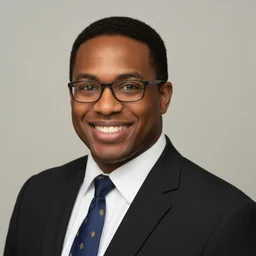
Law Enforcement Trainer & Civil Service Exam Specialist
John Jay College of Criminal JusticeMarcus B. Thompson earned his Master of Arts in Criminal Justice from John Jay College of Criminal Justice and served 12 years as a law enforcement officer before transitioning to full-time academy instruction. He is a POST-certified instructor who has prepared candidates for police entrance exams, firefighter assessments, and civil service examinations across dozens of agencies.
Join the Discussion
Connect with other students preparing for this exam. Share tips, ask questions, and get advice from people who have been there.
View discussion (7 replies)