
Adult Probation Officers: Complete Career Overview, Duties, and Requirements
🎯 Complete guide to adult probation officers: daily duties, salary, qualifications, career path, and how to pass the certification exam in 2026 October.

Adult probation officers serve as a critical link between the criminal justice system and the communities they protect. These professionals supervise individuals who have been convicted of crimes but are serving their sentences in the community rather than in a correctional facility. On any given day, adult probation officer caseloads can include dozens of individuals, each requiring individualized attention, risk assessment, and structured oversight to ensure compliance with court-ordered conditions.
The role of an adult probation officer is far more complex than many people realize. These professionals are simultaneously social workers, law enforcement agents, case managers, and community advocates. They conduct home visits, coordinate treatment referrals, enforce compliance with conditions like drug testing and curfew restrictions, and write detailed reports for the courts. The work demands strong interpersonal skills, an ability to navigate difficult situations, and a deep understanding of criminal justice policy and rehabilitation principles.
Across the United States, there are approximately 93,000 probation and parole officers employed at the federal, state, and local levels. The Bureau of Justice Statistics reports that on any given day, more than 3.6 million adults are under probation supervision in the United States — making community corrections one of the largest segments of the criminal justice system. Adult probation officers are the frontline professionals who make this massive system function effectively.
To become an adult probation officer, candidates typically need at least a bachelor's degree in criminal justice, social work, psychology, or a related field. Many jurisdictions also require candidates to pass a written civil service examination, a psychological evaluation, a background investigation, and a physical fitness test before being hired. Once hired, new officers complete a structured academy training program that covers everything from legal authority to crisis intervention techniques.
The career outlook for adult probation officers is generally stable, with employment driven largely by government budgets and criminal justice policy trends. The median annual wage for probation officers and correctional treatment specialists was approximately $64,000 as of recent Bureau of Labor Statistics data, though salaries vary significantly depending on geographic location, level of government, and years of experience. Officers in urban areas and federal positions typically earn the most.
For those interested in entering this field, preparation is essential. Competitive hiring processes, written exams, and structured oral interviews mean that candidates who study and prepare strategically have a significant advantage over those who do not. Understanding the theoretical frameworks behind supervision, rehabilitation, and risk assessment is just as important as knowing your jurisdiction's specific policies and procedures.
This comprehensive guide covers everything you need to know about building a career as an adult probation officer — from daily responsibilities and required qualifications to salary expectations, career advancement pathways, and practical tips for succeeding in the role. Whether you are just beginning your research or are actively preparing for an exam or interview, this resource will give you the grounding you need to move forward with confidence.
Adult Probation Officers by the Numbers
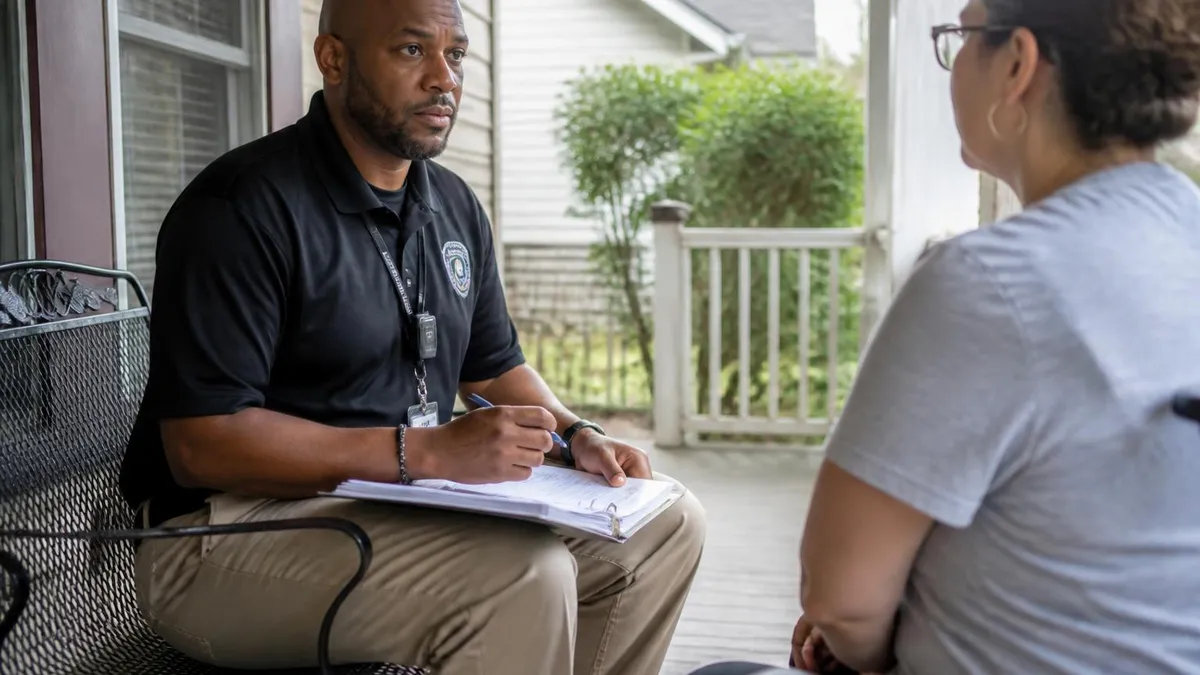
Core Duties and Daily Responsibilities of an Adult Probation Officer
Officers meet regularly with probationers to review compliance with court conditions, verify employment and residence, administer drug tests, and document behavior patterns. These contacts occur in the office, at the probationer's home, and in the community.
Using validated tools like the LSI-R or ORAS, officers assess each individual's risk of reoffending and identify criminogenic needs such as substance abuse, unstable housing, or lack of employment that must be addressed through supervision planning.
Officers develop individualized supervision plans and connect probationers to treatment programs, job training, mental health services, and educational resources. Effective case management is central to reducing recidivism and supporting long-term community reintegration.
Adult probation officers prepare pre-sentence investigation reports, progress reports, and violation reports for judges. Accurate, timely documentation is critical to court proceedings and legal compliance throughout the supervision period.
When probationers fail to meet their conditions, officers must respond appropriately — issuing warnings, increasing supervision intensity, or filing formal violation petitions with the court depending on the severity and pattern of non-compliance.
Becoming an adult probation officer requires meeting a combination of educational, personal, and procedural requirements that vary by jurisdiction but follow broadly consistent standards across the country. At a minimum, nearly every state and federal agency requires a bachelor's degree as the baseline credential for entry into this profession. The most commonly accepted majors include criminal justice, sociology, social work, psychology, and public administration, though some agencies accept any four-year degree when combined with relevant work experience.
Beyond the degree requirement, candidates must typically pass a comprehensive background investigation that includes criminal history checks, credit history reviews, reference interviews, and in many cases polygraph examinations. Any felony conviction is typically disqualifying, and misdemeanor convictions are evaluated on a case-by-case basis depending on their nature and recency. Candidates are also expected to demonstrate a history of responsible, law-abiding conduct that reflects the integrity demands of the role.
Many jurisdictions administer a written civil service examination as a core part of the hiring process. These exams test candidates on areas including reading comprehension, written communication, logical reasoning, basic math, and sometimes criminal justice knowledge or situational judgment. Scores on this exam often determine eligibility for the next stages of the hiring process, making exam preparation an important investment for serious candidates. Practicing with realistic test questions significantly improves performance on these high-stakes assessments.
Physical fitness standards apply in some jurisdictions, particularly those that classify probation officers as sworn law enforcement personnel. Where physical testing is required, candidates must typically meet benchmarks in areas such as push-ups, sit-ups, and a timed run. Requirements vary widely: some agencies use a modified standard similar to police officer fitness tests, while others use lighter benchmarks reflecting the primarily social-service nature of the role.
After being hired, new officers complete a structured training academy that typically lasts between 4 and 16 weeks depending on the agency. Academy curricula cover legal authority and officer liability, supervision techniques, risk assessment tools, report writing, ethics, crisis intervention, and use of force where applicable. Field training under the supervision of an experienced officer follows academy graduation, and new officers are typically evaluated regularly during their probationary employment period.
Ongoing professional development is expected throughout an officer's career. Many states require officers to complete continuing education credits annually to maintain their certification, and specialized training in areas such as motivational interviewing, trauma-informed supervision, and evidence-based practices is increasingly common. National organizations like the American Probation and Parole Association (APPA) offer certifications, conferences, and training resources that help officers stay current with evolving best practices in community corrections.
For candidates preparing to enter the field, understanding what the exams and hiring processes actually test is essential. Studying supervision theory, case management frameworks, legal standards, and ethics will give you a substantial advantage. The most competitive candidates combine a strong academic background with practical preparation — a combination that demonstrates both the knowledge and the professional commitment that agencies are looking for when building their officer corps.
Supervision Approaches Used by Adult Probation Officers
Risk-based supervision is the dominant framework in modern adult probation. Officers use validated actuarial tools like the Level of Service Inventory–Revised (LSI-R) or the Ohio Risk Assessment System (ORAS) to score each individual's probability of reoffending. Higher-risk individuals receive more frequent contacts, more intensive programming, and closer monitoring, while lower-risk individuals are supervised with a lighter touch to avoid disrupting stabilizing factors like employment and family ties.
The core principle behind risk-based supervision is that officer resources are finite and must be allocated strategically. Research consistently shows that applying intensive supervision to low-risk individuals can actually increase recidivism by disrupting pro-social bonds. By concentrating attention where it matters most — on high-risk individuals with multiple criminogenic needs — agencies achieve better public safety outcomes while using their workforce more efficiently.

Is a Career as an Adult Probation Officer Right for You?
- +Meaningful work that directly impacts public safety and individual rehabilitation
- +Stable government employment with strong job security and predictable schedules
- +Competitive salary with excellent pension and benefits packages at most agencies
- +Opportunities to specialize in areas like sex offender supervision, DUI cases, or mental health courts
- +Clear career advancement pathways to senior officer, supervisor, and management roles
- +Exposure to diverse populations and community resources broadens professional perspective
- −High caseloads create significant stress and can compromise supervision quality
- −Exposure to trauma, violence, and high-risk individuals is an ongoing occupational hazard
- −Bureaucratic reporting requirements and documentation demands consume substantial time
- −Emotionally demanding when probationers reoffend despite best efforts and support
- −Salary, while stable, typically lags behind comparable private-sector professional roles
- −Physical danger risk exists, particularly during home visits in high-crime areas
Pros and Cons at a Glance
| Pros | Cons |
|---|---|
| Meaningful work that directly impacts public safety and individual rehabilitation | High caseloads create significant stress and can compromise supervision quality |
| Stable government employment with strong job security and predictable schedules | Exposure to trauma, violence, and high-risk individuals is an ongoing occupational hazard |
| Competitive salary with excellent pension and benefits packages at most agencies | Bureaucratic reporting requirements and documentation demands consume substantial time |
| Opportunities to specialize in areas like sex offender supervision, DUI cases, or mental health courts | Emotionally demanding when probationers reoffend despite best efforts and support |
| Clear career advancement pathways to senior officer, supervisor, and management roles | Salary, while stable, typically lags behind comparable private-sector professional roles |
| Exposure to diverse populations and community resources broadens professional perspective | Physical danger risk exists, particularly during home visits in high-crime areas |
Skills Every Adult Probation Officer Must Master
- ✓Conduct structured risk and needs assessments using validated actuarial tools like LSI-R or ORAS.
- ✓Write clear, accurate, and legally sound court reports including pre-sentence investigations and violation petitions.
- ✓Apply motivational interviewing techniques to engage probationers and promote voluntary behavior change.
- ✓Manage a high-volume caseload by prioritizing contacts based on individual risk levels and supervision needs.
- ✓Navigate crisis situations involving mental health emergencies, substance use relapses, or threats of self-harm.
- ✓Collaborate effectively with treatment providers, law enforcement, courts, and community organizations.
- ✓Recognize early warning signs of recidivism and respond with proportional, evidence-based interventions.
- ✓Maintain detailed and up-to-date case files in electronic case management systems with full audit trails.
- ✓Enforce court-ordered conditions firmly and consistently while maintaining a professional, respectful rapport.
- ✓Understand the legal limits of your authority, including Fourth Amendment search standards applicable to probationers.
The Best Officers Balance Enforcement with Empathy
Research consistently shows that probation officers who combine firm enforcement with genuine engagement produce better outcomes than those who rely on surveillance alone. Probationers supervised by officers skilled in motivational interviewing and relationship-building are significantly less likely to reoffend — making interpersonal skills not just a soft advantage, but a core professional competency that agencies increasingly measure and reward.
Salary and compensation for adult probation officers vary considerably depending on the employing jurisdiction, geographic location, and level of government. At the federal level, US Probation Officers employed by the Administrative Office of the US Courts are paid on the Judicial Salary Plan (JSP), with entry-level officers typically starting at JSP-9 or JSP-11, translating to annual salaries in the $55,000 to $75,000 range in most locations. Senior and supervisory federal officers can earn well above $100,000 annually with locality adjustments in high-cost cities like New York and San Francisco.
State-level adult probation officers earn a wide range of salaries depending on the state. California probation officers supervised by county agencies are among the highest paid in the country, with experienced officers frequently earning $80,000 to $110,000 or more, especially in large counties like Los Angeles and San Diego. States in the Southeast and Midwest tend to offer lower base salaries, with starting pay in some jurisdictions below $40,000, though this is partially offset by lower costs of living in those areas.
Beyond base salary, most government probation positions come with substantial benefits packages that add significant value to total compensation. These typically include defined-benefit pension plans — increasingly rare in the private sector — as well as comprehensive health insurance, paid leave, and tuition assistance programs. For officers who serve 20 or 25 years, pension benefits can provide retirement income equivalent to 50–80% of final salary, making long-term retention financially attractive for employees who commit to the career.
Career advancement opportunities within adult probation are structured and reasonably predictable. Entry-level officers typically progress through grade-based pay increases as they gain experience and satisfactory performance evaluations. After several years, officers can compete for senior officer positions that offer enhanced pay and specialized caseloads. From there, supervisory roles overseeing teams of officers become available, followed by management positions leading entire units, divisions, or offices within the department.
Lateral specialization is another advancement route. Many large probation departments have dedicated units handling specialized populations — sex offenders, individuals with serious mental illness, DUI cases, gang members, or drug court participants. Officers who develop expertise in these areas often receive specialty pay and increased professional recognition. Federal probation offices additionally offer specialized positions in presentence investigation, drug testing management, and fugitive apprehension.
Geographic mobility can also advance an officer's career. Officers who are willing to relocate to areas with higher demand or to accept federal positions can often achieve both salary increases and enhanced professional development opportunities compared to staying in a single local agency. Federal probation positions in particular offer a nationally consistent pay scale and a clear path to supervisory and management roles in districts across the country.
For officers seeking long-term growth beyond field supervision, pathways exist into policy development, training and staff development, program evaluation, and agency leadership. Many probation directors and department heads began their careers as line officers, gaining the field experience and credibility that allows them to lead organizations effectively. Understanding the full scope of the career ladder from the beginning helps new officers make strategic decisions about experience, specialization, and continued education that will serve them throughout a long and rewarding career.
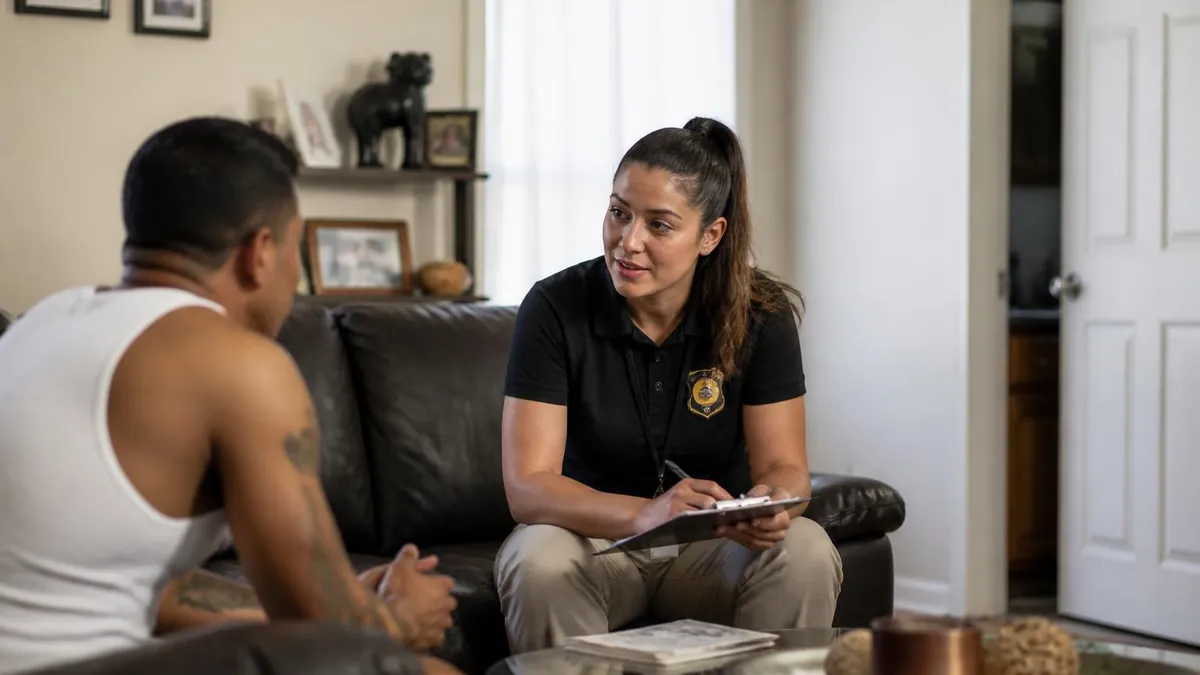
Many state and county probation agencies hire through civil service lists that open and close on fixed schedules. Missing an application window can mean waiting months or longer before the next hiring cycle. Check your target agency's human resources portal regularly and submit all required materials — including transcripts, licenses, and references — well before posted deadlines to avoid disqualification on procedural grounds.
Preparing for the adult probation officer exam and hiring process requires a structured, deliberate approach that addresses every component of the selection process simultaneously. Most candidates underestimate how competitive these processes are: in large urban jurisdictions, dozens or even hundreds of applicants may compete for a small number of openings, and your score on the written examination often determines whether you advance to any subsequent stages at all. Taking preparation seriously from the start is essential.
The written examination typically tests reading comprehension, grammar and writing clarity, basic mathematics, logical reasoning, and situational judgment. Criminal justice knowledge questions appear on some exams but not all, so check your target agency's published exam outline before studying. Building vocabulary and reading speed through regular practice with dense informational texts will strengthen your performance on reading comprehension sections, which often carry significant weight in the overall score calculation.
Report writing is a core skill tested both on written exams and during the oral interview phase. Probation officers must produce clearly organized, grammatically sound documents under time pressure, and evaluators look for candidates who can communicate complex information in a structured, professional format. Practicing the structure of case notes, violation reports, and pre-sentence investigation summaries before your exam will directly improve your performance on these components.
The oral interview or board interview is a defining moment in the hiring process. Panels typically consist of senior officers, HR professionals, and sometimes community members or judges. Questions are usually behavioral and situational in format: you may be asked how you handled a difficult interpersonal situation in a previous job, or how you would respond if a probationer disclosed drug use during a scheduled office visit. Preparing structured responses using the STAR method — Situation, Task, Action, Result — will help you deliver clear, confident answers that impress evaluators.
Background investigations are thorough and can take weeks or months to complete. Candidates who are honest, organized, and proactive in submitting required materials move through the process faster than those who are slow to respond or who provide incomplete information. Any discrepancies between what you state on your application and what investigators discover during background checks are serious and can be disqualifying, so accuracy and completeness are critical from the very first document you submit.
If your jurisdiction requires a psychological evaluation, understand that this is not a test you can study for in the traditional sense. The psychologist is looking for specific traits — emotional stability, sound judgment, ethical behavior, and the ability to handle stress — that are assessed through structured interviews and standardized psychological instruments. Being authentic and consistent throughout the evaluation, rather than attempting to game the process, is the most effective strategy.
Finally, invest in networking within the field. Speaking with current adult probation officers about their experiences, job shadowing if possible, and attending criminal justice events in your community gives you real-world context that will strengthen both your written exam responses and your interview performance. Agencies are looking for candidates who demonstrate genuine motivation and informed interest in the role — and few things demonstrate that as effectively as having done your research and connected with people already doing the work.
Succeeding as a newly hired adult probation officer requires more than just passing your academy and completing your field training. The transition from candidate to practicing officer demands rapid professional development, strong mentorship relationships, and a proactive approach to learning your jurisdiction's specific policies, culture, and community resources. Officers who treat their first two years as a sustained learning experience — rather than simply a period of checking boxes — tend to build stronger professional foundations and advance more quickly than those who coast on their initial training.
Time management is one of the most critical practical skills for new officers. With caseloads ranging from 40 to 150 or more individuals depending on your jurisdiction, the sheer volume of contacts, documentation, court deadlines, and collateral duties can feel overwhelming in the early months. Developing personal systems for tracking due dates, prioritizing high-risk cases, and batching similar tasks — such as home visits by neighborhood on a set day — can dramatically improve efficiency without sacrificing quality.
Building relationships with community partners is another hallmark of effective probation officers. Treatment providers, housing agencies, employment programs, mental health clinics, and community organizations are force multipliers for officers trying to address the full range of a probationer's needs. Officers who invest in building and maintaining these relationships can access resources faster and more flexibly than those who treat community partnerships as an afterthought. A strong referral network is one of the most valuable professional assets an officer can develop over time.
Documentation quality matters more than many new officers initially appreciate. Vague, incomplete, or inconsistent case notes create legal vulnerabilities, undermine credibility in court, and make it difficult to demonstrate the work you've done if a probationer is later revoked. From your first week, develop the habit of writing case notes the same day as your contact, being specific about what was discussed and observed, and documenting your reasoning for supervision decisions in objective, fact-based language.
Self-care and stress management are non-negotiable aspects of career sustainability in adult probation. The work involves regular exposure to trauma, adversarial situations, and the weight of responsibility for complex human lives. Officers who develop healthy coping strategies — physical exercise, strong social support, clear boundaries between work and personal life, and access to employee assistance programs when needed — are more resilient and less prone to burnout, compassion fatigue, and the ethical errors that chronic stress can produce.
Staying current with research and best practices in community corrections will distinguish you as a serious professional and position you for advancement. The field has evolved dramatically over the past two decades, with evidence-based practices, trauma-informed supervision, and procedural justice principles transforming how effective agencies operate. Officers who read professional journals, attend training conferences, and engage with the research literature bring a level of informed practice to their work that supervisors and peers recognize and respect.
Finally, remember that every interaction with a probationer is both a supervision contact and an opportunity to model and reinforce pro-social behavior. How you conduct yourself — the consistency of your enforcement, the fairness of your communication, the follow-through on your commitments — shapes not only outcomes for the individuals you supervise but the reputation of your agency in the broader community. Adult probation officers who take this responsibility seriously, treating their role with both authority and humanity, define what excellent community corrections practice looks like in practice.
Sample Probation Officer Practice Questions
Try these questions from our free Probation Officer practice tests. The correct answer and an explanation follow each question.
When an offender's risk level is reassessed and drops, the officer should typically:
- A. Increase reporting frequency
- B. Adjust the supervision plan toward lower intensity
- C. Revoke probation immediately
- D. Ignore the change until the term ends
Answer: B. Adjust the supervision plan toward lower intensity
Supervision intensity should match current risk, so a lower score usually warrants reduced contact.
What is the primary reason probation officers must maintain accurate and timely case documentation?
- A. To satisfy personal record-keeping habits
- B. To ensure legal defensibility and continuity of supervision
- C. To impress supervisors during annual reviews
- D. To reduce the offender's sentence automatically
Answer: B. To ensure legal defensibility and continuity of supervision
Accurate documentation protects the officer legally, supports court proceedings, and ensures consistent supervision if cases are transferred.
A probation officer notices an offender has missed two consecutive office visits. What is the first appropriate action?
- A. Immediately file a revocation petition
- B. Attempt contact via phone, letter, and home visit before escalating
- C. Close the case as absconded without further action
- D. Reduce the offender's reporting frequency
Answer: B. Attempt contact via phone, letter, and home visit before escalating
Standard procedure requires exhausting reasonable contact attempts and documenting them before pursuing formal revocation.
How often should a probation officer typically update a supervision case plan?
- A. Only at intake
- B. Never, once the plan is set it remains fixed
- C. Periodically, based on the offender's progress and changing needs
- D. Only when the offender requests a change
Answer: C. Periodically, based on the offender's progress and changing needs
Supervision case plans are living documents that should be updated as the offender's circumstances and compliance change.
Probation Officer Questions and Answers





About the Author

Law Enforcement Trainer & Civil Service Exam Specialist
John Jay College of Criminal JusticeMarcus B. Thompson earned his Master of Arts in Criminal Justice from John Jay College of Criminal Justice and served 12 years as a law enforcement officer before transitioning to full-time academy instruction. He is a POST-certified instructor who has prepared candidates for police entrance exams, firefighter assessments, and civil service examinations across dozens of agencies.