
When Was OSHA Formed? History, Founding & 1971 Origins 2026 October
✅ When was OSHA formed? Nixon signed the OSH Act Dec 29, 1970; OSHA opened April 28, 1971. Full history, founding, key milestones.

If you have been digging around for the answer to when was OSHA formed, here it is in one line. Congress passed the Occupational Safety and Health Act on December 29, 1970, President Richard Nixon signed it the same day, and the Occupational Safety and Health Administration officially opened its doors on April 28, 1971. That April date is the one OSHA itself treats as its birthday.
So depending on what you really mean — the law, the signing, or the day the agency began enforcing standards — the answer is either December 29, 1970 or April 28, 1971. Both are correct. Both matter. And both are tested on safety certifications constantly.
This guide walks through the full backstory. Why the country needed OSHA in the first place. Who pushed the bill through Congress. What workplace conditions looked like before the agency existed. Who the early administrators were. And how OSHA grew from a 1970s startup with a thin rulebook into the federal regulator that now covers more than 130 million American workers.
You will also see the milestones that shaped modern compliance — Process Safety Management in 1992, the Globally Harmonized System rollout in 2013, recordkeeping rule changes through the 2010s, and the COVID-era emergency temporary standards. By the end you will know not just the date OSHA was formed, but why it was formed and what changed because of it.
The Short Answer: December 29, 1970
Congress passed the Occupational Safety and Health Act, often shortened to the OSH Act, in late December 1970. President Nixon signed it into public law as Pub.L. 91-596 on December 29, 1970. The Act created three separate entities — the Occupational Safety and Health Administration inside the Department of Labor, the National Institute for Occupational Safety and Health inside what was then HEW, and the independent Occupational Safety and Health Review Commission.
Then came a 120-day setup period. April 28, 1971 is when OSHA officially began functioning. That is the date the agency uses on its anniversary page. So when somebody asks "when did OSHA go into effect," the honest answer is April 1971, even though the underlying law is dated December 1970.
OSHA Founding Facts at a Glance
Why Was OSHA Formed in the First Place?
The numbers from the late 1960s are bleak. About 14,000 American workers died on the job every year. Another 2.5 million were disabled. An estimated 300,000 new cases of occupational disease appeared annually — black lung, asbestosis, brown lung from cotton mills, chemical poisoning, hearing loss. There was no federal agency with broad authority to set or enforce safety standards across industries. State programs existed, but they varied wildly, and most were underfunded or captured by the very industries they were meant to regulate.
By 1968 the Johnson administration had introduced a federal occupational safety bill. It died in committee. Labor unions, particularly the AFL-CIO, kept the pressure on through 1969 and 1970, with the United Steelworkers and United Mine Workers leading public campaigns. A series of disasters concentrated public attention — most notably the 1968 Farmington Mine explosion in West Virginia, which killed 78 miners and led to the Federal Coal Mine Health and Safety Act in 1969. That coal mine law became the template for the broader workplace safety bill that followed a year later.
Why was the OSHA created? Because the existing patchwork was killing people and the political moment finally lined up. Nixon, despite being a Republican president, supported the bill. The combination of bipartisan congressional sponsors, union pressure, public outrage over preventable industrial deaths, and Nixon's willingness to sign produced one of the broadest worker-protection laws in American history.
For a deeper look at the agency's mandate, the what is OSHA guide explains the modern mission, jurisdiction, and the rights workers gained as a direct result of the 1970 statute.

Quick Take
The Occupational Safety and Health Act became law on December 29, 1970 when President Richard Nixon signed Public Law 91-596. The Occupational Safety and Health Administration itself opened on April 28, 1971 after a 120-day setup period. Either date can be correct depending on the question — the law dates to 1970, but the agency dates to 1971. Most exam answer keys treat 1971 as OSHA's founding year because that is when enforcement actually began.
Who Founded OSHA and Who Pushed the Bill Through?
OSHA was not founded by one person. The 1970 OSH Act was the product of a multi-year political effort, but a few names show up in every honest history of the agency.
On the Democratic side, Senator Harrison Williams of New Jersey led the Senate version of the bill. Representative William Steiger, a Wisconsin Republican, sponsored the House version that ultimately became law — which is why the OSH Act is sometimes called the Williams-Steiger Act in older legal references. James O'Hara of Michigan and Phillip Burton of California were also key floor managers.
Labor leaders kept the bill from dying. AFL-CIO President George Meany, United Steelworkers President I.W. Abel, and United Mine Workers President Tony Boyle (later imprisoned for unrelated reasons) testified repeatedly and mobilized member campaigns. Ralph Nader's consumer-protection movement added pressure from outside organized labor.
Inside the Nixon administration, Secretary of Labor George Shultz pushed for the bill and convinced Nixon to sign rather than veto. When asked later who established OSHA, Shultz's role often gets understated — without his advocacy inside the cabinet, the bill might have died on Nixon's desk.
So who founded OSHA? Functionally, a coalition: Williams and Steiger in Congress, Meany and Abel from labor, Shultz inside the White House, and Nixon as the signature. The agency itself was led on day one by George Guenther, the first Assistant Secretary of Labor for Occupational Safety and Health. Guenther served from April 1971 through early 1973.
What Year Did OSHA Begin Operations?
1971. Specifically April 28, 1971 — 120 days after the OSH Act was signed. That is the answer to what year did OSHA begin and what year did OSHA start. The first 90 days of that window were spent staffing the agency, drafting initial standards, and setting up regional offices. The 30 days after that were a public comment and rulemaking sprint.
OSHA's first published standards were largely adopted from existing consensus codes — American National Standards Institute documents and National Fire Protection Association codes. Borrowing those gave the agency an instant rulebook on day one. The decision was pragmatic. Drafting original standards from scratch would have left workers unprotected for years while rules went through formal notice-and-comment proceedings.
By the end of 1971 OSHA had roughly 500 inspectors covering an estimated 5 million workplaces. The math was rough then. It is still rough now — modern OSHA covers about 8 million worksites with about 2,000 federal and state inspectors. The agency has always run on tight resources.
If you are studying for any OSHA certification, the founding date is a near-guaranteed exam item. So is the OSH Act citation (Public Law 91-596) and the parent agency (Department of Labor). The osha certification online free guide breaks down which certificates test which historical facts.
Three Agencies the OSH Act Created
Lives inside the Department of Labor. Writes workplace safety standards, conducts inspections, issues citations, and enforces penalties. Run by the Assistant Secretary of Labor for Occupational Safety and Health. Has direct authority over most private-sector workplaces and federal contractors.
Lives inside the CDC (originally HEW). Does the research that OSHA bases standards on. Publishes recommended exposure limits, hazard alerts, and Health Hazard Evaluations. Trains workers and emergency responders. No enforcement authority — NIOSH only recommends, OSHA decides.
An independent agency that hears appeals from employers contesting OSHA citations. Three commissioners are appointed by the President and confirmed by the Senate. Administrative law judges hold the initial hearings; commissioners review on appeal. Decisions can be appealed further to federal courts of appeals.
Since Its Implementation in 1971 OSHA Has...
Done a lot, actually. Worker death rates have dropped about 60% since the agency opened. Injury and illness rates have fallen even further — roughly 75% per 100 workers since the early 1970s. None of that drop is purely OSHA's doing — automation, better materials, and post-industrial economic shifts also played a role — but the regulatory floor OSHA set forced industries to take safety seriously in a way they had not before.
The agency now enforces more than 1,000 standards across general industry, construction, maritime, and agriculture. It issues roughly 30,000 inspections per year through federal staff and another 50,000 through 22 state-plan programs. Penalties were modest in the early years — maximum citations of $1,000 per violation. Today serious violations can run more than $16,000 each, and willful or repeat violations can exceed $160,000.
The first OSHA logo and identity were designed in 1971 by an in-house team. The crossed-wrench symbol that some workers still recognize on older materials traces to that era. If you have ever seen the modern OSHA seal or wondered where the branding came from, the OSHA logo guide unpacks the visual identity.
OSHA's biggest growth came in the late 1970s under the Carter administration, then a long deregulatory stretch under Reagan in the 1980s. The agency's enforcement strength has tended to track the political party of the sitting president — Democratic administrations expand inspections, Republican administrations focus on outreach and partnerships. Compliance numbers tell that story plainly across five decades.

Key Dates in OSHA History
1968: Farmington Mine explosion kills 78 miners in West Virginia. Public pressure builds for federal workplace safety legislation. 1969: Federal Coal Mine Health and Safety Act becomes the template for the broader OSH Act. 1970: Senator Harrison Williams (D-NJ) and Representative William Steiger (R-WI) sponsor the OSH Act. Congress passes it in December. December 29, 1970: President Nixon signs Public Law 91-596.
Key Milestones After OSHA Was Formed
1972 — First training requirements published. Initial Hazard Communication Standard drafted (it would not be finalized until 1983).
1978 — OSHA establishes the Voluntary Protection Programs concept in pilot form. Cancer policy generic standard issued.
1983 — Hazard Communication Standard ("Right to Know") finalized for manufacturing. This is the rule that put SDS sheets, labels, and chemical inventories into every covered workplace.
1988 — Hazard Communication expanded to cover non-manufacturing employers. The reach went from roughly 14 million workers to 32 million.
1991 — Bloodborne Pathogens Standard issued. Heavily shaped by the HIV epidemic. Required engineering controls, exposure plans, and post-exposure follow-up.
1992 — Process Safety Management standard issued for highly hazardous chemicals. A direct response to the 1984 Bhopal disaster in India and the 1989 Phillips 66 explosion in Texas. Still one of OSHA's most complex and tested rules.
1994 — Confined Spaces in General Industry rule.
2001 — OSHA's first ergonomics standard issued, then rescinded by Congress under the Congressional Review Act in 2001. The agency never re-issued a comprehensive ergonomics rule.
2002 — Steel erection standard updated after years of construction-industry pressure.
2012 — Final Rule on Cranes and Derricks in Construction. Affected operator certification across the industry.
2013 — Globally Harmonized System of Classification and Labeling (GHS) alignment finalized. Chemical labels changed worldwide. Hazard pictograms became standard.
2014 — Significant update to the OSHA 300 Log recordkeeping rule expanded electronic submission requirements.
2020-2022 — COVID-19 Emergency Temporary Standards issued for healthcare and (briefly) general industry. The vaccine-or-test ETS was stayed by the Supreme Court in January 2022.
2024 — New heat injury and illness prevention rule proposed for public comment. As of early 2026 the final rule is in OSHA's regulatory agenda but not yet promulgated.
For more on how those standards play out in practice, the osha standards for first aid kits reference breaks every category down.
Watch the wording. If a question asks when the OSH Act was passed or signed, the answer is 1970. If it asks when OSHA was formed, founded, established, or began operating, the answer is 1971. Some practice tests treat the two interchangeably, which leads to legitimate confusion. When forced to pick one year, choose 1971 — that is the year OSHA itself uses on its anniversary page. Public Law 91-596 carries the 1970 date.
The First OSHA Administrators
George Guenther — the first head of OSHA, serving from April 1971 to early 1973. A Pennsylvania Republican appointed by Nixon. His tenure was short and controversial; he resigned amid accusations of softening enforcement for political donors. The "Guenther memo" became a textbook example of regulatory capture and is still discussed in public-administration courses.
John Stender — appointed by Nixon after Guenther's resignation. Served from 1973 to 1975. A former United Steelworkers official, Stender pushed harder enforcement but ran into industry resistance.
Morton Corn — a chemical engineer and academic, appointed by President Ford in 1975. Served through the rest of the Ford term. Brought scientific rigor to standard-setting that the agency had been criticized for lacking.
Eula Bingham — appointed by President Carter in 1977. The first OSHA administrator with a strong public health background and one of the most consequential heads of the agency. Issued the cancer policy generic standard, expanded inspector ranks, and reshaped how OSHA handled health (as opposed to safety) standards. Many of her appointees stayed in the agency for decades.
From the 1980s onward, the role has cycled through administrators tied closely to presidential politics. Eula Bingham's tenure is still considered the high-water mark for proactive standard-setting at OSHA.

OSHA Founding Facts Worth Memorizing
- ✓The OSH Act was signed December 29, 1970 by President Richard Nixon
- ✓OSHA officially opened for business on April 28, 1971 after a 120-day setup window
- ✓The statutory citation is Public Law 91-596 — sometimes called the Williams-Steiger Act
- ✓OSHA sits inside the United States Department of Labor
- ✓The same 1970 law created NIOSH (research) and OSHRC (appeals) as separate agencies
- ✓George Guenther served as the first Assistant Secretary of Labor for Occupational Safety and Health
- ✓Pre-OSHA workplace deaths ran about 14,000 per year — modern figures are roughly 5,000
- ✓The General Duty Clause is Section 5(a)(1) of the OSH Act — the catch-all enforcement tool
- ✓Roughly half the states run their own OSHA-approved state plans rather than federal OSHA
- ✓Worker fatality rates have fallen about 60% since OSHA was formed
- ✓The Hazard Communication Standard (1983) is one of OSHA's most-tested rules
- ✓Process Safety Management (1992) followed the Bhopal and Phillips 66 disasters
How OSHA Fits Inside the Federal Government
OSHA sits inside the United States Department of Labor. The head of OSHA holds the title Assistant Secretary of Labor for Occupational Safety and Health and reports directly to the Secretary of Labor. The position requires Senate confirmation.
The 1970 OSH Act also created the National Institute for Occupational Safety and Health (NIOSH) inside what was then the Department of Health, Education, and Welfare. NIOSH is now part of the Centers for Disease Control and Prevention. NIOSH does the research; OSHA does the enforcement. They are sister agencies with different parent departments and different funding streams.
The third entity created by the 1970 Act is the Occupational Safety and Health Review Commission. The OSHRC is independent — it hears appeals from employers who challenge OSHA citations. Its three commissioners are appointed by the President and confirmed by the Senate. law enforcement officers cases never reach federal court because the OSHRC system resolves them first.
Roughly half the states run their own OSHA-approved plans. State plans must be at least as effective as federal OSHA and cover state and local government workers, which federal OSHA does not directly regulate. California (Cal/OSHA), Oregon, Washington, and Michigan run some of the more aggressive state programs.
What Workplace Safety Looked Like Before OSHA
Brutal. Genuinely brutal. The pre-OSHA workplace death rate ran around 18 per 100,000 workers. Today that figure sits closer to 3.5 per 100,000. Some industries were almost beyond belief.
Coal mining killed about 500 American miners a year through the 1960s. Textile mills, especially in the South, ran with cotton dust levels that produced brown lung in a high percentage of workers. Asbestos was being installed in shipyards, schools, and power plants without warning labels. The first major civil litigation over asbestos exposure only began in 1969.
Construction had no fall protection rules, no scaffolding standards, no respirable silica exposure limit. Trenching collapses killed dozens of workers per year. Lead exposure in painters, plumbers, and battery manufacturers went largely unmonitored. Mercury was used in hat-making and felt production through the 1950s and into the 1960s, producing the so-called mad-hatter syndrome.
State workers' compensation systems existed, but they paid out for injuries that had already happened — they did nothing to prevent them. Federal authority over workplace safety was scattered across the Walsh-Healey Act for federal contractors, the Service Contract Act, the Longshore and Harbor Workers Act, the Federal Coal Mine Safety Act, and various ICC rules for railroads. None of these gave any agency the authority to set general workplace standards across industries.
That is the context for why was OSHA founded. The country had built a 20th-century industrial economy on a 19th-century safety framework. Something had to give. The OSH Act was the legislative response.
Impact of OSHA Since 1971: What Worked and What Did Not
- +Fatal injury rates have dropped roughly 60% per 100,000 workers since 1971
- +Hazard Communication gave every covered worker the right to know what chemicals they handle
- +Bloodborne Pathogens Standard transformed healthcare worker safety after the HIV epidemic
- +Process Safety Management prevented countless catastrophic releases at chemical plants
- +State-plan flexibility lets states like California exceed federal minimums
- +Whistleblower protections under Section 11(c) created legal cover for workers reporting hazards
- +OSHA 10 and OSHA 30 cards became near-universal credentials in construction
- −Penalty levels stayed too low for decades — fines under $100 were common until the 1990s
- −The 1980 Supreme Court benzene decision made new health standards far harder to issue
- −Ergonomics standard was rescinded by Congress in 2001 and never replaced
- −Federal OSHA inspector counts have not kept up with workforce growth
- −About 8% of US workers remain outside direct OSHA jurisdiction
- −Standard-setting timelines often stretch 10-15 years from proposal to enforcement
- −Enforcement intensity has fluctuated with political party of the administration
OSHA's First Decade: 1971-1981
The agency spent its early years adopting consensus standards, training inspectors, and surviving a constant lawsuit barrage from industry. Many of the original OSHA rules were copies of ANSI or NFPA codes incorporated by reference. That decision saved time but produced confusing standards full of internal cross-references — a complaint that lasted into the 1990s.
Notable first-decade actions included the 1972 ladder and scaffolding standards, the 1974 vinyl chloride exposure standard (one of OSHA's first major health rules, issued after a cluster of liver cancers among PVC plant workers), and the 1976 benzene standard. The benzene rule went all the way to the Supreme Court in 1980. The Court struck it down in Industrial Union v. American Petroleum Institute, requiring OSHA to prove significant risk before issuing new health standards. That decision still shapes how OSHA writes health rules today.
Inspections grew from about 25,000 in 1972 to roughly 70,000 by 1980. Penalty totals were small by modern standards — most early citations carried fines under $100. Penalty levels were not adjusted to meaningful amounts until 1990 and again in 2016 under inflation-adjustment legislation.
The agency also began publishing the General Duty Clause guidance in this era. The General Duty Clause is Section 5(a)(1) of the OSH Act and remains the catch-all enforcement tool for hazards that have no specific standard. The general duty clause guide explains how it works and when OSHA invokes it.
Modern OSHA: The 2000s to Now
OSHA in 2026 looks structurally similar to OSHA in 1971 — same parent department, same statutory authority, same three-branch design with NIOSH and OSHRC. What has changed is enforcement reach, electronic reporting, and the volume of consensus-standard adoption.
Electronic recordkeeping is the biggest operational change. Since 2017 most establishments with 250 or more workers must submit injury and illness data electronically through the Injury Tracking Application. Establishments with 20 to 249 workers in higher-hazard industries also report annually. The data feeds the OSHA establishment search and gives compliance officers a head start before they ever walk into a facility.
Training has been pushed online. OSHA 10 and OSHA 30 cards, originally outreach-only credentials, are now near-mandatory in construction across most states. Authorized online providers carry the bulk of the training. The agency itself does not directly issue OSHA 10 or 30 cards — third-party authorized trainers do.
The COVID-19 pandemic stress-tested OSHA's emergency temporary standard authority. The healthcare ETS issued in June 2021 was the most aggressive use of that authority since 1983. The vaccine-or-test ETS issued in November 2021 was stayed by the Supreme Court in January 2022, ending the broadest public-health workplace mandate in OSHA's history.
Looking forward, the proposed heat rule, ongoing recordkeeping updates, and ergonomic guidance development continue OSHA's incremental approach. Major new standards are rare. Most modern OSHA work happens through guidance documents, settlement agreements, and General Duty Clause enforcement.
Common Misconceptions About When OSHA Was Formed
OSHA was not founded in 1970. The OSH Act was signed in 1970, but the agency itself opened in 1971. If you see a date like "OSHA founded December 1970" on a wound care practice test question, that is technically wrong — though it is so common in test banks that examinees often have to choose between two arguably-correct answers.
OSHA is not a single agency. It is part of a three-agency system created by the same statute. Confusing OSHA with NIOSH is one of the most common test errors. NIOSH researches, recommends, and trains. OSHA writes standards and enforces them. OSHRC adjudicates citation disputes.
OSHA does not directly cover every American worker. Federal employees fall under separate OSHA regulations issued under Executive Order 12196. Self-employed workers, immediate family members of farm employers, and certain transportation workers governed by DOT rules are outside OSHA jurisdiction. About 8% of the US workforce is not directly covered.
OSHA does not certify workers. It approves training programs and recognizes outreach trainers, but the actual OSHA 10 and OSHA 30 cards come from authorized providers — not from OSHA itself. The what does OSHA do guide unpacks the practical scope of agency authority.
The Bottom Line on When OSHA Was Formed
December 29, 1970. That is when the OSH Act became law under President Nixon. April 28, 1971 is when the agency began enforcing standards. Either date is defensible depending on how the question is asked. If a certification exam wants a single year, the safest answer is 1971 — because that is when OSHA actually started doing the work.
The agency exists because the 1960s ended with roughly 14,000 worker deaths a year and no federal authority to fix it. Five decades later worker deaths have fallen by more than half, occupational illness rates are down sharply, and the country has a framework for setting and enforcing workplace safety standards across nearly every private-sector industry. None of that was guaranteed in 1970. Plenty of similar bills had failed in earlier decades. The combination of disaster, union pressure, congressional sponsorship, and presidential signature produced one of the most consequential pieces of regulatory law in modern American history.
Knowing the founding facts matters for OSHA 10, OSHA 30, and most safety-certification exams. The question of when OSHA was formed appears on roughly one in every three OSHA 10 quiz banks. Memorize both dates. 1970 for the OSH Act. 1971 for the agency itself. Public Law 91-596. President Richard Nixon. Williams-Steiger Act. Department of Labor. Those are the six facts every test will probe.
For broader context on how the agency operates today, see the what does OSHA do guide. For the modern certification path, the osha certification online free guide walks through every card type, cost, and the training providers that issue them.
Sample OSHA Safety Certificate Practice Questions
Try these questions from our free OSHA Safety Certificate practice tests. The correct answer and an explanation follow each question.
Under OSHA's general requirements for Personal Protective Equipment [29 CFR 1910.132(a)], PPE should be used to protect employees when:
- A. It is the cheapest method of hazard control.
- B. Engineering and administrative controls are not feasible or do not provide sufficient protection.
- C. Employees request it, regardless of the presence of a hazard.
- D. It is the first line of defense against all workplace hazards.
Answer: B. Engineering and administrative controls are not feasible or do not provide sufficient protection.
OSHA's regulations and the hierarchy of controls establish that PPE is to be used after engineering and administrative controls have been considered and implemented but are not feasible or sufficient to eliminate the hazard. PPE is considered the last line of defense, not the first.
Under OSHA's Respiratory Protection standard (29 CFR 1910.134), when is an employer required to provide respirators to employees?
- A. When employees request them for comfort
- B. When engineering and administrative controls are not feasible or do not reduce exposures to safe levels
- C. Only when air monitoring detects an IDLH atmosphere
- D. Whenever employees work outdoors
Answer: B. When engineering and administrative controls are not feasible or do not reduce exposures to safe levels
OSHA requires respirators when engineering and administrative controls alone cannot reduce hazardous exposures to acceptable levels.
Why does OSHA prefer engineering controls over PPE when both are feasible?
- A. Engineering controls protect all workers without depending on individual behavior
- B. PPE is always more expensive
- C. Engineering controls require no maintenance
- D. PPE is prohibited by OSHA
Answer: A. Engineering controls protect all workers without depending on individual behavior
Engineering controls reduce hazards at the source and don't rely on each worker using them correctly.
When must a new injury case be entered on the OSHA 300 Log?
- A. Within 7 calendar days of learning it occurred
- B. Within 1 hour
- C. Only at year end
- D. Within 30 days
Answer: A. Within 7 calendar days of learning it occurred
Recordable cases must be entered on the log within seven calendar days of receiving information that they occurred.
OSHA Questions and Answers
About the Author
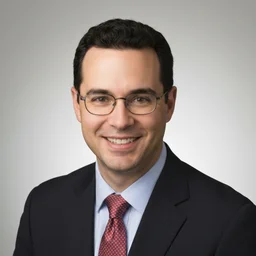
Certified Safety Professional & OSHA Compliance Expert
Indiana University of Pennsylvania Safety SciencesDr. William Foster holds a PhD in Safety Science from Indiana University of Pennsylvania and is a Certified Safety Professional (CSP) and Certified Hazardous Materials Manager. With 20 years of occupational health and safety management experience across construction, manufacturing, and chemical industries, he coaches safety professionals through OSHA certification, CSP, CHST, and safety management licensing programs.
Join the Discussion
Connect with other students preparing for this exam. Share tips, ask questions, and get advice from people who have been there.
View discussion (8 replies)