
OSHA 30 Courses: Complete Guide to OSHA 30-Hour Training, Certification, Course Options, Costs, and What You'll Learn in Construction and General Industry Programs
OSHA 30 courses explained: 🏆 construction vs general industry, costs, online vs in-person, what you learn, and how to earn your DOL card. Full 2026 October guide.

OSHA 30 courses are the gold standard for supervisor-level safety training in the United States, covering 30 hours of OSHA-authorized instruction designed for foremen, site superintendents, safety coordinators, and anyone with responsibility for workplace safety oversight. Whether you work in construction or general industry, completing OSHA 30 courses earns you a Department of Labor (DOL) wallet card that proves you understand hazard recognition, OSHA standards, and the rights and responsibilities outlined under the Occupational Safety and Health Act of 1970.
The OSHA Outreach Training Program was developed by the Occupational Safety and Health Administration as a voluntary education initiative, but in practice it has become functionally mandatory across most U.S. construction sites. States like New York, Connecticut, Missouri, Massachusetts, New Hampshire, Rhode Island, and others now legally require OSHA 30 certification for supervisors working on public works projects above certain dollar thresholds. Many private general contractors also require the card before allowing supervisors on site, making OSHA 30 courses one of the most valuable credentials a construction professional can hold.
The training is delivered through two main pathways: a 30-hour online course completed at your own pace over a maximum of six months, or an instructor-led in-person classroom course typically taught over four consecutive days. Both pathways result in the same physical DOL wallet card and offer identical recognition by employers and state agencies. The online format dominates the modern market because it allows working professionals to complete training during evenings and weekends without missing project deadlines or losing income from time off the job.
OSHA 30 courses cover a much broader curriculum than the 10-hour version, including managerial responsibilities, accident investigation, ergonomics, materials handling, hand and power tools, welding and cutting, fall protection systems, scaffolding requirements, electrical safety, excavation hazards, and personal protective equipment selection. The construction version focuses on the OSHA 29 CFR 1926 standards, while the general industry version focuses on the 29 CFR 1910 standards. Choosing the correct version matters because employers and state laws specify which one satisfies their requirements.
Costs for OSHA 30 courses vary widely depending on the provider, format, and any included extras like printed study guides or instructor support. Online courses typically range from $129 to $189, while in-person courses can run $250 to $500 depending on location and instructor availability. Free OSHA 30 courses do not exist through authorized providers because the training requires substantial investment in curriculum development, OSHA-authorized trainer compensation, DOL card processing fees, and platform maintenance — any provider advertising a truly free OSHA 30 certification should be treated with extreme caution.
This comprehensive guide walks through everything you need to know before enrolling in OSHA 30 courses, including how to identify legitimate providers, what topics are covered in each module, how long the training actually takes, what your wallet card looks like once issued, how to use the credential for crane operator certification pathways, and how to verify that any course you take is officially OSHA-authorized. For supervisors working with heavy equipment, the OSHA 30 credential pairs naturally with the OSHA (OSHA Certified Crane Operator) Test Guide requirements that govern lift planning, rigging supervision, and signal communication on construction sites.
OSHA 30 Courses by the Numbers
Key Facts at a Glance
| Item | Value | Details |
|---|---|---|
| Total Training Time | 30 hrs | Across 4-6 days online |
| Typical Online Cost | $129-$189 | Authorized providers |
| Card Validity (NY/CT) | 5 years | Lifetime federally |

OSHA 30 Course Formats and Delivery Options
Complete all 30 hours through an LMS platform with video lectures, interactive modules, and quizzes. Login from any device, save progress, and finish over 4-180 days. Most popular format for working supervisors.
Live Zoom or Teams classes with an OSHA-authorized trainer, typically split across 4 days of 7.5-hour sessions. Allows real-time Q&A and group discussion while still avoiding travel costs.
Traditional 4-day instructor-led training at a union hall, trade school, or corporate facility. Best for visual learners and those who prefer face-to-face interaction with peers and trainers.
Mix of online self-study modules combined with one or two in-person practical sessions. Often used by larger contractors who want consistency across multi-state crews while preserving some hands-on time.
The single most important decision when enrolling in OSHA 30 courses is choosing between the construction industry version and the general industry version. These are two separate, distinct OSHA Outreach programs governed by different sets of federal regulations and designed for different work environments. The construction version is built around 29 CFR 1926, the federal code that regulates building, highway, bridge, demolition, and heavy civil construction. The general industry version is built around 29 CFR 1910, which covers manufacturing, warehousing, healthcare, utilities, and most non-construction workplaces.
The construction OSHA 30 course is by far the more commonly taken version, partly because state laws specifically reference it and partly because the construction industry has higher inherent hazards that demand more rigorous supervisor training. Topics in the construction version include the Focus Four hazards — falls, struck-by, caught-in-between, and electrocution — which together account for over 60 percent of construction worker fatalities every year according to Bureau of Labor Statistics data. Supervisors completing this course learn to identify, evaluate, and control each of these hazard categories on real job sites.
The general industry OSHA 30 course covers a different set of operational realities. Topics include lockout/tagout procedures for energized machinery, machine guarding requirements, hazard communication and the Globally Harmonized System for chemical labeling, bloodborne pathogens for healthcare and waste-handling environments, permit-required confined spaces, and emergency action planning. Warehouses, food processing plants, hospitals, refineries, and manufacturers typically require this version of OSHA 30 for their floor supervisors, shift leads, and EHS coordinators.
There is no overlap credit between the two versions — taking the construction OSHA 30 does not satisfy general industry requirements, and vice versa. Workers who split time between construction and manufacturing environments sometimes choose to complete both courses, though this is relatively rare.
For crane operators specifically, the construction version is almost always the correct choice because mobile cranes, tower cranes, and overhead cranes used on building sites fall under the construction standards rather than general industry. The detailed crane standards live in OSHA's Subpart CC, which is part of the broader regulatory framework documented in OSHA 29 CFR 1926: Complete Guide to Construction Industry Safety and Health Regulations for Crane Operators, Contractors, and Site Supervisors.
State-specific requirements add another layer of complexity. New York City requires the construction OSHA 30 for supervisors and 40 additional hours of site safety training to obtain the Site Safety Training (SST) card. Connecticut requires OSHA 30 for supervisors on state-funded projects over $100,000. Missouri's Senate Bill 54 mandates OSHA 30 for site supervisors on state highway construction. Always verify the specific version, format, and refresher requirements in your jurisdiction before enrolling, because taking the wrong version means starting over and losing 30 hours plus the course fee.
Employers in some industries — notably oil and gas, petrochemical refining, and shipbuilding — have created their own improved standards that go beyond OSHA 30. The maritime industry, for example, often requires OSHA 30 plus shipyard-specific endorsements. The petrochemical industry frequently requires Process Safety Management (PSM) training in addition to OSHA 30. Always check with your hiring manager or contracting officer to confirm exactly which version and which add-ons satisfy the job site's entry requirements before paying for any course.
One useful guideline: if you wear a hard hat to work and your job site has cranes, scaffolding, excavations, or active building activity, you need the construction version. If you wear safety glasses and steel-toed boots in a factory, warehouse, hospital, or utility setting and you supervise hourly workers around machinery, chemicals, or process equipment, you need the general industry version. When in doubt, ask your employer's safety director in writing and keep the response for your records.
OSHA Practice Test Questions
Prepare for the OSHA - OSHA Certified Crane Operator exam with our free practice test modules. Each quiz covers key topics to help you pass on your first try.
OSHA Crane Operation Controls & Signal Com...
OSHA Exam Questions covering Crane Operation Controls & Signal Communication. Master OSHA Test concepts for certification prep.
OSHA Crane Safety Procedures & Hazard Prev...
Free OSHA Practice Test featuring Crane Safety Procedures & Hazard Prevention. Improve your OSHA Exam score with mock test prep.
OSHA Load Handling & Rigging Techniques
OSHA Mock Exam on Load Handling & Rigging Techniques. OSHA Study Guide questions to pass on your first try.
OSHA Regulations & Equipment Inspection St...
OSHA Test Prep for Regulations & Equipment Inspection Standards. Practice OSHA Quiz questions and boost your score.
OSHA Code Compliance
OSHA Questions and Answers on Code Compliance. Free OSHA practice for exam readiness.
OSHA Crane Operator Certification & Qualif...
OSHA Mock Test covering Crane Operator Certification & Qualification Requirements. Online OSHA Test practice with instant feedback.
OSHA Environmental Standards
Free OSHA Quiz on Environmental Standards. OSHA Exam prep questions with detailed explanations.
OSHA Equipment Operation
OSHA Practice Questions for Equipment Operation. Build confidence for your OSHA certification exam.
OSHA Maintenance Protocols
OSHA Test Online for Maintenance Protocols. Free practice with instant results and feedback.
OSHA Material Selection
OSHA Study Material on Material Selection. Prepare effectively with real exam-style questions.
OSHA Pre-Lift Planning & Load Chart Interp...
Free OSHA Test covering Pre-Lift Planning & Load Chart Interpretation. Practice and track your OSHA exam readiness.
OSHA Quality Inspection
OSHA Exam Questions covering Quality Inspection. Master OSHA Test concepts for certification prep.
Online vs In-Person OSHA 30 Courses
Online OSHA 30 courses dominate the modern training market because they eliminate travel costs, allow flexible scheduling around active project work, and let students rewind difficult modules as many times as needed. Authorized online providers like 360training, ClickSafety, OSHA Education Center, and OSHA Pros LLC deliver narrated video content, interactive simulations, downloadable PDF resources, and short quizzes at the end of each module that must be passed with at least 70 percent.
The tradeoff is that you must self-discipline yourself to complete the full 30 hours within the six-month enrollment window. OSHA limits daily training to 7.5 hours and requires a minimum total elapsed time before final exam access. Most students complete the course over two to four weekends. The DOL wallet card typically arrives by mail within 6-8 weeks of finishing, though a printable digital certificate is usually available immediately upon completion.

Should You Take OSHA 30 Courses Online?
- +Complete training on your own schedule without missing work days
- +Significantly lower total cost when factoring in lost wages from time off
- +No travel required — log in from home, hotel, or job site trailer
- +Rewind and replay any module as many times as needed for full comprehension
- +Save progress and resume across multiple devices over 6 months
- +Same DOL wallet card and federal recognition as in-person courses
- +Available 24/7 including evenings, weekends, and holidays
- −Requires strong self-discipline to finish within the enrollment window
- −No real-time peer interaction or group discussion opportunities
- −Wallet card delivery can take 6-8 weeks after course completion
- −Cannot ask spontaneous questions of a live instructor for clarification
- −Some employers and union locals still prefer in-person attendance records
- −Quality varies dramatically between providers, requiring careful vetting
- −Slower internet or older computers can cause platform performance issues
OSHA 30 Courses Enrollment Checklist
- ✓Confirm whether you need the construction or general industry version with your employer in writing
- ✓Verify the provider is listed as an authorized OSHA Outreach training partner
- ✓Check that the course includes the official DOL wallet card with no extra shipping fees
- ✓Confirm the maximum daily training time is capped at 7.5 hours per OSHA rules
- ✓Read recent reviews on Trustpilot, Google, and the BBB for the specific provider
- ✓Verify the provider's refund policy in case you need to withdraw before completion
- ✓Check your state requirements for additional credentials beyond OSHA 30
- ✓Ensure your computer or mobile device meets the platform technical requirements
- ✓Set a realistic personal completion timeline and block training hours on your calendar
- ✓Save your enrollment confirmation email and provider receipt for tax deduction records
Federal OSHA cards do not expire — but states often require refreshers
The federal Department of Labor does not place an expiration date on OSHA 30 wallet cards. However, several states including New York and Connecticut require refresher training every 5 years, and most large general contractors have adopted similar internal policies. Always check your specific state's labor department website and your employer's site safety program before assuming your card remains valid years after issuance.
The OSHA 30 curriculum is built around mandatory and elective topics defined by the OSHA Outreach Training Program guidelines. For the construction version, mandatory topics include an introduction to OSHA covering worker rights and the OSHA inspection process, OSHA Focus Four hazards (falls, electrocution, struck-by, caught-in-between), personal protective and lifesaving equipment, health hazards in construction, and stairways and ladders. These mandatory topics consume roughly 15 of the 30 instructional hours, ensuring every certified supervisor has consistent grounding in the most critical safety concepts.
Elective topics fill out the remaining hours and cover specialized areas like cranes, derricks, hoists, elevators, and conveyors; motor vehicles, mechanized equipment, and marine operations; excavations; concrete and masonry construction; steel erection; tools (both hand and power); welding and cutting; scaffolds; and confined space entry. Authorized trainers select a mix of electives appropriate for the audience, so a course delivered to a road construction crew might emphasize excavation and motor vehicles while a course delivered to a high-rise concrete crew might emphasize scaffolds, fall protection, and cranes.
The Focus Four module deserves special attention because falls alone account for more than one-third of all construction fatalities annually. The OSHA 30 course teaches supervisors how to recognize unguarded edges, properly anchor fall arrest systems to rated tie-off points, calculate fall clearance distances to prevent ground strikes, inspect uses for cuts and chemical damage, and develop site-specific fall protection plans. Real case studies from OSHA investigation reports drive home the human cost of fall protection failures and motivate the rigorous standards.
The crane and rigging module is particularly relevant for anyone supervising lifting operations. Topics include OSHA Subpart CC requirements for crane operator certification, ground conditions and crane stability calculations, power line clearance distances, signaling communication using both ANSI hand signals and radio protocols, rigging hardware inspection, and the responsibilities of the lift director, signal person, and qualified rigger. Supervisors learn to distinguish between routine lifts and critical lifts that require engineered lift plans with calculated load weights, center of gravity analysis, and contingency procedures.
The electrical safety module covers ground-fault circuit interrupters (GFCIs), assured equipment grounding conductor programs, lockout/tagout procedures for de-energizing circuits before work, arc flash hazard boundaries, and the minimum approach distances for power lines based on voltage. Construction supervisors are responsible for ensuring temporary wiring meets code, extension cords are rated for the loads they carry, and electrical tools are inspected before each shift. The course emphasizes the catastrophic consequences of electrical contact with overhead power lines, a leading cause of crane operator fatalities.
Other elective modules teach the proper use of personal protective equipment selection matrices, hearing conservation programs for high-noise environments, respiratory protection program requirements, hazard communication including the new GHS labeling system and Safety Data Sheets, ergonomic hazard reduction, hand and power tool inspection and maintenance, materials handling and storage, and emergency action planning including fire prevention. The breadth of content is what distinguishes OSHA 30 from the shorter 10-hour version aimed at entry-level workers.
Final assessment in OSHA 30 courses typically involves a comprehensive end-of-course exam covering all modules taken. Authorized providers must verify student identity throughout the course through periodic check-in questions and may use webcam proctoring or secret PIN codes to prevent cheating. Students must achieve a minimum 70 percent score on each module quiz and the final exam to receive the DOL card. If you fail a quiz, providers generally allow unlimited retakes within the six-month enrollment window without additional fees.
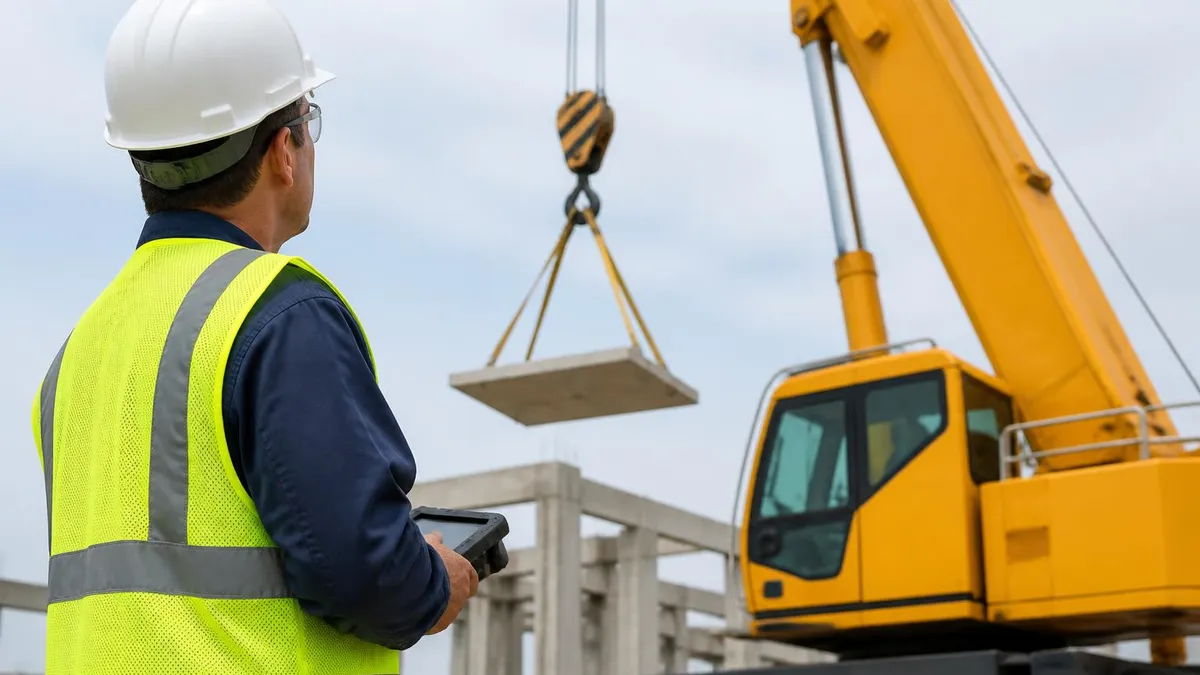
Scam websites advertising same-day OSHA 30 cards, courses under $50, or no-coursework certificates have become widespread. The Department of Labor does not authorize any provider to issue cards without completing the full 30 hours of instruction. Using a fraudulent card on a job site can result in immediate termination, criminal charges for fraud, and permanent disqualification from future safety certifications. Always verify your provider against OSHA's official Outreach trainer database before paying.
Choosing an authorized OSHA 30 course provider is the single most important step in the enrollment process. OSHA itself does not deliver Outreach training directly — instead, it authorizes independent trainers who have completed the OSHA 500 trainer course for construction or the OSHA 501 course for general industry.
These authorized trainers can then teach OSHA 30 courses in their own classrooms, through their employers, or through online platforms that license their content. Anyone marketing OSHA 30 training must work through an authorized trainer to issue the official DOL card. Learn more about the trainer pathway in our guide to the OSHA 500 Course Online: Complete Guide to Trainer Certification for Construction Industry Outreach.
The most reliable way to verify a provider is to check the OSHA Outreach Training Program online directory at osha.gov, which lists every authorized provider and trainer by region and industry. Legitimate online platforms display their authorized trainer's name and credentials prominently on their website, and the trainer's name must appear on your completion certificate. If a provider cannot or will not name the OSHA-authorized trainer issuing your card, do not enroll.
Established and widely-recognized online providers include 360training, ClickSafety (now part of HSI), OSHA Education Center, OSHAcademy (no relation to OSHA itself), Pure Safety, Summit Training Source, and several community college continuing-education programs. Pricing among legitimate providers clusters between $129 and $189 for online construction OSHA 30, with occasional promotional discounts during slow seasons. Be skeptical of any provider charging dramatically less than this range.
Beyond price, evaluate providers on several practical criteria. Check whether the course is mobile-friendly so you can complete modules from a tablet or phone. Confirm the provider offers free technical support during evenings and weekends when most students study. Verify the DOL wallet card is included at no extra cost — some providers list a low base price and then charge $30 to $50 for card shipping. Read recent Trustpilot and Google reviews focusing on complaints about card delivery delays, refund issues, or unresponsive support.
Customer support matters more than most students anticipate. The OSHA 30 course is substantial, and questions about content interpretation come up frequently. Quality providers staff live chat or phone support with safety professionals who can answer technical questions about regulations rather than just platform navigation. Test the support channels before paying by sending a substantive question and evaluating the response speed and quality. A provider that takes three days to respond before purchase will not improve after you pay.
For supervisors and safety coordinators looking to simplify training procurement across teams, several providers offer bulk enrollment discounts, learning management system integrations with corporate HR platforms, and centralized reporting that lets safety managers track completion progress across the workforce. These features matter especially for general contractors managing dozens of supervisors across multiple sites who need consolidated training records for OSHA inspections, EMR audits, and prequalification submissions to project owners.
Finally, save every document from your OSHA 30 training journey: the enrollment receipt, the completion certificate, scans of your wallet card front and back, and any continuing education certificates. Lost wallet cards can be replaced for around $15-$25 by the original issuing trainer within five years of course completion, but only if you can prove your identity and original enrollment.
After five years, you'll likely need to retake the entire course. If you need to reach OSHA directly for clarification on training requirements or to verify a trainer's credentials, the OSHA Contact Number: Complete Directory of Phone Numbers, Regional Offices, and How to Reach OSHA for Questions, Complaints, and Emergencies provides every relevant phone line and regional office.
Final preparation for getting maximum value from your OSHA 30 courses starts with the right mindset and study environment. Treat the 30 hours of instruction as professional development rather than a checkbox exercise — the safety knowledge you gain genuinely prevents injuries and deaths on your job sites. Block dedicated study time on your calendar, ideally in two-hour sessions with short breaks between modules, and study in a quiet location free from interruptions. Reading on a phone during a lunch break technically counts toward your hours but yields poor retention compared to focused desk study.
Take handwritten or typed notes as you work through each module, especially noting OSHA standard citations like 29 CFR 1926.501 (fall protection) or 1926.1400 (cranes and derricks). These citations come up constantly in real OSHA inspections, and being able to reference the specific regulation by number marks you as a serious safety professional in the eyes of inspectors, project managers, and union officials. Many course platforms include downloadable PDFs of the regulations — print or save these for quick reference on the job after the course ends.
If you struggle with a particular module, use the platform's pause and rewind features liberally. Online courses are not exams — there is no time pressure and no penalty for spending extra time on difficult content. Some students find that complementing the course with free YouTube videos from OSHA-authorized trainers or watching real incident investigation reports on the U.S. Chemical Safety Board's channel deepens understanding of why specific regulations exist. Context turns dry regulatory text into memorable safety lessons.
Take the end-of-module quizzes seriously even though you can retake them. The quizzes are designed to surface specific concepts the OSHA Outreach program considers essential. If you barely pass with 70 percent, that means you misunderstood roughly one-third of the content — go back and review before moving forward, because each module builds on the previous one. Students who consistently score 90 percent or higher on practice quizzes are demonstrably better prepared for real safety decisions on the job.
After completing OSHA 30, immediately apply your knowledge on your current job site. Walk the site with fresh eyes and identify three hazards you would have missed before the training. Document them, propose corrective actions, and discuss with your supervisor. This pattern of immediate application converts theoretical knowledge into practical competency and demonstrates to your employer that the training investment paid off. Many supervisors who take OSHA 30 seriously find themselves promoted to safety coordinator or site superintendent within 12-18 months.
Continue your safety education beyond OSHA 30. Natural next steps include taking the OSHA 510 course in construction industry standards, the OSHA 500 train-the-trainer course if you want to teach OSHA 10 and 30 yourself, the BCSP-administered Safety Trained Supervisor Construction (STSC) credential, the Certified Safety Manager (CSM) credential, or the more advanced Certified Safety Professional (CSP) designation. For crane-focused supervisors, NCCCO Lift Director, Signal Person, and Rigger Level 1 certifications complement OSHA 30 perfectly.
Finally, remember that the OSHA 30 wallet card is the beginning of a safety career, not the end. The construction industry evolves constantly with new equipment, new materials, new chemicals, and new regulations. Subscribe to OSHA's QuickTakes newsletter, follow ASSP (American Society of Safety Professionals) publications, attend annual safety conferences when possible, and stay engaged with industry forums where safety professionals share lessons learned. The most respected supervisors are those who treat safety as a lifelong learning commitment rather than a one-time certification.
Sample OSHA - OSHA Certified Crane Operator Practice Questions
Try these questions from our free OSHA - OSHA Certified Crane Operator practice tests. The correct answer and an explanation follow each question.
Under what condition may a crane operate closer than standard OSHA minimum approach distances to overhead power lines?
- A. When the operator has more than 10 years of experience
- B. When the load weight is under 2,000 pounds
- C. When the utility owner deenergizes and visibly grounds the lines
- D. When operations occur during daylight hours only
Answer: C. When the utility owner deenergizes and visibly grounds the lines
OSHA 1926.1408(d) permits reduced clearance only when the utility owner/operator has deenergized the power lines and visibly grounded them.
When a new crane model is introduced that differs significantly from what an operator is certified on, what must the employer do?
- A. Nothing additional is needed if the operator holds any valid certification
- B. Evaluate the operator on the new equipment before unsupervised operation
- C. Require a completely new NCCCO exam
- D. File a variance request with OSHA
Answer: B. Evaluate the operator on the new equipment before unsupervised operation
Employers must evaluate and document operator qualification on equipment that differs significantly from what they are already certified on.
When a crane must operate within a power line's danger zone, OSHA requires that a dedicated spotter be assigned to watch for what?
- A. Load swing and rigging condition
- B. The crane's proximity to the energized power lines at all times
- C. Ground crew positioning and foot traffic only
- D. Wind speed and weather changes
Answer: B. The crane's proximity to the energized power lines at all times
OSHA requires a dedicated spotter whose sole responsibility is monitoring the distance between the crane and energized power lines during all movements in the danger zone.
What is the minimum safe approach distance required by OSHA for crane operations near power lines energized at 50 kV or less?
- A. 5 feet
- B. 10 feet
- C. 15 feet
- D. 20 feet
Answer: B. 10 feet
OSHA 29 CFR 1926.1408 requires a minimum clearance of 10 feet for power lines energized up to 50 kV.
Take the full OSHA - OSHA Certified Crane Operator practice test
OSHA Questions and Answers
OSHA 500 Course Online: Complete Guide to Trainer Certification for Construction Industry Outreach
360 OSHA Training: Complete Guide to Online OSHA 10 & 30 Certification Courses for Construction and General Industry Workers
OSHA Contact Number: Complete Directory of Phone Numbers, Regional Offices, and How to Reach OSHA for Questions, Complaints, and Emergencies

OSHA 29 CFR 1926: Complete Guide to Construction Industry Safety and Health Regulations for Crane Operators, Contractors, and Site Supervisors
OSHA (OSHA Certified Crane Operator) Test Guide
About the Author

Certified Safety Professional & OSHA Compliance Expert
Indiana University of Pennsylvania Safety SciencesDr. William Foster holds a PhD in Safety Science from Indiana University of Pennsylvania and is a Certified Safety Professional (CSP) and Certified Hazardous Materials Manager. With 20 years of occupational health and safety management experience across construction, manufacturing, and chemical industries, he coaches safety professionals through OSHA certification, CSP, CHST, and safety management licensing programs.
Join the Discussion
Connect with other students preparing for this exam. Share tips, ask questions, and get advice from people who have been there.
View discussion (8 replies)