
NYPD Salary Guide: Pay by Rank from Officer to Commissioner 2026 October
🎓 Prepare for the NYPD Salary Guide: Pay by Rank from certification. Practice questions with answer explanations covering all exam domains.
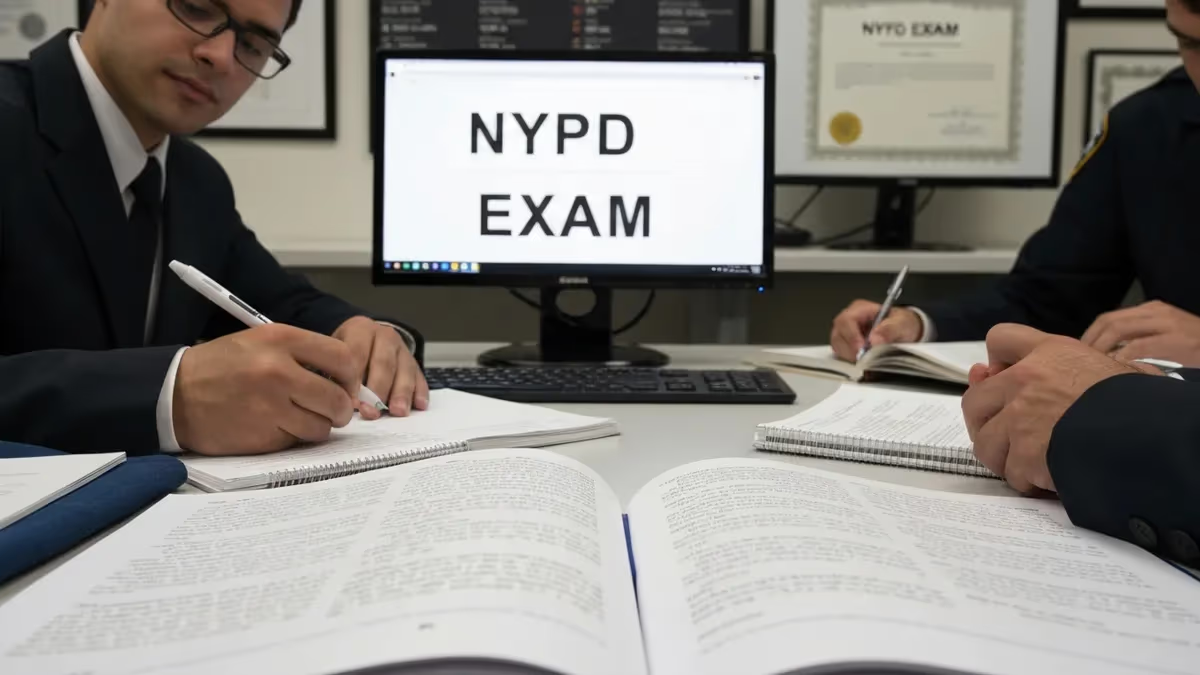
If you're considering a career with New York City's Finest, understanding nypd salary is one of the first things you need to nail down. The pay structure covers everyone from entry-level recruits to the NYPD Commissioner — and the range is enormous. Recruits start at a trainee rate during the Police Academy, while seasoned officers with overtime and longevity pay can pull in six figures well into their careers.
The nypd starting salary for a new officer has changed over recent contract cycles. As of the latest Patrolmen's Benevolent Association (PBA) agreement, recruits begin at around $42,500 during training. Once you graduate the academy and hit the street as a probationary officer, the rate jumps to approximately $51,000. After 5.5 years of service, base pay reaches roughly $85,000 — and that's before overtime, night differentials, and specialty pay are added.
This guide covers everything: nypd salary by rank, how pay scales as you promote, detective and sergeant rates, and what the NYPD Commissioner earns. Whether you're studying for the entrance exam or planning your 20-year career, knowing the full compensation picture helps you make an informed decision about joining one of the largest police forces in the world.

Let's get specific about nypd starting salary and how it grows over time. New recruits enter the Police Academy at a rate of approximately $42,500 annually. That's lower than full officer pay, but the academy period is compensated — you're earning while you train. Once you graduate (typically after six months), your nypd police salary jumps to roughly $51,000 as a probationary police officer.
The step increases are built into the PBA contract. At 1.5 years: ~$55,000. At 2.5 years: ~$60,000. At 4 years: ~$70,000. At 5.5 years (full salary step): ~$85,000 base. Most officers also earn significant overtime — the NYPD overtime budget runs into the hundreds of millions annually, and it's common for officers to push well past $100,000 in total compensation. Check nypd starting salary details for the latest PBA-negotiated rates before applying.
On top of base salary, NYPD officers receive a full benefits package: health insurance, a defined-benefit pension (50% of salary after 20 years), and paid holiday/vacation time. The pension alone makes the total compensation picture extremely competitive. Many officers retire in their early 40s with a guaranteed income for life — that's a benefit that's increasingly rare in modern employment.
The nypd detective salary is one of the most-searched figures in NYPD pay tables — and for good reason. Detectives don't follow the standard officer scale; they're assigned to one of three grade levels. Detective Third Grade earns approximately $92,000–$96,000 base. Detective Second Grade is around $98,000–$103,000. Detective First Grade — the top detective rank — earns approximately $105,000–$115,000 base salary, and that's before overtime.
Being promoted to detective isn't just about time on the job. You need to be recommended by your commanding officer, typically based on investigative performance, arrests, or special assignment work. Many officers spend years working plainclothes details or anti-crime units before getting their shield. The competition is real — but so is the police nypd salary bump that comes with it.
Detectives also frequently earn substantial overtime. High-profile investigations, court appearances, and on-call hours push many detectives well past $130,000 in total annual earnings. NYC also pays shift differentials for nights and weekends, which stack on top of the detective base. For officers with a knack for investigations, the detective track is one of the highest-earning paths without moving into supervisory ranks.
The application process for detective is competitive but manageable if you know what the NYPD values. Most officers who earn their detective shield have demonstrated consistent case work, strong arrest numbers, and — critically — positive relationships with supervisors who advocate for them. Building that reputation starts on day one of patrol, long before you're thinking about the detective pay bump.
NYPD Pay by Career Stage
NYPD recruits earn $42,500 during academy training. After graduating, probationary officers start at approximately $51,000. Salary increases on a step schedule tied to years of service: $55K at 1.5 years, $60K at 2.5 years, $70K at 4 years, and $85K base at 5.5 years. Overtime and night differentials regularly push total compensation past $100,000 even at this level.
The nypd commissioner salary reflects the highest executive level of NYPD leadership. The Police Commissioner is an at-will appointee of the Mayor of New York City, and the nypd officer salary and commissioner pay exist at very different ends of the spectrum. The commissioner earns approximately $205,000–$225,000 per year in base compensation — placing the role firmly in senior executive government pay territory.
It's important to distinguish the police commissioner from other deputy commissioner roles. The nypd officer salary scale ends at captain for uniformed ranks, after which officers move into inspector and chief grades. The various Deputy Commissioners (overseeing Legal Matters, Public Information, Intelligence, etc.) earn in the $190,000–$215,000 range, depending on their portfolio and tenure.
The commissioner and senior command also receive benefits consistent with executive NYC government positions: health insurance, city vehicle, executive security detail, and access to the city's retirement system. While the commissioner doesn't receive overtime, the role comes with prestige, policy-making authority, and — if they serve long enough — access to a city pension. Most commissioners hold the role for 2–5 years before moving to private sector or consulting work.
Let's talk about nypd captain salary and police commissioner salary nypd in context. A captain earning $190,000 base is already in the top 5% of US household incomes — before pension and benefits are counted. The police commissioner salary nypd is set at approximately $205,000–$225,000, which seems modest given the responsibility of overseeing 36,000 officers and civilian employees across the largest police department in the United States.
For context, the NYPD Chief of Department — the highest-ranking uniformed officer — earns approximately $230,000–$250,000, slightly more than the commissioner in some years due to uniformed pay structures and longevity. This surprises many people, but the chief of department is a civil service position with defined pay scales, while the commissioner is a political appointee with a separately negotiated salary.
Knowing these numbers matters whether you're planning a 20-year career or just starting to study for the entrance exam. The salary progression from officer to captain represents a nearly 5× increase in base pay over a career. When you factor in the defined-benefit pension — which can pay 50–75% of your final salary for life — the long-term financial picture is genuinely compelling for anyone willing to put in the work and years of service.
NYPD Career: Financial Pros and Cons
- +Defined-benefit pension pays 50–75% of salary after 20–25 years
- +Starting salary increases quickly through PBA step schedule
- +Substantial overtime opportunities available at every rank
- +Full health, dental, and vision insurance for officer and family
- +Detective and sergeant promotions deliver major salary jumps
- +NYC longevity pay and shift differentials boost total compensation
- −Academy starting salary ($42,500) is below NYC living wage
- −Full base salary ($85K) doesn't kick in until 5.5 years
- −NYC cost of living means $85K goes less far than in other cities
- −Overtime is never guaranteed and depends on department budget
- −Promotion timelines are competitive — sergeant exam waits can be years
- −Commissioner and chief roles are subject to political appointment cycles
Pros and Cons at a Glance
| Pros | Cons |
|---|---|
| Starting salary increases quickly through PBA step schedule | Overtime is never guaranteed and depends on department budget |
| Substantial overtime opportunities available at every rank | Promotion timelines are competitive — sergeant exam waits can be years |
| Full health, dental, and vision insurance for officer and family | Commissioner and chief roles are subject to political appointment cycles |
Understanding nypd pay salary goes beyond the base rate — it's about total compensation. NYC has negotiated a series of pay improvements through successive PBA contracts. Officers who reach the top pay step ($85K base) are still eligible for overtime, night shift differential (8–10% extra), and assignment-specific pay for units like Harbor, Aviation, or K-9. The nypd sergeant salary of approximately $140,000+ also includes these add-ons.
Pay scales are governed by collective bargaining agreements. The PBA represents patrol officers and detectives below the rank of sergeant. The Sergeants Benevolent Association (SBA), Lieutenants Benevolent Association (LBA), and Captains Endowment Association (CEA) each bargain separately for their respective ranks. This means pay raises at different rank levels don't always happen simultaneously — a factor to keep in mind when planning your career timeline.
For officers thinking about their pension, the nypd pay salary in the final years of service matters most. NYC pensions are typically calculated as a percentage of your "final average salary" — the average of your three highest-earning years. Officers who maximize overtime in their final years can significantly boost their lifetime pension income. It's a real strategy, and it's one reason experienced NYPD officers often seek high-overtime assignments as they approach retirement eligibility.
In addition to base salary and overtime, NYPD officers benefit from a $12,000 annual uniform allowance contribution, holiday pay (1.5× for working certain holidays), and a transit benefit covering NYC MTA monthly passes. These add-ons may seem small individually, but they stack up to a meaningful total compensation bump over the course of a year — particularly for officers on rotating shifts who regularly qualify for multiple differential categories at once.
NYPD Benefits and Compensation Checklist
- ✓Base salary from $42,500 (recruit) to $85,000+ (5.5 years) for patrol officers
- ✓Defined-benefit pension: 50% of salary after 20 years, 75% after 25 years
- ✓Overtime pay available for officers, detectives, and sergeants
- ✓Night shift differential of 8–10% added to base for qualifying hours
- ✓Full health, dental, and vision insurance for officer and eligible dependents
- ✓Uniform allowance paid annually to cover required equipment and clothing
- ✓Paid vacation: 27 days annually after 15 years of service
- ✓Line-of-duty death and disability insurance coverage
- ✓Tuition reimbursement program for college courses during employment
- ✓NYC deferred compensation plan (457b) for additional retirement savings
The nypd police officer salary is competitive, but how does it compare to other major US police departments? LAPD officers max out at roughly $95,000 base; Chicago PD reaches about $93,000 maximum base for patrol. The nypd officer salary tops out around $85,000 base at 5.5 years for patrol, which sounds lower — but the pension structure, NYC COLAs, and overtime culture make total compensation highly competitive in practice.
Commissioner of nypd salary — approximately $205,000–$225,000 — is lower than many large-city police chiefs across the US, particularly in comparison to chiefs at major Texas and Florida departments. But the NYC compensation package includes benefits that private-sector executives don't get: a city pension, full government health coverage, and substantial job security outside political appointments. The commissioner role is effectively a cabinet-level position in city government.
One often-overlooked component: NYPD officers who retire after 20 years can take outside employment while collecting their pension. Many retired officers work in corporate security, investigations, or law enforcement consulting — effectively doubling their income in retirement. The combination of a guaranteed pension and the skills that NYPD service develops makes the department one of the most financially rewarding long-term career choices in American law enforcement.
The nypd cop salary discussion often misses one key factor: geographic adjustments. NYC officers live and work in one of the most expensive cities in the world — but they also benefit from NYC-specific pension and benefits structures that aren't available at suburban or state police agencies. The nypd police commissioner salary, while lower than some private equivalents, comes with unique institutional authority that no other law enforcement position in the city can match.
Another compensation note: NYPD officers are eligible for a $7,500 recruiting bonus for candidates who pass the civil service exam and hold certain hard-to-fill credentials (bilingual skills, military veterans, prior law enforcement). This bonus is paid upon completing the academy and entering probationary status. It's not huge relative to a full career, but for candidates weighing multiple offers, it's worth knowing about when comparing total first-year compensation packages.
The nypd police commissioner salary question also comes up in the context of pension benefits. Commissioners who serve long enough to qualify for the city pension system — typically 5–10 years in a qualifying position — receive benefits comparable to other senior city executives. Most commissioners, however, serve shorter tenures and rely on their private-sector earnings post-service rather than pension income. It's a different retirement calculus than the one patrol officers follow, but it's worth understanding the full picture.
NYPD salary figures are set through collective bargaining with the PBA, SBA, LBA, and CEA. Rates change with each contract cycle — sometimes significantly. Always verify current pay scales on the NYPD Recruitment website or NYC Department of Citywide Administrative Services before making career or financial decisions. The figures in this article reflect the most recent publicly available contract terms as of 2025.
Understanding nypd lieutenant salary gives you a clear picture of the mid-senior rank pay jump. Lieutenants — who command patrol platoons and oversee sergeants — earn approximately $155,000–$175,000 base salary. That's a substantial step up from sergeant pay, and it comes with increased administrative responsibility. Most lieutenants spend 5–10 years at the rank before being considered for captain promotion.
Nypd salary by rank follows a clear progression: Officer ($51K–$85K base), Detective ($92K–$115K), Sergeant ($140K–$160K), Lieutenant ($155K–$175K), Captain ($180K–$200K), Deputy Inspector/Inspector ($195K–$215K), Deputy Chief/Chief ($215K–$240K), Police Commissioner ($205K–$225K). The progression isn't linear in time — promotions depend on exam scores, time in grade, and available positions — but the pay trajectory is consistent and well-defined.
Whatever your rank target, understanding nypd salary by rank from day one lets you set realistic financial goals and timelines. The step schedule for patrol officers is fixed and contractual; you'll know exactly when raises are coming. Above officer rank, promotion timelines vary — but the pay rewards for moving up are significant at every level. Start your prep, pass the exam, and let the salary structure work in your favor over a full career.
New York City also offers officers who earn college degrees an additional education incentive pay of up to $6,000 annually. That's a quiet but meaningful reward for officers who pursue their education while on the job — and it adds another layer to the total compensation stack that makes the NYPD one of the better-compensated departments in the country for career-minded officers.
NYPD Practice Test Questions
Prepare for the NYPD Exam exam with our free practice test modules. Each quiz covers key topics to help you pass on your first try.
NYPD Auxiliary Police
NYPD Exam Questions covering Auxiliary Police. Master NYPD Test concepts for certification prep.
NYPD Entry Exam
Free NYPD Practice Test featuring Entry Exam. Improve your NYPD Exam score with mock test prep.
NYPD Deductive and Inductive Reasoning
NYPD Test Prep for Deductive and Inductive Reasoning. Practice NYPD Quiz questions and boost your score.
NYPD Information Ordering
NYPD Questions and Answers on Information Ordering. Free NYPD practice for exam readiness.
NYPD Memorization Skills
NYPD Mock Test covering Memorization Skills. Online NYPD Test practice with instant feedback.
NYPD Legal Definitions and Police Procedures
Free NYPD Quiz on NYPD Legal Definitions and Police Procedures. NYPD Exam prep questions with detailed explanations.
NYPD Mathematical Reasoning
NYPD Practice Questions for NYPD Mathematical Reasoning. Build confidence for your NYPD certification exam.
NYPD Problem Sensitivity
NYPD Test Online for Problem Sensitivity. Free practice with instant results and feedback.
NYPD Reading Comprehension
NYPD Study Material on Reading Comprehension. Prepare effectively with real exam-style questions.
NYPD Situational Judgment
Free NYPD Test covering Situational Judgment. Practice and track your NYPD exam readiness.
NYPD Spatial Orientation
NYPD Exam Questions covering Spatial Orientation. Master NYPD Test concepts for certification prep.
When people search nypd salary lieutenant, they're often trying to understand whether the promotion from sergeant is worth the additional responsibility. The short answer is yes — the pay jump from sergeant ($140K–$160K) to lieutenant ($155K–$175K) is meaningful, and lieutenants retain access to the same pension structure and benefits. The workload shifts from street supervision to administrative command, which suits some officers better than others.
Exploring nypd ranks and salary together helps you see the full earning potential of a career in blue. The step schedule from recruit to full officer to detective or sergeant tracks over roughly 10–15 years and can take your base salary from $42,500 to well over $140,000. With pension, overtime, and NYC-specific benefits layered on top, the lifetime financial value of an NYPD career is exceptional — particularly compared to other careers that don't come with a guaranteed retirement income.
If you're ready to take the first step, the NYPD Entry Exam is your gateway into this pay structure. The exam tests cognitive skills, reading comprehension, and basic problem-solving. Preparation matters — candidates who practice with realistic exam-style questions consistently outperform those who walk in cold. Use the practice quizzes on this page to build your skills, understand the format, and put yourself in the best position to earn that starting salary and everything that follows.
Sample NYPD Exam Practice Questions
Try these questions from our free NYPD Exam practice tests. The correct answer and an explanation follow each question.
Five officers each submitted a field interview card. Cards were submitted at: Officer 1—11:30, Officer 2—09:00, Officer 3—14:15, Officer 4—08:45, Officer 5—13:00. Which order reflects earliest to latest submission?
- A. 4, 2, 1, 5, 3
- B. 1, 2, 3, 4, 5
- C. 2, 4, 1, 5, 3
- D. 4, 2, 5, 1, 3
Answer: A. 4, 2, 1, 5, 3
Ordering by time: 08:45 (4), 09:00 (2), 11:30 (1), 13:00 (5), 14:15 (3).
An officer is pursuing a suspect on foot. The pursuit begins with the officer running 3 blocks North. The suspect then turns left, and the officer follows for 2 blocks. The suspect makes a right turn, and the officer follows for another 3 blocks. Finally, the suspect makes another right turn. In which cardinal direction is the officer now running?
- A. West
- B. North
- C. South
- D. East
Answer: D. East
The officer starts by running North. A left turn from North faces West. A right turn from West faces North. A final right turn from North faces East. Therefore, the officer is now running East.
A department rule states: 'No officer may accept gifts valued over $25 from any member of the public.' Officer Nguyen receives a gift basket from a grateful citizen valued at $40. What is the correct conclusion?
- A. Officer Nguyen may keep it since it is a gift, not a bribe
- B. Officer Nguyen violated the rule by accepting a gift valued over $25
- C. Officer Nguyen may keep half and return the rest
- D. The rule only applies to cash gifts
Answer: B. Officer Nguyen violated the rule by accepting a gift valued over $25
The rule explicitly prohibits accepting any gift over $25 from the public; a $40 gift basket falls above the threshold and violates the rule.
Officer Reed is conducting a welfare check on a man whose family hasn't heard from him in a week. The man answers the door, says he's fine, and tries to close it quickly. Officer Reed notices the man's apartment is completely dark at noon, he has a week's worth of unopened mail, and his speech is unusually slow. What problem should Officer Reed identify?
- A. The man values his privacy and law enforcement should respect his wish to be left alone
- B. The man shows multiple indicators of a serious mental health crisis or medical condition requiring intervention
- C. The family is overreacting to a week of no contact
- D. The man works night shifts and the closed curtains and slow speech reflect sleep deprivation
Answer: B. The man shows multiple indicators of a serious mental health crisis or medical condition requiring intervention
Darkness at midday, unopened mail, and slowed speech together form a cluster of warning signs indicating a person who may be in a serious mental health or medical crisis.
NYPD Questions and Answers
About the Author

Attorney & Bar Exam Preparation Specialist
Yale Law SchoolJames R. Hargrove is a practicing attorney and legal educator with a Juris Doctor from Yale Law School and an LLM in Constitutional Law. With over a decade of experience coaching bar exam candidates across multiple jurisdictions, he specializes in MBE strategy, state-specific essay preparation, and multistate performance test techniques.
Join the Discussion
Connect with other students preparing for this exam. Share tips, ask questions, and get advice from people who have been there.
View discussion (8 replies)