
NCLEX Prep Course vs. Bootcamp vs. Tutor — Which Option Fits You Best?
Get ready for your NCLEX Prep Course vs. Bootcamp vs. 📚 Tutor certification. Practice questions with step-by-step answer explanations and instant scoring.
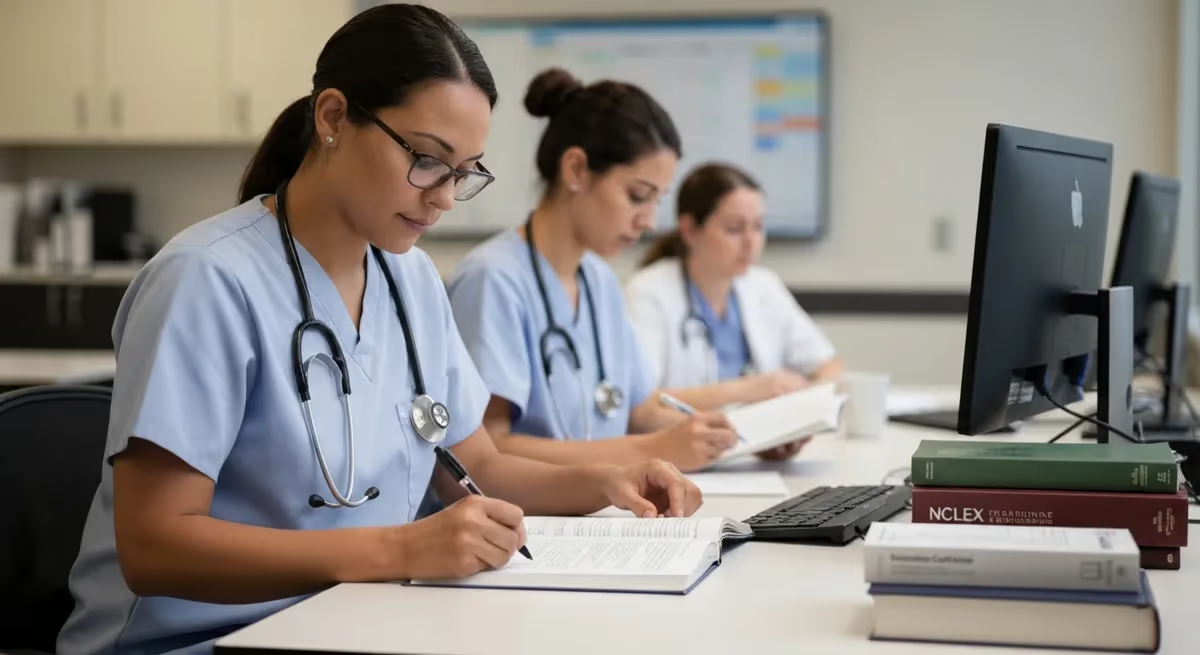
Choosing between an nclex prep course vs bootcamp vs tutor is one of the biggest decisions you'll make after nursing school. Each option has real trade-offs — in cost, flexibility, and how well it matches your learning style. Pick wrong, and you waste time and money. Pick right, and you walk into Pearson VUE confident and ready to pass on your first attempt.
An nclex tutor gives you personalized attention that group settings can't match. A prep course offers structured curriculum with video lectures, question banks, and progress tracking. A bootcamp compresses everything into an intense sprint — usually one to four weeks of back-to-back study. The best choice depends on how much time you have, what your weak areas are, and how you learn most effectively. There's no universal answer here.
If you're searching for an nclex tutor near me, you've probably already tried self-study and hit a wall. That's normal. The NCLEX-RN and NCLEX-PN test clinical judgment, not just memorization, and many nursing graduates find that shift difficult without guidance. This article breaks down all three options honestly — costs, pros, cons, and who each one works best for — so you can make an informed decision without the marketing spin that most review companies layer on top.

When you search for nclex tutor near me, you'll find options ranging from independent nursing educators to tutors employed by large review companies. Independent tutors often charge less and offer more scheduling flexibility. Company-affiliated tutors usually follow a set curriculum — which can be a positive if you need structure, but limiting if your weak spots fall outside their standard plan.
Searching for nclex tutors near me also returns online-only options, and these deserve serious consideration. Virtual tutoring eliminates geographic barriers. You can work with a top-rated tutor in another state without commuting. Many nursing graduates in rural areas find that online tutoring gives them access to expertise that simply doesn't exist locally. Screen-sharing platforms make it easy to review practice questions together in real time, so you don't lose much compared to sitting across a table.
Before you hire anyone, ask three questions. First: what's their NCLEX pass rate among previous students? Second: do they customize sessions based on your diagnostic results, or follow a one-size-fits-all plan? Third: how many hours do they typically recommend? A tutor who can't answer these clearly isn't worth your investment. You're paying for targeted help, not general encouragement — and good tutors know exactly how to structure their sessions around your weakest content areas.
Finding the right tutor for nclex preparation means understanding what separates a great tutor from a mediocre one. Great nclex tutors don't just explain content — they teach you how to think through questions. The NCLEX uses Next Generation item types that test clinical judgment, and you need someone who can show you the reasoning process, not just drill you on facts. A tutor who says "memorize this" for every topic isn't teaching you the skill the exam actually measures.
Online platforms like Wyzant, Varsity Tutors, and Care.com list nclex tutors near me with reviews and hourly rates visible upfront. You can filter by specialty — some tutors focus on NCLEX-RN, others on NCLEX-PN, and a few handle both. Check whether the tutor has recent nursing experience, because NCLEX content changes regularly. Someone who passed their own NCLEX ten years ago but hasn't kept up with NGN format changes may not serve you well.
Pricing varies widely. Expect $50 to $80 per hour for independent tutors and $80 to $150 per hour through established review companies. Most students need between 10 and 20 hours of tutoring total. That puts the full cost at $500 to $3,000 — comparable to many prep courses but with the advantage of fully personalized instruction. Some tutors offer package deals that bring the per-hour cost down, so always ask before committing to session-by-session pricing.
Three Prep Methods Compared
Best for: Self-motivated learners who want structure without rigid schedules. Prep courses from UWorld, Kaplan, Hurst, and Archer offer video lectures, adaptive question banks, and study calendars. Most run 1–3 months and cost $200–$500. You study at your own pace but follow a proven curriculum. The downside? No one checks whether you're actually doing the work. If accountability is your weakness, a course alone may not be enough.
If you're exploring nclex tutoring near me options, don't overlook your nursing school's resources. Many programs offer free or low-cost nclex tutoring through alumni networks, faculty office hours, or partnerships with review companies. These aren't always advertised — you may need to ask your academic advisor or dean of nursing directly. Schools have a vested interest in your success because NCLEX pass rates affect their accreditation, so they're usually willing to connect you with help.
Community colleges and workforce development centers sometimes offer NCLEX review sessions too. These group tutoring environments split the cost among participants, making them a budget-friendly alternative to private sessions. The trade-off is less individual attention, but if your main need is content review rather than test-taking strategy, group sessions can work just fine. Check your local community college's continuing education catalog — many offer NCLEX-specific workshops during spring and fall.
Online nclex tutoring has exploded since 2020, and the quality has improved dramatically. Platforms now offer interactive whiteboards, shared question banks, and recorded sessions you can rewatch later. Some tutors even provide between-session homework with feedback. If you're comparing in-person versus online, consider that online tutoring typically costs 10–20% less while offering equal or greater scheduling flexibility. The only real downside is the lack of physical presence, which some learners find harder to engage with.
Searching for an nclex rn tutor near me returns different results than a generic NCLEX tutor search because many tutors specialize. NCLEX-RN content covers more complex clinical scenarios, delegation questions, and leadership topics than NCLEX-PN. Make sure your tutor has specific RN exam expertise — someone who primarily tutors PN candidates may not prepare you adequately for the RN-level critical thinking questions that the exam emphasizes heavily.
An nclex refresher course is a different product entirely. Refresher courses target nurses who graduated more than a year ago and haven't yet taken the exam, or nurses returning to the field after an extended break. These courses review foundational nursing content — not just test-taking strategy. If you graduated recently and failed once, you probably don't need a full refresher. A tutor for nclex exam prep or a focused bootcamp would be more time-efficient in that situation.
State boards of nursing sometimes require a remedial or refresher course before allowing repeat test attempts. If you've failed the NCLEX multiple times, check your state board's requirements before choosing a prep method. Some states mandate a specific number of classroom hours, which means self-study courses or private tutoring alone may not satisfy the requirement. Florida, California, and Texas each have different rules — don't assume yours matches what you've read about another state.
NCLEX Prep Course vs. Bootcamp vs. Tutor
- +Prep courses offer self-paced flexibility and large question banks
- +Bootcamps provide intense focused review in compressed timeframes
- +Private tutors customize every session to your specific weak areas
- +Online tutoring eliminates geographic limitations and commute time
- +Many prep courses include pass guarantees with extended access
- +Bootcamp environments create accountability through daily structure
- −Prep courses require strong self-discipline with no external accountability
- −Bootcamps are exhausting — burnout risk is real with 6-8 hour study days
- −Private tutoring costs more per hour than any other prep method
- −Online-only prep misses hands-on practice for clinical judgment questions
- −Cheap tutors may lack recent NCLEX experience or NGN format knowledge
- −Bootcamp pacing leaves little room for students who need extra time on topics
Pros and Cons at a Glance
| Pros | Cons |
|---|---|
| Prep courses offer self-paced flexibility and large question banks | Prep courses require strong self-discipline with no external accountability |
| Bootcamps provide intense focused review in compressed timeframes | Private tutoring costs more per hour than any other prep method |
| Private tutors customize every session to your specific weak areas | Online-only prep misses hands-on practice for clinical judgment questions |
| Online tutoring eliminates geographic limitations and commute time | Cheap tutors may lack recent NCLEX experience or NGN format knowledge |
| Many prep courses include pass guarantees with extended access | Bootcamp pacing leaves little room for students who need extra time on topics |
Candidates looking for the best nclex prep classes near me often end up comparing live review courses — and these deserve a closer look. Live classes combine lecture-style teaching with group Q&A, and the best ones incorporate active learning techniques like case studies and practice questions worked through in real time. Mark Klimek, Hurst, and Kaplan all offer in-person review sessions in major cities. Pricing typically runs $300 to $800 for a multi-day event.
A tutor for nclex exam preparation works best when paired with a question bank you're already using. The tutor doesn't replace your UWorld or Archer subscription — they enhance it. Bring your weakest practice test results to each session and let the tutor work through those specific question types with you. This combination approach — self-study course plus targeted tutoring — often produces the best outcomes because you get both breadth and depth. Many top-performing candidates use exactly this formula.
Cost comparison matters. A prep course runs $200 to $500. A bootcamp costs $300 to $1,500. Private tutoring totals $500 to $3,000 depending on hours needed. If budget is tight, start with a prep course and add 5–10 tutoring hours for your weakest areas. If money isn't the primary constraint, a bootcamp plus a few tutor sessions covers all your bases. There's no single best option — only the best option for your situation, timeline, and learning style.
Your NCLEX Prep Decision Checklist
- ✓Take a diagnostic practice test to identify your weakest NCLEX content areas
- ✓Set a realistic test date — allow at least 4-6 weeks of dedicated study time
- ✓Calculate your total prep budget including materials, courses, and tutoring
- ✓Research nclex tutor near me options — compare rates, reviews, and specialties
- ✓Check if your nursing school offers free alumni review resources or tutoring
- ✓Decide whether you need content review, test strategy, or both
- ✓Read pass guarantee fine print before purchasing any prep course or bootcamp
- ✓Ask potential tutors about their NCLEX pass rate and teaching approach
- ✓Confirm your state board's requirements if you're a repeat test-taker
- ✓Start practice questions early — aim for 100-150 per day in your final two weeks
If you're considering an nclex pn prep course, the landscape looks slightly different from RN prep. Fewer companies offer PN-specific courses, but the ones that do — like Archer and Kaplan — tailor their content to the NCLEX-PN blueprint. PN candidates often find that a focused prep course plus free practice questions provides enough preparation. The PN exam is shorter and covers a narrower content scope than the RN version, so you may not need a full bootcamp or extensive tutoring.
You might notice nclex tutor jobs posted on Indeed and LinkedIn. That's a growing field — and it tells you something important about market demand. So many nursing graduates need exam help that tutoring has become a viable career path for experienced nurses. If you're hiring a tutor, look for one who tutors as a primary occupation rather than a side gig. Full-time nclex tutors stay current with exam changes, refine their teaching methods continuously, and have more student outcome data to share with you during your initial consultation.
Some candidates combine multiple prep methods across different phases. Phase one: complete a self-paced course to build foundational knowledge. Phase two: attend a bootcamp to intensify your review. Phase three: hire a tutor for the final week to address remaining weak spots. This layered approach costs more but produces high pass rates among students who use it — especially repeat test-takers who need to change their study approach entirely from what failed before.
For tutors for nclex who advertise on social media, verify their credentials before booking. Anyone can call themselves an NCLEX tutor — there's no certification or licensing requirement. Look for active RN or LPN licensure, recent clinical experience, and testimonials from students who actually passed. A polished Instagram page doesn't equal teaching ability, and flashy marketing sometimes masks a lack of substance.
A remedial course for nclex rn is specifically designed for candidates who've failed the exam one or more times. These courses differ from standard prep because they address the psychological barriers — test anxiety, negative self-talk, and learned helplessness — alongside content gaps. Programs like Feuer Nursing Review and some state-mandated remediation courses include counseling components. If you've failed twice or more, consider a remedial course over a standard bootcamp. The underlying issue often isn't content knowledge alone — it's the test-taking experience itself.
Your state board of nursing may have specific approved remedial programs. Check their website before enrolling in anything. In some states, completing an unapproved course won't count toward your re-examination requirements, which means you'd need to take an additional approved course on top of what you've already paid for. This is an expensive mistake that's entirely preventable with a five-minute check of your board's website.
Some websites sell "guaranteed NCLEX answers" or claim to have actual exam questions. These are scams — and using them can result in your exam being invalidated by Pearson VUE, a report to your state board, and potential disqualification from future attempts. Only use legitimate prep courses, licensed tutors, and accredited review programs. If an offer sounds too good to be true, it is.
Resources like nclex khan academy content have gained popularity because they're free and accessible. Khan Academy offers some nursing-adjacent science content — anatomy, physiology, pharmacology basics — but it doesn't provide NCLEX-specific question practice or clinical judgment training. Use it as a supplement for foundational science gaps, not as your primary prep tool. Pairing Khan Academy videos with a proper NCLEX question bank gives you the best of both worlds without spending extra money.
You may have heard about nclex crusade 7 day training programs that promise rapid results. Short-duration intensive programs can work, but only if you've already built a solid knowledge base through prior study. Going into a 7-day program cold — without having completed at least one pass through your content review — usually leads to information overload and poor retention. Think of these programs as a final push, not a starting point. They compress and reinforce material you should already be somewhat familiar with.
The hybrid approach works for most candidates: use a self-paced course for broad content review, supplement with free resources like Khan Academy for weak areas, add practice questions daily, and bring in a tutor for your final 1–2 weeks if your practice scores aren't where they need to be. This is both cost-effective and thorough. The candidates who pass on their first attempt usually aren't the ones who spent the most money — they're the ones who built a consistent daily study habit and adjusted their approach based on practice test feedback.
NCLEX Practice Test Questions
Prepare for the NCLEX - National Council Licensure Examination exam with our free practice test modules. Each quiz covers key topics to help you pass on your first try.
NCLEX Basic Care and Comfort
NCLEX Exam Questions covering Basic Care and Comfort. Master NCLEX Test concepts for certification prep.
NCLEX Coordination of Care
Free NCLEX Practice Test featuring Coordination of Care. Improve your NCLEX Exam score with mock test prep.
NCLEX Medical Surgical Nursing
NCLEX Mock Exam on Medical Surgical Nursing. NCLEX Study Guide questions to pass on your first try.
NCLEX Medical Surgical Nursing Questions a...
NCLEX Test Prep for Medical Surgical Nursing Questions and Answers. Practice NCLEX Quiz questions and boost your score.
NCLEX Health Promotion and Maintenance
NCLEX Questions and Answers on Health Promotion and Maintenance. Free NCLEX practice for exam readiness.
NCLEX Management of Care
NCLEX Mock Test covering Management of Care. Online NCLEX Test practice with instant feedback.
NCLEX Exam: Nursing Prioritization, Delega...
Free NCLEX Quiz on Exam: Nursing Prioritization, Delegation and Assignment. NCLEX Exam prep questions with detailed explanations.
NCLEX-PN Test
NCLEX Practice Questions for NCLEX-PN Test. Build confidence for your NCLEX certification exam.
NCLEX-PN Test #10
NCLEX Test Online for NCLEX-PN Test #10. Free practice with instant results and feedback.
NCLEX-PN Test #1
NCLEX Study Material on NCLEX-PN Test #1. Prepare effectively with real exam-style questions.
NCLEX-PN Test #11
Free NCLEX Test covering NCLEX-PN Test #11. Practice and track your NCLEX exam readiness.
NCLEX-PN Test #12
NCLEX Exam Questions covering NCLEX-PN Test #12. Master NCLEX Test concepts for certification prep.
NCLEX-PN Test #13
Free NCLEX Practice Test featuring NCLEX-PN Test #13. Improve your NCLEX Exam score with mock test prep.
NCLEX-PN Test #14
NCLEX Mock Exam on NCLEX-PN Test #14. NCLEX Study Guide questions to pass on your first try.
NCLEX-PN Test #15
NCLEX Test Prep for NCLEX-PN Test #15. Practice NCLEX Quiz questions and boost your score.
NCLEX-PN Test #16
NCLEX Questions and Answers on NCLEX-PN Test #16. Free NCLEX practice for exam readiness.
NCLEX-PN Test #17
NCLEX Mock Test covering NCLEX-PN Test #17. Online NCLEX Test practice with instant feedback.
NCLEX-PN Test #18
Free NCLEX Quiz on NCLEX-PN Test #18. NCLEX Exam prep questions with detailed explanations.
NCLEX-PN Test #19
NCLEX Practice Questions for NCLEX-PN Test #19. Build confidence for your NCLEX certification exam.
NCLEX-PN Test #20
NCLEX Test Online for NCLEX-PN Test #20. Free practice with instant results and feedback.
NCLEX-PN Test #2
NCLEX Study Material on NCLEX-PN Test #2. Prepare effectively with real exam-style questions.
NCLEX-PN Test #22
Free NCLEX Test covering NCLEX-PN Test #22. Practice and track your NCLEX exam readiness.
NCLEX-PN Test #23
NCLEX Exam Questions covering NCLEX-PN Test #23. Master NCLEX Test concepts for certification prep.
NCLEX-PN Test #24
Free NCLEX Practice Test featuring NCLEX-PN Test #24. Improve your NCLEX Exam score with mock test prep.
NCLEX-PN Test #3
NCLEX Mock Exam on NCLEX-PN Test #3. NCLEX Study Guide questions to pass on your first try.
NCLEX-PN Test #4
NCLEX Test Prep for NCLEX-PN Test #4. Practice NCLEX Quiz questions and boost your score.
NCLEX-PN Test #5
NCLEX Questions and Answers on NCLEX-PN Test #5. Free NCLEX practice for exam readiness.
NCLEX-PN Test #6
NCLEX Mock Test covering NCLEX-PN Test #6. Online NCLEX Test practice with instant feedback.
NCLEX-PN Test #7
Free NCLEX Quiz on NCLEX-PN Test #7. NCLEX Exam prep questions with detailed explanations.
NCLEX-PN Test #8
NCLEX Practice Questions for NCLEX-PN Test #8. Build confidence for your NCLEX certification exam.
NCLEX-PN Test #9
NCLEX Test Online for NCLEX-PN Test #9. Free practice with instant results and feedback.
NCLEX Practice Exam
NCLEX Study Material on Practice Exam. Prepare effectively with real exam-style questions.
NCLEX-RN Practice Test
Free NCLEX Test covering NCLEX-RN Practice Test. Practice and track your NCLEX exam readiness.
NCLEX-RN Practice Test #12
NCLEX Exam Questions covering NCLEX-RN Practice Test #12. Master NCLEX Test concepts for certification prep.
NCLEX Select All That Apply Practice Exam
Free NCLEX Practice Test featuring Select All That Apply Practice Exam. Improve your NCLEX Exam score with mock test prep.
NCLEX Nursing Process
NCLEX Mock Exam on Nursing Process. NCLEX Study Guide questions to pass on your first try.
NCLEX Pharmacological and Parenteral Thera...
NCLEX Test Prep for Pharmacological and Parenteral Therapies. Practice NCLEX Quiz questions and boost your score.
NCLEX Physiological Integrity
NCLEX Questions and Answers on Physiological Integrity. Free NCLEX practice for exam readiness.
NCLEX Psychosocial Integrity
NCLEX Mock Test covering Psychosocial Integrity. Online NCLEX Test practice with instant feedback.
When evaluating the best nclex prep courses, look beyond the brand name. Read recent reviews — within the last 6 months — because course quality changes as content gets updated (or doesn't). UWorld consistently ranks highest for question quality, but their course doesn't include video lectures. Kaplan offers a more complete package but costs more. Archer has emerged as a budget-friendly option with solid pass rates. Each serves a different type of learner, so your choice should align with how you study best, not which company has the biggest advertising budget.
An nclex remedial course florida option — like Feuer Nursing Review based in Miami — has helped thousands of repeat test-takers pass. Florida requires candidates who fail the NCLEX three times to complete a board-approved remedial program before retesting. If you're in this situation, Feuer and similar programs are worth the investment. They combine content review with test-taking psychology, and their structured environment provides the accountability that self-study lacks. Other states with similar requirements include California and New York — check your specific state board for approved provider lists.
Ultimately, the prep method that works is the one you'll actually complete. A $2,000 bootcamp does nothing if you drop out after day two. A free YouTube playlist works great if you watch every video and take notes. Match the method to your personality, budget, and timeline — then commit fully. Consistency beats intensity. The nursing graduates who pass the NCLEX aren't necessarily smarter than those who don't. They're the ones who showed up every day, did the practice questions, reviewed the rationales, and adjusted their approach when something wasn't clicking.
Sample NCLEX Practice Questions
Try these questions from our free NCLEX practice tests. The correct answer and an explanation follow each question.
The PN is performing a mental status examination. Which question best assesses the client's orientation?
- A. "What is 7 minus 3, and subtract 3 from that?"
- B. "Can you tell me what day, month, and year it is, where you are, and what your name is?"
- C. "What does the phrase 'don't cry over spilled milk' mean to you?"
- D. "Please copy this design on a piece of paper."
Answer: B. "Can you tell me what day, month, and year it is, where you are, and what your name is?"
Orientation is assessed by asking about person (name), place (where they are), and time (day/month/year). Serial subtraction tests concentration; interpretation of proverbs assesses abstract thinking; drawing tests visuospatial ability. Orientation × 3 (person, place, time) is a standard component of the mental status exam.
A nurse is preparing a client for discharge. The client will be taking multiple medications at home. Which action best ensures medication safety at discharge?
- A. Provide the client with a written list of all medications with names and dosages only
- B. Instruct the client to consult their pharmacist if they have questions
- C. Conduct teach-back by having the client explain each medication's purpose, dose, and schedule
- D. Ensure the client signs the discharge medication reconciliation form
Answer: C. Conduct teach-back by having the client explain each medication's purpose, dose, and schedule
Teach-back — having the client explain in their own words the medications' purpose, dose, and schedule — is the gold standard for verifying health literacy and ensuring the client truly understands their discharge regimen.
A nurse is caring for a patient who refuses a blood transfusion due to religious beliefs. The nurse disagrees with this decision but proceeds to respect it. This action best demonstrates which ethical principle?
- A. Beneficence
- B. Autonomy
- C. Justice
- D. Fidelity
Answer: B. Autonomy
Autonomy is the patient's right to make informed decisions about their own care, even when the healthcare provider disagrees. Respecting the patient's refusal upholds this principle.
The RN is using clinical judgment to determine which of four clients to see first. Which framework provides the most systematic approach for prioritization?
- A. First-come, first-served based on admission time
- B. Maslow's Hierarchy of Needs (physiological → safety → love/belonging → esteem → self-actualization) combined with ABC (Airway-Breathing-Circulation)
- C. SBAR communication tool
- D. The nursing process (ADPIE)
Answer: B. Maslow's Hierarchy of Needs (physiological → safety → love/belonging → esteem → self-actualization) combined with ABC (Airway-Breathing-Circulation)
Combining Maslow's hierarchy with ABC provides a systematic two-level framework: (1) identify which clients have physiological threats, (2) within physiological threats, use ABC to determine who has airway (A) threats first, then breathing (B), then circulation (C). This is the standard NCLEX priority-setting framework used for triage, delegation, and care sequencing.
NCLEX Questions and Answers
NCLEX Exam Tips: Proven Strategies to Pass RN and PN on Your First Try

NCLEX Exam Prep: Study Strategies That Actually Work for RN and PN

NCLEX Practice Tests: Free Questions to Build Your Confidence
Pearson VUE NCLEX 2026: Registration, Scheduling & Quick Results

NCLEX Prep Course: Best Review Courses, Tutors, and Study Programs for 2026
About the Author

Registered Nurse & Healthcare Educator
Johns Hopkins University School of NursingDr. Sarah Mitchell is a board-certified registered nurse with over 15 years of clinical and academic experience. She completed her PhD in Nursing Science at Johns Hopkins University and has taught NCLEX preparation and clinical skills courses for nursing students across the United States. Her research focuses on evidence-based exam preparation strategies for healthcare certification candidates.
Join the Discussion
Connect with other students preparing for this exam. Share tips, ask questions, and get advice from people who have been there.
View discussion (8 replies)