

NBEO Practice Test
Updated for October 2026Passing all parts of the NBEO exam is mandatory for optometry licensure in all 50 states, the District of Columbia, and Puerto Rico. The NBEO Part 1 Applied Basic Science exam is often considered the most challenging hurdle for students.

NBEO Practice Test Questions
Prepare for the NBEO - National Board of Examiners in Optometry exam with our free practice test modules. Each quiz covers key topics to help you pass on your first try.
NBEO Applied Basic Science
NBEO Exam Questions covering Applied Basic Science. Master NBEO Test concepts for certification prep.
NBEO Continued Professional Development in...
Free NBEO Practice Test featuring Continued Professional Development in Optometry. Improve your NBEO Exam score with mock test prep.
NBEO Clinical Optometry & Patient Care
NBEO Mock Exam on Clinical Optometry & Patient Care. NBEO Study Guide questions to pass on your first try.
NBEO Contact Lenses & Fitting
NBEO Test Prep for Contact Lenses & Fitting. Practice NBEO Quiz questions and boost your score.
NBEO - National Board of Examiners in Opto...
NBEO Questions and Answers on - National Board of Examiners in Optometry Anterior Segment Disease. Free NBEO practice for exam readiness.
NBEO - National Board of Examiners in Opto...
NBEO Mock Test covering - National Board of Examiners in Optometry Binocular Vision and Pediatrics. Online NBEO Test practice with instant feedback.
NBEO Neuro-Optometry & Visual Fields
Free NBEO Quiz on NBEO Neuro-Optometry & Visual Fields. NBEO Exam prep questions with detailed explanations.
NBEO Posterior Segment & Retinal Disease
NBEO Practice Questions for NBEO Posterior Segment & Retinal Disease. Build confidence for your NBEO certification exam.
NBEO Ocular Anatomy & Physiology
NBEO Test Online for Ocular Anatomy & Physiology. Free practice with instant results and feedback.
NBEO Exam Study Guide
This NBEO study guide breaks down essential information about the exam structure, registration, and scoring. Use these tabs to quickly find answers about the NBEO Part 1, Part 2, and Part 3 examinations.
- Topics: Laser procedures, surgical skills
- Questions: Varies
Injections Skill Examination for specific state requirements.
- Topics: Injection techniques
- Questions: 1 Station
Review the NBEO drug list carefully for Part 1, as pharmacology questions often require knowledge of specific mechanisms and side effects.
NBEO Score Calculator
Total Scored Questions
150
105 out of 150 correct
70%
Required to Pass: ~70% (Estimated)
The total cost for the core NBEO boards (Parts 1, 2, and 3) is approximately $2,435, not including travel to Charlotte for Part 3.
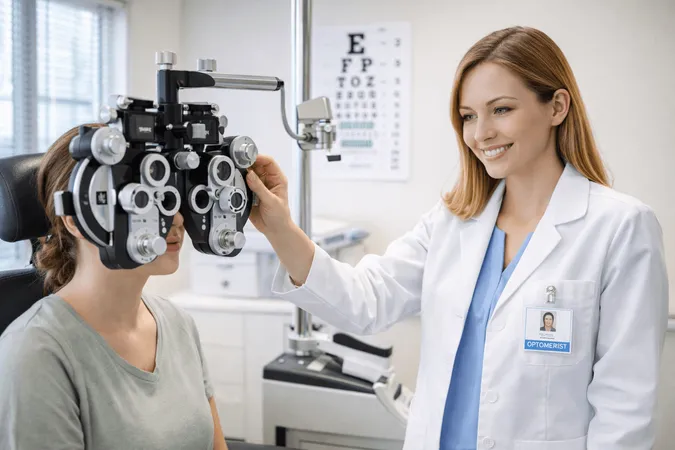
NBEO Career Opportunities
Passing the NBEO optometry exam opens doors to various specialties and practice settings.
Pediatric Optometrist
Specializes in vision care for children, managing development and binocular vision disorders.
Clinical Optometrist
Works in hospitals or multi-specialty clinics managing ocular disease and co-managing surgery.
Research Optometrist
Conducts studies on vision science, contact lenses, and new ocular therapies in academic or industry settings.
Vision Therapy
Provides rehabilitative exercises for patients with traumatic brain injury or learning-related vision problems.
Low Vision Specialist
Helps patients with significant vision loss maximize their remaining sight through devices and strategies.
NBEO Test Day Checklist
- ✓Two forms of ID (Part 1/2/3)
- ✓White coat (Part 3)
- ✓Equipment kit (Part 3)
- ✓Confirmation email
- ✓Arrive 30 mins early
- ✓No electronics allowed
- ✓Review Part 3 candidate guide
- ✓Get good rest!
Start Your NBEO Prep
Get ready for your NBEO optometry exam with our comprehensive practice questions.
NBEO Renewal Requirements
Renewal Cycle
1-2 Years
CE Hours
20-50 Hours
Renewal Fee
$200-$500
Check your state board's requirements for CE credits, as they vary. The NBEO website also provides resources for continued competence.
- +Validates your knowledge and skills objectively
- +Increases job market competitiveness
- +Provides structured learning goals
- +Networking opportunities with other certified professionals
- −Study materials can be expensive
- −Exam anxiety can affect performance
- −Requires dedicated preparation time
- −Retake fees apply if you don't pass
Pros and Cons at a Glance
| Pros | Cons |
|---|---|
| Validates your knowledge and skills objectively | Study materials can be expensive |
| Increases job market competitiveness | Exam anxiety can affect performance |
| Provides structured learning goals | Requires dedicated preparation time |
| Networking opportunities with other certified professionals | Retake fees apply if you don't pass |
Sample NBEO - National Board of Examiners in Optometry Practice Questions
Try these questions from our free NBEO - National Board of Examiners in Optometry practice tests. The correct answer and an explanation follow each question.
Which test is used to distinguish a functional (non-organic) visual field loss from a true organic field defect?
- A. Confrontation testing with varying distances showing a tubular (non-expanding) field
- B. Pattern visual evoked potentials (VEP)
- C. Optical coherence tomography
- D. Color vision testing with Farnsworth-Munsell
Answer: A. Confrontation testing with varying distances showing a tubular (non-expanding) field
In functional vision loss the visual field does not expand appropriately with distance (tubular field), whereas a true scotoma subtends a consistent visual angle at any test distance.
Which test is considered the gold standard for diagnosing choroidal neovascularization (CNV) in wet AMD?
- A. Fluorescein angiography
- B. Optical coherence tomography
- C. Fundus autofluorescence
- D. B-scan ultrasonography
Answer: A. Fluorescein angiography
Fluorescein angiography remains the gold standard for detecting and classifying CNV, showing leakage patterns that distinguish classic from occult membranes.
The Jackson crossed cylinder subjective test begins with a -1.00 -1.75 x 090 lens in front of a patient's eye. If the correcting cylinder power is changed to -0.75 x 090, then the spherical power should now be:
- A. -2.00 DS
- B. -1.50 DS
- C. -1.00 DS
- D. -0.50 DS
- E. +0.50 DS
Answer: B. -1.50 DS
Explanation: In the Jackson crossed cylinder subjective test, when the correcting cylinder power is changed from -1.00 -1.75 x 090 to -0.75 x 090, the spherical power should be adjusted in the opposite direction. Since the cylinder power is being reduced by 0.25 D (from -1.75 to -1.00), the spherical power should be increased by the same amount to maintain the patient's prescription. Therefore, the new spherical power should be -1.50 DS.
What is fluorescein staining used for in optometry?
- A. To detect corneal epithelial defects, evaluate tear film stability (TBUT), and assess contact lens fitting
- B. To change eye color temporarily
- C. To measure intraocular pressure only
- D. To test pupil reactions
Answer: A. To detect corneal epithelial defects, evaluate tear film stability (TBUT), and assess contact lens fitting
Fluorescein sodium dye (viewed with cobalt blue light) highlights corneal abrasions, ulcers, and epithelial irregularities, and is used for tear break-up time measurement and evaluating contact lens-cornea interaction.
Take the full NBEO - National Board of Examiners in Optometry practice test
NBEO Questions and Answers
About the Author

Optometrist & Vision Care Licensing Exam Expert
UC Berkeley School of OptometryDr. Susan Park is a Doctor of Optometry with a PhD in Visual Science from UC Berkeley School of Optometry. She has 15 years of clinical optometry practice and academic instruction experience and specializes in preparing optometry graduates for the NBEO Part I, II, and III board examinations, as well as opticianry licensing and vision therapy certification programs.
Join the Discussion
Connect with other students preparing for this exam. Share tips, ask questions, and get advice from people who have been there.
View discussion (7 replies)