
How to Become a Deputy Sheriff: Requirements, Training, and Career Path 2026 October
Free How to Become a Deputy Sheriff: practice test with questions and answer explanations. Prepare for the 2026 October exam with instant scoring. 🧠

Becoming a deputy sheriff requires U.S. citizenship, a high school diploma (college degree preferred), passing a written exam, physical fitness test, background investigation, and completing a law enforcement academy program lasting 12 to 26 weeks. Deputies earn $42,000 to $85,000 annually depending on state and experience, with opportunities to specialize in investigations, K-9, SWAT, narcotics, and marine patrol.
Healthcare and nursing candidates preparing for certification should also use our NREMT practice test 2026 to practice the clinical reasoning and patient care scenarios tested in the real exam.

Deputy Sheriff Requirements
The basic requirements to become a deputy sheriff are set by each state's Peace Officer Standards and Training (POST) commission, with individual agencies adding their own criteria:
Minimum Requirements (Most Agencies):
- U.S. citizenship — Required by the majority of agencies, though some accept permanent residents
- Age — Minimum 18 to 21 years depending on the state (most require 21)
- Education — High school diploma or GED at minimum. Many agencies prefer or require 60 college credits or an associate's degree
- Criminal record — No felony convictions. Misdemeanor domestic violence convictions disqualify under federal law (Lautenberg Amendment). Other misdemeanors are evaluated case by case
- Driver's license — Valid license with no DUI convictions and a clean driving record (typically no more than two moving violations in three years)
- Physical health — Must pass a medical examination and meet vision/hearing standards
- Psychological fitness — Must pass a psychological evaluation administered by a licensed psychologist
Competitive Advantages:
- Bachelor's degree in criminal justice, psychology, sociology, or related field
- Military experience (especially military police)
- Bilingual ability (Spanish, Vietnamese, Mandarin are highly valued)
- Prior law enforcement, corrections, or security experience
- Emergency medical training (EMT certification)
Practice the types of questions you will face during the hiring process with our Patrol Procedures and Techniques practice quiz.
Sheriff Academy Training
After passing all pre-employment screening, new deputies attend a law enforcement academy. Academy training prepares you for the realities of patrol work:
Academy Duration and Structure:
- Length: 12 to 26 weeks depending on the state (California POST requires 24 weeks; Florida requires 12 weeks minimum)
- Schedule: Full-time, Monday through Friday, often with mandatory physical training before classes
- Environment: Paramilitary structure with strict discipline, uniform standards, and chain of command
Core Curriculum:
- Criminal law and procedures — Constitutional law, search and seizure (Fourth Amendment), Miranda rights, arrest procedures, and court testimony
- Patrol operations — Vehicle stops, building searches, responding to calls for service, report writing, and radio communications
- Firearms training — Handgun proficiency, shotgun and rifle familiarization, use of force decision-making, and qualifying scores
- Defensive tactics — Arrest and control techniques, handcuffing, baton use, and ground defense
- Emergency vehicle operations — Pursuit driving, defensive driving, and emergency response driving (EVOC course)
- First aid and CPR — Trauma care, tourniquet application, and medical emergency response
- Community policing — De-escalation techniques, crisis intervention, cultural awareness, and community engagement
Field Training Program (FTO):
After graduating from the academy, new deputies enter a Field Training Officer program lasting 12 to 16 weeks. You ride with an experienced deputy who evaluates your ability to apply classroom knowledge to real-world situations. Successful completion of the FTO program leads to solo patrol assignment.
- ✓Confirm your exam appointment and location
- ✓Bring required identification documents
- ✓Arrive 30 minutes early to check in
- ✓Read each question carefully before answering
- ✓Flag difficult questions and return to them later
- ✓Manage your time — don't spend too long on one question
- ✓Review flagged questions before submitting
Deputy Sheriff Salary by State
Deputy sheriff salaries vary significantly by state and cost of living:
| State | Starting Salary | Average Salary | Top Salary |
|---|---|---|---|
| California | $62,000 | $85,000 | $120,000+ |
| New York | $52,000 | $72,000 | $105,000 |
| Texas | $42,000 | $58,000 | $82,000 |
| Florida | $43,000 | $56,000 | $78,000 |
| Illinois | $48,000 | $67,000 | $95,000 |
| Ohio | $40,000 | $54,000 | $72,000 |
| Georgia | $38,000 | $48,000 | $65,000 |
| Arizona | $46,000 | $60,000 | $82,000 |
| Washington | $55,000 | $75,000 | $100,000 |
| Colorado | $50,000 | $68,000 | $90,000 |
Additional compensation: Most sheriff's offices offer overtime pay (time-and-a-half), shift differentials for nights and weekends, holiday pay, uniform allowances, take-home vehicle programs, and generous retirement pensions (often 50-75% of salary after 20-25 years of service). These benefits can add $10,000-$25,000 to the total compensation package.
Career Path and Specializations
A deputy sheriff career offers numerous advancement opportunities and specializations:
Rank Progression:
- Deputy Sheriff — Entry-level patrol officer (years one through five)
- Senior Deputy / Corporal — Experienced patrol officer, may lead a squad or training (years three through eight)
- Sergeant — First-line supervisor overseeing a team of deputies (years five through twelve)
- Lieutenant — Division or section commander (years eight through fifteen)
- Captain — Bureau or division chief (years twelve through twenty)
- Chief Deputy / Undersheriff — Second-in-command of the entire department
- Sheriff — Elected position leading the county sheriff's office
Specialized Assignments:
- Investigations / Detective Bureau — Criminal investigations including homicide, robbery, fraud, and sex crimes
- K-9 Unit — Working with a trained police dog for narcotics detection, tracking, or patrol apprehension
- SWAT / Special Response Team — High-risk warrant service, barricaded subjects, and hostage situations
- Narcotics / Vice — Undercover drug investigations and organized crime
- Marine / Lake Patrol — Waterway enforcement, boating safety, and water rescue
- Aviation Unit — Helicopter or fixed-wing support for search and rescue, surveillance, and pursuit assistance
- School Resource Officer — Law enforcement presence in schools, mentoring students, and campus safety
- Court Security — Courthouse protection, prisoner transport, and courtroom security
Most specializations require two to five years of patrol experience before eligibility. Prepare for patrol knowledge assessments with our Patrol Procedures and Techniques practice quiz and ethical scenario questions with our Professional Ethics and Situational Judgment practice quiz.
How to Pros and Cons
- +Sheriff credentials open career pathways with defined advancement trajectories and competitive compensation ranges
- +Growing demand in the field means qualified professionals with verified credentials have strong job security
- +Specialization within the field allows professionals to command premium compensation for high-demand skill sets
- +Remote and hybrid work options are expanding in this field, increasing geographic flexibility for credentialed professionals
- +Professional associations and networks provide ongoing career development, mentorship, and job referral opportunities
- −Entry-level positions in this field are competitive, requiring candidates to differentiate through credentials, experience, and networking
- −Some career paths in this field have defined credential and experience prerequisites that create time barriers to advancement
- −Geographic concentration of opportunities in some specializations limits location flexibility for career growth
- −Continuing education and credential maintenance requirements create ongoing time and financial obligations throughout a career
- −Career path choices made early may be difficult to reverse — specialization that narrows options later can limit career flexibility
Sample Sheriff - Deputy Sheriff Exam Practice Questions
Try these questions from our free Sheriff - Deputy Sheriff Exam practice tests. The correct answer and an explanation follow each question.
Which of the following constitutes a valid 'exigent circumstance' that excuses the warrant requirement?
- A. The officer forgot to apply for a warrant before leaving the station
- B. The suspect lives in a neighborhood with a high rate of violent crime
- C. Officers are in hot pursuit of a fleeing felony suspect who enters a building
- D. The officer has worked in law enforcement for more than ten years
Answer: C. Officers are in hot pursuit of a fleeing felony suspect who enters a building
Hot pursuit of a fleeing felon is a classic exigent circumstance; courts recognize that requiring officers to stop and obtain a warrant would allow the suspect to escape or destroy evidence.
The 'automobile exception' to the Fourth Amendment's warrant requirement permits officers to search a vehicle without a warrant when:
- A. The driver is suspected of committing any criminal offense
- B. There is probable cause to believe the vehicle contains contraband or evidence of a crime
- C. The vehicle is parked on a public street or in a public lot
- D. The officer has reasonable suspicion about the driver's conduct
Answer: B. There is probable cause to believe the vehicle contains contraband or evidence of a crime
The automobile exception, rooted in Carroll v. United States (1925), allows warrantless vehicle searches when officers have probable cause to believe the vehicle contains evidence of a crime.
A deputy is attempting to arrest a subject who is verbally refusing to comply with commands but is not making any physical threats or movements. What is the most appropriate initial level of force?
- A. Officer presence and verbal commands.
- B. Empty-hand control techniques (e.g., an arm bar).
- C. Deployment of a Taser.
- D. Use of Oleoresin Capsicum (OC) spray.
Answer: A. Officer presence and verbal commands.
The use of force should be proportional to the subject's resistance. For verbal non-compliance, the appropriate response is at the lowest end of the continuum, which includes officer presence and strong verbal commands. Escalating to physical force is not justified at this stage.
While on patrol, you observe a vehicle matching the description of one used in a recent armed robbery. The BOLO (Be On the Look Out) alert emphasized the suspects were armed and dangerous. As you follow the vehicle waiting for backup, which of the following is the MOST critical piece of information to observe and relay to dispatch?
- A. The driver's style of driving (e.g., aggressive, slow).
- B. The make and model of a car driving in front of the suspect vehicle.
- C. A minor traffic infraction committed by the suspect vehicle, like failing to signal.
- D. The number of occupants and their movements inside the vehicle.
Answer: D. The number of occupants and their movements inside the vehicle.
Officer safety is paramount. Knowing the number of potential threats and observing their movements (e.g., reaching for something, looking back) provides crucial tactical information for you and responding backup units. The other details are less critical to the immediate safety and tactical considerations of a high-risk stop.
Deputy Sheriff Questions and Answers
About the Author
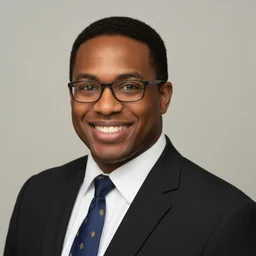
Law Enforcement Trainer & Civil Service Exam Specialist
John Jay College of Criminal JusticeMarcus B. Thompson earned his Master of Arts in Criminal Justice from John Jay College of Criminal Justice and served 12 years as a law enforcement officer before transitioning to full-time academy instruction. He is a POST-certified instructor who has prepared candidates for police entrance exams, firefighter assessments, and civil service examinations across dozens of agencies.
Join the Discussion
Connect with other students preparing for this exam. Share tips, ask questions, and get advice from people who have been there.
View discussion (7 replies)