
Everything You Need to Know About Becoming a CNA 2026 October
Pass your Everything You Need to Know About exam on the first attempt. ✍🏼 Practice questions with detailed answer explanations, hints, and instant scoring.
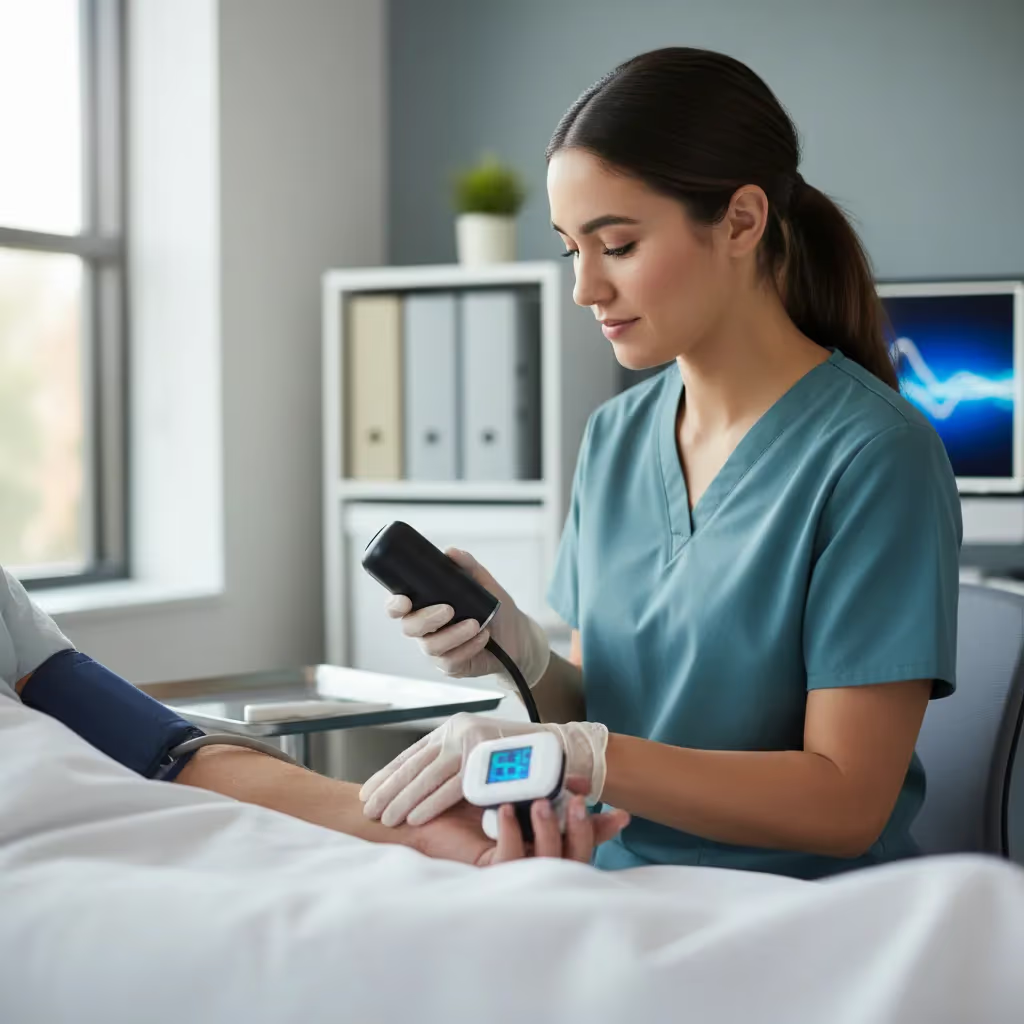
If you're searching for everything you need to know about becoming a CNA, you've landed in the right spot. Certified Nursing Assistants handle the hands-on patient care that keeps hospitals, nursing homes, and private residences running — and demand for them isn't slowing down. Whether a private CNA needed posting caught your eye on a job board or you've been thinking about healthcare for years, this career path has one of the lowest barriers to entry in the medical field. No four-year degree. No mountain of student debt. Just focused training, a state exam, and you're working.
Before you enroll in anything, though, you'll want to understand what the CNA knowledge test actually covers, how training programs differ by state, and what employers expect from day one. The certification process looks straightforward on paper — complete a state-approved program, pass the written and skills exam, get listed on your state's nurse aide registry. But the details matter. Program lengths range from four weeks to sixteen weeks depending on your state and whether you go full-time or part-time. Cost varies wildly too — from free programs at Goodwill or Red Cross to $2,000+ at private schools.
Hospitals, long-term care facilities, and home health agencies are all posting cna needed near me listings constantly. The Bureau of Labor Statistics projects 4% growth through 2032 for nursing assistants, which translates to roughly 73,000 openings per year when you factor in turnover. That's not explosive growth — but it's steady, recession-resistant work that puts you at the bedside where you can actually make a difference. And if you're strategic about it, CNA experience becomes a stepping stone to LPN, RN, or even nurse practitioner roles down the line.

So what do you need to be a CNA? The short answer: you need to be at least 18 in most states (16 in a few), complete a state-approved training program, and pass the CNA knowledge test — which includes both a written or oral component and a hands-on clinical skills evaluation. That's it. No bachelor's degree, no prior healthcare experience required. Some states let you challenge the exam without formal training if you're a nursing student who's completed fundamentals coursework, but that's the exception.
The training program itself typically runs 75 to 120 hours of combined classroom and clinical instruction. You'll cover infection control, patient rights, basic nursing skills, body mechanics, vital signs, and communication techniques. The clinical portion puts you in an actual care facility — usually a nursing home — where you practice skills like repositioning patients, measuring blood pressure, and assisting with activities of daily living under a nurse's supervision.
If you're wondering what do you need to become a cna beyond the classroom, soft skills matter enormously. Patience, empathy, and the ability to stay calm when a patient is agitated or confused — these aren't things you can memorize from a textbook.
Once you've completed training, you register for your state's competency exam. Most states use Prometric or Pearson VUE as their testing vendor. The written portion covers about 60 to 100 multiple-choice questions depending on your state. Pass rates hover around 85-90% for first-time test-takers who've completed an accredited program. Fail, and you typically get two more attempts before needing to retake the training.
Getting ready for the CNA knowledge practice test means understanding what's actually on it — not just memorizing flashcard definitions. The exam breaks into domains: basic nursing care, restorative services, mental health, patient rights, and infection control. Each domain carries different weight depending on your state, but basic nursing care and infection control usually make up the bulk. You'll see scenario-based questions that test whether you can apply concepts, not just recall them. A question might describe a patient situation and ask what you'd do first.
If you're searching for a CNA needed near me, you should know that employers often prefer candidates who scored well on their certification exam — it signals competence. Some facilities even ask for your exam score during the hiring process, though this varies. Hospital positions tend to be more competitive than nursing home roles, so a strong exam score gives you use. Worth knowing: many state registries list your certification status publicly, so potential employers can verify your credentials before the interview.
Study strategies that actually work? Practice tests — lots of them. Don't just read the material passively. Active recall beats re-reading every time. Time yourself on practice exams to build stamina for the real thing, because test anxiety is real and it wrecks performance for people who haven't simulated the pressure. Join study groups if your program offers them. And focus extra attention on the skills portion — about 30% of people who fail the exam fail the clinical skills demonstration, not the written test. Practice hand hygiene, range of motion exercises, and measuring vitals until they're automatic.
CNA Training Options Compared
Community college CNA programs typically run 8-16 weeks and cost between $500 and $1,500. You'll get college credit that transfers if you pursue nursing later — a real advantage. Classes follow a semester schedule, so start dates are fixed. Clinical rotations are usually arranged through partnerships with local nursing facilities. Financial aid and Pell Grants often cover the full cost, making this effectively free for qualifying students.
One of the most common questions people ask: do you need a highschool diploma to be a CNA? The answer depends on your state. Most states require either a high school diploma or GED. But here's the thing — a handful of states, including California and parts of the Midwest, don't have a strict diploma requirement for CNA training enrollment. They'll accept you if you can pass a basic reading and math competency test instead. That said, even in states without a formal requirement, most training programs set their own admission standards, and many do require a diploma or equivalent.
If you're specifically looking at CNA needed for private duty positions — working one-on-one with patients in their homes — the diploma question becomes even more nuanced. Private duty agencies sometimes have looser hiring requirements than hospitals because the work is less supervised. You're showing up to someone's house, helping with bathing, dressing, meals, medication reminders, and light housekeeping. The skills are the same, but the autonomy is greater. Some private duty employers care more about your personality, reliability, and references than your educational background.
Private duty CNA work pays differently too. Hourly rates for private CNA jobs tend to be higher than facility-based work — $15 to $22 per hour in most markets compared to $13 to $18 at nursing homes. The tradeoff? No benefits at many agencies, inconsistent hours, and you're managing the care environment alone without a charge nurse down the hall. For some people, that independence is exactly what they want. For others, it's isolating.
Here's good news if you're starting from scratch: CNA no experience needed positions exist in almost every market. Nursing homes and long-term care facilities are chronically understaffed, and many will hire newly certified CNAs with zero work history. Some even hire you before you finish your training program, letting you work as a "nurse aide trainee" under supervision while you complete your clinical hours. That's especially common in rural areas where the staffing shortage is severe.
When thinking about what do you need to become a CNA, don't overlook the physical demands. This isn't a desk job. You'll be on your feet for 8 to 12 hours, lifting and repositioning patients who may weigh twice what you do, and bending constantly. Back injuries are the most common workplace injury for CNAs — proper body mechanics training exists for a reason. If you have existing back problems or physical limitations, talk to your program director before enrolling. Some facilities offer mechanical lifts and no-lift policies, but not all.
The emotional toll is real too. You'll care for patients with dementia who don't recognize their own families. You'll watch people decline. You'll sometimes be the only person who talks to a resident all day. That weight accumulates. Burnout rates for CNAs are among the highest in healthcare — roughly 30% turnover annually in nursing homes. The CNAs who last are the ones who build genuine connections with their patients while maintaining boundaries, who ask for help when overwhelmed, and who see the work as meaningful even on the hard days.
Pros and Cons of a CNA Career
- +Fast entry — you can be certified and working in as little as four weeks
- +Low cost training, with many free programs available through employers and nonprofits
- +Steady demand — healthcare facilities are always hiring, recession or not
- +Direct patient contact gives you hands-on clinical experience every shift
- +Stepping stone to LPN, RN, or nurse practitioner careers with tuition assistance from many employers
- +Flexible scheduling with options for day, evening, night, and weekend shifts
- −Physically demanding — heavy lifting, 12-hour shifts on your feet, and repetitive bending
- −Pay is modest at $13-18/hour in many facility-based roles despite demanding work
- −Emotional burden of caring for dying patients and those with cognitive decline
- −High burnout and turnover — roughly 30% of nursing home CNAs leave annually
- −Limited upward mobility without additional education and certification
- −Understaffing means heavy patient loads — sometimes 10-15 patients per CNA per shift
Do you need a degree to be a CNA? No. Not a bachelor's, not an associate's, not any college degree at all. CNA certification is a credential, not a degree program. The training is vocational — focused entirely on the specific skills and knowledge you need to provide direct patient care. That's what makes it accessible. You don't need two years of prerequisites. You don't need college-level anatomy (though a basic understanding of body systems helps on the exam).
The related question — do you need a high school diploma to be a CNA — has a more complicated answer. Federal regulations under OBRA (Omnibus Budget Reconciliation Act) require states to establish minimum training standards for nurse aides, but they don't mandate a high school diploma specifically. Each state sets its own rules.
In practice, about 35 states require a diploma or GED. The remaining states either have no formal education requirement or accept alternative proof of basic literacy. If you dropped out of high school, a GED program can usually be completed in 2-3 months while you're waiting for your CNA training to start.
Here's something that surprises people: some of the best CNAs never finished traditional schooling. What matters more is whether you can learn clinical procedures, follow safety protocols, communicate clearly with patients and nursing staff, and show up reliably. A diploma proves you can complete something — and that matters to employers — but it doesn't predict whether you'll be good at the actual work of caregiving. If you're without a diploma, focus on getting your GED and look for programs with flexible admission requirements.
Steps to Become a Certified Nursing Assistant
- ✓Verify your state's minimum age and education requirements (most require 18+ and a diploma or GED)
- ✓Research state-approved CNA training programs — compare cost, length, schedule, and clinical site locations
- ✓Complete a background check and health screening, including TB test and immunization records
- ✓Enroll in and complete a state-approved training program (75-120+ hours of classroom and clinical instruction)
- ✓Practice clinical skills until they're automatic — hand hygiene, vital signs, patient transfers, range of motion
- ✓Register for your state's CNA competency exam through Prometric, Pearson VUE, or your state's testing vendor
- ✓Pass both the written knowledge exam and the hands-on clinical skills evaluation
- ✓Apply to be listed on your state's Nurse Aide Registry after passing the exam
- ✓Submit job applications to hospitals, nursing homes, home health agencies, and private duty employers
- ✓Maintain your certification through continuing education and timely renewal (every 2 years in most states)
People often ask: do you need a diploma to be a CNA? We covered the state-by-state variation above, but let's dig into what the exam itself requires. Whether or not your state mandates a diploma for program entry, the CNA knowledge test quizlet-style questions test concepts that assume basic reading comprehension and math skills. You'll need to read patient scenarios, interpret vital sign measurements, and understand medication schedules. If your reading level is below about 8th grade, you'll struggle — not because the material is advanced, but because the test format demands careful reading under time pressure.
The clinical skills portion is where many candidates actually fail. You'll be observed performing five randomly selected skills from a list of about 25. The evaluator watches everything — did you check the patient's ID band? Did you explain the procedure before starting? Did you wash your hands before and after? Did you provide privacy? Miss one critical element on any skill, and that skill is scored as a fail. Three or more failed skills and you fail the entire clinical portion. It's pass/fail, not graded on a curve.
Study resources range from free to expensive. State-provided candidate handbooks — always free — are your best starting point because they tell you exactly which skills can be tested. CNA knowledge test quizlet decks are popular for the written portion, though quality varies wildly. Your training program's practice materials should be your primary study source since they align with your state's specific requirements. Paid prep courses from companies like CNA Plus Academy run $30-$60 and include timed practice exams that simulate real test conditions.
Do you need a GED to be a CNA? In states that require a high school credential, yes — a GED satisfies the requirement just as well as a traditional diploma. There's no distinction between the two in the eyes of state nursing boards or CNA training programs. If you have a GED, you're eligible everywhere a diploma-holder is. Period. Some states also accept HiSET or TASC credentials as diploma equivalents.
When thinking about what do I need to become a CNA, consider the non-academic requirements too. Most programs require a criminal background check — felony convictions, especially those involving abuse, neglect, or theft, can disqualify you from certification in many states. You'll need proof of immunizations (hepatitis B, flu shot, COVID vaccination at some facilities), a negative TB test, and a physical exam confirming you can perform the job's physical demands. Some programs require CPR certification before enrollment; others include it in the curriculum.
The financial side matters too. Beyond tuition, budget for scrubs ($30-$60 per set, you'll want at least three), comfortable shoes ($60-$100 for nursing shoes with proper support), a watch with a second hand for counting pulse and respirations ($15-$30), a stethoscope if your program doesn't provide one ($20-$50 for a basic model), and the exam fee itself ($75-$165). Total out-of-pocket even at a free training program? Usually $200-$400 for supplies and testing. That's still remarkably affordable compared to almost any other healthcare credential.
After passing your CNA exam, you must be listed on your state's Nurse Aide Registry before you can legally work as a CNA. Processing takes 1-4 weeks. Some states issue a temporary certification that lets you work while waiting for your permanent listing. Check your state's health department website for specific timelines and requirements — they vary significantly.
Do you need high school diploma for CNA certification? We've established that it depends on your state — but here's the practical reality. Even in states that technically don't require one, the vast majority of employers prefer it. Hospital HR departments almost universally list "high school diploma or equivalent" as a minimum qualification on CNA job postings. Nursing homes are sometimes more flexible, especially when they're desperately short-staffed, but it's still the expectation.
Similarly, do you need GED for CNA work? If you don't have a traditional diploma, getting your GED before applying to CNA programs eliminates a potential barrier at every step — program admission, exam eligibility, and employment. GED prep programs are widely available at community colleges, libraries, and online platforms. Many are free. The test itself costs $80-$120 depending on your state. Think of it as an investment that pays for itself on your first day of CNA work.
The timeline for the entire process — from zero credentials to working CNA — can be surprisingly short. Get your GED in 2-3 months if needed. Complete a 4-week accelerated CNA program. Schedule and pass your state exam within 2-4 weeks of finishing training. You could realistically go from deciding to become a CNA to earning your first paycheck in under three months. That's faster than almost any other healthcare career path. Compare that to 2 years for an LPN, 2-4 years for an RN, or 6-8 years for a nurse practitioner.
CNA Practice Test Questions
Prepare for the CNA - Certified Nursing Assistant exam with our free practice test modules. Each quiz covers key topics to help you pass on your first try.
CNA Activities of Daily Living
CNA Exam Questions covering Activities of Daily Living. Master CNA Test concepts for certification prep.
CNA Aging Process
Free CNA Practice Test featuring Aging Process. Improve your CNA Exam score with mock test prep.
CNA Anatomy and Physiology Basics
CNA Mock Exam on Anatomy and Physiology Basics. CNA Study Guide questions to pass on your first try.
CNA Assisting with Daily Living
CNA Test Prep for Assisting with Daily Living. Practice CNA Quiz questions and boost your score.
CNA Assisting with Range of Motion Exercises
CNA Questions and Answers on Assisting with Range of Motion Exercises. Free CNA practice for exam readiness.
CNA Basic Human Anatomy and Age-Related Ch...
CNA Mock Test covering Basic Human Anatomy and Age-Related Changes. Online CNA Test practice with instant feedback.
CNA Basic Nursing Skills
Free CNA Quiz on Basic Nursing Skills. CNA Exam prep questions with detailed explanations.
CNA Basic Nursing Skills 10
CNA Practice Questions for Basic Nursing Skills 10. Build confidence for your CNA certification exam.
CNA Basic Nursing Skills 11
CNA Test Online for Basic Nursing Skills 11. Free practice with instant results and feedback.
CNA Basic Nursing Skills 1
CNA Study Material on Basic Nursing Skills 1. Prepare effectively with real exam-style questions.
CNA Basic Nursing Skills 12
Free CNA Test covering Basic Nursing Skills 12. Practice and track your CNA exam readiness.
CNA Basic Nursing Skills 13
CNA Exam Questions covering Basic Nursing Skills 13. Master CNA Test concepts for certification prep.
CNA Basic Nursing Skills 14
Free CNA Practice Test featuring Basic Nursing Skills 14. Improve your CNA Exam score with mock test prep.
CNA Basic Nursing Skills 15
CNA Mock Exam on Basic Nursing Skills 15. CNA Study Guide questions to pass on your first try.
CNA Basic Nursing Skills 16
CNA Test Prep for Basic Nursing Skills 16. Practice CNA Quiz questions and boost your score.
CNA Basic Nursing Skills 17
CNA Questions and Answers on Basic Nursing Skills 17. Free CNA practice for exam readiness.
CNA Basic Nursing Skills 18
CNA Mock Test covering Basic Nursing Skills 18. Online CNA Test practice with instant feedback.
CNA Basic Nursing Skills 19
Free CNA Quiz on Basic Nursing Skills 19. CNA Exam prep questions with detailed explanations.
CNA Basic Nursing Skills 20
CNA Practice Questions for Basic Nursing Skills 20. Build confidence for your CNA certification exam.
CNA Basic Nursing Skills 21
CNA Test Online for Basic Nursing Skills 21. Free practice with instant results and feedback.
CNA Basic Nursing Skills 2
CNA Study Material on Basic Nursing Skills 2. Prepare effectively with real exam-style questions.
CNA Basic Nursing Skills 3
Free CNA Test covering Basic Nursing Skills 3. Practice and track your CNA exam readiness.
CNA Basic Nursing Skills 4
CNA Exam Questions covering Basic Nursing Skills 4. Master CNA Test concepts for certification prep.
CNA Basic Nursing Skills 5
Free CNA Practice Test featuring Basic Nursing Skills 5. Improve your CNA Exam score with mock test prep.
CNA Basic Nursing Skills 6
CNA Mock Exam on Basic Nursing Skills 6. CNA Study Guide questions to pass on your first try.
CNA Basic Nursing Skills 7
CNA Test Prep for Basic Nursing Skills 7. Practice CNA Quiz questions and boost your score.
CNA Basic Nursing Skills 8
CNA Questions and Answers on Basic Nursing Skills 8. Free CNA practice for exam readiness.
CNA Basic Nursing Skills 9
CNA Mock Test covering Basic Nursing Skills 9. Online CNA Test practice with instant feedback.
CNA Basic Restorative Services
Free CNA Quiz on Basic Restorative Services. CNA Exam prep questions with detailed explanations.
CNA Basic Restorative Services 1
CNA Practice Questions for Basic Restorative Services 1. Build confidence for your CNA certification exam.
CNA Bathing and Dressing
CNA Test Online for Bathing and Dressing. Free practice with instant results and feedback.
CNA Body Mechanics
CNA Study Material on Body Mechanics. Prepare effectively with real exam-style questions.
CNA Career Advancement and Opportunities
Free CNA Test covering Career Advancement and Opportunities. Practice and track your CNA exam readiness.
CNA Career Opportunities and Benefits
CNA Exam Questions covering Career Opportunities and Benefits. Master CNA Test concepts for certification prep.
CNA Care for Residents with Cognitive Impa...
Free CNA Practice Test featuring Care for Residents with Cognitive Impairment. Improve your CNA Exam score with mock test prep.
CNA Care of Cognitively Impaired Residents
CNA Mock Exam on Care of Cognitively Impaired Residents. CNA Study Guide questions to pass on your first try.
CNA Care of Cognitively Impaired Residents 1
CNA Test Prep for Care of Cognitively Impaired Residents 1. Practice CNA Quiz questions and boost your score.
CNA Care Of Cognitively Impaired Residents 4
CNA Questions and Answers on Care Of Cognitively Impaired Residents 4. Free CNA practice for exam readiness.
CNA Common Medical Terms and Abbreviations
CNA Mock Test covering Common Medical Terms and Abbreviations. Online CNA Test practice with instant feedback.
CNA Communication and Interpersonal Skills
Free CNA Quiz on Communication and Interpersonal Skills. CNA Exam prep questions with detailed explanations.
CNA Communication and Interpersonal Skills 1
CNA Practice Questions for Communication and Interpersonal Skills 1. Build confidence for your CNA certification exam.
CNA Communication And Interpersonal Skills 4
CNA Test Online for Communication And Interpersonal Skills 4. Free practice with instant results and feedback.
CNA Eligibility and Qualifications
CNA Study Material on Eligibility and Qualifications. Prepare effectively with real exam-style questions.
CNA Emergency Procedure
Free CNA Test covering Emergency Procedure. Practice and track your CNA exam readiness.
CNA Ethics and Professionalism
CNA Exam Questions covering Ethics and Professionalism. Master CNA Test concepts for certification prep.
CNA Exam Structure and Content
Free CNA Practice Test featuring Exam Structure and Content. Improve your CNA Exam score with mock test prep.
CNA Feeding and Hydration
CNA Mock Exam on Feeding and Hydration. CNA Study Guide questions to pass on your first try.
CNA Infection Control
CNA Test Prep for Infection Control. Practice CNA Quiz questions and boost your score.
CNA Infection Control and Safety
CNA Questions and Answers on Infection Control and Safety. Free CNA practice for exam readiness.
CNA Isolation Precautions
CNA Mock Test covering Isolation Precautions. Online CNA Test practice with instant feedback.
CNA Legal & Ethical Behaviours
Free CNA Quiz on Legal & Ethical Behaviours. CNA Exam prep questions with detailed explanations.
CNA Legal & Ethical Behaviours 1
CNA Practice Questions for Legal & Ethical Behaviours 1. Build confidence for your CNA certification exam.
CNA Legal & Ethical Behaviours 4
CNA Test Online for Legal & Ethical Behaviours 4. Free practice with instant results and feedback.
CNA Mental Health and Social Services Needs
CNA Study Material on Mental Health and Social Services Needs. Prepare effectively with real exam-style questions.
CNA Mental Health and Social Services Needs 1
Free CNA Test covering Mental Health and Social Services Needs 1. Practice and track your CNA exam readiness.
CNA Mental Health And Social Services Needs 4
CNA Exam Questions covering Mental Health And Social Services Needs 4. Master CNA Test concepts for certification prep.
CNA Nutrition and Hydration Management
Free CNA Practice Test featuring Nutrition and Hydration Management. Improve your CNA Exam score with mock test prep.
CNA Patient Care Procedure
CNA Mock Exam on Patient Care Procedure. CNA Study Guide questions to pass on your first try.
CNA Personal Care Skills
CNA Test Prep for Personal Care Skills. Practice CNA Quiz questions and boost your score.
CNA Personal Care Skills 1
CNA Questions and Answers on Personal Care Skills 1. Free CNA practice for exam readiness.
CNA Personal Care Skills 4
CNA Mock Test covering Personal Care Skills 4. Online CNA Test practice with instant feedback.
CNA Personal Care Skills 5
Free CNA Quiz on Personal Care Skills 5. CNA Exam prep questions with detailed explanations.
CNA Personal Hygiene and Grooming
CNA Practice Questions for Personal Hygiene and Grooming. Build confidence for your CNA certification exam.
CNA Practice Test - Basic Nursing Skills #2
CNA Test Online for Practice Test - Basic Nursing Skills #2. Free practice with instant results and feedback.
CNA Practice Test - Basic Nursing Skills #2 1
CNA Study Material on Practice Test - Basic Nursing Skills #2 1. Prepare effectively with real exam-style questions.
CNA Preventing Patient Falls and Injuries
Free CNA Test covering Preventing Patient Falls and Injuries. Practice and track your CNA exam readiness.
CNA Promoting Resident Independence and Ch...
CNA Exam Questions covering Promoting Resident Independence and Choice. Master CNA Test concepts for certification prep.
CNA Proper Hand Hygiene and PPE Usage
Free CNA Practice Test featuring Proper Hand Hygiene and PPE Usage. Improve your CNA Exam score with mock test prep.
CNA Resident Rights and Communication
CNA Mock Exam on Resident Rights and Communication. CNA Study Guide questions to pass on your first try.
CNA Resident’s Rights
CNA Test Prep for Resident’s Rights. Practice CNA Quiz questions and boost your score.
CNA Resident's Rights 1
CNA Questions and Answers on Resident's Rights 1. Free CNA practice for exam readiness.
CNA Resident's Rights 4
CNA Mock Test covering Resident's Rights 4. Online CNA Test practice with instant feedback.
CNA Roles and Responsibilities
Free CNA Quiz on Roles and Responsibilities. CNA Exam prep questions with detailed explanations.
CNA Safety and Emergency Procedures
CNA Practice Questions for Safety and Emergency Procedures. Build confidence for your CNA certification exam.
CNA Safety and Emergency Procedures 1
CNA Test Online for Safety and Emergency Procedures 1. Free practice with instant results and feedback.
CNA Safety And Emergency Procedures 4
CNA Study Material on Safety And Emergency Procedures 4. Prepare effectively with real exam-style questions.
CNA Safety and Infection Control
Free CNA Test covering Safety and Infection Control. Practice and track your CNA exam readiness.
CNA Scope of Practice
CNA Exam Questions covering Scope of Practice. Master CNA Test concepts for certification prep.
CNA Skills and Competencies
Free CNA Practice Test featuring Skills and Competencies. Improve your CNA Exam score with mock test prep.
CNA Supporting Rehabilitation Activities
CNA Mock Exam on Supporting Rehabilitation Activities. CNA Study Guide questions to pass on your first try.
CNA The Nurse Aide's Role and Responsibili...
CNA Test Prep for The Nurse Aide's Role and Responsibilities. Practice CNA Quiz questions and boost your score.
CNA Time Management and Prioritization
CNA Questions and Answers on Time Management and Prioritization. Free CNA practice for exam readiness.
CNA Toileting and Elimination
CNA Mock Test covering Toileting and Elimination. Online CNA Test practice with instant feedback.
CNA Using Adaptive Devices
CNA Practice Questions for Using Adaptive Devices. Build confidence for your CNA certification exam.
For the CNA knowledge test practice portion of your exam prep, focus on the domains where most people lose points. Infection control consistently trips up test-takers — not because hand washing is complicated, but because the questions test specific sequences and protocols. When do you use standard precautions versus contact isolation? What's the correct order for donning and doffing PPE? These details matter on the exam and they matter on the job.
What do I need to be a CNA who actually succeeds long-term? Beyond the certification itself, think about career trajectory. CNAs who stay in the field past the two-year mark tend to be the ones who either genuinely love direct patient care or who have a clear plan for advancement. Many hospitals offer tuition reimbursement — $3,000 to $5,000 per year — for CNAs pursuing LPN or RN programs. Some even offer full-ride scholarships for employees who commit to working at the facility for 2-3 years after graduation. That's free nursing school.
Specialization opens higher-paying doors too. Restorative CNAs work specifically on rehabilitation exercises and mobility training. Hospice CNAs provide end-of-life care. Travel CNAs take short-term assignments in different cities — sometimes earning $20-$28 per hour plus housing stipends. Medication Aide certification (available in some states) lets you administer certain medications, adding $2-$4 per hour to your base pay. The CNA credential is the floor, not the ceiling. What you build on top of it determines where this career actually takes you.
Sample CNA Practice Questions
Try these questions from our free CNA practice tests. The correct answer and an explanation follow each question.
A CNA is about to help a resident stand from a chair. Where should the CNA position their own feet before assisting?
- A. Together in front of the resident for maximum reach
- B. Shoulder-width apart with knees slightly bent
- C. Behind the resident to guide from the back
- D. On tiptoe to gain height advantage
Answer: B. Shoulder-width apart with knees slightly bent
A shoulder-width stance with slightly bent knees lowers the center of gravity and engages the leg muscles, allowing the CNA to assist safely without straining the lower back.
Keeping information confidential about a client is
- A. dependent on the situation.
- B. a legal responsibility.
- C. applicable only to medical records.
- D. somewhat important.
Answer: B. a legal responsibility.
Keeping client information confidential is a fundamental legal responsibility mandated by laws such as HIPAA. Breaching confidentiality can lead to severe penalties, including fines, legal action, and loss of certification. It is also an ethical obligation, building trust between the client and healthcare provider and protecting the client's privacy and dignity.
A CNA is asked by a nurse to take vital signs for a resident who is about to be discharged. At the same time, another resident who is diabetic and has not eaten breakfast begins to look pale and shaky. The CNA should first:
- A. Complete the discharge vital signs as requested by the nurse.
- B. Inform the nurse about the diabetic resident's symptoms immediately.
- C. Offer the diabetic resident a snack and then take the discharge vitals.
- D. Take both sets of vital signs and report the findings for both residents to the nurse at the same time.
Answer: B. Inform the nurse about the diabetic resident's symptoms immediately.
The signs of pallor and shakiness in a diabetic resident who has not eaten are classic symptoms of hypoglycemia (low blood sugar), which is a potential medical emergency. The CNA's priority is to recognize these urgent signs and report them to the nurse immediately for intervention. The discharge vital signs are for a stable resident and are less urgent.
A resident's fingernails need cleaning. Which condition would require the CNA to refer the task to a nurse rather than proceeding?
- A. Nails that are slightly dirty from working in the garden
- B. A resident with diabetes who has thickened or ingrown toenails requiring trimming
- C. Nails that are slightly long and smooth
- D. A resident who has soft, normal-appearing nails
Answer: B. A resident with diabetes who has thickened or ingrown toenails requiring trimming
Residents with diabetes have impaired circulation and sensation in the feet, so nail trimming requires a licensed nurse or podiatrist to prevent injury and infection.
CNA Questions and Answers
About the Author

Registered Nurse & Healthcare Educator
Johns Hopkins University School of NursingDr. Sarah Mitchell is a board-certified registered nurse with over 15 years of clinical and academic experience. She completed her PhD in Nursing Science at Johns Hopkins University and has taught NCLEX preparation and clinical skills courses for nursing students across the United States. Her research focuses on evidence-based exam preparation strategies for healthcare certification candidates.
Join the Discussion
Connect with other students preparing for this exam. Share tips, ask questions, and get advice from people who have been there.
View discussion (8 replies)