
DMV Appointment Complete Guide: Book, Reschedule & Skip the Line in 2026 October
Complete DMV appointment guide: how to book, reschedule, walk-in alternatives, required documents, and state-by-state tips to skip the line in 2026 October. 💡
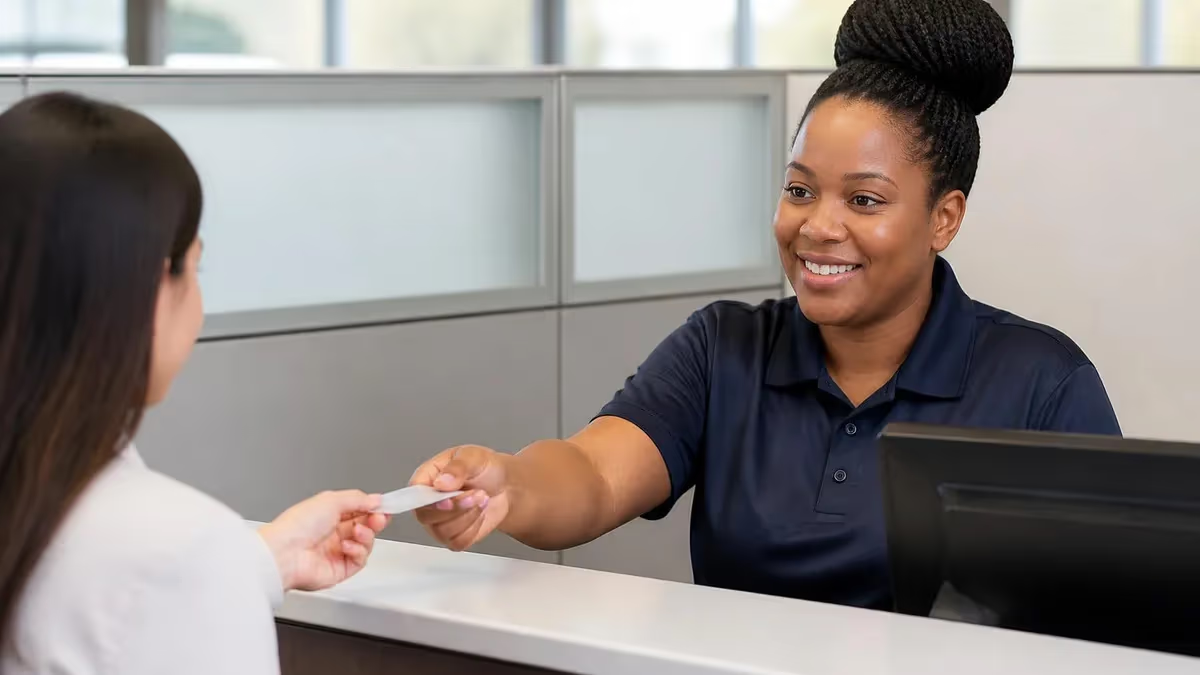
Booking a dmv appointment in 2026 is the single most important step between you and a fast, frustration-free visit to your local driver licensing office. Whether you need a REAL ID, a road test, a title transfer, or a simple license renewal, every major state office now prioritizes scheduled visitors over walk-ins. That shift, which accelerated after pandemic-era reforms, means an unscheduled trip can cost you three to five hours of waiting, while a confirmed slot often gets you out the door in under thirty minutes.
The reservation systems vary widely depending on where you live. The dmv reg renewal portal in California uses a sleek mobile-first interface, while New York routes you through a county-based queue and Texas splits services between DPS megacenters and county tax offices. Wisconsin, North Carolina, and Florida each operate independent platforms with their own quirks. Knowing which platform applies to your transaction is half the battle when you are trying to lock in a slot during a busy renewal season.
This guide walks you through the entire appointment lifecycle, from confirming you actually need one to printing the confirmation barcode that the clerk will scan. We will cover the documents you must bring, the fees you should expect, the cancellation policies that can lock you out for thirty days, and the insider tactics for finding cancellations the moment they appear. Every recommendation here reflects 2026 procedures that took effect after the federal REAL ID full-enforcement deadline.
You will also learn how to interpret the cryptic appointment codes states use, like CDL-RNW, DL-ORIG, ID-DUP, and VR-TRN, and why choosing the wrong code can get you turned away at the counter even with a confirmed reservation. We include a side-by-side look at how the ten largest state systems differ, plus mobile and online alternatives that can eliminate the appointment entirely for routine renewals, address changes, and duplicate license requests.
If this is your first visit to obtain a learner permit or original driver license, the appointment process is even more important because road tests and vision screenings cannot be performed via mail or web portal. We have included dedicated sections for first-time drivers, military families, seniors renewing in person, commercial driver license applicants, and international license holders converting credentials. Each group faces different requirements that affect which appointment type to book.
By the end of this guide you will know exactly how to secure a slot in any state, what to do when no appointments appear for weeks, when a walk-in actually works, and how to make sure your one trip to the office is your only trip. We will close with a practical day-of checklist, FAQ answers to the most common booking problems, and links to free practice tests if a road skills or knowledge exam is part of your visit.
DMV Appointments by the Numbers
How to Book a DMV Appointment in 7 Steps
Identify the exact transaction
Locate your state portal
Verify eligibility
Select office and date
Enter personal details
Receive confirmation
Arrive 10 minutes early
Document preparation is where most appointments quietly fall apart. The clerk at the counter cannot waive federal identity verification rules, no matter how polite you are or how far you drove. Bringing the wrong combination of papers turns a thirty-minute appointment into a wasted morning and a forced rebooking that may be three weeks out. Before you ever touch the scheduler, build a physical folder with originals, never photocopies, of every document the transaction requires.
For a REAL ID, federal rules require one proof of identity, one proof of Social Security number, and two proofs of residency. Acceptable identity documents include a certified birth certificate, valid U.S. passport, or permanent resident card. Social Security proof can be the card itself, a W-2, or a 1099 showing the full nine digits. Residency proofs must be dated within the past sixty to ninety days depending on the state and must show your physical address, not a P.O. box.
Renewals are simpler but still tripping people up in 2026. If your current license is already REAL ID compliant, marked by a star in the upper corner, you typically only need the card itself and the renewal fee. If you are converting a standard license to REAL ID during renewal, you must bring the full federal document set. Many states no longer accept downgraded standards once you have crossed over, so plan carefully if you travel internationally or board domestic flights.
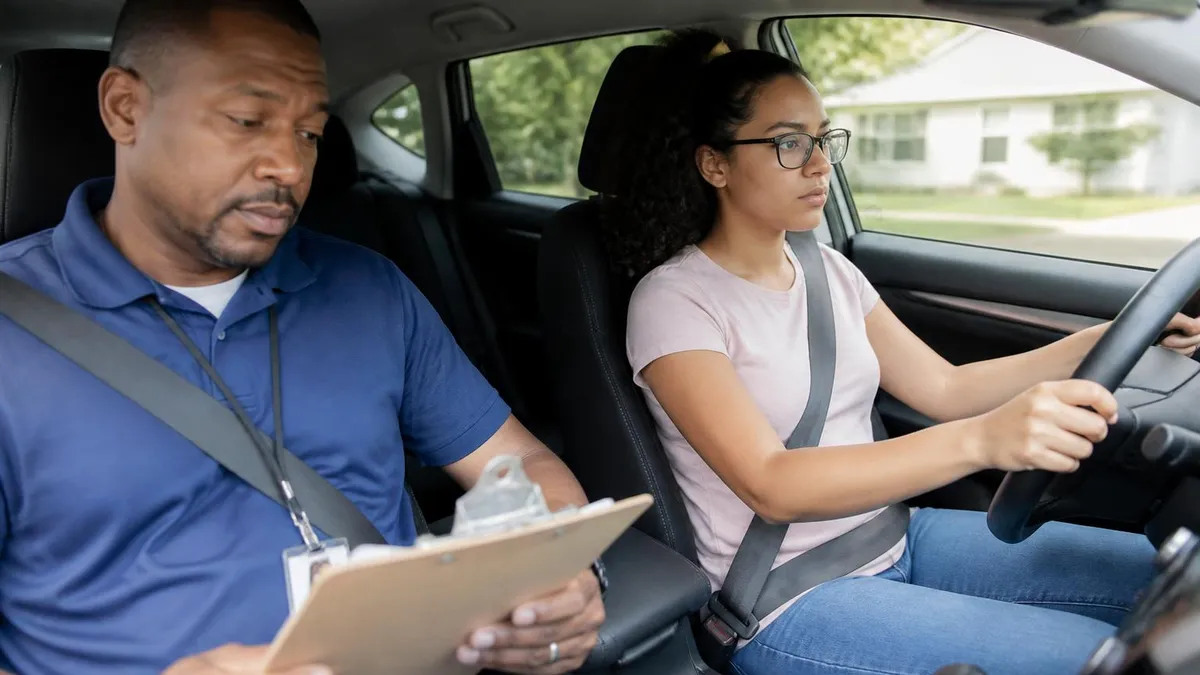
Road test appointments demand an additional documentation layer most first-timers miss. You will need proof of completed driver education for under-eighteen applicants, a parental certification of supervised driving hours where required, valid registration and insurance for the vehicle you bring, working brake lights, turn signals, horn, seatbelts, and a windshield free of cracks in the wiper sweep. Inspectors routinely fail vehicles before the test even begins. Our wisconsin dmv printable practice test bundle is a smart prep step the night before.
Commercial driver license appointments add a federal medical certificate, self-certification of driving type, and proof of training completion from an FMCSA-registered entity. The Entry-Level Driver Training rule that took effect in 2022 means no state will issue a CDL skills test appointment without a verified training record on file. Allow at least three weeks for the training record to post before booking the skills test slot.
Title transfers, registration renewals, and lien releases involve their own paperwork: signed title, bill of sale, odometer disclosure, emissions inspection certificate where required, and proof of insurance for the receiving party. If the seller is out of state, expect to bring additional forms. When a vehicle is gifted, most states still require a notarized gift affidavit because the transaction looks suspicious otherwise. Walking in without these is the number-one reason title appointments end in rebooking.
Finally, payment matters. Some smaller offices remain cash-only or accept only checks drawn on local banks. Larger urban offices generally take credit cards but often add a processing fee of two to three percent. Bringing both a credit card and a checkbook is the safest approach, especially for fees above one hundred dollars. Never assume the office takes mobile wallets — fewer than a third did in the most recent national survey.
DMV Practice Test Questions
Prepare for the DMV - Department of Motor Vehicles exam with our free practice test modules. Each quiz covers key topics to help you pass on your first try.
DMV Alabama Permit Test
DMV Exam Questions covering Alabama Permit Test. Master DMV Test concepts for certification prep.
DMV Alaska Permit Test
Free DMV Practice Test featuring Alaska Permit Test. Improve your DMV Exam score with mock test prep.
DMV Alaska Roads & Signs Test
DMV Mock Exam on Alaska Roads & Signs Test. DMV Study Guide questions to pass on your first try.
DMV Alaska Written Test
DMV Test Prep for Alaska Written Test. Practice DMV Quiz questions and boost your score.
DMV Arizona Roads & Signs Test
DMV Questions and Answers on Arizona Roads & Signs Test. Free DMV practice for exam readiness.
DMV California Drug and Alcohol Test
DMV Mock Test covering California Drug and Alcohol Test. Online DMV Test practice with instant feedback.
DMV General Drug and Alcohol Test
Free DMV Quiz on General Drug and Alcohol Test. DMV Exam prep questions with detailed explanations.
DMV Permit Test
DMV Practice Questions for Permit Test. Build confidence for your DMV certification exam.
DMV Practice Test
DMV Test Online for Practice Test. Free practice with instant results and feedback.
California DMV vs Other Major States
The ca dmv operates the most digitally mature appointment system in the country, supporting both mobile booking and a virtual office experience for many transactions. Appointments are released ninety days in advance and refresh in two-hour increments throughout the morning as cancellations occur. California also pioneered the Behind-the-Wheel Drive Test appointment, which is a separate code from a knowledge test booking.
The california dmv mandates that REAL ID upgrades, original out-of-state transfers, and any transaction requiring document verification go through an appointment. Renewals for drivers under seventy who have no medical or vision conditions can typically be completed online or by mail without ever booking a slot. The eLearning program also allows certain mature drivers to renew remotely after passing a short online refresher course.
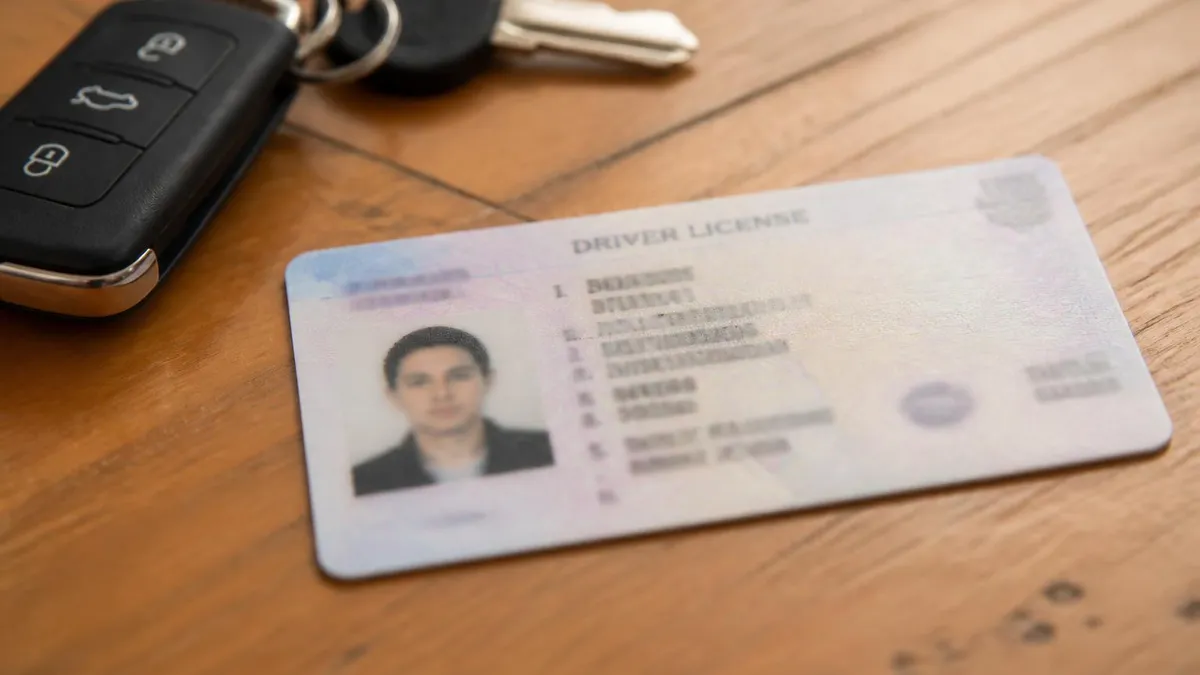
Appointment vs Walk-In: Which Is Better in 2026?
- +Guaranteed entry time with under thirty-minute average wait
- +Document checklist sent in advance so you arrive prepared
- +Eligibility verified before you drive to the office
- +Confirmation barcode lets you bypass the greeter line
- +Reschedule for free up to three times in most states
- +Some transactions are appointment-only with no walk-in option
- +Email reminders reduce no-shows and missed deadlines
- −Slots can be booked out three to eight weeks in busy regions
- −Late arrival past five minutes usually voids the reservation
- −Some states penalize three no-shows with a thirty-day lockout
- −Cancellations refresh randomly, requiring constant portal checking
- −Third-party booking sites may charge fees for free state services
- −You must commit to a date before knowing your work schedule
- −Cannot bring extra family members for multiple transactions
Day-Of DMV Appointment Checklist
- ✓Print the confirmation email or screenshot the barcode for offline access
- ✓Pack the original documents in a labeled folder, never photocopies
- ✓Bring two payment methods: credit card and a personal check
- ✓Arrive ten minutes early but no more than fifteen minutes early
- ✓Wear clothing suitable for your license photo, no hats or sunglasses
- ✓Leave time for parking, which is often the slowest part of the trip
- ✓Charge your phone fully so you can access digital confirmations
- ✓Have your current license ready in hand when entering the building
- ✓Bring a pen for any forms not pre-filled at the kiosk
- ✓Verify office hours that morning in case of holiday or weather closure
Refresh at 7:00 a.m. and 4:00 p.m. daily
State scheduling systems automatically release no-show slots and new capacity twice daily. Setting a calendar alarm to check the portal at exactly 7:00 a.m. and 4:00 p.m. local time is the single most effective way to find a slot within seventy-two hours when the default search shows nothing for a month. Cancellations during these windows fill within minutes.
Rescheduling and canceling a dmv appointment seems trivial until you discover that most state systems have hidden penalty rules buried deep in their terms of use. The general principle in 2026 is that you can reschedule up to three times without consequence, but a third no-show or last-minute cancellation can trigger a thirty-day booking lockout that prevents you from securing any new slot at any office in the state. That lockout can be devastating if your license is about to expire.
The official policy in California allows changes up to one hour before the appointment with no penalty. New York requires at least four hours notice. Texas, Florida, and Illinois set the cutoff at twenty-four hours. Wisconsin and Pennsylvania allow same-day cancellations through 7 a.m. on the day of, after which the slot is treated as a no-show. Always read the confirmation email carefully because the policy is usually printed there in fine print.
To reschedule cleanly, log back into the same portal using the confirmation number, your license number, or the email address you booked under. Most systems then display a calendar with available alternatives and a clear cancel option. If you simply cancel without immediately rebooking, you forfeit any priority position and re-enter the general queue. Always try to keep one foot in the system by switching dates rather than canceling outright.
If the portal will not let you reschedule because of timing rules, call the state DMV phone line. Live agents have override authority that the web system does not. Wait times for these calls can exceed ninety minutes during peak season, so dial as soon as the lines open in the morning. Many states also offer chat-based support staffed weekdays from 8 a.m. to 5 p.m. that resolves rescheduling requests faster than phone.
Cancellations after the appointment time has passed are treated as no-shows automatically, regardless of the reason. If a true emergency caused the miss — hospitalization, family bereavement, jury duty, military deployment — most states will reverse a no-show penalty when you submit documentation in writing within thirty days. Letters from doctors, court summonses, or military orders are accepted; personal statements alone usually are not.
If you miss three appointments and trigger a lockout, your only path forward is a written appeal or a walk-in visit to a regional office that handles exception cases. Some applicants in this situation have had success showing up at opening time at a less-busy rural office and pleading their case in person. This works inconsistently, so do not rely on it. The far better strategy is to set multiple calendar reminders, keep two backup dates booked at different offices, and cancel the unused ones early.
As of May 7, 2025, every adult boarding a domestic U.S. flight or entering a federal facility must show a REAL ID-compliant credential or an acceptable alternative such as a U.S. passport. Standard licenses without the gold or black star are no longer accepted. If your renewal appointment is your chance to upgrade, bring the full federal document set and verify the appointment code is REAL-RNW, not standard renewal.
Even with the best preparation, some appointment scenarios require workarounds that the official portals will not advertise. Knowing these alternatives can save weeks of waiting when your renewal deadline is closing in. The first and most powerful is online renewal eligibility. Roughly sixty percent of all driver license renewals in 2026 qualify for full online processing that bypasses any in-person visit, including the photo if your previous photo is less than fifteen years old.
Mail-in renewals remain available in most states for drivers without medical restrictions, address changes, or REAL ID upgrades pending. The state will send a renewal notice forty-five to sixty days before expiration with a return envelope and instructions. If you act within that window, you can avoid the appointment system entirely. Missing the mail window forces an in-person visit, so check your mailbox carefully during the renewal year. The dmv new york state drug and alcohol video answer review is a smart prep step if your visit includes any testing.
Self-service kiosks have proliferated dramatically since 2024. California, Texas, Illinois, and Florida now operate hundreds of kiosks in grocery stores, libraries, and shopping centers. These machines handle vehicle registration renewals, replacement license printing, address changes, and even REAL ID downgrade requests. The whole transaction takes about three minutes, accepts credit cards, and prints a temporary credential on the spot while the permanent card mails within seven business days.
For road tests specifically, many states have approved third-party testers, usually driving schools, to administer the skills exam off-site. The fee is higher, often eighty to one hundred fifty dollars instead of the state's twenty to forty, but availability is dramatically better and the test environment is often the same vehicle and instructor you trained with. If a state office is booked out two months, a third-party test next Tuesday is well worth the premium.
Military service members and their dependents are entitled to special accommodations in every state under federal law. These include extended license validity during deployment, mail-in renewal regardless of standard eligibility, and priority appointment scheduling at offices near military installations. Bring military orders or a current DEERS card to claim these accommodations. Spouses also qualify under most programs even when the service member is overseas.
Finally, if you absolutely must visit and cannot get an appointment, walk-in is still legal in most states for emergency situations, expired licenses requiring same-day reinstatement, and limited transactions. Arrive at the office at least thirty minutes before opening, bring something to do for the four-plus hour wait, and ask the greeter specifically about emergency walk-in protocols. Some offices reserve a small daily quota for walk-ins that experienced staff will offer to clearly prepared visitors.
Final preparation in the seventy-two hours before your appointment is what separates a thirty-minute success from a wasted afternoon. Start by re-reading your confirmation email word for word. Note the exact office address, suite number, and any parking instructions. Many urban offices share buildings with other agencies, and arriving at the wrong floor or wing can cost you fifteen critical minutes. Use a mapping app the night before to verify the route and account for construction or traffic.
Two days out, lay every required document on a single flat surface and photograph the spread. This protects you if anything is lost in transit and gives you a quick visual reference to confirm nothing is missing. Re-check expiration dates on documents that have them: passports, residency proofs, insurance cards, and medical certificates. A residency proof dated more than ninety days ago will be rejected at the counter even if it shows your correct address.
The night before, complete any remaining online prerequisites. Many states allow you to fill out the application form, pay fees, and acknowledge legal disclosures through the web portal in advance. Doing this trims the in-office portion to just identity verification, photo, and credential printing. If a knowledge test is part of your visit, take at least two full practice tests the night before to keep concepts fresh. Our dmv registration renewal companion guide covers what to study.
Morning of, eat a proper meal because some offices process you straight through without restroom or vending breaks during the active transaction. Dress professionally for your photo — collared shirts photograph better than t-shirts, and avoid white tops that wash out against pale photo backgrounds. Remove glasses unless you wear them while driving, in which case keep them on so your license photo matches your driving appearance.
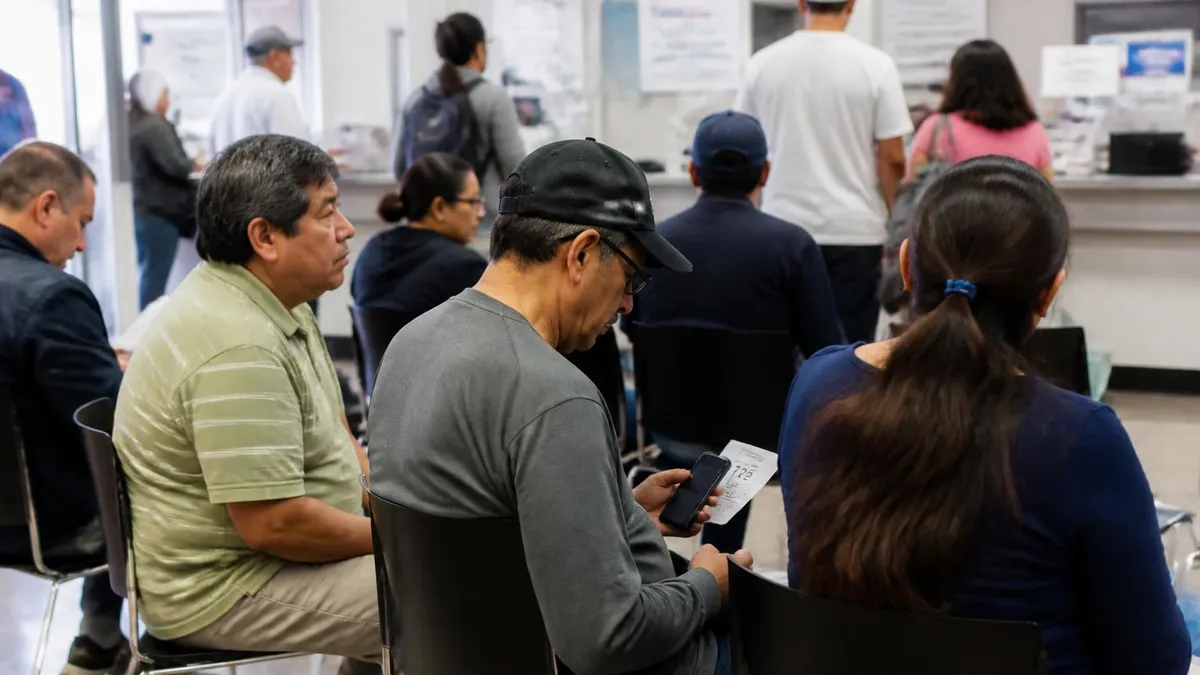
Arrive at the office building ten minutes before your slot. Walk in calmly, scan the barcode or approach the greeter, and state your appointment time clearly. You will typically receive a printed ticket showing your queue number and an estimated call time. Sit where you can see the ticker board and listen for both your number and your name, since some offices announce only one or the other. Do not leave the building because once your number is called and skipped you go to the bottom of the queue.
When the clerk calls you, lead with the confirmation barcode and your current driver license. Let them set the pace. Answer questions directly without volunteering information that could complicate the transaction. If something seems wrong — a fee you did not expect, a document being questioned — politely ask to speak with a supervisor before signing anything. Supervisors have discretion that line staff lack and can often resolve issues immediately.
Once you leave with your temporary credential, the permanent card typically arrives within seven to fourteen business days. Track it through the state portal using the confirmation number, and if it has not arrived within twenty-one days call to request a status check. Lost-in-mail credentials are reissued without fee when reported promptly, but waiting too long sometimes forces a full replacement at standard cost.
DMV Questions and Answers
About the Author
Licensed Driving Instructor & DMV Test Specialist
Penn State UniversityRobert J. Williams graduated from Penn State University with a degree in Transportation Management and has spent 20 years as a certified driving instructor and DMV examiner consultant. He has personally coached thousands of applicants through written knowledge tests, skills assessments, and commercial driver licensing programs across more than 30 states.
Join the Discussion
Connect with other students preparing for this exam. Share tips, ask questions, and get advice from people who have been there.
View discussion (9 replies)