
What Is CPR Certification? Complete Guide to Training, Costs, and Career Value in 2026 October
What is CPR certification? Learn course types, 🔎 costs, ACLS algorithm basics, AED use, and how to earn your CPR card in 2026 October.
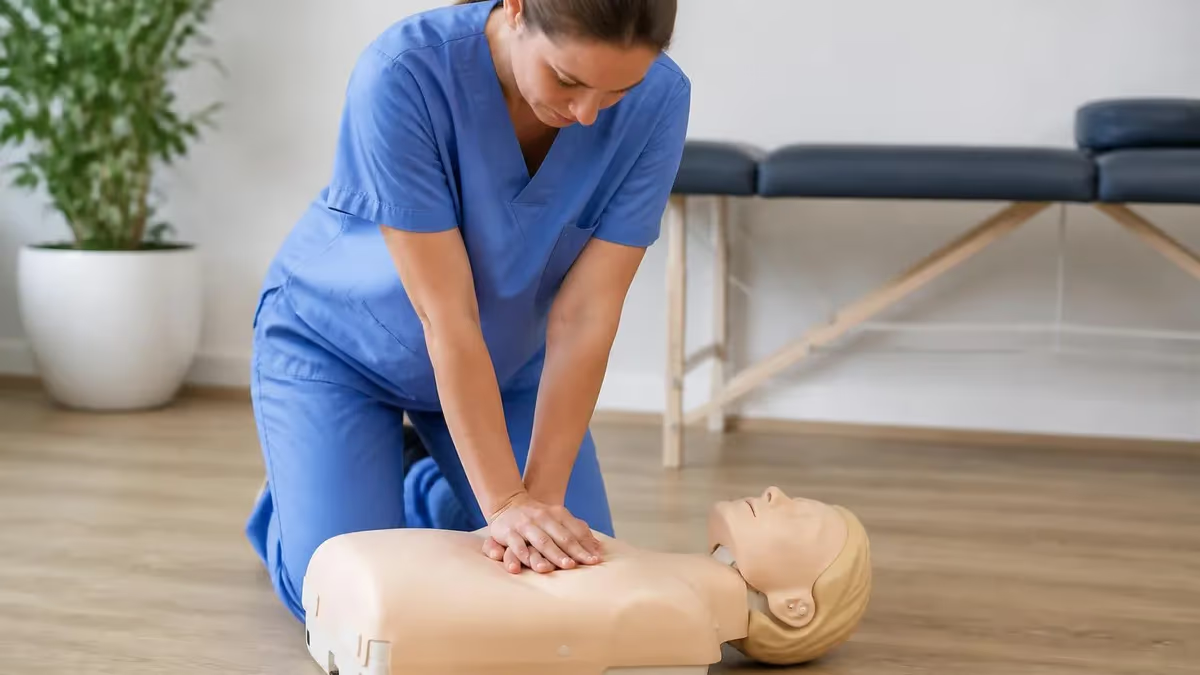
What is CPR certification? At its simplest, CPR certification is a formal credential that proves you have been trained to recognize cardiac and respiratory emergencies, perform high-quality chest compressions, deliver rescue breaths, and operate an automated external defibrillator. It is issued by training organizations such as the American Heart Association, the American Red Cross, the National Safety Council, and the National CPR Foundation after you complete a written exam and, for most courses, a hands-on skills evaluation with a qualified instructor.
Certification matters because cardiac arrest kills roughly 350,000 Americans outside hospitals each year, and survival rates double or triple when bystander CPR begins within the first two minutes. A certification card on file tells employers, licensing boards, and state agencies that you can intervene confidently, follow evidence-based algorithms, and avoid common mistakes such as compressing too shallow, ventilating too fast, or interrupting compressions for longer than ten seconds during a code.
The credential is built around a tiered curriculum. Heartsaver and community-level courses focus on lay rescuers in homes, offices, and gyms. Basic Life Support, often called BLS, is the standard for healthcare students, nurses, paramedics, and dental staff. Advanced Cardiovascular Life Support adds the ACLS algorithm for medication-driven resuscitation, while Pediatric Advanced Life Support, known as PALS certification, layers in pediatric airway management, fluid resuscitation, and arrhythmia recognition for infants and children.
Every certification course covers core skills: chest compression depth and rate, airway positioning, ventilation ratios, AED pad placement, two-rescuer coordination, and the recovery position for unresponsive but breathing patients. Healthcare courses go further, requiring you to interpret rhythm strips, dose epinephrine and amiodarone, and recognize reversible causes of arrest such as hypoxia, hypovolemia, hypothermia, and tension pneumothorax — the H's and T's that anchor advanced resuscitation training nationwide.
Most CPR certifications stay valid for two years from the date you pass, and renewal usually requires a shorter refresher class plus a fresh skills test. Some employers, particularly hospitals and ambulance services, demand annual competency check-offs in addition to the two-year card. If you let your card expire, you generally must retake the full initial course rather than the renewal version, which costs more and takes longer. Tracking your expiration date is one of the simplest career-protection habits in healthcare.
If you are new to the field, the easiest way to test your readiness before paying for a course is to work through realistic practice questions. You can warm up with our AHA CPR overview and a free question bank to see where your weak spots are — airway, AED steps, pediatric rates, or the ACLS algorithm itself — so your in-person class time is spent sharpening skills rather than learning basic terminology from scratch.
This guide walks through every layer of the credential: who needs it, what each course covers, what it costs, how long it takes, how to choose a provider, and how to maintain your card year after year. By the end, you will know exactly which certification level fits your role, your budget, and your state's requirements for 2026 — and you will be able to spot the red flags that mark a low-quality online provider from a mile away.
CPR Certification by the Numbers
The Main CPR Certification Levels in 2026
For lay rescuers, teachers, coaches, parents, and corporate staff. Covers adult, child, and infant CPR, choking relief, AED use, and basic first aid. No medical background required and skills focus on confidence under pressure.
The healthcare-provider standard for nurses, EMTs, dental teams, and medical students. Adds two-rescuer techniques, bag-valve-mask ventilation, team dynamics, and high-performance compressions with metronome-paced quality feedback.
For RNs, physicians, paramedics, and pharmacists. Layers the ACLS algorithm onto BLS skills, including rhythm recognition, IV medication administration, airway adjuncts, and post-cardiac-arrest care with targeted temperature management.
PALS certification trains clinicians who treat infants and children. Covers pediatric assessment triangle, respiratory distress versus failure, shock recognition, and weight-based dosing for emergency medications using length-based tape methods.
Includes Neonatal Resuscitation, bloodborne pathogens, first aid, and instructor-level credentials. These complement core certification when your role demands deeper scope, such as labor and delivery or industrial safety teams.
CPR certification is mandatory for far more occupations than most people realize. Healthcare workers — registered nurses, licensed practical nurses, certified nursing assistants, medical assistants, respiratory therapists, dentists, hygienists, physical therapists, and pharmacists — all hold current BLS as a condition of licensure or employment. Emergency responders such as paramedics, EMTs, firefighters, and police officers add ACLS or PALS depending on jurisdiction. Even hospital chaplains and unit clerks frequently carry BLS in case they witness a code.
Outside healthcare, CPR cards are required for K-12 teachers in most states, athletic coaches at every level, lifeguards, personal trainers, group fitness instructors, daycare workers, nannies, build parents, flight attendants, commercial drivers, electrical linemen, construction supervisors, and security officers. Some states also require new drivers and high school graduates to complete a Heartsaver-level course before receiving a license or diploma — a public-health policy now adopted by more than 40 states.
Parents, grandparents, and caregivers of medically fragile children are strong voluntary candidates. Drowning, choking, and sudden infant events remain leading causes of preventable death in the under-five age bracket, and infant CPR techniques differ significantly from adult care: two fingers instead of two hands, a compression depth of about 1.5 inches, and a more cautious approach to head-tilt maneuvers because of the infant's proportionally large occiput and easily occluded airway anatomy.
Workplace safety regulations under OSHA do not specifically mandate CPR for every employer, but the agency requires a trained responder to be available in any workplace without easy access to a nearby clinic or hospital. Industries handling hazardous chemicals, heavy machinery, electrical work, or confined spaces almost always have CPR-certified staff on every shift, and many employers reimburse course fees because the credential reduces liability and improves emergency response time.
If you work in fitness, you should also understand respiratory rate baselines, because rapid breathing in a member during exercise can signal exertional heat illness, asthma exacerbation, or cardiac compromise long before collapse. Recognizing tachypnea early — typically above 24 breaths per minute at rest in adults — lets you intervene with positioning, rest, and EMS activation before a full arrest occurs, which is one reason fitness certifications increasingly bundle CPR training into the curriculum.
Volunteer roles often require certification as well. Boy Scout leaders, ski patrollers, search-and-rescue volunteers, disaster relief teams, and church safety committees commonly require a current card. Even ride-share drivers in some cities now carry voluntary CPR credentials because passenger emergencies do occur, and a willing trained bystander dramatically improves outcomes during the critical four-to-six-minute window before paramedics arrive at the scene.
For step-by-step technique training that complements certification, our Adult CPR walkthrough breaks down compressions, ventilations, and AED integration in a format you can review before or after your hands-on class. Pairing structured online study with an in-person skills session is the single most effective combination for first-time pass rates above 95 percent and durable long-term retention of high-quality compression mechanics.

CPR Practice Test Questions
Prepare for the CPR Cardiopulmonary Resuscitation Practice exam with our free practice test modules. Each quiz covers key topics to help you pass on your first try.
CPR Basic CPR
CPR Exam Questions covering Basic CPR. Master CPR Test concepts for certification prep.
CPR and First Aid
Free CPR Practice Test featuring and First Aid. Improve your CPR Exam score with mock test prep.
CPR (Cardiopulmonary Resuscitation) Adult ...
CPR Mock Exam on (Cardiopulmonary Resuscitation) Adult CPR and AED Usage. CPR Study Guide questions to pass on your first try.
CPR (Cardiopulmonary Resuscitation) Airway...
CPR Test Prep for (Cardiopulmonary Resuscitation) Airway Obstruction and Choking. Practice CPR Quiz questions and boost your score.
CPR (Cardiopulmonary Resuscitation) Cardio...
CPR Questions and Answers on (Cardiopulmonary Resuscitation) Cardiopulmonary Emergency Recognition. Free CPR practice for exam readiness.
CPR (Cardiopulmonary Resuscitation) Child ...
CPR Mock Test covering (Cardiopulmonary Resuscitation) Child and Infant CPR. Online CPR Test practice with instant feedback.
CPR (Cardiopulmonary Resuscitation) High-P...
Free CPR Quiz on (Cardiopulmonary Resuscitation) High-Performance Team Dynamics. CPR Exam prep questions with detailed explanations.
CPR (Cardiopulmonary Resuscitation) Legal ...
CPR Practice Questions for (Cardiopulmonary Resuscitation) Legal and Ethical Considerations. Build confidence for your CPR certification exam.
CPR for Specific Populations
CPR Test Online for for Specific Populations. Free practice with instant results and feedback.
CPR Airway & Breathing Management
CPR Exam Questions covering Airway & Breathing Management. Master CPR Test concepts for certification prep.
CPR Assessment & Recognition of Cardiac Ar...
Free CPR Practice Test featuring Assessment & Recognition of Cardiac Arrest. Improve your CPR Exam score with mock test prep.
CPR Chest Compressions & Defibrillation
CPR Mock Exam on Chest Compressions & Defibrillation. CPR Study Guide questions to pass on your first try.
CPR Post-Resuscitation Care & Recovery
CPR Test Prep for Post-Resuscitation Care & Recovery. Practice CPR Quiz questions and boost your score.
What You Actually Learn — Life Support Skills Covered
Every certification course drills compression mechanics relentlessly. You will compress the lower half of the sternum at a rate of 100 to 120 per minute, push at least two inches deep in adults, allow complete recoil between compressions, and minimize interruptions to less than ten seconds. Instructors use feedback manikins that beep when depth, rate, or recoil drift outside acceptable ranges, ensuring you leave class with measurable competence.
Ventilation skills are taught alongside compressions. Lay rescuers learn the 30:2 ratio with mouth-to-mask barriers, while BLS providers add bag-valve-mask technique with two-rescuer coordination. Each breath should last one second and produce visible chest rise. Over-ventilation is one of the most common errors, causing gastric inflation, vomiting, and reduced cardiac output, so courses now emphasize slow, gentle, paced breaths.
In-Person vs. Online-Only CPR Certification
- +In-person classes include mandatory hands-on skills testing required by employers
- +Blended courses combine online theory with a short in-person skills session for flexibility
- +Instructors give real-time feedback on compression depth, rate, and recoil quality
- +Group scenarios build team-based communication and closed-loop call-outs
- +Most state licensing boards and hospitals accept only AHA, Red Cross, or ASHI cards
- +Renewal courses are shorter and cheaper when you stay current with an accredited provider
- −Fully online certifications without skills checks are rejected by most healthcare employers
- −Course schedules can be limited in rural areas, requiring travel to regional training centers
- −Some low-cost online providers issue cards that are not recognized by hospitals or state boards
- −Manikin practice cannot fully replicate the chaos and adrenaline of a real cardiac arrest
- −Cards expire every two years, requiring ongoing time and cost commitment
- −Pediatric and infant skills require additional class time or a specialty module
Pros and Cons at a Glance
| Pros | Cons |
|---|---|
| In-person classes include mandatory hands-on skills testing required by employers | Fully online certifications without skills checks are rejected by most healthcare employers |
| Blended courses combine online theory with a short in-person skills session for flexibility | Course schedules can be limited in rural areas, requiring travel to regional training centers |
| Instructors give real-time feedback on compression depth, rate, and recoil quality | Some low-cost online providers issue cards that are not recognized by hospitals or state boards |
| Group scenarios build team-based communication and closed-loop call-outs | Manikin practice cannot fully replicate the chaos and adrenaline of a real cardiac arrest |
| Most state licensing boards and hospitals accept only AHA, Red Cross, or ASHI cards | Cards expire every two years, requiring ongoing time and cost commitment |
| Renewal courses are shorter and cheaper when you stay current with an accredited provider | Pediatric and infant skills require additional class time or a specialty module |

How to Earn Your CPR Certification — Step-by-Step Checklist
- ✓Identify whether you need Heartsaver, BLS, ACLS, or PALS based on your role or licensing board
- ✓Choose an accredited provider such as AHA, American Red Cross, ASHI, or the National CPR Foundation
- ✓Confirm your employer or state board accepts the provider's card before paying
- ✓Register for either a fully in-person class or a blended online-plus-skills option
- ✓Complete the online or textbook precourse work, typically 1 to 2 hours of self-study
- ✓Attend the in-person skills session and bring photo ID plus your precourse completion certificate
- ✓Pass the written exam, usually 25 to 50 multiple-choice questions with a 70–84% passing score
- ✓Demonstrate hands-on skills on an adult, child, and infant manikin plus AED operation
- ✓Receive your eCard or physical card within 24 to 48 hours and save a digital backup
- ✓Set a calendar reminder 60 days before your two-year expiration to schedule renewal
Verify acceptance before you pay.
Many online-only providers advertise instant CPR cards for $20 or less, but hospitals, state licensing boards, and most school districts reject any certification lacking a hands-on skills evaluation. Before enrolling, ask your employer or board directly which providers and course formats they accept — saving the email confirmation can prevent a costly second course later.
Costs for CPR certification vary based on the level and the provider, but the ranges are predictable. A community Heartsaver course typically runs $30 to $70. BLS for healthcare providers costs $55 to $110 depending on whether materials are included. ACLS and PALS sit higher at $200 to $325 for initial certification because they include longer course time, more textbooks, and mandatory simulation. Renewal courses generally cost 15 to 30 percent less than initial certifications across every level.
Time commitment scales with complexity. Heartsaver and renewal BLS classes run two to three hours. Initial BLS takes three to four hours. Initial ACLS and PALS occupy a full day, usually eight hours, while renewal versions compress into four to six. Blended learning shifts roughly half the time to self-paced online modules, leaving only the hands-on skills test in person — a popular format for working professionals who cannot dedicate a full weekday to classroom training.
Renewal rules vary slightly by provider, but the AHA, Red Cross, and ASHI all set a strict two-year window. Letting your card lapse — even by a single day — usually forces you to retake the full initial course rather than the shorter renewal. Some hospitals build in a 30-day grace period, but state licensing boards rarely do. The financial penalty for letting BLS expire is typically $40 to $60 plus an extra hour of class time, so calendar discipline matters.
If you teach group classes, your employer often covers the cost as a workforce expense, and many YMCAs, community colleges, and fire departments offer free or subsidized community courses to nurses returning to practice or students entering healthcare programs. Veterans can sometimes claim training stipends through GI Bill educational benefits when CPR is part of a broader allied health credential, which is worth asking about before you self-pay for an initial course.
Beware of phone-related search confusion when researching certification online. Always include the words "certification," "training," or "life support" in your queries, and verify the provider's accrediting body — typically AHA, Red Cross, ASHI, or another nationally recognized organization — before entering payment details on any online registration form.
Group rates can dramatically reduce per-person cost. A workplace booking of ten or more often drops the BLS price to $40 to $55 per learner, and the instructor will usually come on-site, saving travel time. Schools, daycares, gyms, and law firms commonly host quarterly group sessions, which doubles as a team-building exercise and ensures every staff member's expiration date stays synchronized — making future renewals easier to schedule and budget.
Finally, factor in hidden costs that catch first-timers off guard: pocket masks ($10 to $20), textbooks if not included in tuition ($30 to $50), and replacement card fees ($15 to $35) if you lose your physical card before your eCard system syncs. Some providers also charge a small processing fee for printed wall certificates, while digital eCards are typically free and easier to share with HR departments and credentialing offices.
Your CPR card is invalid the day after it expires — there is no grace period in most healthcare systems. Letting BLS, ACLS, or PALS lapse can pull you off the schedule, suspend clinical privileges, or pause a nursing license renewal. Set two calendar reminders, one at 90 days and one at 30 days before expiration, and book renewal early to avoid waitlists at popular training centers.
Choosing the right provider starts with verifying recognition. The American Heart Association issues the gold-standard cards accepted across virtually every U.S. hospital and licensing board. The American Red Cross holds equivalent recognition for community and healthcare audiences. ASHI, the American Safety and Health Institute, is widely accepted but worth double-checking with your employer. The National CPR Foundation and similar online-first providers serve niche audiences where hands-on testing is not required by the credentialing body.
Look closely at the instructor's credentials. A qualified CPR instructor holds a current instructor card from their certifying body, completes ongoing teaching-quality reviews, and maintains a personal provider certification at the level they teach. Ask how many students they have certified in the past year — experienced instructors who run 50+ classes annually catch subtle skill errors faster and provide more nuanced feedback than instructors who teach occasionally as a side activity.
Class size matters more than most learners expect. The AHA recommends no more than six students per instructor for BLS and no more than three for ACLS or PALS to allow adequate hands-on practice. If a provider crams 15 learners around two manikins, individual practice time drops below the threshold needed for skill retention, and instructors cannot give meaningful corrective feedback. Always ask about the student-to-instructor ratio before registering for a class.
Examine the equipment. Modern courses should use feedback-enabled manikins that measure compression depth, rate, and recoil. Training AEDs should match the brands commonly deployed in your workplace — Zoll, Philips HeartStart, LIFEPAK, and Cardiac Science all behave slightly differently. Asking the provider which manikins and AED brands they use is a quick way to gauge whether they invest in current equipment or rely on outdated training tools from a decade ago.
Reviews and refund policies reveal a lot. A reputable provider has dozens of recent online reviews, a clear cancellation policy, and transparent pricing without hidden fees. Be skeptical of providers offering same-day cards without a skills test, lifetime certifications, or course completion in under an hour — none of these meet the standards of any major certifying body, and the cards they issue will not survive a credentialing-office review at any healthcare employer.
If you are unsure which path matches your role, our CPR - Cardiopulmonary Resuscitation: Complete Study Guide 2026 compares Heartsaver, BLS, ACLS, and PALS side by side with sample exam questions and renewal timelines. Reading it before you book a course can save you the cost and time of registering for the wrong level — a surprisingly common mistake among nursing students and new healthcare hires each year.
Finally, consider logistics. Course location, parking, start time, and lunch break length all influence whether you arrive ready to learn or stressed and rushed. A class held within a fifteen-minute drive with morning start times produces better skill retention than an evening session squeezed in after a long workday. When two providers offer equivalent quality and price, choose the one that fits your schedule cleanly to maximize learning and minimize fatigue-driven errors during skills testing.
Practical preparation makes the difference between barely passing and earning a confident, lasting credential. Start your prep two weeks before class. Spend the first week reviewing the provider's textbook or eLearning modules and the second week running through practice questions until your accuracy is consistently above 85 percent. Spaced repetition — short daily sessions of 20 to 30 minutes — beats one marathon study night and improves long-term skill retention by a significant margin.
Rehearse the rhythm of compressions before you ever touch a manikin. Use a metronome app set to 110 beats per minute, or hum the chorus of "Stayin' Alive," "Baby Shark," or "Crazy in Love" — three songs whose tempos fall squarely inside the 100–120 BPM window. Tap on a couch cushion or pillow with the heel of your hand for one to two minutes at a time to build muscle memory before your instructor introduces a feedback-enabled training manikin.
Memorize the recovery position before class. After verifying the patient is breathing, kneel beside them, place the near arm at a right angle, bring the far arm across the chest with the back of the hand against the cheek, bend the far knee, and roll the patient toward you. The result protects the airway, allows fluid drainage, and prevents aspiration if vomiting occurs while you wait for EMS to arrive at the scene.
Practice infant CPR mentally as well. Use the two-finger technique just below the nipple line, compress about 1.5 inches deep at 100–120 per minute, and switch to a two-thumb encircling technique when a second rescuer arrives. Cover the infant's mouth and nose together when delivering rescue breaths, and use only enough volume to produce visible chest rise — typically a small puff rather than a full adult breath, which can cause barotrauma in infant lungs.
On the day of your class, arrive 15 minutes early, eat a real breakfast or lunch, hydrate well, and wear comfortable clothes that allow you to kneel on the floor without restriction. Bring photo ID, your precourse completion certificate, a pen, and a small notebook. Avoid heavy perfume or cologne — instructors and other students need to be physically close during skills testing, and strong scents can become a distraction or trigger respiratory irritation during long sessions.
During skills testing, narrate your actions out loud. Say "scene safe," "check responsiveness," "call 911 and get an AED," "open airway," "check breathing" — verbalizing the steps signals to the instructor that you understand the sequence and helps you avoid skipping a critical action. In real codes, the same verbal habit becomes closed-loop communication, the foundation of high-performing resuscitation teams in every emergency department nationwide.
After certification, keep the skill alive. Quarterly five-minute refresher drills, watching one resuscitation video monthly, and re-taking online practice questions twice a year all preserve skill quality between renewals. CPR is perishable — studies show measurable skill decay within three to six months without practice — so building a tiny maintenance habit dramatically improves your effectiveness when a real emergency occurs months or years after the initial class.
CPR Questions and Answers
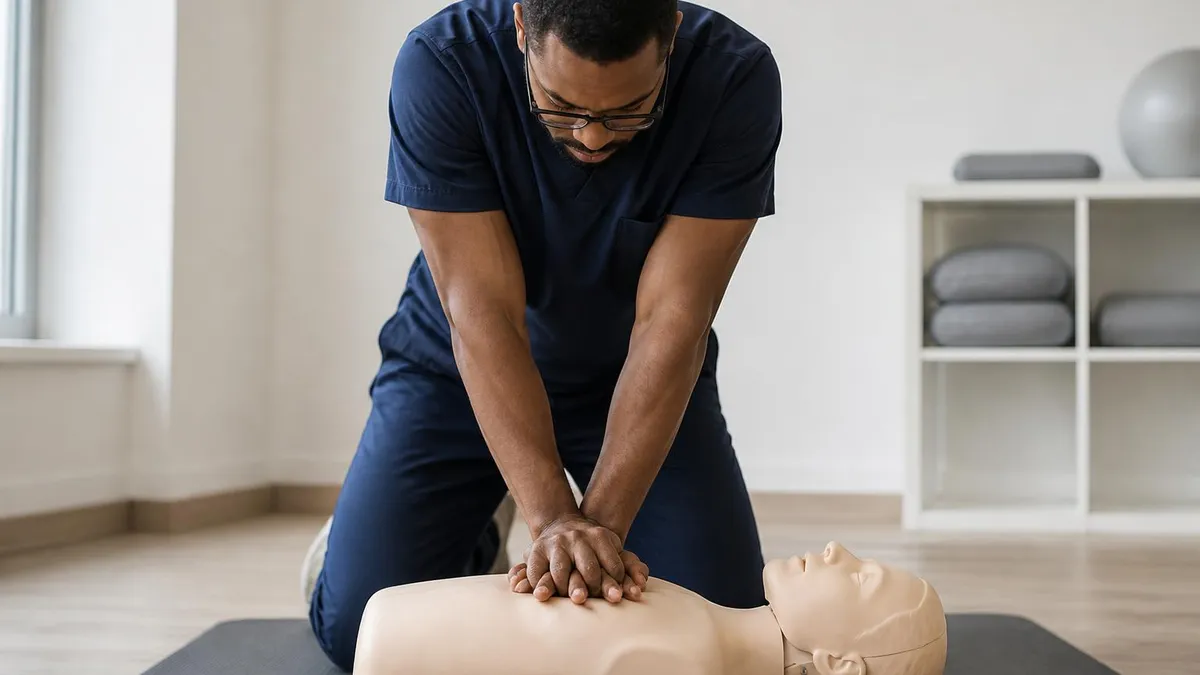
CPR Card Lookup: How to Verify, Replace, and Access Your CPR Certification in 2026
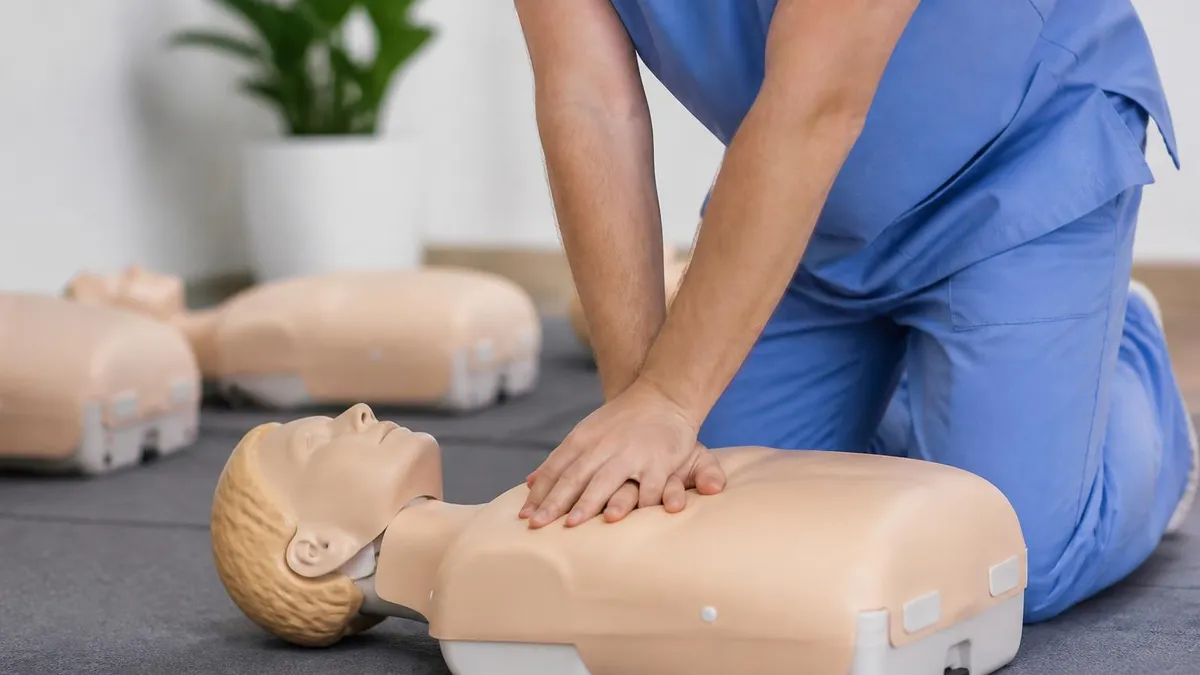
AHA CPR: What It Is, Which Course You Need, and How to Get Certified
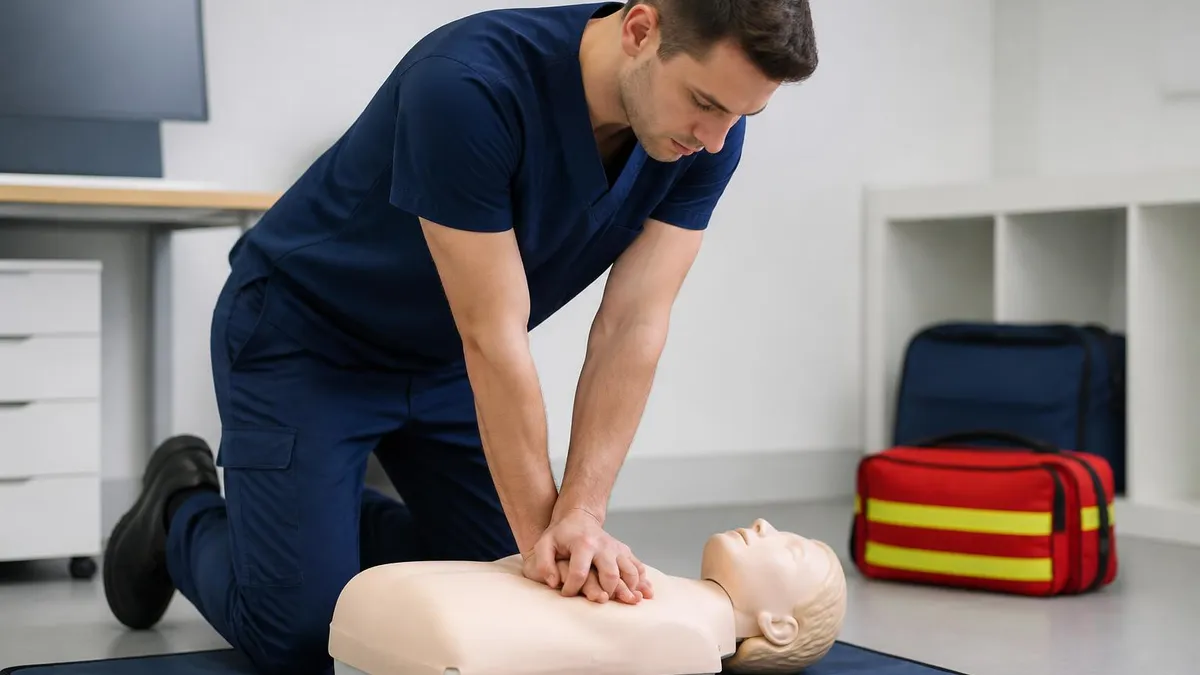
Adult CPR: Complete Step-by-Step Guide to Hands-Only and Standard CPR in 2026
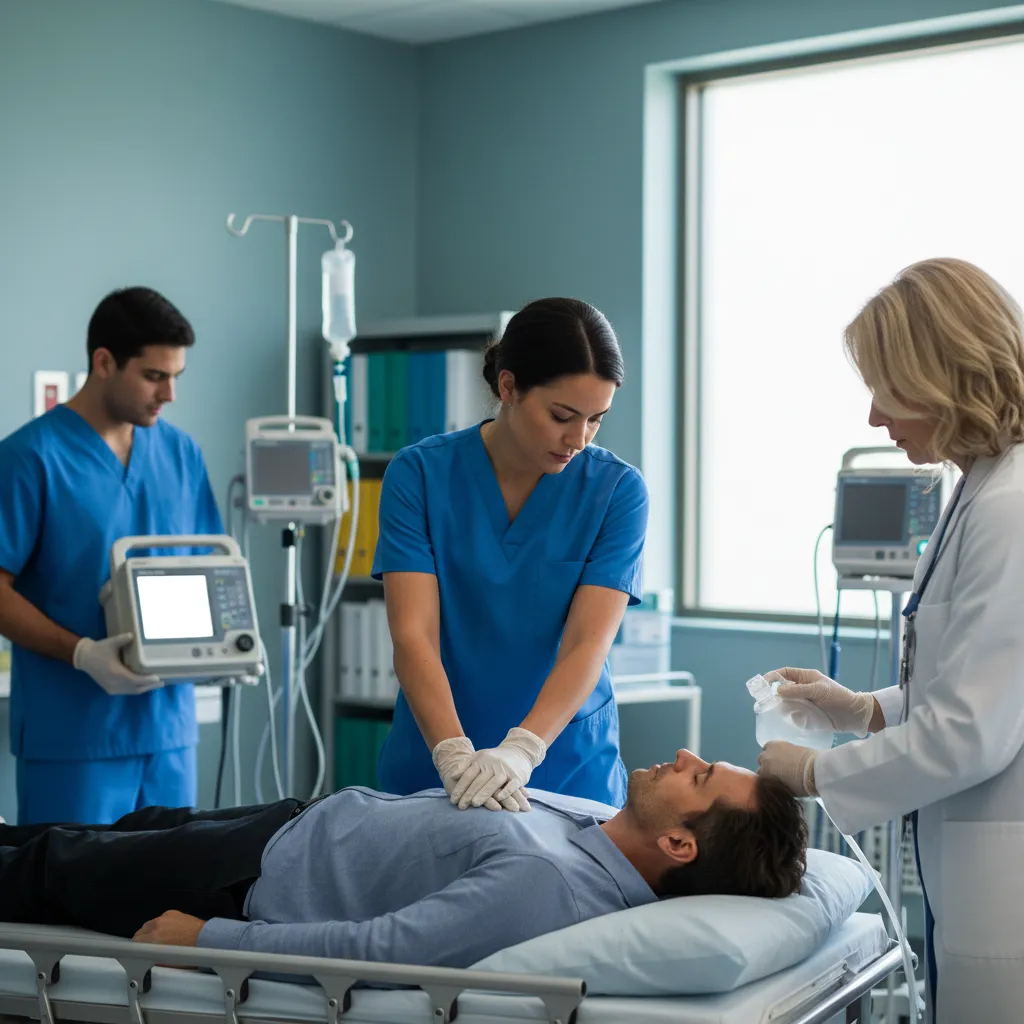
CPR - Cardiopulmonary Resuscitation: Complete Study Guide 2026
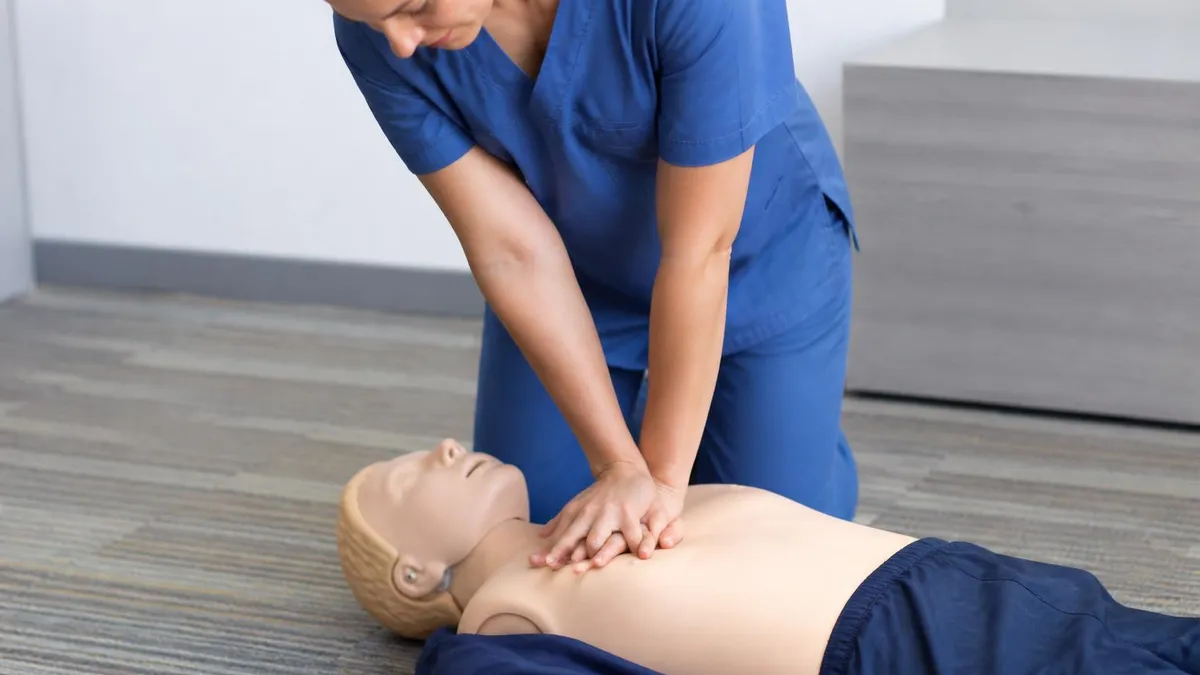
Inappropriate CPR Songs: What Not to Play, Why It Matters, and Better Beat-Per-Minute Alternatives
About the Author

Registered Nurse & Healthcare Educator
Johns Hopkins University School of NursingDr. Sarah Mitchell is a board-certified registered nurse with over 15 years of clinical and academic experience. She completed her PhD in Nursing Science at Johns Hopkins University and has taught NCLEX preparation and clinical skills courses for nursing students across the United States. Her research focuses on evidence-based exam preparation strategies for healthcare certification candidates.
Join the Discussion
Connect with other students preparing for this exam. Share tips, ask questions, and get advice from people who have been there.
View discussion (5 replies)