
Dog CPR: How to Perform Canine CPR Correctly 2026 October
Dog CPR guide — 🔎 when to perform, compression technique by dog size, rescue breathing, common mistakes, and emergency response steps.
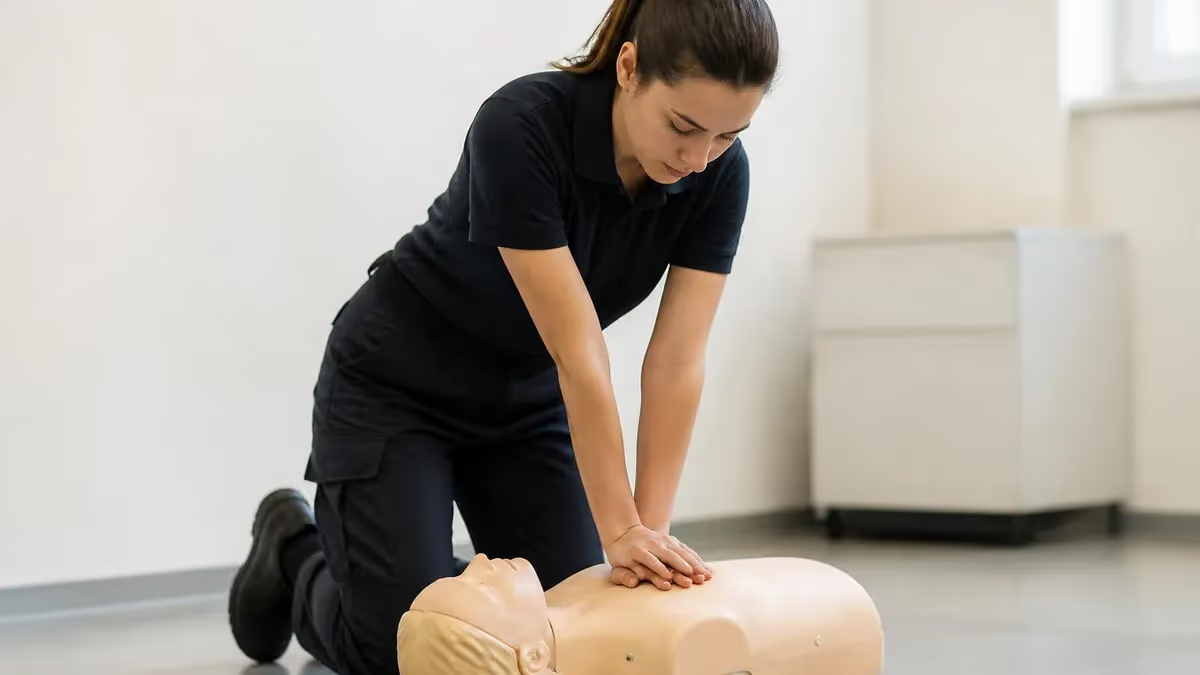
Dog CPR — cardiopulmonary resuscitation for canines — is an emergency procedure that combines chest compressions and rescue breathing to maintain circulation and oxygenation in a dog whose heart has stopped or who has stopped breathing. While CPR is no substitute for veterinary care, knowing how to perform dog CPR correctly can keep oxygen flowing to vital organs while you transport your dog to emergency veterinary care, potentially making the difference between recovery and loss in cases of cardiac arrest, drowning, choking after the airway is cleared, severe trauma, or various other emergencies.
This guide explains how to perform dog CPR according to current Recover Initiative guidelines (the canine and feline CPR guidelines developed by veterinary critical care specialists), when CPR is appropriate, what survival rates look like, and the broader context of canine emergency response.
Information here is educational and intended to help dog owners and caregivers understand the technique. CPR training with hands-on practice through veterinary or pet first aid courses provides skill development that reading alone cannot match — consider taking such a course if you have a dog, particularly a senior dog or one with health conditions increasing emergency risk.
Before discussing technique, an important reality must be acknowledged: dog CPR survival outcomes are sobering. Studies of veterinary CPR outcomes show survival to discharge rates of approximately 6-7% even with full ICU-level resuscitation by veterinary teams. Bystander CPR for dogs whose hearts have stopped outside a veterinary setting has substantially lower outcomes. CPR is appropriate for true emergencies where the alternative is certain death, not for unconscious dogs who are still breathing or those who are dying from terminal conditions where CPR would only prolong suffering. Understanding these realities helps owners make difficult decisions appropriately during emergencies.

Dog CPR Quick Facts
When to perform: Only when dog is unconscious, not breathing, and has no pulse — and CPR is appropriate (not terminal illness). Compression rate: 100-120 per minute (same as human CPR). Compression depth: 1/3 to 1/2 of chest width. Ratio: 30 compressions to 2 rescue breaths (cycles of 2 minutes). Position: Lateral recumbency (lying on right side); medium/large dogs compress over highest point of chest; small dogs/cats compress directly over heart. While doing CPR: Have someone else call emergency veterinary care immediately for transport.
The first step in any potential dog CPR situation is assessment to determine whether CPR is actually needed. Approach your dog calmly. Assess responsiveness by gently tapping the dog and calling their name. If unresponsive, check for breathing by watching the chest for rise and fall over 5-10 seconds and feeling for breath at the nose. If the dog is breathing, do not perform CPR — instead, place them in lateral recumbency and seek emergency veterinary care immediately. Perform CPR only when the dog is unresponsive and not breathing.
If breathing is absent, check for a pulse by feeling the femoral artery on the inner thigh near the groin. Press firmly with two or three fingers — the femoral artery runs along the inside of the upper thigh and is the most reliable pulse point in dogs. Spend no more than 10 seconds checking pulse. If you cannot find a pulse and the dog is not breathing, begin CPR immediately. The simplified Recover Initiative guideline for laypeople is: if dog is unresponsive and not breathing normally, start CPR — don't waste time perfecting pulse checks if you're uncertain.
Dog CPR Steps
Tap and call dog's name. Check breathing 5-10 seconds. Check femoral pulse 5-10 seconds.
Lateral recumbency on right side. Hard flat surface — floor not bed. Extend neck to open airway.
100-120/min, 1/3-1/2 chest depth. Medium/large: highest point of chest. Small: directly over heart.
After 30 compressions, close mouth and breathe into nose. 2 breaths over 1 second each.
30:2 ratio. Switch compressors every 2 minutes if multiple rescuers available to maintain quality.
Continue CPR while transporting to emergency veterinary care. Don't stop unless dog recovers.
Position the dog in lateral recumbency on their right side on a hard, flat surface. Carpet works in a pinch but firm flooring transmits compression force more effectively. Soft surfaces like beds or couches absorb compression force and substantially reduce CPR effectiveness. If the dog is on furniture, move them to the floor. Open the airway by gently extending the neck so the head is in line with the body — avoid hyperextension which can compress the airway. Sweep the mouth gently to clear visible debris if any is present and easily reachable without delaying compressions further.
Compression technique varies somewhat by dog size. For medium and large dogs (the majority of pets), kneel beside the dog and place hands at the highest point of the chest when the dog is lying on their side — this is approximately mid-chest at the widest part of the ribcage.
Lock your elbows and use your upper body weight to compress, maintaining straight arms. Compress to a depth of approximately one-third to one-half of the chest width. The rate is 100-120 compressions per minute — the same rate used in human CPR, which can be maintained by following the beat of songs like 'Stayin' Alive' (103 BPM).
For small dogs (under 30 pounds), the technique adjusts. Compress directly over the heart, which is located at the elbow when the leg is pulled forward. Use either two hands wrapped around the chest with thumbs over the heart, or one hand cupping the chest from above with the heel of the hand over the heart.
The compression depth is still approximately one-third to one-half of chest width. For very small dogs and cats, two-finger compressions directly over the heart may be more appropriate than full hand techniques designed for larger animals. Adjust technique based on the specific size of the dog.
Position: Lateral recumbency, right side down. Hands: Highest point of chest, hands stacked. Compress: 1/3 to 1/2 chest depth, locked arms, body weight. Rate: 100-120/min. Cycle: 30 compressions, 2 rescue breaths. Examples: Labradors, German Shepherds, Golden Retrievers, larger breeds.

Rescue breaths in dog CPR are administered through the nose, not the mouth as in human CPR. After completing 30 chest compressions, close the dog's mouth firmly with one hand to seal it. Extend the neck to open the airway. Place your mouth over the dog's nose to create a seal and deliver one breath that lasts approximately one second. The breath should be enough to make the chest rise visibly. Then deliver a second breath of similar volume. After the two rescue breaths, immediately resume chest compressions for another set of 30.
Watch the dog's chest during rescue breaths to confirm the breath is going in. If the chest doesn't rise, the airway may be obstructed — recheck the mouth for foreign objects, ensure the neck is properly extended, and try to deliver the breath again. If the chest still doesn't rise, focus on chest compressions and skip rescue breaths rather than wasting time on ineffective breaths. Compression-only CPR is better than no CPR if rescue breath delivery is failing for any reason during the actual emergency response.
Continue CPR cycles of 30 compressions to 2 breaths until one of three things happens: the dog recovers (begins breathing on their own with detectable pulse), you reach emergency veterinary care, or the situation becomes physically impossible to continue. CPR is exhausting — high-quality compressions cannot be maintained indefinitely. If multiple rescuers are present, switch compressors every 2 minutes (every cycle of 2 minutes of CPR equals about 5 cycles of 30:2). The compression-quality drop at the 2-minute mark is well-documented in human CPR research and applies similarly to canine CPR delivery.
CPR on a dog with a beating heart can cause serious injury including broken ribs, lung damage, and disruption of normal heart rhythm. Only perform CPR when: Dog is unresponsive AND not breathing AND has no detectable pulse. If unsure: Modern guidelines lean toward starting CPR if dog is unresponsive and not breathing normally — risk of CPR injury is much lower than risk of withholding CPR from a dying dog. Never: Perform CPR on a dog with terminal illness as a final intervention — this prolongs suffering rather than saving life.
Pet owners should know how to recognise emergencies that may require CPR before the situation becomes critical. Common scenarios that can lead to cardiac arrest in dogs include drowning incidents (CPR after water removal once airway is clear), severe choking that has progressed beyond conscious airway obstruction (CPR after object is removed if dog stops breathing), severe trauma from car accidents or other injuries, severe shock from various causes, electrical shock incidents, and sudden cardiac arrest in dogs with underlying heart disease. Recognising these scenarios helps owners respond appropriately when they occur.
The Recover Initiative guidelines emerged from veterinary critical care research seeking to standardise canine and feline CPR practices analogous to AHA guidelines for human CPR. The guidelines have evolved through multiple revisions reflecting research findings and clinical experience. Current recommendations emphasise high-quality chest compressions as the primary intervention, with rescue breaths as secondary. The simple summary for laypeople: get help, start chest compressions immediately if dog is unresponsive and not breathing, transport to veterinary care while continuing CPR, accept that CPR success is challenging but provides best chance available.
Prevention matters substantially more than CPR response in most cases. Regular veterinary care identifies cardiac conditions, dental disease that contributes to cardiac issues, and other risk factors that owners can address before emergencies develop. Dog-proofing homes prevents many trauma scenarios. Avoiding hot weather exhaustion, recognising early signs of distress, and not leaving dogs in cars or alone near pools/water all prevent emergencies. Knowledge of CPR is valuable insurance against rare but serious situations, but consistent prevention efforts reduce the likelihood of needing CPR substantially across most dogs' lifetimes.
Dog CPR Action Steps
- ✓Confirm dog is unresponsive and not breathing — if breathing, do not perform CPR
- ✓Check femoral pulse for no more than 10 seconds — if absent, begin CPR
- ✓Ask someone to call emergency veterinary care immediately while you start CPR
- ✓Position dog in lateral recumbency on right side on hard flat surface
- ✓Extend neck to open airway, sweep mouth for visible debris
- ✓Begin chest compressions at 100-120/min, depth 1/3-1/2 chest width
- ✓After 30 compressions, deliver 2 rescue breaths through closed mouth into nose
- ✓Continue 30:2 cycles, switching compressors every 2 minutes if multiple rescuers
- ✓Transport to emergency veterinary care while continuing CPR
- ✓Continue until dog recovers or you reach veterinary care for advanced support
Common mistakes during dog CPR can substantially reduce effectiveness and should be avoided. Slow compressions are a frequent error — many lay rescuers compress at 60-80 per minute when the correct rate is 100-120 per minute. Practicing the rate using metronome apps or songs helps build accurate timing. Shallow compressions are another common error — proper compression depth is one-third to one-half of chest width, requiring substantial force on larger dogs. Compressing on a soft surface (carpet, bed, couch) reduces effectiveness — move the dog to firm flooring if possible.
Hyperventilation during rescue breaths is another common mistake. Each rescue breath should last approximately one second and provide just enough volume to make the chest rise visibly. Forceful or prolonged breaths can cause lung injury and gastric inflation that compromises compression effectiveness. Two breaths is the correct number per cycle — adding more breaths or extending breath time reduces compression rate and degrades CPR quality. Stick with the standard cycle of 30 compressions to 2 brief rescue breaths throughout the resuscitation effort.
Stopping CPR too early is perhaps the most common and consequential mistake. CPR can fatigue rescuers quickly, and many people stop within 1-2 minutes when actual CPR efforts may need to continue 5-10 minutes or longer until veterinary care is reached. Switch compressors every 2 minutes if multiple rescuers are present — this is recommended specifically because compression quality degrades after 2 minutes of continuous effort. If you're alone, accept that quality will degrade and continue anyway — imperfect CPR is substantially better than no CPR for a dog whose heart has stopped during the emergency.

Pet first aid courses with hands-on CPR practice are widely available through organisations like the American Red Cross, PetTech, Pro Pet Hero, and various veterinary practices offering owner education programs. Hands-on practice on CPR-approved manikins develops muscle memory that reading alone cannot provide. Most courses run 4-8 hours and cover broader pet first aid topics beyond just CPR — including bleeding control, choking response, seizures, heat illness, poisoning recognition, and bandaging. Total cost typically runs $50-$150 depending on provider and format (in-person versus hybrid).
Pet owners with senior dogs or dogs with known cardiac or respiratory conditions particularly benefit from CPR training. The likelihood of needing emergency response increases with age and underlying conditions, and prepared owners respond more effectively than those learning the technique for the first time during an actual emergency. Consider having multiple household members trained — emergencies can happen when any caregiver is alone with the dog, and the trained responder is the one who can actually help during those critical moments before veterinary care is reached.
For families with both dogs and cats, courses often cover both species since the techniques are similar. Cat CPR follows the same general principles as small dog CPR, with adjustments for the smaller frame and somewhat different chest anatomy. Cat-specific training is valuable for cat owners since cats have higher rates of certain emergencies (particularly heart conditions in male cats) where CPR knowledge matters. Multi-pet households benefit from comprehensive emergency preparation across all species in the home including knowledge of species-specific CPR adjustments where they apply.
Beyond CPR training itself, basic emergency preparedness matters substantially. Keep your veterinarian's emergency contact and the nearest 24-hour emergency veterinary clinic's contact information in an accessible location. Know the route to the emergency clinic by car. Have a pet first aid kit including basics like gauze, sterile saline, hydrogen peroxide for emesis induction (only when directed by veterinarian or poison control), pet thermometer, and emergency contact information. Combine knowledge, planning, and equipment for the most effective emergency response capability when situations arise.
Dog CPR Quick Reference
When NOT to Perform Dog CPR
Even unconscious dogs who are breathing don't need CPR. Place in lateral recumbency, get veterinary care.
If pulse is present even if weak, focus on transport to vet care, not CPR which can damage beating heart.
CPR on terminal end-of-life dog prolongs suffering. Hospice care and humane euthanasia better.
Dog may already be deceased from trauma. CPR rarely succeeds in catastrophic injuries.
Stiff muscles indicate the dog has been deceased for some time. CPR cannot help.
Some owners with seriously ill dogs make DNR decisions in advance with veterinarian — respect those wishes.
Decisions about whether to perform CPR involve emotional and ethical considerations beyond just technical capability. For senior dogs with chronic illness, cardiac disease, cancer, or other conditions where life expectancy is limited, owners and veterinarians often discuss DNR (Do Not Resuscitate) decisions in advance. These conversations are difficult but important — they prevent owners from facing the decision in crisis when emotional response can override what would have been the considered choice during calmer times. Discuss your wishes with your veterinarian when your dog has a serious diagnosis to align expectations and decisions.
For emergencies in apparently healthy dogs, the calculation differs. A previously healthy young dog who collapses suddenly from drowning, choking, or trauma is precisely the situation where CPR might save a life that has substantial remaining quality. These cases warrant immediate response and full effort. The key distinction is between using CPR to potentially save a dog with substantial remaining life expectancy versus prolonging the dying process for a dog whose underlying conditions mean recovery is unlikely. Recognising the difference helps owners make appropriate decisions during crisis moments.
Emotional preparation matters as much as technical knowledge for owners facing potential pet emergencies. CPR is physically and emotionally exhausting. The reality of pressing your hands hard onto your dog's chest while their life hangs in the balance is more challenging than any reading or video can prepare you for. Many owners describe shock, fear, and intense distress during emergency CPR efforts. Knowing this is normal — and that doing CPR despite distress is what your dog needs — helps maintain the focus required to perform compressions effectively for the duration needed before veterinary care is reached.
The veterinary emergency receiving team will continue resuscitation efforts upon arrival, often with much greater capability than bystander CPR. ICU-level resuscitation includes intubation and assisted ventilation, intravenous medications (epinephrine, atropine), defibrillation when ventricular fibrillation is present, advanced monitoring, and various other interventions not possible in the field. Your role with bystander CPR is to maintain circulation and oxygenation enough to give your dog a chance at benefiting from those advanced interventions when you arrive at veterinary care during the emergency response.
Learning Dog CPR: Pros and Cons
- +Provides skill that may save your dog's life in true emergency
- +Hands-on training in pet first aid courses develops real capability
- +Useful for any pet owner regardless of dog age or health
- +Reasonable cost ($50-$150) for course and skill
- +Knowledge transfers to other small mammals (cats, smaller pets)
- −Survival rates remain low even with proper CPR
- −Performing CPR on healthy/breathing dog can cause injury
- −Emotional difficulty of CPR on family pet during emergency
- −Skill perishes without periodic practice/refresher
- −Cannot replace veterinary emergency care — only buys time
Pros and Cons at a Glance
| Pros | Cons |
|---|---|
| Provides skill that may save your dog's life in true emergency | Survival rates remain low even with proper CPR |
| Hands-on training in pet first aid courses develops real capability | Performing CPR on healthy/breathing dog can cause injury |
| Useful for any pet owner regardless of dog age or health | Emotional difficulty of CPR on family pet during emergency |
| Knowledge transfers to other small mammals (cats, smaller pets) | Skill perishes without periodic practice/refresher |
CPR Questions and Answers
About the Author

Registered Nurse & Healthcare Educator
Johns Hopkins University School of NursingDr. Sarah Mitchell is a board-certified registered nurse with over 15 years of clinical and academic experience. She completed her PhD in Nursing Science at Johns Hopkins University and has taught NCLEX preparation and clinical skills courses for nursing students across the United States. Her research focuses on evidence-based exam preparation strategies for healthcare certification candidates.
Join the Discussion
Connect with other students preparing for this exam. Share tips, ask questions, and get advice from people who have been there.
View discussion (5 replies)