
CPR Training Online: What's Possible and What's Not 2026 October
CPR training online: hybrid programs, what online portion covers, in-person skills required, valid certifications, and avoiding scam sites. 🎯
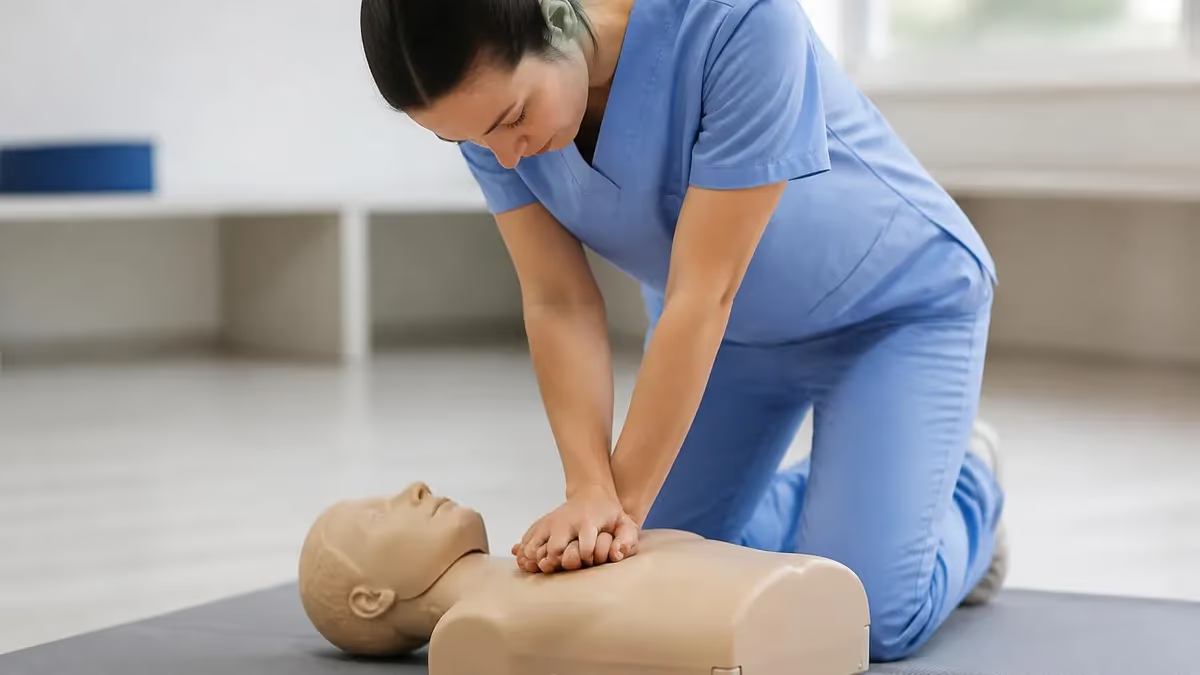
CPR training online has expanded substantially over the past decade as healthcare and safety training adopted online learning technologies. However, understanding what "online CPR training" actually means is important because there are significant differences between legitimate online training programs that meet certification standards and questionable programs that promise full certification through online-only completion. The fundamental reality is that no major CPR certification organization (American Heart Association, American Red Cross, ASHI, HSI) recognizes purely online CPR training as adequate for full certification — hands-on skills practice and demonstration are essential parts of legitimate training that cannot be completed online.
What does work online is the cognitive content portion of CPR training — videos, interactive modules, knowledge assessments, and similar didactic learning that's traditionally been delivered through classroom lecture. Combined with required in-person skills sessions, this creates blended learning programs that satisfy major organizations' certification requirements.
The American Heart Association's HeartCode programs and similar offerings from other certifying organizations represent legitimate hybrid approaches that combine convenient online learning with brief in-person assessment. Understanding the difference between legitimate hybrid programs and online-only scams matters because using fake CPR certification could cost lives if you're called upon to perform CPR in actual emergencies.

Online CPR Training Reality
Truth: No fully online CPR certification exists from major organizations. What works: Blended learning combining online cognitive content with in-person skills sessions. AHA HeartCode: 2-3 hours online + 30-90 minute in-person skills check. Cost: $40-$130 typical for hybrid programs. Validity: 2 years standard. Beware: Programs claiming "100% online certification" from major organizations are misrepresenting requirements.
The American Heart Association's HeartCode programs (HeartCode BLS for healthcare providers, HeartCode Heartsaver for lay rescuers) represent the gold standard of legitimate hybrid CPR training. The programs combine 2-3 hours of online cognitive learning (videos, interactive scenarios, knowledge checks) with brief in-person skills sessions (30-90 minutes typically) where students demonstrate competence on manikins and AED training units. Both portions are required for AHA certification — completing only the online portion produces no valid certification. Successful completion of both portions yields the same certification card as traditional classroom courses.
Legitimate Online CPR Training Options
Healthcare provider CPR through American Heart Association. Online cognitive + in-person skills. Most widely accepted in clinical settings.
Lay rescuer CPR through AHA. Online cognitive + in-person skills. Common for workplace and community certification.
American Red Cross online theory + in-person skills. Various course types from CPR/AED through Lifeguarding.
Health and Safety Institute online + in-person. Workplace-focused with simplified documentation.
American Safety and Health Institute combinations. OSHA-compliance focused for workplace settings.
Some employers operate internal training programs combining online learning with in-house skills assessments.
The advantages of legitimate hybrid programs include time efficiency for busy professionals, self-paced learning during cognitive portions, ability to review content as needed during online study, reduced classroom seat time freeing the in-person component for hands-on practice and assessment, and convenient accessibility for healthcare workers managing demanding schedules. Many healthcare professionals dramatically prefer blended learning to traditional all-classroom courses because the format respects their time while maintaining training quality. Renewal candidates particularly benefit since they need refresher rather than initial introduction to content.
The skills session component remains essential because CPR is fundamentally a physical skill that must be practiced hands-on under expert observation. The skills session addresses several specific needs: practicing chest compressions on manikins with feedback devices verifying correct depth, rate, and recoil; demonstrating proper hand placement on adult, child, and infant patients; using AED training units correctly including proper pad placement; performing rescue breathing technique correctly; and demonstrating choking response procedures at multiple age levels. Each skill must be physically demonstrated to certify competence — there's no online alternative to physical practice and observation.
Watching out for scam programs requires understanding what they typically promise. Red flags include claims of "complete online CPR certification," promises of certification "in under an hour," extremely low prices ($10-$25 range when legitimate programs run $40-$130), use of unfamiliar certifying organization names that aren't AHA, ARC, ASHI, or HSI, and instant printable certifications without any skills component.
Some programs market themselves as meeting OSHA workplace requirements while actually providing no useful training that an employer should accept. The certificates these programs produce may look impressive but provide no actual qualification — using them to claim CPR-trained status creates legal liability for both individuals and employers.
AHA HeartCode process: Enroll in HeartCode online program (BLS or Heartsaver). Complete approximately 2-3 hours of online cognitive content covering CPR principles, AED operation, choking response, and related material. Pass online knowledge assessment. Receive completion certificate showing online portion done. Schedule in-person skills session at AHA Training Center (30-90 minutes typical). Demonstrate skills with instructor observation. Receive certification card for 2-year validity. Skills session typically scheduled within weeks of online completion.

Time savings from hybrid programs are real and substantial for busy professionals. Traditional classroom CPR courses run 4-5 hours total — 2-3 hours of presentation, 1-2 hours of practice, and 30-60 minutes of assessment. Hybrid programs split this into 2-3 hours of self-paced online study (completed during convenient times) and 30-90 minutes of in-person skills session. The total time investment is similar but distributed differently. For healthcare workers who can complete online portions during slow periods at work, breaks, or evenings, hybrid format dramatically reduces opportunity cost compared to taking full days off for traditional classes.
Cost considerations for hybrid programs vary by certifying organization and Training Center pricing. Some programs combine online and in-person fees into single price; others charge separately. AHA HeartCode typically runs $40-$80 for the online portion plus $40-$60 for the in-person skills session, totaling $80-$140 in many markets. Red Cross blended programs run similar ranges. Workplace-administered programs often cover all costs for employees. Healthcare students sometimes get subsidized pricing through their educational programs. The pricing premium for hybrid programs over traditional classroom is small or none in many markets — convenience without significant additional cost.
Recertification through online or hybrid programs is typically more simplified than initial certification. Healthcare workers who hold current BLS certification can usually complete renewal through HeartCode or equivalent hybrid programs efficiently. Renewal candidates already understand fundamental concepts, reducing the time needed for cognitive content review. The in-person skills session focuses on demonstrating continued competence rather than initial skill development. Some employers manage recertification programs internally with their own qualified instructors handling skills sessions for staff. This integrated approach minimizes employee time investment while maintaining certification currency across the workforce.
Red flags indicating scam programs: Claims of "complete online certification" without skills session. Certification "in under an hour." Extremely low prices ($10-$25 range). Unfamiliar certifying organization names. Instant printable certification immediately after online completion. No in-person component requirement. Unverifiable certifying body that doesn't appear to exist. Always verify: The certifying organization is real (AHA, ARC, ASHI, HSI). The certification is recognized by your employer. Skills session is part of the program.
Workplace requirements for CPR training vary by industry and role. Healthcare workers typically need BLS Provider certification through AHA or equivalent. Daycare workers, lifeguards, fitness instructors, and similar safety-sensitive workers typically need Heartsaver or equivalent lay rescuer certification. School employees often need specific state-mandated certification. Workplace safety regulations sometimes require specific training that meets OSHA standards. Verify your specific requirements before completing training — getting wrong certification level wastes time and may not satisfy employer or regulatory requirements. Most employers accept either AHA, ARC, or major safety organization certifications meeting their requirements.
Online learning effectiveness for CPR cognitive content is well-supported by research. Studies comparing classroom and online learning for CPR cognitive content show similar knowledge acquisition between formats. The online format actually has some advantages including consistent content delivery (no instructor variability), self-pacing accommodating different learning speeds, ability to review difficult content multiple times, and individual rather than group attention. The interactive video and assessment formats most online CPR programs use use these advantages. Where online learning falls short is the physical skill component that requires hands-on practice — which is why hybrid format works while purely online doesn't.
For people with anxiety about hands-on skills practice, advance preparation helps. Online cognitive content viewed before skills sessions builds familiarity with what to expect, reducing surprise during in-person practice. Watching skills demonstration videos repeatedly until comfortable with the procedure visually before physical practice reduces performance pressure. Practicing imagined scenarios mentally before physical practice supports skill acquisition. Some training centers allow brief practice time before formal skills assessment. Clear communication with instructors about anxiety often produces accommodation or coaching support. Most students complete skills sessions successfully despite initial nervousness.
Preparing for Online CPR Training
- ✓Verify program is from recognized certifying organization (AHA/ARC/ASHI/HSI)
- ✓Confirm hybrid format with both online and in-person components
- ✓Check certification meets your specific employer requirements
- ✓Verify in-person skills session available in your area
- ✓Plan time for online portion (typically 2-3 hours)
- ✓Schedule in-person skills session within validity window
- ✓Prepare for physical practice session (comfortable clothing, water)
- ✓Have prerequisite documentation if needed (current certification for renewal)
For healthcare students completing CPR as part of professional education, online and hybrid options have become standard. Most nursing schools, paramedic programs, dental hygiene programs, and similar healthcare education incorporate hybrid CPR training rather than traditional all-classroom courses. The format respects student schedules already crowded with required coursework while ensuring genuine skill development. Students often complete CPR training during breaks between semesters, weekends, or evenings to avoid conflict with primary academic work. The flexibility makes professional education sustainable while maintaining certification standards.
For employers managing employee CPR training, hybrid programs offer operational advantages over traditional classroom training. Online portions don't require all employees to be away from work simultaneously — staff can complete online learning during slow periods or off-hours. In-person skills sessions can be scheduled in shorter blocks fitting around operations rather than full-day classes. Larger employer programs with internal training centers can deliver skills sessions on-site during shifts rather than requiring employee travel. The reduced operational disruption makes regular CPR training more sustainable, supporting better certification currency across the workforce.
Looking forward at CPR training trends, virtual reality skills practice is emerging as supplementary training tool. VR systems let students practice scenarios in immersive environments before or alongside physical skills practice. Augmented reality tools provide real-time feedback during practice with manikins. AI-powered analysis evaluates compression quality and provides specific improvement suggestions. These technologies don't replace in-person skills assessment but provide additional practice opportunities and data-driven feedback that traditional training lacks. As these technologies mature, the boundary between online and in-person training will continue evolving.

For specific certification verification needs, employers and credentialing organizations can verify CPR certifications through certifying organizations' systems. AHA provides eCard verification through aha.org/ecards. American Red Cross provides verification through redcross.org/take-a-class/digital-certificate. ASHI and HSI provide verification through their respective systems. Verification confirms the certification is current and valid. Employers typically check verification when hiring for CPR-required positions. Certified individuals can access their digital certificates anytime through these systems for documentation purposes.
Beyond entry-level CPR certification, advanced training options expand into specialty areas. ACLS (Advanced Cardiovascular Life Support) extends to advanced healthcare provider scenarios including arrhythmia recognition and treatment. PALS (Pediatric Advanced Life Support) addresses pediatric resuscitation specifically. NRP (Neonatal Resuscitation Program) addresses newborn resuscitation. Each advanced certification builds on basic CPR skills with additional content, equipment use, and scenario practice. Most healthcare providers in critical care, emergency, and pediatric settings hold advanced certifications beyond basic BLS.
For employers wanting to support employee CPR training without managing programs internally, partnerships with established training providers work well. Local AHA Training Centers, American Red Cross chapters, and similar organizations contract with employers to provide on-site training, group rates for employees, scheduling flexibility, and consolidated billing. These partnerships reduce administrative burden compared to individual employees arranging their own training while ensuring quality through established programs. Annual or biennial group training events can refresh entire teams efficiently with minimal disruption to operations.
Online CPR Training Quick Stats
Key Facts at a Glance
| Item | Value | Details |
|---|---|---|
| Typical online cognitive portion duration | 2-3 hr | |
| Total cost for hybrid program | $40-$130 | |
| Standard certification validity | 2 years |
Hybrid vs Traditional Classroom
Hybrid splits time across self-paced online + brief in-person. Traditional requires 4-5 hours all in classroom. Hybrid saves opportunity cost.
Both formats produce equivalent knowledge and skill outcomes per research. Hybrid may suit some learners better, traditional others.
Hybrid and traditional similar in most markets. Hybrid sometimes slightly cheaper due to reduced classroom overhead.
Hybrid much more flexible. Traditional requires specific class times. Hybrid better for irregular schedules.
Renewal candidates particularly benefit from hybrid. Initial learners may benefit from extended classroom time for skill development.
Traditional better for group bonding and discussion. Hybrid better for individual schedules but less peer interaction.
Common workplace CPR training scenarios include healthcare orientation programs requiring rapid certification of new employees, ongoing continuing education maintaining certifications across larger workforces, vocational education programs preparing students for healthcare careers, school district staff training for educators and support staff, fitness facility staff training meeting state requirements, and various community organizations providing CPR education to volunteers. Each scenario benefits differently from hybrid versus traditional formats. Healthcare orientation often uses intensive traditional formats due to compressed timeline. Ongoing continuing education frequently uses hybrid for efficiency. School staff training often happens in summer using traditional formats during professional development time.
Quality assurance for CPR training programs involves several factors regardless of delivery format. Trainer qualifications must meet certifying organization standards. Training materials must be current and aligned with latest evidence-based guidelines. Equipment used in skills sessions must include adequate manikins, AED training units, and feedback devices. Documentation must support audit and verification. Regular updates incorporate periodic guideline changes from international resuscitation councils. Training centers undergo periodic quality reviews from certifying organizations. Selecting training programs from established Training Centers with strong reputations provides better assurance of quality than choosing based on lowest price alone.
For lay rescuers (non-healthcare workers) considering CPR training, several considerations affect program selection. Heartsaver-level certification (AHA) or Red Cross CPR/AED for lay rescuers typically suits non-clinical settings. The training emphasizes recognizing emergencies, calling for help, performing basic CPR, using AEDs, and providing care until professional help arrives. Workplace requirements may specify particular certification types — verify before enrolling. Community CPR programs are often free or low-cost through American Red Cross, fire departments, hospitals, or community organizations. The free options provide legitimate basic certification without the expense of premium programs.
For caregivers of family members at increased risk of cardiac arrest (elderly relatives with heart disease, family members with conditions creating arrest risk), more extensive training than standard certification often makes sense. Family and Friends CPR programs from major organizations provide hands-on practice without formal certification — useful for family members focused on home preparedness rather than workplace certification.
Some programs offer extended training combining standard CPR with home-specific scenarios and equipment use. Investment in family preparedness pays off if cardiac emergencies happen in home settings. The skills can literally save lives of loved ones in the critical minutes before paramedics arrive.
Beyond formal CPR training, ongoing skill maintenance through periodic practice supports retention. Research shows CPR skills decay substantially within months without practice, with skills nearly returning to pre-training levels by 6-12 months without reinforcement. Quality CPR training programs increasingly include refresher mechanisms like scheduled brief skills checks, practice manikins available between certifications, and online refresher modules. Some healthcare workplaces conduct quarterly mock code drills to keep skills sharp. Family caregivers might practice on simple home manikins periodically. The investment in maintaining skills between formal certifications produces better real-world performance when emergencies occur.
The future of CPR training continues evolving with new technologies and learning approaches. Mobile apps provide on-demand practice scenarios and refreshers. Smart manikins with cloud connectivity enable distributed skills assessment with remote instructor verification. AR/VR systems immerse learners in realistic emergency scenarios for stress-inoculated practice. AI-powered analysis of practice performance provides specific personalized feedback. Wearable devices may eventually enable bystander coaching during real emergencies.
As these technologies mature, the training landscape will continue shifting while maintaining core requirement of physical hands-on practice for valid certification. The combination of online cognitive efficiency and in-person skills assessment will likely remain the dominant model for the foreseeable future across healthcare and lay rescuer markets nationwide and across various international jurisdictions adopting similar standards.
Online/Hybrid CPR Training: Pros and Cons
- +Time efficient — self-paced online + brief in-person
- +Same certifications as traditional classroom courses
- +Flexible scheduling around work and personal commitments
- +Self-pacing accommodates different learning speeds
- +Ability to review difficult content multiple times
- +Reduced disruption for employer training programs
- −Cannot be entirely online — skills session required
- −Some learners benefit from extended classroom interaction
- −Less peer interaction during cognitive learning
- −Skills session must be scheduled separately
- −Beware scam programs claiming online-only certification
- −Initial learners may need more practice than hybrid provides
CPR Questions and Answers
About the Author

Registered Nurse & Healthcare Educator
Johns Hopkins University School of NursingDr. Sarah Mitchell is a board-certified registered nurse with over 15 years of clinical and academic experience. She completed her PhD in Nursing Science at Johns Hopkins University and has taught NCLEX preparation and clinical skills courses for nursing students across the United States. Her research focuses on evidence-based exam preparation strategies for healthcare certification candidates.
Join the Discussion
Connect with other students preparing for this exam. Share tips, ask questions, and get advice from people who have been there.
View discussion (5 replies)