
CPR Videos: The Complete 2026 October Guide to Learning Lifesaving Skills Through Visual Training
Master CPR videos covering acls algorithm, infant cpr, AED use, and recovery position. ❓ Free visual training resources, demos, and certification prep.
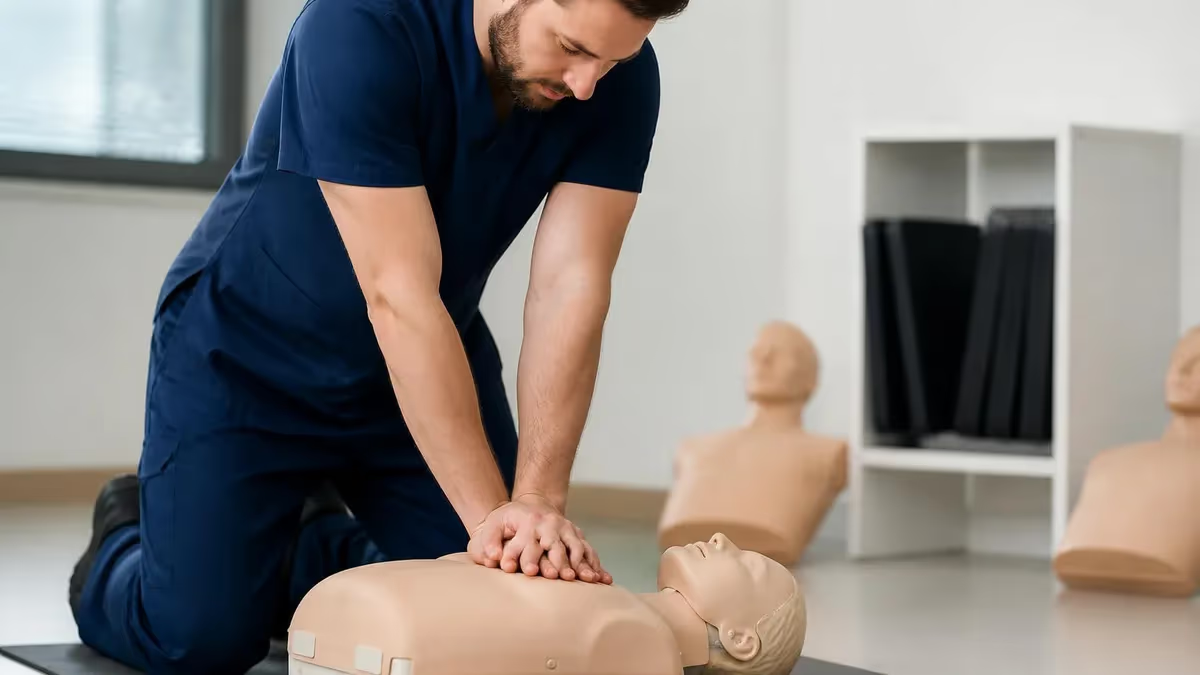
CPR videos have transformed how millions of Americans learn cardiopulmonary resuscitation, turning what used to be a classroom-only skill into something anyone can study at home, on a phone, or during a lunch break. Whether you are a first-time learner trying to memorize compression depth, a healthcare professional reviewing the acls algorithm before recertification, or a parent searching for infant cpr demonstrations, video instruction now sits at the center of modern resuscitation education across both lay and clinical training pathways.
The American Heart Association reports that bystander CPR roughly doubles or triples a victim's chance of survival, yet only about 40 percent of out-of-hospital cardiac arrest victims receive it before paramedics arrive. Quality video content closes that confidence gap. When viewers can watch hand placement, listen to the rhythm of 100 to 120 compressions per minute, and pause to rewatch ventilation technique, retention rises dramatically compared to text-only study or single-attempt classroom drills with limited feedback time.
Modern CPR videos cover a wide spectrum of skills, from hands-only adult compressions to two-rescuer infant resuscitation, AED pad placement, choking relief, and the full pediatric advanced life support sequence taught in pals certification courses. Many free resources are produced by the national cpr foundation, the AHA, the Red Cross, and major universities, while subscription platforms add interactive simulations, smart manikin feedback, and competency tracking aligned with workplace requirements for teachers, lifeguards, nurses, and emergency responders.
This guide walks you through the most useful categories of CPR videos available in 2026, what to look for in a high-quality production, how to integrate them with hands-on practice, and which channels deliver accurate, current science instead of outdated 15:2 ratios or pre-2010 compression depths. We will also explore how to verify a video against published guidelines so you never train from a clip that contradicts current AHA or ILCOR consensus statements.
You will also find practical advice on combining video study with mannequin practice, smartphone metronome apps, and quiz-based recall testing — the three-part learning loop most strongly associated with skill retention 6 and 12 months after a course. Research from the Resuscitation journal consistently shows that learners who pair video review with at least one tactile practice session perform compressions within target depth and rate at rates 30 to 50 percent higher than video-only learners.
Finally, we will address common search confusion. This article focuses strictly on cardiopulmonary resuscitation videos — the lifesaving kind — though we briefly clarify the difference so you can quickly find what you need without losing time clicking into the wrong industry's content.
By the end, you will know how to evaluate, organize, and use CPR videos as part of a structured self-study plan, how to recognize trustworthy producers, and how to confirm that what you are watching reflects the current Guidelines for Emergency Cardiovascular Care rather than older, retired sequences that still circulate on YouTube and unmoderated learning sites.
CPR Video Learning by the Numbers

Types of CPR Videos You Will Encounter Online
Short 60-to-90-second clips showing compression-only CPR for adult bystanders. Ideal for first-time learners and public awareness. Often set to a 100–120 bpm song like 'Stayin' Alive' to reinforce rhythm and depth without complicating ventilation.
10-to-30-minute walkthroughs of complete Basic Life Support sequences, including scene safety, pulse check, ventilations, AED use, and team dynamics. Designed for healthcare students, EMRs, and recertifying professionals working through a structured curriculum.
Visual breakdowns of the acls algorithm covering shockable rhythms, drug timing, and post-arrest care. These videos use simulated codes with rhythm strips and team callouts so advanced providers can rehearse decision points before clinical practice.
Step-by-step infant cpr demonstrations using infant manikins, covering two-finger versus two-thumb technique, 30:2 single-rescuer ratios, and back blows for choking. Often paired with pals certification prep modules for clinicians working with children.
Focused videos showing what does aed stand for (automated external defibrillator), pad placement on adults and children, voice prompts, and integration with chest compressions. Many include real bystander rescue footage to demonstrate confident, correct use under stress.
Adult, child, and infant CPR videos make up the largest share of resuscitation content online, and for good reason — these three age groups each require subtly different technique, and visual demonstration is the fastest way to internalize the differences. Adult CPR videos emphasize two-handed compressions to a depth of at least 2 inches at 100 to 120 per minute, while child CPR uses one or two hands depending on body size, and infant cpr relies on two fingers or two encircling thumbs at roughly one-third the chest depth.
The best adult CPR videos open with a scene-safety check, then show the rescuer kneeling beside the victim's chest, locking elbows, and stacking hands on the lower sternum. High-quality production includes overhead camera angles, on-screen compression counters, and audible metronomes. Some channels even overlay real-time depth feedback from sensor-equipped manikins, which is invaluable for self-study because compression depth is the most commonly under-performed metric in classroom skill tests across both lay and professional learners.
Child CPR videos, generally covering ages 1 to puberty, demonstrate the transition from adult to pediatric technique. Rescuers learn to assess size before choosing one or two hands, and the ratio changes to 30:2 for single rescuers and 15:2 for two trained rescuers — a distinction that confuses many recertifying nurses if they have not watched a recent demonstration. Good videos pause to highlight this exact moment with on-screen text and a slow-motion replay of hand positioning during the compression downstroke.
Infant CPR videos are arguably the most-watched category among new parents, daycare workers, and pediatric nurses preparing for pals certification. The most useful productions show the two-thumb encircling technique used by two rescuers, the two-finger technique for solo lay rescuers, and the difference between back blows and abdominal thrusts for choking. They also demonstrate gentle head-tilt-chin-lift, which is easy to overdo on an infant and obstruct the airway if exaggerated past a neutral sniffing position.
Across all three age groups, watch for videos that explicitly state respiratory rate targets when ventilations are given. Current guidelines call for one breath every 6 seconds (about 10 per minute) during continuous compressions with an advanced airway, and one breath every 2 to 3 seconds for infants and children without an advanced airway during rescue breathing. A video that glosses over respiratory rate is missing a critical safety check that prevents hyperventilation, which actually worsens outcomes.
Many top channels also include a position recovery segment for unconscious but breathing victims. Recovery position keeps the airway open and lets fluids drain from the mouth, preventing aspiration while EMS arrives. Look for videos that show how to log-roll the victim, place the upper leg at a 90-degree angle, and tuck the lower hand under the cheek to support the head. This part of the curriculum is frequently rushed or skipped in shorter clips.
Finally, the most educational adult-child-infant series link directly to skill drills you can perform with a household towel-rolled "manikin" between formal courses. Pairing a video lesson with even a 5-minute practice on the floor at home translates into measurably better performance on a real victim, because muscle memory for compression depth and rhythm only forms through repeated tactile rehearsal — watching alone never gets you there.

CPR Practice Test Questions
Prepare for the CPR Cardiopulmonary Resuscitation Practice exam with our free practice test modules. Each quiz covers key topics to help you pass on your first try.
CPR Basic CPR
CPR Exam Questions covering Basic CPR. Master CPR Test concepts for certification prep.
CPR and First Aid
Free CPR Practice Test featuring and First Aid. Improve your CPR Exam score with mock test prep.
CPR (Cardiopulmonary Resuscitation) Adult ...
CPR Mock Exam on (Cardiopulmonary Resuscitation) Adult CPR and AED Usage. CPR Study Guide questions to pass on your first try.
CPR (Cardiopulmonary Resuscitation) Airway...
CPR Test Prep for (Cardiopulmonary Resuscitation) Airway Obstruction and Choking. Practice CPR Quiz questions and boost your score.
CPR (Cardiopulmonary Resuscitation) Cardio...
CPR Questions and Answers on (Cardiopulmonary Resuscitation) Cardiopulmonary Emergency Recognition. Free CPR practice for exam readiness.
CPR (Cardiopulmonary Resuscitation) Child ...
CPR Mock Test covering (Cardiopulmonary Resuscitation) Child and Infant CPR. Online CPR Test practice with instant feedback.
CPR (Cardiopulmonary Resuscitation) High-P...
Free CPR Quiz on (Cardiopulmonary Resuscitation) High-Performance Team Dynamics. CPR Exam prep questions with detailed explanations.
CPR (Cardiopulmonary Resuscitation) Legal ...
CPR Practice Questions for (Cardiopulmonary Resuscitation) Legal and Ethical Considerations. Build confidence for your CPR certification exam.
CPR for Specific Populations
CPR Test Online for for Specific Populations. Free practice with instant results and feedback.
CPR Airway & Breathing Management
CPR Exam Questions covering Airway & Breathing Management. Master CPR Test concepts for certification prep.
CPR Assessment & Recognition of Cardiac Ar...
Free CPR Practice Test featuring Assessment & Recognition of Cardiac Arrest. Improve your CPR Exam score with mock test prep.
CPR Chest Compressions & Defibrillation
CPR Mock Exam on Chest Compressions & Defibrillation. CPR Study Guide questions to pass on your first try.
CPR Post-Resuscitation Care & Recovery
CPR Test Prep for Post-Resuscitation Care & Recovery. Practice CPR Quiz questions and boost your score.
ACLS Algorithm, Life Support, and Recovery Position Videos
ACLS algorithm videos take the AHA's printed flowcharts and turn them into living, decision-based scenarios. Viewers see a simulated patient go into ventricular fibrillation, watch the team call for the defibrillator, deliver a shock, resume compressions, push epinephrine, reassess the rhythm, and rotate compressors every 2 minutes. The visual sequence makes the algorithm far easier to memorize than reading the boxes on a card alone.
The strongest acls algorithm videos pause at each decision point, freeze the rhythm strip on screen, and ask the viewer to call the next move before revealing the answer. This active-recall format mirrors what you will face during megacode testing and dramatically improves performance on the timed scenario portion of an ACLS certification exam, where hesitation between steps frequently costs candidates their first-attempt pass.
CPR Videos vs. Classroom-Only Learning: Pros and Cons
- +Free or low-cost access to expert demonstrations 24/7
- +Pause, rewind, and rewatch difficult techniques unlimited times
- +Visual learners retain compression depth and rhythm faster
- +Easy to compare adult, child, and infant cpr side by side
- +Convenient pre-class study reduces in-person training time
- +Refresher videos help maintain skills between recertifications
- +Mobile-friendly for review during commutes or breaks
- −No tactile feedback on compression force or hand placement
- −Cannot fully replace hands-on manikin practice for certification
- −Outdated clips still circulate showing retired ratios or depths
- −Quality varies dramatically between channels and producers
- −Viewers may overestimate skill confidence without testing
- −No instructor to correct subtle errors in technique or posture
- −AED and ventilation skills need real equipment to master

Quality Checklist: How to Evaluate a CPR Video Before You Trust It
- ✓Confirm the video references the current AHA or ILCOR guidelines (2020 or 2025 update)
- ✓Verify compression rate is shown as 100 to 120 per minute, not the older 100-only figure
- ✓Check compression depth: at least 2 inches for adults, about 2 inches for children, 1.5 inches for infants
- ✓Look for explicit ventilation timing and respiratory rate guidance for advanced airway scenarios
- ✓Ensure AED pad placement is demonstrated for both adult and pediatric patients
- ✓Confirm hands-only CPR is clearly distinguished from full CPR with ventilations
- ✓Watch for proper scene safety, gloves, and personal protective equipment use
- ✓Verify the producer is credentialed (AHA, Red Cross, national cpr foundation, university, or licensed instructor)
- ✓Check that recovery position is taught for unconscious but breathing victims
- ✓Ensure pediatric and infant cpr sequences reflect current 30:2 single-rescuer and 15:2 two-rescuer ratios
Watch It Three Times, Then Practice on a Pillow
Studies on motor-skill acquisition show that learners who watch a CPR video three times — once for orientation, once focused on hand placement, and once focused on rhythm — and then immediately practice compressions on a firm pillow retain technique up to 50 percent better than those who watch once and skip practice. The whole loop takes less than 15 minutes and pays off for months.
Combining CPR videos with deliberate practice is the single most effective way to actually retain the skill, and it is where most self-learners fall short. Watching is comfortable; practicing on the floor with a stopwatch and a metronome app is awkward at first. But the research is unambiguous: tactile rehearsal, even on a couch cushion or rolled-up towel, builds neural pathways that pure visual study cannot. Pair every 10 minutes of video with at least 3 minutes of hands-on rehearsal to get the most out of either modality.
The structure that works best is what educators call a watch-do-test loop. First, watch a focused 3-to-5-minute clip on one skill — say, adult compressions or AED pad placement. Second, immediately perform the skill yourself, ideally on a manikin but a firm pillow works for compressions alone. Third, take a short quiz or answer recall questions out loud about what you just watched and did. This three-step cycle, repeated for each major skill, beats any single longer training session.
Many free apps now sync with smart manikins and provide real-time compression depth and rate feedback through the phone camera or a Bluetooth sensor. If you have access to one through your employer, school, or local fire department, use it. Even one 20-minute session with feedback can correct compression habits that have lingered for years. Lay rescuers tend to compress too shallow; healthcare providers, ironically, often compress too fast and lose depth as a result.
Pairing video study with quizzing accelerates long-term retention far more than rewatching ever does, a phenomenon cognitive scientists call the testing effect. After watching a CPR videos lesson on choking relief, immediately answer 10 short-answer questions about it, even silently in your head. The act of retrieval cements the information in long-term memory more effectively than a second viewing of the same material, which often produces only false confidence.
For healthcare professionals preparing for recertification, build a weekly micro-study habit. Watch one acls algorithm scenario each Monday, one BLS skill drill each Wednesday, and one PALS pediatric case each Friday. Each session takes 10 to 15 minutes and stretches your retention across the year rather than cramming the week before your card expires. Spaced repetition keeps performance from sliding during the long mid-cycle period when most providers have forgotten roughly 30 percent of what they learned at their last course.
Lay rescuers benefit from a different cadence — a single annual refresher of 30 minutes is usually enough to maintain hands-only CPR proficiency, especially if it includes a few minutes of pillow practice with a metronome. Parents, teachers, and coaches should also rewatch infant cpr and child choking relief videos seasonally, because these skills are used so rarely that confidence erodes faster than the more frequently rehearsed adult compression sequence.
Finally, document your video study like a course log. Note the date, the channel, the topic, and one specific thing you want to remember. Reviewing this log monthly takes 60 seconds and reactivates everything you have learned. It also helps you identify which topics you have neglected — most self-learners over-study adult CPR and under-study AED pediatric pad placement, choking relief, and respiratory rate calculations for infants.
Watching CPR videos is excellent preparation and ongoing refresher training, but it does not produce a recognized certification card. Employers, schools, and licensing boards require completion of an in-person or hybrid course with hands-on skills testing through providers like the AHA, Red Cross, or the national cpr foundation. Use video study to arrive prepared — not to replace the certification step entirely.
Trusted producers separate signal from noise in a crowded online space. The American Heart Association's YouTube channel remains the gold standard for guideline-aligned content because every video is reviewed by the same scientific committees that publish the official Guidelines for Emergency Cardiovascular Care. Their hands-only CPR demonstration alone has more than 10 million cumulative views and remains the single most useful 60-second clip a complete beginner can watch before stepping into any classroom.
The American Red Cross also maintains a deep library, including longer-form lifeguard, babysitter, and workplace responder modules. Their videos are particularly strong on first-aid integration — bleeding control, allergic reaction, and seizure response — alongside the core CPR sequence. The Red Cross also produces excellent position recovery and choking relief content suitable for both lay and professional audiences.
The national cpr foundation publishes accessible video lessons paired with its online certification pathway, which is popular among childcare workers, fitness professionals, and employees whose workplaces accept nationally recognized non-AHA cards. Their content tends to be plainspoken and beginner-friendly, and the platform integrates short quizzes after each video segment to reinforce learning before the final exam.
University-produced channels deserve a mention too. Stanford, Johns Hopkins, and several major academic medical centers post code-team simulations, ACLS megacode rehearsals, and PALS scenarios that go deeper than standard course material. These videos are excellent supplemental study for nurses, paramedics, and residents preparing for high-stakes recertification, particularly when paired with current pals certification curriculum requirements.
Avoid uncredited or anonymous channels, especially older uploads predating 2015. Many still teach the retired 15:2 single-rescuer ratio for adults, deeper-than-current compression targets, or outdated AED sequences that interrupt compressions excessively. If a video does not display a recent publication date or reference current guidelines in its description, treat it as historical curiosity rather than training material.
If you are looking for lifesaving training, append "cardiopulmonary," "first aid," "AHA," or the specific skill — "infant cpr," "adult cpr," "AED" — to your query. This small habit saves time and gets you to credentialed instructional content immediately rather than scrolling past device-repair listings in your local results.
Once you have identified two or three trustworthy producers, subscribe and enable notifications for guideline-update videos. CPR science changes every five to six years on average, and channels that post timely explainers when guidelines update — for example, when ventilation timing or AED pediatric thresholds shift — are gold for maintaining current knowledge between formal recertifications. Treat your subscription list as an ongoing professional resource, not a one-time setup.
Putting everything together starts with a simple weekly plan. Pick two CPR videos for the week — one on a fundamental skill you want to keep sharp, like adult compressions, and one on a less-practiced topic, like infant cpr or recovery position. Watch each twice, practice on a pillow or manikin for 5 minutes, and then test yourself with a short quiz. The total time investment is under 30 minutes per week and produces measurably better skill retention over a 12-month period than annual cramming.
Build a personal video library by bookmarking your top five clips in a folder on your phone or browser. Include one hands-only adult demo, one full BLS sequence, one AED walkthrough, one infant cpr demonstration, and one acls algorithm or PALS scenario depending on your professional level. Having these five queued up means you can refresh any skill in under 10 minutes whenever a slow moment appears in your day, turning idle time into competence.
For workplace teams — schools, gyms, daycare centers, dental offices — consider a monthly micro-training using a single video shown during a staff meeting. A 5-minute clip followed by a 5-minute discussion and a 5-minute pillow drill takes only 15 minutes total and builds collective readiness across the team. The teams that survive cardiac arrest emergencies best are those that rehearse together, not those with the most individually certified members in isolation from one another.
Parents and caregivers should prioritize infant cpr and choking relief videos twice a year — once at the start of summer when drowning risk peaks, and once before holiday gatherings when choking incidents from food spike. Combine those reviews with a check of your home AED if you own one, including battery and pad expiration dates. Pediatric pads expire on a separate schedule from adult pads, so verify both when prompted by the device's self-test indicator light.
When you are ready to test your skills, take multiple short quizzes spaced over several weeks rather than one long exam on a single day. Spaced retrieval strengthens memory consolidation far more effectively than massed practice, and short quizzes — 10 to 15 questions covering one skill — fit easily into a coffee break. Combine quiz results with your video log to identify topics where your scores lag and target them with focused video review the following week.
Track your progress simply. A spreadsheet or notes-app entry per week is plenty: date, video watched, time spent practicing, quiz score, and one takeaway. After three months, patterns emerge — you will see which skills you have mastered and which still trip you up. Many self-learners discover, for instance, that they consistently miss respiratory rate questions for infants but ace adult AED placement, and they can then weight their study accordingly.
Finally, remember that CPR videos exist to multiply confidence and competence, not to replace the irreplaceable: a real human teacher who can put a hand on your shoulder and say, "Push deeper, slow down, you are doing well." Use video as the broad daily foundation and certification as the periodic verified checkpoint. Together they create a sustainable, lifelong commitment to readiness that is the entire point of learning resuscitation in the first place.
CPR Questions and Answers
CPR Card Lookup: How to Verify, Replace, and Access Your CPR Certification in 2026
AHA CPR: What It Is, Which Course You Need, and How to Get Certified
BLS CPR Course: Complete Guide to Basic Life Support Certification in 2026
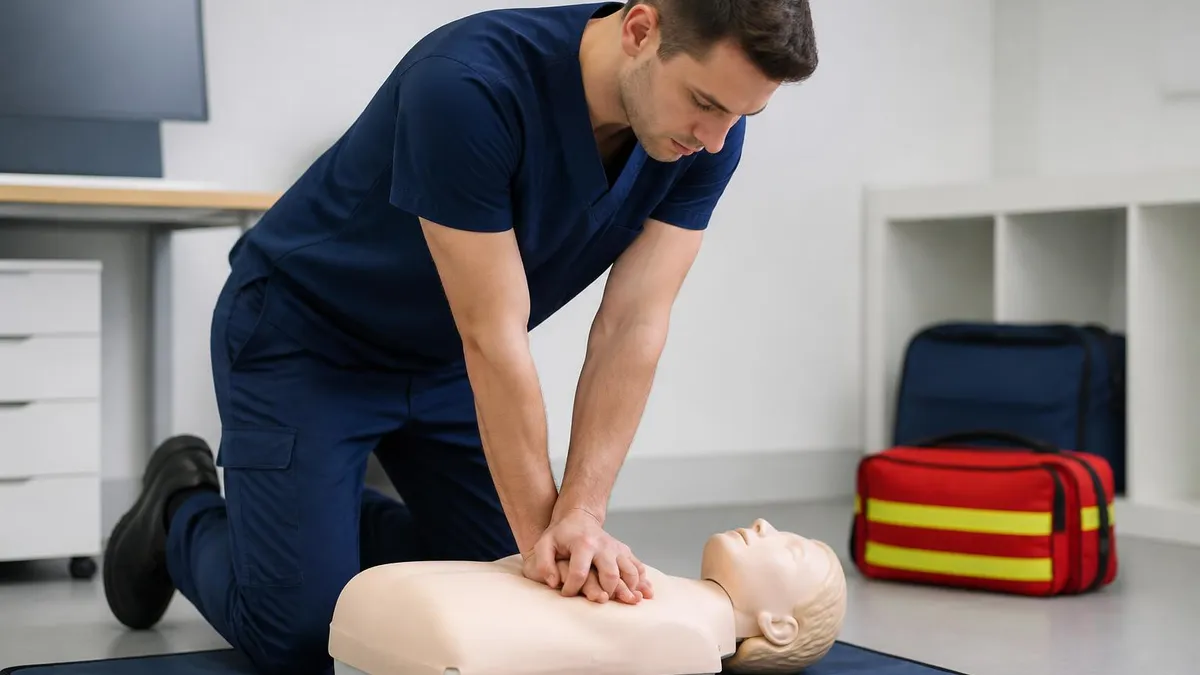
Adult CPR: Complete Step-by-Step Guide to Hands-Only and Standard CPR in 2026

CPR - Cardiopulmonary Resuscitation: Complete Study Guide 2026
About the Author

Registered Nurse & Healthcare Educator
Johns Hopkins University School of NursingDr. Sarah Mitchell is a board-certified registered nurse with over 15 years of clinical and academic experience. She completed her PhD in Nursing Science at Johns Hopkins University and has taught NCLEX preparation and clinical skills courses for nursing students across the United States. Her research focuses on evidence-based exam preparation strategies for healthcare certification candidates.
Join the Discussion
Connect with other students preparing for this exam. Share tips, ask questions, and get advice from people who have been there.
View discussion (5 replies)