
CPR Compression and Breath Ratios: How Many Beats for CPR in 2026 October
🟢 Learn how many beats for CPR, compression-to-breath ratios for adults, children, and infants, plus ACLS algorithm timing and AED integration.
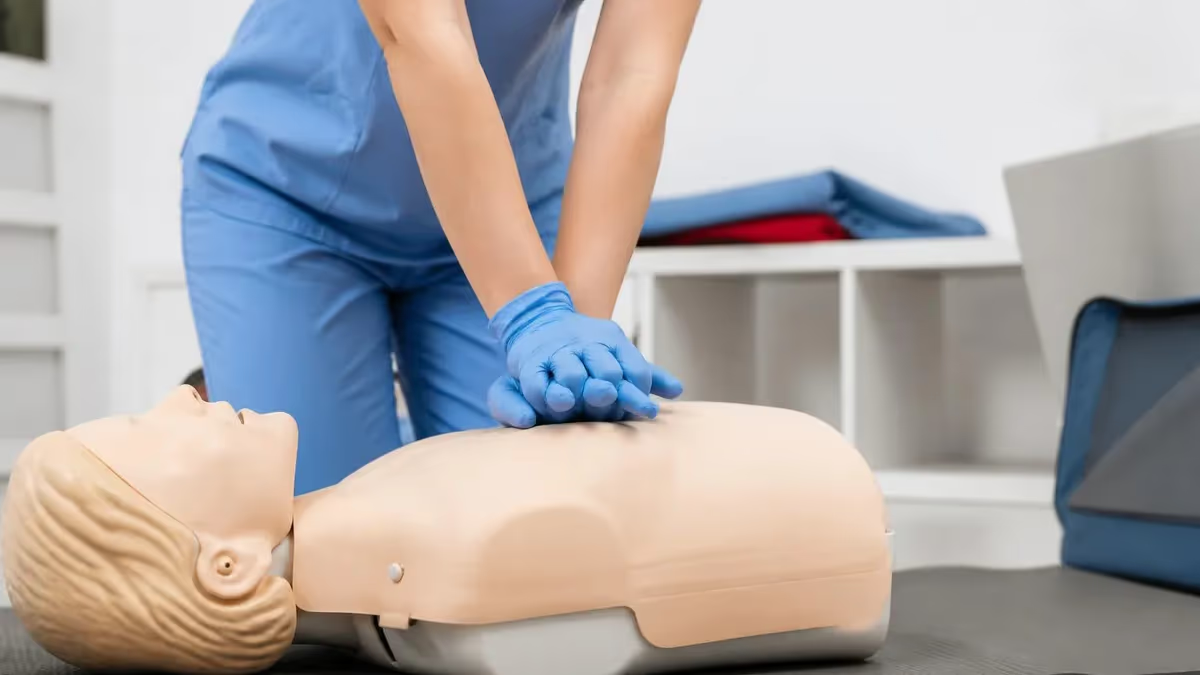
Knowing how many beats for CPR you need to deliver per minute is the single most important rhythm skill any rescuer can master. The American Heart Association sets the target at 100 to 120 compressions per minute for every age group, paired with an age-specific compression-to-breath ratio. Whether you are following the acls algorithm in a hospital code, performing infant cpr on a choking baby, or supporting a teen until life support arrives, the cadence stays consistent while the ratio shifts based on rescuer count and patient size.
The standard ratio for adult CPR by a lone rescuer is 30 compressions followed by 2 rescue breaths, repeated in cycles of five over roughly two minutes. For children and infants, two-rescuer professional CPR drops the ratio to 15:2, giving more frequent ventilation because pediatric arrests are usually respiratory in origin. These numbers are not arbitrary — they reflect decades of resuscitation science showing that interruption-free compressions generate the perfusion pressure a struggling heart needs.
Many learners confuse the beats per minute (the speed) with the ratio (the structure). The beat rate of 100 to 120 stays the same whether you are doing hands-only CPR or full ventilation cycles. The ratio determines when you pause briefly to deliver breaths. Pushing too slow starves the brain of oxygenated blood, while pushing too fast prevents the heart from refilling between compressions, both of which reduce survival odds significantly.
Music plays a surprising role in CPR training. Songs like "Stayin' Alive" by the Bee Gees, "Crazy in Love" by Beyoncé, and "Cecilia" by Simon and Garfunkel all sit near 103 to 110 beats per minute, matching the target compression tempo. Rescuers who hum a beat while pumping deliver more consistent compressions than those who count silently, which is why the national cpr foundation includes tempo cues in its certification materials.
Depth matters as much as speed. Adult compressions should be at least 2 inches but no more than 2.4 inches deep. For children, target about 2 inches or one-third the chest depth. For infants, push about 1.5 inches or one-third the depth using two fingers or the two-thumb encircling technique. Full chest recoil between each compression allows the heart chambers to refill, and leaning on the chest during recoil is one of the most common errors observed in real codes.
This guide breaks down every ratio, tempo, and timing detail you need to perform high-quality CPR across all ages. We will cover the science behind the 30:2 ratio, when to switch to 15:2, how AED integration affects timing, and how the latest 2025 ACLS guideline updates refined the algorithm. Whether you are renewing your pals certification or learning CPR for the first time, the goal is the same: deliver compressions that match the rhythm of life until advanced help takes over.
Beyond the numbers, mastering CPR also means knowing when to start, when to stop, and how to integrate other rescuers smoothly. A confident bystander who begins compressions within 60 seconds of collapse can double or triple survival odds compared to waiting for paramedics. Every second of delay drops the survival rate by roughly 7 to 10 percent, which makes early recognition and immediate action the most powerful interventions in the entire resuscitation chain.
CPR Compression and Breath Ratios by the Numbers

CPR Compression and Breath Ratios by Age Group
Single rescuer uses 30:2 compressions to breaths. Two professional rescuers stay at 30:2 unless an advanced airway is in place. Compressions are 2 to 2.4 inches deep using both hands.
Single rescuer uses 30:2. Two healthcare rescuers switch to 15:2 because pediatric arrests are usually hypoxic. Use one or two hands and compress about 2 inches or one-third chest depth.
Single rescuer uses 30:2 with two fingers on the lower sternum. Two healthcare rescuers use 15:2 with the two-thumb encircling technique, compressing about 1.5 inches deep.
Once an endotracheal tube or supraglottic airway is inserted, stop pausing for breaths. Deliver continuous compressions at 100 to 120 per minute with one breath every 6 seconds (10/min).
Untrained bystanders should deliver continuous compressions without breaths for adult sudden collapse. Speed stays 100 to 120 per minute. Use full CPR for drowning, drug overdose, or pediatric cases.
The beat rate of 100 to 120 compressions per minute applies universally, but the way you achieve and maintain that rhythm changes with patient size and rescuer experience. For adults, place the heel of one hand on the lower half of the sternum and stack the other hand on top, interlocking fingers. Keep your shoulders directly over your hands and use your body weight, not your arms, to push down. Locking your elbows reduces fatigue and helps you maintain consistent depth across the recommended two-minute compression cycles.
Children between one year and puberty respond well to either one-handed or two-handed compressions, depending on the size of the child and the rescuer. The target depth is approximately 2 inches or one-third the anterior-posterior diameter of the chest. Smaller children may only need a single hand to avoid over-compressing, while older children near adolescence often require the standard two-hand technique. The compression-to-breath ratio remains 30:2 for lone rescuers and shifts to 15:2 when two trained providers work together.
For infants under one year of age, single rescuers use the two-finger technique, placing the index and middle fingers just below the imaginary nipple line on the sternum. When two healthcare providers are present, the preferred method is the two-thumb encircling-hands technique, which generates better perfusion pressures and consistent depth. Compress about 1.5 inches or one-third the chest depth, and remember that infants tolerate very little leaning during recoil because their chests are highly elastic.
The 100 to 120 beats per minute window exists because faster compressions reduce the time the heart has to refill between strokes, resulting in lower stroke volume and weaker pulses. Slower compressions, on the other hand, produce inadequate forward blood flow and quickly drop the coronary perfusion pressure that the myocardium needs to recover. Real-time CPR feedback devices used in hospitals and training programs help rescuers stay within this Goldilocks zone of cardiac output.
The respiratory rate during CPR depends on whether an advanced airway is present. With a bag-valve-mask alone, you pause every 30 compressions to give two breaths, each lasting about one second with just enough volume to make the chest rise visibly. Hyperventilation is a major problem because it raises intrathoracic pressure, reduces venous return to the heart, and worsens outcomes. Each breath should be deliberate, gentle, and brief — not forceful or rapid.
Once a healthcare team places an advanced airway, the dynamics shift. Compressions become continuous at 100 to 120 per minute, and ventilations are delivered asynchronously at a rate of one breath every six seconds, or about 10 breaths per minute. This corresponds to the normal adult respiratory rate range and avoids the pressure spikes that come with bag-mask ventilation. Capnography monitoring confirms both tube placement and the quality of ongoing compressions.
Switching rescuers every two minutes is essential because compression quality drops significantly after that point, even when rescuers do not consciously feel fatigued. Studies using feedback devices show that depth declines by the end of the first minute and rate often drifts upward. Rotating providers during the rhythm check window keeps interruptions to under five seconds and preserves the steady perfusion that gives the patient the best shot at return of spontaneous circulation.

CPR Practice Test Questions
Prepare for the CPR Cardiopulmonary Resuscitation Practice exam with our free practice test modules. Each quiz covers key topics to help you pass on your first try.
CPR Basic CPR
CPR Exam Questions covering Basic CPR. Master CPR Test concepts for certification prep.
CPR and First Aid
Free CPR Practice Test featuring and First Aid. Improve your CPR Exam score with mock test prep.
CPR (Cardiopulmonary Resuscitation) Adult ...
CPR Mock Exam on (Cardiopulmonary Resuscitation) Adult CPR and AED Usage. CPR Study Guide questions to pass on your first try.
CPR (Cardiopulmonary Resuscitation) Airway...
CPR Test Prep for (Cardiopulmonary Resuscitation) Airway Obstruction and Choking. Practice CPR Quiz questions and boost your score.
CPR (Cardiopulmonary Resuscitation) Cardio...
CPR Questions and Answers on (Cardiopulmonary Resuscitation) Cardiopulmonary Emergency Recognition. Free CPR practice for exam readiness.
CPR (Cardiopulmonary Resuscitation) Child ...
CPR Mock Test covering (Cardiopulmonary Resuscitation) Child and Infant CPR. Online CPR Test practice with instant feedback.
CPR (Cardiopulmonary Resuscitation) High-P...
Free CPR Quiz on (Cardiopulmonary Resuscitation) High-Performance Team Dynamics. CPR Exam prep questions with detailed explanations.
CPR (Cardiopulmonary Resuscitation) Legal ...
CPR Practice Questions for (Cardiopulmonary Resuscitation) Legal and Ethical Considerations. Build confidence for your CPR certification exam.
CPR for Specific Populations
CPR Test Online for for Specific Populations. Free practice with instant results and feedback.
CPR Airway & Breathing Management
CPR Exam Questions covering Airway & Breathing Management. Master CPR Test concepts for certification prep.
CPR Assessment & Recognition of Cardiac Ar...
Free CPR Practice Test featuring Assessment & Recognition of Cardiac Arrest. Improve your CPR Exam score with mock test prep.
CPR Chest Compressions & Defibrillation
CPR Mock Exam on Chest Compressions & Defibrillation. CPR Study Guide questions to pass on your first try.
CPR Post-Resuscitation Care & Recovery
CPR Test Prep for Post-Resuscitation Care & Recovery. Practice CPR Quiz questions and boost your score.
Respiratory Rate and Ventilation During CPR
For adults without an advanced airway, deliver 2 rescue breaths after every 30 compressions. Each breath should last about one second and produce visible chest rise. Avoid forceful ventilation because excess pressure pushes air into the stomach, increasing the risk of vomiting and aspiration. Use a bag-valve-mask with a tight seal whenever possible, and squeeze gently rather than rapidly to deliver tidal volumes of roughly 500 to 600 milliliters.
Once an advanced airway is in place, switch to continuous compressions and provide one breath every six seconds, which equals 10 breaths per minute. This matches the normal adult respiratory rate and prevents hyperventilation. End-tidal CO2 monitoring should remain above 10 millimeters of mercury during high-quality CPR. A sudden rise to 35 or 40 often signals return of spontaneous circulation and prompts a pulse check.
Hands-Only CPR vs Standard CPR with Breaths
- +Easier for untrained bystanders to perform without hesitation
- +Eliminates concerns about disease transmission through mouth-to-mouth
- +Maintains higher compression fraction because no pauses for breaths
- +Equally effective for the first few minutes of adult sudden cardiac arrest
- +Reduces rescuer fatigue from coordinating two skills simultaneously
- +Improves bystander willingness to start CPR immediately
- −Not recommended for drowning, overdose, or pediatric arrest cases
- −Less effective after 6 to 10 minutes when oxygen reserves are depleted
- −Does not address respiratory-cause arrests common in infants and children
- −Skips ventilation training that builds confidence in airway management
- −May delay introduction of advanced ventilation by trained responders
- −Less useful for asphyxial arrests like strangulation or smoke inhalation
Pros and Cons at a Glance
| Pros | Cons |
|---|---|
| Easier for untrained bystanders to perform without hesitation | Not recommended for drowning, overdose, or pediatric arrest cases |
| Eliminates concerns about disease transmission through mouth-to-mouth | Does not address respiratory-cause arrests common in infants and children |
| Maintains higher compression fraction because no pauses for breaths | Skips ventilation training that builds confidence in airway management |
| Equally effective for the first few minutes of adult sudden cardiac arrest | May delay introduction of advanced ventilation by trained responders |
| Reduces rescuer fatigue from coordinating two skills simultaneously | Less useful for asphyxial arrests like strangulation or smoke inhalation |

High-Quality CPR Checklist for Every Rescuer
- ✓Confirm scene safety before approaching the patient
- ✓Check responsiveness and call 911 within the first 10 seconds
- ✓Send someone to retrieve an AED immediately if available
- ✓Place hands correctly on the lower half of the sternum
- ✓Compress at 100 to 120 beats per minute consistent tempo
- ✓Push at least 2 inches deep for adults, less for children and infants
- ✓Allow full chest recoil between every single compression
- ✓Limit interruptions to less than 10 seconds for rhythm checks
- ✓Switch rescuers every 2 minutes to maintain compression quality
- ✓Resume compressions immediately after AED shock delivery
Compression Fraction Matters More Than Perfection
The percentage of time hands are actively compressing the chest during a code, known as compression fraction, should exceed 80 percent. Short interruptions for pulse checks, AED analysis, and rescuer changes all add up. Even slightly imperfect compressions delivered continuously outperform perfect compressions with frequent pauses.
The acls algorithm builds on the foundation of high-quality CPR by adding rhythm interpretation, medication delivery, and advanced airway management. The cycle begins with two minutes of compressions, followed by a brief rhythm check that should last no more than 10 seconds. If the rhythm is shockable — ventricular fibrillation or pulseless ventricular tachycardia — the team delivers a single biphasic shock and immediately resumes compressions for another two minutes before rechecking. The pattern repeats while epinephrine is given every three to five minutes.
Knowing what does aed stand for becomes especially important during the early minutes of arrest. AED stands for automated external defibrillator, a portable device that analyzes the heart rhythm and delivers an electrical shock when needed. Public access AEDs are now standard in airports, gyms, schools, and offices because defibrillation within three to five minutes of collapse can produce survival rates as high as 50 to 70 percent. Each minute of delay drops survival by roughly 10 percent.
When the AED arrives, expose the patient's chest, dry the skin if wet, and place the pads exactly as shown in the pad diagram. For adults, one pad goes on the upper right chest below the collarbone and the other on the lower left side along the mid-axillary line. For children under eight or under 55 pounds, use pediatric pads if available, or place adult pads front-and-back to avoid overlap. Once pads are attached, allow the device to analyze and follow the voice prompts exactly.
The acls algorithm also distinguishes between shockable and non-shockable rhythms. Asystole and pulseless electrical activity are non-shockable, meaning the focus shifts to compressions, epinephrine, and identification of reversible causes. The classic teaching mnemonic of the Hs and Ts — hypoxia, hypovolemia, hydrogen ion, hypo/hyperkalemia, hypothermia, tension pneumothorax, tamponade, toxins, thrombosis pulmonary, and thrombosis coronary — guides this search. Treating the underlying cause is often what restores spontaneous circulation in these cases.
Capnography integration with the algorithm has transformed modern resuscitation. End-tidal CO2 below 10 millimeters of mercury after 20 minutes of high-quality CPR strongly suggests futility, while a sudden jump often signals successful return of circulation. Teams that follow these objective markers, rather than guessing based on appearance, achieve better outcomes and make termination-of-resuscitation decisions with more confidence and consistency.
Throughout the algorithm, the team leader assigns clear roles: compressor, ventilator, monitor, medication, and recorder. Closed-loop communication ensures every order is heard and confirmed. Pre-charging the defibrillator during the last few seconds of a compression cycle minimizes the perishock pause and keeps the compression fraction high. These small details, polished through repeated simulation, separate teams that achieve return of spontaneous circulation from those that do not.
Post-resuscitation care begins the moment a pulse returns. Targeted temperature management, blood pressure support, glucose control, and avoiding hyperoxia all influence neurological outcome. Many survivors arrive at the hospital with hearts beating but brains still vulnerable, and the hours after return of circulation determine whether they walk out of the hospital. The algorithm does not stop at pulse return — it carries through to the intensive care unit and beyond.
Every minute without defibrillation in a shockable rhythm reduces survival by 7 to 10 percent. Do not wait for paramedics if an AED is nearby. Untrained bystanders can safely use an AED because the device will only shock if a shockable rhythm is detected. Send someone for the AED at the same time you call 911.
Common CPR mistakes are easy to identify once you know what to watch for, and correcting them dramatically improves patient outcomes. The most frequent error is inadequate compression depth, often because rescuers worry about breaking ribs. While rib fractures do occur in 30 percent of resuscitations, they heal — brains starved of oxygen do not. Push hard enough to depress the chest at least 2 inches in adults, and trust that the physiological need outweighs the cosmetic concern about fractures.
Leaning on the chest during recoil is the second most common error. Even a small amount of residual pressure prevents the heart chambers from refilling completely, which cuts stroke volume on the next compression. Rescuers should consciously lift their hand weight off the chest at the top of each upstroke without losing hand position. Real-time feedback devices and CPR manikins with depth-and-recoil sensors help trainees feel the difference and build the right muscle memory.
Incorrect hand placement leads to ineffective compressions and increased injury. Hands placed too high on the sternum compress the manubrium, which transmits poorly to the heart. Hands placed too low compress the xiphoid process and abdominal organs, increasing the risk of liver laceration. The reliable landmark is the lower half of the sternum, roughly between the nipples in an adult male or just above the inframammary line in adult females. Recovery position skills also matter — once spontaneous breathing returns, knowing the proper position recovery technique protects the airway from secretions.
Interruption creep is another silent killer of resuscitation outcomes. Every pause for pulse checks, equipment changes, or moving the patient adds up. Teams that exceed 10-second pauses lose perfusion pressure that takes another 60 seconds of compressions to rebuild. Drilling teams on rapid handoffs, pre-charged defibrillators, and continuous compressions during intubation attempts keeps the compression fraction above the 80 percent target that correlates with better survival.
Hyperventilation, as discussed earlier, deserves repeating because it remains stubbornly common even among experienced providers. Bagging at 25 to 30 breaths per minute during a stressful code reduces venous return and worsens outcomes despite seeming intuitively helpful. Assigning one team member to silently count six seconds between breaths, or using a metronome, virtually eliminates this problem. Capnography waveforms also make hyperventilation visible in real time.
Finally, failing to switch rescuers leads to gradual deterioration of CPR quality even when individual rescuers feel fine. Studies show that depth drops measurably after one minute and continues to decline through minute three. Mandatory two-minute rotations during rhythm checks solve this problem and also give the resting rescuer time to coach the active provider. This buddy-coaching model has been shown to improve compression metrics by 15 to 20 percent in observational studies.
Practicing on a feedback-enabled manikin at least once a year is the single best investment any provider can make. Skills decay rapidly without practice, with measurable declines in depth, rate, and recoil within three to six months after a course. Brief, frequent practice sessions outperform marathon refreshers, and many programs now incorporate monthly two-minute drills at the start of shifts. The result is a workforce that performs the basics flawlessly when it matters most.
Putting all of these pieces together in a real emergency requires both knowledge and practice. The moment you recognize an unresponsive person who is not breathing normally, the chain of survival starts ticking. Call 911, send someone for an AED, and begin compressions within 10 seconds of confirming arrest. Do not overthink the depth or rate at first — start pushing hard and fast, and refine as adrenaline settles. Action beats hesitation every single time, and trained bystanders save lives every day with imperfect but immediate CPR.
Training pathways exist for every level of provider. Laypeople should take a hands-only CPR course every two years, which most chapters of the Red Cross and American Heart Association offer in under an hour. Healthcare providers must hold BLS certification, and many add ACLS or pals certification depending on their patient population. Pediatric providers, emergency responders, and ICU clinicians benefit enormously from the rhythm and pharmacology layers built on top of basic CPR.
Workplace preparedness has improved dramatically over the past decade. OSHA, state laws, and accreditation bodies now require AED access in many public buildings, and corporate wellness programs increasingly include CPR training as a benefit. Knowing where the nearest AED is located in your office, gym, or school removes precious seconds of decision-making during a real emergency. Take a moment this week to identify the AEDs in places you frequent — that small step can change someone's life.
Mental rehearsal matters as much as physical practice. Studies of high-performing resuscitation teams show that members regularly visualize the steps of the algorithm during downtime. Mentally walking through scene assessment, compression initiation, AED attachment, and rescuer rotation builds the cognitive scaffolding that lets your hands work while your brain manages the larger picture. Pilots and surgeons use the same technique, and it works just as well for CPR providers at any level.
Family preparedness is often overlooked. The majority of cardiac arrests happen at home, and the people most likely to need CPR are the loved ones of trained rescuers. Teaching your spouse, teenage children, or housemates the basics of compression depth and rate could save your own life one day. Many community programs now offer family-bundle pricing, and home AEDs have become more affordable, especially for households with known cardiac risk factors.
Stay current with guideline updates. The American Heart Association releases focused updates every few years, and the 2025 cycle refined recommendations around drowning resuscitation, opioid overdose response, and pediatric ventilation rates. Subscribing to a single reliable source — your certifying body, the AHA Journals, or a trusted clinical podcast — keeps you from drifting away from best practice. Five minutes a month of guideline reading is enough to stay sharp without becoming overwhelmed.
Above all, remember that CPR is a skill of confidence and rhythm, not perfection. The goal is to keep blood moving and oxygen flowing until the heart can take over again or until advanced help arrives. Every compression matters, every breath counts, and every second you act faster than the average bystander is a second of brain tissue preserved. Whether you are an experienced clinician or a worried parent learning infant cpr for the first time, the principles remain the same: push hard, push fast, push deep, and never give up too soon.
CPR Questions and Answers
CPR Card Lookup: How to Verify, Replace, and Access Your CPR Certification in 2026
AHA CPR: What It Is, Which Course You Need, and How to Get Certified
BLS CPR Course: Complete Guide to Basic Life Support Certification in 2026
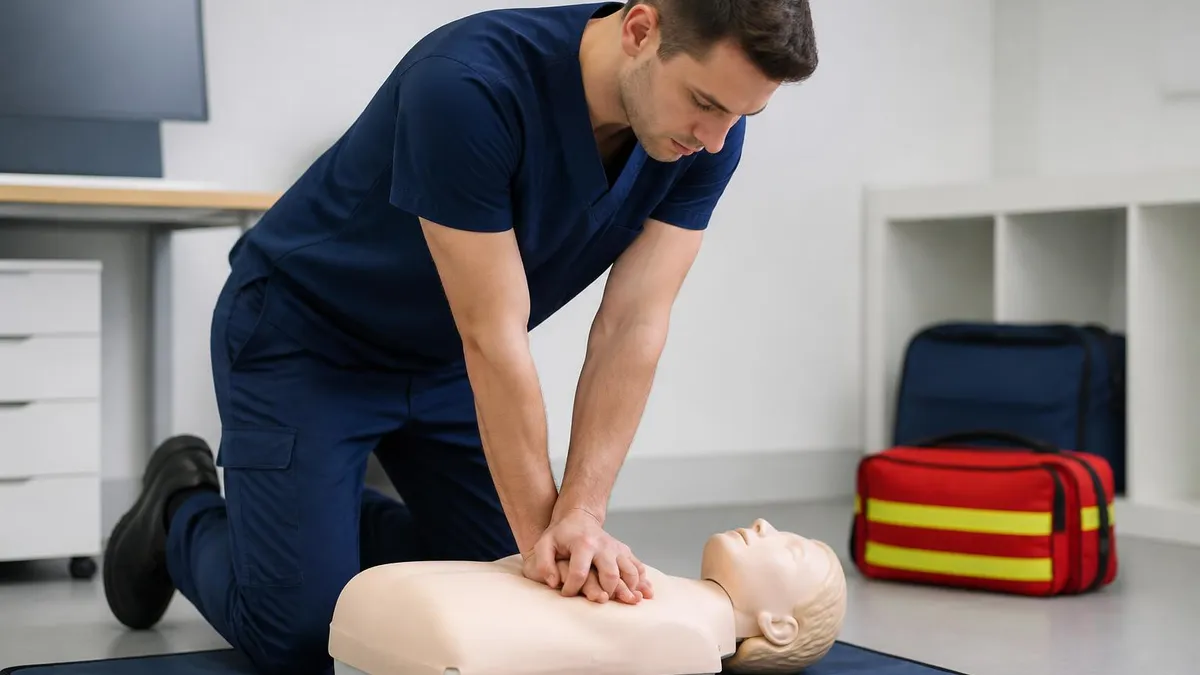
Adult CPR: Complete Step-by-Step Guide to Hands-Only and Standard CPR in 2026

CPR - Cardiopulmonary Resuscitation: Complete Study Guide 2026
About the Author

Registered Nurse & Healthcare Educator
Johns Hopkins University School of NursingDr. Sarah Mitchell is a board-certified registered nurse with over 15 years of clinical and academic experience. She completed her PhD in Nursing Science at Johns Hopkins University and has taught NCLEX preparation and clinical skills courses for nursing students across the United States. Her research focuses on evidence-based exam preparation strategies for healthcare certification candidates.
Join the Discussion
Connect with other students preparing for this exam. Share tips, ask questions, and get advice from people who have been there.
View discussion (5 replies)