
CPR Certification Price in 2026 October: Complete Cost Breakdown by Course Type, Provider, and Format
CPR certification price ranges from $20 to $250. Compare costs by provider, course type, and format. ✍🏼 Find the cheapest verified CPR class for your needs.
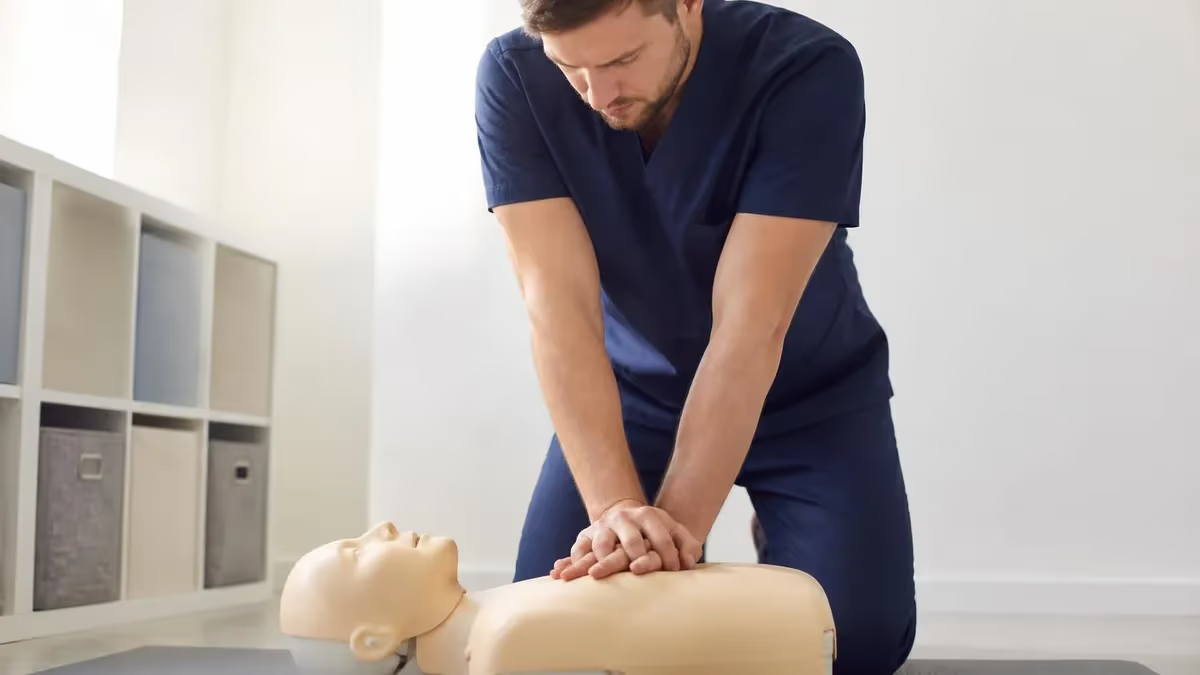
The cpr certification price in the United States in 2026 ranges from roughly $20 for an online-only refresher to $250 for an in-person blended Basic Life Support course with hands-on skills testing at a hospital training center. Most working professionals pay somewhere between $55 and $110 for a two-year card, while community members taking a Heartsaver class typically pay $60 to $90. The reason the price varies so widely is that CPR certification is not a single product — it is a family of courses with different audiences, different scopes of practice, and very different credentialing standards behind them.
Before you swipe your card, you need to know which course you actually need. A daycare worker, a personal trainer, a nurse, and a parent looking to learn infant cpr techniques all need different documents. Picking the wrong one wastes money and may leave you with a card your employer refuses to accept on day one. This guide walks through the real pricing for each major course, the difference between accredited and non-accredited providers, and the hidden fees that turn a $30 advertised price into a $95 final cost.
The big three accredited training organizations — the American Heart Association (AHA), the American Red Cross, and the Health & Safety Institute (HSI) — set the market for in-person and blended pricing. Online-only providers like the red cross cpr classes near me directory and the national cpr foundation occupy a much cheaper tier, but they come with caveats about employer acceptance that we'll cover in detail below. Understanding this two-tier market is the single most important thing a buyer can do.
You should also factor in time cost. A traditional AHA BLS class runs three to four hours in person, while a Heartsaver class can run five hours. Blended courses cut classroom time roughly in half by moving lectures online, and pure online refreshers (for already-certified providers) can be completed in 45 to 90 minutes. If your hourly wage is $30 or more, the time saved by paying $20 extra for a blended format usually pays for itself before you finish your morning coffee.
Renewal pricing is another variable that catches first-timers off guard. Most cards expire after exactly two years, and renewal courses are usually 20 to 40 percent cheaper than the initial course because the skills test is shorter. If you let the card expire by more than 30 days, many providers require you to retake the full initial course at full price — a common $35 to $60 penalty for procrastination that affects roughly one in four CPR holders nationally.
Finally, there is the question of employer reimbursement. Hospitals, school districts, fire departments, and many corporate wellness programs cover 100 percent of CPR costs if you bring back a receipt and a copy of your card. Roughly 62 percent of healthcare employees never pay out of pocket. Before you book a class, send a one-line email to HR asking whether they have a preferred vendor and a reimbursement form. That single email is the highest return-on-investment minute in this entire process.
CPR Certification Price by the Numbers

CPR Certification Price by Course Type
The cpr certification price is shaped by five factors: the certifying body's licensing fee, the instructor's time, the cost of the manikin and AED trainer equipment, the classroom or facility overhead, and the volume of students the training center pushes through each month. A high-volume hospital training center in a major city can offer BLS for $75 because they certify 200 people a week. A solo instructor in a rural area teaching six students a month has to charge $130 just to break even. Geography and scale matter more than brand.
The single biggest driver is the certifying body. AHA-aligned training centers pay AHA roughly $4 to $7 per eCard issued, plus instructor licensing fees and manikin maintenance contracts. The Red Cross uses a similar fee structure. Non-accredited online providers have none of these costs — they generate a PDF certificate on demand and the entire margin is profit. That is why the price gap between $25 online courses and $90 in-person courses is so large, and why employer acceptance varies dramatically between the two tiers.
Course scope is the second factor. A Heartsaver class covers adult, child, and infant cpr plus AED use and choking relief. A BLS Provider class adds two-rescuer techniques, bag-valve-mask ventilation, and a more rigorous skills test. ACLS adds the entire acls algorithm family — recognizing rhythms, pushing drugs, leading a code team. Each additional layer requires more instructor time, more equipment, and more renewal practice. Pricing scales accordingly, roughly doubling at each step up the ladder.
Format is the third major lever. Pure in-person classes are most expensive because instructors are paid for the full class duration. Blended-learning courses (online didactic plus in-person skills check) are typically 10 to 20 percent cheaper because the instructor only needs to run the two-hour skills portion. Pure online courses are cheapest, but for hands-on certifications like BLS, AHA explicitly requires an in-person skills verification — anyone selling a fully online BLS card is selling something AHA does not recognize.
The fourth factor is whether the course includes a printed textbook. AHA student manuals (the BLS Provider Manual, ACLS Provider Manual, PALS Provider Manual) retail for $18 to $25 each. Many training centers bundle the manual into the price; others sell it separately and surprise you at checkout. Before booking, ask whether the manual is included, whether a digital copy is acceptable, and whether you can share a manual with a colleague who took the class six months ago.
The fifth factor is the eCard fee itself. AHA, Red Cross, and HSI all use digital cards now, and the eCard fee is built into the course price. However, if you lose access to your eCard portal and need a replacement, expect a $10 to $25 reissue fee from many centers. A few centers absorb this cost as a courtesy. Check the aed pad placement requirements and card retrieval policy before you commit.

CPR Practice Test Questions
Prepare for the CPR Cardiopulmonary Resuscitation Practice exam with our free practice test modules. Each quiz covers key topics to help you pass on your first try.
CPR Basic CPR
CPR Exam Questions covering Basic CPR. Master CPR Test concepts for certification prep.
CPR and First Aid
Free CPR Practice Test featuring and First Aid. Improve your CPR Exam score with mock test prep.
CPR (Cardiopulmonary Resuscitation) Adult ...
CPR Mock Exam on (Cardiopulmonary Resuscitation) Adult CPR and AED Usage. CPR Study Guide questions to pass on your first try.
CPR (Cardiopulmonary Resuscitation) Airway...
CPR Test Prep for (Cardiopulmonary Resuscitation) Airway Obstruction and Choking. Practice CPR Quiz questions and boost your score.
CPR (Cardiopulmonary Resuscitation) Cardio...
CPR Questions and Answers on (Cardiopulmonary Resuscitation) Cardiopulmonary Emergency Recognition. Free CPR practice for exam readiness.
CPR (Cardiopulmonary Resuscitation) Child ...
CPR Mock Test covering (Cardiopulmonary Resuscitation) Child and Infant CPR. Online CPR Test practice with instant feedback.
CPR (Cardiopulmonary Resuscitation) High-P...
Free CPR Quiz on (Cardiopulmonary Resuscitation) High-Performance Team Dynamics. CPR Exam prep questions with detailed explanations.
CPR (Cardiopulmonary Resuscitation) Legal ...
CPR Practice Questions for (Cardiopulmonary Resuscitation) Legal and Ethical Considerations. Build confidence for your CPR certification exam.
CPR for Specific Populations
CPR Test Online for for Specific Populations. Free practice with instant results and feedback.
CPR Airway & Breathing Management
CPR Exam Questions covering Airway & Breathing Management. Master CPR Test concepts for certification prep.
CPR Assessment & Recognition of Cardiac Ar...
Free CPR Practice Test featuring Assessment & Recognition of Cardiac Arrest. Improve your CPR Exam score with mock test prep.
CPR Chest Compressions & Defibrillation
CPR Mock Exam on Chest Compressions & Defibrillation. CPR Study Guide questions to pass on your first try.
CPR Post-Resuscitation Care & Recovery
CPR Test Prep for Post-Resuscitation Care & Recovery. Practice CPR Quiz questions and boost your score.
Provider Comparison: National CPR Foundation vs AHA vs Red Cross
The American Heart Association sets the gold standard for healthcare CPR. AHA BLS Provider cards are universally accepted by hospitals, nursing schools, and emergency medical systems across all 50 states. Pricing through an authorized AHA training center runs $80 to $130 for BLS, $170 to $250 for ACLS (which teaches the full acls algorithm and rhythm recognition), and $200 to $280 for pals certification. AHA cards are valid for two years and use a digital eCard system you can verify with a QR code.
Hidden costs to watch for with AHA include the student manual ($18–$25 if not bundled), the eCard reissue fee, and parking at hospital training centers in dense urban areas. The upside is iron-clad acceptance: no nursing director or hospital HR department will ever question an AHA card. If your career requires recognition by a state nursing board or a hospital credentialing committee, AHA is almost always the safest choice despite the higher price.
In-Person vs Online-Only CPR Certification
- +In-person courses include hands-on manikin practice that builds real muscle memory
- +AHA and Red Cross cards are accepted by virtually every U.S. employer
- +Instructor feedback corrects compression depth, rate, and hand placement errors
- +Skills checks verify you can actually perform CPR under stress
- +Group classes simulate the chaos of a real emergency response
- +Includes AED trainer practice with real pad placement scenarios
- +Provides a paper trail and instructor signature that survives audits
- −Higher price — typically $75 to $130 vs $25 online
- −Requires 3 to 5 hours of in-person attendance
- −Schedule conflicts can delay your certification by weeks
- −Travel and parking add hidden costs in urban areas
- −Manikins and shared equipment raise hygiene concerns for some learners
- −Class size may limit individual instructor attention
Pros and Cons at a Glance
| Pros | Cons |
|---|---|
| In-person courses include hands-on manikin practice that builds real muscle memory | Schedule conflicts can delay your certification by weeks |
| AHA and Red Cross cards are accepted by virtually every U.S. employer | Travel and parking add hidden costs in urban areas |
| Instructor feedback corrects compression depth, rate, and hand placement errors | Manikins and shared equipment raise hygiene concerns for some learners |
| Skills checks verify you can actually perform CPR under stress | Class size may limit individual instructor attention |

CPR Certification Price Buyer's Checklist
- ✓Confirm with your employer or licensing board whether AHA, Red Cross, or HSI is required
- ✓Ask whether the price includes the student manual and eCard fee
- ✓Verify the course covers adult, child, and infant cpr if you need full Heartsaver scope
- ✓Check if a hands-on skills session is included or sold separately
- ✓Look up the instructor or training center on the provider's official roster
- ✓Compare blended-learning prices against pure in-person for time savings
- ✓Ask whether the certificate is delivered same-day or by mail
- ✓Confirm the card validity period — should be exactly 24 months
- ✓Request the refund and reschedule policy in writing before paying
- ✓Check for employer reimbursement and group discount codes
- ✓Save the receipt and PDF certificate to your personal email immediately
- ✓Set a calendar reminder 90 days before expiration to schedule renewal
Schedule your renewal before the 90-day mark
Most accredited providers allow you to take a shorter, cheaper renewal course up to 90 days before expiration and up to 30 days after. If you miss this 120-day window, you must retake the full initial course at full price — typically a $35 to $60 penalty. Setting a phone reminder for month 21 of your card is the single cheapest cost-saving move you can make.
The CPR market has its share of scams and questionable practices, and the lowest cpr certification price is not always the best deal. The most common red flag is an online-only provider claiming their card is accepted by "all employers nationwide." No certificate is universally accepted; even the AHA card is sometimes questioned by a credentialing officer who wants to see the eCard QR code verified live. Any provider making absolute claims is overselling, and any provider that issues your card before you complete a single question is selling a souvenir, not a credential.
Another frequent issue is the bait-and-switch on student manuals. A training center advertises BLS for $60, you arrive and learn the manual is $25 extra, the eCard fee is $8 extra, and parking is $12. Suddenly the $60 class costs $105 — still reasonable, but not what was advertised. Reputable centers itemize every cost upfront on their booking page. If you cannot see a complete itemized total before paying, choose a different vendor. Transparency in pricing correlates strongly with quality of instruction.
Watch for fake AHA logos on third-party websites. The AHA maintains a public training-center finder, and only centers listed on the official AHA site can issue genuine AHA eCards. A website using the AHA shield without being on that list is committing trademark infringement and selling counterfeit credentials. The same is true for the Red Cross. Before paying, search the official finder for the training center name and the instructor's full name. If either is missing, walk away.
Reciprocity between providers is another subtle pricing trap. A few employers will accept any 2-year card; others insist on a specific brand. If you take an HSI card because it is $20 cheaper, then change jobs to a hospital that requires AHA, you have to repay for the full AHA course before your new card expiration. The savings disappear. Match the provider to the most demanding employer you might work for in the next two years, not just the current one.
Group discounts are widely available but rarely advertised. Most training centers offer 10 to 25 percent off when six or more people book together. If you're a small business owner, a daycare director, or a department manager, you can usually negotiate a private on-site class at a per-person price below the public retail rate. The instructor saves on facility costs and you save on travel. Ask explicitly — many centers will quote you a group rate only on request.
Finally, beware of "lifetime" CPR certifications. There is no such thing in the United States. Every legitimate provider issues a 2-year card because skills decay rapidly without practice. Studies show that compression quality drops within three to six months of training. Any provider selling a permanent card is fundamentally misunderstanding the standard of care, and any employer accepting one is exposed to liability. Stick with 2-year cards from accredited providers — your patients and your insurance carrier will thank you.
The American Heart Association explicitly requires an in-person skills test for any BLS Provider card. Websites selling fully online BLS for $30 are not issuing AHA cards regardless of what their marketing implies. If your job requires AHA BLS specifically, an online-only card will be rejected on your first day and you'll have to repay for the in-person course. Always confirm the format requirement with your employer in writing.
Renewal pricing is one of the most under-discussed parts of the CPR economy. The standard 2-year card cycle means roughly half of all CPR holders are within 12 months of expiration at any given moment. Smart consumers plan for renewal the day they receive their initial card. The cheapest path is to book renewal exactly 30 to 60 days before expiration with the same training center, which often discounts 15 to 25 percent for returning students and waives the skills-fee component.
Reciprocity is where pricing gets interesting. Most U.S. hospitals require AHA BLS, but some accept Red Cross BLS as equivalent. State EMS agencies almost always require AHA. School districts and daycares typically accept AHA, Red Cross, or HSI. Fitness centers usually accept any nationally recognized provider. The smartest financial move is to identify the strictest employer in your career horizon and certify with that provider from the start — even if it costs $30 more today.
Group rates and union benefits often slash costs further. Many nursing unions, EMS associations, and teacher associations negotiate bulk rates that bring BLS down to $40 to $55 per member. Check your union's benefits portal before paying retail. Many hospitals also run free in-house CPR classes for employees on monthly schedules — you may already have a free option you didn't know about. One quick conversation with your nursing education office can save a hundred dollars.
Stacking certifications can also save money. If you need both BLS and ACLS, many training centers offer a combined two-day weekend program priced 15 to 20 percent below the sum of two individual classes. The same applies to BLS plus PALS for pediatric staff. Bundled scheduling also reduces the time you spend off the clinical floor, which matters for hourly workers and per-diem staff. Ask about combo pricing before booking either course alone.
If you're a student in a healthcare program, check whether your tuition already includes CPR certification. Many nursing, dental hygiene, respiratory therapy, and paramedic programs build BLS into the curriculum during the first semester. Don't pay for a class your school will mandate anyway. The same is true for many medical and PA programs, where the school's simulation center runs free monthly sessions for current students. Verify with your program director before opening your wallet.
The other key consideration is what skills you'll be tested on. A good BLS class will reinforce compression depth, the normal breathing rate for assessing a victim, proper hand placement, AED pad placement for adults and children, and the use of two-rescuer techniques. If a course skips any of these, the price is irrelevant because the certification won't reflect competence. Ask for a syllabus or scope-of-practice sheet before paying, and compare it against the AHA or Red Cross course outline to make sure nothing was cut to lower the headline price.
Smart shoppers spend an hour preparing before they spend a dollar on certification. Start by writing down exactly which credential your employer or licensing board requires. The wording matters: "AHA BLS Provider" is different from "BLS for Healthcare Providers" (an older name), and both are different from "CPR/AED certified." Get the exact wording in writing from HR or the licensing board, and match the course title on the booking page to that wording character-for-character. This single step eliminates 80 percent of buyer's-remorse cases.
Next, look at three to five training centers within 30 minutes of your home or workplace. Compare full itemized prices — course fee, manual, eCard, and any surcharges. Look at instructor reviews on Google Maps and Yelp; an instructor with a 4.8-star average across 200 reviews is almost always worth $10 more than a 3.6-star one with the same course. Skilled instructors finish on time, teach the jaw thrust maneuver correctly, and answer real-world questions without rushing.
Before class, complete the pre-course assessment if your provider offers one. AHA includes a free pre-course self-test for BLS and ACLS candidates, and roughly 30 percent of students who fail the in-class test never bothered with the pre-test. Use free quiz banks to drill the basics until you can answer 90 percent correct without hesitation. Knowing the material before you arrive turns the in-person class into a skills-practice session rather than a frantic cramming exercise — and dramatically reduces the risk of having to retake.
Bring the right gear to class. Wear clothes you can kneel in for 30 minutes without strain. Bring a refillable water bottle and a light snack — compressions burn real calories and a hungry student performs worse. Take a phone photo of your printed receipt the moment it's handed to you in case the paper gets lost. Save your digital eCard PDF to three places: your work email, your personal email, and a cloud drive. Replacements aren't free and they take time.
If you fail the initial skills test, do not panic. Most training centers allow one free retest within 30 days. Use the time to drill the specific skill you missed — usually compression depth, rate, or ventilation volume. Compression-rate drift is the single most common failure, and a free metronome app set to 110 beats per minute fixes it in one practice session. The fail-and-retest path is far cheaper than rebooking the entire course at full price.
After class, register your eCard within 24 hours. Verify the spelling of your name, your expiration date, and the course type. Mistakes are common and they are infinitely easier to correct in the first week than six months later when you're standing in front of a hospital credentialing officer. Add a calendar reminder for month 21 of your two-year cycle so you can hit the renewal discount window. Then put your card in your wallet, your phone, and your work badge clip — three places means you'll never be caught without proof.
One final tip: bookmark your training center. The relationship is worth maintaining. Many centers send returning students priority booking links, last-minute discounted seat fills, and free advanced workshops on topics like aed pad placement on pacemaker patients or pediatric resuscitation case reviews. A good training center is a career-long resource, not a one-time transaction, and treating it that way pays dividends every two years for the rest of your working life.
CPR Questions and Answers
CPR Card Lookup: How to Verify, Replace, and Access Your CPR Certification in 2026
AHA CPR: What It Is, Which Course You Need, and How to Get Certified
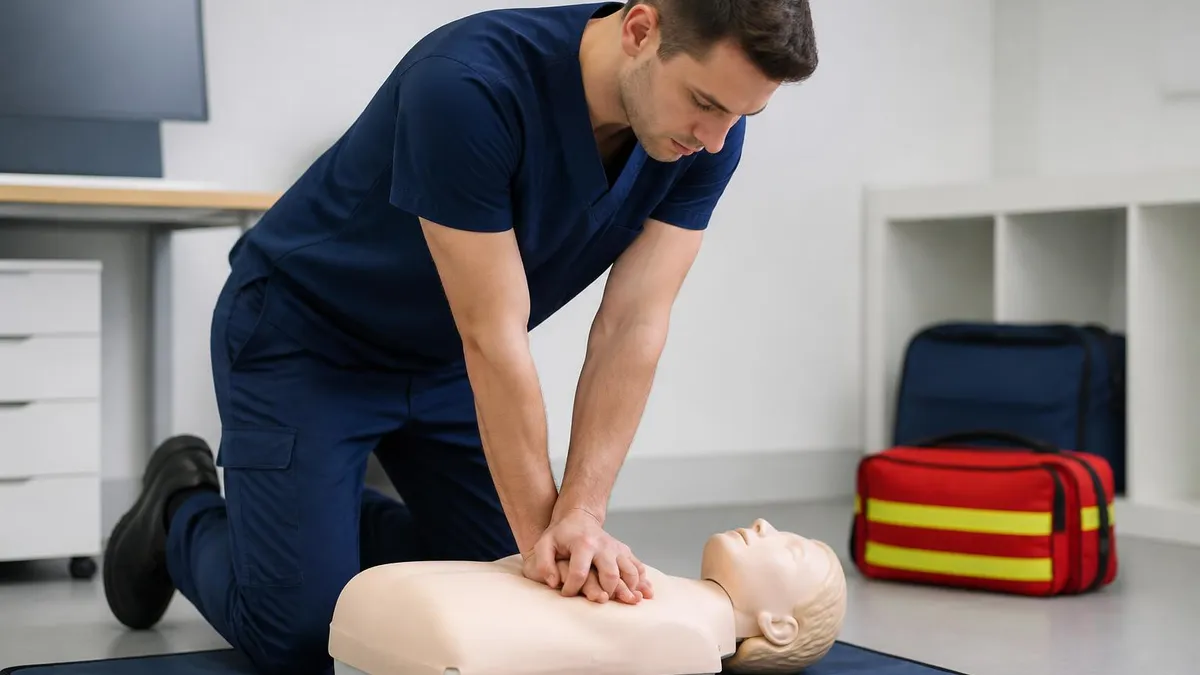
Adult CPR: Complete Step-by-Step Guide to Hands-Only and Standard CPR in 2026
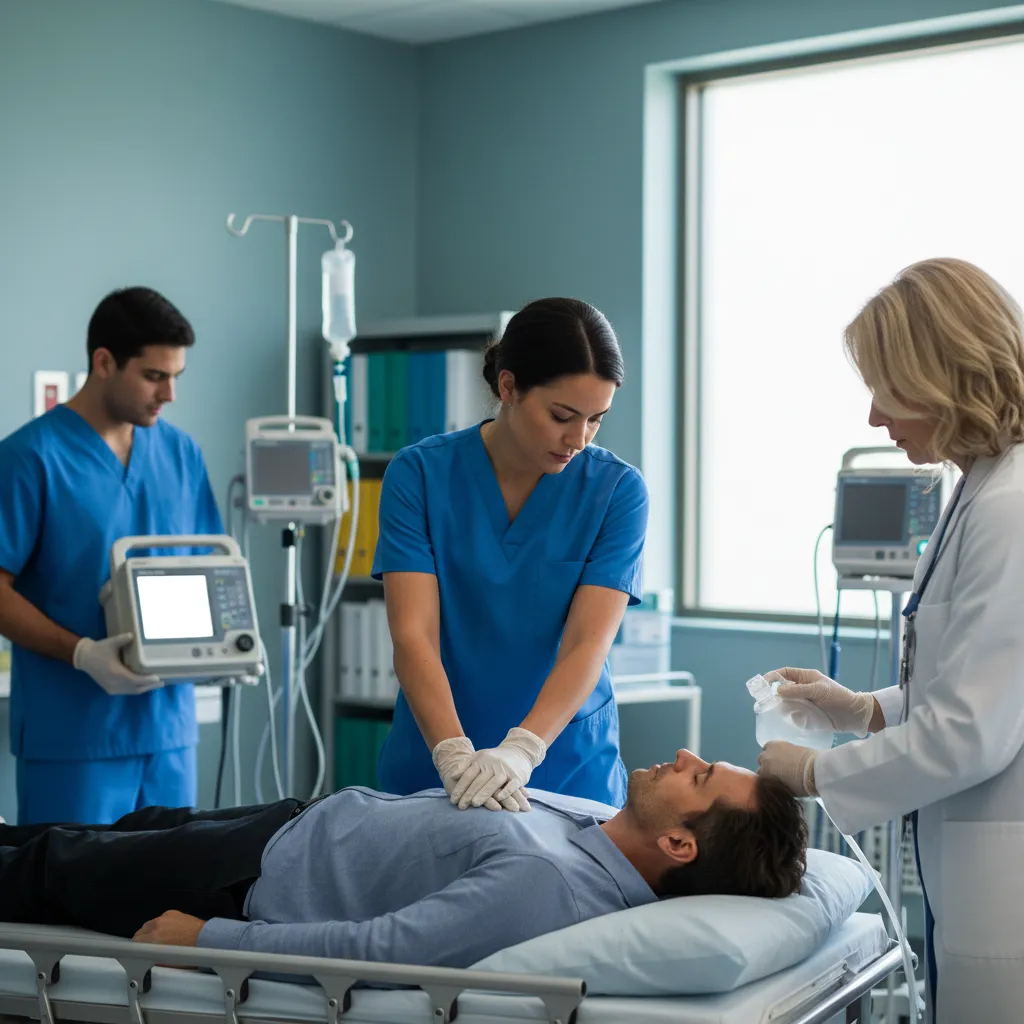
CPR - Cardiopulmonary Resuscitation: Complete Study Guide 2026
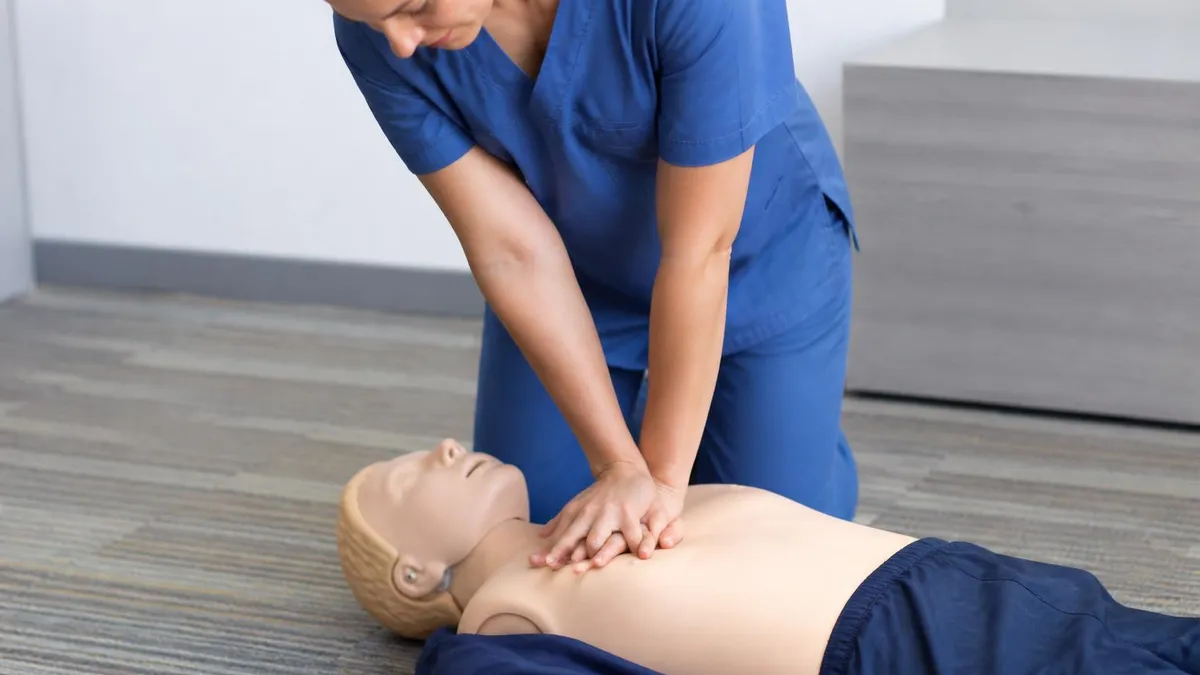
Inappropriate CPR Songs: What Not to Play, Why It Matters, and Better Beat-Per-Minute Alternatives
About the Author

Registered Nurse & Healthcare Educator
Johns Hopkins University School of NursingDr. Sarah Mitchell is a board-certified registered nurse with over 15 years of clinical and academic experience. She completed her PhD in Nursing Science at Johns Hopkins University and has taught NCLEX preparation and clinical skills courses for nursing students across the United States. Her research focuses on evidence-based exam preparation strategies for healthcare certification candidates.
Join the Discussion
Connect with other students preparing for this exam. Share tips, ask questions, and get advice from people who have been there.
View discussion (5 replies)