
Texas Cosmetology License: Complete Requirements, Costs, and Application Guide for 2026 October
Get your Texas cosmetology license in 2026 October. Complete guide to school hours, exam requirements, fees, application steps, and renewal rules. 🟢
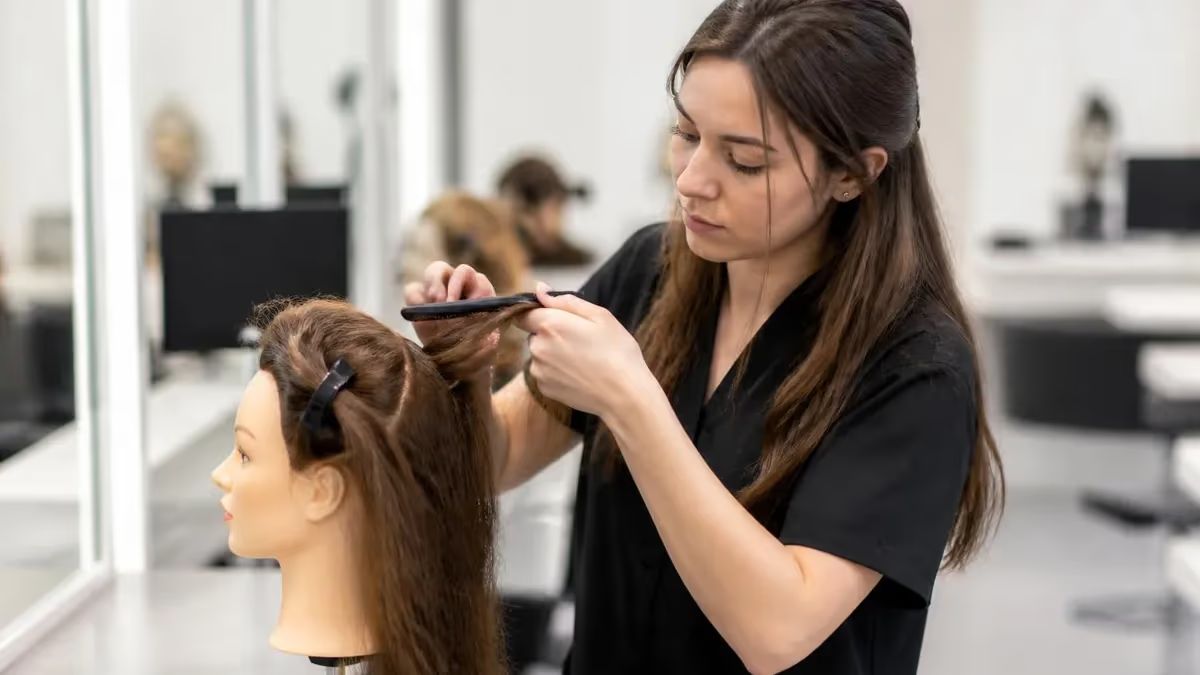
Earning a texas cosmetology license is the official credential that legally authorizes you to cut hair, color, perm, style, and provide skin and nail services for paying clients anywhere in the state. The Texas Department of Licensing and Regulation, known as TDLR, oversees every step of the process, from approving training programs to administering the written and practical state board exams. Whether you are switching careers, finishing high school, or moving from another state, understanding the rules now saves months of frustration and hundreds of dollars in avoidable fees.
Texas is one of the largest beauty markets in the country, with more than 250,000 active licensees and steady annual demand for trained professionals. Searching online for a cosmetology school near me will return dozens of TDLR-approved programs in Houston, Dallas, Austin, San Antonio, and smaller metros like Lubbock or McAllen. Each school must teach the same 1,000-hour core curriculum, but tuition, schedule flexibility, equipment quality, and job placement support vary widely.
The path itself is straightforward on paper. You enroll in an approved program, complete 1,000 hours of supervised training, submit a state application with fingerprints and a fee, then sit for the written theory exam and the practical skills exam through PSI. Once both are passed, your license arrives by mail within a few weeks. In practice, most students take 9 to 14 months from first day of class to first paying client, depending on whether they study full-time or part-time.
Texas reduced the required training from 1,500 to 1,000 hours in September 2023, putting it among the more efficient states in the country. That change cut roughly five months off the average completion time and lowered total tuition by several thousand dollars. For ambitious students who want to start earning quickly, this shift makes Texas one of the most attractive states to begin a beauty career in 2026.
This guide walks through every requirement, fee, deadline, and exam topic you need to know. You will learn what the application actually asks for, how much money to budget, what the two exam sections look like, and how to handle reciprocity if you already hold a license elsewhere. We will also cover renewal rules, continuing education, and what to do if you fail an exam section the first time.
Whether your goal is salon employment, booth rental, eventual ownership, or specialty work in editorial and bridal, the license is your starting point. Treat it like a serious professional credential, because that is exactly what TDLR and your future clients expect. The information below reflects current 2026 rules and fee schedules published by the state regulator.
Read straight through if you are new to the process, or use the table of contents to jump to the section that matters most right now. Each section is written to stand alone, so you can return later when you reach that step of your journey.
Texas Cosmetology License by the Numbers
Key Facts at a Glance
| Item | Value | Details |
|---|---|---|
| Required Training Hours | 1,000 | Reduced from 1,500 in 2023 |
| Application Fee | $50 | Paid to TDLR |
| PSI Exam Fee | $72 | Written and practical combined |
| Renewal Cycle | 2 yrs | $53 renewal fee |
From Enrollment to Licensed Cosmetologist
Confirm Eligibility
Enroll in Approved School
Apply to TDLR
Schedule PSI Exams
Pass Both Sections
Receive License
Choosing the right school matters more than any other decision you will make in this process. Texas has more than 300 approved cosmetology programs, ranging from small independent academies to large national chains like Paul Mitchell, Aveda Institute, and Empire Beauty Schools. The state sets the curriculum floor at 1,000 hours, but the quality of instructors, the condition of equipment, and the volume of real client traffic in the student salon shape what you actually learn.
Tuition in Texas typically runs from $11,000 to $22,000 for the full program. Public community colleges like Houston Community College and Austin Community College often charge less than $7,000 in total, making them the strongest value if you live near one. Private academies cost more but frequently offer evening schedules, faster completion tracks, and financial aid packages through Title IV federal student loans that community colleges sometimes do not match.
When you visit a school, ask three concrete questions. First, what is the first-time pass rate of their graduates on the TDLR state exam? Anything below 65 percent is a red flag. Second, how many client services does each student perform before graduation? Strong programs put students on the floor working with real clients by hour 300. Third, what does job placement assistance actually look like after graduation, and which salons regularly hire from this school?
Schedule structure deserves equal attention. Full-time programs of 30 to 40 hours per week finish in roughly 6 to 8 months. Part-time evening programs of 20 hours per week stretch to 12 or 14 months. If you need to keep a day job during training, confirm the part-time option exists before signing anything. Some schools advertise flexibility but only offer one cohort start date per quarter, which can stall your enrollment for months.
The work of a cosmetology cosmetologist involves chemistry, biology, business skills, and constant client interaction, so the curriculum should reflect that breadth. Look at sample syllabi and ask to observe a class before you commit. A school that resists letting prospective students sit in on instruction is one to walk away from. Reputable programs welcome visitors and even let you talk privately with current students.
Equipment and product lines also signal quality. Schools partnered with professional brands like Redken, Wella, Pivot Point, or Goldwell expose students to the tools they will actually use in salons. Cheap private-label products taught throughout training leave graduates struggling with brand-name formulations on their first job. Walk through the student salon during your tour and check whether stations look maintained, sanitized, and well-stocked.
Finally, read online reviews carefully. Filter out the obviously fake five-star posts and the bitter one-star rants from students dismissed for attendance violations. Focus on detailed three- and four-star reviews that mention specific instructors, classroom conditions, and post-graduation experiences. Patterns across a dozen honest reviews tell you more than any glossy brochure or admissions counselor sales pitch ever will.
Cosmetology Practice Test Questions
Prepare for the Cosmetology Test exam with our free practice test modules. Each quiz covers key topics to help you pass on your first try.
Cosmetology Test Anatomy and Physiology
Cosmetology Exam Questions covering Test Anatomy and Physiology. Master Cosmetology Test concepts for certification prep.
Cosmetology Test Business and Career Manag...
Free Cosmetology Practice Test featuring Test Business and Career Management. Improve your Cosmetology Exam score with mock test prep.
Cosmetology Test Chemical Texture Services
Cosmetology Mock Exam on Test Chemical Texture Services. Cosmetology Study Guide questions to pass on your first try.
Cosmetology Test Haircolor and Lightening
Cosmetology Test Prep for Test Haircolor and Lightening. Practice Cosmetology Quiz questions and boost your score.
Cosmetology Test Haircutting and Styling
Cosmetology Questions and Answers on Test Haircutting and Styling. Free Cosmetology practice for exam readiness.
Cosmetology Test Infection Control and Safety
Cosmetology Mock Test covering Test Infection Control and Safety. Online Cosmetology Test practice with instant feedback.
Cosmetology Test Nail Care and Procedures
Free Cosmetology Quiz on Test Nail Care and Procedures. Cosmetology Exam prep questions with detailed explanations.
Cosmetology Test Nail Care and Services
Cosmetology Practice Questions for Test Nail Care and Services. Build confidence for your Cosmetology certification exam.
Cosmetology Test Principles of Skin Care
Cosmetology Test Online for Test Principles of Skin Care. Free practice with instant results and feedback.
Cosmetology Test Scientific Concepts
Cosmetology Study Material on Test Scientific Concepts. Prepare effectively with real exam-style questions.
Cosmetology Test Skincare and Services
Free Cosmetology Test covering Test Skincare and Services. Practice and track your Cosmetology exam readiness.
Cosmetology Test Wigs, Hair Extensions, an...
Cosmetology Exam Questions covering Test Wigs, Hair Extensions, and Hair Additions. Master Cosmetology Test concepts for certification prep.
Cosmetology Administrative Rules
Free Cosmetology Practice Test featuring Administrative Rules. Improve your Cosmetology Exam score with mock test prep.
Cosmetology On Hair & Scalp Properties
Cosmetology Mock Exam on On Hair & Scalp Properties. Cosmetology Study Guide questions to pass on your first try.
Cosmetology
Cosmetology Test Prep for Cosmetology. Practice Cosmetology Quiz questions and boost your score.
Understanding What Is Cosmetology Training in Texas
Hair services account for the largest share of cosmetology training in Texas, typically 500 to 600 of the 1,000 required hours. Students learn cutting, styling, chemical relaxing, perming, coloring, lightening, and treatments. Texas testers expect competency in both traditional barbering-style cuts and modern fashion techniques, since cosmetologists can legally perform both.
Coloring is the most heavily tested specialty area because it involves chemistry, color theory, and client consultation. Programs that integrate live color demonstrations with weekly written quizzes produce stronger exam performers. Your school should also teach you how to read manufacturer formulation guides for at least two major color lines.
Texas Cosmetology License Pros and Cons
- +Only 1,000 training hours required, lower than most states
- +No high school diploma legally required to apply
- +Cosmetology license covers hair, skin, and nail services
- +Two-year renewal cycle reduces yearly paperwork
- +Strong job market in all major Texas metros
- +Reciprocity available with many other states
- +TDLR application process fully online
- −Tuition can reach $22,000 at private academies
- −Practical exam logistics require traveling to PSI sites
- −Background check required and can delay processing
- −Continuing education needed every renewal cycle
- −Fees add up across application, exam, and renewal stages
- −Some rural counties have limited approved schools
- −Failed exam sections require additional retake fees
Texas Cosmetology License Application Checklist
- ✓Verify you are at least 17 years old with valid ID
- ✓Confirm your school is TDLR-approved before enrolling
- ✓Complete and document all 1,000 required training hours
- ✓Request your school completion certificate in writing
- ✓Create a TDLR online account at the official portal
- ✓Pay the $50 application fee by card or e-check
- ✓Complete the fingerprint background check through IdentoGO
- ✓Upload a clear color passport-style photograph
- ✓Wait for the eligibility notice from TDLR before scheduling
- ✓Book both PSI exams within 90 days of eligibility approval
- ✓Bring two forms of ID and the exam confirmation to the test center
- ✓Save your license number and verification link after passing
Apply to TDLR Before You Finish School
Most students wait until graduation to start the application. Instead, submit the TDLR application and complete the background check during your final 100 hours of training. This parallel approach can shave two to four weeks off your total timeline and let you sit for the state exam within days of finishing school.
Reciprocity is the legal process that allows cosmetologists licensed in another state to work in Texas without repeating their entire training program. Texas operates one of the more flexible reciprocity systems in the country, but the rules depend heavily on which state issued your original license and how closely that state's training hours match Texas requirements. The TDLR reviews every application individually, so two people from the same state can have different outcomes depending on documentation quality.
If your original training included at least 1,000 hours of approved cosmetology instruction, you are generally eligible for reciprocity in Texas. You must submit a license verification directly from the original state board, proof of training hours, a copy of your current license, and the $50 reciprocity application fee. Some states, including the ohio state board of cosmetology and California Board of Barbering and Cosmetology, can take six to eight weeks to send verification, so request it early.
Candidates who trained in states with fewer than 1,000 hours may still qualify by demonstrating significant work experience. TDLR considers documented salon employment, payroll records, and tax returns showing active practice as a licensed cosmetologist. Generally, two years of recent full-time experience can compensate for a training hour shortfall, though the agency has discretion to require a Texas state exam if your case is borderline.
Military spouses receive expedited handling under Texas Occupations Code Chapter 55. If you are a spouse of an active-duty service member stationed in Texas and you hold a valid out-of-state cosmetology license, TDLR processes your application within 30 days and waives several documentation requirements. This benefit also applies to recently separated veterans and certain dependents transitioning from active duty.
Foreign-trained cosmetologists face a different path. International credentials are not directly recognized by TDLR. You must either complete a credential evaluation through a recognized agency to determine US training equivalency, or simply enroll in a Texas school to complete enough hours to qualify. Many foreign-trained professionals find the second route faster because document evaluation can stall for months in bureaucratic queues.
One detail that catches reciprocity applicants by surprise is the Texas-specific law section of the state exam. Even if you are exempted from the full written theory exam under reciprocity, you may still be required to pass a shorter state law and rules section. This ensures incoming licensees understand Texas-specific scope of practice limits, sanitation rules, and consumer protection requirements that vary from their home state.
Plan for at least 60 days from submitting your reciprocity application to receiving your Texas license. If you have a job offer waiting, ask the salon for flexibility on your start date, because rushing TDLR rarely speeds the timeline. Working without an active Texas license, even briefly, can result in fines for both you and the salon owner under state administrative penalties.
The fingerprint background check is the single most common cause of application delays in Texas. If you have any prior arrests, even dismissed charges, expect additional review time. Disclose everything truthfully on the application. Concealing a record will result in denial when fingerprints reveal it, and reapplying with full disclosure is much harder than addressing the issue upfront.
Once your license arrives, the career possibilities open immediately. Texas hosts more than 30,000 active salons and barbershops, plus an enormous pipeline of independent booth renters who run small businesses out of suite-style spaces like Sola Salons and Phenix Salon Suites. Starting pay for new graduates typically ranges from $12 to $18 per hour at chain salons, but commission-based work in higher-end shops can push first-year earnings well past $40,000 once you build a client base.
The Bureau of Labor Statistics reports a Texas median wage of about $32,000 for cosmetologists, but that number understates reality because it excludes tips, retail commissions, and self-employment earnings. Experienced stylists in Austin, Dallas, or Houston metro areas regularly clear $60,000 to $90,000 annually once they specialize in coloring, extensions, or bridal work. Salon ownership, once you reach the 5 to 8 year mark, can multiply that figure substantially.
License renewal happens every two years in Texas, with a $53 fee due before your expiration date. Renewals can be completed online through your TDLR account in about 10 minutes once you have logged your continuing education hours. Late renewals trigger an additional $25 late fee for the first 90 days, after which you must reapply as a new licensee. Setting a calendar reminder six months before expiration prevents this expensive mistake.
Continuing education is part of every renewal cycle. Texas requires four hours of continuing education every two years, covering sanitation, infection control, and applicable law updates. These hours are easy to satisfy through online TDLR-approved providers, often for under $30 total. Some employers offer in-house training that counts toward the requirement, so ask your salon manager whether sessions are state-credit eligible.
Investing in what is cosmetology training is only the beginning of your professional development. The most successful Texas stylists keep learning throughout their careers by attending advanced certification classes from major product companies. Redken, Aveda, and Goldwell offer multi-day intensives in Texas cities that sharpen specialty skills and give you marketing material for clients who want to know exactly what training their stylist has completed.
Insurance is the other practical consideration once you are licensed. Professional liability insurance for cosmetologists typically costs $130 to $200 per year through providers like ASCP, Salon Pro, or Beauty and Bodywork Insurance. Even if you work for a salon that has its own coverage, your personal policy protects you from claims that target you individually. Booth renters and independent contractors should consider this mandatory, not optional.
Booth rental versus employee status is a decision most new licensees face within their first two years. Employee positions offer steady hourly pay and benefits but cap your earning potential. Booth rental gives you full control over pricing, schedule, and clientele but requires business skills, marketing effort, and tax planning. Most successful stylists begin as employees to build a clientele, then transition to booth rental once they have at least 30 to 40 returning clients.
Practical preparation for the Texas state board exam differs from preparing for any quiz you took in school. The written theory exam contains 100 multiple choice questions delivered on a computer at a PSI testing center, and you have 90 minutes to complete it. Time pressure is rarely the limiting factor. The real difficulty is the scenario-based phrasing that asks you to apply rules rather than recall them, so passive reading of your textbook will not be enough.
Build a study routine that mixes active recall with applied practice. Use flash cards for sanitation timing rules, decontamination levels, and electrical safety concepts. Spend at least one hour a week answering full-length practice tests under timed conditions. The act of working through unfamiliar questions, then reviewing every miss, builds the reasoning skills the actual exam rewards. Programs that overemphasize highlighting and rereading textbooks tend to produce students who freeze on test day.
The practical skills exam is administered separately at a designated PSI practical site. You bring your own kit, demonstrate live procedures on a mannequin head, and are scored by a state examiner on technique, sanitation, and timing. The scoring rubric is published by TDLR and worth printing out, since examiners can only mark you on the listed criteria. Knowing exactly what they are watching for prevents wasted motion and reduces nerves significantly.
Common practical exam sections include thermal styling, chemical waving setup, hair color application, manicure procedure, and sanitation. Each task has a time limit, usually 15 to 30 minutes, plus a setup and breakdown period. Practice each one at full speed at school under instructor observation at least three times before your exam date. Muscle memory matters here, because the room will feel different and your nerves will subtract a few percentage points from performance no matter how prepared you are.
Test anxiety is real and worth addressing directly. Sleep at least seven hours the night before, eat a normal breakfast, arrive 30 minutes early to the testing center, and bring a printed copy of your confirmation along with two forms of identification. PSI examiners follow strict procedures and will not admit you without proper ID. Bring a sweater regardless of the season, since testing rooms are often uncomfortably cold and shivering hurts manual dexterity on the practical sections.
If you fail one section, you may retake just that section after paying the retake fee. There is no penalty against your record, and the TDLR does not report failed attempts to future employers. Most who fail on the first try pass on the second attempt within 30 to 60 days. Use the time productively by focusing study energy entirely on the failed content area instead of reviewing material you already mastered.
Finally, remember that the license is the beginning, not the end. Once you pass and start working, the rate at which you build skill is largely up to you. Stylists who treat every client as a learning opportunity, take notes after challenging services, and ask senior colleagues for honest critique advance much faster than those who treat the license as the finish line. Texas rewards ambition in this industry, and the foundation you build now compounds for decades.
Sample Cosmetology Test Practice Questions
Try these questions from our free Cosmetology Test practice tests. The correct answer and an explanation follow each question.
If an establishment moves, the licensee is required to file for a new establishment license and ensure that the new location complies with the Act's and this chapter's requirements. In accordance with the Act, a relocated beauty culture school must also be inspected before opening. Mobile shops are exempt from this subsection's restrictions.
- A. False
- B. True
Answer: B. True
This statement is true. When an establishment moves, the licensee must apply for a new license for the new location and ensure it meets all regulatory requirements. Relocated beauty culture schools also require re-inspection before opening to verify compliance. Mobile shops are typically exempt from these specific relocation inspection rules due to their nature.
What does a 'restricted license' in cosmetology typically indicate?
- A. The licensee may only work in rural areas
- B. The licensee is permitted to perform only specific services or work in limited settings
- C. The license is valid only during daytime hours
- D. The licensee must pay higher annual fees
Answer: B. The licensee is permitted to perform only specific services or work in limited settings
A restricted license limits the scope of services a cosmetologist may legally perform, often due to incomplete training in certain areas.
How often must a cosmetology license typically be renewed in most U.S. states?
- A. Every year
- B. Every two years
- C. Every five years
- D. Every ten years
Answer: B. Every two years
Most U.S. states require cosmetology license renewal every two years, often accompanied by continuing education requirements.
Under cosmetology administrative rules, what is an 'inactive' license status?
- A. A license that has been permanently revoked by the board
- B. A valid license that the holder has chosen not to use actively to practice, often with reduced renewal requirements
- C. A license issued to a retired cosmetologist with no renewal needed
- D. A temporary status granted only to military personnel
Answer: B. A valid license that the holder has chosen not to use actively to practice, often with reduced renewal requirements
An inactive license allows a cosmetologist to maintain their credentials without actively practicing, often at a lower fee, but they cannot legally perform services.
Cosmetology Questions and Answers

Board of Barbering and Cosmetology: What State Boards Do
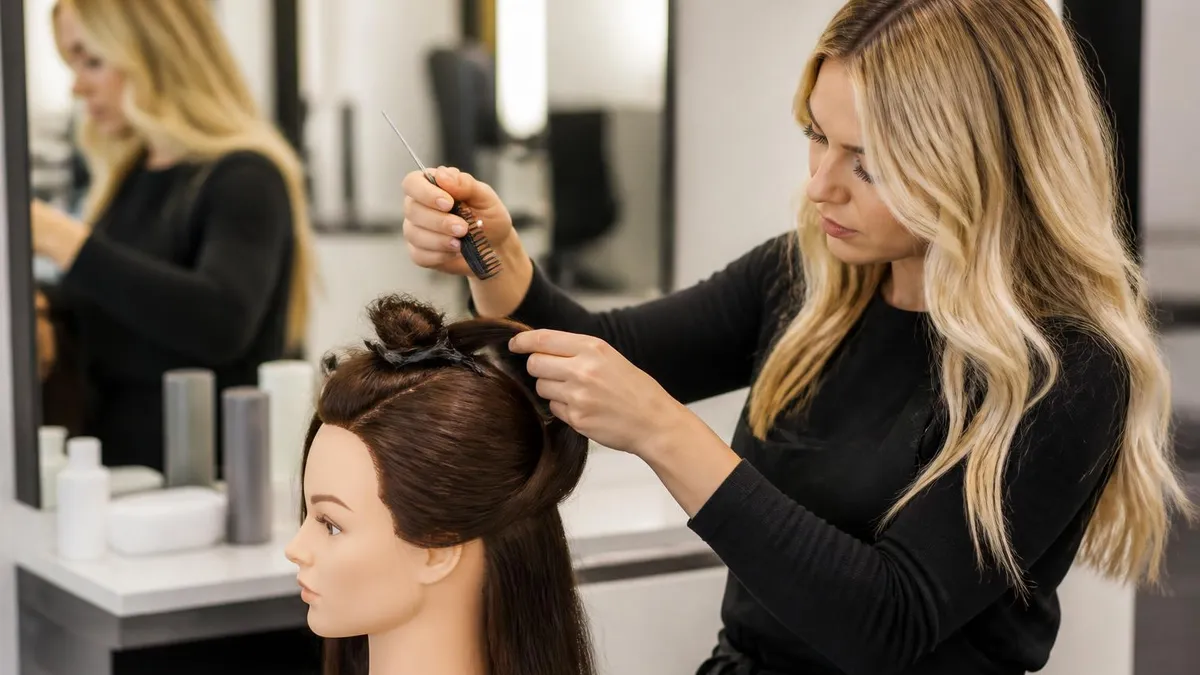
Cosmetology State Board Exam: Complete 2026 Study Guide and Certification Prep

Cosmetology Tuition: Complete Cost Breakdown and Funding Guide for 2026

Cosmetology Programs: Hours, Curriculum, Cost and Accreditation
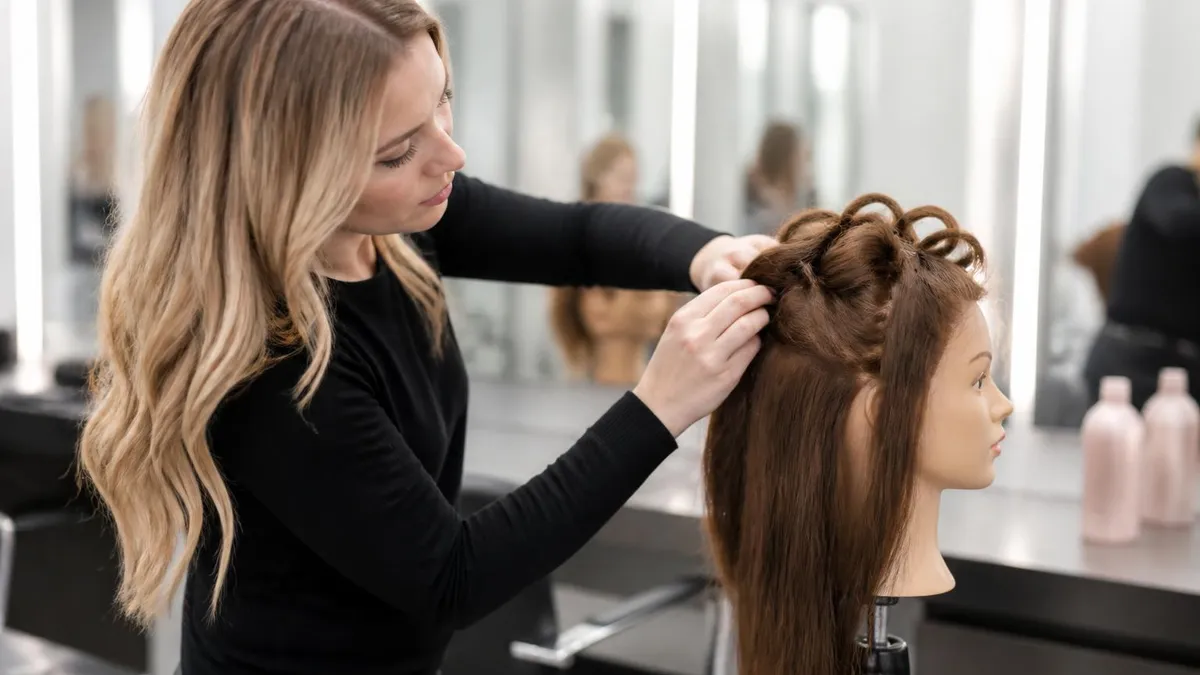
Cosmetology License Verification: How to Check Any State Lookup in 2026
About the Author
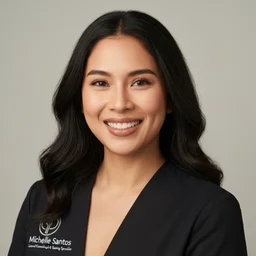
Licensed Cosmetologist & Beauty Licensing Exam Specialist
Paul Mitchell SchoolsMichelle Santos is a licensed cosmetologist with a Bachelor of Science in Esthetics and Salon Management from Paul Mitchell School. She has 16 years of salon industry experience and 8 years preparing students for state cosmetology board exams in theory, practical skills, and sanitation. She specializes in licensure preparation for cosmetologists, estheticians, and nail technicians.
Join the Discussion
Connect with other students preparing for this exam. Share tips, ask questions, and get advice from people who have been there.
View discussion (6 replies)