
Cosmetology State Board Exam: Complete 2026 October Study Guide and Certification Prep
Complete cosmetology state board exam guide: format, pass rates, study schedule, practice questions, and licensing tips for first-time test takers. ✅
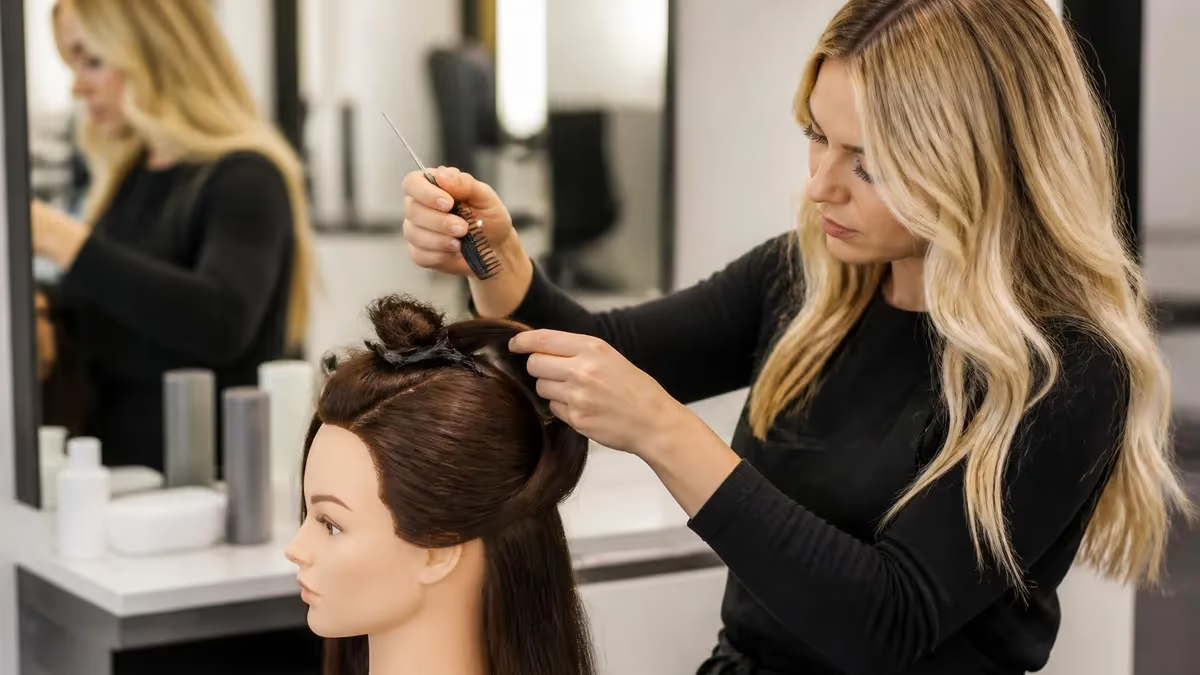
The cosmetology state board exam is the final gateway between graduating beauty school and earning your professional license to practice as a working stylist. Every state requires this two-part assessment, which includes a written theory section testing your knowledge of sanitation, chemistry, and salon business principles, plus a practical demonstration where examiners watch you perform haircuts, color applications, and chemical services on a mannequin or live model under timed conditions.
If you have been searching for a cosmetology school near me or are nearing graduation, understanding the exam structure now will save you weeks of last-minute cramming. Most candidates underestimate how different the state board environment feels compared to classroom practicals. Examiners use rigid scoring rubrics, time limits are strict, and any sanitation violation can result in immediate point deductions or automatic failure regardless of how skilled your technique appears.
The written portion typically contains 90 to 110 multiple-choice questions covering scientific concepts like the hair growth cycle, electrical safety, infection control protocols, and the chemistry behind permanent waves and color formulations. The practical portion runs three to four hours and requires you to bring your own kit with specific tools, products, and draping materials listed in your state's candidate information bulletin.
Pass rates vary significantly by state and testing provider. National averages hover around 70 percent for first-time test takers, but states using PSI as their provider tend to see slightly higher pass rates than those using Prometric or D.L. Roope. The biggest predictor of success is not natural talent but rather structured preparation during the final 60 days of your program, when you should shift focus from learning new content to practicing test conditions repeatedly.
This guide walks you through everything you need to know: the exam format breakdown, state-by-state hour requirements, a 12-week study schedule, the most commonly tested topics, sanitation rules examiners watch for, and proven strategies that consistently boost first-attempt pass rates. Whether you are testing in California, Texas, Florida, Ohio, or Arizona, the core principles remain remarkably consistent.
You will also find links to free practice tests covering every major content area, plus answers to the questions candidates ask most frequently about kit requirements, retake policies, reciprocity between states, and what to do if you fail one section but pass the other. Bookmark this page and return to it throughout your preparation journey.
By the time you finish reading, you will have a clear roadmap for the next three months, know exactly which topics deserve the most study time, and feel confident walking into the testing center prepared rather than panicked. Licensing is achievable for any committed student who treats exam preparation as seriously as they treated their training hours.
Cosmetology State Board Exam by the Numbers
Cosmetology State Board Exam Format
| Section | Questions | Time | Weight | Notes |
|---|---|---|---|---|
| Scientific Concepts | 30 | 30 min | 30% | Anatomy, chemistry, electricity |
| Hair Care and Services | 35 | 45 min | 35% | Cutting, coloring, texture |
| Skin, Scalp, Nails | 20 | 25 min | 20% | Facials, manicures, disorders |
| Sanitation and Safety | 15 | 20 min | 15% | Disinfection, infection control |
| Practical Demonstration | 8 | 3 hours | Pass/Fail | Live skills assessment |
| Total | 100 | 5 hours combined | 100% |
Understanding the content weighting on the cosmetology state board exam helps you allocate study time intelligently rather than spreading effort evenly across topics that carry vastly different point values. The written exam consistently devotes roughly 30 to 35 percent of questions to hair care services, including cutting techniques, color theory, and chemical texture procedures like permanent waves and relaxers. This is the largest single content domain on every state board exam.
Scientific concepts make up another 25 to 30 percent and trip up the most candidates because the material feels disconnected from daily salon work. You will face questions on the structure of the hair shaft, the difference between cortex and cuticle layers, pH scales, oxidation reactions in haircolor, the function of disulfide bonds during perming, and basic electrical principles like the difference between alternating and direct current used in styling tools.
Sanitation, infection control, and state law collectively account for 15 to 20 percent of written questions, but they carry disproportionate weight on the practical because violations cause automatic deductions. Memorize the difference between cleaning, disinfecting, and sterilizing. Know which EPA-registered disinfectants kill HIV, hepatitis B, and tuberculosis. Understand single-use versus multi-use item protocols, and never let a tool touch the floor during your practical.
If you are still selecting your training program, comparing different cosmetology cosmetologist curricula will reveal that NACCAS-accredited schools tend to align their final assessments closely with state board content outlines. This alignment matters because your school's mock exams become your most realistic preparation tool. Ask instructors specifically which areas your graduating class has historically struggled with and focus there.
Skin sciences, including basic facials, hair removal, and recognition of common disorders like contact dermatitis and folliculitis, represent another 15 percent of content. Nail technology questions cover anatomy of the natural nail, sanitation between clients, and recognizing conditions like onychomycosis. Many candidates skip these sections during review because they prefer hair work, but missing easy points here is a common reason borderline candidates fail.
Business and salon management questions appear in smaller numbers, usually 5 to 10 percent of the test, but cover practical topics like booth rental versus commission compensation, basic bookkeeping, client consultation protocols, and professional ethics. These questions reward common sense more than memorization, so do not over-invest study hours here once you have reviewed the basics.
The practical exam typically requires demonstrating six to ten services in a strict sequence: workstation setup, thermal styling, haircutting on a mannequin, chemical waving procedure, virgin haircolor application, predisposition patch test simulation, basic facial steps, and complete sanitation breakdown. Each station has its own scoring sheet, and examiners deduct points for skipped steps even when the final result looks correct.
Cosmetology Practice Test Questions
Prepare for the Cosmetology Test exam with our free practice test modules. Each quiz covers key topics to help you pass on your first try.
Cosmetology Test Anatomy and Physiology
Cosmetology Exam Questions covering Test Anatomy and Physiology. Master Cosmetology Test concepts for certification prep.
Cosmetology Test Business and Career Manag...
Free Cosmetology Practice Test featuring Test Business and Career Management. Improve your Cosmetology Exam score with mock test prep.
Cosmetology Test Chemical Texture Services
Cosmetology Mock Exam on Test Chemical Texture Services. Cosmetology Study Guide questions to pass on your first try.
Cosmetology Test Haircolor and Lightening
Cosmetology Test Prep for Test Haircolor and Lightening. Practice Cosmetology Quiz questions and boost your score.
Cosmetology Test Haircutting and Styling
Cosmetology Questions and Answers on Test Haircutting and Styling. Free Cosmetology practice for exam readiness.
Cosmetology Test Infection Control and Safety
Cosmetology Mock Test covering Test Infection Control and Safety. Online Cosmetology Test practice with instant feedback.
Cosmetology Test Nail Care and Procedures
Free Cosmetology Quiz on Test Nail Care and Procedures. Cosmetology Exam prep questions with detailed explanations.
Cosmetology Test Nail Care and Services
Cosmetology Practice Questions for Test Nail Care and Services. Build confidence for your Cosmetology certification exam.
Cosmetology Test Principles of Skin Care
Cosmetology Test Online for Test Principles of Skin Care. Free practice with instant results and feedback.
Cosmetology Test Scientific Concepts
Cosmetology Study Material on Test Scientific Concepts. Prepare effectively with real exam-style questions.
Cosmetology Test Skincare and Services
Free Cosmetology Test covering Test Skincare and Services. Practice and track your Cosmetology exam readiness.
Cosmetology Test Wigs, Hair Extensions, an...
Cosmetology Exam Questions covering Test Wigs, Hair Extensions, and Hair Additions. Master Cosmetology Test concepts for certification prep.
Cosmetology Administrative Rules
Free Cosmetology Practice Test featuring Administrative Rules. Improve your Cosmetology Exam score with mock test prep.
Cosmetology On Hair & Scalp Properties
Cosmetology Mock Exam on On Hair & Scalp Properties. Cosmetology Study Guide questions to pass on your first try.
Cosmetology
Cosmetology Test Prep for Cosmetology. Practice Cosmetology Quiz questions and boost your score.
How Long Is Cosmetology School in Each Major State
California requires 1,000 training hours under the Board of Barbering and Cosmetology, which is among the lowest in the nation after a 2022 reduction from 1,600 hours. Texas mandates 1,000 hours as well, and both states allow apprenticeship pathways that substitute supervised salon work for some classroom time. Test fees in California run about $125, while Texas charges $50 to $75 depending on the section.
Both states use third-party testing providers and offer Spanish-language written exams. California exam day requires bringing a live model for the haircutting practical, which is unusual compared to most states that allow mannequin work throughout. Texas allows mannequin-only testing, making logistics significantly easier for candidates who do not have a willing volunteer model.
Testing Immediately After Graduation vs Waiting
- +Material is freshest in your memory right after final exams
- +Maintains study momentum and disciplined practice schedule
- +Faster path to earning real income as a licensed professional
- +School mock exam scores accurately predict state board readiness
- +Classmates available for last-minute practice partnerships
- +Avoids paying for refresher courses or extended kit rentals
- +Instructors are still accessible for quick clarification questions
- −Less time to address specific weak content areas thoroughly
- −Practical skills may need additional polish under timed conditions
- −Limited window to retake if you fail on the first attempt
- −Test anxiety compounds with graduation stress simultaneously
- −May not have arranged employment before licensing arrives
- −Financial pressure to test quickly can rush preparation
- −Less time to research state-specific kit requirements in detail
Pros and Cons at a Glance
| Pros | Cons |
|---|---|
| Material is freshest in your memory right after final exams | Less time to address specific weak content areas thoroughly |
| Maintains study momentum and disciplined practice schedule | Practical skills may need additional polish under timed conditions |
| Faster path to earning real income as a licensed professional | Limited window to retake if you fail on the first attempt |
| School mock exam scores accurately predict state board readiness | Test anxiety compounds with graduation stress simultaneously |
| Classmates available for last-minute practice partnerships | May not have arranged employment before licensing arrives |
| Avoids paying for refresher courses or extended kit rentals | Financial pressure to test quickly can rush preparation |
Cosmetology State Board Exam Pre-Test Checklist
- ✓Submit your exam application at least 60 days before your target test date
- ✓Verify your school has reported your completed training hours to the state board
- ✓Pay all application and exam fees and save confirmation receipts
- ✓Download and read your state's candidate information bulletin twice
- ✓Build a complete kit matching every item on the official supply list
- ✓Label all bottles with product names per state board requirements
- ✓Practice the full practical exam start-to-finish under timed conditions at least five times
- ✓Complete a minimum of 500 written practice questions across all content areas
- ✓Confirm your government-issued photo ID matches your application name exactly
- ✓Arrange transportation and arrive at the testing site 30 minutes early
- ✓Prepare professional attire that meets the dress code in your state bulletin
- ✓Get a full night of sleep and eat a substantial breakfast before testing
Sanitation Violations Cause More Failures Than Skill Errors
Examiners report that the leading cause of practical exam failure is not poor technique but rather sanitation breakdowns: dropping a comb and continuing to use it, failing to use a fresh towel for each service station, or skipping the implement disinfection step between procedures. Memorize sanitation protocols cold and rehearse them as a continuous habit, not just during exam prep.
Walking into a state board testing center for the first time can feel disorienting, but the process follows a predictable structure regardless of which provider your state uses. Plan to arrive 30 minutes before your scheduled time so you have a buffer for parking, security check-in, and last-minute restroom visits. You will not be permitted to enter the testing area carrying a phone, smart watch, food, drinks other than water, or any personal items beyond your approved kit.
Check-in involves presenting your government-issued photo ID, your exam confirmation letter, and any state-required documentation like your school completion certificate. Staff will inspect your kit against the official supply list, and missing items can result in disqualification before you even begin. This is why printing the kit list and physically checking off each item the night before is non-negotiable. Bring backup tools where allowed, because broken implements during the exam cannot be replaced mid-test.
The written portion typically comes first if both sections are scheduled the same day. You will sit at an individual computer station with noise-canceling headphones available. The interface allows you to flag questions for review, skip and return, and see your remaining time at all times. Pace yourself to complete roughly one question per minute, leaving 15 minutes at the end to review flagged items and double-check answers you felt uncertain about.
After a brief break, the practical exam begins with a workstation setup phase. Examiners give you a set window, typically 15 minutes, to organize your station, lay out implements on a sanitized surface, drape your mannequin, and prepare for the first service. Your setup itself is scored, so practice this until it becomes automatic. Sloppy setup signals to examiners that you may cut corners during procedures.
Services are called out by an examiner or displayed on a screen with strict time limits per station. Common services include haircut to specific specifications, chemical wave procedure simulation, virgin lightener application, basic facial steps, and predisposition patch test demonstration. You will not be expected to complete an actual color processing because of time, but you must demonstrate the full application technique correctly within the allotted minutes.
Between services, you must perform full sanitation breakdowns: disinfecting implements, replacing capes and towels, washing hands at designated sinks, and resetting your station to a clean state. These transitions are heavily scored, and examiners watch closely. Maintaining calm, professional composure throughout signals readiness and avoids the cascading mistakes that come from rushing or panicking when you fall behind schedule.
Results timing varies by state. Some states give you preliminary written exam results immediately upon submission, while practical scores arrive within two to four weeks by mail or online portal. If you pass both sections, your physical license typically arrives within 30 to 60 days, though most states allow you to begin working under a temporary permit or printed verification while waiting for the official card to arrive.
You can be immediately disqualified for bringing prohibited items into the testing room, including phones, smart watches, recording devices, study notes, and unapproved kit items. Talking to other candidates, asking examiners content questions during the test, or leaving the testing area without permission also result in automatic failure. Read all rules in your candidate bulletin twice before exam day.
Successful candidates consistently follow a 90-day preparation framework that splits study time between written theory review, practical skill repetition, and full-length mock exam simulations. During the first month, focus on identifying weak content areas by taking a comprehensive diagnostic practice test and tracking which categories you score below 75 percent on. These become your priority study targets for the remaining preparation period.
The middle 30 days should emphasize spaced repetition of high-frequency exam content. Flashcards work well for anatomy terms, hair structure components, disinfection chemicals, and electrical principles. Studies on memory retention show that reviewing the same material on day one, day three, day seven, and day fourteen produces far better long-term recall than cramming the same total hours into one weekend. Build this rhythm into a calendar and treat study sessions as non-negotiable appointments.
Knowing what is cosmetology tuition has cost you should motivate treating exam preparation as the final return on that investment. Failing the state board means paying retake fees, potentially purchasing additional study materials, and delaying employment by weeks or months. Most graduates who fail their first attempt cite insufficient practical practice rather than written theory weakness as the reason, so allocate at least 60 percent of study time to hands-on rehearsal.
Practice partnerships with classmates dramatically improve outcomes. Take turns playing examiner and candidate using your school's mock exam scoring rubrics. The experience of being watched while performing forces you to articulate your sanitation steps verbally, maintain composure under observation, and identify habitual mistakes you never notice when practicing alone. Schedule at least one full mock practical per week during the final 30 days.
For the written portion, use practice questions from multiple sources rather than relying on a single textbook or app. Different question writers emphasize different content patterns, and exposing yourself to varied phrasing helps you recognize the underlying concept rather than memorizing specific wordings. Aim for at least 1,000 practice questions completed before exam day, with a target accuracy of 80 percent or higher on your final mock tests.
Manage test anxiety by visiting the actual testing center location at least once before your exam date. Knowing the parking situation, building layout, and check-in procedures removes unknown variables that fuel stress. Some candidates find guided meditation or breathing exercises useful during exam morning. Avoid caffeine overdose, which can cause hand tremors during precision tasks like haircutting and chemical application.
Finally, accept that perfection is not the standard. Most state board exams require scores between 70 and 75 percent to pass, meaning you can miss roughly one quarter of questions and still earn your license. This perspective helps reduce paralyzing pressure on individual questions. If you encounter a question you do not know during the written test, make your best educated guess, flag it for review, and move forward without dwelling.
Final preparation in the last two weeks before your exam should shift from learning new material to consolidating what you already know and building exam-day stamina. Stop introducing new study resources at this point because adding more information can actually undermine confidence in concepts you already understand. Trust the work you have done across your training program and focus on execution rather than expansion.
Conduct a complete dry run of exam day during the final week. Wake at the time you will need to wake, eat the breakfast you plan to eat, drive to the testing center, and complete a full mock practical at home immediately after returning. This rehearsal reveals logistical problems like traffic patterns, parking difficulties, or dietary choices that affect your energy levels during long testing windows. Adjust based on what you learn.
Review your kit one last time the night before, lay out your clothing, charge your phone for the morning commute, and prepare a packed lunch if your testing window spans multiple hours. Many candidates underestimate how exhausting a full state board day becomes by hour four, and bringing protein-rich snacks for break periods maintains mental sharpness when fatigue sets in during the final practical stations.
Sleep is the single most undervalued exam preparation tool. Aim for at least seven hours the night before your test, and avoid the temptation to cram late into the evening. Sleep deprivation impairs working memory, fine motor coordination, and emotional regulation, all of which directly affect both written and practical performance. If anxiety prevents falling asleep, try guided meditation apps or progressive muscle relaxation rather than staying up to study more.
On exam morning, eat a substantial breakfast with protein and complex carbohydrates that release energy slowly rather than spiking and crashing. Avoid heavy or unfamiliar foods that could cause digestive issues during the test. Drink water but moderate intake to avoid frequent restroom interruptions, since timed sections may not allow breaks once started.
If you fail one or both sections, do not panic. Every state allows retakes, typically after a 30 to 90 day waiting period depending on your testing provider. Use the diagnostic report you receive to identify exactly which content areas need additional work, then enroll in a targeted refresher course or use focused practice tests rather than restudying everything. Most candidates who fail once pass comfortably on their second attempt with targeted preparation.
After passing, remember that your initial license is just the beginning. Plan ahead for continuing education requirements, license renewal cycles that vary by state, and the professional growth opportunities that come with specialized certifications in areas like advanced color, extensions, or salon management. Treat your license as a foundation to build upon rather than a destination, and your cosmetology career will reward years of continued investment.
Sample Cosmetology Test Practice Questions
Try these questions from our free Cosmetology Test practice tests. The correct answer and an explanation follow each question.
What is the minimum passing score on the written state board exam in most U.S. states?
- A. 60%
- B. 70%
- C. 75%
- D. 80%
Answer: B. 70%
Most U.S. states require a minimum score of 70% on the written cosmetology state board exam to pass.
During the state board practical exam, a candidate accidentally cuts themselves with shears. What is the correct first action?
- A. Stop the service and treat the wound with gloves on
- B. Continue the service and bandage after
- C. Notify the examiner immediately and follow bloodborne pathogen protocol
- D. Ask the client to hold a cloth to the wound
Answer: C. Notify the examiner immediately and follow bloodborne pathogen protocol
Any exposure incident must be reported to the examiner immediately, and bloodborne pathogen protocol (stopping service, gloves, proper disposal) must be followed.
When setting up for the state board practical exam, implements must be stored in a manner that demonstrates:
- A. They are accessible within arm's reach at all times
- B. They have been properly sanitized and organized
- C. They were purchased new for the exam
- D. They are the brand specified by the state board
Answer: B. They have been properly sanitized and organized
Examiners assess that all implements are properly sanitized and organized before the service begins as part of the sanitation score.
During the practical state board exam, an examiner marks a deduction for contaminating a clean implement. This most likely occurred because the candidate:
- A. Held the implement incorrectly
- B. Touched the implement to an unsanitary surface after disinfection
- C. Used the wrong brand of disinfectant
- D. Did not time the disinfection properly
Answer: B. Touched the implement to an unsanitary surface after disinfection
Contamination occurs when a disinfected implement contacts an unsanitary surface (such as a countertop or the candidate's clothing), requiring it to be re-disinfected.
Cosmetology Questions and Answers
About the Author
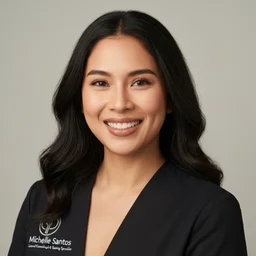
Licensed Cosmetologist & Beauty Licensing Exam Specialist
Paul Mitchell SchoolsMichelle Santos is a licensed cosmetologist with a Bachelor of Science in Esthetics and Salon Management from Paul Mitchell School. She has 16 years of salon industry experience and 8 years preparing students for state cosmetology board exams in theory, practical skills, and sanitation. She specializes in licensure preparation for cosmetologists, estheticians, and nail technicians.
Join the Discussion
Connect with other students preparing for this exam. Share tips, ask questions, and get advice from people who have been there.
View discussion (6 replies)