
Cosmetology Apprenticeship: Complete Guide to Earning Your License Through On-the-Job Training in 2026 October
🔎 Cosmetology apprenticeship guide: hours, pay, licensing, and how on-the-job training compares to traditional cosmetology school programs in 2026 October.

A cosmetology apprenticeship is a state-approved alternative to traditional beauty school that lets you earn your license while working inside a licensed salon under the supervision of an experienced mentor. Instead of paying tuition upfront and sitting in classrooms for hours each day, apprentices learn cutting, coloring, chemical services, and client communication on the salon floor. If you have searched for a cosmetology school near me but found tuition prices intimidating, an apprenticeship offers a paid, hands-on path to the same state board exam.
Apprenticeships are recognized in roughly twenty states, including California, Arizona, Florida, Virginia, Wisconsin, and Tennessee, although the specific rules and required hour counts vary widely. In most states, the apprenticeship pathway requires significantly more training hours than a traditional program, typically between 3,000 and 4,000 hours compared to the 1,000 to 1,600 hours required for cosmetology school graduates. The longer timeline reflects the slower pace of learning while simultaneously serving real clients.
The role of an apprentice cosmetologist is structured carefully by each state board. You are not just shadowing a stylist; you are completing documented training in safety, sanitation, hair design, chemistry, anatomy, business, and state law. Your supervising cosmetology cosmetologist must hold an instructor license or a senior cosmetology license depending on the state, and they are legally responsible for verifying your hours and competencies before you can sit for the licensing exam.
Financial appeal is one of the strongest reasons aspiring stylists choose apprenticeships in 2026. Traditional cosmetology programs can cost anywhere from $10,000 to $25,000, and accelerated private academies sometimes exceed $30,000. Apprentices, by contrast, typically earn minimum wage or a small training stipend while learning, eliminating tuition debt and shortening the time before they can start earning commission as a fully licensed stylist.
However, an apprenticeship is not the easy route many people imagine. Apprentices must self-study extensively, complete written progress reports, and prepare for the same state board theory and practical exam that beauty school graduates take. Without the structured lecture schedule of a classroom, discipline and a strong mentor are essential to staying on track and absorbing the science behind the services.
This guide breaks down everything you need to know about a cosmetology apprenticeship in 2026, including state-by-state hour requirements, expected pay, application steps, salon hosting responsibilities, and how to prepare for licensure. We will also compare apprenticeship outcomes to traditional schooling and answer the most common questions from prospective apprentices, salon owners, and career changers entering the beauty industry.
Whether you are eighteen and skipping the financial burden of college, a career changer in your thirties or forties, or a salon assistant ready to formalize your training, the apprenticeship model can be a smart, modern entry point into the licensed beauty profession. Read on to learn how to evaluate the path, find a host salon, and finish strong with a passing score on your written and practical exams.
Cosmetology Apprenticeship by the Numbers
Apprenticeship Hour Requirements by State
California requires 3,200 hours of supervised training over a minimum of two years. Apprentices must complete related instruction at a state-approved school and pass both written and practical exams administered by the California Board of Barbering and Cosmetology.
Under the Arizona Board of Cosmetology, apprentices complete 3,000 hours within a licensed salon and submit monthly progress reports. Theory instruction must be documented, and the supervising stylist needs at least five years of active licensure.
Virginia allows apprentices to train for 3,000 hours under a licensed sponsor while completing required theory modules. The program must be registered with the Department of Professional and Occupational Regulation before training begins.
Florida offers a shorter apprenticeship at 2,400 hours, but it remains one of the more flexible state programs. The Florida Board of Cosmetology requires a sponsor with at least three years of experience and approved training facilities.
Wisconsin maintains one of the longest apprenticeship programs at 4,000 hours. Apprentices receive a registered apprentice card from the Department of Workforce Development and complete paid related instruction during the program.
A cosmetology apprenticeship is built around a written training contract between you, your host salon, and the state regulatory board. Once approved, you are issued an apprentice permit that legally authorizes you to perform supervised services on paying clients. The supervising stylist signs off on every category of training you complete, from basic shampooing to advanced chemical services, and submits progress logs to the board on a scheduled basis.
Most state boards require a structured curriculum that mirrors what is taught in beauty school. This typically includes hair cutting and styling, hair coloring, chemical relaxers and perms, skin care basics, manicuring fundamentals, sanitation, infection control, anatomy, and state law. Knowing what is cosmetology at a regulatory level helps apprentices grasp why the curriculum is so detailed and why even small procedural lapses can derail an exam attempt.
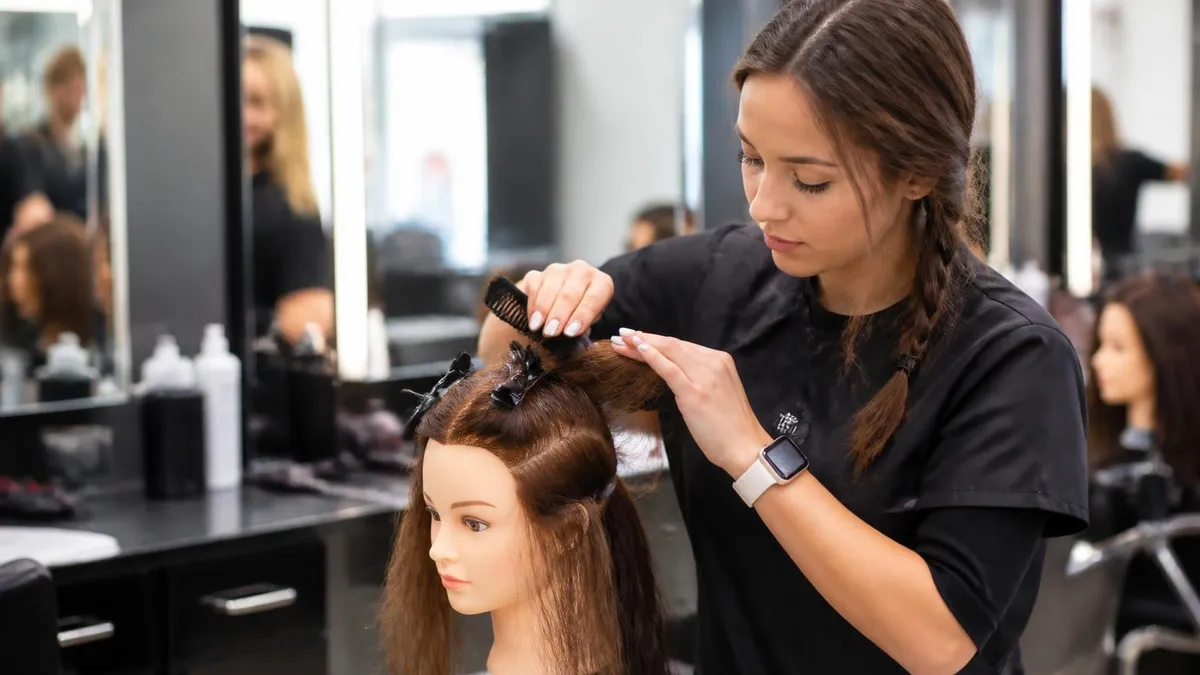
Daily life as an apprentice usually begins with prep work — sweeping stations, restocking color bars, sanitizing tools, and shampooing clients. As your hours accumulate and your mentor signs off on competencies, you advance to performing supervised haircuts, root touch-ups, blow-dry styling, and eventually full color and chemical services. Many apprentices reach a hybrid role within twelve months, where they handle their own clients while still under supervision.
Theory study is the part new apprentices underestimate most. Unlike school students who attend lectures, apprentices must self-study textbooks like Milady Standard Cosmetology, complete online modules, and pass periodic quizzes. Some states require attendance at approved off-site theory classes one day per week or several Saturdays per month. Without that classroom rhythm, time-blocking your reading into one to two hours per night is essential.
Mentor quality is the single biggest determinant of apprenticeship success. A great mentor explains the chemistry behind a permanent color, walks you through why a relaxer sometimes underprocesses, demonstrates correct sectioning for advanced cuts, and gives constructive feedback on consultation skills. A weak mentor delegates only menial tasks and signs off on competencies you have not truly mastered, which usually shows up as a failed practical exam later.
Apprenticeship programs almost always run longer than traditional school. While a full-time cosmetology student can graduate in nine to twelve months, an apprentice typically needs eighteen months to three years depending on weekly hours. State law usually caps apprentice hours per week — for example, California limits apprentices to 40 hours of training per week to prevent salon owners from exploiting the structure.
Finally, the apprenticeship ends when your supervisor certifies that all required hours and competencies have been completed. You then submit your hour log and competency checklist to the state board, pay an exam fee, and schedule both the written theory exam and the practical exam. Passing both earns you the same cosmetology license a school graduate receives, with no notation on the license indicating you trained via apprenticeship.
Cosmetology Practice Test Questions
Prepare for the Cosmetology Test exam with our free practice test modules. Each quiz covers key topics to help you pass on your first try.
Cosmetology Test Anatomy and Physiology
Cosmetology Exam Questions covering Test Anatomy and Physiology. Master Cosmetology Test concepts for certification prep.
Cosmetology Test Business and Career Manag...
Free Cosmetology Practice Test featuring Test Business and Career Management. Improve your Cosmetology Exam score with mock test prep.
Cosmetology Test Chemical Texture Services
Cosmetology Mock Exam on Test Chemical Texture Services. Cosmetology Study Guide questions to pass on your first try.
Cosmetology Test Haircolor and Lightening
Cosmetology Test Prep for Test Haircolor and Lightening. Practice Cosmetology Quiz questions and boost your score.
Cosmetology Test Haircutting and Styling
Cosmetology Questions and Answers on Test Haircutting and Styling. Free Cosmetology practice for exam readiness.
Cosmetology Test Infection Control and Safety
Cosmetology Mock Test covering Test Infection Control and Safety. Online Cosmetology Test practice with instant feedback.
Cosmetology Test Nail Care and Procedures
Free Cosmetology Quiz on Test Nail Care and Procedures. Cosmetology Exam prep questions with detailed explanations.
Cosmetology Test Nail Care and Services
Cosmetology Practice Questions for Test Nail Care and Services. Build confidence for your Cosmetology certification exam.
Cosmetology Test Principles of Skin Care
Cosmetology Test Online for Test Principles of Skin Care. Free practice with instant results and feedback.
Cosmetology Test Scientific Concepts
Cosmetology Study Material on Test Scientific Concepts. Prepare effectively with real exam-style questions.
Cosmetology Test Skincare and Services
Free Cosmetology Test covering Test Skincare and Services. Practice and track your Cosmetology exam readiness.
Cosmetology Test Wigs, Hair Extensions, an...
Cosmetology Exam Questions covering Test Wigs, Hair Extensions, and Hair Additions. Master Cosmetology Test concepts for certification prep.
Cosmetology Administrative Rules
Free Cosmetology Practice Test featuring Administrative Rules. Improve your Cosmetology Exam score with mock test prep.
Cosmetology On Hair & Scalp Properties
Cosmetology Mock Exam on On Hair & Scalp Properties. Cosmetology Study Guide questions to pass on your first try.
Cosmetology
Cosmetology Test Prep for Cosmetology. Practice Cosmetology Quiz questions and boost your score.
How Long Is Cosmetology School Compared to an Apprenticeship
If you are asking how long is cosmetology school, the answer depends on your state and whether you attend full or part-time. Most states require between 1,000 and 1,600 hours of classroom training, which translates to roughly nine to twelve months of full-time study. Programs run Monday through Friday with a mix of theory lectures and supervised clinic floor work.
Part-time students often take eighteen to twenty-four months to complete the same hour requirement. The structured environment provides predictable progress, but it comes at a tuition cost. Traditional cosmetology programs typically run $10,000 to $20,000 plus kit fees, books, and exam costs, and students are unable to earn meaningful income while enrolled.
Is a Cosmetology Apprenticeship Right for You
- +Earn hourly wages while training instead of paying tuition upfront
- +Build a real client book months before you are licensed
- +Learn at the pace of real salon traffic and current trends
- +Avoid most student loan debt and federal financial aid paperwork
- +Receive one-on-one mentorship from an experienced stylist
- +Develop business skills like booking, retail, and consultations early
- +Earn the same unrestricted license as cosmetology school graduates
- −Requires two to three times more total hours than traditional school
- −Theory study is self-directed and easy to neglect
- −Quality varies dramatically based on your mentor and salon
- −Fewer than half of US states formally permit cosmetology apprenticeships
- −You may earn only minimum wage for eighteen to thirty months
- −Federal student aid and Pell Grants generally do not apply
- −Some salons treat apprentices as cheap labor rather than learners
Cosmetology Apprenticeship Application Checklist
- ✓Verify your state allows formal cosmetology apprenticeships through the state board website
- ✓Confirm you are at least sixteen or seventeen years old depending on state minimum age
- ✓Obtain a high school diploma, GED, or equivalent transcript
- ✓Identify a licensed host salon with a qualified supervising cosmetologist
- ✓Request the official apprentice application packet from your state board
- ✓Complete the training contract signed by you, the mentor, and the salon owner
- ✓Pay the state apprentice permit fee, typically $50 to $150
- ✓Submit fingerprints or background check documentation where required
- ✓Schedule and complete any required pre-apprenticeship orientation classes
- ✓Purchase a textbook, professional kit, and liability insurance before your first day
The real ROI is the head start on building clients
Most apprentices focus on avoiding tuition, but the bigger financial win is graduating with a loyal client book. A second-year apprentice who has been performing supervised cuts and color for clients walks into licensure with thirty to sixty regulars already booked. That existing demand can mean $30,000 to $50,000 in first-year licensed income — far more than the tuition you avoided.
Money is the deciding factor for most aspiring cosmetologists, so let us walk through the real numbers in 2026. Traditional cosmetology school tuition has continued to rise, with the national average now around $17,500. When you add kit fees of $1,500 to $3,000, textbook costs of $200, and licensing exam fees of roughly $150, the total out-of-pocket cost for a school graduate frequently exceeds $20,000. Many students finance this with federal loans, private loans, or institutional payment plans.
Apprenticeship costs are far lower. Beyond your initial state permit fee, you will pay for your own textbook, shears, brushes, tools, and a basic kit, totaling roughly $400 to $900. Some host salons absorb these costs as a recruiting incentive. Liability insurance is highly recommended and runs about $99 to $200 per year. Total upfront cost for most apprentices is under $1,500, with no monthly student loan payments lurking after graduation.
Wages during apprenticeship vary by state and salon size. In California, apprentices must be paid at least the state minimum wage of $16 per hour. In Arizona and Tennessee, apprentices typically earn the federal minimum wage of $7.25 plus tips, although competitive salons offer $11 to $13 per hour to attract talent. Tips are a meaningful boost: an apprentice who shampoos and assists with twenty clients per week can take home an additional $100 to $250 weekly.
The state board exam fees are identical for apprentices and school graduates. Most states charge $75 to $150 for the written portion and an additional $50 to $125 for the practical. License application fees range from $75 to $200, and license renewal — covered later — adds a recurring cost every one or two years depending on the state. Plan to budget at least $400 for fees from final exam through your first license card.
Tax considerations matter too. Apprentices typically receive a W-2 since they are employees of the salon, meaning Social Security, Medicare, and income tax are withheld. If your host salon classifies you as a 1099 independent contractor, that is usually a red flag — most state apprenticeship laws explicitly require employee status. School students, by contrast, receive no income but may qualify for the Lifetime Learning Credit on their tax return.
Long-term earnings should drive your decision more than tuition savings. The Bureau of Labor Statistics reports a median annual wage of around $35,000 for licensed cosmetologists, with experienced top earners exceeding $75,000. Whether you trained at a school or through an apprenticeship has no bearing on long-term income; only your skill, client retention, and business sense matter once you hold the license.
One often-overlooked cost is the post-licensure ramp-up. School graduates frequently spend the first six to twelve months after licensure as a salon assistant earning $12 to $18 per hour while building clientele. Apprentices typically skip this phase entirely because they have already been on the floor for two years. That single difference can shift the financial advantage strongly in favor of apprenticeship over a five-year horizon, even before tuition savings are counted.
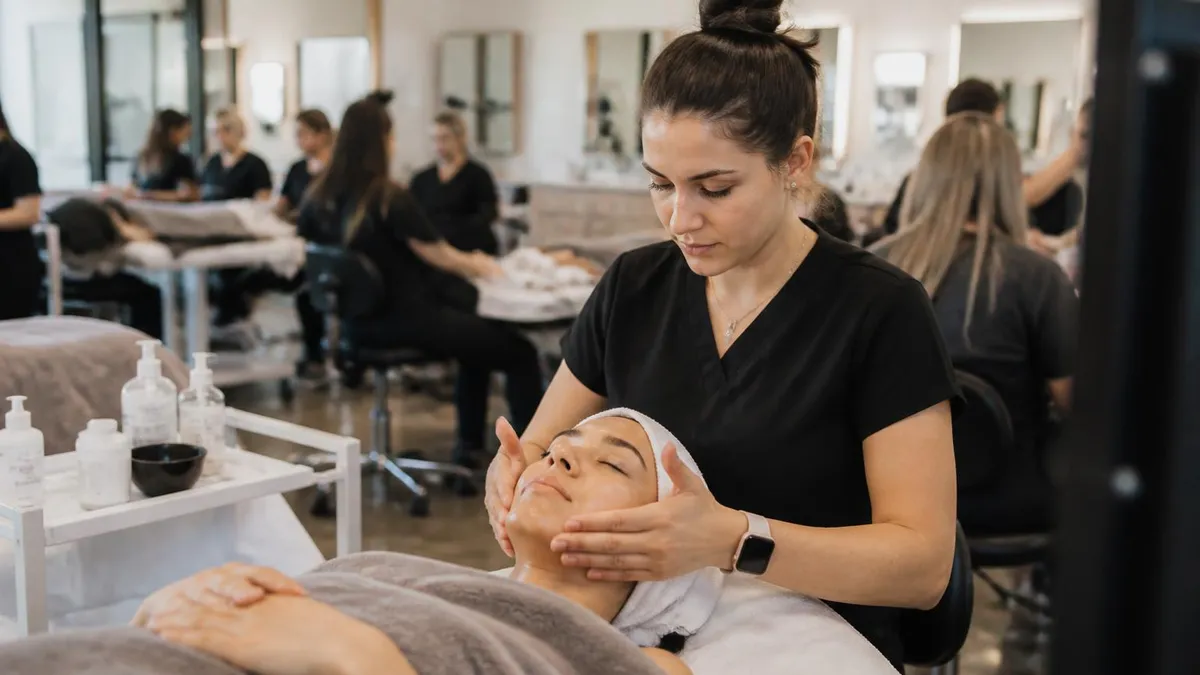
Before signing any apprenticeship contract, run your prospective mentor's license through your state board's online verification system. The supervising cosmetologist must hold an active, unrestricted license and meet state-specific experience minimums. Training hours logged under an unlicensed or suspended mentor will be voided by the board, and you may have to restart your apprenticeship from zero.
Preparing for the licensing exam as an apprentice requires more self-discipline than school graduates need because nobody is forcing you to sit through theory lectures. Start your written exam prep at least six months before your projected hour completion date. Schedule daily reading time, ideally one hour after your salon shift, and use practice question banks weekly to identify weak topics. Most failed apprenticeship candidates underprepared for chemistry, electricity, and anatomy questions on the written exam.
Practical exam prep should begin even earlier. Around 1,500 hours into your training, ask your mentor to start running mock practical exams using your state's official rubric. The practical exam typically tests sanitation setup, a haircut, a chemical service such as a relaxer or perm wrap, a color application, and client safety procedures. Examiners grade strictly on procedure rather than artistic outcome, so memorizing the official sequence matters more than producing a salon-quality finish.
The ohio state board of cosmetology and other major state boards publish detailed candidate information bulletins that list every procedural step the examiner watches for. Print these bulletins, highlight the timing requirements, and rehearse the sequences until they feel automatic. Many apprentices fail not because they cannot perform the service but because they skip a sanitation step, forget to drape the client correctly, or run out of time.
Building test stamina is another underrated apprenticeship task. The written exam typically contains 100 to 125 multiple-choice questions and must be completed in 90 to 120 minutes. If you have not taken a structured test in years, that pace is exhausting. Do at least three full-length timed practice exams in the final month before your test date to build endurance and reduce careless errors caused by mental fatigue near question 90.
Document everything throughout your apprenticeship. Keep a physical or digital binder with every signed hour log, competency checklist, and progress report. Some state boards reject apprentice applications due to missing or improperly signed forms even when the hours were completed. A clean, organized portfolio also impresses examiners during the application review and signals professionalism to future employers.
Plan for license renewal from day one of your career. Most states require renewal every one or two years with continuing education hours ranging from four to sixteen hours per renewal cycle. Renewal fees typically run $50 to $125. Set calendar reminders sixty days before expiration so you never let your license lapse, because reinstatement after expiration usually involves penalty fees and sometimes retesting depending on how long the license remained inactive.
Finally, treat the final months of your apprenticeship as a transition rather than an endpoint. Negotiate your post-licensure compensation package with your host salon in advance. Will they convert you to commission, booth rental, or a hybrid model? What percentage of your existing client book travels with you if you switch salons? Having these conversations before you take your exam protects your earnings and removes the most common source of post-apprenticeship conflict.
Practical tips from experienced apprentices and salon owners can dramatically smooth the path from permit to license. The first rule is to be a sponge: ask questions constantly, but ask them at the right moments. Save complex chemistry questions for slow afternoons or post-shift coffee with your mentor, never while a client is mid-color. Apprentices who respect salon rhythms are trained more thoroughly because mentors enjoy teaching them.
Photograph your work from the very first day, with client consent. A before-and-after portfolio is invaluable when you apply for licensed positions or build a social media following. Many top stylists today landed their first commission seat because their Instagram showed a track record of progress from apprentice cuts to advanced color corrections. Tag your salon, your mentor, and the products used to build credibility within the local beauty community.
Network outside your home salon. Attend hair shows, manufacturer education classes, and local guild meetings whenever possible. Vendors like Redken, Aveda, Pravana, and Wella offer apprentice-friendly education days at discounted prices. Building relationships with educators and other apprentices gives you a wider perspective on techniques and protects you from picking up bad habits limited to one salon's style preferences.
Master the consultation early. Many apprentices focus on technical skills and ignore the fact that consultations decide whether a client returns. Learn to read body language, ask open-ended questions about lifestyle and maintenance, and recommend services within the client's budget. A licensed stylist with strong consultation skills typically earns 30 to 50 percent more than one with equal technical skill but weaker communication.
Use slow salon periods strategically. When walk-in traffic is light, do not scroll your phone — practice on mannequins, review your textbook, watch educational videos, or shadow a senior stylist doing advanced work. Salon owners notice apprentices who use downtime productively, and that observation usually translates into earlier promotions, higher commission splits after licensure, or first pick of new clients walking through the door.
Protect your physical health from day one. Cosmetology is hard on hands, wrists, shoulders, and feet. Invest in cushioned non-slip shoes, ergonomic shears, and quality wrist support. Stretch daily and learn to alternate between standing and sitting during services where appropriate. Career-ending repetitive strain injuries among stylists usually started with poor body mechanics during apprenticeship, when habits were formed without ergonomic coaching.
Finally, plan your exit strategy from the apprenticeship itself. The day you pass your state board, you become a licensed professional with real market value. Decide in advance whether you want to stay with your host salon, move to a higher-end studio, or pursue independent booth rental. The salon that trained you may expect you to stay, and an honest conversation about expectations three to six months before licensure prevents awkward post-exam negotiations and burned bridges in a small local industry.
Cosmetology Questions and Answers

Board of Barbering and Cosmetology: What State Boards Do
Cosmetology State Board Exam: Complete 2026 Study Guide and Certification Prep

Cosmetology Tuition: Complete Cost Breakdown and Funding Guide for 2026

Cosmetology Programs: Hours, Curriculum, Cost and Accreditation
Cosmetology License Verification: How to Check Any State Lookup in 2026
About the Author
Licensed Cosmetologist & Beauty Licensing Exam Specialist
Paul Mitchell SchoolsMichelle Santos is a licensed cosmetologist with a Bachelor of Science in Esthetics and Salon Management from Paul Mitchell School. She has 16 years of salon industry experience and 8 years preparing students for state cosmetology board exams in theory, practical skills, and sanitation. She specializes in licensure preparation for cosmetologists, estheticians, and nail technicians.
Join the Discussion
Connect with other students preparing for this exam. Share tips, ask questions, and get advice from people who have been there.
View discussion (6 replies)