

CES Practice Test
Updated for October 2026In today’s fitness landscape, professionals are expected to do more than count reps and sets—they are tasked with improving lives by correcting movement dysfunctions, preventing injuries, and enhancing performance. This is where the Corrective Exercise Specialist Certification (CES) from the National Academy of Sports Medicine (NASM) comes into play. It is one of the most respected credentials for fitness professionals, physical therapists, and personal trainers who wish to improve their expertise and address the root causes of muscular imbalances. Whether you're seeking to boost your career, deepen your understanding of biomechanics, or expand your client base, the CES certification provides the foundation and tools necessary to make a significant impact.
If you are preparing for the CES exam, you may also benefit from reviewing material covered in our ACE practice test, which reinforces the foundational personal training knowledge that supports advanced corrective exercise concepts.
Candidates looking to expand their credentials beyond corrective exercise should consider exploring our ACSM-EP practice test, which covers clinical exercise physiology topics that pair well with CES specialization.
CES Practice Test Questions
Prepare for the CES - Corrective Exercise Specialist Certification exam with our free practice test modules. Each quiz covers key topics to help you pass on your first try.
CES Anatomy and Biomechanics
CES Exam Questions covering CES Anatomy and Biomechanics. Master CES Test concepts for certification prep.
CES Pain Science and Injury Prevention
Free CES Practice Test featuring CES Pain Science and Injury Prevention. Improve your CES Exam score with mock test prep.
CES Client Assessment
CES Mock Exam on Client Assessment. CES Study Guide questions to pass on your first try.
CES Exercise Science
CES Test Prep for Exercise Science. Practice CES Quiz questions and boost your score.
CES Neuromuscular Control and Proprioception
CES Questions and Answers on Neuromuscular Control and Proprioception. Free CES practice for exam readiness.
CES Nutrition Fundamentals
CES Mock Test covering Nutrition Fundamentals. Online CES Test practice with instant feedback.
CES Program Design
Free CES Quiz on Program Design. CES Exam prep questions with detailed explanations.
CES Activation & Integration Strategies
CES Practice Questions for Activation & Integration Strategies. Build confidence for your CES certification exam.
CES Assessment and Program Design
CES Test Online for Assessment and Program Design. Free practice with instant results and feedback.
CES Client Communication and Behavioral Co...
CES Study Material on Client Communication and Behavioral Coaching. Prepare effectively with real exam-style questions.
CES Corrective Exercise Techniques
Free CES Test covering Corrective Exercise Techniques. Practice and track your CES exam readiness.
CES Corrective Program Design & Implementa...
CES Exam Questions covering Corrective Program Design & Implementation. Master CES Test concepts for certification prep.
CES Human Movement Science
Free CES Practice Test featuring Human Movement Science. Improve your CES Exam score with mock test prep.
Key Takeaways
Free Corrective Exercise Specialist Practice Test Online
CES certification is designed to help fitness professionals assess and correct muscular imbalances and movement dysfunctions.
The NASM CES exam emphasizes real-world applications and is backed by science-based protocols.
Earning a CES certification opens up opportunities in sports performance, rehabilitation, and injury prevention.
The certification is ideal for personal trainers, physical therapists, chiropractors, and health coaches.
NASM offers flexible study options including self-study, guided study, and academic support.
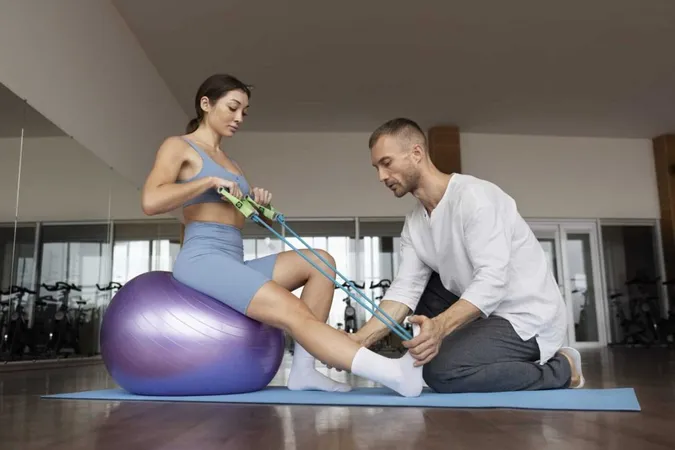
Why Pursue a Corrective Exercise Specialist Certification?
Addressing Movement Dysfunction
Injury prevention has become a central pillar of fitness programming. The CES certification focuses on identifying and correcting compensatory movement patterns that can lead to long-term dysfunction and injury. This proactive approach helps clients move better, feel better, and achieve optimal performance safely.
Career Advancement
Holding a CES credential adds value to your resume and distinguishes you in a crowded fitness market. Certified specialists can work in gyms, rehabilitation centers, sports facilities, and even open their own corrective-focused practices.
Science-Backed Protocols
CES curriculum is grounded in evidence-based research. It incorporates findings from fields such as kinesiology, functional anatomy, and biomechanics to provide reliable methods for assessing posture and movement.
- ✓Confirm your exam appointment and location
- ✓Bring required identification documents
- ✓Arrive 30 minutes early to check in
- ✓Read each question carefully before answering
- ✓Flag difficult questions and return to them later
- ✓Manage your time — don't spend too long on one question
- ✓Review flagged questions before submitting
Inside the NASM CES Exam
Certification Requirements
To sit for the CES exam, candidates must have a valid CPR/AED certification and a background in fitness or healthcare. This includes credentials like NASM-CPT, or a degree in an exercise-related field.
Exam Format
100 multiple-choice questions
90-minute duration
Passing score: 70% or higher
Offered online through remote proctoring
The exam covers core areas such as assessment techniques, corrective strategies, program design, and anatomical insights related to joint and muscular function.
Study Materials
NASM provides digital textbooks, video tutorials, quizzes, and practice exams. Options like the Guided Study program include support from instructors, discussion boards, and live webinars.
Popular Career Paths with a CES Certification
Fitness Professionals
Trainers with CES credentials are equipped to design smarter programs by reducing injury risk and customizing sessions based on movement patterns.
Rehabilitation Specialists
Physical therapists and rehab professionals use corrective techniques to aid recovery, restore function, and prevent recurrence of injuries.
Sports Coaches & Strength Trainers
Athletic populations benefit immensely from corrective strategies that improve performance by addressing biomechanical limitations.
Occupational Therapists & Chiropractors
These professionals often integrate corrective exercise techniques into treatment plans to reinforce structural alignment and muscular balance.

Top Skills You'll Learn Through CES
Movement Assessments: Identify overactive and underactive muscles using visual and functional movement screening.
Inhibition Techniques: Use self-myofascial release to deactivate overactive muscles.
Lengthening Methods: Apply static and neuromuscular stretching techniques to restore range of motion.
Activation & Integration: Strengthen weak muscles and reintegrate them into full-body movements to promote stability and efficiency.
These tools help build personalized corrective programs that align with the client’s physical needs and long-term goals.
Benefits of Becoming a Corrective Exercise Specialist
Client Retention: Clients are more likely to stick with a trainer who helps them move better and avoid pain.
Higher Income Potential: Specialists often charge premium rates due to the advanced nature of their service.
Professional Recognition: CES-certified professionals are viewed as problem-solvers in the fitness world.
Expanded Scope of Practice: The CES certificate allows professionals to work alongside physicians and physical therapists more effectively.
Conclusion
As more individuals seek personalized, injury-free approaches to fitness, the role of the Corrective Exercise Specialist has never been more critical. The NASM CES certification not only strengthens your credentials but also equips you with the knowledge to make a lasting difference in your clients' lives.
From correcting posture and imbalances to preventing injuries and improving performance, the skills acquired through the CES program are applicable across a wide range of fitness and healthcare disciplines.
Whether you're a personal trainer aiming for career growth or a physical therapist looking to enhance your rehabilitative approach, this certification offers the tools and credibility to succeed in a highly competitive industry.
CES Questions and Answers
- +Validates your knowledge and skills objectively
- +Increases job market competitiveness
- +Provides structured learning goals
- +Networking opportunities with other certified professionals
- −Study materials can be expensive
- −Exam anxiety can affect performance
- −Requires dedicated preparation time
- −Retake fees apply if you don't pass
Pros and Cons at a Glance
| Pros | Cons |
|---|---|
| Validates your knowledge and skills objectively | Study materials can be expensive |
| Increases job market competitiveness | Exam anxiety can affect performance |
| Provides structured learning goals | Requires dedicated preparation time |
| Networking opportunities with other certified professionals | Retake fees apply if you don't pass |
Sample CES - Corrective Exercise Specialist Certification Practice Questions
Try these questions from our free CES - Corrective Exercise Specialist Certification practice tests. The correct answer and an explanation follow each question.
What is the goal of inhibition techniques in corrective exercise?
- A. To increase heart rate
- B. To activate weak muscles
- C. To reduce muscle overactivity
- D. To stretch tendons
Answer: C. To reduce muscle overactivity
Inhibition techniques, such as self-myofascial release (SMR), aim to decrease the neural activity of overactive or tight muscles. By applying pressure to these tissues, the Golgi tendon organ is stimulated, leading to a relaxation response in the muscle. This reduction in overactivity is a crucial first step in the corrective exercise continuum, preparing the muscle for subsequent lengthening.
What is the role of the CES when a client reports acute pain during a corrective exercise session?
- A. Modify exercise intensity and continue the session
- B. Refer the client to an appropriate healthcare professional
- C. Administer manual therapy to reduce pain
- D. Prescribe anti-inflammatory medication if available
Answer: B. Refer the client to an appropriate healthcare professional
The CES scope of practice does not include diagnosing or treating pain; clients reporting acute pain must be referred to an appropriate licensed healthcare provider.
What is the primary focus of the 'Integrate' phase in corrective exercise?
- A. Perform static stretches
- B. Improve functional movement patterns
- C. Increase heart rate
- D. Assess body composition
Answer: B. Improve functional movement patterns
The 'Integrate' phase is the final step in the corrective exercise continuum, following the 'Inhibit,' 'Lengthen,' and 'Activate' phases. Its primary focus is to re-educate the body to perform functional, multi-joint movements with proper mechanics. This involves combining the newly inhibited, lengthened, and activated muscles into coordinated, full-body movements that mimic daily activities or sport-specific actions.
What is the purpose of activation techniques in corrective exercise?
- A. Relax overactive tissues
- B. Increase heart rate
- C. Stimulate underactive muscles
- D. Reduce body fat
Answer: C. Stimulate underactive muscles
Activation techniques are designed to increase the neural drive and improve the function of muscles that have been identified as underactive or weak. After inhibiting and lengthening overactive antagonists, activation exercises specifically target these weak muscles to restore proper muscle balance and improve their ability to contract effectively. This step is vital for re-establishing optimal movement patterns.
Take the full CES - Corrective Exercise Specialist Certification practice test
CES Questions and Answers
About the Author

Registered Dietitian & Fitness Certification Coach
University of FloridaAmanda Foster holds a Master of Science in Kinesiology from the University of Florida and is a Registered Dietitian and NASM Certified Personal Trainer. She has helped over 1,000 fitness professionals prepare for their ACE, NASM, ACSM, and specialty nutrition certifications, specializing in evidence-based exercise science and macro nutrition coaching methodology.
Join the Discussion
Connect with other students preparing for this exam. Share tips, ask questions, and get advice from people who have been there.
View discussion (8 replies)