
Are Correctional Officers Law Enforcement? Peace Officer Status Explained
Do correctional officers carry guns? Are they cops? COs are peace officers in most states with LEOSA carry rights — 📚 but not police. Full breakdown inside.

Short answer first — yes, correctional officers are law enforcement in most U.S. states, but they're not police officers. The distinction matters more than most people realize. COs hold peace officer status under state statute, carry use-of-force authority inside the facility, and in many jurisdictions can make arrests for offenses they witness while on duty. But they don't patrol streets. They don't carry firearms on the housing units. And their arrest powers usually stop at the prison gate or extend only to facility-related crimes.
The confusion's understandable. COs wear uniforms, carry badges, swear an oath, and work under the same chain of command structure you'd find in a sheriff's department. Federal Bureau of Prisons officers are explicitly classified as federal law enforcement officers under 18 U.S.C. § 3050. State-level corrections officers fall under their state's POST (Peace Officer Standards and Training) framework — sometimes the same one that certifies police officers, sometimes a separate corrections-specific track. So when somebody asks are correctional officers law enforcement, the honest answer is: yes, with caveats that depend heavily on what state you're working in.
This guide walks through the legal framework, the use-of-force authority, when (and where) COs actually carry guns, federal versus state differences, and the LEOSA retirement carry rights that some — but not all — corrections officers qualify for. If you're researching the job, applying for an academy slot, or just trying to settle an argument with someone who insists corrections work "isn't real law enforcement," you'll have a much sharper picture by the time you finish reading.
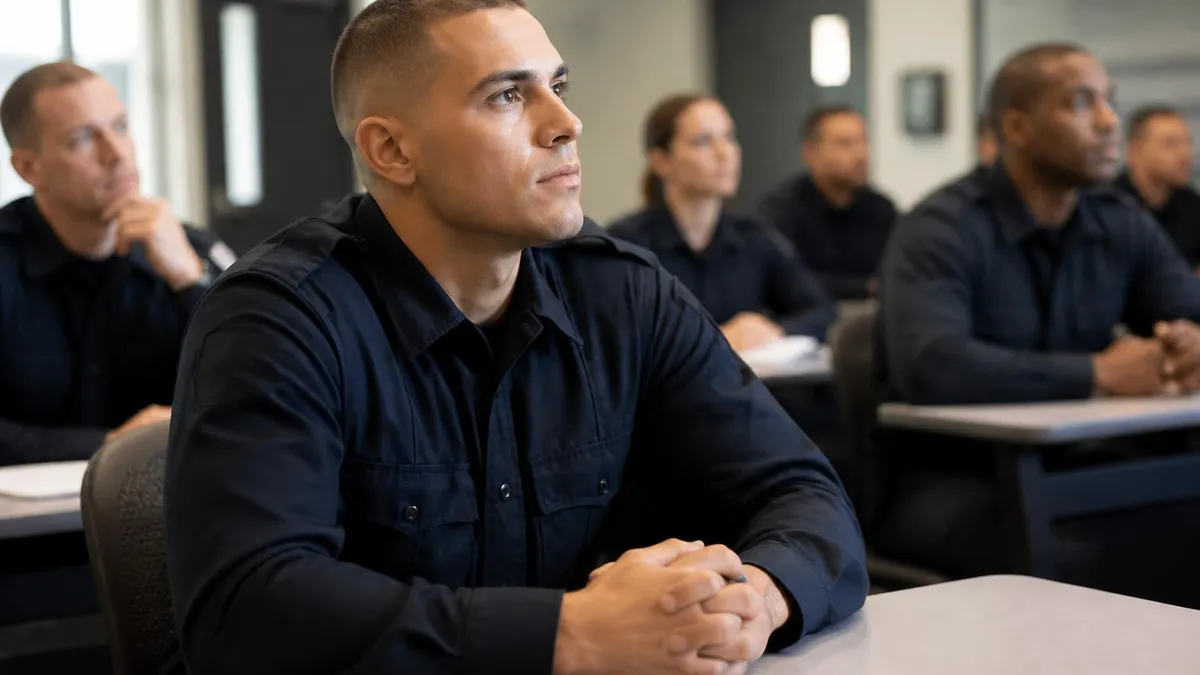
Yes — in most U.S. states. Correctional officers hold statutory peace-officer status, carry use-of-force authority within the facility, and most qualify for LEOSA retirement carry. They're not police officers — they don't patrol streets, don't carry firearms on housing units, and their arrest powers are usually limited to facility-related crimes. Federal BOP officers are explicitly classified as federal law enforcement under 18 U.S.C. § 3050.
Legally, the line between police and corrections is drawn by statute — and it varies wildly by state. California treats correctional officers as full peace officers under Penal Code § 830.5. Texas TDCJ officers operate under a slightly narrower peace-officer designation. Florida requires DOC officers to complete Criminal Justice Standards and Training Commission certification, the same body that handles police. New York City Corrections Department officers are sworn peace officers under state law. The pattern? Most states recognize COs as peace officers but limit the scope of their authority to the institutional setting.
Police officers carry general criminal jurisdiction. They can enforce traffic codes, respond to 911 calls, make arrests anywhere in their jurisdiction, and conduct investigations across the full spectrum of state law. Corrections officers, by contrast, have institutional jurisdiction — meaning their authority kicks in inside the facility, on transport details, during off-site assignments, and sometimes when they observe felonies in progress while off duty. That last piece varies a lot. In some states, off-duty COs can intervene like any peace officer. In others, they're treated more like private citizens once they clock out.
One quick clarification on terminology. "Detention officer" usually means someone working in a county jail (short-term holding, pre-trial detention). "Correctional officer" or "corrections officer" typically means state or federal prison work. "Probation officer" and "parole officer" are separate roles — they supervise people in the community, not inside facilities. All four fall under the broader corrections umbrella, but they're not interchangeable jobs. Salary scales, training requirements, and statutory authority differ across each one.
Correctional Officer Authority by the Numbers
So do correctional officers carry guns? Usually no — at least not inside the housing units. Bringing a firearm into a population unit creates an obvious safety problem. If an officer gets overpowered, that weapon becomes the inmates' weapon. Almost every state and federal prison policy prohibits firearms on the floor of housing units. What officers carry inside instead: pepper spray (OC), expandable batons, stab vests, body cameras in newer facilities, and a radio. Some states add Tasers to the mix. The Federal BOP uses chemical agents and impact munitions for cell extractions and emergency response.
Outside the housing units, the picture changes fast. Perimeter towers — staffed in most maximum and many medium-security prisons — are armed posts. Tower officers carry rifles (typically Mini-14s or similar) and shotguns. Their job is to prevent escapes and respond to yard disturbances from a fixed elevated position. Transport details (moving inmates between facilities, to court, to medical appointments) are also armed. So are perimeter patrol vehicles. Federal BOP additionally arms officers assigned to Special Operations Response Teams (SORT) and disturbance response units.
Federal officers carry differently than state ones. BOP staff qualify with sidearms (Glock 22 in .40 S&W for years, transitioning to 9mm in newer issuance) plus shotguns and rifles for armed posts. They train at the BOP's Glynco facility alongside other federal LEOs. State systems vary — some run academy firearms training comparable to police certification, others run shorter qualification courses only for officers assigned to armed posts. If you're aiming for armed assignments, ask during the application process which posts in your facility rotate armed roles and what additional certifications you'll need.
Unarmed inside housing units. Pepper spray, batons, stab vests, and radios — never firearms on the floor. A weapon on the unit becomes the inmates' weapon if an officer is overpowered. Armed at the perimeter. Tower officers carry rifles and shotguns. Perimeter patrols and inmate transport details are armed. Armed in special teams. Federal SORT and state tactical response teams carry sidearms and long guns for cell extractions and escape pursuits. Most COs qualify with firearms during the academy whether they'll work armed posts or not.
Use-of-force authority is where the law-enforcement question gets concrete. Inside the facility, a CO can use reasonable force to prevent escape, stop assaults, defend themselves or others, and gain compliance during lawful orders. The standard isn't "reasonable cop on the street" — it's "reasonable corrections officer in a controlled custodial setting." Courts have repeatedly upheld that prison context calls for different force calculus than street-level policing.
The Supreme Court's Hudson v. McMillian (1992) and Whitley v. Albers (1986) cases set the framework: force is unconstitutional when applied maliciously or sadistically to cause harm, not when applied in good faith to maintain or restore discipline.
What does that look like in practice? An officer can lawfully use a closed-fist strike to defend against an inmate assault. An officer can deploy pepper spray on a non-compliant inmate refusing to leave a contraband-laden cell. An officer can authorize a forced cell extraction when an inmate barricades themselves. An officer cannot punch an inmate already in restraints.
An officer cannot deploy chemical agents "as punishment." An officer cannot use lethal force except in defense of life or to stop an escape from a secure facility — and even there, policies have tightened significantly over the past 20 years. Lethal force on a fleeing unarmed inmate post-perimeter is far more constrained today than it was in the 1990s.
Arrest powers? Usually limited. A CO who witnesses an inmate stab another inmate has arrest authority for that assault — they can detain, secure, and turn the case over to investigators. A CO who witnesses a visitor smuggling drugs at the visiting room has arrest authority for that contraband felony. But a CO driving home who sees a DUI weave? In most states, they're a witness, not an arresting officer. That's where the gap between corrections and patrol policing becomes obvious — and it's a real one, not a snub.

Police Officer vs Correctional Officer — Side by Side
Patrol-based law enforcement with general criminal jurisdiction across the entire city, county, or state they're sworn into. Carry firearms on duty at all times.
- ▸General arrest authority anywhere in jurisdiction
- ▸Traffic enforcement, 911 response, criminal investigations
- ▸22-28 week academy training average
- ▸Always armed on duty
Institution-based peace officer with authority focused on the facility, transport, and facility-related crimes. Carry varies by post — usually unarmed inside, armed at perimeter.
- ▸Arrest authority for facility-related offenses
- ▸Use-of-force authority within institution
- ▸6-16 week academy training average
- ▸Armed only on tower, transport, perimeter posts
Federal law enforcement under 18 U.S.C. § 3050. Broader arrest authority than state COs — can arrest for any federal offense committed in their presence, anywhere in the U.S.
- ▸Federal LEO retirement (20 yrs at 50)
- ▸Trained at FLETC Glynco, GA
- ▸LEOSA eligible at retirement
- ▸Sidearms, shotguns, rifles per assignment
Works in county jails (short-term, pre-trial). Often under sheriff's department command. Authority and training requirements vary substantially by county and state.
- ▸Pre-trial and short-sentence custody
- ▸Often deputy-sheriff status
- ▸Shorter academy in many counties
- ▸Frequent crossover with patrol assignments
Training requirements illustrate the same point. State correctional officer training academies typically run six to sixteen weeks depending on the state. Federal BOP's initial training is roughly six weeks at the Federal Law Enforcement Training Center in Glynco, Georgia, followed by 200 hours of facility-specific training. Compare that to a typical state police academy — usually 22 to 28 weeks.
Corrections academies cover legal authority, defensive tactics, firearms (for armed-post officers), report writing, inmate psychology, contraband recognition, and emergency response. They don't cover traffic enforcement, accident investigation, or general criminal procedure to the same depth — because those aren't the job.
POST certification differs by state. California requires corrections officers to complete a 13-week BSCC-certified academy. New York's CO training is run through DOCCS and lasts about 8 weeks. Texas TDCJ's pre-service training is about 199 hours over five weeks. Most states require continuing education each year — typically 40 hours of refresher training on use of force, firearms qualification (if applicable), and policy updates. Want a clear starting point for the application path? The how to become a correctional officer guide walks through age requirements, background checks, physical fitness standards, and the typical hiring timeline from application to academy.
And the qualifications? Most states require a high school diploma or GED, U.S. citizenship or legal residency, minimum age of 18 or 21 depending on jurisdiction, a clean criminal record (felony convictions usually disqualify), passing a physical fitness assessment, a medical exam, a psychological evaluation, and a background investigation. Federal BOP adds requirements like maximum entry age 37 and ability to obtain a Public Trust security clearance. Full breakdown in the correctional officer requirements guide.
Federal vs State CO — Career Breakdown
Classification: Federal law enforcement officer (18 U.S.C. § 3050). Training: ~6 weeks at FLETC Glynco plus 200 hours facility-specific. Retirement: 20 years at age 50, or any age at 25 years. LEOSA: Fully eligible. Pay: Federal LEO scale (GS-5 to GS-8 typical entry, with locality pay and law enforcement availability pay). Carry: Sidearm qualification at academy; armed posts include towers, transport, perimeter, special teams. Max entry age: 37 (with limited exceptions for veterans and prior fed LEOs).
Federal versus state corrections officers — the differences run deeper than most applicants realize. Federal BOP officers are explicitly classified as federal law enforcement officers under 18 U.S.C. § 3050.
They get FLEO retirement benefits (eligible for retirement after 20 years of service if at least 50 years old, or any age at 25 years), they're covered under the federal LEO pay scale (which often pays more than equivalent state corrections), and they qualify for LEOSA carry rights at retirement. Their statutory authority is broader — federal officers can make arrests for any offense against the United States committed in their presence, on or off duty, anywhere in the U.S.
State COs land in a wider range. California, New York, Florida, Illinois, Pennsylvania, Texas, and most larger-state systems treat correctional officers as peace officers with retirement systems comparable to police (often 20-year or 25-year retirement, sometimes earlier with hazardous-duty credits). Smaller states sometimes treat COs as civilian state employees with standard public-sector pensions.
The pay gap shows up here too. State COs in California, New York, and New Jersey often earn $70,000 to $100,000+ with overtime. Texas TDCJ starting salary is lower — the trade-off being lower cost of living and a faster path to senior posts. The correctional officer pay page breaks down state-by-state numbers.
One pattern that's true across federal and state: corrections work compensates with overtime. Mandatory overtime is common when facilities run short-staffed. Officers regularly clear $20,000 to $40,000 a year in overtime beyond their base salary. The downside? Burnout. The schedule is brutal — 12-hour rotating shifts at many facilities, mandatory holdovers, and being called in on your day off. It's part of why staffing crises and recent correctional officer strikes have made headlines from New York to Massachusetts.
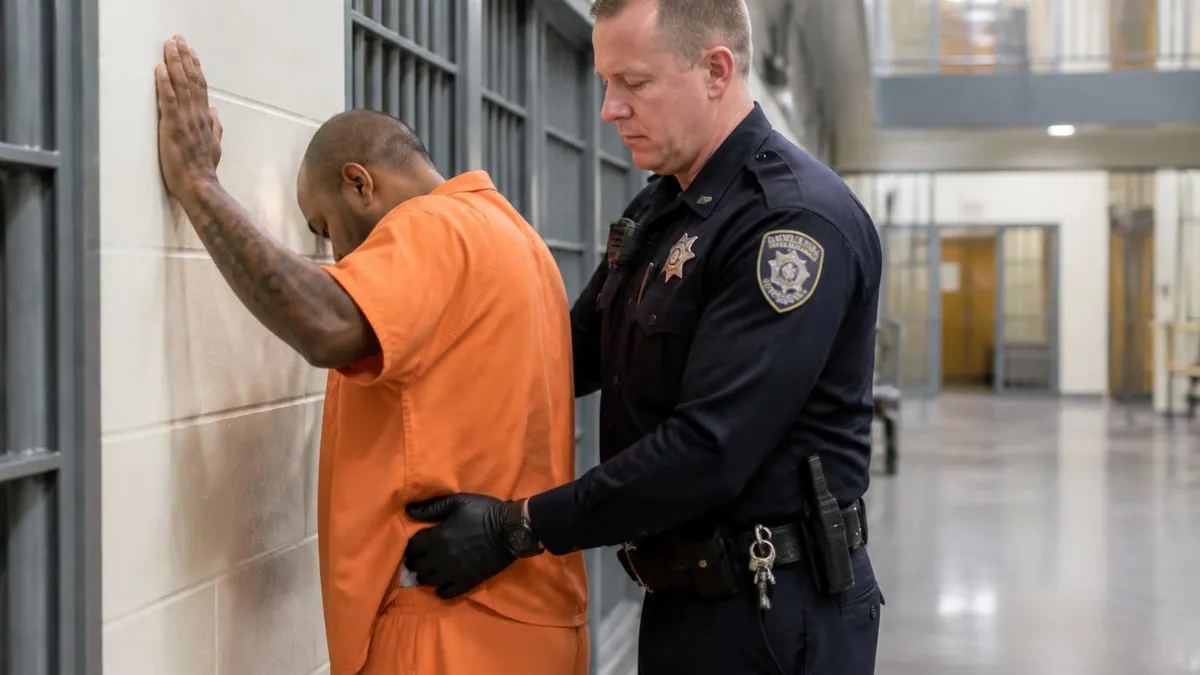
Retirement and LEOSA — the topic that comes up in every CO veterans' Facebook group. The Law Enforcement Officers Safety Act (LEOSA), passed in 2004 and amended in 2010 and 2013, allows qualified active and retired law enforcement officers to carry a concealed firearm in any U.S. state, regardless of state-level concealed carry laws.
The key word is "qualified." To qualify under LEOSA as a retired officer, you must: have served as a public agency law enforcement officer for at least 10 years (or separated due to service-connected disability), have statutory powers of arrest under federal, state, or local law, and have separated in good standing.
Here's where it gets messy for corrections. LEOSA's definition of "law enforcement officer" includes individuals who had statutory arrest authority and engaged in or supervised the prevention, detection, investigation, prosecution, or incarceration of suspects. Most state COs meet that test — they had statutory powers within the facility, even if those powers were limited. Federal BOP officers definitely qualify. But some states pushed back early on, arguing their COs weren't "law enforcement" for LEOSA purposes. Federal courts have generally sided with the corrections officers in these challenges. Today, well over 40 states explicitly recognize corrections officers as LEOSA-qualified at retirement.
Practical effect: a retired California, New York, or Florida CO can carry concealed nationwide as long as they re-qualify annually on a state-approved firearms course and carry their retirement credentials plus their qualification certificate. That's a real benefit, and one of the strongest reinforcements of the "yes, COs are law enforcement" answer. Federal courts have ruled — repeatedly — that prison and jail officers fall within LEOSA's scope. If retirement carry matters to you, ask your hiring agency to confirm LEOSA eligibility in writing before you accept the position.
Steps to Confirm Your CO Law Enforcement Status
- ✓Check your state penal code for peace officer classification language
- ✓Confirm POST or state-equivalent certification on your hiring offer
- ✓Ask hiring agency to confirm LEOSA eligibility in writing
- ✓Verify retirement system: hazardous-duty or standard public pension
- ✓Check whether your facility rotates armed (tower/transport) posts
- ✓Confirm academy length and curriculum before accepting offer
- ✓Review union contract for use-of-force training requirements
- ✓Save retirement firearms qualification cert if LEOSA matters to you
What about the public-perception side? This is where corrections officers get short-changed. Films and TV almost always frame police as the "real" law enforcement and corrections as background scenery. The Bureau of Labor Statistics groups corrections officers under "protective service occupations" alongside police, sheriff's deputies, and fire investigators — meaning the federal government's official classification system treats them as part of the same broad protective category.
National Law Enforcement Officers Memorial in D.C. honors fallen correctional officers alongside police. The Officer Down Memorial Page lists corrections fatalities under the same registry as police line-of-duty deaths. Inside the profession, that recognition is unambiguous.
The job's also more dangerous than most outsiders assume. BLS reports correctional officers experience workplace injuries and illnesses at one of the highest rates of any occupation — higher than police in some years. Inmate assaults, exposure to communicable disease, restraint injuries, and chronic stress all contribute. The job carries a real human cost. PTSD rates among corrections staff exceed those of police and approach those of military combat veterans in some studies. None of that gets press, but it's why CO unions consistently push for hazardous-duty retirement and parity with police benefits.
So when someone tells you corrections "isn't real law enforcement" — they're partly right and mostly wrong. Right that COs don't do patrol-style policing. Wrong that the job sits outside the law enforcement community. The statutes, the training, the retirement systems, LEOSA eligibility, and the day-to-day exposure to violence all point the same direction. It's law enforcement work — done in the most controlled, most volatile environment in the entire profession.
Corrections as a Law Enforcement Career — Honest Take
- +Peace officer status in most states with statutory authority
- +Strong retirement systems (20-25 years in major states)
- +LEOSA carry rights at retirement for most officers
- +Federal BOP pay competitive with federal LEO scale
- +Overtime adds $20K-$40K annually for many officers
- +Faster academy timeline than police (6-16 weeks vs 22-28)
- +Predictable post assignments (no random street calls)
- −Higher injury rates than most law enforcement roles
- −12-hour rotating shifts and mandatory holdovers common
- −PTSD and burnout rates approaching combat-veteran levels
- −Public perception still ranks COs below police culturally
- −Limited general criminal jurisdiction outside the facility
- −Career advancement slower than patrol-side policing
- −Smaller states sometimes deny LEOSA at retirement
If you're researching this question because you're considering the career, a few quick recommendations. First, talk to officers actively working in the system you're applying to. A federal BOP recruiter will paint the federal picture. A California state hire can walk you through CDCR's academy expectations. A New York City DOC officer can tell you what the NYC scale and overtime pattern actually feel like. The internet stops being useful pretty quickly once you've absorbed the basics — real conversations with real officers are where the next layer of insight comes from.
Second, take the practice test side seriously. Most state and federal corrections hiring processes include a written exam covering reading comprehension, situational judgment, basic math, and sometimes report writing. Federal BOP uses the COBC (Correctional Officer Basic Course) entry assessment plus a structured interview. State exams vary but follow similar patterns. Failing the written knocks you out before you ever see an academy. Prep matters — and free practice questions cost nothing to attempt.
Third, be realistic about the lifestyle. The schedule's hard. The environment's tense. Burnout's real. But the pension's strong, the union benefits in most states are solid, and the work itself — keeping a complex, dangerous system running safely — matters more than the cultural image suggests. If you want a career inside the law enforcement community without the patrol-side public exposure, corrections offers a real path. Check the correctional officer jobs board for current openings, then start preparing for the hiring assessment.
Correctional Officer Questions and Answers
About the Author
Educational Psychologist & Academic Test Preparation Expert
Columbia University Teachers CollegeDr. Lisa Patel holds a Doctorate in Education from Columbia University Teachers College and has spent 17 years researching standardized test design and academic assessment. She has developed preparation programs for SAT, ACT, GRE, LSAT, UCAT, and numerous professional licensing exams, helping students of all backgrounds achieve their target scores.
Join the Discussion
Connect with other students preparing for this exam. Share tips, ask questions, and get advice from people who have been there.
View discussion (6 replies)